How to make a pan sauce in five minutes: lift the protein out of the pan, pour in about half a cup of broth, wine or water, scrape up the browned bits, reduce the liquid by half, then whisk in cold butter off the heat. Five minutes of active work, one pan, no recipe.
Those browned bits are called fond, and they are the entire basis of the sauce. Hot liquid dissolves them off the pan surface, and reducing then evaporates the water so what stays behind is the flavor they were holding all along.
I started making these by accident, pouring a splash of whatever was in the fridge into a hot skillet because I hated throwing away drippings. Several overly thin sauces later, this is the method I actually use on a weeknight.
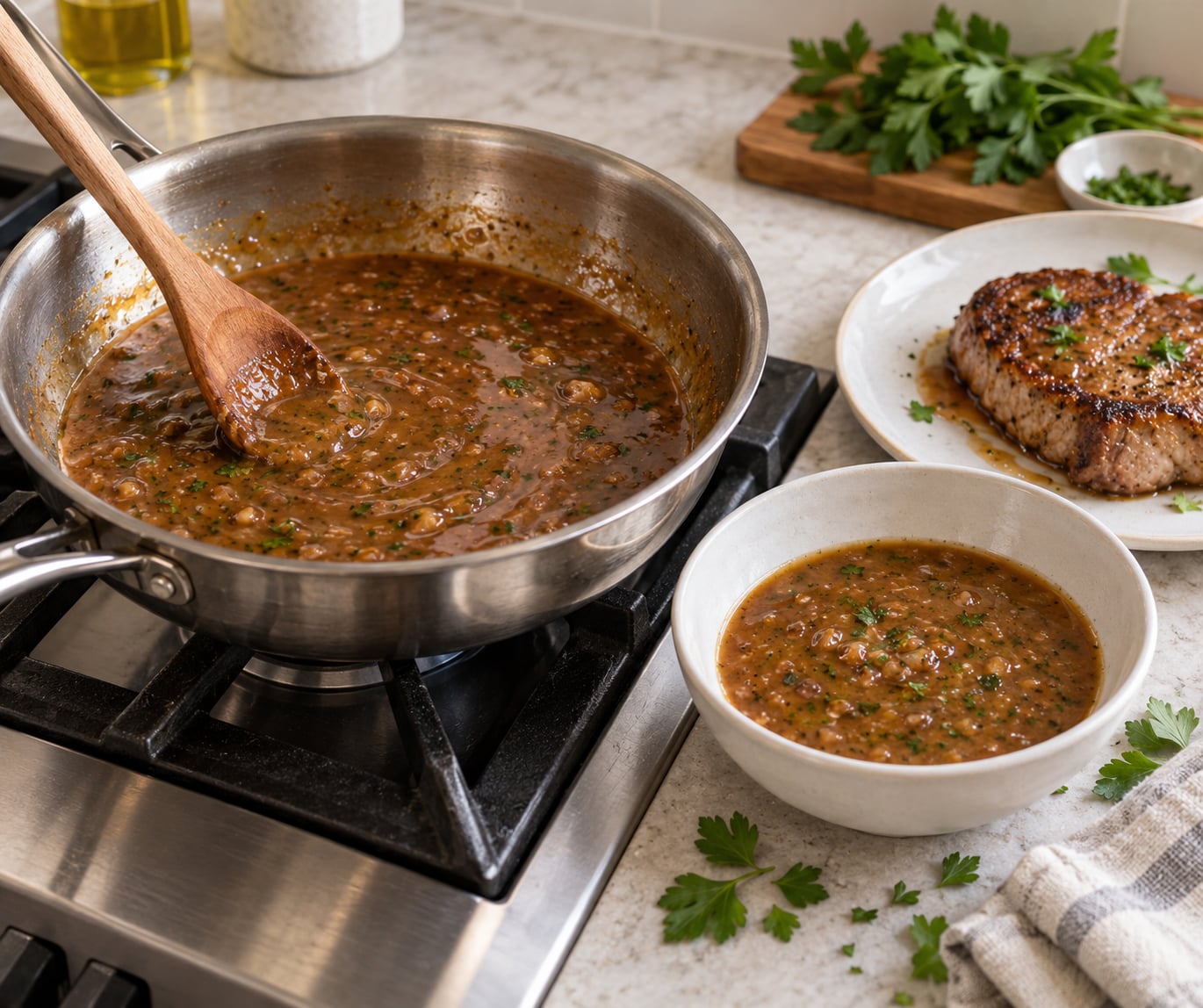
A good one is glossy, coats the back of a spoon, and tastes richer and brighter than the meat it came from. It works on steak, chicken, pork chops, salmon, scallops, pork tenderloin and roast beef, and it doubles the effort of whatever you cooked without adding a single dish to wash.
Table of Contents
- What You Need
- Which liquid to pour in
- Step-by-Step
- Step 1: Taste the Pan Juices (about 30 seconds)
- Step 2: Deglaze and Start the Sauce (about 45 seconds)
- Step 3: Whisk in Fat for Body (about 60 seconds)
- Step 4: Adjust the Consistency (about 60 seconds)
- Step 5: Finish and Serve (about 30 seconds)
- Common Mistakes
- Frequently Asked Questions
- What is the fastest way to make a pan sauce?
- Do I need wine or broth to make a pan sauce?
- How do I know when a pan sauce is thick enough?
- Why did my pan sauce break or turn greasy?
- Can I make pan sauce without butter?
- Can pan sauce be made ahead of time?
What You Need
The formula scales with the protein, and for one 4-ounce portion the default is small: half a cup of liquid, a tablespoon or two of cold butter, a pinch of salt, and a spoonful of acid at the end. For a 12-ounce steak, double the liquid and butter.
- Half a cup of liquid to deglaze: dry white wine, red wine, dry cider, chicken or beef broth, or water
- 1 to 2 tablespoons cold butter, cut into cubes
- About a quarter teaspoon fine salt, plus more to taste
- A teaspoon of acid: balsamic vinegar, red wine vinegar, or lemon juice
- A handful of soft herbs: flat-leaf parsley, thyme, or chives
- A stainless steel or cast iron skillet, a whisk, and a sauce spoon
Measure everything before the protein hits the pan. The sauce phase moves fast, and the version you assemble while rushing is the one that turns greasy.
Which liquid to pour in
| Liquid | What it tastes like | Alcohol-free | Best with |
|---|---|---|---|
| Dry white wine | Bright, clean, sharp | No | Chicken, fish, pork |
| Red wine | Deeper, tannic, slightly sweet | No | Beef, lamb, mushrooms |
| Dry cider | Mild, gently sweet | No | Pork, poultry, apples |
| Chicken or beef broth | Rounded, savory, familiar | Yes | Anything, especially beginners |
| Water | Neutral, fond-only | Yes | When the fond is dark enough |
| Balsamic or wine vinegar | Sweet-tart, sharp | Yes | Rich or gamey fond |
| Lemon juice | Clean and citrusy | Yes | Fish, scallops, chicken |
Yes, you can deglaze a pan with just water. It works because the fond supplies all the flavor, and it is the right call when your fond is dark and well browned. Skip it when the fond is thin or pale, because then the sauce will taste flat, and reach for broth instead.
One safety note on the protein itself. Cook poultry to 165°F (74°C), ground meat to 160°F (71°C), and whole cuts and fish to 145°F (63°C), then rest it on a warm plate before you start the sauce.
Step-by-Step
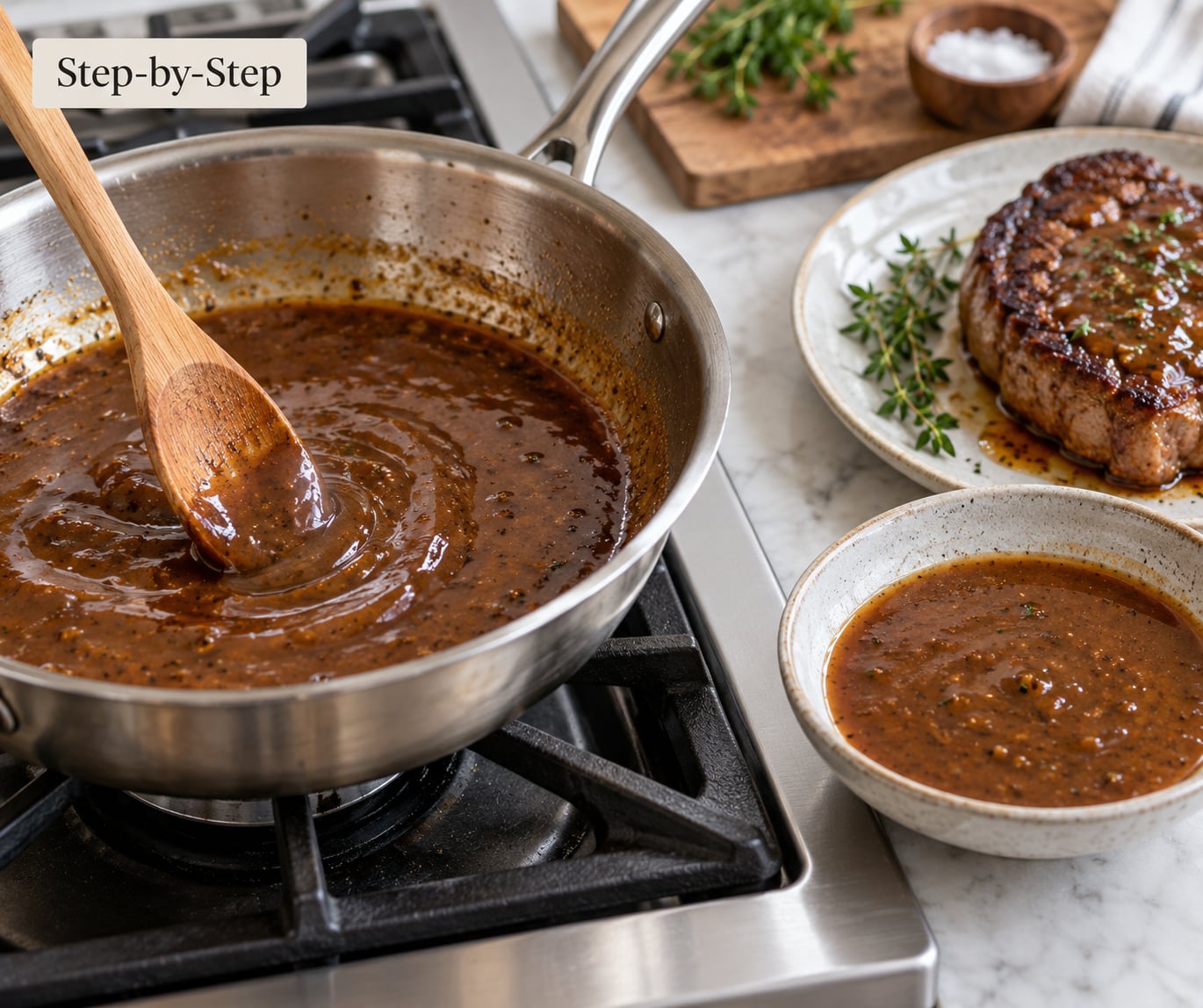
Step 1: Taste the Pan Juices (about 30 seconds)
Move the protein to a warm plate. Spoon off and discard any fat that is blackened, then lift a teaspoon of the pan juices and taste them on their own.
You are checking for two things: whether the fond is browned and sweet, or scorched and acrid. If it tastes burnt, wipe the pan out and start again with fresh fat, because no amount of wine rescues a burnt base. If it tastes raw and thin, you need more reduction, which comes in step two.
Step 2: Deglaze and Start the Sauce (about 45 seconds)
Turn the heat to medium-high and pour in about half a cup of liquid per 4 ounces of protein. It should hit the pan and bubble immediately. Scrape with a flat spatula or whisk as it boils, loosening the fond from the bottom.
The fond should shift from dark brown to a lighter, glossy caramel color as it dissolves. Stop when the smell changes from raw alcohol to something cooked and sweet, usually well before the liquid is gone. If you like, drop in a sliced shallot or a clove of crushed garlic at this point; give it about 30 seconds.
Step 3: Whisk in Fat for Body (about 60 seconds)
Kill the heat. Add the cold butter one tablespoon at a time, whisking constantly until each piece has melted and disappeared before adding the next. A successful mount looks glossy and slightly thickened, with no separated oily streaks.
If the butter melts into a thin pool instead of thickening, the pan was still too hot or the sauce had no fat of its own to emulsify with. Do not panic. Lower the heat, whisk in another splash of cold butter, and it will come together.
Step 4: Adjust the Consistency (about 60 seconds)
Put a spoon in the sauce and lift it. The sauce should coat the back of the spoon and hold a thin film for a second rather than running off clean. That is the endpoint, and by volume it usually means the liquid has reduced by about half.
Too thin? Keep the heat on and let it boil another minute. Too thick? Whisk in a tablespoon of broth or water. You can also thicken a thin sauce with a slurry: mix one teaspoon of cornstarch with one tablespoon of cold water, pour it in, and whisk for about 30 seconds while it bubbles. Scraping a little cold butter in is the third option, and the fastest.
Step 5: Finish and Serve (about 30 seconds)
Taste on a clean spoon. Season with a small pinch of salt, then add about a teaspoon of vinegar or lemon juice and taste again. The acid should be noticeable but not sour; it is what keeps a rich sauce from tasting heavy.
Tip in any juices that pooled on the resting plate, stir in a handful of chopped parsley, thyme leaves, or chives, and spoon the sauce over the protein while it is still hot. Sauce that has sat for ten minutes thickens and dulls in the pan.
Common Mistakes
Nearly every failed pan sauce I have made traces back to one of these. The fixes are quick if you catch the problem while the sauce is still in the pan.
| Problem | Why it happened | The fix |
|---|---|---|
| Watery sauce that runs off the food | Not reduced long enough, or no fat added | Boil one more minute, then mount with cold butter off the heat |
| Greasy or separated sauce | Pan was too hot, or butter went in too fast | Off the heat, whisk in cold butter or a tablespoon of cold water to bring it back |
| Too salty | Fond concentrated as it reduced, and the protein was salted right before searing | Add a splash of unsalted broth or water, then more vinegar or lemon; a spoonful of Dijon also rounds it out |
| Too sour or sharp | Acid added too early, or too much | Whisk in a knob of cold butter and a spoonful of broth to soften it |
| Bitter or harsh | Liquid reduced well past the endpoint, which concentrates bitterness as well as flavor | Stir in cold butter and a splash of water; it can be rescued but not reversed |
| Flat but not bland-sour | It needs acid, not salt | Add a few drops of vinegar, taste, repeat |
| Nothing to deglaze | Crowded pan, meat moved around, or a nonstick surface | Start the next sear with more space and leave the protein untouched for two minutes per side |
| Burnt smell | Fond cooked past brown before liquid went in | Taste the juices first, discard blackened residue, and start over |
A few habits that make the five minutes work. Keep your heat at medium-high rather than blasting it, so the liquid reduces without scorching the fond. Pull the protein off before the liquid goes in, because a cold wet steak sitting in boiling wine will dilute the whole thing and stop the fond from releasing. And taste twice, once for salt and once for acid.
On pans: stainless steel and cast iron give you the browning you need. Cast iron holds heat fiercely, so drop to medium after searing. Nonstick works fine for the sauce itself, it just produces less fond, so lean on broth and butter for flavor instead. Many beginners start here, and the technique still teaches you the habit.
If the sauce outruns the portion, spoon it over vegetables, rice, polenta, or mashed potatoes built from the same meal. Leftovers keep three to four days in a sealed container in the fridge, and reheat them until steaming, about 165°F (74°C). A frozen cube of broth dropped into a thin sauce is a fast rescue, and scraps in a zip bag make a perfectly good one.
Frequently Asked Questions
What is the fastest way to make a pan sauce?
Rest the cooked protein on a warm plate, pour half a cup of broth, wine, or water into the hot skillet, scrape the fond loose while it boils, reduce the liquid by half, then whisk in cold butter off the heat. Season with salt and a splash of vinegar and spoon it over. That is roughly five minutes of active work and no extra pans.
Do I need wine or broth to make a pan sauce?
No. Wine gives brightness, broth gives savory depth, and water gives you the flavor of the fond alone. Water is a genuinely good choice when your fond is dark and well browned, and broth is the safer bet when the fond is thin or pale. A splash of dry cider or a teaspoon of balsamic vinegar covers most of the middle ground.
How do I know when a pan sauce is thick enough?
Dip a spoon in and lift it. The sauce should coat the back of the spoon and hold a thin film briefly instead of running off clean, and by volume that usually means the liquid has reduced by about half. If it is still watery, boil it another minute and check again. Thickening with cold butter or a cornstarch slurry is a faster route than reducing.
Why did my pan sauce break or turn greasy?
Heat that was too high, or butter added too quickly. The milk solids in butter need a gentle temperature to blend with the starch and fat in the pan juices. Take the pan off the heat, whisk in cold butter one piece at a time, or add a tablespoon of cold water and whisk hard to pull the sauce back together.
Can I make pan sauce without butter?
Yes. Reduce the liquid further to concentrate it, or thicken it with a cornstarch slurry made from one teaspoon of cornstarch and one tablespoon of cold water. A spoonful of Dijon mustard, some cream, or a finishing herb also adds body. Butter is a fast route to gloss and richness, not a requirement for a good sauce.
Can pan sauce be made ahead of time?
You can, but it loses some of its freshness. A sauce made a few hours ahead and reheated gently is fine, and it keeps three to four days in a sealed container in the fridge. Expect it to thicken as it sits, so loosen it with a splash of broth or water on the way back to the stove and finish with fresh acid and herbs after reheating.
Start with this: sear your protein in a hot stainless pan, leave it alone for two minutes a side, and take it out the moment it hits your target temperature. While it rests, pour in half a cup of broth, scrape, reduce by half, and mount with cold butter. Everything else on this page is a variation of that sequence, and once you have made it three or four times you will stop needing the instructions.