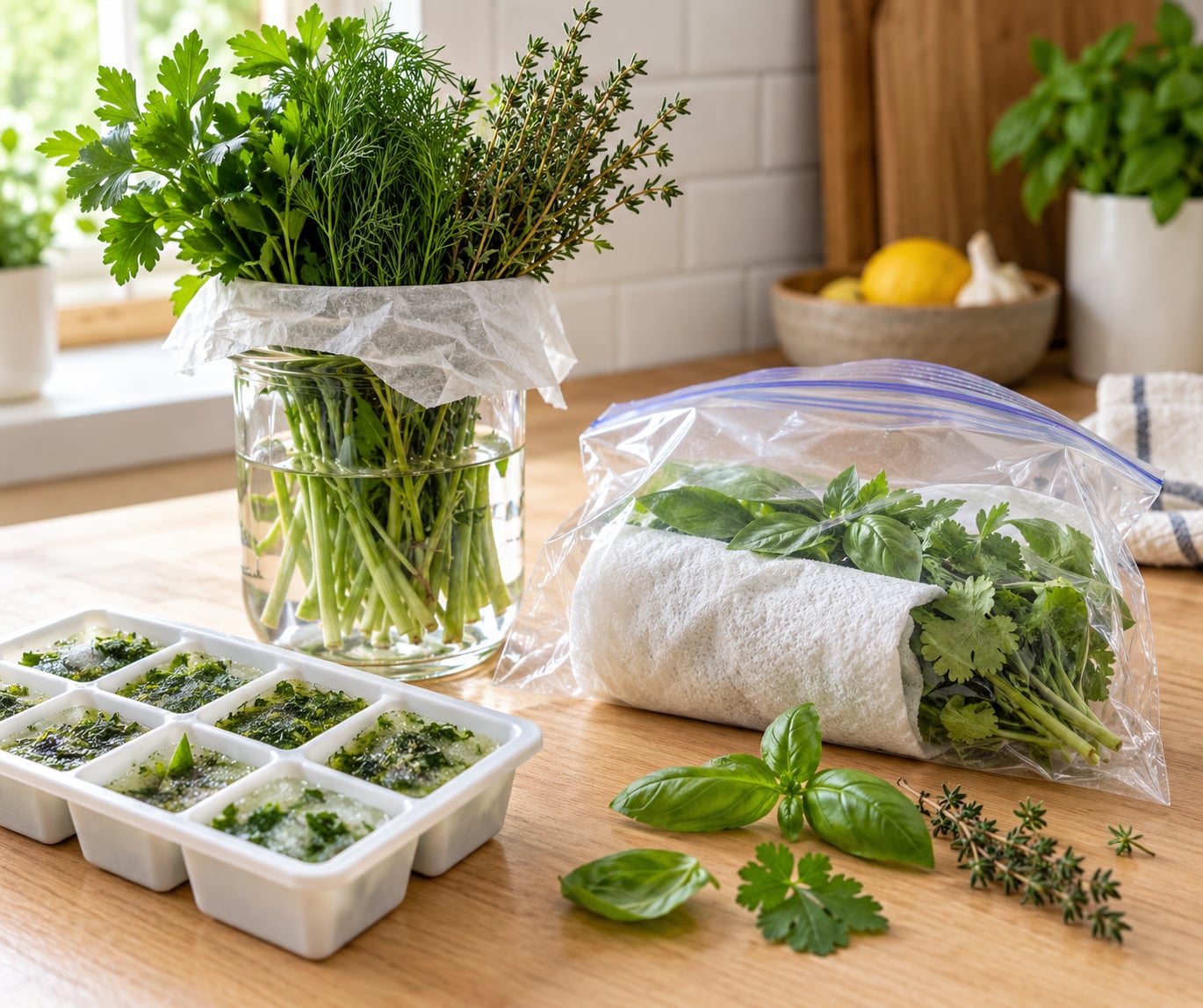
To store fresh herbs so they last, wrap the bunch in a damp paper towel, seal it loosely in a zip-top bag, and refrigerate for about a week. For longer life, trim the stems and stand them in a jar of water, loosely covered, for two to three weeks. Either way, skip the rinse and skip the airtight seal.
Herbs have a short shelf life because they keep losing water through their leaves after you cut them. They also give off ethylene gas, the same ripening gas that yellows and softens produce. A damp towel or a jar of water puts water back into the stems, and a loose cover lets that gas escape instead of pooling around the leaves and turning them black.
Below is the whole method set: two fridge methods for this week, then freezing, drying and oil for the surplus that a farmers market haul or a garden bed always produces. Each one has a realistic time range, so you can pick by how soon you plan to cook.
Table of Contents
- What You Need
- Step-by-Step: How to Store Fresh Herbs So They Last
- How to Store Tender Herbs in the Refrigerator
- How to Freeze Herbs for Long-Term Storage
- How to Preserve Herbs in Oil
- How to Dry Herbs for Pantry Storage
- Common Mistakes
- Frequently Asked Questions
- How long do fresh herbs last in the refrigerator?
- Which herbs freeze best for later use?
- Should fresh herbs be washed before storing?
- How do you revive wilted herbs at home?
- Can I store fresh herbs in olive oil on the counter?
- Which herbs are best dried for pantry storage?
- Conclusion
What You Need
You do not need anything special. Most of this list is already in a working kitchen, and the container matters less than people think.
- A zip-top bag or the perforated produce bag the greens came in. This is the single best container for soft herbs because you can leave the seal cracked.
- Clean paper towels for wrapping. You want them damp, not wrung out.
- A jar, pint glass or tall tumbler with enough height to hold the stems upright.
- Kitchen scissors or a sharp knife for a diagonal cut on the stems.
- A freezer bag or a silicone ice cube tray if you plan to freeze.
- Extra virgin olive oil or water for freezing herbs in cubes.
- A cool, dark, dry cupboard shelf for dried bundles and jars.
- Masking tape and a pen to label and date anything that goes into a jar.
On container choice specifically: a zip-top bag wins for a single bunch, a rigid airtight container works for hardy herbs like thyme and rosemary, and a jar only makes sense when the stems are long enough to stand. A produce bag with no intervention at all lasts a while but often turns leaves slimy, because it traps its own moisture.
Step-by-Step: How to Store Fresh Herbs So They Last
Every method below depends on the same four minutes of prep. Do this first and whichever storage method you pick will work better.
- Pick over the bunch. Pull off anything already brown, yellow or slimy. One bad leaf turns its neighbors.
- Trim the stems. Cut about half an inch off the bottom at an angle so the cut surface is larger and more water moves up. For mint and cilantro, trim more of the stem because the leaves lowest down are the ones that rot first.
- Do not wash. Leave the herbs dry. Rinsing pushes water into the leaf tissue and speeds up spoilage, which is why the “wash before storing” advice online does more harm than good.
- Separate the herbs. Do not store basil, cilantro and thyme in the same container. Stems packed together bruise, and a soft herb going bad takes the whole bag with it.
| Method | How long it lasts | Best for | Effort |
|---|---|---|---|
| Damp paper towel in a zip-top bag | 7 to 10 days | Soft herbs you will use this week | None after setup |
| Stems in water, jar loosely covered | 2 to 3 weeks | Soft herbs with long stems | Change water weekly |
| Stems in water, uncovered | 1 to 2 weeks | Parsley and cilantro | Change water weekly |
| Produce bag, no intervention | 1 to 2 weeks, often slimy | Nothing, really | None |
| Counter in water | 1 to 2 days, up to a week if cool | Herbs you will use the same day | None |
| Frozen in oil or water | 3 to 12 months | Cooked dishes, sauces, soups | 10 minutes |
| Air-dried or oven-dried | 6 to 12 months | Pantry cooking, rubs, teas | 30 minutes plus drying time |
How to Store Tender Herbs in the Refrigerator
Basil, cilantro, parsley, dill, mint and chives are the herbs that need this treatment. They wilt within hours of cutting and recover if you give them water and humidity.
- Lay the cleaned, trimmed herbs on a paper towel.
- Roll the towel loosely around them, like a small burrito. Do not pack it tight.
- Put the roll in a zip-top bag or drape a produce bag over it.
- Seal the bag, or leave the top folded over so air can move in and out.
- Refrigerate in the crisper or on a middle shelf, not in a warm spot near the door.
The towel should be damp enough that a finger leaves a cool mark, and no wetter. A soaking towel adds a layer of moisture that turns the leaves translucent and starts mold within a couple of days. If you see condensation on the inside of the bag, replace the towel with a drier one.
Does wetting the paper towel actually help? Yes, and it is the part people get wrong most often. Water held against the leaves slows transpiration, so they stay crisp instead of going limp. The failure mode is overdoing it, not doing it.
The jar method works better for longer life, and it is the one I use most. Stand the trimmed stems in about an inch of water, no deeper, so the leaves sit above the waterline. Drape a produce bag or plastic bag loosely over the top and put the jar in the fridge. Never seal it airtight. A tight lid traps ethylene gas and stagnates the water, which is why so many jars of parsley go black at the bottom.
Change the water every three to four days and top it up whenever the level drops. Two to three weeks is a realistic run; past that the stems get slimy at the waterline and the whole jar goes.
| Herb | Best fridge method | Fridge life | Freezes well? | Dries well? |
|---|---|---|---|---|
| Basil | Counter in water, loosely covered | 2 to 3 days cool; blackens in the fridge | Yes, in oil | Poorly |
| Cilantro | Damp towel in a bag | 7 to 10 days | Yes, in oil | Poorly |
| Flat-leaf parsley | Stems in water | 2 to 3 weeks | Yes | Yes |
| Dill | Damp towel in a bag | 5 to 7 days | Yes | Yes |
| Mint | Damp towel in a bag | 7 to 10 days | Yes, in oil | Yes |
| Chives | Damp towel in a bag | 7 to 10 days | Yes, chopped in oil | Yes |
| Tarragon | Damp towel in a bag | 7 to 10 days | Yes, in oil | Yes |
| Rosemary, thyme, sage, oregano | Jar or airtight container | 2 to 3 weeks | Yes | Best dried |
On which herbs not to refrigerate: basil is the clear answer. Cold plus moisture turns its leaves black and limp within a day or two, and no bag fixes it. Keep basil in water on the counter if you will use it the same day. Anything you plan to eat within 24 hours is fine on the counter too, since cold storage only pays off for longer holds.
If your fridge is packed and herbs come out crushed, the fix is not a different container. Give each bunch an empty shoebox-sized space, or stand jars upright on a shelf where nothing is resting on top of them.
How to Freeze Herbs for Long-Term Storage
Freezing is the best-value option for surplus, because you chop once and then scoop what you need. It suits cooked dishes rather than raw garnishes, since freezing softens the leaf structure and mutes the aroma of fresh greens.
- Wash the herbs, then dry them thoroughly. Any water left behind freezes into ice and turns the herbs to mush.
- Chop them roughly, or leave soft-leaved herbs whole.
- Add a spoonful of olive oil, or enough water to cover, into each ice cube tray well. Oil preserves flavor and texture better than water; water keeps it from freezing solid.
- Freeze overnight until solid, then pop the cubes into a labeled freezer bag.
- Label with the herb and the month. Frozen herbs stay good for three to twelve months depending on the oil.
Skip the tray and freeze flat instead if you plan to use whole leaves: chop, spread on a lined tray, freeze until firm, then bag it. Sturdy herbs like rosemary and thyme do not need blanching. Basil, mint and chives lose a little color but keep enough flavor for sauces, soups and compound butters.
Once thawed, use frozen herbs straight away. They do not refreeze well, and they do not go back into the fridge for a second round.
How to Preserve Herbs in Oil
Herb oil is worth making, but it is a refrigerated product, not a pantry product. Water trapped under oil in a sealed jar is exactly the condition that grows Clostridium botulinum, so the home method has rules.
- Dry the herbs completely first. If you wash them, dry them for several hours or overnight. Skipping this step is the one mistake that makes the method unsafe.
- Use clean, dry jars and utensils, and pack the herbs loosely.
- Pour in olive oil until every leaf and stem is fully submerged.
- Refrigerate immediately and label with the date.
- Use it within four weeks to be conservative. If the oil looks cloudy, has a film on top or smells off, throw it away rather than straining it.
Keep the jar in the refrigerator every time you use it. A jar that sits on the counter for hours during dinner party prep is not the same as one that lives in the fridge, and the room-temperature version carries real risk. That is why store-bought herb oils are shelf-stable and homemade ones are not: they are processed differently, not stored differently.
How to Dry Herbs for Pantry Storage
Drying is the right answer for rosemary, thyme, sage, oregano, marjoram and bay. These woody herbs lose almost nothing in the process, and dried versions keep their flavor for most of a year.
- Rinse the stems and shake off the water.
- Bundle about ten stems together and tie them with kitchen twine.
- Hang them upside down in a dark, dry, well-ventilated room, away from the stove and any direct sun. Expect several days for soft leaves, up to two weeks for thick sage.
For a faster result, set your oven to its lowest setting, around 95 to 115 degrees Fahrenheit, leave the door cracked open, and put the herbs on a tray for a few hours. High heat scorches the oils in the leaves and the result tastes dusty, so take them out while they are still slightly flexible and cool before they crisp fully.
Strip the leaves from the stems, crush them coarsely and store them in airtight glass jars in a dark cabinet. Label and date each jar. Once the herb is dry and dark, light is what damages it next, not air.
Common Mistakes
Almost every failed herb bunch traces back to one of these, and each has a quick fix.
- Washing herbs before storing them. The rinse leaves moisture on and inside the leaves, which speeds rot. Wash at the moment you cook, not before you store.
- A wet paper towel instead of a damp one. Wrung-out towels create the humidity that grows mold on soft herbs. Squeeze yours until only a few drops come out.
- A tight lid or airtight bag on a water jar. Sealed jars trap ethylene gas and stale water, and herbs blacken from the stem up. Drape the bag loosely and never seal it.
- Too much water. An inch is enough to keep stems hydrated. Submerged leaves rot where they touch the surface.
- Crowding the fridge. Weight from other produce crushes soft herbs into the paper towel, and the crushed spots turn first. A shelf with nothing stacked on the herbs beats a full crisper drawer.
- Treating basil like a hardy herb. A week of refrigeration blackens basil. Counter storage for a day, or freeze it the day you buy it.
- Homemade herb oil on the counter. Fridge only, always, and label the date. This one is a safety habit rather than a flavor habit.
- Undated jars of dried herbs. A jar of dusty unlabeled leaves in the back of the cupboard does nobody any good. Label and date everything you dry.
If a bunch is already past saving, do not toss it yet. Trim off the green parts, stand the stems in cold water with the tops over a sink, and leave them for a few hours. That revives most slightly wilted parsley and cilantro, and a quick dip in ice water firms up leaves that have just started to droop.
And if the fridge pile is beyond reviving, use it rather than losing it: blitz soft herbs with oil and parmesan into pesto and freeze in an ice cube tray, beat them into butter for bread or corn, or dry them for the pantry.
Frequently Asked Questions
How long do fresh herbs last in the refrigerator?
Most soft herbs last 7 to 10 days in the fridge using a damp paper towel in a loosely sealed bag, and 2 to 3 weeks with their stems standing in water and the jar loosely covered. Woody herbs such as rosemary, thyme and sage hold for 2 to 3 weeks in a jar or airtight container. Basil is the exception: it lasts 2 to 3 days on the counter and blackens quickly in the cold.
Which herbs freeze best for later use?
Basil, parsley, dill, chives, mint and tarragon all freeze well and hold their flavor in cooked dishes. Freeze them chopped in olive oil or water in an ice cube tray, then transfer the frozen cubes to a labeled bag. Color and aroma fade a little, so use frozen herbs in sauces, soups, stews and compound butters rather than as a raw garnish.
Should fresh herbs be washed before storing?
No. Rinsing leaves moisture on and inside the leaf tissue, and that is the single biggest cause of herbs turning slimy in the fridge. Store them dry and wash at the moment you cook. If a bunch came from the garden or looks gritty, dry it fully with a salad spinner or paper towels before it goes anywhere near a container.
How do you revive wilted herbs at home?
Trim about half an inch off the stems and stand them in cold water, with the leaves above the waterline, in a cool spot for a few hours. For leaves that are only slightly droopy, a 30-second ice water bath tightens them back up. Soggy, browning or black leaves will not come back, so strip those off first and judge the rest by smell and color.
Can I store fresh herbs in olive oil on the counter?
No. Water trapped beneath oil in a sealed jar is the condition that grows botulism, and herbs that were not dried completely are the most common cause. Homemade herb oil belongs in the refrigerator, used within about four weeks, and thrown away if it turns cloudy or smells off. Store-bought oils are shelf-stable because they are processed differently, not stored differently.
Which herbs are best dried for pantry storage?
Woody herbs are the right candidates: rosemary, thyme, sage, oregano, marjoram and bay. Hang small bundles upside down in a dark, dry room until the leaves are crisp, or use the oven at its lowest setting with the door cracked. Strip the leaves, store them in airtight glass jars in a dark cupboard, and label with the date. They stay good for 6 to 12 months.
Conclusion
Start the moment you get herbs home: pull off damaged leaves, trim half an inch off the stems at an angle, and keep them dry. Then choose by timing. For the current week, wrap them in a damp paper towel and seal them loosely in a bag. For a longer hold, stand the stems in an inch of water under a loose cover and change it every few days. For surplus, freeze in oil or dry the woody herbs.
That is the whole method. Three minutes of prep at the sink is the difference between a bunch of usable herbs and a bag of green slime by Sunday.