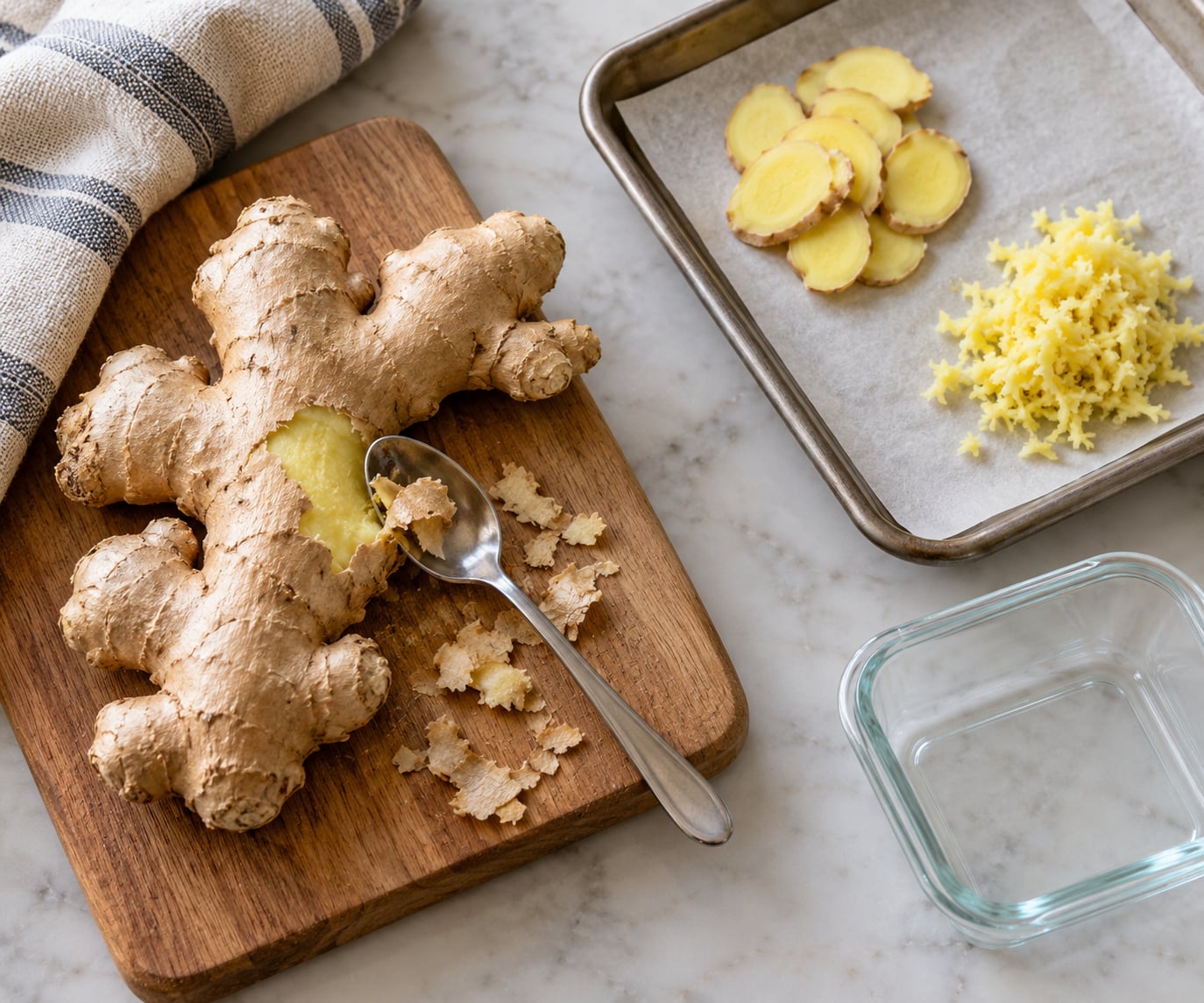
The easiest way to peel ginger is with the edge of a metal spoon, held sideways and scraped along the root until the papery skin lifts away. Store it based on how fast you will use it: whole unpeeled roots go in the fridge, peeled ginger goes in the freezer in small portions. That is the whole system, and it takes about five minutes per root.
Most of the trouble with ginger is not the peeling. It is that people buy a knobby root, use a thumb-sized piece, and find the rest dried out or fuzzy in the back of the fridge weeks later. Once you treat how to peel ginger and store it as one job instead of two, most of that waste disappears.
The timings below come from kitchen guidance published by the Iowa State University Extension service and from the short video and forum advice on the spoon method, so they are the figures those sources agree on rather than guesses.
Table of Contents
- What You Need
- Step-by-Step
- 1. Inspect the root before you cut anything
- 2. Trim the bad ends
- 3. Loosen the skin
- 4. Peel the outer skin
- 5. Trim and dry
- 6. Seal it and choose where it lives
- How to Peel Ginger and Store It: Peel the Outer Skin
- Choose the Right Storage Method
- Common Mistakes
- Peeling away too much flesh
- Storing ginger while it is still damp
- Leaving peeled pieces in a sealed heap
- Labelling nothing
- Peeling ginger you never needed to peel
- Frequently Asked Questions
- What is the easiest way to peel ginger?
- How can I peel ginger without a spoon?
- Do you peel the skin off ginger before grating it?
- Should ginger be refrigerated?
- How long does peeled ginger last in the fridge?
- Can you use ginger straight from the freezer?
- Conclusion
What You Need

You need very little. A teaspoon does the actual peeling, and it is the only tool that matters here.
- A teaspoon — held sideways, the edge lifts the skin off knobbly ginger without digging into the flesh.
- A paring knife — for trimming the dried or shriveled ends before you start, and for cutting into slices or chunks.
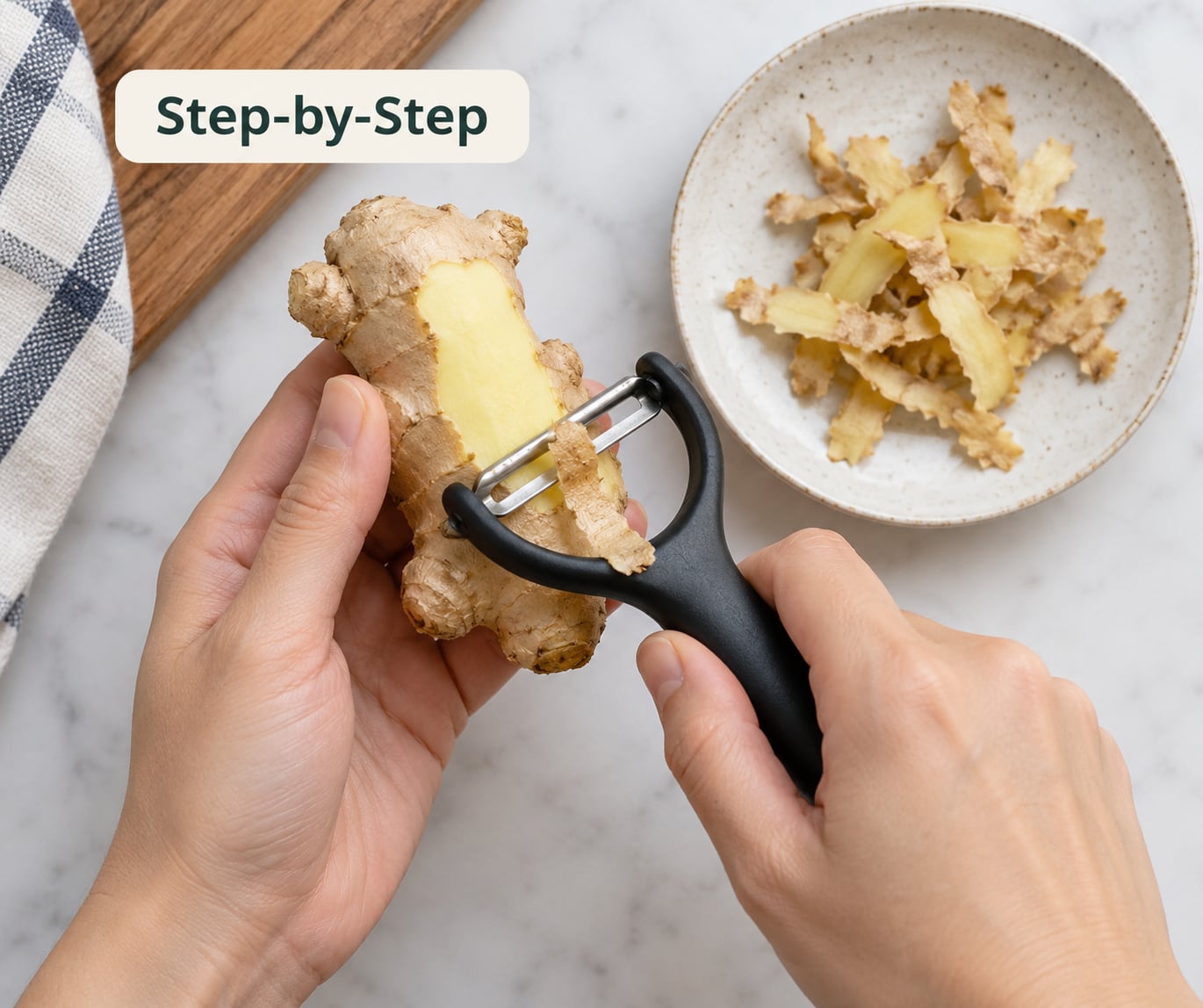
- A Y-shaped peeler — worth having if your ginger is smooth and young. It is faster on flat lobes but still takes a thin layer of flesh.
- Paper towel — the cut ends of peeled ginger hold moisture, and that moisture is what turns a tidy root into a slimy one.
- An airtight container or freezer bag — glass jar, sealed tub, or zip-top bag with the air pressed out.
- A microplane or box grater — only if you grate a lot of it, and best used on frozen ginger.
One thing worth knowing before you start: young ginger has thinner, pinkish-blushed skin and peels easily by hand. Mature ginger has tougher, darker skin and more fibrous flesh, so the spoon method pays off more there.
Step-by-Step
Six steps, in order. Each one has a sign that tells you it worked.
1. Inspect the root before you cut anything
Look the ginger over and find the ends that have dried, wrinkled or gone dark. Those are the ones you lose first.
You know it worked when: you have found every soft or discoloured patch and marked it, so nothing surprising turns up halfway through peeling.
2. Trim the bad ends
Cut off each shriveled end with the paring knife. If one finger of the root is soft or fuzzy, slice down until the cut face looks clean and firm rather than cutting the whole knob away.
You know it worked when: the cut faces are pale and clean, with no dark or translucent ring.
3. Loosen the skin
Hold the ginger in one hand and drag the back edge of the spoon along the surface, following the curve. The skin lifts in strips. Work around the knobs instead of straight across them, and let the spoon do the pressing — pushing hard shaves off flesh you want to keep.
You know it worked when: you can see a clean, shiny line of pale flesh behind the strip of skin.
4. Peel the outer skin
Repeat the scrape over any areas you missed, especially the crevices between lobes, where dirt hides. Rinse the root under cold water and rub it with your fingers to get the grit out of the grooves. This is the step people skip, and it is why scraped ginger sometimes still tastes faintly of earth.
You know it worked when: the surface is uniformly pale and smooth with no papery patches left in the seams.
5. Trim and dry
Cut the peeled root into the shape you need — thin slices for stir-fries, chunks for stock, or a whole piece if it is going back in the fridge. Pat every cut surface dry with a paper towel.
You know it worked when: the cut ends look matte rather than wet or glistening.
6. Seal it and choose where it lives
Put the ginger in an airtight container lined with a paper towel, press the air out of a freezer bag, or scatter small piles on a parchment-lined tray to freeze before bagging. Label the bag with the date.
You know it worked when: you cannot see any trapped air, and you know what is inside without opening it.
How to Peel Ginger and Store It: Peel the Outer Skin
Scraping beats peeling because the skin on ginger sits loosely over the lobes. A vegetable peeler is built for smooth, cylindrical vegetables, so on ginger it shaves off a layer of the flesh underneath — and on a thin, forked finger of ginger that can be half the usable root.
Hold the spoon sideways rather than bowl-up. The curve of the spoon follows the curve of the ginger, which is the entire reason the hack works, and it keeps your knuckles away from a blade. For anyone who finds peeling genuinely awkward, that safety point matters as much as the waste.
| Method | Best for | What you get | Watch out for |
|---|---|---|---|
| Spoon scrape | Every shape, especially knobby and forked roots | Least waste; skin off, flesh intact | Take your time around the crevices |
| Paring knife | Large flat lobes and trimming | Fast on thick pieces | Easy to slice into the flesh and lose it |
| Y-shaped peeler | Young, smooth ginger | Quickest on thin fingers | Removes a noticeable layer of flesh |
| Freeze then peel | Frozen ginger you forgot to peel | Skin shatters off in brittle pieces | Works best on sliced or grated frozen ginger |
| Microwave then scrape | Old, hard, mature roots | Skin softens in about 15 seconds | Stop at 15 seconds; longer makes it gummy |
The last two solve the two most common complaints. Frozen ginger is miserable to peel fresh, which is the entire subject of a long-running thread on Life Hacks Stack Exchange, and the microwave trick — 15 seconds, no more, then scrape — comes up constantly in cooking forum threads as the answer to hard, mature roots.
Choose the Right Storage Method
Peel the ginger only when you need to. For tea, broth, stock and anything you strain, drop the whole unpeeled piece in and pull it out later; the skin carries a lot of the aromatic compounds that a long simmer draws out. Peel when you are grating, using it raw, or want clean visible slices on the plate.
| Method | Prep state | Where it lives | How long |
|---|---|---|---|
| Counter | Whole, unpeeled | Bowl on the counter | About 1 week |
| Refrigerator | Whole, unpeeled | Crisper drawer, airtight or in a paper bag | 3 to 6 weeks |
| Refrigerator | Peeled or cut | Airtight container, paper towel lining | 2 to 3 weeks |
| Freezer | Peeled, sliced or grated | Sealed bag or tray, airtight | Best quality 3 months, commonly used up to 6 to 12 |
| Brine | Thin slices, peeled | Vinegar, sugar and water, submerged | 2 to 3 months |
| Alcohol | Slices or chunks | Fully covered in vodka or other spirit | 1 to 2 months |
| Dehydrated | Slices, peeled | Dried, ground to powder | About 1 year |
Whole unpeeled ginger outlasts peeled ginger by weeks, which is why the root keeps its skin in the fridge and loses it only in the freezer. Sources disagree on how long frozen ginger truly lasts, and both figures get quoted as fact: best quality in about three months, and safe indefinitely at a steady 0°F. Treat six months as a practical target and keep using it past that if it looks and smells fine.
A paper towel in the container is doing real work. It catches the moisture that peeled ginger releases, and a damp piece of ginger in a sealed tub will go soft or fuzzy well before its clock runs out.
Common Mistakes
Five problems come up again and again, and every one of them has a quick fix.
Peeling away too much flesh
A vegetable peeler on thin ginger takes the skin plus a layer of the root. Switch to the spoon and hold it sideways, letting the curve do the work. You should be left with paper-thin strips of skin and a full, pale root underneath.
Storing ginger while it is still damp
Peeling leaves wet cut surfaces, and rinsing leaves the whole root wet. Dry everything thoroughly before it goes into a sealed container, and add a folded paper towel that you swap every few days. The towel tells you the truth about moisture before the ginger does.
Leaving peeled pieces in a sealed heap
One bruised spot spreads to the rest. Separate cut pieces with parchment or a paper towel so they do not touch, and cut back a centimetre or so around anything that looks dull or dark.
Labelling nothing
Frozen bags of pale paste all look identical, and ginger buried at the back gets used once a year and then thrown out. Write the date and the prep on the bag, and push older ones to the front. Two or three small bags beat one large one every time.
Peeling ginger you never needed to peel
For tea, stock and broth, break the root in and fish it out later. For grating and raw use, peel first. That single habit change is where most of the waste goes away.
A few extras worth keeping in your head: grate ginger from frozen and it shaves off a microplane far more easily than fresh. For freezing, spread small piles on a lined tray, freeze until solid, then bag them so nothing fuses into one block. And when a root starts to wrinkle, that is dehydration rather than spoilage — peel it, grate it, and freeze it rather than binning it.
Frequently Asked Questions
What is the easiest way to peel ginger?
The easiest method is scraping the skin off with the edge of a metal spoon held sideways. The curved edge follows the knobs and grooves of the root, so you remove the papery skin while leaving the flesh underneath intact. Trim the dried ends with a paring knife first, then scrape and rinse under cold water.
How can I peel ginger without a spoon?
A paring knife works on thick, flat lobes, and a Y-shaped peeler is fastest on young ginger, though both take a thin layer of flesh with the skin. For frozen ginger, let it sit briefly and the brittle skin will break away in pieces. Ten to fifteen seconds in the microwave softens the skin of mature roots enough to scrape by hand.
Do you peel the skin off ginger before grating it?
Yes, if you are grating it. Peeled ginger grates cleaner, releases no papery flecks into the sauce, and gives you an even texture. The exception is long-simmered liquid such as stock or tea, where leaving the skin on adds aroma and you strain the pieces out whole anyway.
Should ginger be refrigerated?
Refrigerate it if you will use it within a month or so. Whole unpeeled ginger keeps three to six weeks in the crisper drawer, while peeled or cut ginger keeps two to three weeks in an airtight container lined with a paper towel. On the counter it lasts roughly a week before the skin wrinkles and the root starts to dry out.
How long does peeled ginger last in the fridge?
Two to three weeks, stored in an airtight container with the cut surfaces completely dry. Line the container with a paper towel and replace it every few days to draw off moisture, which is what turns sealed peeled ginger soft and discoloured. If you need more than a month, freeze it in portions instead.
Can you use ginger straight from the freezer?
Yes, no thawing needed. Drop frozen slices or a frozen clump straight into a stir-fry, soup or tea, and add it to the pan while the oil is still hot. For grating, frozen ginger is actually easier than fresh because it shaves off a microplane more cleanly.
Conclusion
Start by peeling only as much skin as the dish actually needs. Scrape with the sideways spoon rather than a peeler, dry the cut surface properly, then put the root away based on the clock: fridge for whole unpeeled ginger you will use within a month, freezer for peeled pieces you want to reach for any time. Label the bag, and nothing from the root ends up in the bin.
That is how to peel ginger and store it without the usual waste — a spoon, a paper towel, and two minutes of storage method thought before you close the container.