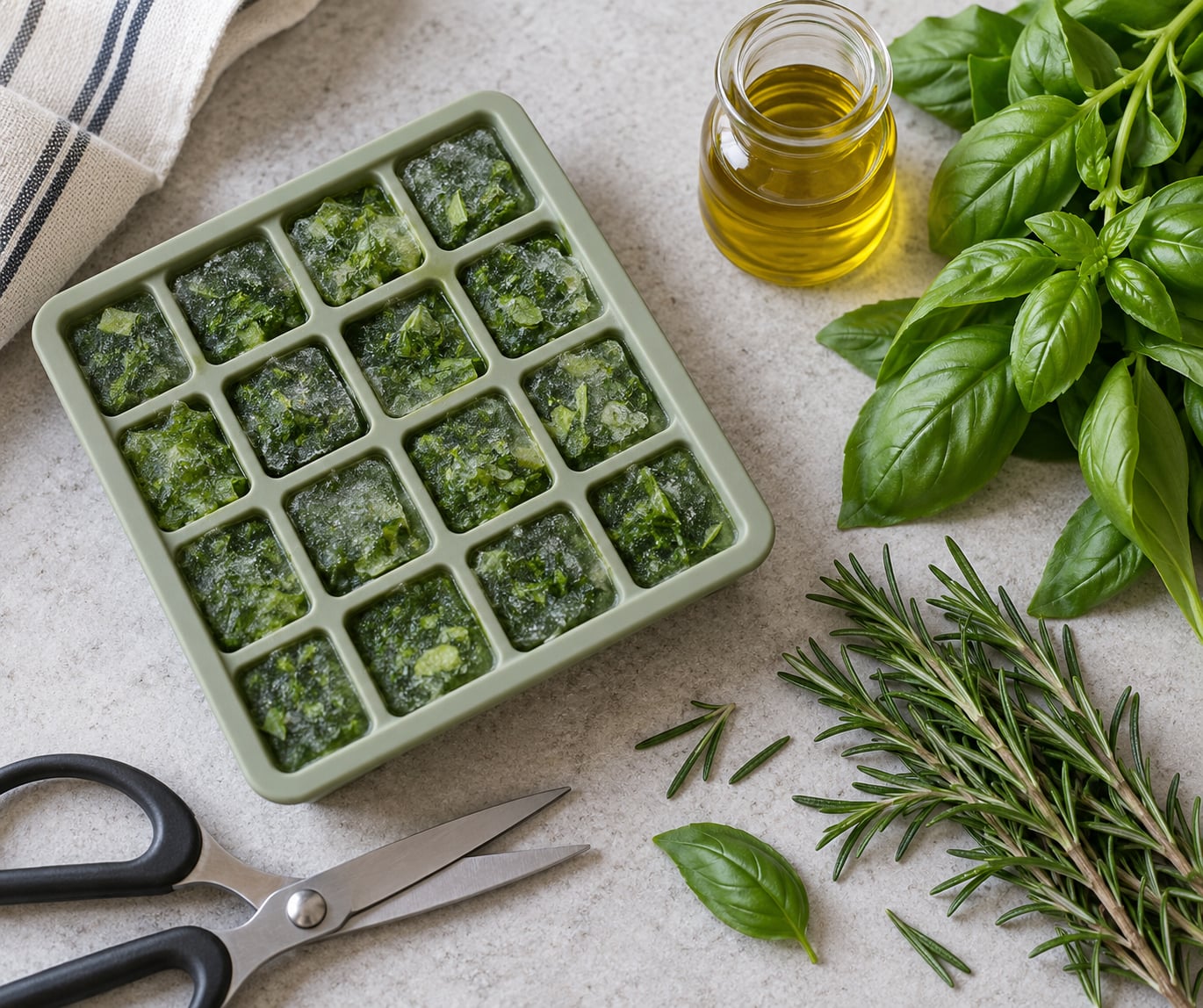
Freezing herbs in oil is simple: chop the herbs, pack them into ice cube tray wells, cover them completely with olive or avocado oil, and freeze for 4 to 6 hours until solid. Pop the cubes out, store them in a dated airtight freezer bag, and drop one straight into a hot pan. No thawing, no measuring, no half-used bunch of cilantro wilting in the crisper.
The oil does two jobs at once. It seals the herbs away from the dry cold air that causes freezer burn, and it flavors the oil itself, so each cube is both seasoning and cooking fat. If you buy herbs in bulk when the price is right, or you grow them, this is the difference between using the whole bunch and throwing most of it away.
Table of Contents
- What You Need
- Step-by-Step: How to Freeze Herbs in Oil
- Choose the Right Herbs and Oil
- Wash and Dry the Herbs Thoroughly
- Pack Herbs in Oil Portions
- Freeze, Label, and Store
- Use Frozen Herb-and-Oil Portions
- Common Mistakes and How to Fix Them
- Drying the herbs only halfway
- Leaving herbs above the oil
- Filling the wells to the rim
- Using a rigid plastic tray
- Forgetting the label
- Treating every herb the same
- Frequently Asked Questions
- Can you freeze herbs in oil?
- Which herbs are best to freeze in oil?
- How long do herbs frozen in oil stay good?
- Do you need to thaw frozen herbs in oil before using them?
- What type of container is best for freezing herbs in oil?
- Is it safe to freeze fresh herbs in olive oil?
- Conclusion
What You Need
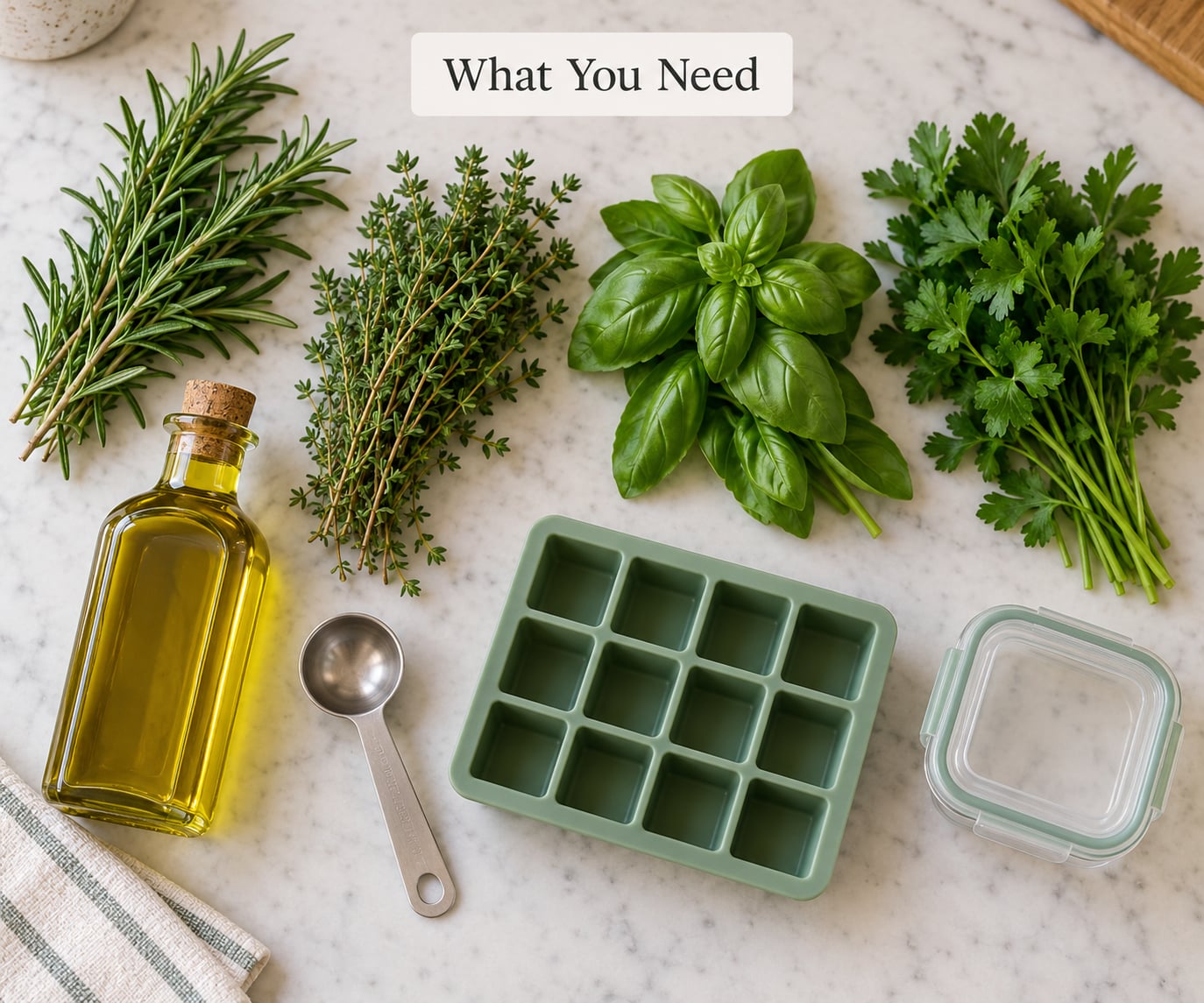
The ingredient list is short. Everything you need is probably already in your kitchen, plus herbs you actually want to cook with.
- Fresh herbs. Soft leafy herbs like basil, parsley, cilantro, dill, mint and chives work best, though sturdy woody ones also freeze fine.
- Oil. Extra virgin olive oil for a classic flavor, or avocado oil if you want the herb flavor to lead rather than the oil.
- A silicone ice cube tray. Flexible silicone pops cleanly. Rigid plastic trays crack cubes or trap them, which is the most common complaint I hear from people who tried this with the first tray they found.
- Kitchen scissors or a sharp knife for chopping and trimming stems.
- A teaspoon or tablespoon measure to keep portions consistent, roughly one tablespoon of chopped herbs per well.
- Paper towel or a salad spinner for drying.
- Freezer bags or a small airtight container plus a marker pen for labeling.
Airtight matters here more than anything else. A tray alone is not storage; it is a mold. The cubes move to a sealed bag or container as soon as they are frozen.
Step-by-Step: How to Freeze Herbs in Oil
Choose the Right Herbs and Oil
Tender herbs are the easiest to freeze and the most useful, because you use them raw and in small amounts. Basil, parsley, cilantro, dill, mint, chives and tarragon all hold up reasonably well. Woody herbs such as rosemary, thyme, sage and oregano lose a little aroma in the freezer, but they flavor oil powerfully, so they are still worth a tray.
Skip very thick, watery stems like lemongrass unless you are using the tender core only. Green onions freeze nicely if you slice the white and green parts together.
For oil, extra virgin olive oil is the default because it is what most people expect in an herb oil. Avocado oil is neutral and lets a delicate herb like basil or tarragon come through clearly. A flavored oil like chili or garlic-infused oil also works, but keep separate flavors in separate trays, because everything in one cube blends into the same note.
One caution about garlic. Fresh garlic in oil carries a well-documented risk of botulism when it sits at room temperature, so treat garlic and herb cubes as you would any homemade infused oil: keep them frozen, or refrigerate them and use within about four days.
Wash and Dry the Herbs Thoroughly
Rinse the herbs under cold running water and swish them through once more. Soft herbs like parsley and cilantro hold grit in the leaf folds, so a second pass matters more than a long soak.
Drying is the step people skip, and it is the one that ruins the batch. Any surface water freezes into ice, and the resulting cube turns cloudy with an ice core that pushes the herbs into a loose clump. Spin or pat the herbs dry, then let them sit on a towel for 10 to 15 minutes until the leaves feel dry to the touch rather than cool.
Strip off thick stems and give woody herbs a quick strip of the leaves. Pat the leaves only. Crumpled leaves bruise, and bruised herbs go brown faster in the freezer.
Pack Herbs in Oil Portions
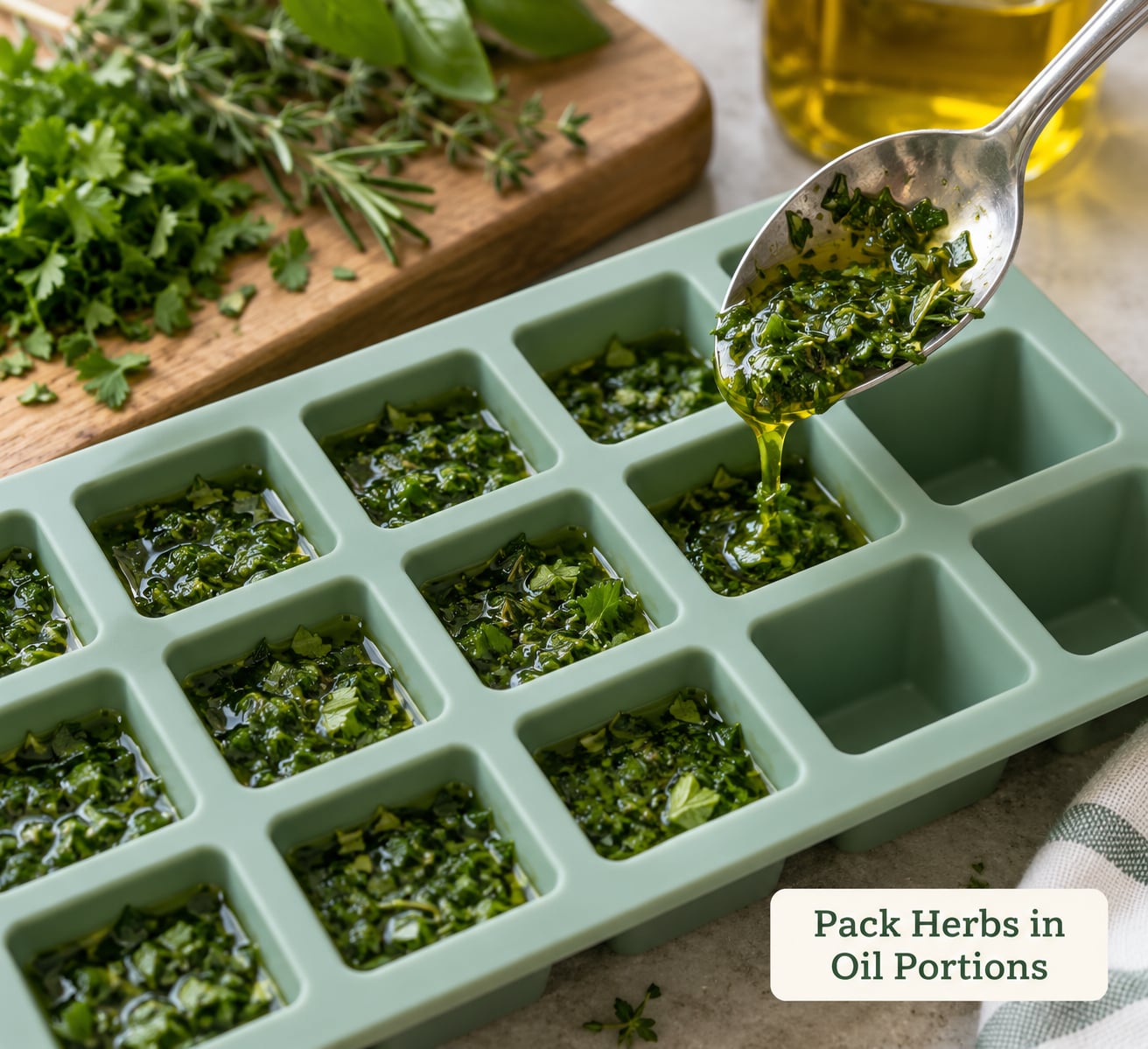
Chop the herbs finely, a rough chop is fine for rosemary and sage, but a finer chop for basil and parsley. Fill each well about two-thirds full with the chopped herbs, which is roughly one tablespoon.
Pour oil over the herbs until every piece is submerged and a thin layer sits on top. Leaving any herb above the oil line is the mistake that leads to the classic complaint of herbs floating at the top of the cube and freezing dry. Push the herbs down with the back of the spoon if they bunch up, and top the well up with oil again.
Oil does expand slightly as it freezes, so leave a finger’s width of room at the top of each well rather than filling to the rim.
Freeze, Label, and Store
Slide the tray into a flat part of the freezer and leave it for 4 to 6 hours, or overnight if the tray is deep. The cubes are done when they are solid and cloudy-green all the way through rather than liquid in the middle.
Pop them out, flexing the silicone tray, and transfer them to an airtight freezer bag or a small airtight container. Squeeze most of the air out of the bag before sealing it, since trapped air is what causes freezer burn.
Write the herb name and the month on the bag. If you have several trays going into the same bag, a labeled marker on each compartment of a plastic tray lid is faster than sorting frozen cubes by guesswork later. Frozen cubes keep their color and flavor for about 3 to 6 months, so date them and use the oldest first.
Keep the freezer at 0 F or below and use each cube within a few months. Throw out any cube that smells off or has turned brown-gray rather than simply darkened.
Use Frozen Herb-and-Oil Portions
Most of the time you do not thaw at all. Drop a cube into a hot pan for eggs or sautéed vegetables and let it sizzle for 30 seconds before adding the rest of the food.
For soups, stews and pasta sauces, toss the cube in as the liquid hits the pan. It melts straight into the broth and takes on no separate metallic taste the way an herb frozen in plain water sometimes does.
A cube stirred into a vinaigrette or marinade is the fastest use of all. Break it up with a fork, and you have a single-portion herb dressing without shaking a bottle for a week to get it back together. Frozen herb and oil cubes also work in a cocktail shaker, folded into pesto, or spooned over a finished plate as a finishing oil.
The tray does not need to go in the freezer again once you start popping cubes out of it. Most people keep the tray in the door of the freezer and pull two or three cubes as needed, which is a lot easier than pre-portioning everything.
Common Mistakes and How to Fix Them
Drying the herbs only halfway
A cube with an ice core in the middle is the tell. Pat herbs dry, then leave them out for another 10 to 15 minutes. When the leaves feel room-temperature rather than cool, they are ready.
Leaving herbs above the oil
Herbs sticking out of the oil freeze in open air, go limp, and lose the flavor the whole method is supposed to protect. Fill each well two-thirds full, then add oil last until everything floats covered.
Filling the wells to the rim
Oil expands when it freezes and pushes right over the top. A small gap saves you a waxy tray full of oil spills.
Using a rigid plastic tray
Plastic trays crack and trap cubes, and the edges can chip as you pry at them. Silicone trays flex, so the cubes slide out with a thumb.
Forgetting the label
A freezer bag of green cubes with no label is a science project. Write the herb and the date on the bag before it goes in, not after you have frozen a block of them together.
Treating every herb the same
Basil and cilantro turn soft and darker in the freezer, while rosemary and thyme keep more of their structure. Both are usable. The difference matters when you are finishing a dish, where soft herbs work and woody herbs do not, versus cooking a stew, where either is fine.
Two habits pay off over a season. Portion for the dish you actually cook rather than for an abstract cube size, and keep your blends separate: a soup blend of parsley, thyme and bay, a sauce blend of basil, oregano and garlic. Forum cooks ask about mixed cubes constantly, and they work well as long as every ingredient in the blend is something you would put in the same pot.
Frequently Asked Questions
Can you freeze herbs in oil?
Yes. Chopped fresh herbs covered completely with oil freeze well in ice cube tray wells, and most tender herbs such as basil, parsley, cilantro, dill, mint and chives keep usable flavor for 3 to 6 months. The oil limits freezer burn and infuses itself at the same time. Keep the cubes airtight and dated, and use them from frozen in hot cooking.
Which herbs are best to freeze in oil?
Soft leafy herbs freeze best, including basil, parsley, cilantro, dill, mint, chives, tarragon, oregano and marjoram. Sturdy woody herbs such as rosemary, thyme and sage also freeze and infuse oil well, though they lose some aroma. Herbs with high water content turn softer and darker, so use those in cooked dishes and sauces rather than as raw garnishes.
How long do herbs frozen in oil stay good?
Frozen herb and oil cubes keep their best flavor and color for about 3 to 6 months when stored airtight at 0 F or below. Dated cubes make it easy to work through your stash oldest first. Discard any cube with an off odor or a brown-gray color rather than a simple darkening. Homemade herb or garlic-infused oil kept in the fridge without freezing should be used within about four days.
Do you need to thaw frozen herbs in oil before using them?
Usually not. Drop the frozen cube straight into a hot pan, soup, sauce or marinade and it melts within seconds. Thawing first only matters for dressings and vinaigrettes, where you break the cube up with a fork to make a single-portion herb dressing. Cooking from frozen is faster and gives a cleaner result than letting a cube sit and separate.
What type of container is best for freezing herbs in oil?
Use a flexible silicone ice cube tray to freeze the portions, then move them to an airtight freezer bag or a small airtight container for storage. The tray forms the portions but is not airtight storage on its own. Squeeze the air out of a bag before sealing it, and keep the tray flat in the freezer so the cubes freeze evenly in 4 to 6 hours.
Is it safe to freeze fresh herbs in olive oil?
Freezing is the safe option. Oil seals herbs from oxygen, and frozen herb cubes keep much longer than homemade infused oil kept in the fridge, which mainstream food safety guidance limits to about four days when garlic is included. Never leave fresh garlic or herbs sitting in oil at room temperature, and do not pour leftover herb oil over the top of a frozen cube to save the last few drops.
Conclusion
Start with one bunch you have right now. Wash it, strip the stems, dry it properly for those extra 10 minutes, chop it and pack about a tablespoon into each well of a silicone tray. Cover every piece with oil, freeze for 4 to 6 hours, then pop the cubes into an airtight bag labeled with the herb and the month.
Do that once and you have a season of cooking covered without buying a fresh bunch every time a recipe calls for basil.