If you’re wondering why coffee tastes sour and what it means, the short answer is that the water did not dissolve enough of the coffee’s sweet, body-forming compounds, so the naturally acidic compounds that come out first in brewing dominate the cup. Sourness is a signal, not a verdict. It points at grind size, dose, ratio, water temperature, water chemistry, roast level or the beans themselves, and the useful move is diagnosing which one rather than guessing.
Coffee is a fruit, and a sour cup is usually an unbalanced one. The taste is entirely normal in a well-made light roast and completely normal in a badly pulled shot, so the flavor alone never names the cause. What names it is the rest of the cup: is it thin and hollow too, or full-bodied? Sour and sharp with no sweetness, that’s one diagnosis. Sour with a sippy, drying finish, that’s another.
Below is the order I’d work through it in. Grind first, because it moves the result more than anything else you own, then dose and ratio, then temperature and technique, then the beans and the water. One variable at a time, or you’ll never know which change did the work.
Table of Contents
- What Does It Mean When Coffee Tastes Sour?
- Why Coffee Tastes Sour: The Most Common Causes
- What Does Under-Extracted Coffee Taste Like?
- Grind size
- Brew ratio
- Brewing time
- Water temperature
- Does grind size explain why coffee tastes sour and what it means?
- How Roast Level Changes Sourness
- How to Fix Sour Coffee Without Starting Over
- Is Sour Coffee a Sign of Bad Beans?
- Which Brewing Method Is Most Prone to Sour Coffee?
- How Storage and Freshness Affect Sour Taste
- Why Coffee Tastes Sour and What It Means: A Quick Diagnosis
- Frequently Asked Questions
- Is it normal for my coffee to taste sour?
- How do I get rid of sourness in coffee?
- Why is light roast coffee sour?
- Is acidic coffee bad for you?
- Can you drink 20 year old coffee beans?
- Why does my coffee taste sour and bitter at the same time?
- Conclusion
What Does It Mean When Coffee Tastes Sour?
It means the balance between the coffee’s acids and its sugars is off. Coffee contains organic acids, mainly chlorogenic, citric, quinic and lactic acids, and those dissolve fast, especially early in a brew. Sugars, savory compounds and the dissolved solids that give body come out later and slower.
Pull too little of the coffee into the cup and you taste the acids without the sweetness that balances them. That reads as sour, sharp, sometimes a little tangy or vinegary. Pull more than you should and the cup goes bitter, drying and hollow instead, with almost no fruit character in it at all.
There are four different things people mean when they say sour, and they need different fixes.
- Bright acidity — a lively, juicy, almost fruit-like sourness in a well-extracted light roast. This is a quality signal, not a fault.
- Dull sourness — flat, vinegary, thin sourness with no sweetness behind it. Usually under-extraction, or a roast that never developed.
- Fermented or boozy notes — sourness that smells like wine, overripe fruit or alcohol. That comes from the bean or the roast, not from your brew.
- Sour plus drying — sourness arriving with a drying, astringent finish. That is over-extraction, and a coarser grind is the fix.
Coffee’s pH usually sits around 5.0 to 5.9, which matters for one reason people often get wrong: this is a chemical fact about the drink, not a statement about your stomach. A sour cup of coffee is not, on its own, an acidic cup in any health sense. If reflux or stomach sensitivity is the real worry, that’s a different conversation and a conversation for your doctor.
Why Coffee Tastes Sour: The Most Common Causes
Causes fall into four buckets: roast, brewing technique, bean quality and storage. Here’s how to tell them apart by what you taste.
| Taste pattern | Likely cause | First adjustment |
|---|---|---|
| Sour, thin, watery, no sweetness | Grind too coarse, so water rushed through | Grind finer |
| Sour, sharp, short finish, full body | Dose or brew ratio too small | Add more coffee or less water |
| Sour with almost no aroma or flavor depth | Water too cool, or a cold machine pulling early shots | Raise temperature to 195-205F (90-96C) and let the brewer warm up |
| Sour with a drying, astringent finish | Over-extraction, or too fine for the method | Grind coarser or brew shorter |
| Sour and bitter at the same time | Uneven grind or channeling, not a grind size | Fix distribution, clumps, dose and water |
| Sour, boozy or fermented smell | Defective or poorly processed beans | Change the bag, contact the roaster |
| Sour, musty, dull, tastes of the bag | Stale beans absorbing moisture and oxygen | Move to fresh coffee, fix storage |
| Sour that will not budge after several adjustments | Underdeveloped roast or wrong water chemistry | Try a different bag, then a different water |
Two of those rows deserve a note, because they are the ones people get wrong most often. Sourness that shows up in one method but not another is a technique problem, not a bean problem: same bag, different grind, better cup. Sourness that follows the bag from method to method is a bean or water problem, and no amount of grinder fiddling will clear it.
What Does Under-Extracted Coffee Taste Like?
Under-extracted coffee tastes sharp and thin, like a squeezed lemon over plain water. The sweetness is hollow, meaning you can sense a sugary idea but never quite reach it, and the finish is short and drying rather than long and sweet. Body feels light and watery, more tea than coffee. If you add milk and the sourness goes away, you were probably looking at underextraction all along, because milk is mostly adding fat and sweetness to thin the acid’s effect.
Note the direction: underextracted is sour and empty. Overextracted is bitter and empty. Both can feel thin, and both get described as “bad,” but the fixes are opposites. A cup that’s both sour and bitter is a third thing entirely, and it’s covered further down.
Grind size
Grind size sets surface area, and surface area sets how fast water can reach into the grounds. Coarse grounds mean less contact and faster flow, which is exactly the setup for sour, thin coffee. Finer is the first lever I’d pull, in small steps, tasting each time. Too fine and you’ll cross into bitter and choking, so adjust in increments you can taste rather than one dramatic turn of the dial.
Brew ratio
Ratio is coffee to water by weight. Espresso usually starts around 1:2, filter coffee around 1:16, and cold brew runs much longer. A strong-tasting brew pushes more water through the same grounds, and if the ratio is too strong for the roast, the cup leans sour because there’s not enough extraction density to round it off. More coffee per unit of water, or less water overall, is often the quickest second fix.
Brewing time
Time is extraction in progress. Espresso shots in the 25-35 second window with a 1:2 ratio are a good baseline; pour-over and French press are judged against contact time and a total time consistent with your dose. Pull too fast, pour too quickly, or plunge too soon, and you stop short of the dissolved solids you needed. If the brew finishes far quicker than it used to, the grind is usually the reason.
Water temperature
Below about 195F (90C) extraction stalls: the water does not dissolve enough of the coffee’s sugars and deeper flavors, and the acids that do dissolve stand unopposed. Espresso machines are the worst offenders, since a cold group head and portafilter can pull a visibly sour shot on the first run of the morning. Heat the machine, preheat the glass, and a purge shot fixes a surprising number of “the beans changed” complaints.
Does grind size explain why coffee tastes sour and what it means?
More than any other variable, yes. Grind size is the most common reason why coffee tastes sour, and it is the most common reason why coffee tastes sour and what it means turns out to be technique rather than a bad bag. It controls surface area, which controls flow, which controls how much of the coffee actually ends up in the cup. Change one thing, taste, then change the next.
How Roast Level Changes Sourness
Roasting transforms the coffee inside the seed. The organic acids break down as heat and time accumulate, so the longer and darker a bean is roasted, the less of its raw acidity survives into the cup. That is why dark roasts rarely taste sour and why light roasts frequently do. The sourness in a light roast isn’t a defect at all; it’s a signal that the roast stopped early and left more of the fruit character intact.
Light roasts need more energy to extract, which means finer grinds, more coffee, hotter water and longer contact time than a dark roast from the same origin. Brew a light roast like a dark roast and it will taste sour every time, and the brewer is not at fault.
Dark roasts can still taste sour, and the reasons are different. An underdeveloped roast dropped too early at the roaster leaves acids in and sweetness out, so a “dark” bean can present a dull, flat sourness. Home roasters on r/roasting report exactly this: a full city roast that tastes sour because the roast was underdeveloped. Variable batches from a cheap roaster can do the same thing in a lighter bag.
There’s also a freshness variable. Coffee releases a lot of carbon dioxide right after roasting, and that trapped gas physically pushes water away from the grounds, which blocks extraction. A cup pulled three days off the roast can taste sharp and gassy in a way the same coffee will not after a week. Light roasts need more rest than dark roasts for this reason.
One last distinction worth learning: bright sourness versus dull sourness. Bright means lively, structured, with sweetness and fruit behind it, and it usually means the coffee is good and the brew is close. Dull means flat, thin and slightly ammoniacal or vinegary, and it usually means something is genuinely wrong with the roast or the beans.
How to Fix Sour Coffee Without Starting Over
Work through these in order and change one thing per brew. The order is roughly ordered by how much each variable moves the result.
- Grind finer, in small steps. The biggest lever. If a shot runs in 15 seconds, grind finer until it lands nearer 25-30 seconds. If a pour-over finishes in under two minutes, go a notch finer.
- Increase your dose or tighten the ratio. Add more coffee per unit of water. Espresso toward 1:2, filter toward 1:16 as a starting point, then adjust from taste.
- Heat the water and the brewer. Aim for 195-205F (90-96C). Preheat the mug, the carafe, the portafilter. Give a cold espresso machine a purge shot before judging the beans.
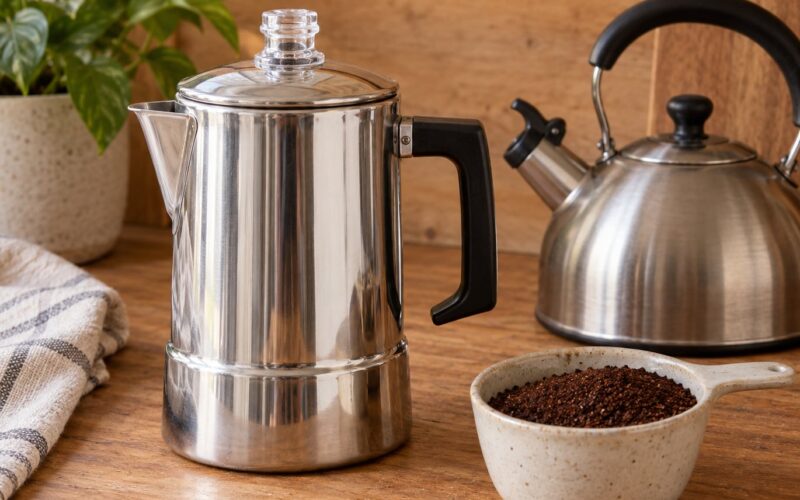
- Slow the brew down. For pour-over, a slower, more deliberate pour gives water more time on the grounds. For French press, wait for the crust to settle rather than plunging at four minutes. For a moka pot, take it off the heat the moment it starts to sputter.
- Check your water. Very hard water pushes coffee sour, and mineral-free distilled water tastes sour too because there’s nothing to help extraction. Filtered water sits in the middle and is the safe default.
- Use fresher beans and give them rest time. Coffee that roasted two or three weeks ago brews noticeably better than coffee that roasted yesterday, and a bag opened a month ago and left on a counter brews worse than either.
| What you observe | Next change |
|---|---|
| Sour and thin, brew finished fast | Grind finer |
| Sour, brew time normal, dose small | Increase dose |
| Sour on a cold morning only | Preheat the machine and purge |
| Sour, no change after three grind adjustments | Change the water |
| Sour in every method with the same bag | Try a different bag, then contact the roaster |
| Sour and bitter together | Fix grind distribution, clumps, tamping and flow |
If you need to drink the cup that’s already in front of you, a splash of hot water, some sugar or a pour of milk will all reduce the sourness. That’s a workaround, not a fix, but it’s a legitimate one for a single morning.
Is Sour Coffee a Sign of Bad Beans?
Usually not. Process-driven acidity, especially a bright fruit note in a light roast from a high-grown coffee, is one of the reasons people buy specialty coffee in the first place. What separates good sourness from bad sourness is what’s underneath it. Bright and juicy with real sweetness is a well-extracted, well-roasted coffee that you brewed a little short. Thin and flat with no sweetness behind it usually means the roast itself never developed.
Signs the bean is genuinely the problem include a fermented or boozy smell like overripe fruit, wine or alcohol; a musty, dusty or bag-like taste; a flat gray appearance with no aroma when you open the bag; and sourness that survives every method and every water you throw at it. r/Coffee threads about supermarket light-roast single origins tasting sour often turn out to be underdeveloped or badly processed beans rather than a brewing fault.
Very old beans tell you themselves too. Coffee left for years loses its aroma entirely, and what remains tastes dusty and cardboard-like, sometimes with a faint stale sourness that people mistake for under-extraction. It isn’t under-extracted. There is nothing left in it to extract. For storage and safety, follow your roaster’s guidance, keep beans sealed and away from heat and moisture, and use them within the window the roaster recommends.
Which Brewing Method Is Most Prone to Sour Coffee?
Every method can go sour, but the risk comes from different places in each one. Espresso and moka pots punish you hardest because pressure hides the early signs and the contact window is short. Filter methods are forgiving, and immersion methods are hardest to get wrong.
| Method | Typical sour cause | Watch for |
|---|---|---|
| Espresso | Grind too coarse, cold machine, too little dose, channeling | Shot under 25 seconds, thin blond stream, no body |
| Moka pot | Boiled water, too coarse a grind, taking it off heat too late or too early | Bitter, thin liquid; or harsh sour that clears on the stove |
| Pour-over (V60, Chemex) | Coarse grind, fast pour, small dose | Brew finishing in under two and a half minutes, thin cup |
| Drip machine | Coarse pre-ground coffee, cool carafe, too little coffee per pot | Weak, watery pot that tastes thin and sharp |
| French press | Plunging early, or grinding too fine and over-extracting | Empty, drying cup; or sour with no body |
| AeroPress | Pressing too fast, or a grind that is too coarse for the short steep | Quick, thin drawdown with no sweetness |
| Cold brew | Under-extracting from too short a steep or too coarse a grind | Flat, watery concentrate with a faint tang |
Cold brew is worth a second look, because people expect it to be smooth and it often tastes faintly sour. Cold water and coarse grounds extract less, and the ratio people use is often too lean. A longer steep with a finer grind is usually all it takes.
Moka pot deserves its own note. r/mokapot threads keep circling the same fix: water that has been boiled twice, or a very hard or very soft tap supply, produces persistent sourness that no grind change touches. Start with fresh, filtered water that hasn’t been boiled, fill the reservoir only to the valve, and take the pot off the heat as soon as the stream turns pale.
How Storage and Freshness Affect Sour Taste
Coffee is a dried seed with a lot of surface area, which means it is very good at absorbing everything around it. Oxygen is the main enemy, and it flattens the aromatics first, so a stale bag tastes dull, papery and hollow rather than obviously spoiled. People often report that stale coffee tastes sour, because the sweetness has faded and what’s left is the thin edge of the acidity with nothing under it. That’s staleness, not underextraction, and no grind change will bring the aromatics back.
Moisture does the same thing faster. A bag opened in a humid kitchen and kept that way for a month will smell musty, and that musty quality is unmistakable once you know it. Heat is the third factor, and sunlight is the fourth. Both accelerate oxidation faster than anything else you do wrong.
Store beans in an airtight, opaque container at room temperature, away from the stove and the window. If you buy in bulk, freeze in small portions and take out only what you’ll use in a week or two. Avoid the refrigerator, because the temperature swing and the moisture pull the aroma out faster than the cold helps. Bags with one-way valves are useful for the days after roasting, when the coffee is still releasing gas, but they don’t protect against long-term exposure once the bag is open.
The opposite problem is very fresh coffee. There’s a window after roasting where beans degas, and a cup pulled during the first few days can taste sharp and gassy because trapped carbon dioxide is fighting the water. Resting espresso 7 to 14 days and filter coffee 3 to 7 days usually clears it. Very fresh coffee isn’t automatically the best coffee, despite what the bag says.
Why Coffee Tastes Sour and What It Means: A Quick Diagnosis
Run through this in order. It takes two cups of coffee, not two hours.
| Step | Question | If yes |
|---|---|---|
| 1 | Is the cup sour but also thin and watery? | Under-extraction. Go to grind. |
| 2 | Is the sourness bright and juicy, with sweetness behind it? | Good coffee, slightly short brew. Extract a little more. |
| 3 | Is there a drying, astringent finish? | Over-extraction. Grind coarser or brew shorter. |
| 4 | Is it sour and bitter at the same time? | Grinder or channeling problem, not a grind size. |
| 5 | Does it smell fermented, boozy or musty? | Bean problem. Change the bag. |
| 6 | Is it sour in every method with the same bag? | Roast, bean or water. Try a new bag, then new water. |
| 7 | Is it dull and papery with no aroma? | Stale. Fix storage and buy fresh. |
On the sour-plus-bitter case, which several espresso threads describe and most guides skip: when a cup is both at once, more than one thing is happening, and grinding finer will not fix it. A blade grinder produces a mix of boulders and dust, so some areas are barely touched while others over-extract. Channels in the puck do the same thing, letting part of the shot run fast and sour while the rest runs slow and bitter. Fix distribution, break up clumps, dose consistently and tamp level.
Frequently Asked Questions
Is it normal for my coffee to taste sour?
Yes, to a degree. Coffee is an acidic fruit, and a bright sourness in a well-extracted light roast is a sign of quality, not a fault. Sourness becomes a problem when it arrives with thinness and no sweetness behind it, which points to under-extraction or a roast that never developed. Judge the cup as a whole, not one note in isolation.
How do I get rid of sourness in coffee?
Grind finer first, in small steps, and taste after each change. If that does not do it, increase your dose or tighten the ratio, then check water temperature and preheat your brewer. After that, look at water quality and bean freshness. Change one variable per brew, or you will not know which adjustment actually fixed the cup.
Why is light roast coffee sour?
Light roasts stop early in the roast process, so more of the bean’s original fruit acids survive into the cup. That is the point of the roast level, and it is why light roasters expect a livelier, fruitier cup than dark roasters. Light roasts also need more extraction energy, meaning finer grinds, more coffee and hotter water than a dark roast from the same origin.
Is acidic coffee bad for you?
Coffee’s pH typically falls around 5.0 to 5.9, which is much less acidic than most wines at 3 to 4. That number describes the drink, not your stomach, and a sour cup is not by itself a health concern. If coffee triggers reflux or stomach discomfort, talk to your doctor about amounts, timing and meal pairing rather than changing beans.
Can you drink 20 year old coffee beans?
You can, but nobody enjoys it. Coffee left that long has lost nearly all its aroma and flavor compounds, leaving a dusty, cardboard taste that some people read as sour. It is not a safety question in the way spoiled food is, because the bean is dry, but follow your roaster’s storage guidance, keep beans sealed, cool and dark, and buy fresh instead.
Why does my coffee taste sour and bitter at the same time?
That combination points to uneven extraction rather than a grind size setting. A blade grinder or a clogged burr set creates boulders and dust at once, so part of the coffee is barely extracted and sour while the rest over-extracts and turns bitter. The same happens when a shot channels. Fix grinder consistency, break up clumps, distribute the grounds and tamp level.
Conclusion
Start with grind size. It is the single variable that changes the most about the cup, and a finer grind is the right move most of the time. If that doesn’t land it, adjust dose and ratio, then check that your water is hot enough and that your brewer is warmed up, then look at your beans, your water and how you store them.
That is the working answer to why coffee tastes sour and what it means in almost every case: a balance problem you can correct, not a ruined bag. Work down that list before you blame the beans, because the beans are rarely the thing that changed.
Sourness is the fastest feedback signal in coffee brewing. Treated as a diagnosis rather than a verdict, one unpleasant cup tells you exactly where to look next.