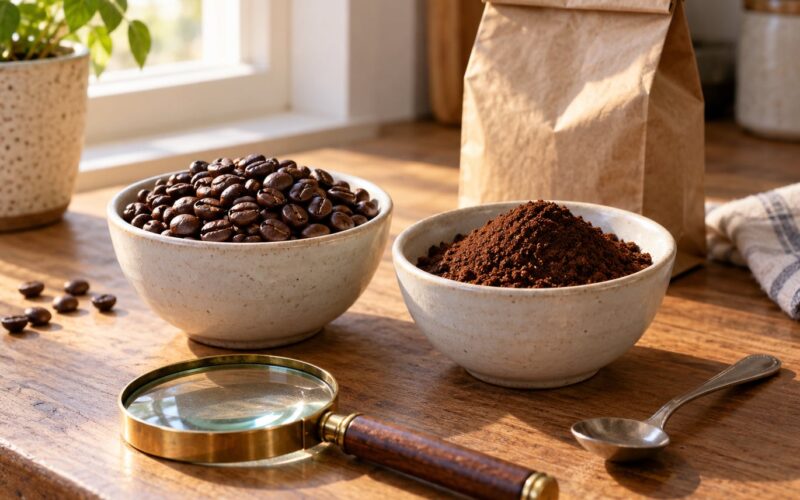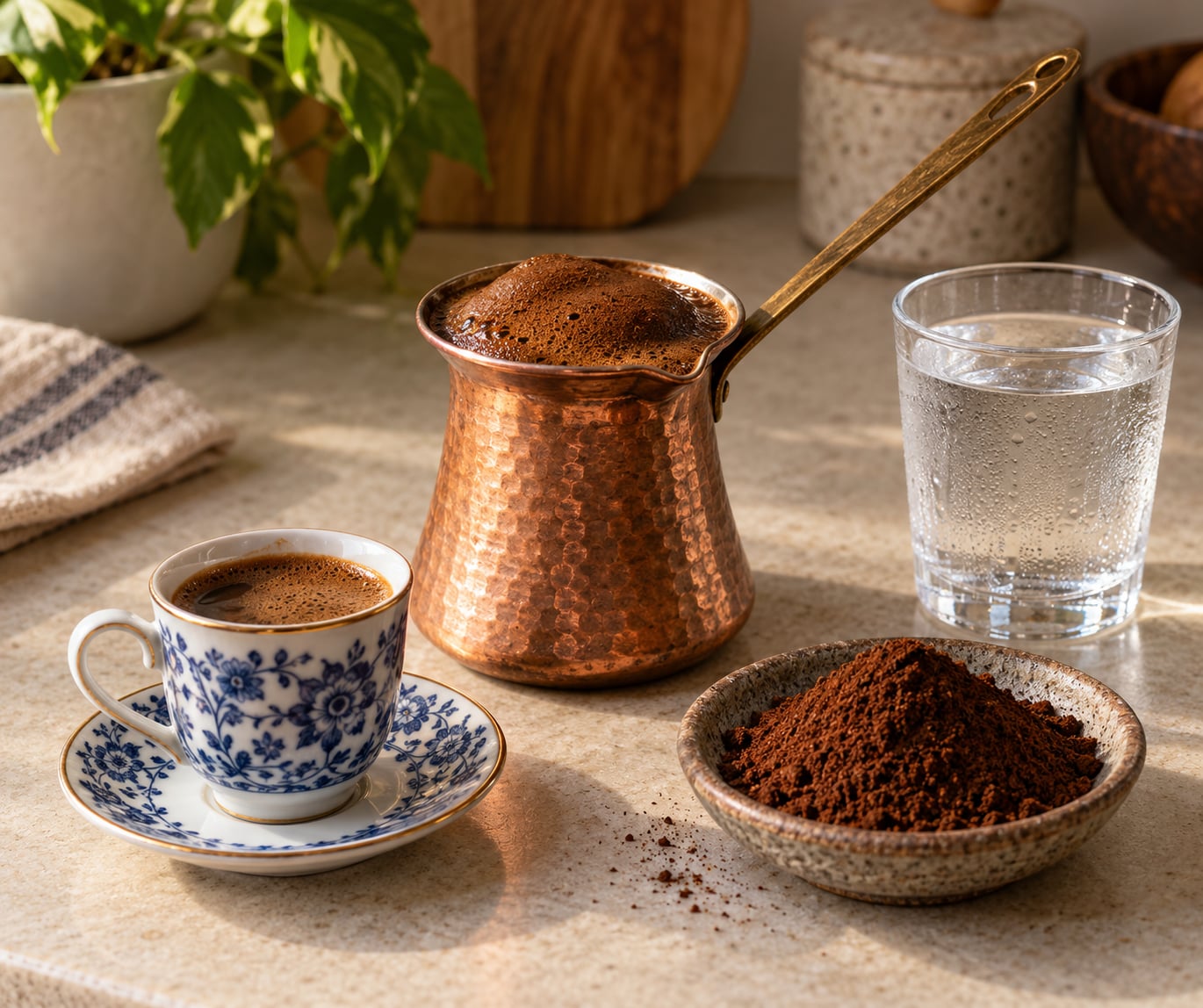
Turkish coffee is very finely ground coffee, water and optional sugar heated together, unfiltered, in a small pot called a cezve (also called an ibrik), until the brew rises just to the top and a thick foam forms. If you know how to make Turkish coffee at home, you only need a stovetop, a small pot and about ten minutes of patience, because the whole method rests on three things: a grind finer than espresso, a 10:1 coffee-to-water ratio by weight, and pulling the pot off the heat as the foam climbs.
Most home attempts go wrong for one of three reasons: the coffee is not ground finely enough, the pot gets a genuine rolling boil, or nobody watches it for the thirty seconds when it decides to climb out. Get those three right and the cup is small, thick, startlingly strong and topped with the foam everyone is looking for.
Table of Contents
- What You Need to Make Turkish Coffee at Home
- Coffee-to-water ratio: how much per cup
- Turkish sweetness levels: sade, orta and sekerli
- How to Make Turkish Coffee at Home: Step-by-Step Method
- How to heat the water and coffee
- How to tell when Turkish coffee is ready
- How to rest, pour and serve the brew
- Common Mistakes and How to Fix Them
- Frequently Asked Questions
- What grind should I use for Turkish coffee?
- Can I make Turkish coffee without a cezve?
- How much coffee and water should I use per cup?
- Should Turkish coffee be boiled or heated until it rises?
- Can I add milk or sugar to Turkish coffee?
- Why is my Turkish coffee bitter or foamy?
- Conclusion
What You Need to Make Turkish Coffee at Home
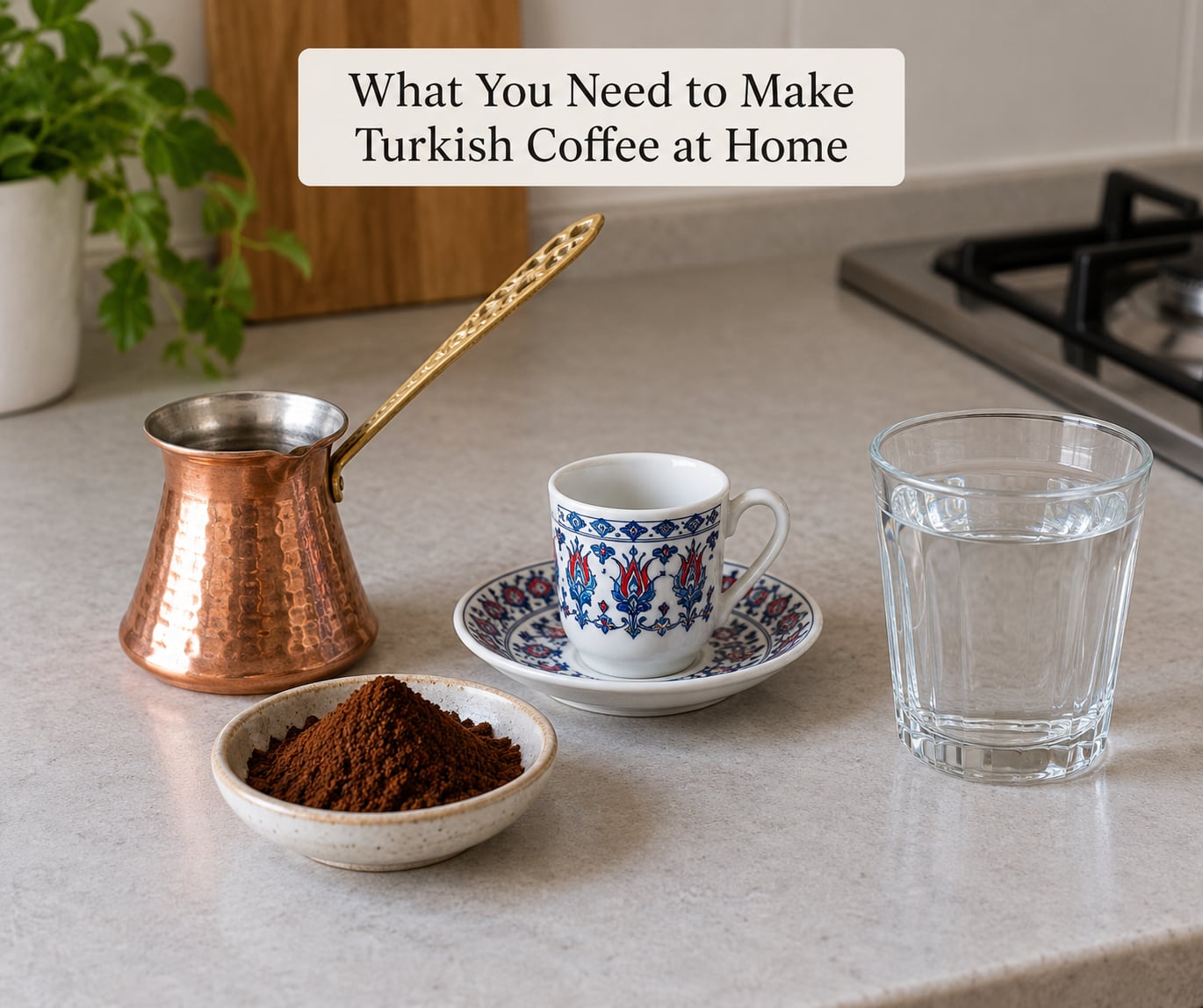
Four items cover the whole method, and none of them is expensive. A cezve (or ibrik) holds one to three cups and gives you the small, narrow surface that builds foam best, but a small saucepan works fine if that is what you have.
- A cezve or ibrik, ideally copper or stainless steel, one to three cup capacity. A small saucepan is a perfectly good substitute.
- Turkish grind coffee, powder-fine and finer than espresso. If your burr grinder cannot get there, buy a bag labelled Turkish grind rather than grinding for espresso and hoping.
- Cold filtered water, measured in your demitasse cup so the coffee and water come out equal by volume.
- Sugar, optional. Most published recipes call for two teaspoons a cup, which is far sweeter than most home drinkers actually want. Start at half a teaspoon.
The vessel matters less than people think. A cezve is tall and narrow, so the water rises fast and the foam has somewhere to build, while a wide saucepan heats more slowly and gives you a wider surface. The coffee in it will taste the same. What people notice is the foam, and the cezve builds more of it.
Coffee-to-water ratio: how much per cup
The standard ratio is 10 grams of coffee to 100 ml of water by weight, and a Turkish cup (fincan) holds about 60 ml. Weighing beats spooning every time, because ground coffee packs differently from scoop to scoop.
| Servings | Ground coffee | Cold water | Pot size |
|---|---|---|---|
| 1 cup | 6 g | 60 ml | 1 to 2 cup cezve |
| 2 cups | 12 g | 120 ml | 2 to 3 cup cezve |
| 4 cups | 24 g | 240 ml | 4 cup cezve |
| 5 cups | 30 g | 300 ml | 5 cup cezve |
The traditional serving is four or five small cups filled one at a time, which is why a four-cup cezve exists at all. Guests get a cup each, a glass of water alongside, and the pot stays on the table for the second round.
Turkish sweetness levels: sade, orta and sekerli
Turks order coffee by how sweet it is, and the two words you will hear most are sade (plain) and sekerli (sweet). Orta sits in the middle.
| Order | Meaning | Sugar per cup | Sugar for a 4 cup pot |
|---|---|---|---|
| Sade | No sugar at all | 0 tsp | 0 |
| Orta | Medium, the most common home order | about 1 tsp | 4 tsp |
| Sekerli | Sweet | 2 tsp | 8 tsp |
Coffee shops in Turkey will also ask whether you want it with or without milk, though traditional Turkish coffee is black and milk is not part of the method.
How to Make Turkish Coffee at Home: Step-by-Step Method
Read the whole thing once, then make it with your eyes on the pot the whole time. The pot goes on and off the heat three times, and each rise takes roughly fifteen seconds of watching.
- Measure the water. Fill your demitasse cup with cold filtered water and pour that same amount into the cezve.
- Add the coffee. Tip in 6 g of ground coffee per 60 ml of water, plus your sugar if you want it sweet. Do not stir yet.
- Heat slowly. Put the pot on medium-low heat. Do not touch it.
- Watch for the first rise. As the water warms, dark foam appears at the surface. When it rises toward the rim, pull the pot off the heat.
- Let it settle. Wait about 15 to 20 seconds, until the foam drops back down into the liquid.
- Return it for the second rise. Put the pot back on the heat. When the foam climbs again, pull it off.
- Repeat once more for a third rise, then let the pot sit undisturbed for a minute so the grounds settle.
- Serve. Spoon foam into each cup first, then pour the coffee around it, filling each cup about three-quarters full.
How to heat the water and coffee
Medium-low heat is the whole trick. On high heat the water hits a rolling boil before the sugar and coffee have dissolved, which scorches the grounds and sends the pot over the burner. Nothing else in this method matters as much as that dial.
Add the coffee to the cold water rather than the other way around. It settles to the bottom and stays there, undisturbed, until the convection current from the rising water lifts the fine particles into suspension. That suspension is what makes the drink thick.
How to tell when Turkish coffee is ready
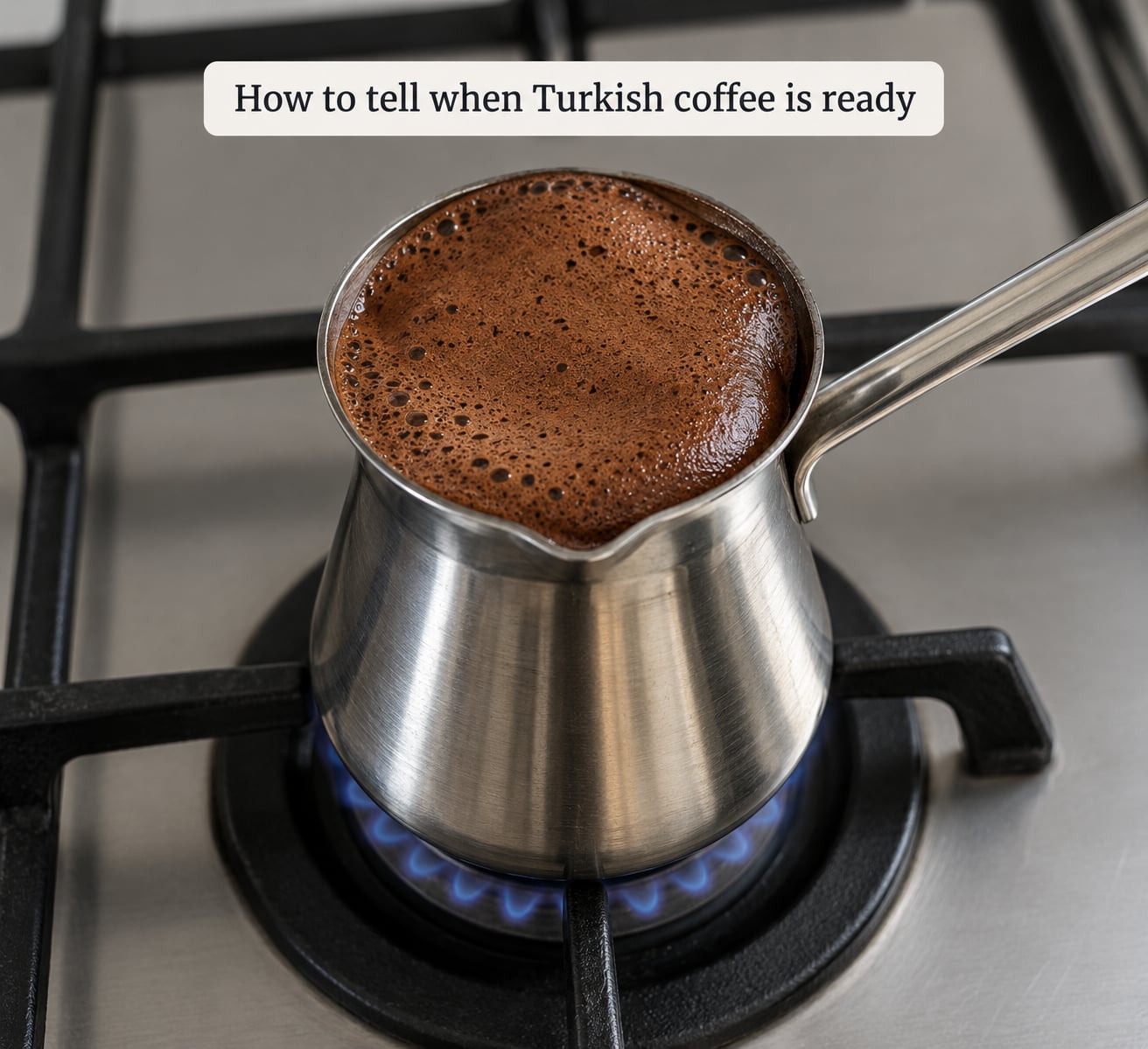
It is ready when the dark foam rises to the top of the liquid and climbs, not when the water boils hard. You should never see bubbles breaking the surface in a rolling churn. Three rises and settles is the target, and the foam doubles as your thermometer: while it is up, the pot is hotter than you want.
One thing worth saying plainly, because it confuses almost everyone new to this: the foam is not espresso crema. On home-barista.com, experienced drinkers point out that the Turkish foam is simply fine coffee particulate held in bubbles by the agitation, and that it is not supposed to look like the crema on an espresso. Grind coarser and the foam disappears entirely, but then it is not Turkish coffee. A slightly dull, close-grained foam is the correct result.
How to rest, pour and serve the brew
Let the pot sit for about a minute after the third rise. The grounds drop to the bottom and stay there, which is how you know it worked. Pour the foam into each cup first, then fill around it, so every guest gets an equal share of foam and an equal share of sediment.
Leave the last quarter inch in the pot. That thick layer of grounds at the base is the reward for patience, and it is often the best part of the cup.
Serve a glass of cold water with each cup. It resets the palate between sips, which matters more here than with filter coffee because the brew is unfiltered and full-bodied. Turkish delight or lokum is the traditional sweet alongside it.
For a spiced version, drop two or three lightly crushed cardamom pods in with the coffee at step two. Mastic and a small pinch of saffron both work in a single-cup pot, though a little goes a long way in a four-cup batch.
On strength: a 60 ml cup of Turkish coffee has roughly the same caffeine as a small espresso, because the serving is small and the grounds never leave the pot. Per ounce it is much less intense than espresso, and nothing is strained out.
Common Mistakes and How to Fix Them
Nearly every bad cup traces back to one of five things. Find the symptom below and adjust that one variable before you change anything else.
It boiled over the pot. The heat was too high and you were not watching. Drop to medium-low and keep the pot in your line of sight for the whole rise, because the pot decides to climb about two seconds after it looks calm.
It tastes bitter or scorched. You let it reach a true boil, or you used a dark roast. Pull it from the heat as the foam rises instead of waiting for bubbles, and move to a medium roast next time. Dark roast has already been taken to the edge of burnt, and boiling re-roasts it in the pot.
It tastes weak or thin. Either the grounds were too coarse to suspend, or you skimmed the foam off and threw it away. Check your grind first; if the coffee is properly fine and the foam is intact, the cup is not weak.
It is grainy or gritty. A coarse grind cannot dissolve or suspend, so you are drinking powder. Grind finer, or buy coffee already ground for Turkish. Stirring the settled grounds back up while pouring makes it worse, so pour gently down the side of the cup.
There is no foam at all. Almost always the grind. Too coarse, or you stirred during brewing. Do not stir until the pot is off the heat for the final rest, and check that your grind is genuinely powder-fine rather than just espresso-fine.
The foam is thin and disappears. A wide saucepan and a short heating time are usually to blame. Let each rise run its full course and give the foam a minute to settle before you pour. A narrow cezve builds noticeably more of it.
A few habits that fix most of the above before they start: measure by weight instead of scoop, start at half a teaspoon of sugar rather than two, and let the coffee sit for a minute before the first pour so the grounds have settled somewhere you can leave behind.
Frequently Asked Questions
What grind should I use for Turkish coffee?
Use a Turkish grind, which is finer than espresso and closer to powder than to sand. If you cannot see individual particles when the grounds sit in your palm, they are about right. Most home burr grinders bottom out well before Turkish fineness, so a bag labelled Turkish grind is usually the more reliable option. Grind quality is the single biggest factor in the foam.
Can I make Turkish coffee without a cezve?
Yes. A small saucepan gives you a very similar cup, and any small pot will do. The cezve is narrower, so the water rises faster and the foam has a wall to climb, but the flavour comes from the grind and the heat control, not the metal. Keep medium-low heat, watch the pot closely, and pull it as the foam rises.
How much coffee and water should I use per cup?
Use about 6 g of ground coffee for every 60 ml of cold water, which is the standard 10:1 ratio by weight. Measure the water in your demitasse cup and pour that same cupful into the pot, then match the coffee to it by weight. Doubling the recipe works the same way: 12 g and 120 ml for two cups, 24 g and 240 ml for four.
Should Turkish coffee be boiled or heated until it rises?
Heat it until it rises, never to a rolling boil. Bring it to the edge three times, pulling the pot off the heat as the dark foam climbs and letting it settle for 15 to 20 seconds each time. A true boil scorches the grounds, drives bitterness into the cup and is the most common reason a home cup tastes burnt.
Can I add milk or sugar to Turkish coffee?
Sugar yes, milk no. Traditional Turkish coffee is served black, and the sweetness is built into the brew before it is heated. Order by level instead: sade for none, orta for about a teaspoon a cup, sekerli for two. If you want milk, you are making a different drink, and it is better made as a separate pot of hot milk served alongside.
Why is my Turkish coffee bitter or foamy?
Bitter and foamy are usually two separate problems. Bitterness means the brew hit a real boil or you used a dark roast; drop the heat and pull the pot as the foam rises. Heavy foam means your heat is fine but the grind is too coarse, or you stirred during brewing. Grind finer and stop stirring until the pot is off the heat for the final rest.
Conclusion
How to make Turkish coffee at home comes down to four things you can fix on your first attempt: grind finer than espresso, measure 6 g of coffee to 60 ml of water, keep the heat on medium-low, and pull the pot off as the dark foam rises rather than when it boils. Do those and you will get a small, thick, sediment-heavy cup with a proper foam top.
Start at half a teaspoon of sugar, pour the foam into the cups first, and let the grounds settle in the pot for a minute before you serve. Once you have one good cup, the method stops being difficult.