To make instant coffee taste good, dissolve the granules in a small splash of cool water first, then top up with water at about 195°F, and get the dose right at 1 to 2 teaspoons for an 8-ounce mug. That single splash is where most cups go wrong. Granules dumped straight into a full mug of hot water clump, settle as grit at the bottom, and never fully dissolve, so you end up with a thin cup that reads as bitter because the flavor never came out evenly.
The good news is that the whole fix is free and takes about two minutes. No machine, no grinder, nothing to buy. Here is the short version before the full method:
- Bloom the coffee: stir 2 teaspoons of granules into 1 to 2 tablespoons of cool water until it forms a smooth paste. This is the step that removes grit and uneven flavor.
- Fix the ratio: 1 to 2 teaspoons per 8 ounces of water. More coffee does not mean better coffee, it means more bitterness.
- Cool the water: aim for 175°F to 195°F. Water straight off a rolling boil tastes harsh on instant granules.
- Use filtered or spring water: flat-tasting or faintly metallic tap water makes a weak cup taste weaker.
- Add salt: a pinch, no more than that, suppresses the sense of bitterness without making the cup taste salty.
- Layer in the right order: sugar and milk go in before or during the pour, not dumped into a finished hot cup.
Table of Contents
- What You Need
- Step-by-Step: How to Make Instant Coffee Taste Good
- 1. Choose a Fresh, Good-Quality Instant Coffee
- 2. Use the Right Coffee-to-Water Ratio
- 3. Heat the Water Without Making It Too Hot
- 4. Dissolve the Granules Completely
- 5. Add Flavor With Restraint
- 6. Taste and Adjust Before the Next Cup
- Why Instant Coffee Tastes Bitter Before You Fix It
- Instant Coffee vs Ground Coffee: What Technique Can and Cannot Fix
- How to Take the Bitterness Out of Instant Coffee
- What the 15-15-15 Coffee Rule Actually Is
- The Pinch of Salt Trick to Make Instant Coffee Taste Good
- Why the Foam on Top Tastes Bitter
- What to Add to Instant Coffee to Make It Taste Better
- How to Make Instant Coffee Taste Good With Three Simple Blends
- Mocha With Cocoa and Cayenne
- Cinnamon and Cocoa Blend
- Salted Caramel Latte From a Jar
- Iced Instant Coffee That Does Not Go Watery
- Common Mistakes
- Frequently Asked Questions
- How much instant coffee should I use for one cup?
- What is the best water temperature for instant coffee?
- Can I make instant coffee taste less bitter?
- How do I make instant coffee smooth instead of clumpy?
- Can I use milk instead of water to make instant coffee?
- How should I store instant coffee so it tastes fresh?
- Put It All Together
What You Need
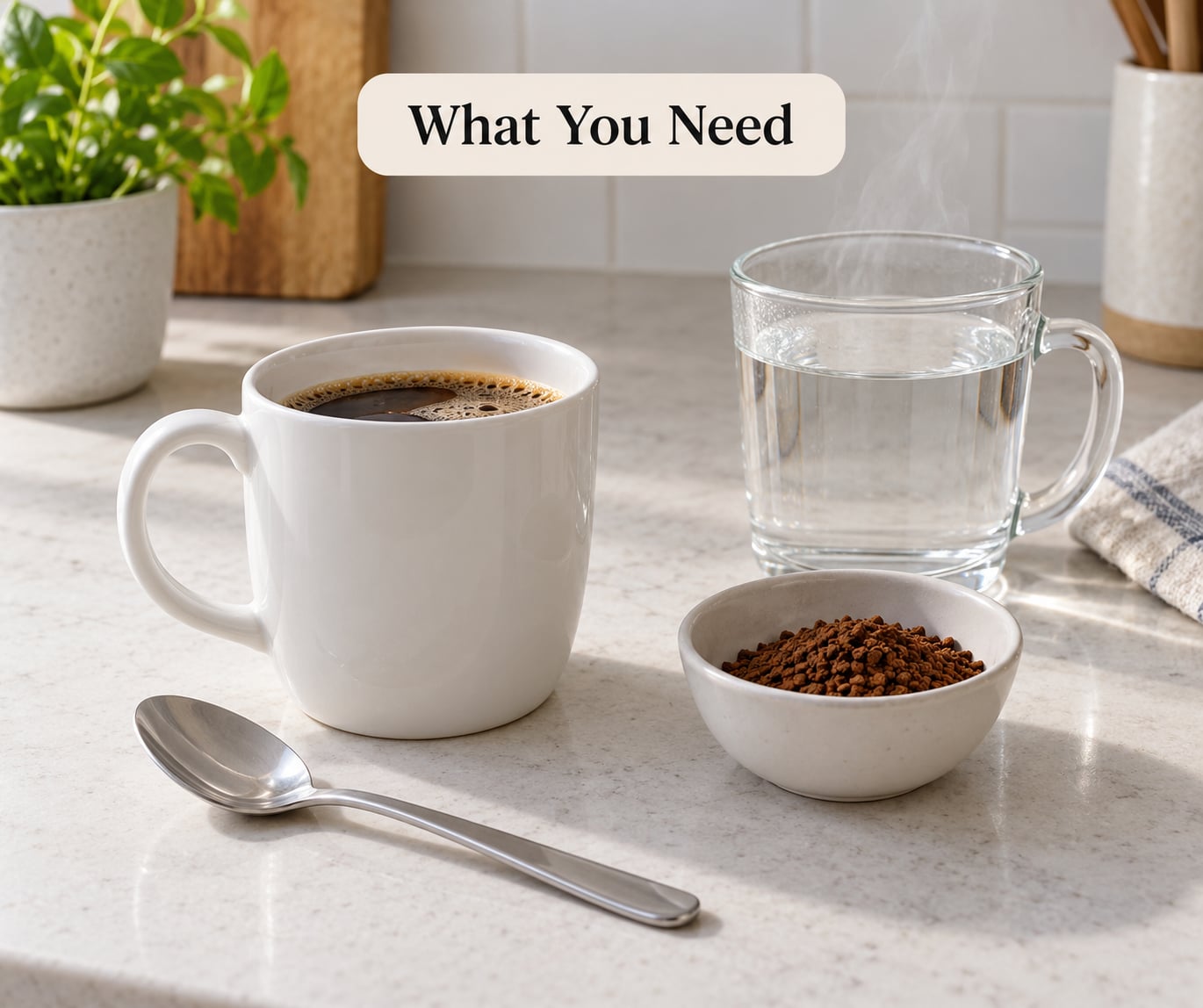
You need a mug, a teaspoon, instant coffee granules, and hot water. That is the whole shopping list, and none of it is specialist equipment. A variable-temperature kettle is genuinely useful, but it is an optional upgrade rather than a requirement, and the cooling table further down shows you how to get the same result with a normal kettle or a microwave.
The optional items are where most of the flavor work happens:
- Milk or cream for body and a rounder mouthfeel. Whole milk performs best because the fat carries flavor compounds; oat and other plant milks work but taste thinner.
- A sweetener you actually like the taste of, such as brown sugar, maple syrup, honey, or condensed milk.
- Salt for bitterness, plus spices such as cinnamon, cardamom, or nutmeg.
- Vanilla extract or cocoa powder for turning a plain cup into something that resembles a mocha.
If you only change one thing from that list, change your water. Good filtered or spring water is the cheapest upgrade in the kitchen and it does more for the cup than any single additive.
Step-by-Step: How to Make Instant Coffee Taste Good
1. Choose a Fresh, Good-Quality Instant Coffee
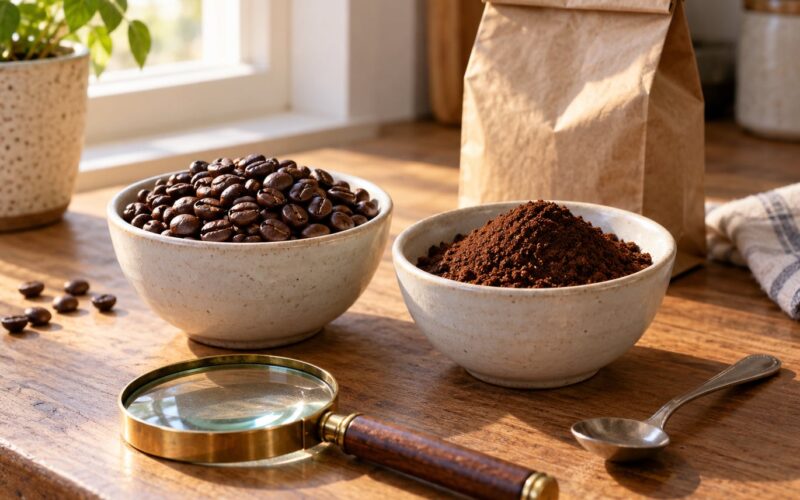
Buy a jar you will finish within a few weeks, not one that will sit on a shelf until next year. Instant coffee goes stale faster than ground because every granule has a large surface area already exposed to air, and stale granules taste flat and dusty no matter how well you brew them.
Check the label for two things. The first is the process: freeze-dried granules tend to taste cleaner and more coffee-like, while spray-dried ones dissolve faster but carry more of a roasted, slightly burnt note. The second is added sugar, which is common in flavored and three-in-one blends and will make your own sweetener unnecessary.
Arabica and robusta both appear in instant coffee. Arabica is the milder, fruitier option and is the better choice if you dislike bitterness, while robusta is the stronger, higher-caffeine, more bitter bean and is usually the one hiding in a robust blend.
2. Use the Right Coffee-to-Water Ratio
Start with 1 to 2 teaspoons per 8 ounces of water, and use the lower end unless you like a strong cup. Coffee geeks who weigh everything usually land somewhere in that same range, and the reason is worth repeating: instant coffee is already a concentrated extraction, so an extra teaspoon adds bitterness far faster than it adds flavor.
A weak cup tastes thin and slightly sour, like someone watered down the last dregs of the jar. An over-strong cup tastes harsh and drying, and no amount of milk quite rescues it. If your cup is weak, add coffee before you add anything else. If it is too strong, dilute it with more hot water rather than with milk, since milk only masks what is already there.
3. Heat the Water Without Making It Too Hot
Target 175°F to 195°F, which is 80°C to 90°C. Boiling water is 212°F, and pouring it straight onto granules over-extracts them, pulling harsh compounds into the cup and driving off the aromatics that give coffee its character. The result tastes burnt and flat at the same time, which is a strange combination that is easy to recognize once you have tasted it.
Water that is too cool is the opposite problem. Below about 165°F the granules dissolve slowly and unevenly, so you get a weak, sour-tasting cup with sediment at the bottom.
No variable-temperature kettle? Use this instead. Boil the water, then wait before you pour.
| Water temperature you want | Wait after boiling |
|---|---|
| 195°F / 90°C | about 5 minutes |
| 190°F / 88°C | about 6 minutes |
| 185°F / 85°C | about 7 to 8 minutes |
| 175°F / 80°C | about 10 to 12 minutes |
Cooling times shift with the amount of water and the temperature of the room, so treat them as a guide and aim a little high on the wait. When in doubt, wait too long rather than too little.
4. Dissolve the Granules Completely
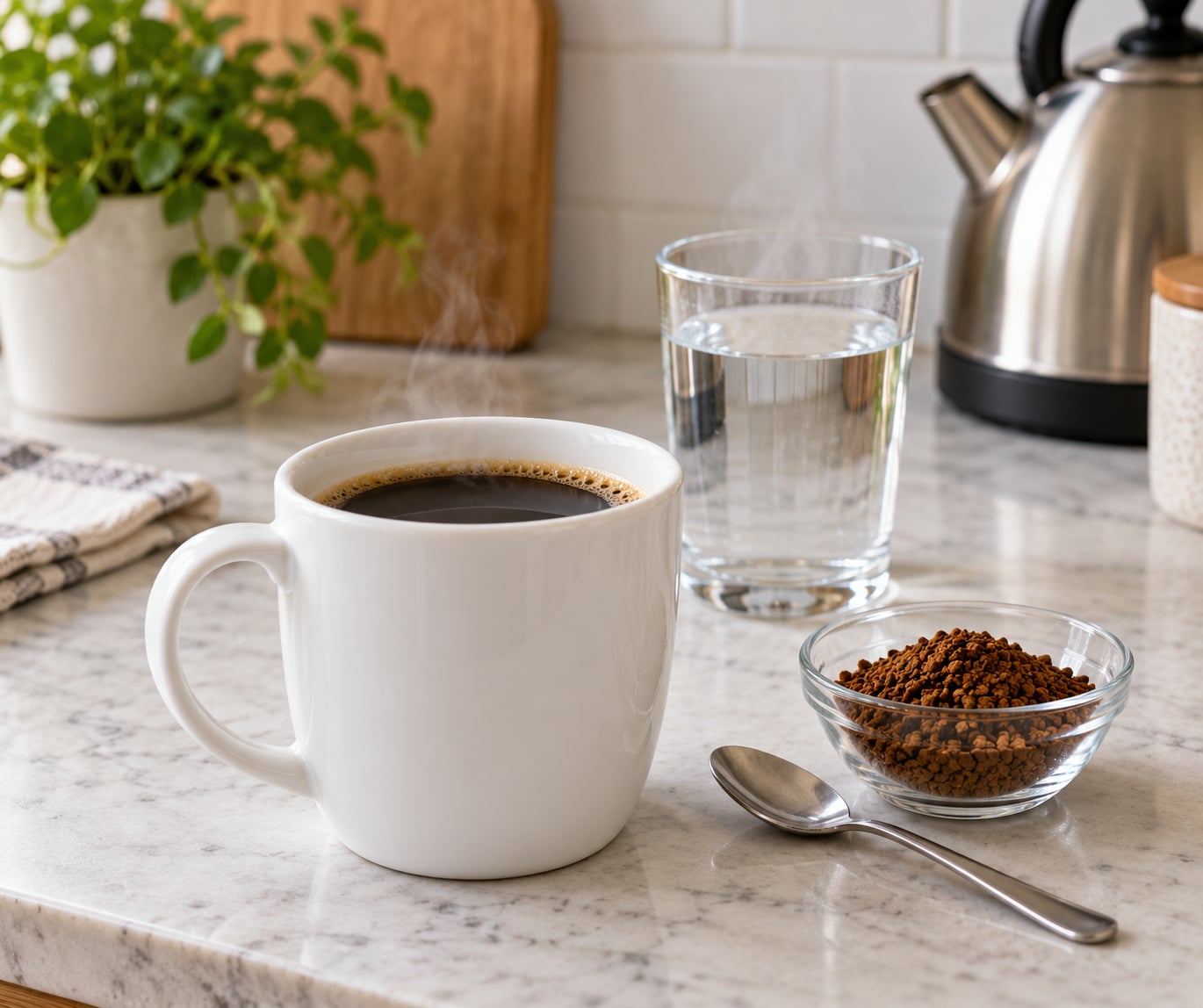
This is the step that decides whether your cup is smooth or gritty. Put 2 teaspoons of granules in your mug, add 1 to 2 tablespoons of cool or room-temperature water, and stir until it forms a thick, smooth paste with no dry pockets left in it. Give it 15 to 30 seconds. Then pour the hot water in slowly while stirring, or add a splash at a time until the paste loosens and the rest goes in.
The reason cool water works better here is simple. Granules dissolve fastest when there is little liquid and time to move, so a small cold volume turns them into an even suspension before the mug fills up. Pour boiling water over loose granules instead, and they clump on contact and drop straight to the bottom.
If you use sugar, stir it into the paste now while it is still cool. Sugar stirred into an already-hot cup will not dissolve properly and you get a sweet drink with a gritty layer underneath.
5. Add Flavor With Restraint
Add one thing at a time and taste before adding the second. Milk and cream give body, a sweetener softens the finish, a pinch of salt cuts perceived bitterness, and spices add character.
Restraint matters because extras hide problems instead of fixing them. A splash of whole milk makes a good cup rounder, but the same splash over a badly brewed one just gives you a weak cup with a creamy top. Fix the brewing first, then season it.
One more layer worth knowing: if you want a latte rather than coffee with milk, dissolve the granules in about 2 to 3 ounces of hot water first, then add the milk. Milk poured straight onto dry granules produces clumps, and a kettle of steamed milk is not necessary to get the same result.
6. Taste and Adjust Before the Next Cup
Use the cup itself as your calibration tool, and change one variable at a time so you know what worked:
- Weak and thin: add a half teaspoon of granules, or use hotter water.
- Bitter and drying: add more hot water to dilute, and drop the temperature a few degrees next time.
- Sour or harsh-tasting in a thin way: the water was too cool, or it did not dissolve. Stir longer and go hotter.
- Too sweet: reduce the sweetener next time rather than removing it entirely, since some sweetness rounds out the roast.
- Gritty at the bottom: the slurry was too thin or too rushed. Give the paste a full 30 seconds.
For storage, keep the jar airtight and away from the stove, the counter, and any direct light. Press the lid down firmly each time you use it, because oxygen is what flattens an opened jar, and keep a small spoon in the jar so nobody scoops with a wet teaspoon and starts the decline early.
Why Instant Coffee Tastes Bitter Before You Fix It
Instant coffee is not bitter by design, and it is not the roast’s fault alone. Five things drive almost every disappointing cup, and it helps to know which one you are dealing with before you start adjusting.
Heat. Granules scalded by near-boiling water over-extract, which pulls bitter compounds forward and burns off the lighter aromatics. That is why a scalded cup tastes burnt and thin simultaneously.
Dose. Instant coffee is already a concentrated extraction, so an extra teaspoon adds bitterness several steps before it adds flavor. Most jars are dosed for an 8-ounce mug, not a 12-ounce one.
Dissolution failure. Undissolved granules do not sit there harmlessly. The first sip tastes thin, and the last sip of the cup tastes harsh, because the sediment has settled into the bottom.
Water. Very hard water dulls aroma, and water with a metallic or flat note drags the whole cup down. This is why the same jar tastes better at one address than another.
Staleness. An opened jar loses aroma compounds steadily. Once they are gone, no temperature or ratio will bring them back, and the cup reads as dull cardboard no matter what you add.
Instant Coffee vs Ground Coffee: What Technique Can and Cannot Fix
Better technique closes most of the gap, but not all of it. Some differences come from the coffee itself, and no amount of stirring will change them.
| Instant | Ground coffee | |
|---|---|---|
| Prep time | Under a minute | 3 to 5 minutes plus equipment |
| Equipment | Mug, spoon, kettle | Grinder and brewer or press |
| Aroma ceiling | Lower, coffee has already been brewed once | Higher, volatile compounds survive brewing |
| Shelf life unopened | Months | Weeks after opening |
| Caffeine per 8 oz | About 60 to 90 mg | About 95 to 130 mg |
| Bitterness control | Mostly dose and temperature | Grind size and pour rate matter too |
The aroma line is the honest limit. Freeze-drying and spray-drying both leave less of the volatile top notes than a fresh brew, and no technique puts them back. What technique does fix is the grit, the uneven extraction, and the scalding, which together cause most of the complaints people have with instant.
Two flavor claims get repeated without much basis, so it is worth clearing them up. Instant is not meaningfully higher in caffeine than brewed coffee; the 60 to 90 mg figure above sits just below drip. And the acrylamide worry applies mainly to dark roast at high heat, not to the cup you make with a teaspoon of granules in hot water.
How to Take the Bitterness Out of Instant Coffee
Bitterness is the complaint almost everyone has with instant coffee, and it comes from four levers: temperature, dose, salt, and fat. You can pull any one of them and get a noticeable improvement. Pull two and the cup changes character completely.
- Drop the temperature. Water just off the boil, 175°F to 195°F, is the single biggest fix. Scalding water scorches the granules and strips the aromatics that would have balanced the bitterness.
- Cut the dose, then extend. If 2 teaspoons tastes harsh in 8 ounces, try 1.5 teaspoons in 10 ounces. A gentler cup is almost always better than a stronger one.
- Add a small pinch of salt. This is the cheapest and least obvious fix on the list.
- Add fat. Whole milk, cream, or condensed milk coats the tongue and softens the edges of bitterness in a way water cannot.
What the 15-15-15 Coffee Rule Actually Is
The 15-15-15 rule circulates as 15 grams of coffee, 15 grams of sugar, and 15 ounces of water, sometimes served as 15 percent each. There is no brewing authority behind it and it does not reference your granule dose or your water temperature, which is why following it often leaves people with a sweet, thin cup. The instinct underneath it is reasonable, though. Sugar rounds out roast bitterness, and a slightly fuller ratio does make a cup feel more substantial. Borrow those parts, skip the fixed numbers, and use the ratio in step 2 instead.
The Pinch of Salt Trick to Make Instant Coffee Taste Good
Salt does not remove bitterness, it lowers how much of it your tongue registers. That distinction is why it works so well: a single pinch of fine salt makes a bitter cup taste rounder and sweeter without turning it into a salty drink. Use roughly one small pinch per 8 ounces, stir it in with the granules while you are making the paste, and stop there. Anyone who has gone overboard on the salt has learned the ceiling the hard way.
Why the Foam on Top Tastes Bitter
The foam that rises on a well-made cup is not a defect, but the trapped air in it concentrates the surface flavors, which reads as stronger and harsher than the liquid beneath. If the foam is unpleasant to you, stir the cup from the bottom just before drinking so it settles, and check your dose and water temperature, since a properly brewed cup should taste rounder at the top than the bottom.
What to Add to Instant Coffee to Make It Taste Better
Here is the practical version, with the amount that works in an 8-ounce mug. Add one or two, not all of them at once.
| Addition | What it fixes | How much |
|---|---|---|
| Pinch of salt | Perceived bitterness, harsh finish | One small pinch, about 1/16 teaspoon |
| Whole milk | Thin mouthfeel, lack of body | 3 to 4 ounces |
| Half-and-half or cream | Bitterness and thinness at once | 2 ounces |
| Oat milk | Acceptable dairy-free body | 3 to 4 ounces |
| Condensed milk | Bitterness and sweetness together | 1 to 2 tablespoons |
| Brown sugar or maple syrup | Harsh finish, flat aftertaste | 1 to 2 teaspoons, stirred into the paste |
| Honey | Bitterness, floral depth | 1 teaspoon, stirred in early |
| Cinnamon | Flatness, missing aroma | 1/4 teaspoon on top |
| Cardamom or nutmeg | Roast sharpness, sweetness balance | A pinch, ground |
| Vanilla extract | Artificial or hollow sweetness | 1/4 teaspoon |
| Cocoa powder | Weak flavor profile | 1 teaspoon whisked into the paste |
| Coffee creamer | Convenience and some body | Per label, but it is often mostly sugar |
Two notes on that table. Stir the sweetener and salt into the cool paste rather than the finished cup, which is the difference between a smooth drink and one with a sandy bottom. And if you are using a creamer, read the ingredients: many are mostly sugar and emulsifier, so they sweeten without adding anything you would call flavor.
How to Make Instant Coffee Taste Good With Three Simple Blends
These are the three versions people in coffee communities make on repeat, and all of them scale to your own mug size without changing the base ratio.
Mocha With Cocoa and Cayenne
Stir 1 teaspoon of cocoa powder and 2 teaspoons of brown sugar into the cool-water paste with your coffee. The cayenne is optional and easy to overdo: a single pinch, barely a sixteenth of a teaspoon, adds warmth and makes the chocolate read as deeper. Add 1 teaspoon of vanilla at the end and finish with 4 ounces of whole milk.
Cinnamon and Cocoa Blend
Mix 1 teaspoon of cocoa powder, 1/2 teaspoon of cinnamon, and a small pinch of nutmeg into the granules before wetting them, then brew as normal with 4 ounces of milk. Nutmeg on top of cinnamon is the upgrade people mention most often, and a whole teaspoon is far too much. Start with an eighth and taste.
Salted Caramel Latte From a Jar
Stir 2 teaspoons of granules into 2 tablespoons of hot water until smooth. Add 1 tablespoon of condensed milk and a pinch of salt, stir again, then top up with 5 to 6 ounces of steamed or frothed milk. The condensed milk carries sweetness and fat at once, which is why the cup tastes rounder than one sweetened with plain sugar.
Iced Instant Coffee That Does Not Go Watery
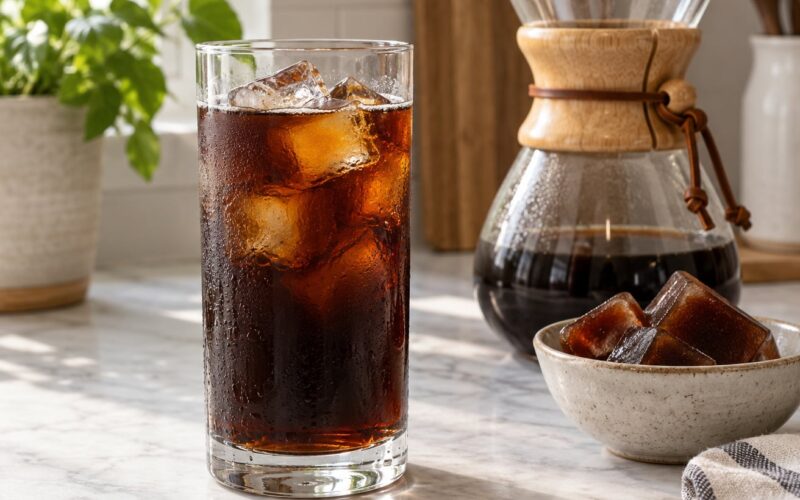
Dissolve 2 teaspoons of granules in 2 ounces of hot water first and let it cool. Pour it over ice, then add milk or water. Cold liquid will not dissolve granules, so pouring cold water or cold milk straight onto coffee powder gives you the clump-and-grit problem forum users complain about most, and pouring it over a large amount of ice dilutes the cup unevenly as the ice melts.
Common Mistakes
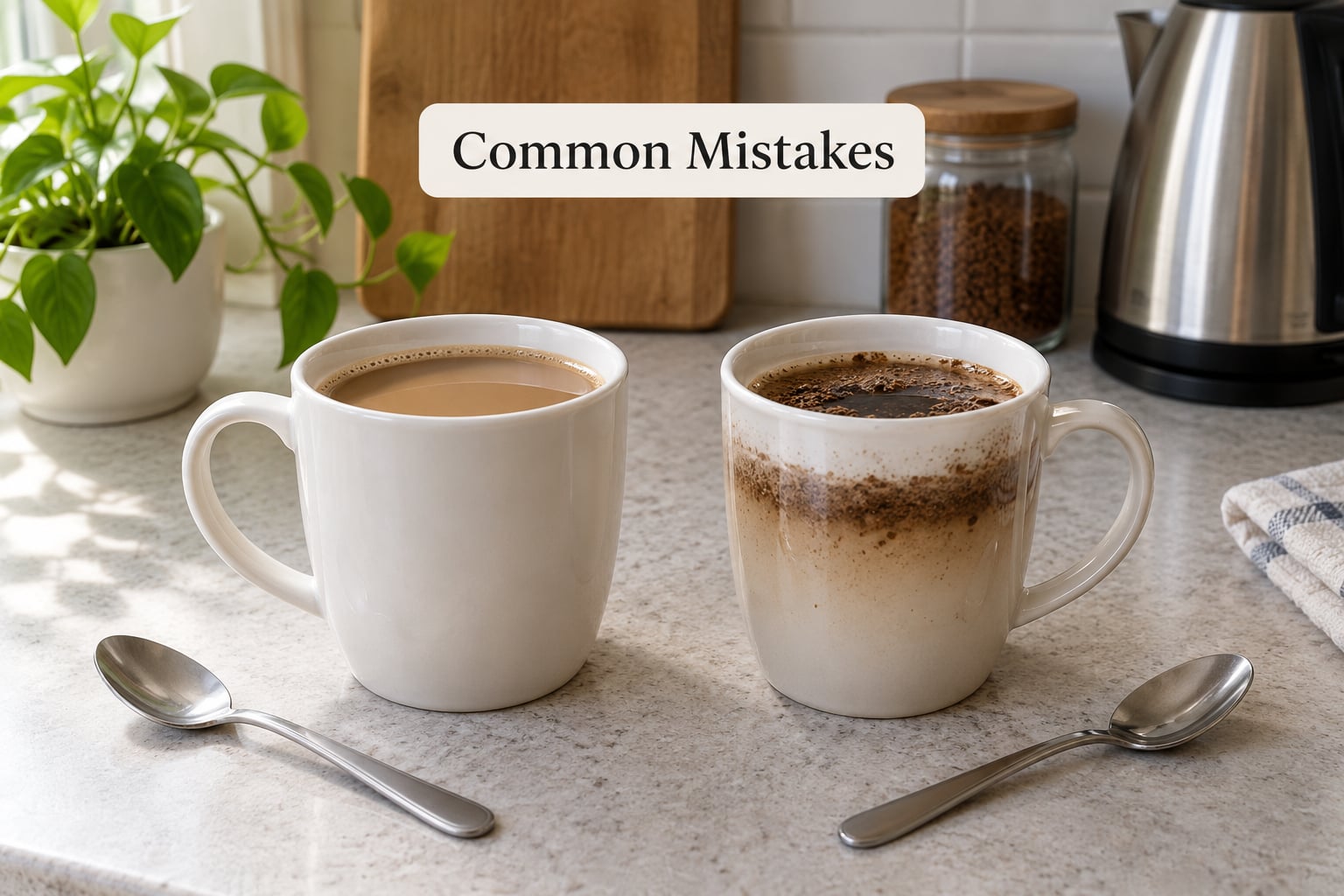
Every bad cup comes down to one of these, and each has a direct fix:
- Boiling water straight onto the granules. Fix: wait 5 to 12 minutes, or use a variable-temperature kettle set near 195°F.
- Adding dairy before dissolving the coffee. Fix: make the slurry in water first, then add milk.
- Dumping all the granules into a full mug at once. Fix: paste the granules with 1 to 2 tablespoons of cool water, then top up.
- Using too much coffee to get more flavor. Fix: cut back to 1 to 2 teaspoons per 8 ounces and add hot water for strength.
- Adding sugar after the water is hot. Fix: stir it into the cool paste so it dissolves fully.
- Storing granules loosely, or scooping with a wet spoon. Fix: an airtight jar, a dry spoon, and a spot away from heat and light.
- Pouring cold milk or cold water onto powder for iced coffee. Fix: dissolve in 2 ounces of hot water first, cool it, then add ice and milk.
- Masking an unbalanced cup with more sugar. Fix: add less sugar and fix the temperature instead. Sugar cannot rescue a cup that was over-extracted.
Frequently Asked Questions
How much instant coffee should I use for one cup?
Start with 1 to 2 teaspoons per 8 ounces of water, which is a standard 8-ounce mug. Coffee that is meant to stand up to milk takes the lower end. If your cup tastes weak, add a half teaspoon rather than a whole one, because instant coffee reaches bitterness faster than it reaches flavor. Adjust the water before you adjust anything else.
What is the best water temperature for instant coffee?
Aim for 175°F to 195°F, which is 80°C to 90°C. Boiling water at 212°F over-extracts instant granules and makes the cup taste harsh and burnt. Without a temperature-controlled kettle, boil the water and wait about 5 minutes for 195°F, or about 10 to 12 minutes for 175°F. Slightly cooler water tastes better than slightly hotter water.
Can I make instant coffee taste less bitter?
Yes, and four levers do most of the work: drop the water temperature to around 195°F, cut the dose slightly and dilute with extra hot water, add a single pinch of salt, and add fat such as whole milk, cream, or condensed milk. Salt does not remove bitterness, it lowers how much your tongue registers. Start with one change and taste before adding the next.
How do I make instant coffee smooth instead of clumpy?
Stir the granules into 1 to 2 tablespoons of cool or room-temperature water until you have a smooth paste with no dry pockets, wait 15 to 30 seconds, then pour in the hot water while stirring. Granules dissolve fastest in a small volume of cool liquid, so making a paste first spreads them evenly before the mug fills. Adding cold milk directly to dry granules will clump no matter how much you stir.
Can I use milk instead of water to make instant coffee?
You can, but dissolve the granules in a little water first. For a latte-style drink, stir 2 teaspoons of granules into 2 to 3 ounces of hot water, then add 5 to 6 ounces of milk. Milk poured straight onto dry granules clumps, and undissolved coffee also dulls the sweetness so you tend to overdo it. A little water up front fixes both problems.
How should I store instant coffee so it tastes fresh?
Keep it in an airtight jar, away from heat and direct light, and always use a dry spoon. Once a jar is opened, oxygen is what flattens the flavor, so press the lid down firmly each time and avoid the jar sitting beside the stove or in a humid cabinet. Buying a smaller jar you will finish in a few weeks is more effective than storing a large one carefully.
Put It All Together
Start tomorrow’s cup like this: fresh granules, 1 to 2 teaspoons in the mug, 1 to 2 tablespoons of cool water stirred into a smooth paste, then hot water at about 195°F poured in slowly while you stir. Add sugar and salt with the paste, taste it, and adjust from there.
That sequence is how to make instant coffee taste good without buying a single piece of equipment. If the cup still tastes flat, the next lever is the water itself, so swap in filtered or bottled water before you buy anything new. And if you find yourself wanting more from the cup than technique can give, a cold brew concentrate made a day ahead is the usual next step for anyone outgrowing instant.