Stale coffee beans have lost their aroma and flavor, but they are almost never unsafe to drink. Coffee is roasted so dry that mold rarely takes hold, so what you are usually detecting in an old bag is oxidation, not spoilage.
That is the reassuring half. The practical half is knowing which signs to trust, and the order matters. If you run the checks below from least destructive to most, you will know whether a bag is worth brewing before you commit it to the grinder.
Here is the short version:
- Faint or cardboard aroma: fresh beans smell rich and lively, old beans smell dusty, muted, or like paper.
- Dull appearance: fresh beans keep a slight sheen from natural oils, while stale beans look dry, pale, or matte.
- Flat taste: brewed stale coffee tastes hollow, bland, or harshly bitter instead of balanced and vibrant.
- No bloom: hot water on fresh grounds bubbles up from trapped carbon dioxide. Stale grounds just sit flat.
- Visible mold: white, green, or blue fuzzy spots after moisture exposure mean the bag goes in the bin, not the brewer.
Run the smell and bloom checks first because both take under a minute and neither requires brewing.
Table of Contents
- What You Need
- Step-by-Step: Five Ways to Tell if Coffee Beans Are Stale
- 1. Check the Smell and Aroma
- 2. Look for Missing Aromatic Oils
- 3. Check the Color: How to Tell If Coffee Beans Have Faded
- 4. Feel the Texture of the Beans
- 5. Brew a Small Taste Test
- Common Coffee Freshness Mistakes
- Frequently Asked Questions
- How long do coffee beans stay fresh?
- Are stale coffee beans bad for you?
- Can old coffee grounds still smell fresh?
- Does freezing keep coffee beans fresh?
- Should old coffee beans be ground and reused?
What You Need
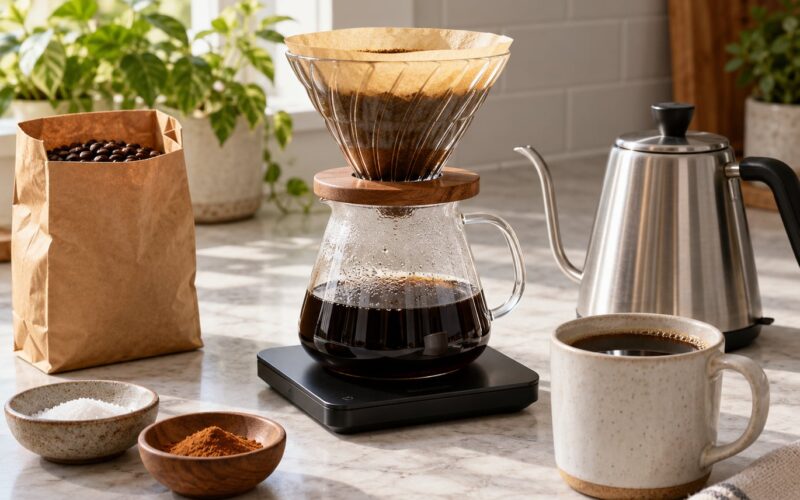
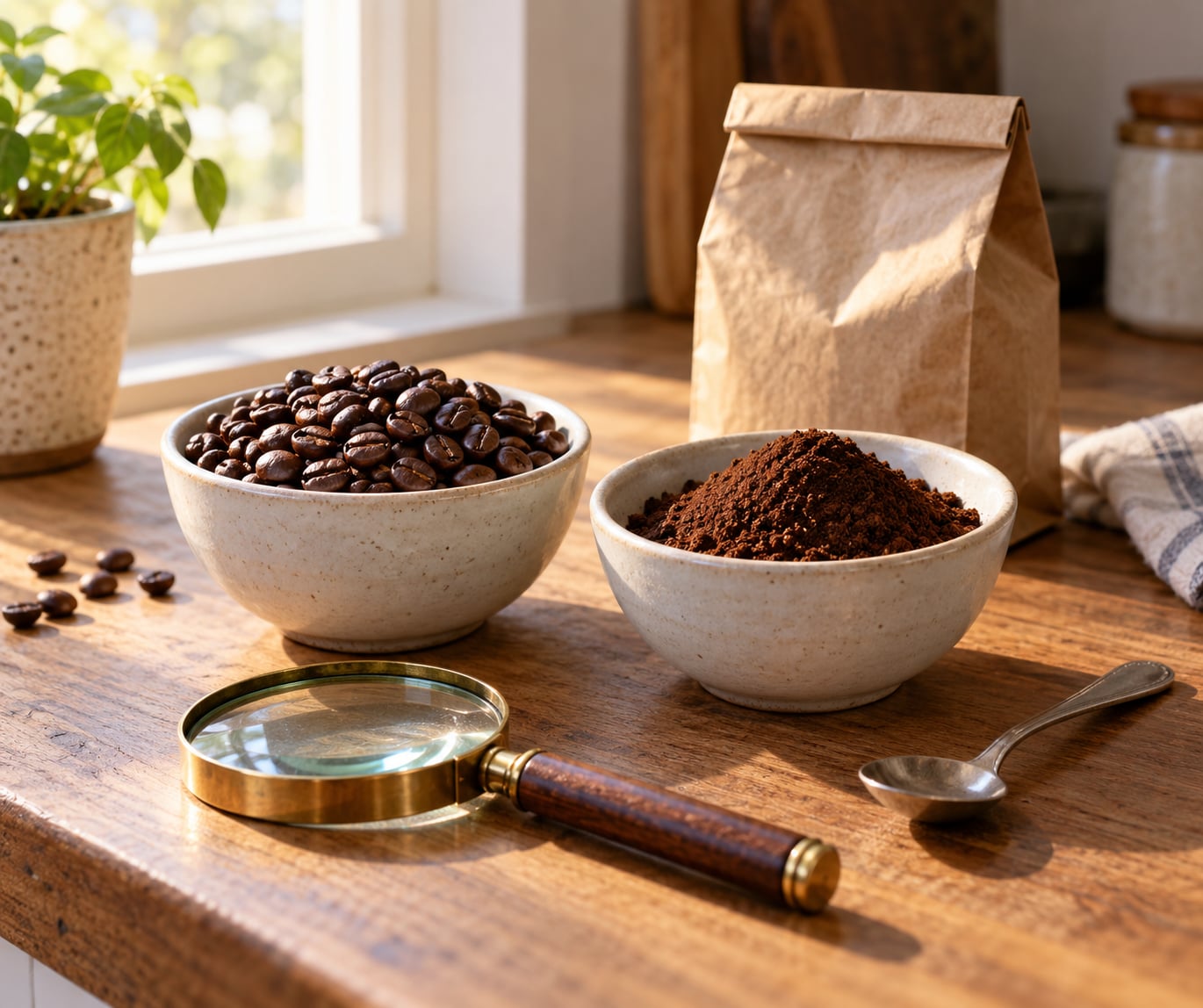
The whole test runs on things already in your kitchen: the coffee itself, a small bowl or cup for each sample, water, a spoon, and a magnifying glass if you have one. Keeping the original bag or its roast-date sticker nearby helps, but you do not need it to run the physical checks.
Nothing special is required, and that is deliberate. Any test that needs a refractometer or a roasting degree means the answer is not going to help a person standing in a kitchen at 7am wondering why their morning cup tastes like nothing.
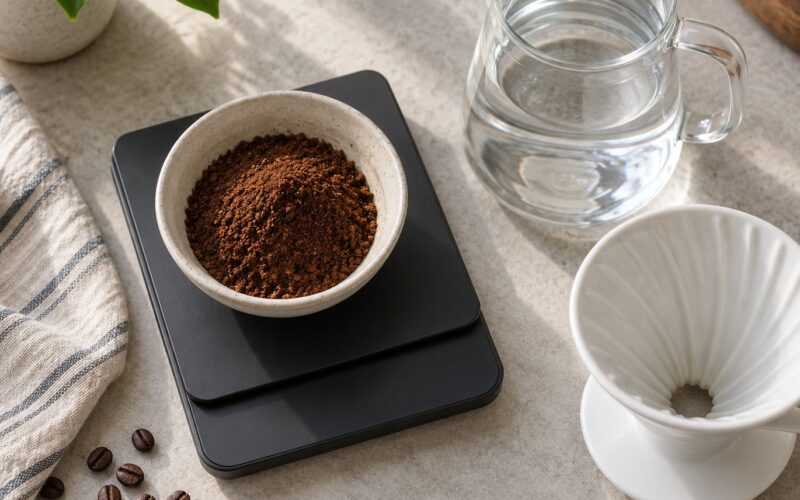
Two ordering rules matter more than the equipment list. Run every whole-bean check before you grind, because grinding multiplies the surface area exposed to oxygen and makes older coffee deteriorate visibly faster. And if you own a proper brewing scale, dig it out for the taste test, since a consistent dose is what lets you compare one cup against another.
If your beans came preground, skip the texture and oil checks. Look instead for damp clumps, a hard block at the bottom of the bag, or a pale grayish tint in the grounds, all of which point at moisture damage or age.
Step-by-Step: Five Ways to Tell if Coffee Beans Are Stale
Start with the checks that cost you nothing and work down toward the ones that use up coffee. The overview below is the whole procedure in one place; each row is explained further down.
| Test | What Fresh Coffee Looks Like | What Stale Coffee Looks Like |
|---|---|---|
| Smell and aroma | Sweet, rich, layered, sometimes floral or fruity | Faint, dusty, cardboard-like, musty or paper-like |
| Surface oils | Slight sheen, especially on darker roasts | Flat and matte, or in oil-rich coffees a slightly waxy film |
| Color | Even color matching the roast level | Pale, washed-out, unevenly faded toward gray |
| Texture | Firm, offers resistance when crushed | Brittle, chalky, or unusually soft and crumbly |
| Bloom | Bubbles and rises within seconds | Stays flat and quiet |
| Cup | Balanced, sweet, with a lingering finish | Hollow, thin, harshly bitter with no sweetness |
1. Check the Smell and Aroma
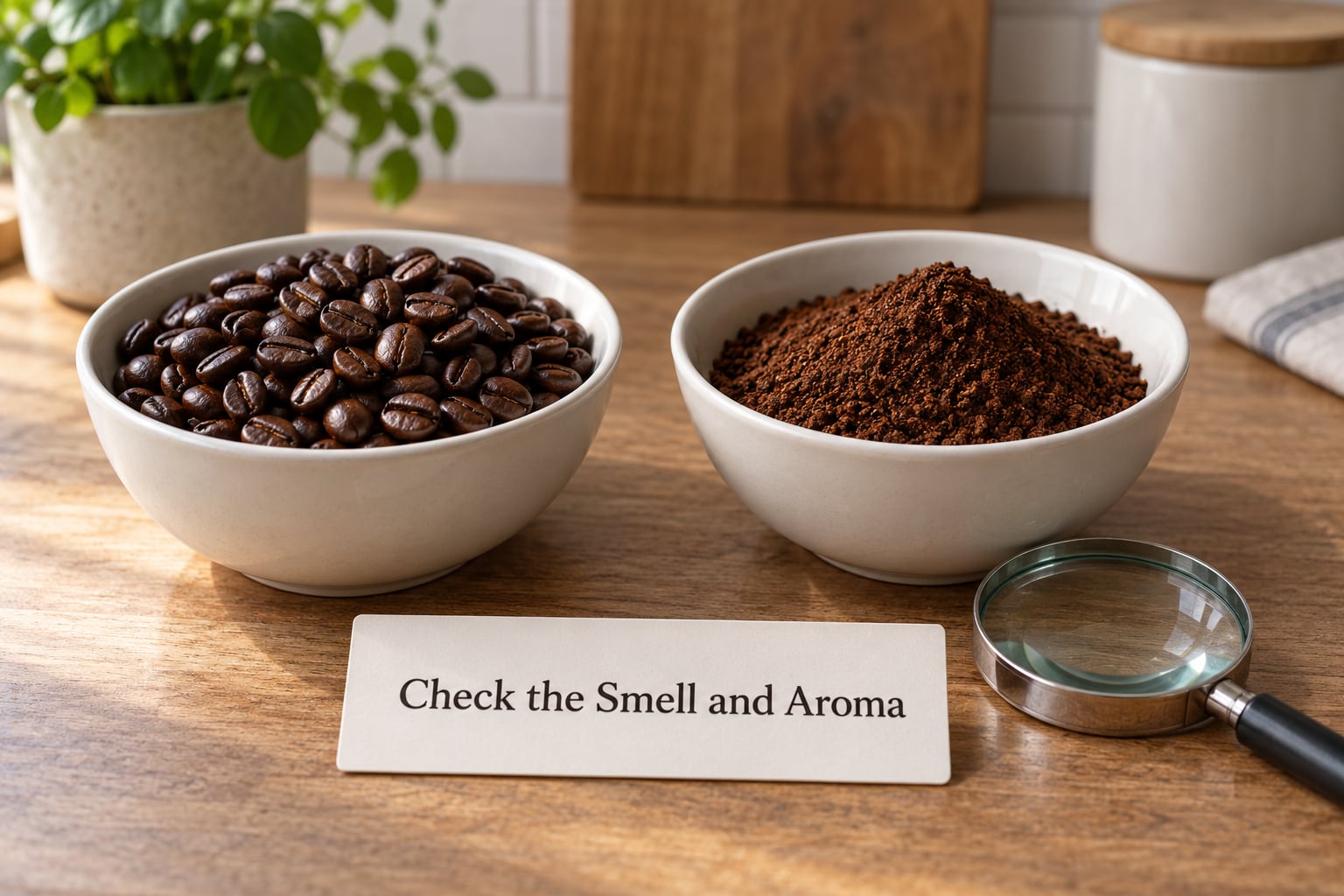
Put a spoonful of beans in an empty bowl, away from the coffee maker and the sink. Lean in and smell, then crush a few beans between your fingers and smell again, which releases more of the aroma than the beans alone will.
Fresh coffee has a specific, sweet character: caramel, toasted nut, chocolate, citrus peel, depending on origin and roast. Stale beans smell thin and dusty, often cardboard, old paper, or musty. Rancid beans add a sharper, oily, almost stale-paint note that no roast produces naturally.
Adjust for roast level before you judge. A light Ethiopian roast is legitimately floral and citrusy, while a dark French roast should smell heavy and smoky. Comparing an unfamiliar light roast against the rich, chocolatey nose you expect from a dark roast is the most common way people convince themselves good coffee has gone off.
Smell is the strongest single signal, but it has a blind spot: you already know what you bought. Brewing a fresh bag of the same coffee and comparing the two side by side tells you far more than memory does.
2. Look for Missing Aromatic Oils
Hold a few beans under decent light and turn them slowly. Roasted beans carry natural aromatic oils, and a slight glossy sheen usually means those oils are still present, which is one signal that the coffee is not old.
Tread carefully here, because the most common belief about coffee freshness is simply wrong. Oiliness is a function of roast level and process, not age. Dark roasts and many naturally processed coffees are oily the day they come off the roaster, while lighter washed coffees may never show much at all. A shiny bean is not proof of freshness, and a matte one is not proof of staleness.
What the surface can tell you is subtler. A waxy or slightly sticky film that appears months after roasting, combined with a dull smell, points at the beans slowly breaking down rather than simply losing their shine. Treat missing oil as one warning sign among several, never as a verdict on its own.
3. Check the Color: How to Tell If Coffee Beans Have Faded
Compare the beans against what their roast level should look like, using the bag or a reference photo if you have one. Beans exposed to oxygen and light over time fade toward pale, gray, or a washed-out version of their original tone.
Color is the check most likely to mislead you. A light roast sitting next to a nearly black French roast is not a freshness difference, it is a roast difference, and origin alone shifts color across a wide range. Uneven fading matters more than overall lightness, since the parts of the bean most exposed to air are the ones that lose color first.
For preground coffee, look for a grayish or pale cast and for damp clumps that have hardened into blocks. Those two together point at moisture getting in, which is a storage problem rather than simple staleness.
4. Feel the Texture of the Beans
Crush three or four beans between clean fingers, or press them with the back of a spoon. Fresh beans usually give slightly and resist, breaking into a gritty but not powdery crumb. Older beans often snap cleanly and too easily, like small shells, which is what brittleness looks like in coffee.
The opposite happens too. Beans stored in humid conditions can turn soft and slightly chewy, and soft beans grind badly and brew unevenly. Some density differences are natural, though: dense high-altitude beans are harder than lower-density lots, and dark roasts are always softer than light ones because roasting drives out moisture.
Texture is the weakest of the five signals on its own. Use it to confirm what the smell and the bloom already suggested rather than to draw a fresh-versus-stale verdict from finger pressure alone.
5. Brew a Small Taste Test
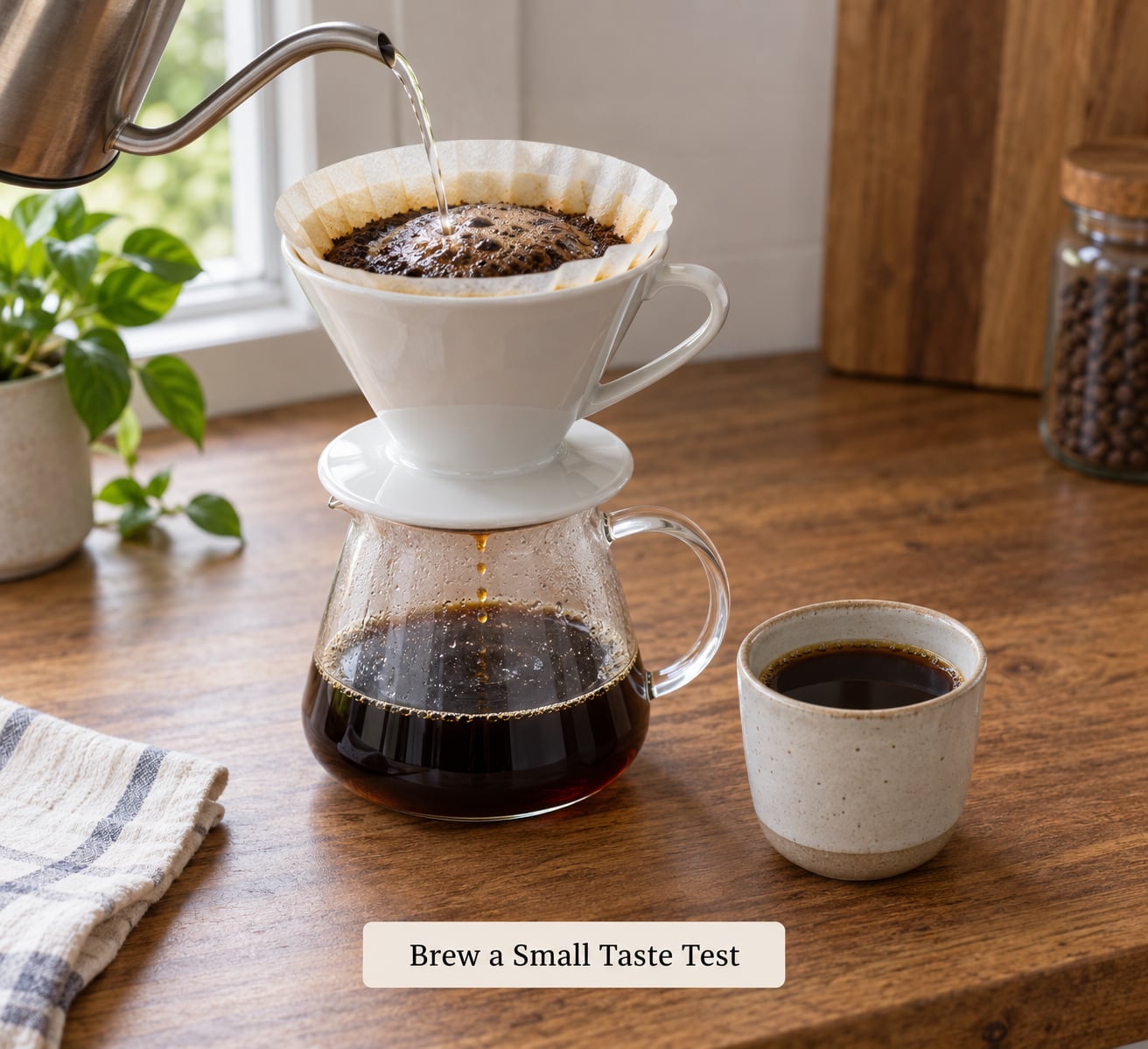
Brew the smallest batch your setup allows and taste it black, without sugar or milk. Sugar hides exactly the flavor loss you are testing for. Use a consistent ratio and, ideally, note the dose, the water temperature, and the total brew time so you can rule your technique in or out afterward.
Fresh coffee is aromatic as it cools, sweet across the sip, and often has something left in the cup at the finish. Stale coffee tastes hollow and thin, or bitter with no sweetness behind it, sometimes with papery or slightly sour edges. It tastes dull the moment it lands and duller as it cools.
The bloom doubles as a diagnostic here. Pour just enough water to wet all the grounds and wait thirty seconds. Fresh, recently roasted coffee releases carbon dioxide and swells, doming up and bubbling across the surface. Older coffee has mostly degassed, so the bed stays flat and quiet. Home brewers also report that stale beans pour through noticeably faster, often in two to four minutes instead of their usual time, because they absorb less water.
Espresso drinkers get their own version of the same signals. Old beans ground fine produce a fast pre-infusion and a gusher, and the spent puck comes out dry and crumbly rather than damp and tight. Tamping harder is the standard attempt to fix a gusher, and it rarely works, which is itself useful information.
One caution before you blame the beans. Weak or harsh cups get blamed on stale coffee constantly, and the real cause is usually grind size, dose, water temperature, or brew ratio. A cheap burr grinder with a tired blade produces inconsistent particle sizes no amount of fresh beans can rescue. Change one variable at a time before you throw a bag away.
Common Coffee Freshness Mistakes
Trusting the roast date alone. Dates tell you when something was roasted, not how it has been handled since. A bag roasted three weeks ago and stored badly can taste older than one roasted last week and sealed immediately, and supermarket bags with no date at all tell you nothing either way.
Treating an oily bean as old. Natural oil sheen comes mostly from roast level and process, not age. Dark roasts are shiny when fresh, and if your light roast is never shiny, that is normal too.
Reading dark color as staleness. Dark means a dark roast. Freshness lives in the aroma, the bloom, and the cup, none of which the darkness of the roast predicts.
Judging preground coffee by looking for oil. Ground coffee loses aroma far faster than whole beans because the surface area is so much larger. The useful signs for grounds are aroma, clumps, and moisture, not sheen.
Storing beans somewhere warm or exposed. Heat, sunlight, humidity, and an open bag on the counter will do more damage than age alone. Airtight, opaque, cool, and dark is the standard, and the single biggest upgrade is getting the beans out of the original bag.
Calling any bad cup stale. Bitterness comes from over-extraction as often as from age. If the coffee tastes sharp and thin, suspect grind and ratio before the roast date.
Waiting for mold as a freshness test. It will not come. Roasted coffee is too dry for mold, which is why a genuinely dangerous-looking bag is rare and why stale beans usually sit around for months being politely ignored.
Read several weak signals together instead of any one of them. A faint aroma plus a flat bloom plus a fast pour-through is a diagnosis. Missing oil on a light roast is just a light roast.
To slow the whole process down, buy smaller bags more often, look for the roast date rather than the best-by date, and portion and freeze what you will not use in a month. Double-bag into a freezer bag, push out the air, and pull out only what you need for the next week or two, letting the sealed portion come to room temperature before you open it so condensation stays outside.
Stale-but-safe beans still have uses. Cold brew concentrate, a coffee rub for meat, baking, coffee-infused spirits, or the compost all work fine, and none of those care about aroma.
Frequently Asked Questions
How long do coffee beans stay fresh?
Whole bean coffee is at its best in the first week or two after roasting, and most people notice a clear decline somewhere between three and six weeks. Ground coffee fades much faster, usually within days to a couple of weeks, because grinding exposes far more surface area to oxygen. Roast level matters too: darker roasts hold their character slightly longer than light, delicate roasts.
Are stale coffee beans bad for you?
No. Coffee beans are roasted to a very low moisture content, which makes them inhospitable to mold and bacteria, so stale beans are a flavor problem rather than a safety one. The exception is visible white, green, or blue fuzzy growth, or beans that were stored damp. Those can carry mycotoxins and should be discarded rather than brewed.
Can old coffee grounds still smell fresh?
Occasionally, yes, and that is where careful testers get caught out. Some naturally processed or dark-roasted coffees are so aromatic that a stale bag can still hit your nose, which is why smell alone is not a complete test. Confirm with the bloom: if the grounds stay flat when you wet them, or the cup comes out hollow and bitter, the aroma is misleading you.
Does freezing keep coffee beans fresh?
Freezing halts oxidation almost completely and it is the best storage method available for beans you will not use for weeks. Portion the beans into weekly amounts, double-bag them, squeeze out the air, and freeze. Only remove what you need, and let the sealed portion warm to room temperature before opening so condensation does not land on dry coffee.
Should old coffee beans be ground and reused?
Grinding coffee that is already stale makes the decline faster because the exposed surface area jumps enormously. If a bag smells faint and tastes flat, grinding it will not rescue it. Reusing old grounds is only worth it for things where aroma does not matter, like a coffee rub, baking, cold brew concentrate, or compost.
Start with the smell and the bloom, since those two take a minute and no coffee. If both look right, brew the smallest batch you can and taste it black before you commit the rest of the bag to the grinder.