Flat decaf coffee usually isn’t a bean problem — it’s a brewing problem. Decaffeination leaves the bean more porous, so water races through the grounds, pulls out the sharp edges, and leaves you with a thin, muted cup. To make decaf coffee taste less flat, start with fresher beans roasted by a specialty roaster, grind a touch coarser, dial the water temperature into the right band rather than off the boil, hold a 1:16 coffee-to-water ratio, and finish with a small measured addition like salt or whole milk.
The whole sequence takes about five minutes and costs nothing but attention. This guide covers what to check first, the fixes in the order that works best, and the mistakes that flatten a cup no matter how good the beans are.
Table of Contents
- What You Need
- Step-by-Step
- How to Make Decaf Coffee Taste Less Flat by Choosing Better Coffee
- How to Make Decaf Coffee Taste Less Flat with Hotter Water
- How to Make Decaf Coffee Taste Less Flat with the Right Ratio
- How to Make Decaf Coffee Taste Less Flat with Simple Finishing Touches
- Common Mistakes
- Frequently Asked Questions
- Why does my decaf coffee taste flat compared with regular coffee?
- What water temperature is best for brewing decaf coffee at home?
- How do I make weak decaf coffee taste stronger without adding more bitterness?
- Can I add salt to decaf coffee to improve its flavor?
- Does using milk or cream make decaf coffee taste less flat?
- Should I grind decaf coffee finer to make it taste better?
What You Need
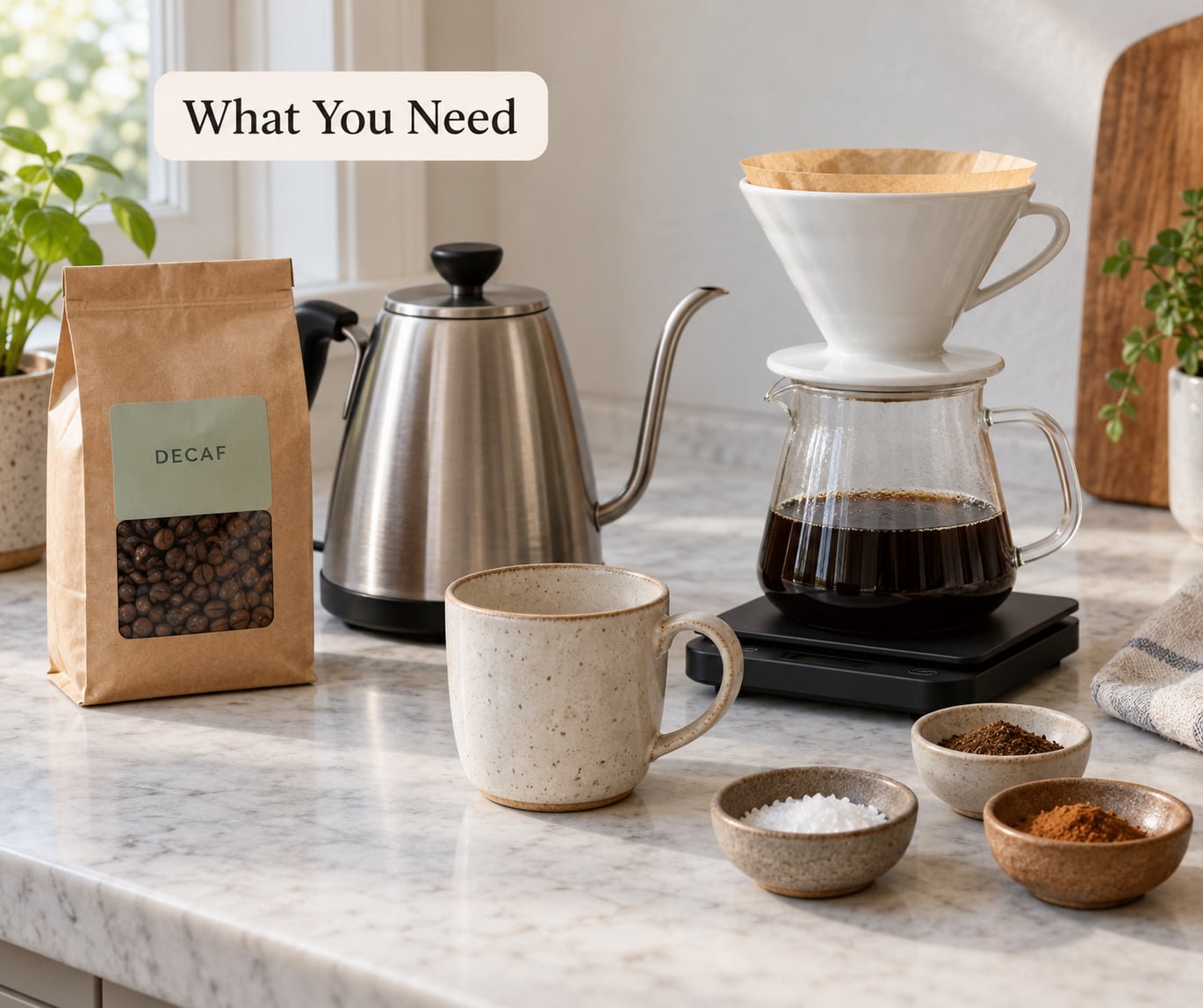
You need far less than most guides suggest. Before you change any variable, gather these so you can tell whether the dullness is coming from the coffee, the gear, or the water.
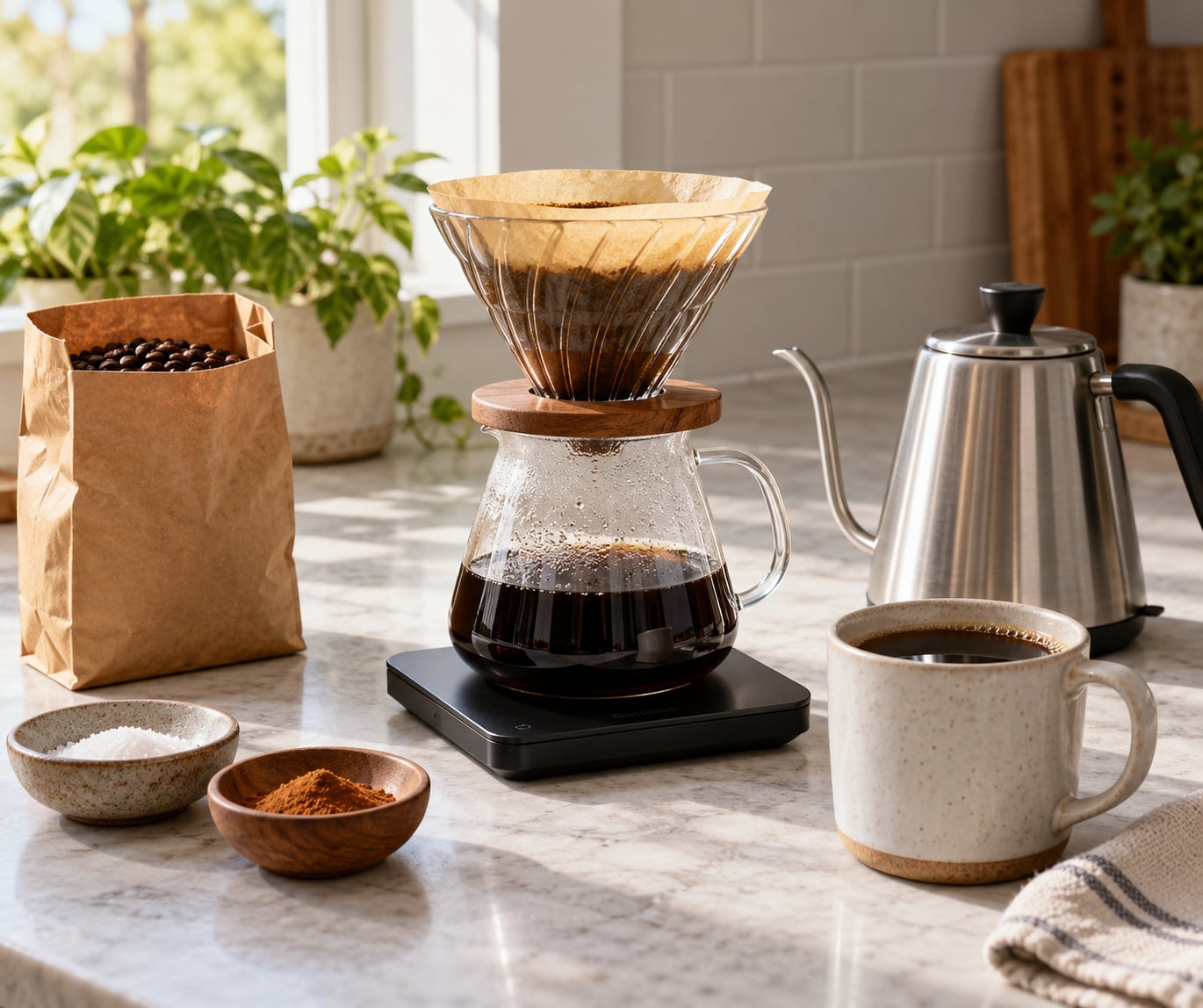
- Fresh decaf coffee, ideally water-processed. Look for a bag that lists a roast date rather than a best-before date. Specialty roasters decaf in small batches and list the process on the bag.
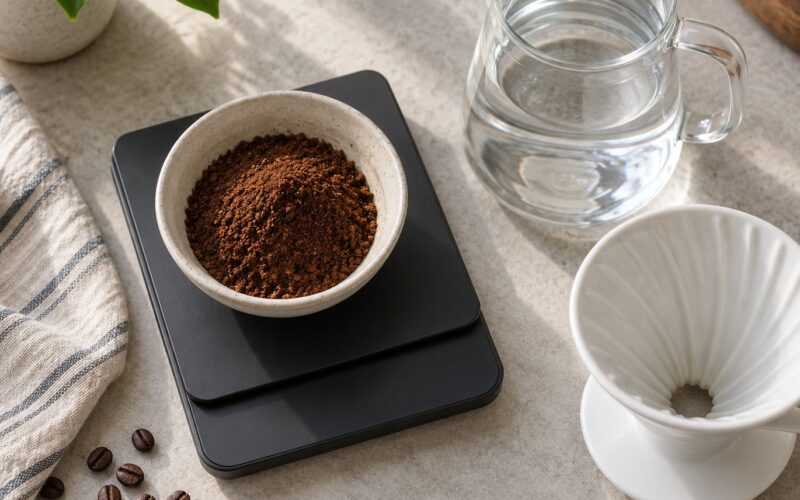
- A scale. Weighing your coffee and water is the only reliable way to know whether you are actually at 1:16. Cups and scoops lie.
- A kettle with a temperature readout. You need to hit a number, not guess from a boil.
- A brewer or press. A drip brewer, pour-over cone, cafetiere, AeroPress, or French press all work. Espresso needs its own approach, covered below.
- Filtered water. Chlorine dulls aroma compounds and is the quietest reason a good bean tastes like nothing. A simple carbon filter pitcher fixes most of it.
- A pinch of fine salt, ground cinnamon, and whole or 2% milk. Optional, but the finishing step recovers a cup you can’t fix at the grinder.
If your brewer hasn’t been washed in a while, clean it first. Old oils trap stale aromatics and will flatten a fresh bag in a week.
Step-by-Step
How to Make Decaf Coffee Taste Less Flat by Choosing Better Coffee
Decaffeination is chemically aggressive. Caffeine isn’t stored separately inside the bean — it’s bound to the same soluble compounds that carry flavour, so every method takes some sweetness and aroma along with it. The four common approaches keep different amounts: water-based processes such as the Swiss Water method soak the beans and pull caffeine out through an activated carbon filter, CO2 decaffeination uses pressurised carbon dioxide at a low temperature, and ethyl acetate or methylene chloride rinse the beans with solvent that is then evaporated off. Solvent methods tend to leave more of the original character behind, and there are specialty roasters who argue the ethyl acetate process preserves acidity better than water processing.
What you control is freshness and labelling. A bag roasted within the last month and dated on the front will out-perform an undated bag six weeks old, every time. Decaf goes stale faster than regular because those soaked beans turn porous and brittle, so the aromatics have less left to lose.
Roast level matters more than any bag claims. Medium roast is the reliable all-rounder: enough development to cover the softer structure of a decaf bean without tipping into ash. Light roast decaf can taste bright and fruity, but it needs a roaster who calibrated for it — otherwise you get grassy, undercooked notes that read as sour and flat. Dark roast hides flatness by burying it in roastiness, which isn’t the same as fixing it.
Buy smaller bags more often. Two weeks of coffee beats six weeks in the cupboard, and store the beans airtight and opaque at room temperature, never in the fridge.
How to Make Decaf Coffee Taste Less Flat with Hotter Water
This is the fix most guides get backwards. Because decaf beans are more porous, water moves through them faster and extracts more aggressively — so at a full boil you get hollow, harsh, stripped-tasting coffee, not richer coffee. The usual advice of dropping to 92–96°C is sensible, and if your cup is thin at that temperature, go higher, not lower.
Work up in small steps: brew at 93°C, taste, then 95°C, then 97°C if it still tastes thin rather than sour. Many people land somewhere around 94–96°C for a medium roast decaf in a pour-over. For French press or cafetiere, where immersion runs long, stay lower and let the steep time do the work instead.
Moka pot users report decaf tastes noticeably worse there than in anything else, and the usual advice is to take the back pressure off by brewing slightly coarser and stopping before the gurgle. On an espresso machine, decaf needs a longer, gentler pre-infusion rather than hotter water, because the grinder applies the pressure instead of the temperature.
How to Make Decaf Coffee Taste Less Flat with the Right Ratio
Use 1 gram of coffee for every 16 grams of water and resist the urge to add more grounds. Extra coffee in a porous decaf bed muddies the cup rather than strengthening it — you get more bitterness and none of the sweetness you were chasing for.
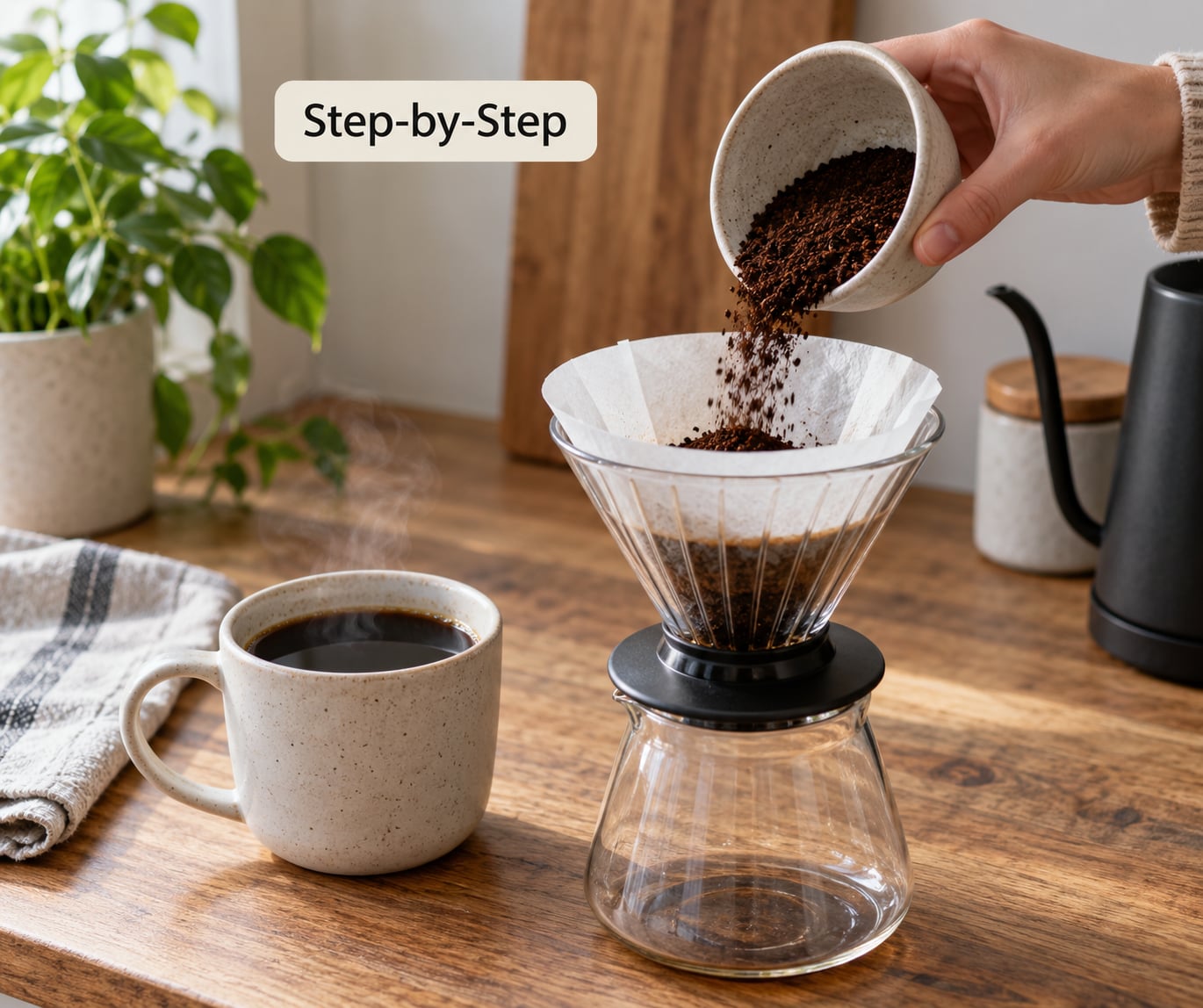
Instead, adjust grind size and contact time, which control extraction without adding mass. Grind a touch coarser than you would for the same regular coffee. Decaf beans crumble more readily, so fines migrate and clog the bed unevenly, and a finer grind worsens the sour, hollow cup. For a pour-over, aim for a total drawdown around three minutes; for a cafetiere, four minutes then plunge; for an AeroPress, start gentle and press slowly.
Once the ratio and grind are right, the flatness in most cups disappears. Do that before adding anything to the mug.
How to Make Decaf Coffee Taste Less Flat with Simple Finishing Touches
After the brew is right, a small measured addition can lift what remains. Add these to the black cup first, then to milk, so you taste what each one actually does.
- Salt. A pinch of fine salt — about 0.5 grams in a 350 ml cup — suppresses bitterness and makes sweetness read as sweeter. More than that and it tastes of brine.
- Warm spices. A small amount of ground cinnamon or cocoa stirred into the grounds before brewing adds aroma without sweetness. Cardamom is bolder, so use half what you’d reach for with cinnamon.
- Sweetener. Use less than you think, and choose a syrup that tastes of something. Two thirds of a teaspoon of simple syrup or a half teaspoon of honey in a 350 ml cup is usually enough to stop a thin decaf feeling thin.
- Higher-fat dairy. Whole milk or a small pour of cream adds body and carries aroma compounds to the tongue. This is also the fix for milk-flattened coffee, since more milk in a thin cup thins it further.
- Cascara. The dried cherry fruit from the coffee plant brews into a tart, tea-like drink that blends with decaf and effectively doubles the liquid without thinning it.
Dairy fat binds aroma compounds, which is why a splash of milk can make an already flat cup worse. Coffee drinkers who prefer plant milk usually do better with oat or soy for body; almond and rice are thin enough that they’ll flatten a decaf further.
Common Mistakes
Most flat decaf comes down to one of these five:
- Boiling water on decaf grounds. Water off the boil over-extracts a porous bean. Drop to 92–96°C and taste again.
- Old beans. Decaf goes flat faster than regular. Check the roast date, not the best-before date.
- Doubling the coffee dose. You get more bitterness, not more strength. Keep 1:16 and adjust grind instead.
- A dirty brewer or stale pods. Rinse the carafe and basket weekly. Trapped oils flatten fresh coffee in days.
- Over-flavouring. Four additions in one cup tastes like a dessert drink. Fix the brew, then use one addition.
Two more worth knowing: brewing decaf immediately after regular coffee on the same grinder is fine, but clean the basket first, since coffee oils carry across. And if a bag tastes flat even at 95°C, ground fine, with filtered water and fresh beans, accept it and switch roasters rather than keep adjusting. Home brewers are usually blunt about this one: some bags are beyond saving.
Frequently Asked Questions
Why does my decaf coffee taste flat compared with regular coffee?
Caffeine is bound to the same soluble compounds that carry flavour, so decaffeination removes sweetness and aroma along with it. The soaking step also leaves the bean more porous and brittle, so water moves faster through decaf grounds and strips the cup. That combination is why most flat decaf cups are a brewing issue rather than a bad bag.
What water temperature is best for brewing decaf coffee at home?
Start between 92 and 96 Celsius and taste. Because decaf beans are porous, boiling water over-extracts them and gives a hollow, harsh cup. If the brew still tastes thin at 96, step up to 97 rather than adding more coffee. In a French press or cafetiere, stay cooler and lengthen the steep instead of raising heat.
How do I make weak decaf coffee taste stronger without adding more bitterness?
Change grind and contact time, not dose. Grind one step coarser, hold the 1:16 coffee-to-water ratio on a scale, and lengthen contact slightly or shorten drawdown depending on your brewer. More grounds in a porous decaf bed mostly adds bitterness and sediment. Filtered water and a clean brewer also recover more apparent strength for free.
Can I add salt to decaf coffee to improve its flavor?
Yes, a very small amount. Around 0.5 grams of fine salt in a 350 ml cup suppresses bitterness and makes existing sweetness read as sweeter, which is useful when there is not much sugar in the coffee. Add it to the black cup before milk so you can taste the effect, and stay well under a teaspoon or the cup will taste salty.
Does using milk or cream make decaf coffee taste less flat?
Whole milk and a small pour of cream add body and help carry aroma compounds, so they usually help. But dairy fat binds those same compounds and can blunt aroma, so too much milk in a thin cup makes it flatter, not fuller. Start with a small splash and taste. Oat and soy milk give more body than almond or rice for coffee.
Should I grind decaf coffee finer to make it taste better?
Go the other way. Decaf beans are more porous and brittle after decaffeination, so a fine grind produces more fines, uneven flow and a sour, hollow cup. Grind a touch coarser than the same regular coffee and keep the brew ratio at 1:16. Only go finer if your cup is genuinely sour and thin at a coarse grind, which is rare.
Change one thing tonight: brew the bag you already own at 1:16, ground a touch coarser, with water at 95°C. If that cup improves, keep going with the finishing touches. If it doesn’t, buy a smaller bag from a roaster that prints a roast date — that’s the variable you can’t fix at home.