If you have ever wondered why coffee tastes bitter and how to fix it, the answer is nearly always the same: the brew is over-extracted. Water that ran too hot, lingered too long, or was pushed through grounds that were too fine pulls harsh, astringent compounds out of the coffee instead of the sugars that make it taste sweet.
Bitterness is a signal rather than a defect in the bean. It tells you which variable has drifted out of range — grind size, temperature, brew time, coffee-to-water ratio or water quality — and nearly all of it can be corrected on your own counter without buying a single new piece of gear.
Updated for October 2026.
Table of Contents
- What Actually Makes Coffee Taste Bitter?
- How to Tell Bitter From Sour, Burnt, and Roast-Bitterness
- Why Coffee Tastes Bitter and How to Fix It
- What Brewing Changes Fix the Most Bitter Coffee?
- Pour over and V60
- French press
- Drip coffee maker
- Espresso
- AeroPress
- Moka pot
- Cold brew
- Superautomatic and bean-to-cup machines
- How to Adjust Grind Size Without Ruining Your Coffee
- How Water Temperature and Water Quality Change Bitterness
- How to Fix Bitter Coffee from the Beans and Roast
- How to Adjust Espresso, Milk, and Drinks That Mask Bitterness
- A Simple Bitter-Coffee Troubleshooting Checklist
- Frequently Asked Questions
- Why does my coffee taste bitter but not sour?
- How do I make bitter coffee less bitter without making it weak?
- Is coffee supposed to taste bitter?
- Does a finer grind make coffee bitter?
- Why is my espresso bitter, and how should I change the recipe?
- Can old coffee beans taste bitter?
- Conclusion: Start With Freshness and Extraction
What Actually Makes Coffee Taste Bitter?
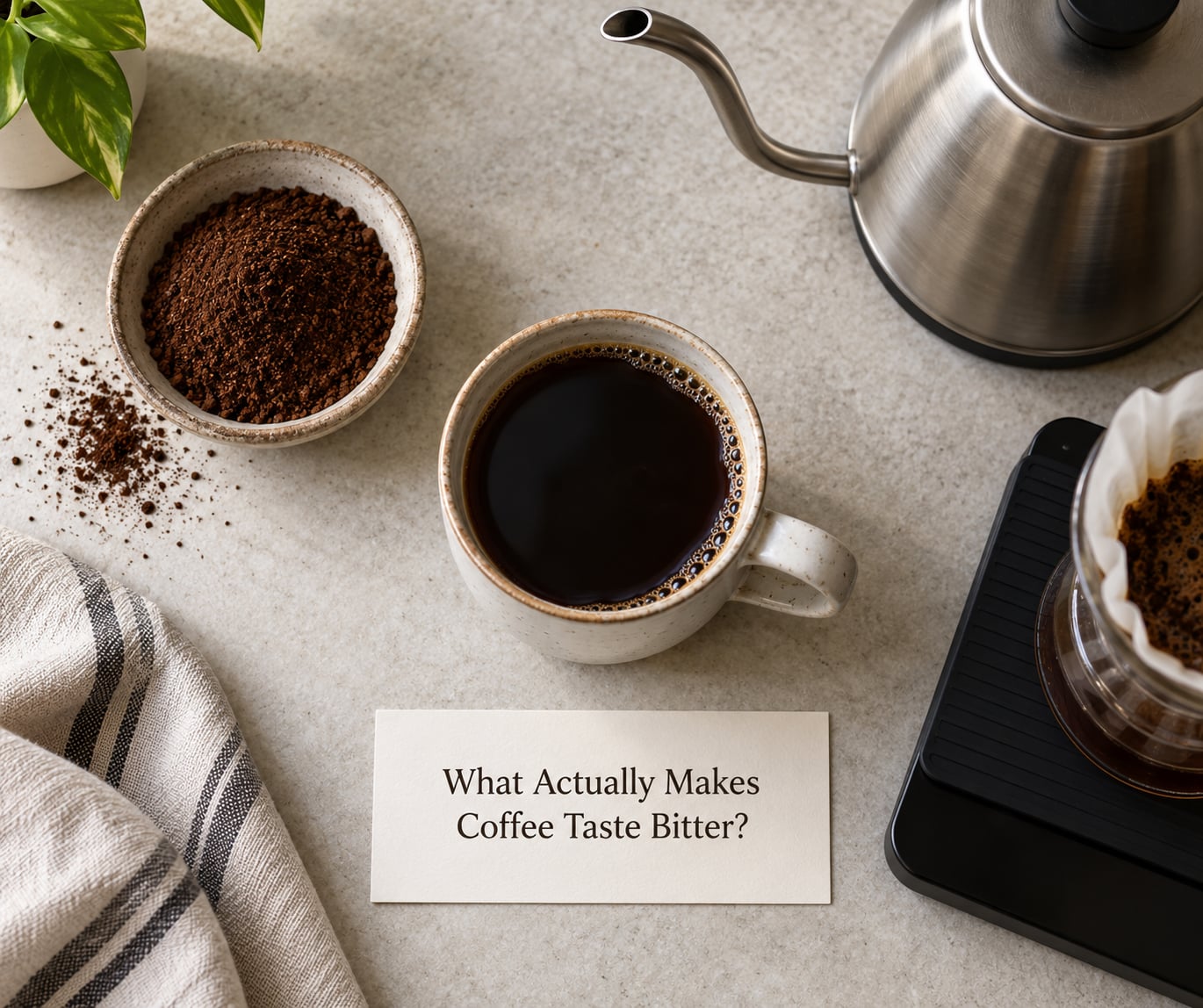
Coffee tastes bitter when it is over-extracted, and over-extraction happens because water dissolves coffee in sequence. Acids and aromatic oils come out first, then sugars and sweetness, and only at the far end of that sequence does water start pulling woody plant fibres and protein compounds that taste dry and astringent on your tongue.
Push past the sweetness stage and the cup turns harsh. The physical feeling people describe as sandpaper or chalk drying out your mouth is called astringency, and it is the most reliable marker of over-extraction you will ever get without a lab.
In practice, four things drive it: a grind that is too fine for the method, water hotter than about 205F (96C), a brew that runs longer than the method calls for, and beans that are old or roasted dark enough that the roast character itself reads as bitter. Water that is very hard or very soft will amplify all of it.
One important distinction: coffee is not supposed to taste sweet and nothing else. A little bitterness is normal and even desirable in dark chocolate, cocoa, nuts and grapefruit zest. The problem is when bitterness is the loudest thing in the cup and the finish dries out.
How to Tell Bitter From Sour, Burnt, and Roast-Bitterness
The first fix is naming the flavor correctly, because people routinely change the grind in the wrong direction after misreading a sour cup as a bitter one. Slurp a spoonful and pay attention to where you feel it.
- Genuinely bitter: harsh, drying, papery, almost salty. Your lips pucker and the finish leaves nothing behind. This is over-extraction, and it appears on the back half of the cup.
- Sour: puckering that reads as lemon, vinegar or green apple, often with a hollow, thin body. That is under-extraction, and it appears on the front of the sip.
- Sour and bitter at once: a sharp first sip followed by a dry finish. This is uneven extraction — some water found fast channels through the bed while the rest of the coffee barely got touched.
- Burnt or ashy: smoke, char, carbon. The bitterness is from roast level or from the brew actually hitting a scorching hot kettle, and no grind change fixes it.
- Stale, not bitter: flat, papery, dull, like old cereal. Stale beans lose aroma and go hollow. Chasing freshness when the real problem is grind is the most common wasted weekend in home brewing.
- Metallic: a coin-like or tin taste at any setting. That is old coffee oils in the gear, not the beans in the bag.
Forum users describe the sour-and-bitter combination most often, and it is the one that trips people up. r/Coffee threads on it repeatedly land on the same diagnosis: the water bypassed part of the bed instead of passing evenly through it.
Bitter coffee concentrated at the bottom of the cup, even after stirring, usually means fines. Fine particles settle during brewing, sit in the bottom of the carafe, and brew a second, much stronger extraction in your cup.
Why Coffee Tastes Bitter and How to Fix It
Work through these in order and change one variable at a time. That last part is the whole method — change two things at once and you will never know which one fixed it.
- Grind coarser first. This solves the majority of bitter cups. Move the burrs one or two clicks toward coarse, or in a blade grinder simply brew for less time.
- Drop the water temperature. Boiling water off the boil, around 195-205F (90-96C), is the brewing standard. Going straight from a rolling boil to the grounds adds a burnt note people mistake for bitterness.
- Shorten contact time. Pull the brew a little early or reduce the steep. If your pour over is taking 4:30, aim for 3:00 to 3:30.
- Loosen the coffee-to-water ratio. More water per gram of coffee means a less concentrated cup. Move from 1:15 toward 1:17 if you are dosing heavy.
- Check the beans. If the bag was opened more than a few weeks ago and it isn’t resealable, freshness is now a suspect.
- Test your water. Brew the same coffee with bottled spring water and with your tap. If the bottled cup tastes better, water is your variable.
- Clean the gear. Grinder burrs, portafilter, carafe and the brew basket hold old oils that add a flat metallic bitterness on top of everything else.
The order matters because grind, time and temperature all push the same lever, and the most common real-world case is all three together: too fine, too hot, and a carafe left sitting on the warm plate.
What Brewing Changes Fix the Most Bitter Coffee?
Every method has its own default and its own failure mode, so the fix depends on what you are brewing with. Here is the short version for each, with the change to make first.
Pour over and V60
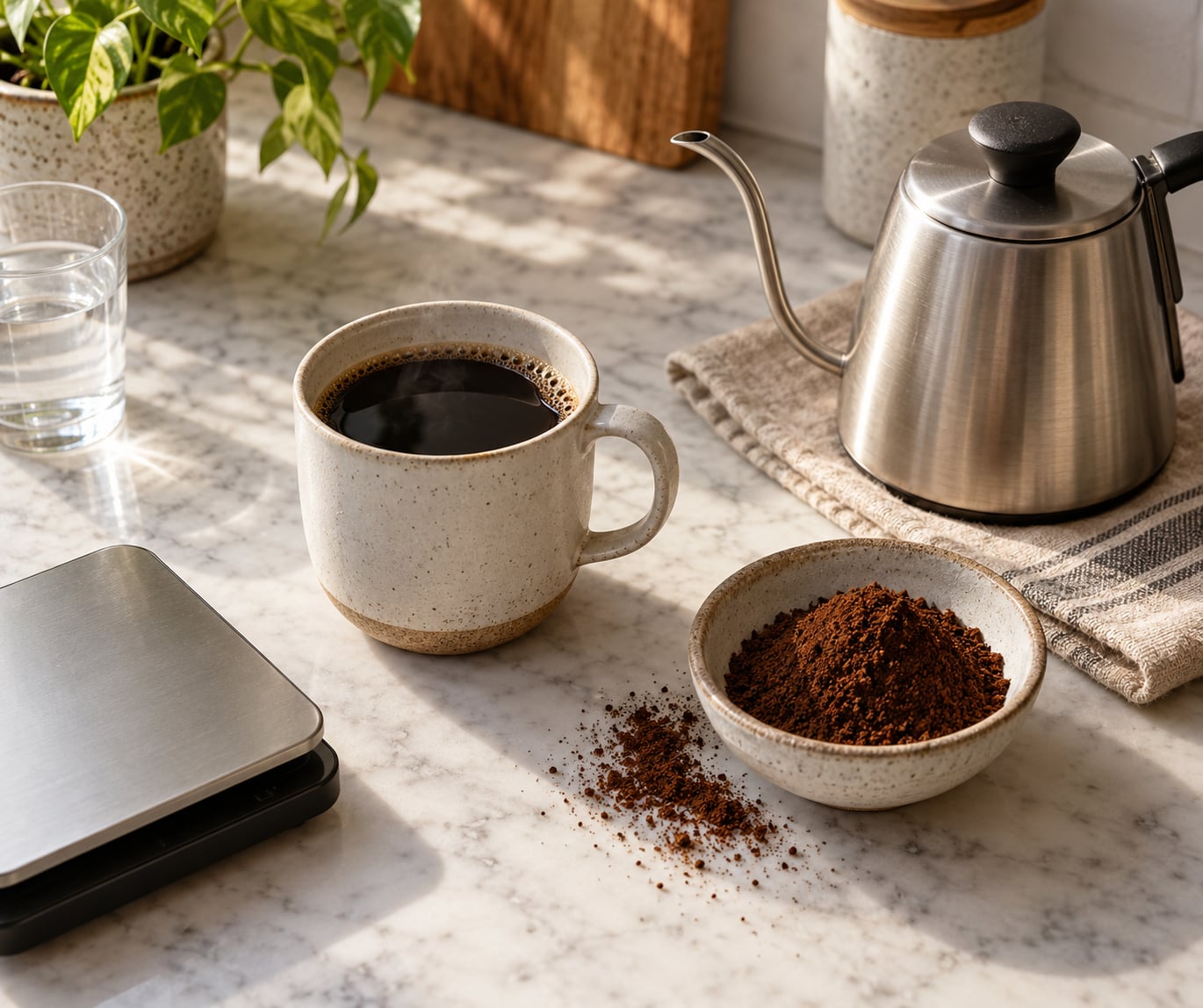
Aim for a medium grind with a texture closer to table salt than sand. If the draw-down runs past about 3:30, coarsen. Bloom with 2 to 3 times the coffee weight in water for 30 to 45 seconds so carbon dioxide releases instead of blocking flow.
French press
Contact time is the whole game here, and immersion brewers steep longest. Cut the steep by 30 to 60 seconds, or start the plunger at 7 minutes rather than 9. Skim the crust before plunging, and avoid breaking the bed.
Drip coffee maker
The most common culprit is the hot plate. Switch it off or move the carafe to a cold surface, because a carafe sitting on a warmer for 30 minutes after brewing is guaranteed to go flat and bitter. Replace paper filters with rinsed paper or a permanent filter, which change flow noticeably.
Espresso
Check yield before anything else. If your 18 g shot is producing more than 40 g in the cup, shorten it. Tamp level, dose fewer grams if the puck is compacted hard, and buy beans with more than a few days of rest.
AeroPress
Push the plunger gently over 30 to 45 seconds rather than stabbing it fast. Pressure spikes push fines through the filter and make the cup harsh. A coarser grind also helps.
Moka pot
Fill the water chamber just below the safety valve and pull it off the heat as soon as the stream pales. Moka pots routinely brew past the point where extraction turns harsh, and the last third of the liquid is the worst of it.
Cold brew
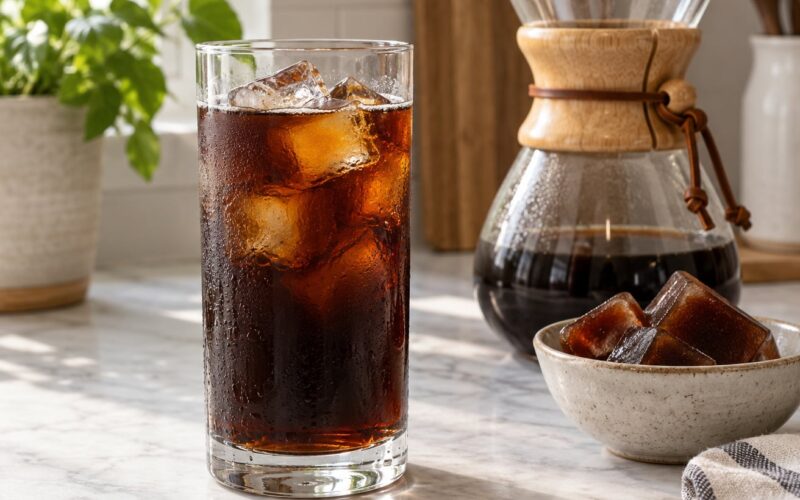
Long cold steeps extract bitter compounds more aggressively than hot water, so cut the steep time. Start at 12 hours in the fridge rather than 18, and use a coarser grind.
Superautomatic and bean-to-cup machines
These are chronically bitter and almost never fixed by changing beans. The boiler water sits hot in a tank, the internal grinder doses a fixed amount regardless of the bean, and the descale cycle uses acid that leaves the machine tasting flat. Lower the brew temperature setting, choose the coarser of the two grind options, descale more often than the manual says, and use filtered water in the tank.
How to Adjust Grind Size Without Ruining Your Coffee
Grind size controls surface area, and surface area controls how fast water moves through the bed. Finer means faster flow, more contact, more extraction, and eventually bitterness. Coarser means slower flow, less contact, and eventually sourness.
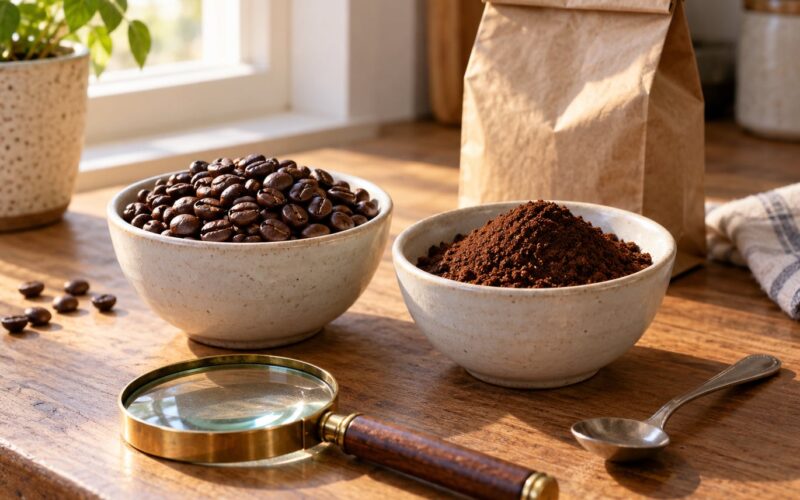
Use a texture reference instead of guessing. Table salt is roughly a pour-over medium, raw sugar is coarser and suits a French press, and something between powdered sugar and sand suits espresso and moka pots.
The adjustment protocol matters more than the direction. Make one change, taste, then make another. On a burr grinder, two clicks is a real step; on a blade grinder, changing the brew time is the only honest lever you have.
You have gone too coarse when the cup turns thin, salty-sour and hollow in the middle. You have gone too fine when the draw-down stalls past 4:00, the cup finishes dry, and bitter flavor keeps building as it cools.
A cheap refractometer turns all of this into a number. It reads total dissolved solids, and a rough extraction yield of 18 to 22 percent is the window most people are aiming for. You do not need one to fix a bitter cup, but it settles arguments quickly if you keep bouncing between recipes.
How Water Temperature and Water Quality Change Bitterness
Temperature is the quiet variable most people ignore. Water at a full boil extracts bitter compounds faster than water at 200F, which is why a cup brewed from kettle-boiled water can taste burnt even when the recipe is perfect.
Use 195-205F (90-96C) as your working range and drop the temperature by 3 to 5F if the cup is still harsh after you fix the grind. Lowering the temperature slightly is a fix that costs nothing, and it is the one users on coffee forums reach for when grind changes have already failed.
Water quality matters just as much. Very hard water buffers acidity and mutes the sweetness, which leaves a dull, lingering bitterness no grind change touches. Very soft or distilled water has no minerals to help extraction and can taste flat and papery.
- Hard tap water: often above 150 ppm of hardness. A pitcher filter designed for coffee, or diluted bottled water, is the cheapest fix.
- Chlorinated tap water: tastes flat and can carry a papery edge. Let it stand uncovered for a few hours, or use a carbon filter.
- Reverse osmosis: strips the minerals too. Remineralize it, or mix it 50-50 with a mineral water.
- Distilled: the worst base for brewing. Never use it alone.
- Spring water: the easiest reference point, and a good diagnostic for whether your tap water is the problem.
One cheap test settles the question: brew the same coffee and the same dose with your tap water and with bottled spring water. If one cup tastes noticeably better, water has been part of your problem all along.
How to Fix Bitter Coffee from the Beans and Roast
Some bitterness is designed in. Dark roasts are roasted long enough to develop carbon compounds and smoky character, and a French roast will never taste like a washed Ethiopian. If you find dark roasts unpleasantly bitter, buy lighter and look for chocolate, nut and fruit notes rather than roast flavor.
Freshness behaves differently from roast level. Coffee degasses for roughly a week to two weeks after roasting, so beans straight off the roast date can taste gassy and slightly sour. Beans opened weeks later taste flat and papery, which people often mislabel as bitter.
If your coffee is fine on Tuesday and bitter on Thursday of the same week, the likely causes are a new bag with a different roast, a water supply change, seasonal humidity affecting stored beans, or coffee left sitting open on the counter.
Store beans airtight, away from light and heat, and buy amounts you can finish in a few weeks. Pre-ground coffee is the worst option: it loses aroma within days and its grind distribution is rarely matched to your brewer.
How to Adjust Espresso, Milk, and Drinks That Mask Bitterness
Espresso hides the general rule that bitterness equals over-extraction, so it needs its own diagnosis. Users on r/espresso point at the same three culprits every time: too many grams tamped, a shot running long, and beans that are too fresh.
Start with the numbers. Dose 18 g of coffee, aim for 36 g of espresso in 28 to 32 seconds, and change one of those three numbers at a time. If the puck is tight and the grinder struggles, you are packing too much coffee in. If the shot chokes and drips slowly, grind finer. If it runs fast and thin with a bitter finish, grind coarser.
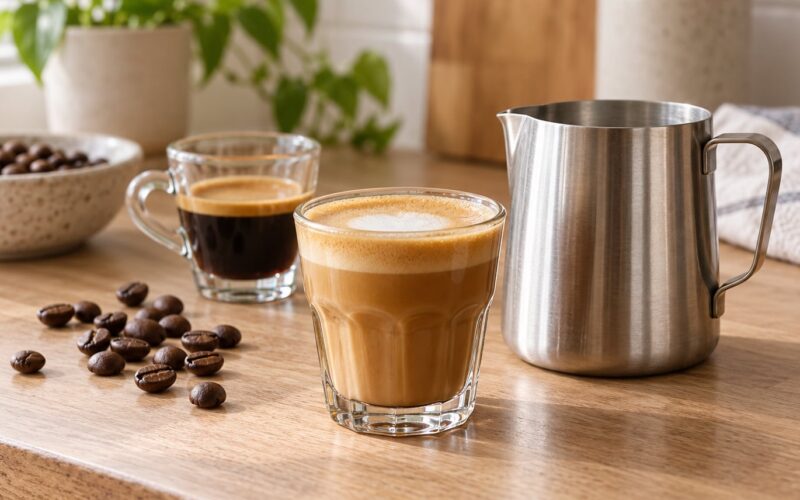
Milk changes how bitterness reads more than most people expect. Well-textured microfoam carries the flavors upward and leaves sweetness on the finish. Badly steamed milk, scalding hot or thin and watery, makes an already bitter shot taste worse while hiding the coffee underneath.
Sugar and salt both suppress perceived bitterness rather than removing it. A small pinch of kosher salt in an already-brewed pot is the most-repeated remedy on coffee forums, and it works well enough to be worth trying. Sugar does the same thing less precisely, and sweetened syrups do it most of all.
The honest answer to bitterness in a drink is that the espresso underneath was over-extracted, and dairy is covering it up.
A Simple Bitter-Coffee Troubleshooting Checklist
When a cup goes wrong, run this in order and stop at the first change that fixes it.
- Taste the coffee black. With milk and sugar, you are diagnosing a drink, not a brew.
- Check the roast date on the bag and how long it has been open.
- Coarsen the grind one step and brew again. This solves most bitter cups on its own.
- If still bitter, drop the water to about 195F and try again.
- Still bitter? Move the ratio from 1:15 toward 1:17 and shorten the contact time.
- Run the tap water versus spring water test.
- Clean the grinder burrs, the brew basket, the carafe and the portafilter.
- If the cup is bitter and sour at the same time, suspect channeling: agitate less, check the filter is seated, and make sure the water is distributed across the whole bed.
- Write down what you changed and what happened. Next time you will not repeat the experiment.
- Reset from a known-good recipe: 1:16, medium grind, 200F, 3:00 draw-down. Dial forward from there.
Write it down. The people who fix bitter coffee fastest are not the ones with the best palates, they are the ones who stopped guessing.
Frequently Asked Questions
Why does my coffee taste bitter but not sour?
A bitter-but-not-sour cup means the water kept pulling solubles after the sweetness stage was done, which is over-extraction. The usual triggers are a grind too fine for the brewer, water above 205F, or a brew running longer than the method needs. Coarsen the grind first, then drop the temperature a few degrees if it persists.
How do I make bitter coffee less bitter without making it weak?
Dilute it, do not add more coffee. Brewing more grounds makes a bitter cup worse. Brew hot water into the pot or cup to bring the ratio from 1:15 toward 1:18, or flash-brew a fresh, more concentrated batch over ice. For the next pot, use less coffee and a coarser grind so the strength stays where you like it.
Is coffee supposed to taste bitter?
Yes, to a degree. Coffee is roasted from a plant seed, and roasted coffee naturally contains bitter and astringent compounds. Beans that taste of dark chocolate, cocoa nib, nuts or grapefruit zest are showing that character in a balanced way. A cup that is only bitterness, with a drying finish and nothing sweet behind it, has been over-extracted and can be fixed.
Does a finer grind make coffee bitter?
A finer grind increases surface area, so water moves through the bed faster and pulls more solubles. Past the sweetness stage that turns into bitterness and astringency. Grind finer when the cup is sour, thin or salty, and coarser when it is bitter, dry or harsh. Change one step at a time and taste each time.
Why is my espresso bitter, and how should I change the recipe?
Check yield before anything else. If 18 g of coffee is producing more than 40 g of espresso, the shot is over-extracted. Pull it earlier, tamp more level, or drop a gram or two of dose if the grinder struggles. Beans that are only a few days off roast also make bitter shots, so give them more rest before blaming the machine.
Can old coffee beans taste bitter?
Old beans usually taste stale rather than bitter: flat, papery, dull, with almost no aroma. What people report as bitter from old coffee is more often the roast character of a dark bean, or a brew that was already over-extracted. If the cup is dry and harsh, fix the grind and temperature first, then try fresher beans to see what changes.
Conclusion: Start With Freshness and Extraction
Start with the two things that resolve most cases: fresh coffee and a sensible extraction. Use beans roasted in the last few weeks, hold a 1:16 ratio, water near 200F, and a medium grind that draws down in about three minutes.
Then change exactly one thing per brew. Most bitter cups turn into good cups within two or three attempts of a single-variable change, and you will find the fix that fits your brewer and your water rather than one that only works on a blog.