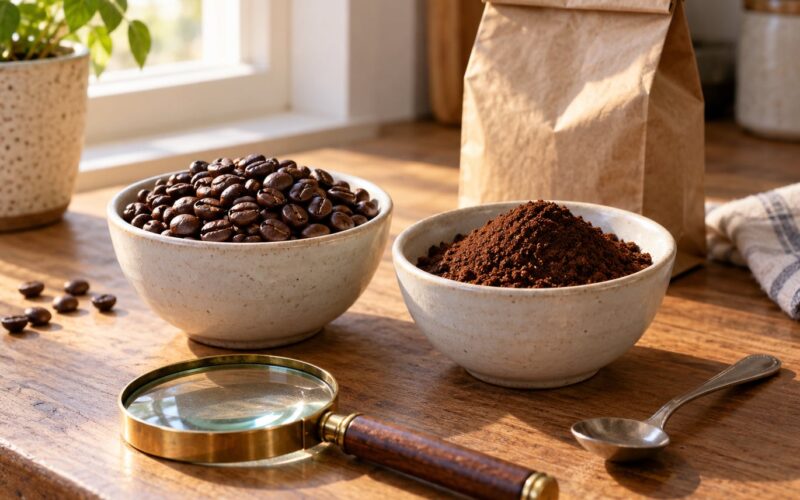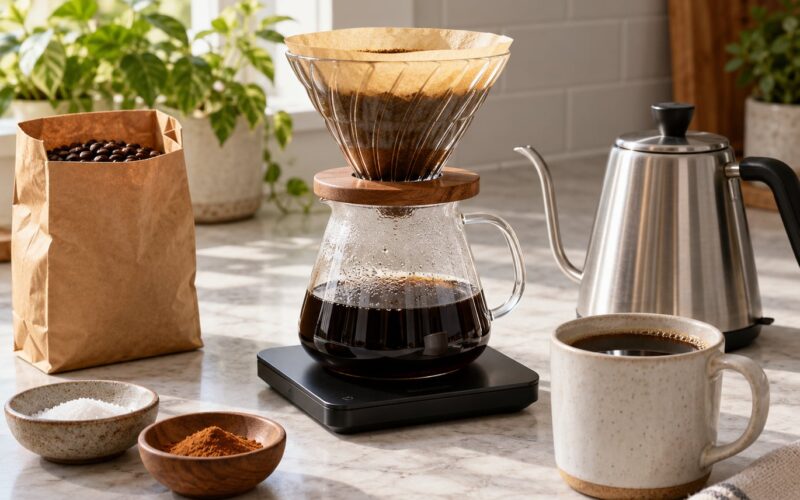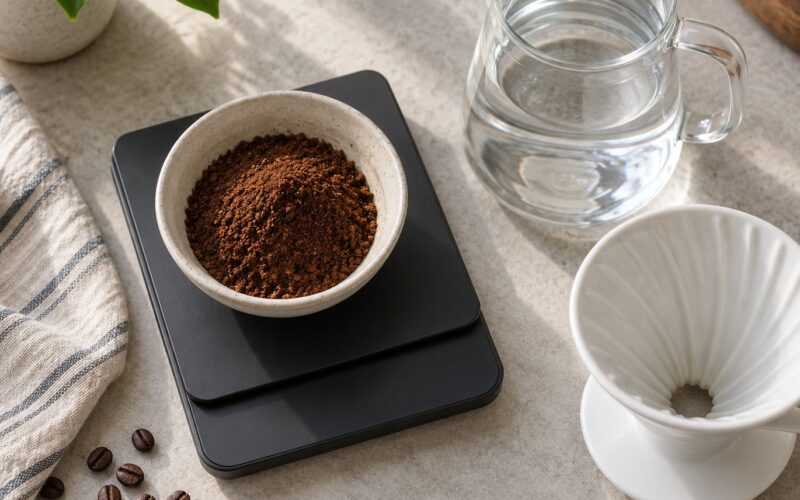
Iced coffee tastes watered down because the ice melts into water you never counted in the recipe, and because brewing with cold water pulls less flavor out of the grounds than hot water does. Fix both and the drink stays sharp from the first sip to the last: brew a concentrate at roughly twice normal strength, cool it fast, and start with 2 parts coffee to 1 part ice by volume. Whole method below, about 15 minutes plus brewing time.
The dilution part is pure arithmetic. Your coffee solids stay the same while the water volume grows, so the same amount of coffee ends up spread across a bigger drink. That is also why most people reach for more coffee powder and end up with something bitter instead of strong, since extra bitterness is not extra strength.
Table of Contents
- What You Need
- Step-by-Step: Make Concentrated Iced Coffee
- 1. Brew Coffee at Twice the Normal Strength
- 2. Use Proportionally More Coffee Solids
- 3. Brew Clean, Sweet Coffee and Chill It Fast
- 4. Add a Controlled Amount of Ice
- 5. Choose Milk or Water Deliberately
- 6. Sweeten After Dilution
- 7. Stir and Serve Before the Ice Fully Melts
- How to Keep a Batch Strong Until Everyone Is Served
- Cold Brew and Espresso Alternatives
- Common Mistakes
- Frequently Asked Questions
- How do I make iced coffee that is not watered down when serving a group?
- What is the best coffee-to-ice ratio for iced coffee?
- Does adding milk to iced coffee make it watered down?
- Can I use cold brew concentrate instead of brewing fresh coffee?
- How strong should the coffee be before I add ice?
- What can I do to keep iced coffee from getting weak in hot weather?
- Conclusion
What You Need
Not much. Everything here is either optional or already in your kitchen, and the ratios are small enough to scale without a scale. The base formula to remember is 2 parts concentrated coffee to 1 part ice.
- Coffee: any brew you already make. A medium or medium-dark roast holds up better against ice than a light roast, which tends to taste thin and sharp once it is cold and diluted.
- Ice: large cubes melt more slowly than small ones. A solid 2-inch cube can hold a drink together for the length of a coffee break, while a thin half-inch cube is gone in about ten minutes.
- A second freezing vessel: a silicone or ice-safe tray, or a clean freezer bag, so you can freeze extra coffee cubes ahead of time.
- Milk: optional, and it is a diluting liquid like any other. Milk adds body and softens acidity, which is a trade you may want, but it is not a way to fix weak coffee.
- Sweetener: simple syrup, maple syrup, sugar, or a spoonful of sweetened condensed milk.
- A serving glass: a freezer-safe or sturdy glass is safer than a thin one when you are loading it with large cubes. Chill it in the freezer for ten minutes beforehand.
If you make one coffee a day, freezing a whole tray of coffee cubes is more effort than it is worth. In that case the 2:1 ratio with a chilled glass does most of the work on its own.
Step-by-Step: Make Concentrated Iced Coffee
1. Brew Coffee at Twice the Normal Strength
Double the grounds and keep the same water, or cut the water in half and keep the grounds. Both land in the same place, and both beat chasing a faster brew. A dependable starting point is 2 tablespoons of medium-coarse grounds per 4 ounces of water, then adjust the grind, not the time, if it tastes off.
If you use pre-brew concentrate, mix it at double the labelled dilution. Espresso-based recipes should start around a double shot, and pod machines need the same 2:1 coffee-to-ice ratio once the concentrate is poured, because a pod gives you very little control over strength until the pod is doubled up.
2. Use Proportionally More Coffee Solids
A standard home brew sits near a 1:16 coffee-to-water ratio by weight. For iced coffee, start at 1:8, which is roughly double the solids. That is a starting point, not a rule to follow blindly. A light, washed African coffee at 1:8 can taste aggressively bitter, so make small adjustments and taste before you commit to a full batch.
Bitterness, body and brew time all shift with roast and method, so treat 1:8 as a dial. If the drink tastes harsh rather than strong, you extracted too much, and the fix is a coarser grind or a slightly higher ratio, not less coffee.
3. Brew Clean, Sweet Coffee and Chill It Fast
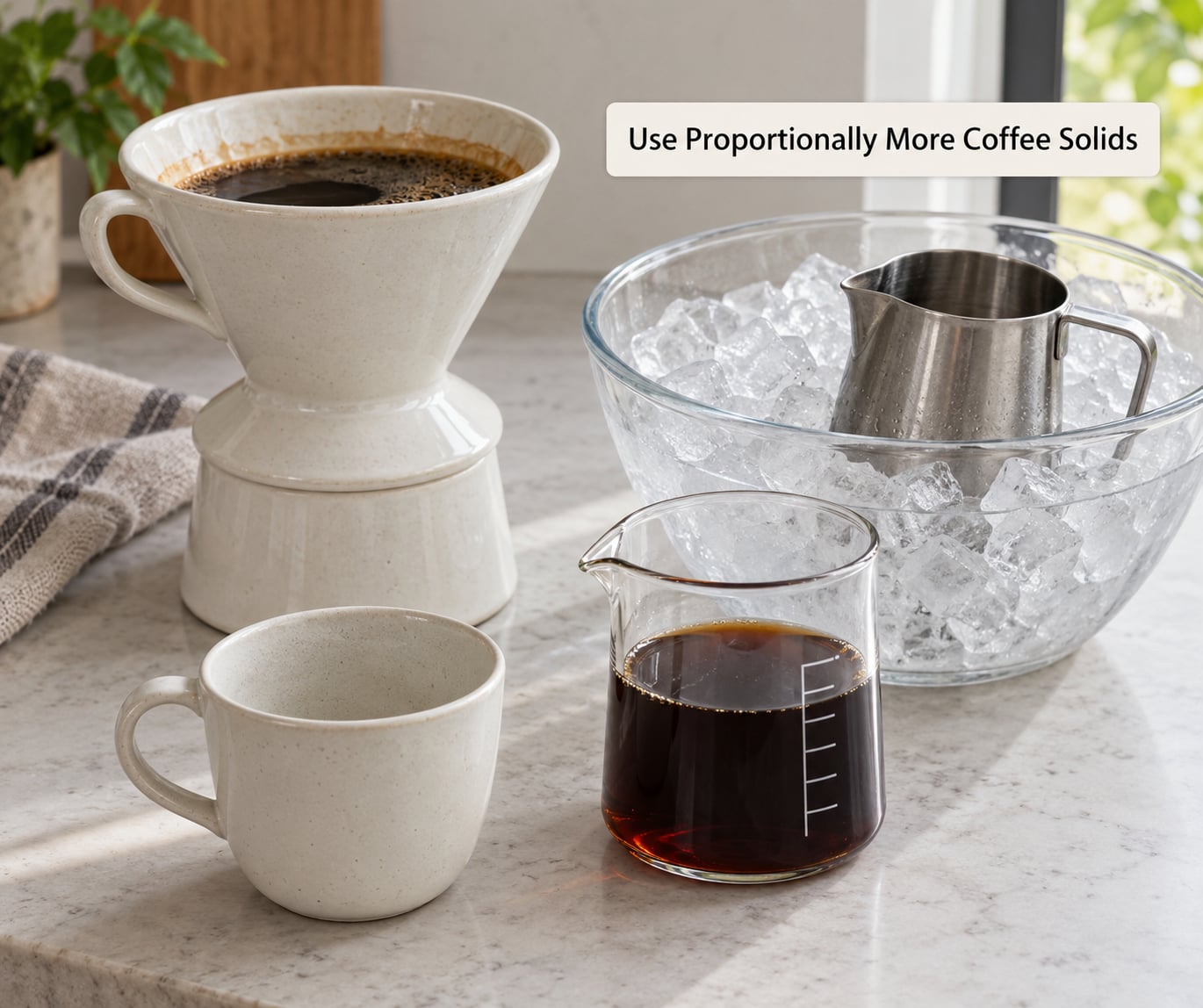
Brew hot, around 200F, and sweeten while it is still hot so the sugar dissolves fully. Undissolved sugar settles at the bottom and gives you one strange first sip. Then pour the finished concentrate straight into a bowl or pitcher sitting in an ice bath and stir for about a minute.
You will know it is cold enough when the vessel feels no warmer than the counter and condensation forms on the outside. Pouring boiling coffee straight over ice works against you twice: the shock melts the cubes faster and the heat flattens the aromatics you are trying to keep.
4. Add a Controlled Amount of Ice
Start with 2 parts concentrate to 1 part ice by volume, so a 12-ounce concentrate gets roughly 6 ounces of ice. That is a starting point rather than a law, because cube size, how warm the coffee was, the room temperature and the shape of your glass all change how fast the ice goes.
Think of it as a water budget instead. If your cup ends up half full of ice, a quarter of the final volume is melted plain water by the time you drink it. Counting the ice in your recipe is how you stop it from counting itself.
5. Choose Milk or Water Deliberately
Water keeps the coffee clear and bright. Milk softens acidity and adds body, which many people like, but it dilutes just like ice does. Start at 50:50 coffee to milk if you want a latte-style drink, and add the milk before the final ice so the ice is doing temperature work rather than replacing lost body.
An overly milky drink tastes thin and flat all the way down. A drink that has simply melted tastes the same at the last sip as it did at the first. Those are different problems, and only one of them is about milk.
6. Sweeten After Dilution
Wait until the ice has started melting, then taste. Add simple syrup, maple syrup, sugar or a small spoon of sweetened condensed milk in increments and stir. Adding extra sweet coffee or a big sugar scoop later on tends to taste cloying because the sweetness lands unevenly and the aroma has already faded.
If you like a sweet cold brew concentrate, mix the sugar into the concentrate before it chills so it dissolves properly. Just keep the total sugar in the ballpark you would use hot.

7. Stir and Serve Before the Ice Fully Melts
Load a sturdy glass with fresh large cubes, pour the concentrate over the back of a spoon so it runs down the side instead of hammering the ice, then stir gently once. Top up with more concentrate as the ice drops, or replace melted cubes with fresh ones and top off.
If you are serving a batch, keep the concentrate undiluted in the fridge and build each glass as it gets ordered. That single habit is the difference between iced coffee and a jug of brown water by hour three. A finished drink still shows coffee color at the top of the glass, smells of coffee when you put your nose to it, and tastes the same on the final sip as the first.
How to Keep a Batch Strong Until Everyone Is Served
A weak serving and a depleted batch are two different problems, and people often try to fix the first by addressing the second. If your own glass was strong at minute five and flat at minute twenty, that is the ice in that glass. If the whole batch tastes weak, the concentrate was too weak to begin with.
For a batch, brew concentrate at 1:8, chill it completely, and store it undiluted and unsweetened in the fridge in a sealed container. A good batch ratio is 4 parts concentrate to 1 part ice as a starting point across several servings, and you can always add more ice than planned while holding the coffee back.
Measure the concentrate into each glass at serving time and add ice and milk per glass. Timing matters less than most people think; what matters is that nothing melts into the shared pot. Expect a sealed batch to hold its flavor well through a working day, and give it a taste test after a few hours before you commit to doubling the next batch.
Cold Brew and Espresso Alternatives
Cold brew concentrate. This is the easiest path for most people. Steep it stronger than a ready-to-drink cold brew, dilute it to order with water or milk, and pour it over ice last. The r/Coffee cold brew guide thread pushes a 3:16 ratio, meaning roughly 3 ounces of coffee grounds to 16 ounces of water, which is far stronger than typical cold brew recipes and works well for iced coffee. Their most-endorsed method steeps in room-temperature water for 16 hours, since cold water steeping is widely seen as under-extracting. If yours tastes watery, add more concentrate or use less ice rather than brewing longer.
Espresso. Double shots over ice, shaken in a closed shaker for ten seconds, gives you a drink that stays punchy because the ice is doing the chilling while the agitation cools it fast. Skip the shaker and the same recipe tastes flatter.
Instant coffee. Dissolve it in a splash of hot water first rather than dumping powder into cold liquid, or you get grit. Treat it like any other concentrate and hold it to the 2:1 ice ratio.
Coffee pods. Use two pods per serving instead of one, and treat the result as a concentrate rather than a finished drink. It is the least controllable option, so keep the ice on the conservative side.
Common Mistakes
Tastes weak at the first sip. The concentrate was brewed at normal strength. Double the grounds or halve the water, then retaste.
Strong at the first sip, flat at the last. Ice melted in the glass. Use larger cubes, a chilled glass, and top up with more concentrate instead of more ice.
Bitter and astringent. Too much extraction, not too much coffee. Grind coarser or move from 1:8 toward 1:10.
Thin and watery no matter what. Cold-water brewing under-extracted the grounds. Brew hot, then chill the finished concentrate.
Thin and watery across the whole batch. The concentrate got diluted before serving. Store it separate and build glasses individually.
Too milky and flat. Milk was added too early or in too much. Start at 50:50 and add milk before the final ice.
Gritty or sandy at the bottom. Instant coffee or grounds went straight over ice. Dissolve instant in hot water first, or filter the concentrate.
Sugar sinking in layers. Sugar was added after the coffee went cold. Dissolve syrup into the hot concentrate before chilling.
A few tips for scaling this up. Multiply the grounds by the number of servings and keep the ratio fixed rather than the water. For roast adjustments, a dark roast is more forgiving at 1:8 than a light roast, so start a touch lower if you are using something chocolatey. And if you drink coffee fast in a hot room, skip the milk and go larger on the ice ratio for temperature, because milk is the liquid most likely to make things taste thin.
Frequently Asked Questions
How do I make iced coffee that is not watered down when serving a group?
Brew one double-strength concentrate at roughly 1:8 coffee-to-water, chill it fully, and keep it undiluted in the fridge. Build each glass to order with 2 parts concentrate to 1 part ice, adding milk and sweetener per glass. Never pour concentrate into a shared pitcher of ice, because that melts into the batch and weakens everything left in it.
What is the best coffee-to-ice ratio for iced coffee?
Start with 2 parts concentrated coffee to 1 part ice by volume, so 12 ounces of concentrate gets about 6 ounces of ice. Treat that as a starting point rather than a rule, since cube size, how warm the coffee was and room temperature all change the melt rate. Tasting and adding more concentrate later is easier to correct than a batch brewed too weak.
Does adding milk to iced coffee make it watered down?
Milk does dilute coffee, but it also softens acidity and adds body, which many people prefer. The trick is to start at 50:50 coffee to milk, add the milk before the final ice, and keep the concentrate strong enough to stand up to it. If your drink tastes thin and flat all the way down, that is too much milk. If it only weakens in the last few sips, that is melting ice.
Can I use cold brew concentrate instead of brewing fresh coffee?
Yes, and for most people it is the easiest route. Look for a concentrate rather than ready-to-drink cold brew, dilute it to taste with water or milk, and pour it over ice last. If it tastes watery, add more concentrate or use fewer cubes instead of diluting it further. Popular brewing ratios run as strong as 3 ounces of grounds to 16 ounces of water.
How strong should the coffee be before I add ice?
Brew at roughly twice normal strength, which is about a 1:8 coffee-to-water ratio by weight compared with the usual 1:16 for hot coffee. Double the grounds or halve the water, not both. Taste it before adding ice, and if it is harsh rather than strong, grind coarser or dilute slightly instead of adding more coffee, since extra bitterness is not extra strength.
What can I do to keep iced coffee from getting weak in hot weather?
Chill everything before you serve it: freeze the glass for ten minutes, chill the concentrate in an ice bath, and use the largest cubes you can make. Freezing extra concentrate into cubes and using those instead of water ice means any melt adds coffee rather than dilution. Serve in an insulated tumbler if you are carrying the drink around, and keep the batch itself undiluted.
Conclusion
Start with three numbers and adjust from there: brew at 1:8 instead of 1:16, add 2 parts concentrate to 1 part ice, and split coffee and milk 50:50. Brew hot and chill fast, then taste after the ice has started to melt and sweeten in small steps from there.
The first thing to do when you learn how to make iced coffee that is not watered down is to measure your concentrate and your ice instead of eyeballing both. Once those two numbers are honest, everything after them is a small correction.