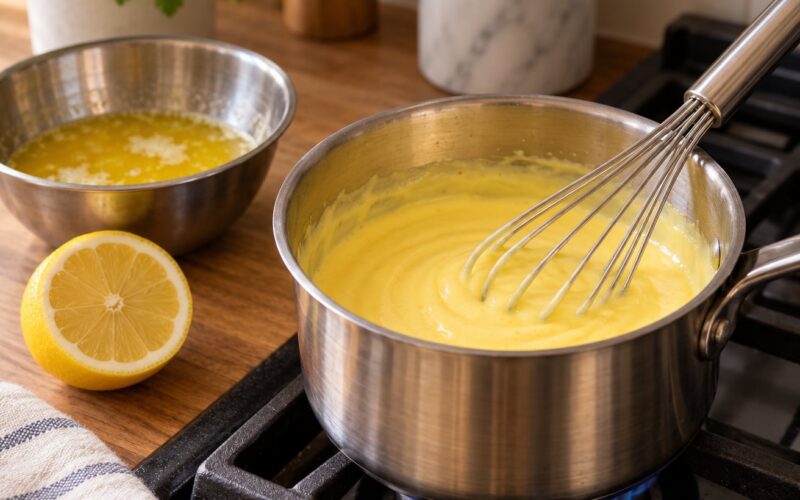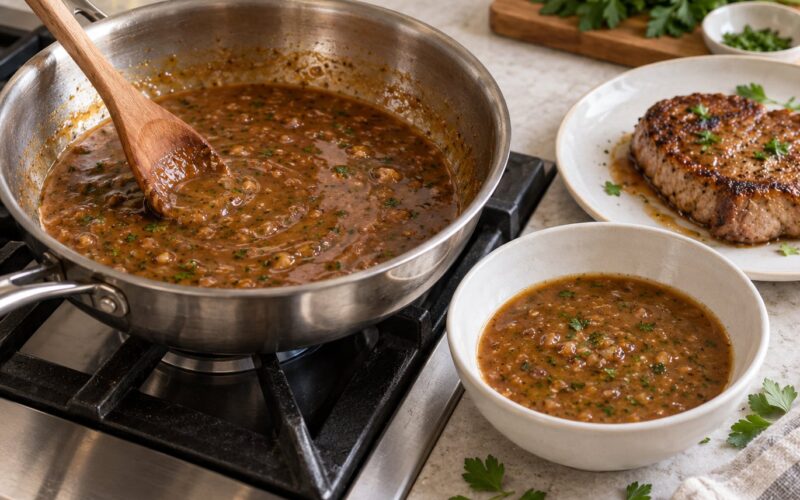
A roux is equal parts fat and flour, cooked together until the raw flour taste is gone, then whisked into hot liquid to thicken it into a smooth sauce. Learning how to make a roux and use it takes about ten minutes of active cooking, and the same four-step method works for white cheese sauce, brown gumbo, and quick pan gravy.
The technique rewards you twice. Cooking the flour in fat toasts the starch and wraps it in fat, which is why a roux never clumps the way raw flour stirred straight into a pot does.
I burned my first one badly. The smoke alarm got a workout, and I learned more in that ten minutes than from any recipe I’d read. Here is the version that has not failed me since.
Table of Contents
- What You Need
- Step-by-Step: How to Make a Roux and Use It
- 1. Make a Basic White Roux
- 2. Make a Golden or Brown Roux
- 3. Use Roux to Thicken Soups, Sauces, and Gravies
- 4. Use Roux as a Thickener Without Making It Too Thick
- Common Mistakes
- Frequently Asked Questions
- Can I use oil instead of butter when making a roux?
- How much roux do I need for 1 cup of liquid?
- How long should I cook a roux for gumbo?
- What color roux should I use for gravy and cheese sauce?
- Can I make roux ahead of time and store it?
What You Need
Equal parts fat and flour is the whole recipe. Measure both by weight and you are always in the right place: 2 ounces of butter calls for 2 ounces of all-purpose flour, which is 4 tablespoons of butter and a scant half cup of flour.
Beyond that you need a saucepan with a heavy bottom, a whisk or a sturdy wooden spoon, and the liquid your finished dish calls for. Measure the liquid before you turn on the heat, because the last stage of the method goes fast.
Butter is the default and gives you a nutty, dairy-rich flavor. A neutral oil like canola behaves the same way and keeps more flavor from the dish itself, which is why many gumbo recipes use it.
Other fats work too. Bacon fat adds smoke, clarified butter or ghee burns less easily, and vegan butter behaves like dairy butter in most recipes. For a dark roux cooked for many minutes, a higher smoke point fat gives you more room before it turns bitter.
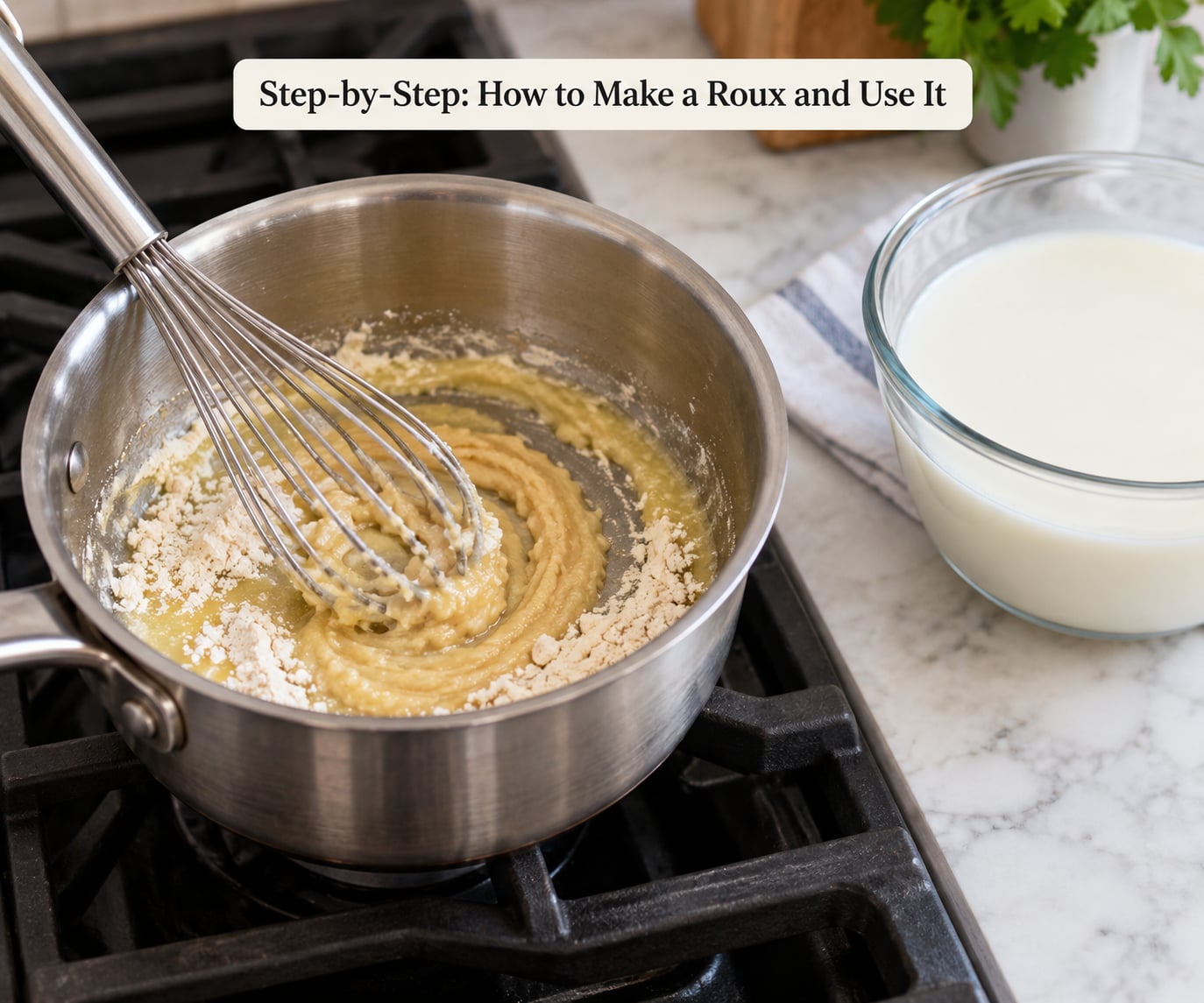
Step-by-Step: How to Make a Roux and Use It
1. Make a Basic White Roux
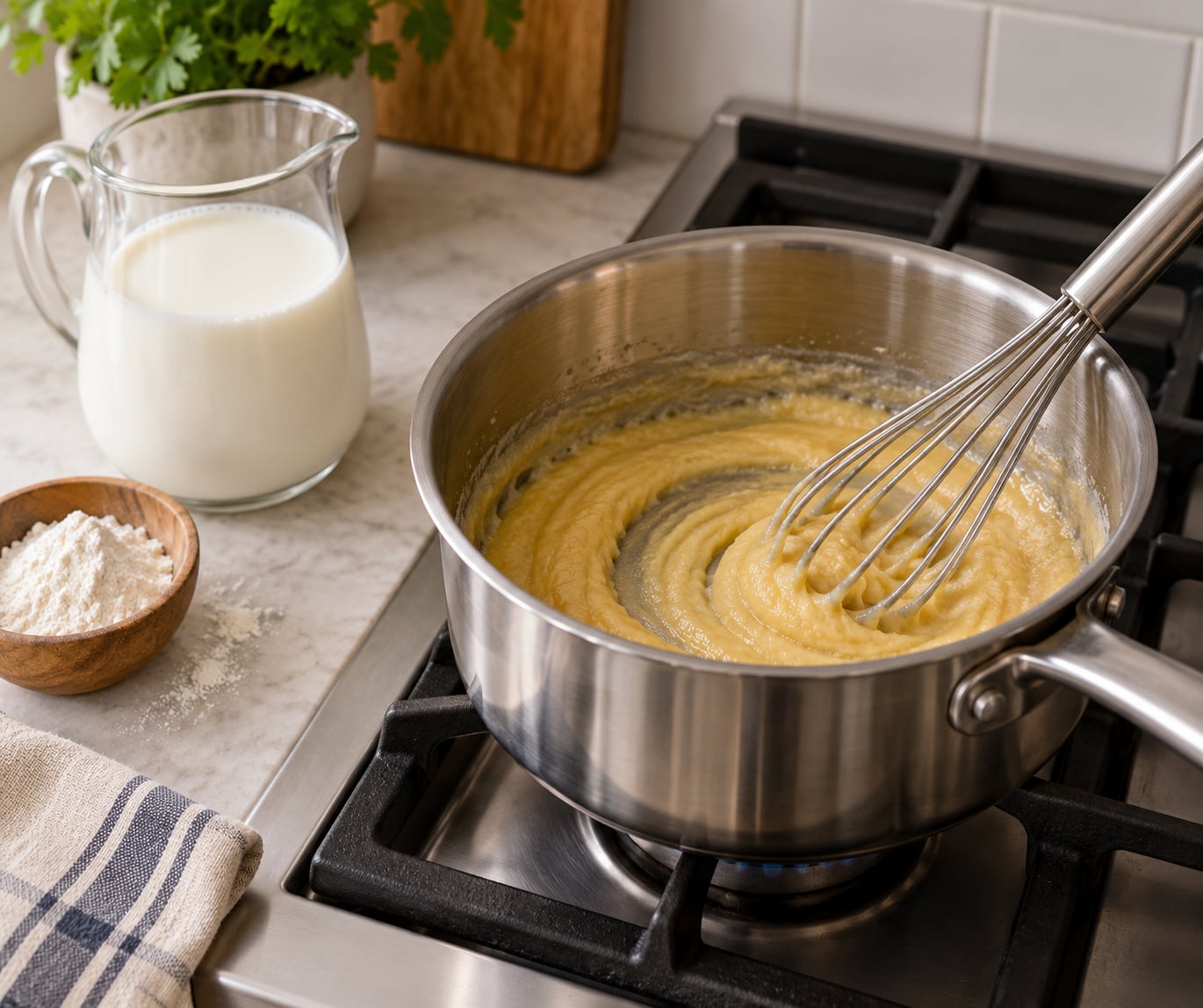
Melt the fat in your saucepan over medium-low heat, then stir in the flour all at once. Whisk steadily, working the paste away from the bottom of the pan, until it looks smooth and slightly darker.
Keep it on the heat for 1 to 2 minutes. You are looking for a faint nutty smell and a paste that leaves a thin film on the whisk when you lift it out. That film is the signal that the raw flour taste is gone.
Now add your liquid slowly, a little at a time, whisking after every addition. The first splash will seize into a thick paste, and that is normal; keep whisking and it loosens. Start with cold milk for a white sauce, which gives you a longer window to whisk before the mixture heats up.
A white roux is the base for béchamel, cheese sauce, and any light pan sauce.
2. Make a Golden or Brown Roux
Same method, longer cook. Keep the whisking up and the heat at medium-low, and let the color climb on its own. Blonde takes roughly 3 to 4 minutes of total cooking, medium brown about 6, and a deep chocolate brown around 8 to 12.
Watch color and aroma rather than the clock. The mixture goes from peanut butter to milk chocolate, and the smell shifts from plain toast to something roasted and sweet. When it smells acrid or bitter, it has gone past the point of no return.
Heat is the trap here. A hot burner scorches the outside before the center darkens, and scorched flour tastes burnt no matter how long the rest of the dish cooks.
A dark roux belongs in gumbo, shrimp étouffée, and jambalaya, where the deep color carries the flavor the stock alone cannot. It also thickens less than a light roux, because long cooking breaks down some of the starch that does the thickening. Plan to use a little more of a dark roux than the recipe’s volume suggests, or add okra or file powder for extra body.
3. Use Roux to Thicken Soups, Sauces, and Gravies
The rule that removes most lumps: cook the roux first, then add the liquid. Slurping raw flour into simmering soup gives you a dish you have to strain.
For a quick gravy, melt 2 tablespoons each of butter and flour in the pan with your drippings, cook a minute or two, then whisk in 1 to 2 cups of stock. That is sausage gravy, turkey gravy, or the pan sauce from a roast dinner in about five minutes.
For a creamy soup, make a small white roux in a separate pot first, then whisk that paste into the hot soup. Doing it in a separate pot means you control the thickness before the whole pot of soup is committed.
A white roux with warm milk gives you béchamel and the base for cheese sauce. Melt the cheese in low heat off the boil, and add it in handfuls until the sauce coats a spoon.
For gumbo, the darker the better. Cook the roux to a deep brown, then add your stock a ladle at a time and let the whole pot simmer for a while before adding okra, sausage, or seafood.
4. Use Roux as a Thickener Without Making It Too Thick
Start with less than you think. Roughly 2 tablespoons of roux per cup of liquid gives a medium-thick sauce, 3 tablespoons gives you something that coats the back of a spoon, and a light coating sauce needs closer to 1 tablespoon.
Add the liquid in stages and taste between them. You can loosen a sauce with more stock or milk, but you cannot thicken a thin sauce without making another roux and stirring it in.
Think about what the sauce has to do. A cream sauce should cling to pasta. A soup needs enough body to hold a spoonful of vegetables up without them sinking. A stew wants enough to suspend chunks, and anything past that turns gluey on cooling.
Thickening changes seasoning too. Salt that tasted right before the roux went in can taste flat after. Season again at the end, every time.
Common Mistakes
Lumps. Usually a temperature mismatch or pouring too fast. Add cold milk to a hot roux in small amounts with the whisk moving the whole time, or let the roux cool a minute before you start.
Thin sauce. Not enough roux for the volume of liquid, or a roux that sat too long on the heat and lost its thickening power. Whisk a fresh tablespoon or two of fat and flour together in a hot pan, cook it a minute, and stir it in.
A greasy or separated sauce. The fat has pulled away from the flour, usually from boiling hard or from cold liquid shocking the mixture. Take it off the heat, whisk hard for a minute, and warm it gently back up.
Scorched flavor. High heat browned the flour unevenly. There is no fix for this one. Start over, stir more often, and keep the burner at medium-low.
Grainy cheese sauce. Cheese added at boiling temperature seizes into strings. Take the sauce off the heat, let it cool for a minute, then stir the cheese in gradually off the heat so the fat and milk absorb it evenly.
A few habits prevent most of these. Measure the fat and flour before you start, whisk constantly rather than in lazy circles, and add liquid in stages rather than all at once. If a sauce goes wrong, you can usually whisk or strain your way out of it, but burnt roux has to go in the bin.
Frequently Asked Questions
Can I use oil instead of butter when making a roux?
Yes. A neutral oil such as canola or vegetable oil behaves the same as butter and keeps its flavor, which lets the dish speak for itself. It is a common choice for dark gumbo roux because it has no dairy solids to scorch. Butter adds a rounder, nuttier flavor that suits white and blond roux, and you can mix the two if you want both.
How much roux do I need for 1 cup of liquid?
Use about 2 tablespoons of roux per cup of liquid for a medium-thick sauce, and 3 tablespoons for a sauce that should coat a spoon. A light coating sauce needs closer to 1 tablespoon. Remember that these amounts are measured by volume in the pan, so a dark roux made from 2 tablespoons of flour and 2 tablespoons of fat yields a little over 4 tablespoons of finished paste.
How long should I cook a roux for gumbo?
Cook a gumbo roux until it reaches a deep brown close to milk chocolate, which usually takes 20 to 45 minutes at medium-low with constant stirring. Some cooks push the heat higher and reach the color in about 10 minutes, but that gives less nutty flavor and more risk of scorching. Stop before the smell turns acrid or bitter.
What color roux should I use for gravy and cheese sauce?
White or blond for both. A white roux keeps a milk sauce pale and mild, which is what you want for béchamel and cheese sauce. Brown adds a roasted, almost coffee-like note that belongs in gumbos and étouffées instead. For turkey or sausage gravy, medium brown is a nice middle ground.
Can I make roux ahead of time and store it?
Yes. Cool it, cover it, and refrigerate it for up to six months, or freeze it in ice cube trays and keep it for about three months. A refrigerated or frozen roux hardens, and you can break off what you need and whisk it into hot liquid. Never store a roux that smells burnt or acrid.
Start with equal parts fat and flour by weight, whisk steadily at medium-low heat, stop when the raw taste is gone and the color is where your dish wants it, and add your liquid slowly. Learn that white roux and the rest follows on its own.