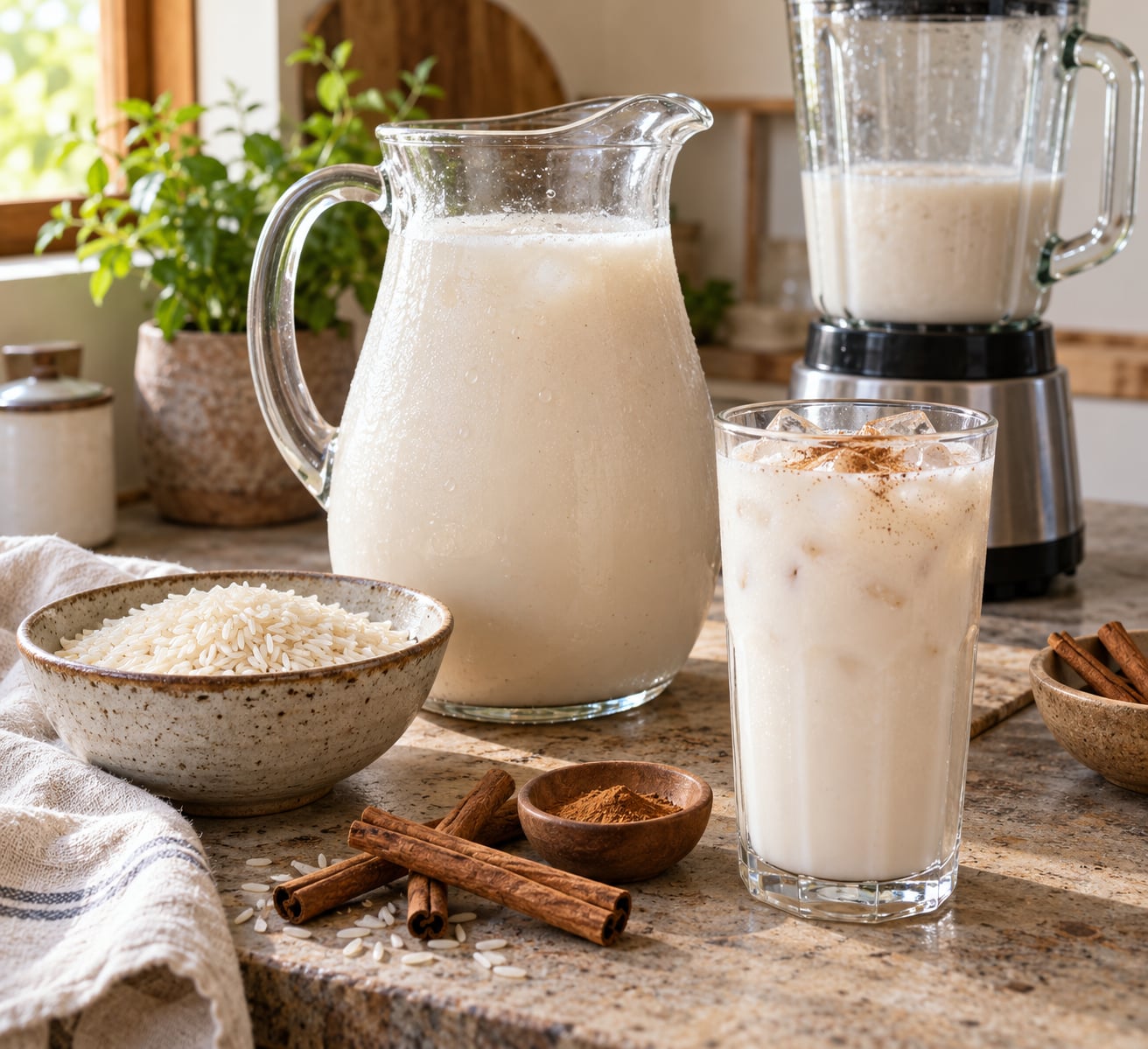
Horchata is not coconut milk and there is no cooking involved. To make horchata from scratch, you rinse long-grain white rice, soak it in water with cinnamon sticks overnight, blend it, strain out every speck of grit, then finish the rice water with milk, vanilla and sugar before chilling it. Ten minutes of work, one overnight soak, about six servings.
The store-bought powder is mostly starch, sugar and artificial cinnamon flavor, which is why it never tastes like the glass you get at a taqueria. The homemade version takes patience rather than skill. If you can rinse rice and run a blender, you can do this.
Table of Contents
- What You Need
- Swaps That Work Well
- Step-by-Step: How to Make Horchata From Scratch
- 1. Rinse and Soak the Rice
- 2. Blend the Rice and Water
- 3. Strain the Rice Mixture
- 4. Add Cinnamon, Vanilla, and Sweetener
- 5. Add Milk and Mix Gently
- 6. Taste and Adjust
- 7. Chill Until Thoroughly Cold
- 8. Serve Over Ice
- Common Mistakes
- Frequently Asked Questions
- How long should I soak the rice for horchata?
- Do I need condensed milk or evaporated milk to make horchata?
- Why is my homemade horchata gritty?
- Can I make horchata without a blender?
- How long does homemade horchata last in the refrigerator?
- Does the rice matter for horchata?
- Conclusion
What You Need
Here is the classic rice-based horchata recipe. It makes roughly six 8-ounce servings, close to three-and-a-half cups of finished drink plus ice.
- 1 cup long-grain white rice, rinsed
- 4 cups water, plus more if the rice drinks a lot of it
- 2 cinnamon sticks
- 1 teaspoon ground cinnamon, divided
- 1 cup whole milk
- 1/2 cup evaporated milk
- 1/3 cup granulated sugar
- 1 teaspoon vanilla extract
- 1/4 cup blanched slivered almonds, optional
Long-grain white rice matters here. Jasmine and basmati both work, and they add a faint floral note. Brown rice and old-fashioned steel-cut oats also work for a nuttier, grainier body, though the drink takes longer to blend smooth. Short-grain rice breaks down into starch paste and gets gluey, so avoid it.
On the equipment side, a blender does the actual work, and any blender will do as long as it has enough room for a quart of liquid. A nut milk bag gives you the smoothest result by far. A fine mesh strainer works, and a piece of clean cheesecloth tied over the mouth of a pitcher is the traditional option. A wide pitcher or a covered container gives the drink room to chill without spilling.
Swaps That Work Well
Swap the milks freely. Whole milk gives the lightest body, evaporated milk thickens and adds a rounded dairy note, and sweetened condensed milk replaces both the milks and the sugar. For a dairy-free version, use unsweetened almond or oat milk at the same volume and bump the sugar by a tablespoon. Honey or agave syrup substitute roughly one for one with the sugar, though they make the drink a little stickier.
Cinnamon varies more than people expect. Mexican cinnamon, also called Ceylon, is the mild, sweet, citrusy kind and it is the traditional choice. Cassia, the darker supermarket kind, is stronger and more peppery, so cut the ground cinnamon in half if you use it.
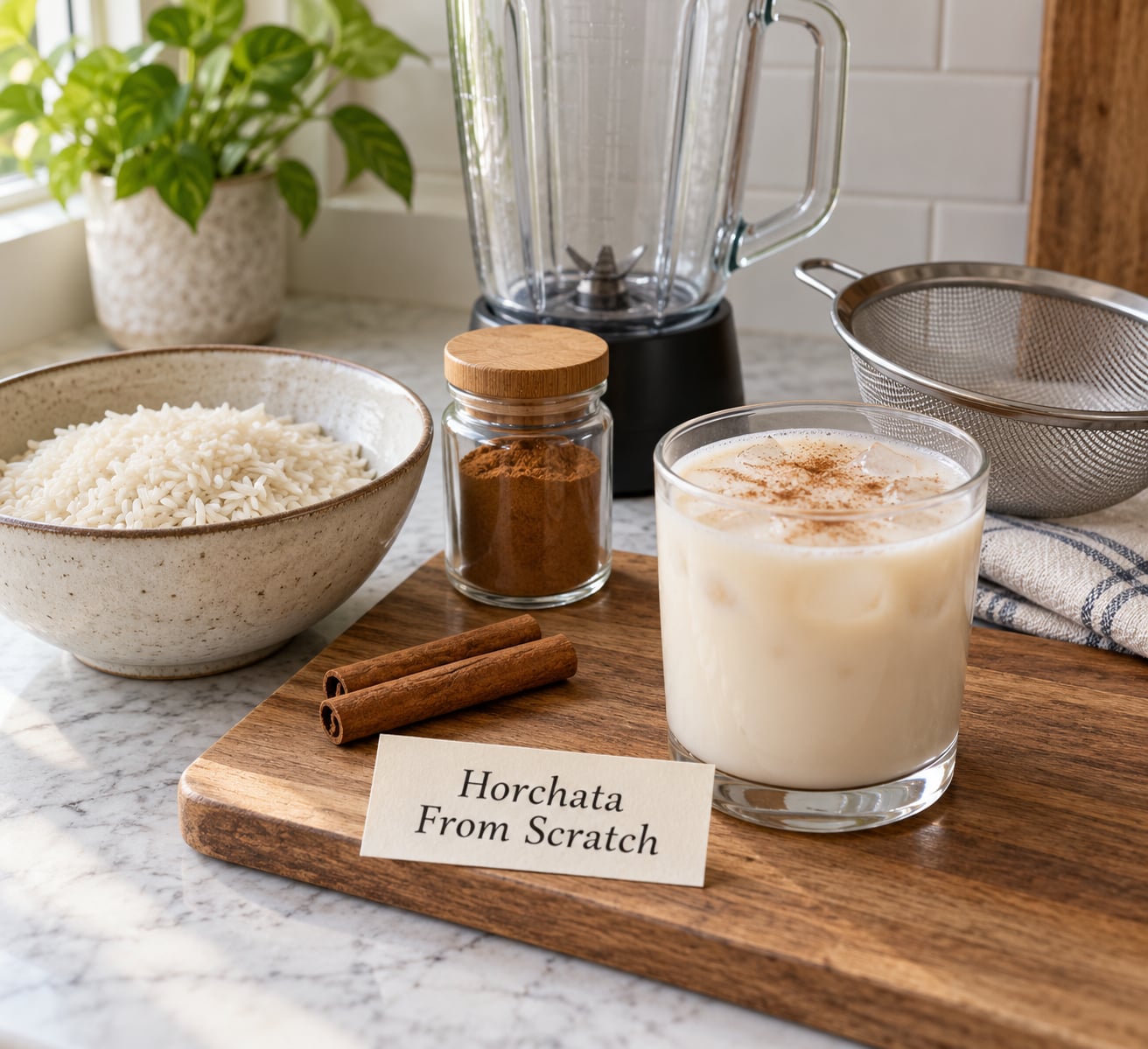
Step-by-Step: How to Make Horchata From Scratch
1. Rinse and Soak the Rice
Rinse the rice under cold running water until the water runs clear, usually six or seven changes. That washes off surface starch, which is the main reason homemade horchata turns gluey. Add the drained rice, cinnamon sticks and 4 cups of water to a large container, cover it, and refrigerate for 6 to 8 hours or overnight.
After a long soak the liquid looks milky and the rice has swollen and softened. That thick, paste-like appearance before blending is normal and it means the soak worked. If you did not plan ahead, soak the rice in hot water for 4 hours instead, though you will lose a little of the clean flavor.
2. Blend the Rice and Water
Drop the cinnamon sticks, pour the soaking liquid and softened rice into the blender, and blend on high for 60 to 90 seconds until everything is white and frothy. A countertop blender should be pulsed in short bursts rather than run continuously, which is easier on the motor and the jar.
You are looking for a consistency like slightly thickened almond milk, with no whole grains visible. The foam that builds is normal. Taste a small spoonful at this point, and it will taste mostly like warm rice water because the flavoring comes later.
3. Strain the Rice Mixture
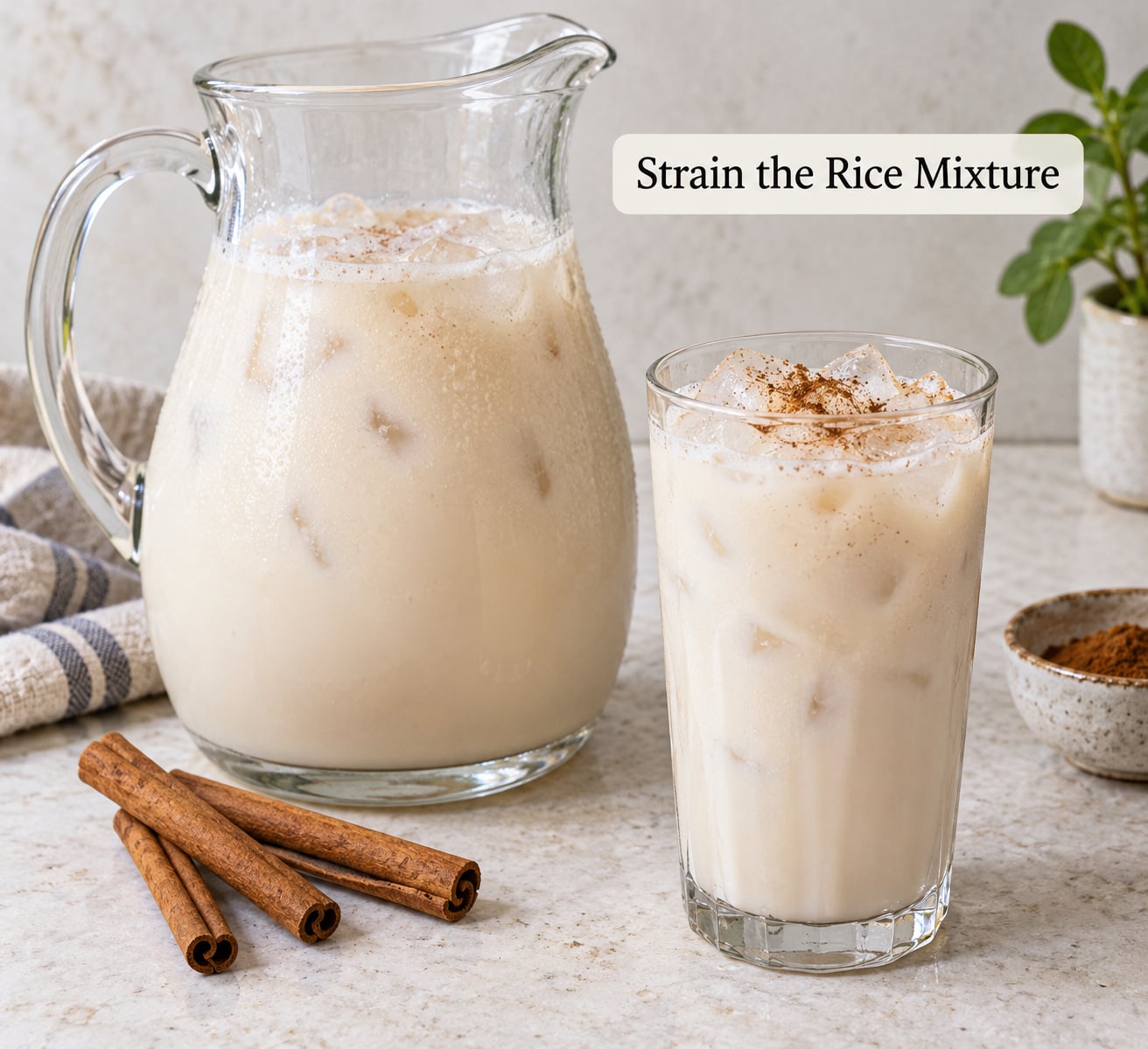
Strain through a fine mesh sieve or nut milk bag, pressing hard on the solids with the back of a spoon or a silicone ladle to squeeze out the liquid. That pressing step is where the difference between gritty and silky horchata lives.
If you still see rice particles in the bowl, pass the liquid through again. Two to four passes is normal for a full blender jar, and the payoff is worth the extra two minutes. A nut milk bag gets you there in a single pass because the weave is far finer than a kitchen sieve.
4. Add Cinnamon, Vanilla, and Sweetener
Warm the strained rice liquid slightly in a saucepan, about five minutes over medium-low heat, and stir in the ground cinnamon and sugar until the sugar dissolves. Warm liquid dissolves sugar and cinnamon far more evenly than cold liquid, where the powder just settles to the bottom.
Start with half the ground cinnamon and a moderate amount of sugar. You can add more later; you cannot take sweetness back out. Remove the pot from the heat, stir in the vanilla, and let the mixture cool to room temperature before adding any dairy.
5. Add Milk and Mix Gently
Pour the cooled rice liquid into a pitcher, add the whole milk and evaporated milk, and stir until the color is completely even. Use a whisk or a few slow passes with a blender in case any concentrated pockets are sitting at the bottom.
You are aiming for the viscosity of thin cream, not of milk and definitely not of pudding. If it looks closer to water, add another half cup of milk. If it looks heavy, whisk in cold water a tablespoon at a time.
6. Taste and Adjust
Taste with a clean spoon. Check four things in order: sweetness, cinnamon intensity, vanilla, and thickness. More sugar by the teaspoon, more ground cinnamon by the quarter teaspoon, a splash more vanilla if it tastes flat.
Cinnamon gets louder as the drink chills, since cold dulls your sense of sweetness and heat. If the flavor tastes perfect warm but muted cold, add a small pinch more cinnamon now rather than after it has sat in the fridge.
7. Chill Until Thoroughly Cold
Cover the pitcher and refrigerate for at least 4 hours, and overnight is better. Chilling is not just for temperature. It firms the texture so the drink pours with a little body instead of running flat over ice, which is the difference between a good horchata and a disappointing one.
A layer on top or a skin at the bottom as it sits is normal, and it is just the fat and solids separating. Give the pitcher a hard swirl or a thirty-second blend in the pitcher before you pour.
8. Serve Over Ice
Fill a tall glass with ice first, then pour the horchata over the top. Pouring the drink into a glass that already holds ice keeps the ice solid and the drink cold, and it stops the meltwater from watering down the bottom of the glass.
Dust the surface with a pinch of ground cinnamon and drop in a cinnamon stick if you have one. A squeeze of lime works well too, and so does a few drops of vanilla stirred in at the table.
Common Mistakes
Gritty texture. This is the number one complaint and it always comes down to straining. Pass the liquid through the bag or sieve two to four times, and press the solids firmly instead of letting them drip. Blending longer does not fix grit; more passes do.
Too thin. Either you diluted it too much or you skipped the milk. Whisk in evaporated milk a quarter cup at a time until it pours with the body of thin cream. Remember that the drink thickens noticeably as it chills.
Watery ice. Put the ice in the glass first, then pour over it. Freezing horchata directly into cubes works well, and it is the easiest way to keep a strong drink strong on a hot afternoon.
Weak cinnamon. Whole cinnamon sticks alone flavor the soaking water gently. If you want the spice to read clearly, add half a teaspoon of ground cinnamon to the warm liquid, and keep the sticks in for the soak rather than skipping them.
Cloying sweetness. The classic recipe sweetens twice, once in the pan and once at the finish. Start a third lighter than you think, taste after chilling, and add more only if needed. Condensed milk versions are already very sweet, so drop the sugar entirely.
Rushing the soak. Under two hours, the rice stays hard in the middle and the drink tastes like flavored water. Six to eight hours is the sweet spot, and an overnight soak in the fridge solves the problem for anyone making this ahead.
Homemade horchata keeps in the refrigerator for about 3 to 4 days, sealed and kept cold. Stir it before each pour, and if you want to freeze it, leave a little room in the container for expansion.
Frequently Asked Questions
How long should I soak the rice for horchata?
Soak the rice for 6 to 8 hours in the refrigerator, or overnight, which is the standard for a smooth homemade horchata. The rice swells and turns soft, and the soaking water picks up both starch and cinnamon flavor. A 4-hour soak in hot water works as a same-day shortcut, but the flavor is lighter and the texture a touch grainier.
Do I need condensed milk or evaporated milk to make horchata?
Neither is required. Plain whole milk and sugar give a lighter drink, and that is how many Mexican home cooks make it. Evaporated milk thickens the body and rounds out the flavor, and sweetened condensed milk adds body and sweetness at once. A dairy-free version uses unsweetened almond or oat milk in the same volume with a little extra sugar.
Why is my homemade horchata gritty?
Grit comes from rice particles that were not strained out. Pass your blended liquid through a nut milk bag or fine mesh strainer two to four times, pressing hard on the solids each pass to squeeze out every bit of liquid. Straining once and letting it drip is the usual reason. Check that your sieve mesh is fine enough, since a standard colander will not catch rice particles.
Can I make horchata without a blender?
It is possible but awkward. You can mash the soaked rice with a potato masher against the bottom of the pot, then strain the result, but expect more sediment and extra straining passes. A stick blender in the pot works nearly as well as a full blender. A food processor is a fallback, though it usually leaves a coarser texture.
How long does homemade horchata last in the refrigerator?
About 3 to 4 days, kept refrigerated in a sealed pitcher and given a good stir before each pour. The drink separates as it sits, which is normal and not a sign that it went bad. Shake or blend briefly to recombine, and add ice only to the glasses rather than the pitcher, since ice dilutes the batch.
Does the rice matter for horchata?
It matters more than most recipes admit. Long-grain white rice gives the cleanest, creamiest result and breaks down into a smooth rice water. Jasmine or basmati add a subtle floral note and work well. Brown rice and oats make a nuttier drink but need longer blending, and short-grain rice turns gluey because of its higher starch content.
Conclusion
Two steps decide whether your horchata is good: the soak and the straining. Give the rice the full 6 to 8 hours, and push the blended liquid through a fine sieve or nut milk bag two to four times. Chill the finished drink at least 4 hours so it firms up, then pour it over ice with a pinch of cinnamon on top.