Knowing how to serve wine at the right temperature takes about ten seconds of planning: the whole useful range sits between 38°F (3°C) for sparkling wines and 68°F (20°C) for bold reds. Get it in that zone and the wine tastes like the winemaker intended; miss it by ten degrees and the same bottle tastes flat, sharp or alcoholic.
The useful part is knowing which temperature belongs to which style, and how to get a bottle there in the time you actually have. That is what the rest of this covers, style by style, with timings you can plan a dinner around.
Table of Contents
- What You Need
- Step-by-Step: How to Serve Wine at the Right Temperature
- Step 1: Identify the Wine Style and Start With a Sensible Target
- Step 2: Chill or Warm the Bottle to the Target
- Step 3: Open, Rest and Pour the Wine
- Wine Serving Temperatures at a Glance
- Common Mistakes
- Serving reds at full room temperature
- Serving whites and sparkling wine straight from a cold fridge
- Using one fridge rule for every bottle
- Serving in a warm glass or holding the bowl
- Overfilling glasses
- Judging the wine before it has settled
- Tips for Serving Wine at Home
- Frequently Asked Questions
- What temperature should red wine be served at?
- Can white wine be served too cold?
- How long does it take to chill a wine bottle?
- Should rosé be served cold or at room temperature?
- Is it better to chill wine in the refrigerator or an ice bucket?
- How should fortified and dessert wine be served?
- Conclusion
What You Need
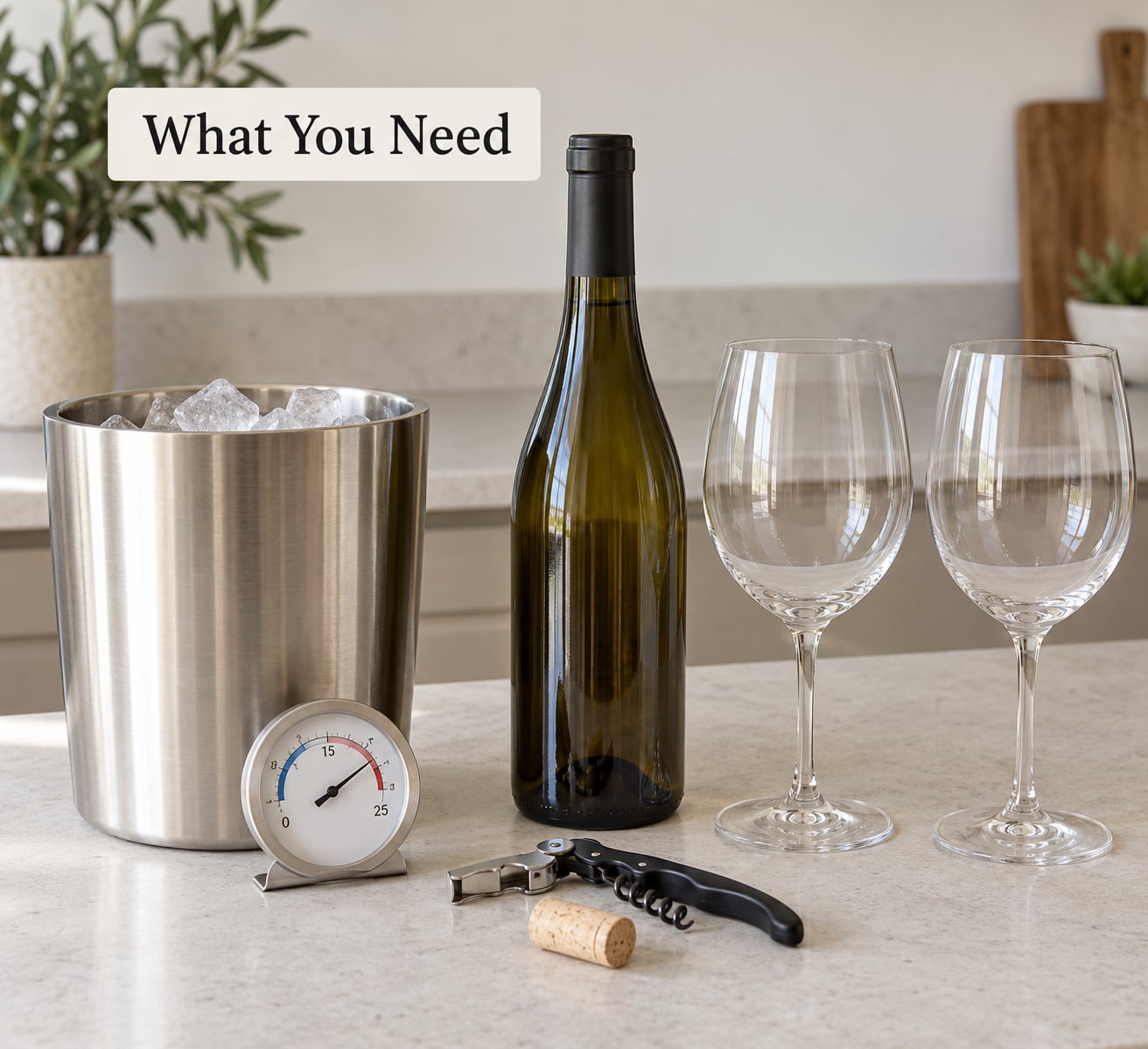
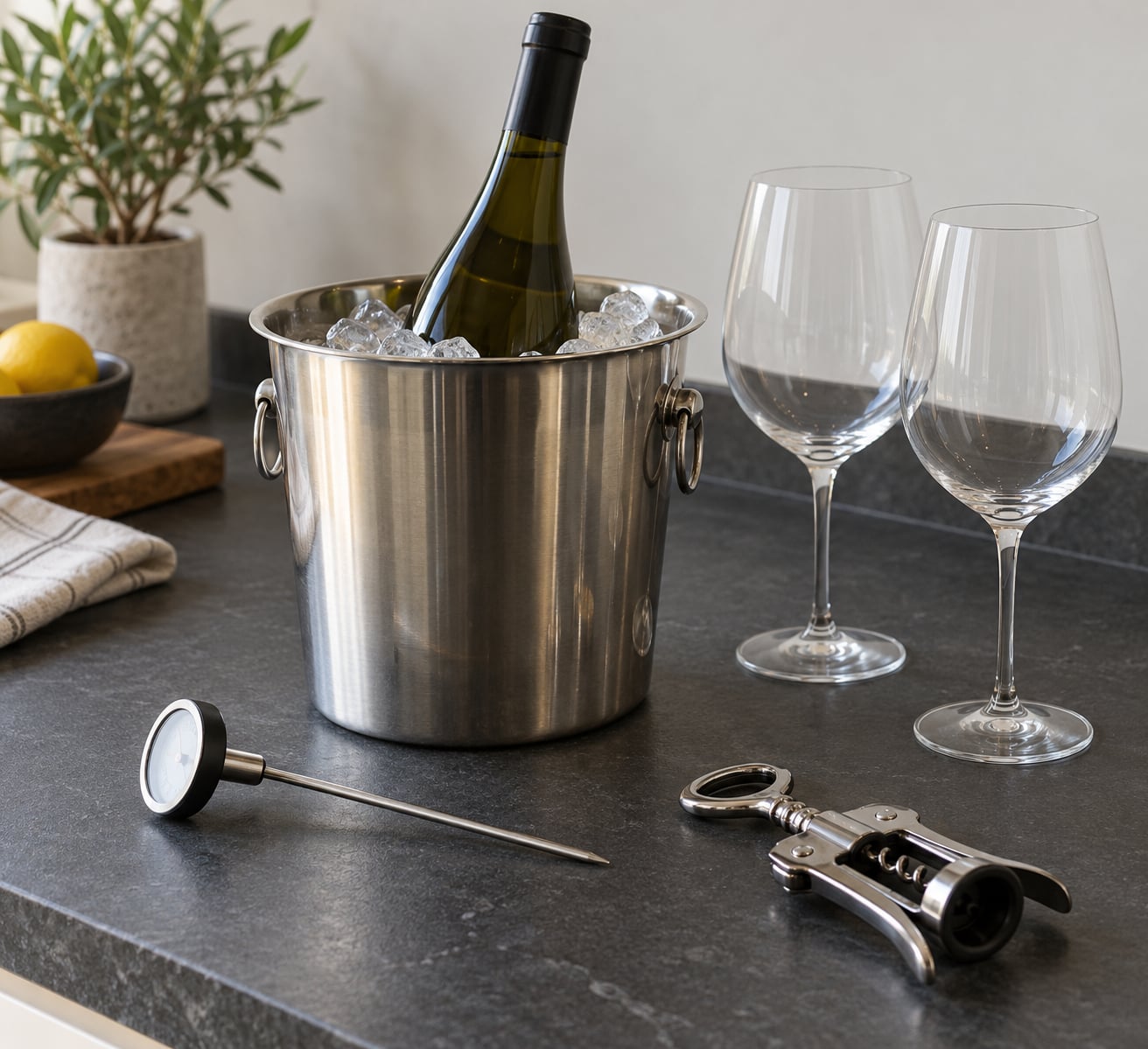
You need very little, and most of it you probably own already. A working refrigerator with a door thermometer, an insulated bucket or cooler that fits one bottle, and one instant-read thermometer are the pieces that turn temperature from guesswork into a check.
- A refrigerator with a door thermometer, so you know whether it actually sits near 38°F (3°C) rather than assuming.
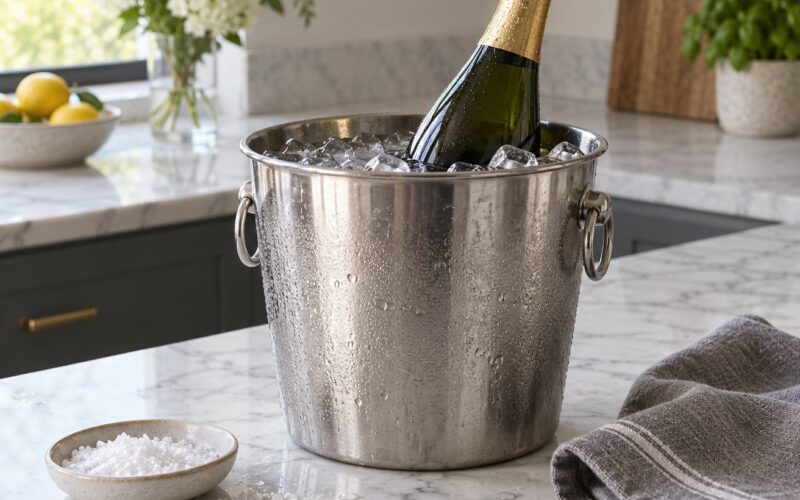
- An ice bucket plus cold water. The water is the part that does the work; ice alone is slow.
- An instant-read probe thermometer you can push into the neck or against the bottle wall for a real reading.
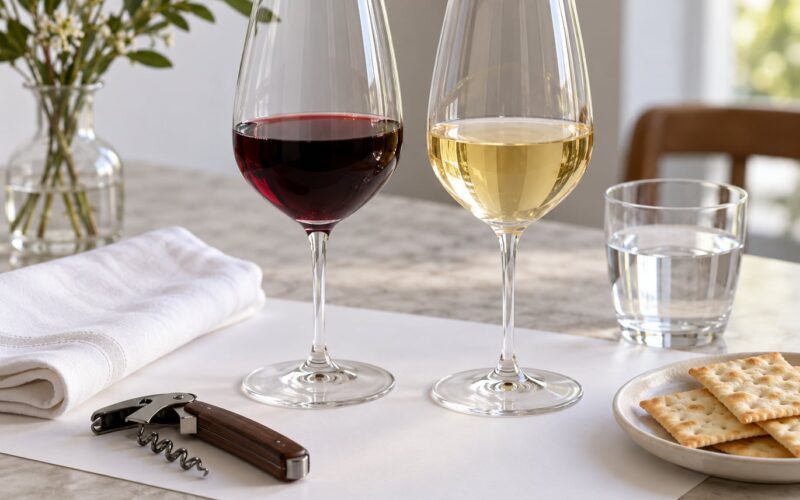
- Glassware matched to the style. A wide tulip bowl for reds and oaked whites, a narrower glass for sparkling and aromatic whites.
- A corkscrew or a pull-tab opener, plus a channel knife if you expect screw caps.
- A bottle cradle, decanter or pitcher for holding a bottle at temperature while the first glass is poured.
A cooler or insulated tote set to about 55°F (13°C) is a nice addition for long dinners, because it holds bottles at temperature instead of letting them climb while everyone eats.
Step-by-Step: How to Serve Wine at the Right Temperature
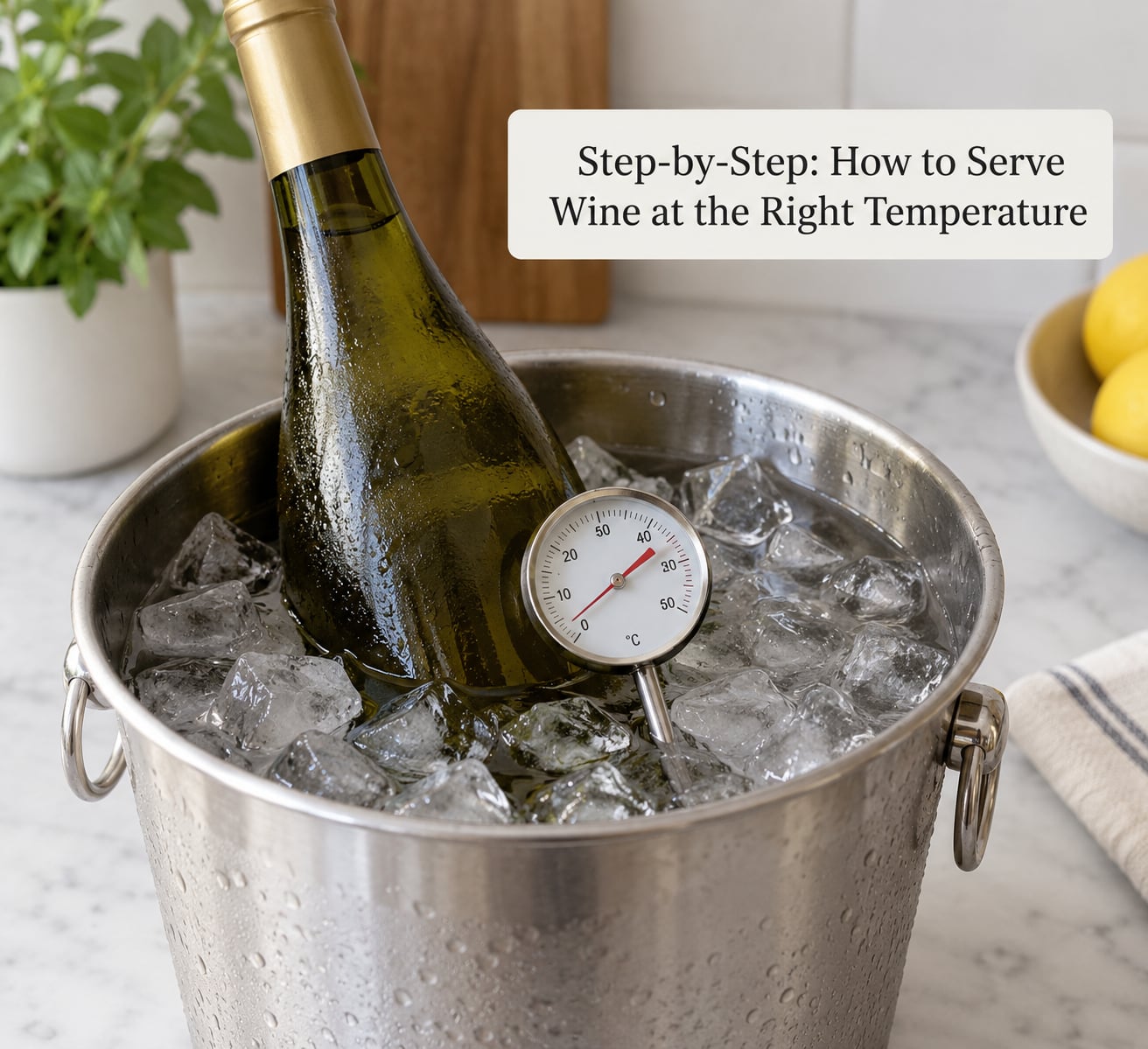
There are three moves to serving wine at the right temperature, and they take a couple of minutes once you know the style: identify it, move the bottle to the target, then open and pour it in a way that protects the result. Do them in that order and you never chill a bottle twice or pour one that has drifted warm.
Step 1: Identify the Wine Style and Start With a Sensible Target
Start with the style, not the color. Body, sweetness and alcohol decide the target far more reliably than red versus white, which is why a light Pinot Noir and a full-bodied Syrah both count as “red” but want temperatures roughly ten degrees apart.
Read the label for grape, region and sweetness, then pick a starting range:
- Sparkling and frizzante: 38–45°F (3–7°C)
- Light, crisp whites and rosé: 45–55°F (7–13°C)
- Oaked or full-bodied whites: 50–60°F (10–16°C)
- Light and medium reds: 55–60°F (12–16°C)
- Bold, tannic reds: 60–68°F (15–20°C)
- Dessert and fortified wines: 50–65°F (10–18°C) depending on sweetness and fortification
If the grape is unfamiliar, wine body is a decent proxy. Light-bodied wines take the cooler end of their family range, full-bodied wines take the warmer end. Sweetness pushes a number of degrees upward because cold suppresses the perception of sweetness more than it suppresses bitterness.
Then aim a few degrees below your target. A wine warms once it is in the glass, and a wine that starts warm keeps going.
Step 2: Chill or Warm the Bottle to the Target
Refrigerator, ice-water bath, cool room or warm water are the four tools. Use the fastest one available and measure rather than guess, because bottle thickness and starting temperature shift the timing more than most guides admit.
An ice-and-water mix chills roughly three times faster than ice alone. Water fills the gaps between the cubes and touches the whole bottle surface, which is what actually pulls heat out. Ice sitting in air leaves the surface between cubes doing nothing.
As a working guide, from a bottle at indoor room temperature:
| Wine style | Ice-water bath | Refrigerator | Notes |
|---|---|---|---|
| Red, drinkable cool | 10–15 min | 30–40 min | Fine for reds brought up from cellar temperature |
| Red, cellar cool | 3–5 min | Not needed | Only a short adjustment |
| Light white or rosé | 15–20 min | 2–3 hours | The most common dinner timing |
| Oaked or full white | 15–20 min | 2–3 hours | Target is higher, so chill less |
| Sparkling | 20–30 min | 3–4 hours | Slower because glass is thicker |
Wet the bottle and roll it in coarse salt before the ice bath if you are in a hurry. Salt dissolves in the meltwater and lowers its freezing point, which speeds the transfer. Users on drinks forums and wine-pages consistently report the same order of effect: ice plus water is dramatically faster than ice alone.
For the freezer, set a timer for no more than about 15 minutes and assume you have one shot. Wine expands as it freezes and will push the cork or the finish out of the neck. There is no fixing that once it happens, so treat it as a last resort rather than a technique.
To warm a bottle that is too cold, do it slowly rather than shocking it. Stand the bottle in a bucket of warm tap water, swirl it every minute or so, and check with the probe thermometer. A bottle that sat in a 45°F (7°C) fridge and needs to reach 58°F (14°C) takes roughly 15 to 20 minutes in warm water.
Avoid extremes. Wine that goes from 38°F (3°C) straight to 68°F (20°C) in a couple of minutes can drop some of the aroma compounds that were already released and dissolved. Gentle, gradual adjustment costs nothing and keeps more of what the bottle is offering.
Step 3: Open, Rest and Pour the Wine
Resting is a temperature fix as much as an aeration fix. An old red or a sediment-heavy bottle left to stand upright for 20 to 30 minutes drops its grit, and a cold bottle given that same time warms toward your target while you are cooking.
Open gently. A cork that has been chilled contracts and can crumble, and a warm cork from an over-warm bottle often pushes itself out and may have leaked slightly down the neck. Neither is a disaster, but a slow twist at the widest point of the cork avoids both.
Decant reds that need air and let the glass breathe. Hold the glass by the stem and by the base, never around the bowl, because a full palm transfers body heat straight into the wine and can move a delicate red several degrees in a few minutes.
Pour about 2 ounces (60 ml) for a tasting comparison and 4 to 5 ounces (120–150 ml) alongside a meal. Overfilling is the most common way good wine gets wasted, since it loses its aromatic surface to the air and warms faster in a wide pool than in a narrow one.
One last habit worth keeping: pour a small splash into the glass before the bottle goes on the table. Let it sit a minute, then smell. If there is almost nothing there, the wine is too cold; if the first thing you notice is a hot alcoholic burn, it is too warm.
Wine Serving Temperatures at a Glance
Use this table as a lookup rather than a rule. The ranges overlap on purpose, because grape, region and vintage move a wine a few degrees within its family, and the serving table is a starting point you adjust from there.
| Wine style | °F | °C | Chill, cool or warm | Why |
|---|---|---|---|---|
| Sparkling, Champagne, frizzante | 38–45 | 3–7 | Chill hard, ice bath | Low temperature preserves bubbles and crisp acidity |
| Light whites: Sauvignon Blanc, Pinot Grigio, unoaked Chardonnay | 45–55 | 7–13 | Chill | Keeps acidity sharp and fruit forward |
| Oaked or full whites: aged Chardonnay, Viognier | 50–60 | 10–16 | Chill lightly or serve cool | Cool suppresses oak and heavy texture |
| Rosé | 45–55 | 7–13 | Chill | Best served cool, not iced and not warm |
| Light and medium reds: Pinot Noir, Beaujolais, Gamay | 55–60 | 12–16 | Cool, not cold | Delicate fruit and fine tannin need a moderate temperature |
| Bold reds: Cabernet Sauvignon, Syrah, Malbec | 60–68 | 15–20 | Serve at cellar cool to room cool | Warmth releases tannin and fruit; hotter tips it into alcohol |
| Dessert and fortified: Port, Madeira, PX, Ice wine | 50–65 | 10–18 | Cool to cellar cool | Warmth brings sweetness and alcohol forward |
Two numbers anchor the whole table. 68°F (20°C) is a sensible ceiling for serving any red; past that, alcohol takes over. And 38°F (3°C) is the floor, which matters because below that a bottle tastes muted rather than cold.
Published figures vary a few degrees between sources. Sparkling is quoted anywhere from 38 to 50°F (3 to 10°C) and light whites from 40 to 55°F (4 to 13°C). None of those authorities are wrong so much as describing different points on the same spectrum, so treat any single number as the middle of a range.
Common Mistakes
Almost every badly served wine comes down to one of six errors, and each has a two-minute fix.
Serving reds at full room temperature
Room temperature in most homes sits near 70°F (21°C), which is above the window for every red. Fix: take the bottle out 30 to 40 minutes before dinner so it lands near 60 to 65°F (15 to 18°C), or give it 10 to 15 minutes in an ice bath if you are out of time.
Serving whites and sparkling wine straight from a cold fridge
A bottle at 35°F (2°C) tastes flat and muted, and anything poured from it warms slowly enough that the whole bottle stays dull. Fix: take whites out 10 to 15 minutes before serving and sparkling about 20 minutes, and use a fridge set a little warmer if you can.
Using one fridge rule for every bottle
Putting everything in for the same two hours gives you a cold red and a still-warm white at the same table. Fix: plan backwards from dinner, counting on roughly 20 minutes in an ice bath or two to three hours in the fridge per white, and far less per red.
Serving in a warm glass or holding the bowl
A glass warmed by the oven, a warm hand around the bowl or a room at 78°F (26°C) will push a delicate red past its range within minutes. Fix: chilled glassware if you have it, hold by the stem, and start the bottle a few degrees below target.
Overfilling glasses
A full glass warms quickly and loses its aromatic surface to the air. Fix: pour half, swirl, smell, then top up to about a third full.
Judging the wine before it has settled
Wine poured straight into a glass can taste tighter and more severe than the same wine thirty seconds later. Fix: let the first glass stand a minute before deciding it is too cold, too warm or simply not for you.
Tips for Serving Wine at Home
A few habits make the whole job easier. The first is to read the label and pick a range before you touch the bottle, so chilling happens while you cook instead of during dinner.
When serving two or three wines, sequence from lightest and coolest to heaviest and warmest, and put the bottle of the last wine in the fridge first so it is ready when you get there. It is also polite to bring a bottle already at serving temperature; hosts read it as thoughtful rather than presumptuous.
Use the thermometer more than you think you need to, especially in summer or in a warm kitchen. A probe reading on the bottle wall takes five seconds and settles most arguments that a rule of thumb cannot.
Keep storage and serving separate. Long-term storage wants about 55–65°F (13–18°C) with roughly 70% humidity and no light, which is cooler than most serving temperatures and warmer than a fridge. A cooler set near serving temperature holds bottles for the evening; it is not an ageing cabinet, and r/wine regulars make that point consistently.
Adjust for the room. In a 68°F (20°C) dining room, pull reds out later than a 60°F table would suggest. Outdoors in summer, start everything a few degrees cooler than the chart and refill from a bucket rather than the counter.
Then let your own palate have the last word. The chart is a starting point, and after a few side-by-side tastings of the same bottle at two temperatures you will know your own preferences better than any authority does.
Frequently Asked Questions
What temperature should red wine be served at?
Most red wines are best between 55 and 68°F (12 to 20°C). Light reds such as Pinot Noir or Beaujolais sit at the cool end, around 55-60°F (12-16°C), while bold Cabernets, Syrahs and Malbecs want 60-68°F (15-20°C). Skip room temperature at 70°F or above; take the bottle out 30-40 minutes before dinner so it lands cooler.
Can white wine be served too cold?
Yes, and it is one of the most common serving errors. White wine pulled straight from a 35°F (2°C) fridge tastes muted and flat, with almost no aroma. Take a light white out 10-15 minutes and sparkling about 20 minutes before serving, or aim for 45-55°F (7-13°C) for crisp whites. Full-bodied whites tolerate a few degrees more because the texture needs some warmth.
How long does it take to chill a wine bottle?
In an ice-and-water bath, about 15-20 minutes takes a room-temperature white or rosé to serving temperature, and 10-15 minutes is enough to chill a red to drinkable cool. A refrigerator takes longer: roughly 2-3 hours for a white and 30-40 minutes for a red. Ice alone works about three times slower than ice plus water because the water is what carries heat away.
Should rosé be served cold or at room temperature?
Cool, not cold and not at room temperature. Most rosé wants 45-55°F (7-13°C), the same band as light whites. Served warmer than about 60°F (15°C) it loses its freshness and the alcohol starts to show; served straight from a cold fridge it tastes muted and thin. Chill it before dinner and let it stand for 10-15 minutes before pouring.
Is it better to chill wine in the refrigerator or an ice bucket?
The ice bucket is much faster and the refrigerator is much more predictable. Ice with water chills a bottle roughly three times faster than ice alone, so use the bucket when dinner is soon. Use the fridge when you have hours, and set it near 38-40°F (3-4°C). For last-minute chilling, wet the bottle and roll it in salt before the ice bath.
How should fortified and dessert wine be served?
Serve them cooler than you expect: most sit between 50 and 65°F (10 to 18°C). Tawny Port and dry sherry such as Fino or Manzanilla work slightly cooler than a sweet vintage Port or Pedro Ximenez, which need the warmth to bring out their sugar and texture. Hold Madeira at cellar cool for its oxidation character. Serve them in smaller glasses than table wine.
Conclusion
The first thing to do is name the style, pick a range from the table and aim a few degrees below it. Then use an ice-and-water bath when dinner is soon and the refrigerator when it is not, checking with a thermometer rather than a rule of thumb, and let the bottle move gradually rather than in one jump.
Get those three things right and the difference is not subtle. The same bottle that tasted of warm alcohol at 75°F (24°C) will show its fruit and its structure once it is sitting near 60°F (16°C).