Building a small wine collection at home is about control, not volume: pick 12 to 24 bottles you already enjoy drinking, keep them near 55°F (13°C) in the dark, and open them while they are still good. Here is how to build a small wine collection at home without ending up with a cupboard full of bottles you have forgotten.
I started keeping a shelf of wine the year friends started bringing dinner-party bottles. The shelf filled with bottles from a case I never finished, two reds that turned out to be too oaked for me, and one sparkling that was worth repeating. Nothing was wasted exactly, but half of it went past its best moment while I forgot it existed.
The fix was not a bigger rack. It was a record, a small buying rhythm, and one honest rule: every bottle has a plan attached to it before it comes home.
Table of Contents
- What You Need
- A budget you set before you shop
- A purpose for the collection
- A basic tasting setup
- One cool, dark, stable spot
- A simple record of bottles and impressions
- How to Build a Small Wine Collection at Home Step by Step
- Define Your Budget and Collection Purpose
- Choose a Balanced Starter Mix
- Buy a Few Bottles You Will Actually Drink
- Taste and Record Every Bottle
- Store Bottles for Quality and Convenience
- Common Mistakes
- Frequently Asked Questions
- How many bottles should a beginner’s home wine collection contain?
- What is the best way to choose affordable wine for a small collection?
- Should a small wine collection be stored upright or on its side?
- How long can unopened wine bottles be kept at home?
- Should I buy older vintages to build a wine collection?
- Start With Three Bottles and Build From Your Tastes
What You Need
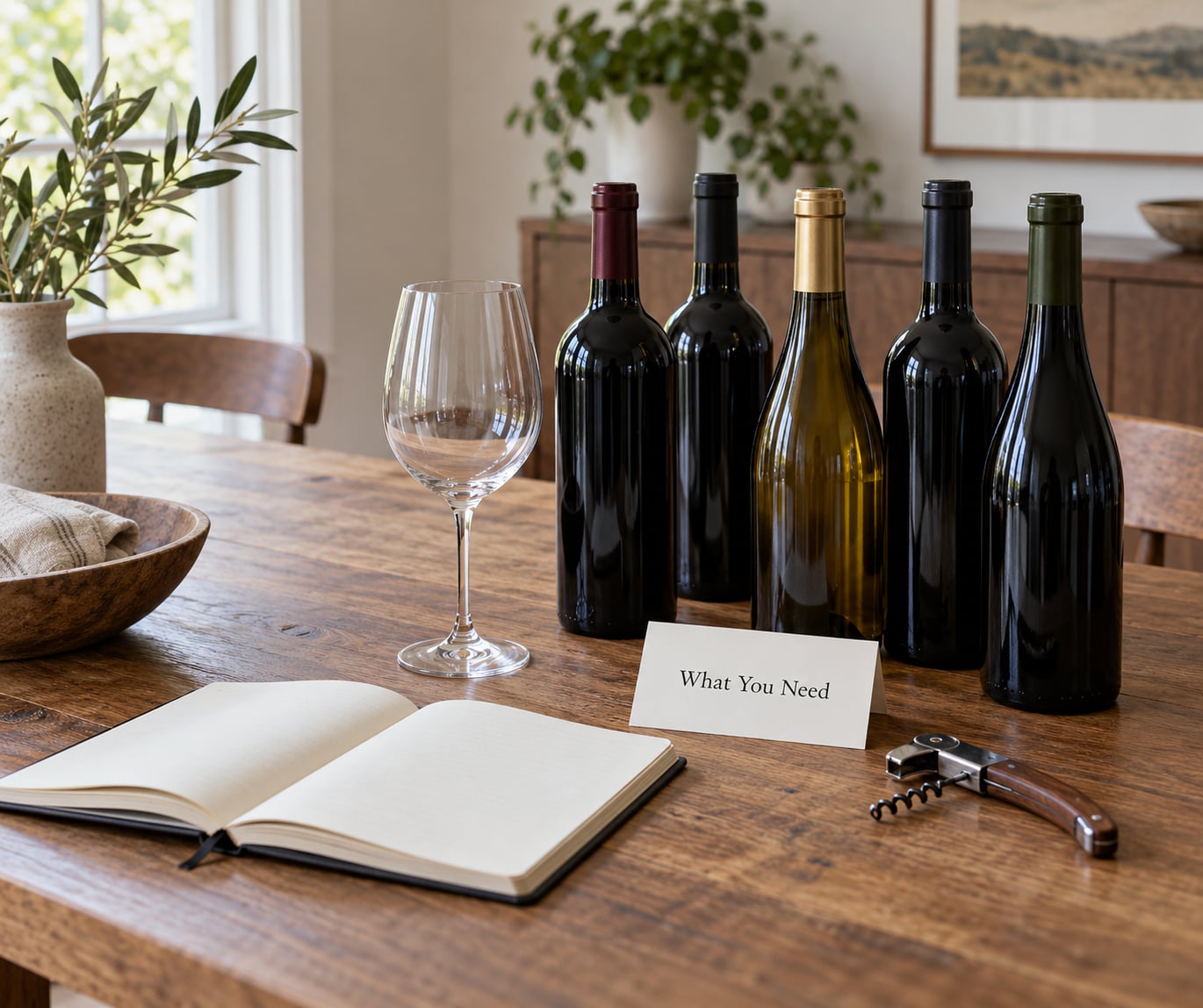
Four things make a home collection work: a budget you set in advance, a clear purpose, one cool and dark place to keep bottles, and a record of what you own. That is genuinely it. You do not need a tracking app, a rack, or a climate-controlled cabinet to get value out of the bottles you buy.
A budget you set before you shop
Look at what you already spend on wine over a few months, then decide on a fixed amount to set aside for the shelf. A number decided before browsing keeps a good evening in a shop from turning into a shelf you cannot finish.
Judge bottles by what you would happily drink on a Tuesday, not by what looks impressive on a shelf. Wine club cases often look like the cheapest way in, but they are also the fastest route to the guilt pile that plenty of beginners describe.
A purpose for the collection
Pick one main reason and write it down. Everyday drinking, pairing with food, learning a few regions and grapes, or having something on hand for guests. Each purpose leads to a very different first shelf.
Everyday drinking builds a shelf quickly and needs no plan beyond using what you like. Learning regions takes longer but gives you the most for the money, since each bottle becomes a comparison point.
A basic tasting setup
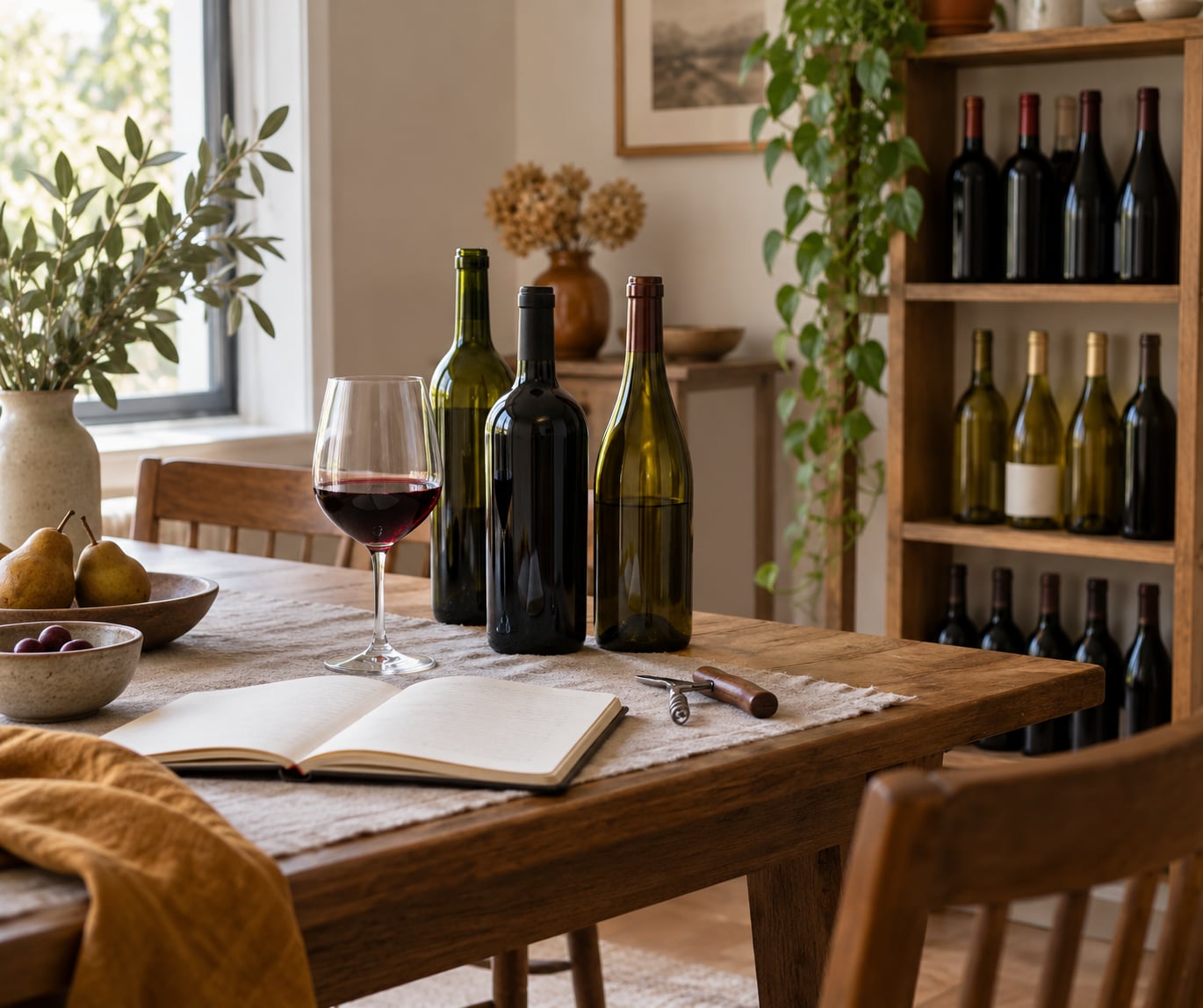
Two glasses are enough: one larger universal glass for red, rosé and most whites, and one smaller if you want to compare whites side by side. Add a decent corkscrew, a white towel for drips, and a notebook or a notes app.
Taste red wine in the evening rather than at lunch. Give it around 20 minutes out of the fridge, which is the short version of the 20-minute rule, and you will taste the wine rather than a cold, muted version of it.
One cool, dark, stable spot
Anywhere you can hit roughly 55°F (13°C) without big swings works to begin with: an interior closet, a shaded lower shelf, a garage that stays temperate, or a temperature-controlled cabinet if you already want one. Avoid anywhere that gets direct sun, sits next to a warm oven, or rattles from foot traffic.
A simple record of bottles and impressions
A notebook, a spreadsheet, or a phone note with six fields will do: producer and wine, vintage, where it came from, what you ate with it, what you noticed, and whether you would buy it again. That last column is the one that keeps the collection pointed at your own palate.
How to Build a Small Wine Collection at Home Step by Step
Define Your Budget and Collection Purpose
Start by splitting your spending into three tiers and choosing one for year one. A modest tier buys everyday drinkers and a few extras for weekends. A middle tier lets you include one or two age-worthy bottles and better sparkling. A generous tier adds more regions and a proper storage cabinet, though the difference is usually volume rather than quality.
Here is the part most guides skip: the jump between tiers is not a jump in what the wine tastes like, it is how many bottles sit unopened at any one time. Twelve bottles you drink across a year beat forty you cycle through in a panic.
Then write down the buying rhythm. One or two new bottles a month is easy to sustain. Five in one month is a project that quietly turns into a backlog, which is exactly the complaint that comes up again and again in home wine forums.
Choose a Balanced Starter Mix
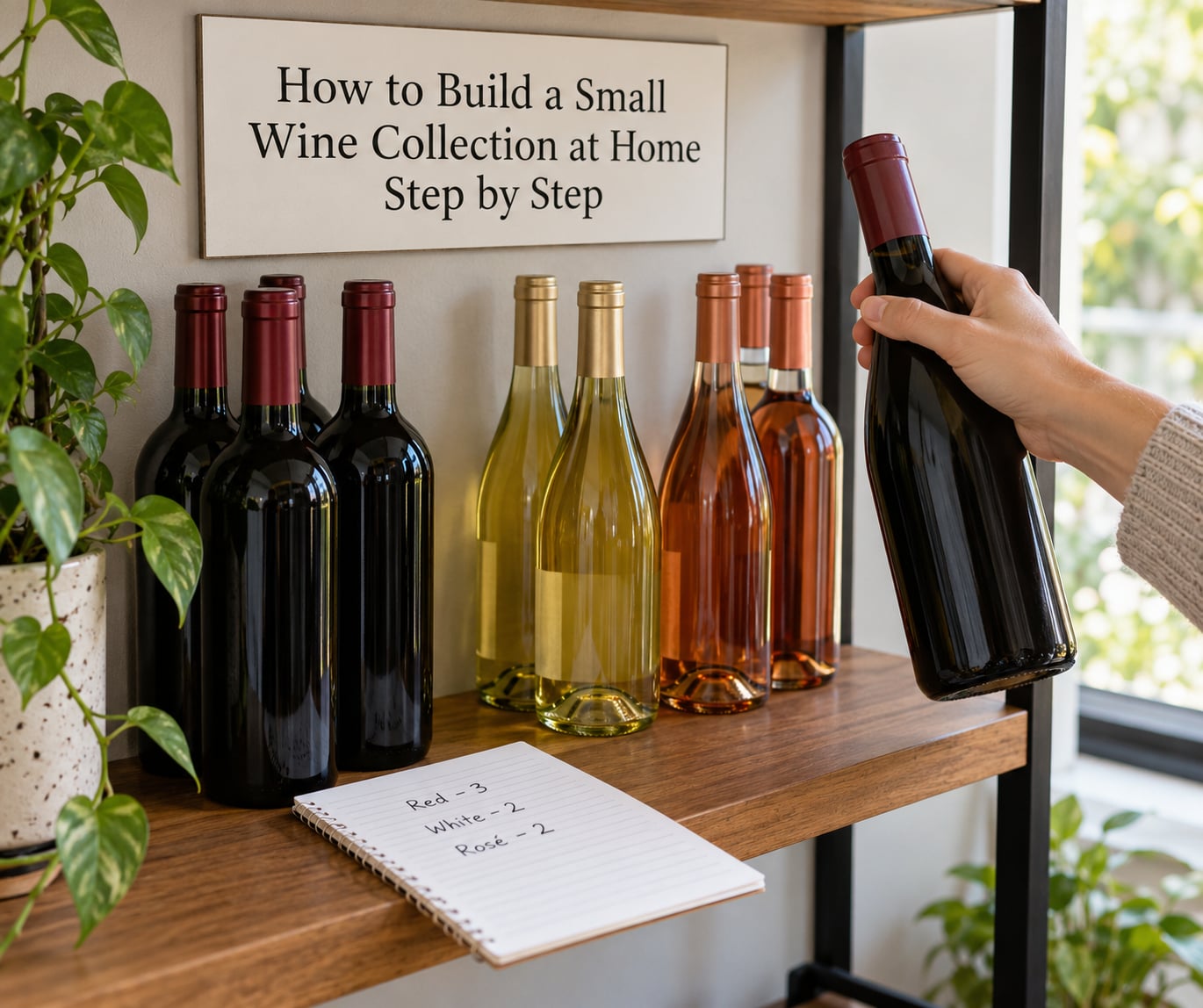
Variety beats depth at the start. Cover six useful categories in your first dozen and you will always have something appropriate for a meal, a celebration, or a cold Tuesday.
- Sparkling. A bottle for celebrations that also works as an aperitif. Cava and similar traditional-method sparkling give you the texture at a gentler spend.
- Dry white. Something crisp and easy with food. Sauvignon Blanc, Albariño, or a dry Chenin Blanc from the Loire are all reliable starting points.
- Fuller white. Chardonnay or a lightly oaked white teaches you what oak does, which helps with every red later.
- Rosé. One dry and one sweeter style if you have the space. Rosé is the easiest way to cover guests with different tastes.
- Light red. Pinot Noir, Gamay, or Lambrusco. Low tannin, low effort, good with food.
- Full red. One age-worthy bottle alongside your everyday reds: Barolo or Brunello di Montalcino for Nebbiolo, a structured Cabernet Sauvignon, a Sangiovese from Chianti, or a Rioja with some age.
- Sweet finish. Sauternes, Tokaji, or a tawny port. These keep for a long time and turn an ordinary dinner into something that feels like an occasion.
Serve reds and fuller whites around 60 to 65°F (16 to 18°C), light whites and rosé around 50 to 55°F (10 to 13°C), and sparkling cold at roughly 40°F (4°C). Serving temperature changes the wine more than most people expect.
Buy a Few Bottles You Will Actually Drink
Read the label before the price. The vintage tells you the harvest year, the appellation tells you the region and its rules, and the grape list tells you what you are actually tasting. If a bottle does not tell you any of those three things, it rarely deserves shelf space.
Before committing to a case, buy one bottle and drink it. The two-at-a-time rule helps here: one bottle now, and one of the same wine later. You learn how it ages without gambling a whole case on a vintage you have never tasted.
Be suspicious of anything old that arrives without a clear history. Provenance means you know where the bottle came from and how it was stored, and it matters most for old vintages where refilled or counterfeit bottles circulate.
Buy from sellers who handle wine properly. A retailer that ships or stores bottles in a hot van will undo any care you took at home, and no amount of good shelf technique can put the freshness back.
Taste and Record Every Bottle
Use the same routine every time so your notes mean something six months later. Look at the colour in natural light, smell before you sip, then taste and let the wine sit in your mouth for a few seconds before deciding what you think.
Write the note while it is in front of you. Record the date and the wine, who you drank it with, the food pairing, two or three descriptors you would actually use again, and a yes-or-no on buying another bottle.
Once you own two or three bottles of something you like, taste them across vintages side by side. That vertical tasting is the fastest way to learn what a region, a producer, or an ageing year actually tastes like.
Store Bottles for Quality and Convenience
Temperature stability matters more than hitting an exact number. Aim for roughly 55°F (13°C) and keep relative humidity around 60 to 70 percent, enough that corks do not dry out but not so much that labels mould. Keep the bottles dark, off the floor, and away from vibration.
Horizontal storage gets a lot of attention and matters less than most guides suggest. It keeps the cork in contact with wine, which is nice, but if you are opening bottles within a year or two, upright in a dark cupboard is fine. Cork taint, a musty smell from a poorly kept cellar, has nothing to do with how the bottle was sitting.
The ordinary kitchen refrigerator is a decent short-term holding spot and a poor long-term one. Fridges run around 37 to 40°F (3 to 4°C), which is colder than wine wants, and the door shelf swings in temperature every time it opens. Use it for a few bottles you are drinking in the next month, not as a cellar.
Apartments have workable options. A shaded interior closet, a rack under the stairs, or a wine fridge sized for twice what you own right now are all sensible. Community advice is consistent on sizing: people who start with a small cabinet outgrow it within a couple of years, so buying larger up front saves money.
Be realistic about durations. Most everyday whites and reds are at their best within a few years of release, sparkling within a year or two, and only a small number of reds genuinely improve for a decade. Unopened bottles do not last forever, so treat the shelf as a working store rather than a hoard.
Common Mistakes
Starting with too many bottles. A first shelf of 40 bottles looks impressive for a month, then becomes a research project you avoid. Twelve is enough to cover every meal and every guest, and it leaves room for the shelf to grow around your actual tastes.
Ignoring what you like. Scoring sheets and critic points are useful reference and a poor shopping guide. If you never enjoy a style, a perfect bottle of it will still be a bottle you skip.
Storing wine somewhere you open every day. A cabinet above the stove, a shelf beside a warm light, or a rack in a bright hallway all work against the wine. Light and heat cause more damage at home than almost anything else.
Confusing vintage with quality. The number on the label is the harvest year, not a quality rating, and a famous region can produce a dull year and an ordinary region a great one. Drink within the window the producer suggests.
Buying only prestigious labels. The bottles people are proud to own are often the ones they never open. Mix in everyday drinkers you will genuinely drink this month, and reserve the special bottles for dates worth them.
Forgetting what you own. Set a repeating reminder once a month to read your list. Anything past its drinking window goes to the top of the dinner list, not back onto the shelf.
A few habits keep a small collection healthy. Buy two bottles at a time rather than cases. Write the drinking window on the label when the bottle goes in, which is the cheapest tracking system there is. And open something every month, even if it is just a glass of what you are saving.
Frequently Asked Questions
How many bottles should a beginner’s home wine collection contain?
Most beginners do well with 12 to 24 bottles, which covers sparkling, white, rosé, red and a sweet bottle without crowding a shelf. Resist buying more until you have opened everything you own. Many home collectors reach 50 to 100 bottles over several years, and they get there by adding a bottle or two a month rather than a case at a time.
What is the best way to choose affordable wine for a small collection?
Start with wines from regions you already enjoy and check the label for vintage, appellation and grape before you look at cost. Compare the price per bottle across a few retailers, and buy a single bottle before committing to a case. Aim for one or two bottles per month; a steady rhythm produces far more bottles actually opened than a large starting batch.
Should a small wine collection be stored upright or on its side?
Both work, and for most home collections the difference is minor. Horizontal storage keeps the cork in contact with the wine, which matters over long ageing, but bottles opened within a year or two are fine upright in a dark cupboard. Temperature stability, darkness and freedom from vibration matter far more than orientation.
How long can unopened wine bottles be kept at home?
It depends entirely on the style. Most everyday whites and rosés are best within a few years, sparkling within a year or two of purchase, and light reds soon after release. Only certain reds, such as Barolo, Brunello di Montalcino, structured Cabernet Sauvignon and aged Rioja, reliably improve for a decade. Sweet fortified wines keep the longest of all.
Should I buy older vintages to build a wine collection?
Not yet. Older vintages cost more, carry more storage risk, and are only enjoyable inside a drinking window you cannot verify without opening the bottle. Begin with current releases and a single age-worthy bottle to learn how storage affects taste. Save older vintages for wines from producers and regions you have come to trust.
Start With Three Bottles and Build From Your Tastes
Decide your budget and your purpose first, then pick three bottles that complement each other: one sparkling, one white or rosé, and one red. Drink them at a comfortable table with something to eat, write down what you liked, and let those notes decide the fourth bottle.
A collection grows from what you genuinely finish, not from what looked interesting on a shelf. That is the whole trick to how to build a small wine collection at home that stays enjoyable instead of turning into homework.