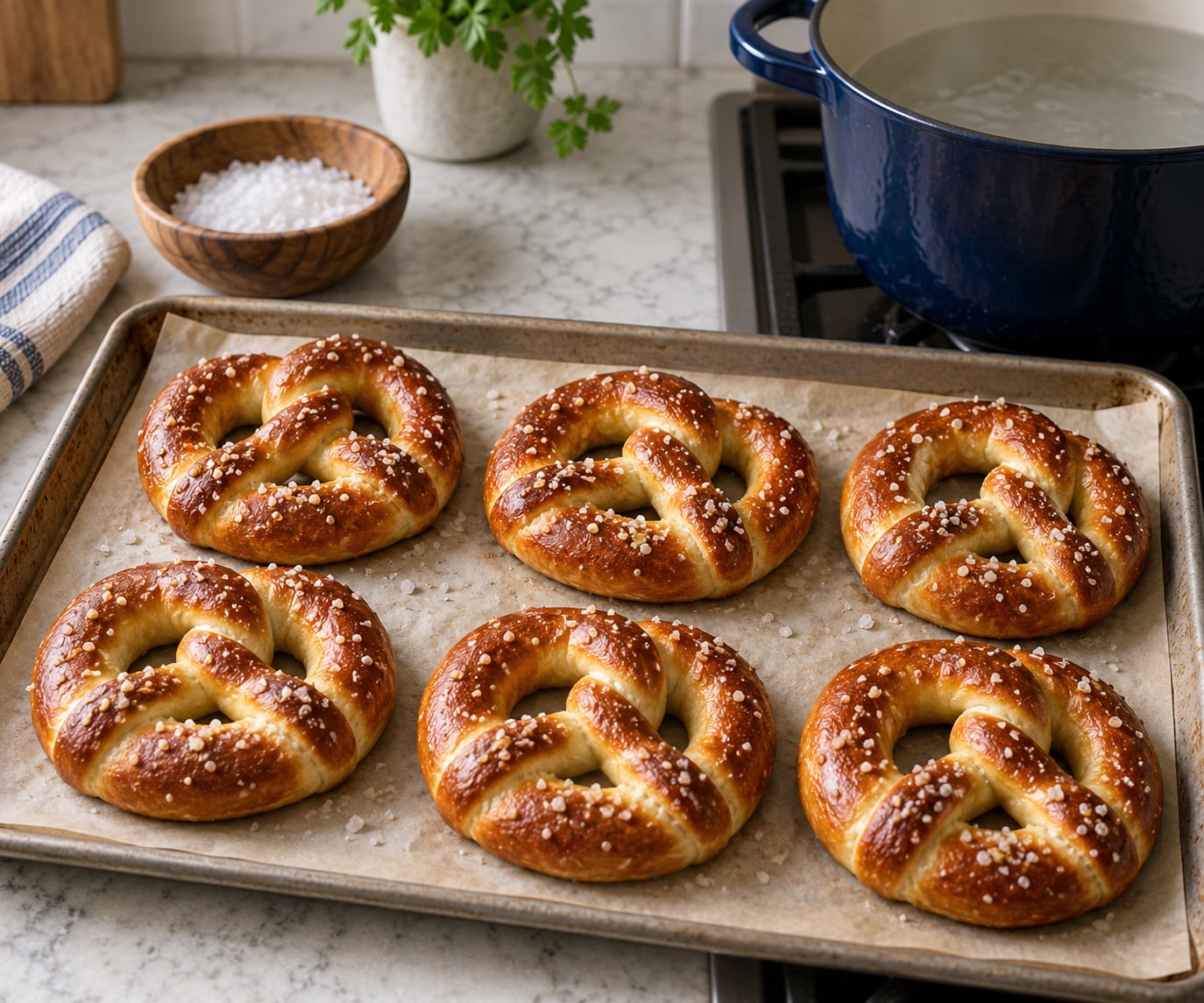
Learning how to make soft pretzels from scratch comes down to four things: a yeasted dough, a short dip in an alkaline baking soda bath, a very hot oven, and coarse salt. Boiling the shaped dough is the step people skip, and it is the step that gives you the glossy, dark, chewy skin and the soft, almost bready center that mall pretzels have. A stand mixer helps, but it is not required.
From scratch to eating takes about two and a half hours of active and waiting time, plus roughly an hour of rise. The batch below makes six large pretzels, and it works just as well for a school bake sale or a game day table as it does for a quiet Sunday.
Table of Contents
- What You Need
- Ingredients for six pretzels
- Flour: bread flour or all-purpose
- Toppings beyond coarse salt
- Equipment
- Step-by-Step: How to Make Soft Pretzels from Scratch
- Step 1: Activate the yeast and make the dough
- Step 2: Knead, rest, and divide the dough
- Step 3: Shape the pretzels
- Step 4: Boil the shaped pretzels
- Step 5: Salt, bake, and serve
- Common Mistakes
- The dough will not rise
- The dough is over-proofed
- The pretzels lose their shape in the pot
- The crust is cracked or rubbery
- The pretzels bake up pale
- The pretzels go dense or gummy inside
- Making better pretzels every time
- Frequently Asked Questions
- Can I make soft pretzel dough ahead of time?
- How do I know when pretzel dough has risen enough?
- Do soft pretzels need to be boiled before baking?
- How do I keep homemade soft pretzels soft after baking?
- How long do soft pretzels stay fresh, and can I freeze them?
- What are good dipping sauces for homemade soft pretzels?
- Conclusion: Start With a Small Batch
What You Need
Soft pretzels are a lean dough with very little fat, so ingredient precision matters more here than in a cookie or a cake. Measure the flour by weight if you have a scale, because a cup of flour packed too loosely will make the dough slack and sticky.
Ingredients for six pretzels
- 1 1/2 cups warm water (355 ml), between 100 and 110°F (38 to 43°C)
- 2 tablespoons sugar (25 g)
- 2 1/4 teaspoons instant yeast (7 g), or 2 1/4 teaspoons active dry yeast
- 3 cups bread flour (360 g), plus more for kneading
- 1 teaspoon kosher salt (6 g)
- 1/4 cup unsalted butter, melted (57 g), divided
- 1 large egg beaten with 1 tablespoon water for the wash
- 1/4 cup coarse salt such as flaky sea salt or coarse kosher
For the bath: 2 quarts water (1.9 L) and 1/4 cup baking soda (60 g). Honey, brown sugar, or malt syrup in the dough is a common upgrade, and a spoonful of honey in the water softens the soda taste while deepening the color.
Flour: bread flour or all-purpose
Bread flour gives you the most chew because of its higher protein. All-purpose flour works fine, and it is more forgiving if your kitchen is warm, so it is a reasonable swap. Just expect a slightly softer crumb and expect to add a little more flour if the dough feels sticky after mixing. Do not use cake flour or a self-rising blend for this.
Toppings beyond coarse salt
Coarse salt is the classic finish, and it sticks best if you apply it while the pretzel is still wet from the bath. Other options work just as well: sesame seeds, poppy seeds, pretzel seasoning blends made of cumin, coriander, and chili, or a drizzle of melted butter with honey butter salt mixed in. A drizzle of olive oil after baking also works if you want something less salty.
Equipment
- Large mixing bowl
- Measuring cups or a kitchen scale
- Sheet pan lined with parchment paper or a silicone baking mat
- Deep pot or Dutch oven, at least 8 inches wide, for the bath
- Slotted spoon or spider for lifting pretzels out of the water
- Cooling rack
- Small bowl of coarse salt for dipping
A rolling pin helps flatten the ropes before shaping. A pastry brush works fine for the egg wash, and a damp towel draped over the risen dough keeps the surface from drying out while you portion it.
Step-by-Step: How to Make Soft Pretzels from Scratch
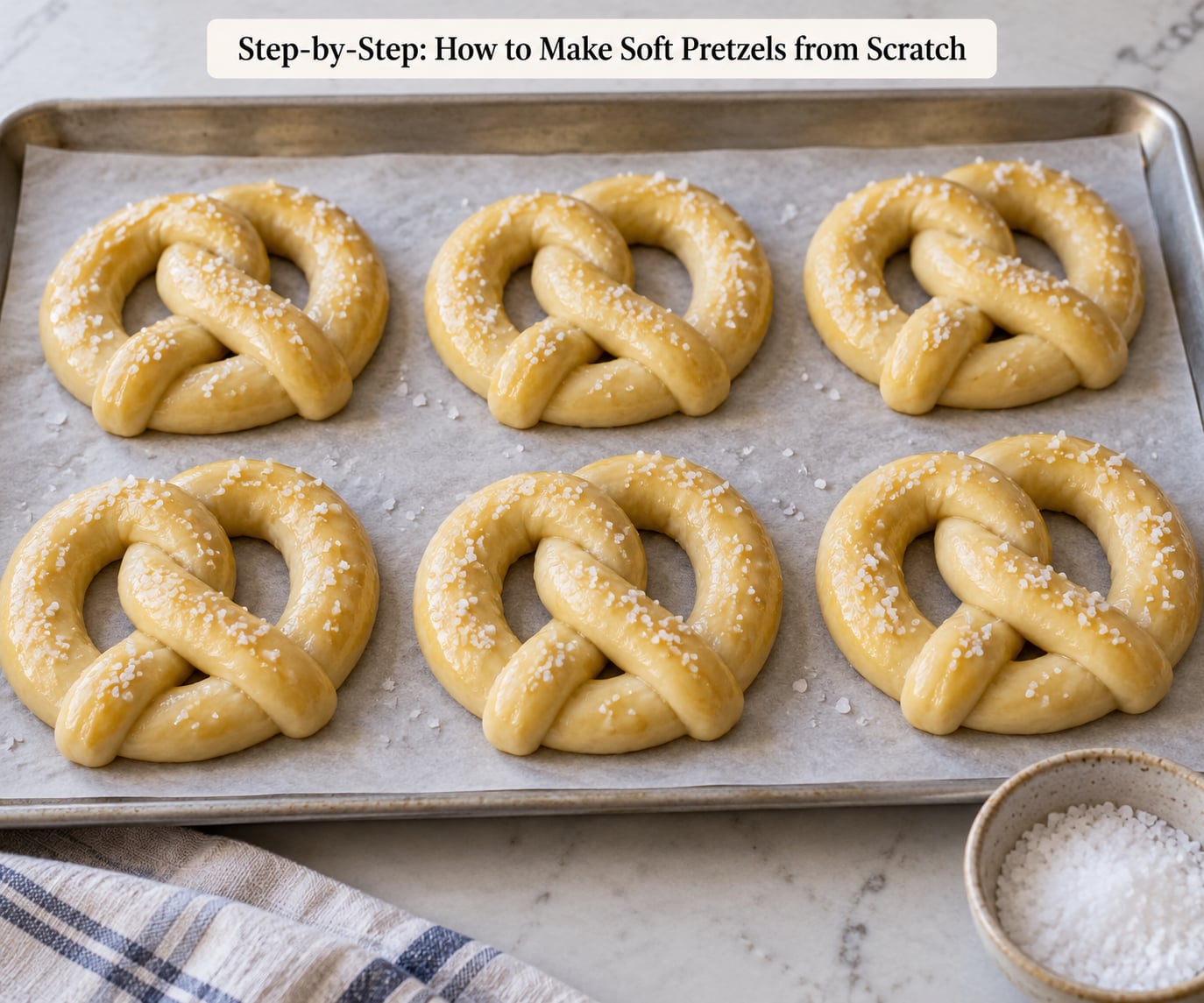
Read the whole sequence once before you start, because the order matters: the dough has to come out of the fridge, get shaped, get boiled, and go into the oven without a long wait. The boil and the bake happen back to back.
Step 1: Activate the yeast and make the dough
Warm the water and check it with a thermometer if you have one. It should feel like a warm bath, not hot. Too hot and the yeast dies on contact, and dough that never rises is the single most common complaint in home pretzel attempts.
Stir the sugar into the water, add the yeast, and wait five minutes. Instant yeast can go straight into the flour, but letting it sit in the water first tells you something useful: if foam and bubbles appear on the surface, your yeast is alive.
Add the flour and salt and stir with a sturdy spoon until a shaggy, sticky mass forms. Stir in two tablespoons of the melted butter, then the rest. The dough should be tacky and slightly stiff, not wet and not dry. If it clings to the bowl in a gluey puddle, add flour a tablespoon at a time.
Step 2: Knead, rest, and divide the dough
Turn the dough onto a lightly floured counter and knead by hand for 8 to 10 minutes, or about 600 full pushes. With a stand mixer, use the dough hook on low for 7 minutes plus 7 minutes on medium. You want a smooth, elastic dough that passes the windowpane test: stretch a small piece thin and you should be able to see light through it without tearing.
Then rest. Put the dough in an oiled bowl, cover it with plastic wrap or a damp towel, and leave it at room temperature for about 45 minutes, until it looks puffy and roughly doubled. Some ovens are warm enough to carry the rise over on their own, and in that case use the fridge for the first rise instead, overnight, for a deeper flavor.
Punch the dough down and divide it into six equal pieces. Weigh them if you have a scale, since six pieces that differ by 20 grams bake unevenly. Let each piece sit, loosely covered, for 5 to 10 minutes before shaping. That bench rest is what keeps the ropes from snapping back and springing out of their twist.
Step 3: Shape the pretzels
Roll each piece into a smooth rope about 18 inches long and 3/8 inch thick, letting the dough relax if it fights you. For an oversized bakery-style pretzel, make the rope 24 inches and expect a bigger, flatter knot that fills the pan.
Here is the classic shape:
- Lay the rope straight down in front of you.
- Pick up the right end, cross it over the center line, and bring it down to the left.
- Pick up the left end, cross it over the first strand, and thread it through the loop in the middle.
- Press the two ends firmly into the center of the crossing point to seal them.
If the ends will not stick, dip a fingertip in water and press them again, or pinch a tiny piece of dough over the join. That is the whole fix. The shape should hold through the boil, and if it does not, the ends were not pressed firmly enough rather than the dough being too soft.
Space the pretzels about two inches apart on the lined sheet pan. They will puff slightly, and touching pretzels fuse into one blob that tears when you try to separate it.
Step 4: Boil the shaped pretzels
This is the step that separates a pretzel from a bagel-shaped roll. The baking soda raises the pH of the dough surface, which triggers the Maillard reaction in the oven. That reaction is what produces the deep chestnut color, the glossy skin, and the dense snap on the outside, while the inside steams and stays soft.
Bring 2 quarts of water to a boil and add the baking soda. Stir once, then let it boil for 30 seconds so the water is properly alkaline.
Slide one pretzel at a time into the pot, using a long-handled spider or two forks. Lower it away from you so the water does not splash. Boil for 30 seconds for a softer, thicker pretzel, or up to 60 seconds for a chewier skin. Work in small batches, since crowding drops the temperature and you lose the alkaline effect.
Good signs: the surface goes glossy and slightly swollen, the color deepens, and the dough feels firm but still gives under a finger. Over-boiled pretzels turn gummy and tough rather than chewy, so set a timer.
For a gentler alternative, bring the same water to a bare simmer and dip each pretzel for 15 to 20 seconds. You get less color and less chew, which some people prefer, and the tradeoff is a softer, breadier pretzel.
Step 5: Salt, bake, and serve
Lift each pretzel out and let it drip for a few seconds. While it is still wet, press the top and the arms into the bowl of coarse salt so the crystals adhere. Salting before the pretzel is hot is what keeps the salt from sliding off into the baking soda water.
Place them on the lined pan and brush lightly with the beaten egg. Bake at 450°F (230°C) on a fully preheated sheet pan for 12 to 15 minutes, until deep brown. If your oven runs hot or you want darker pretzels, go to 475°F (245°C) and pull them a minute early, since the color darkens as they cool.
Brush with the remaining melted butter the moment they leave the oven. Serve warm, within an hour, with mustard, a cheese sauce, or a bowl of honey butter.
Handle the boiled pretzels with a spider or a pair of tongs and keep your face and hands clear of the pot, because the alkaline water spits when a wet pretzel hits it.
Common Mistakes
Almost every failed pretzel batch traces back to one of six things. Work down this list the next time the dough misbehaves.
The dough will not rise
Check three things in order: water temperature, yeast freshness, and dough temperature. Water above 115°F (46°C) kills most yeast, and dough that comes out of a long mix warmer than 90°F (32°C) will also stall. If you knead by hand, the dough should feel cool, like a comfortable room temperature, not like a hand warmer.
Dense, heavy pretzels usually mean the same thing plus an early bake. Cutting the rise short gives you a tight crumb no amount of boiling will fix.
The dough is over-proofed
An over-risen dough is slack, sticky, and collapses when you poke it. It tears easily and never holds a shape through the boil. Watch the bowl, not the clock, and push to the next stage when the dough has roughly doubled rather than tripled. A warm kitchen can double a batch in half the time you expected.
The pretzels lose their shape in the pot
Almost always one of two things. The ends were not pressed hard enough into the center, or the ropes were stretched too thin before shaping, so there was no structure to hold. Press the join with a wet finger, and keep the rope at 3/8 inch or thicker. Pretzels that spread out and flatten in the bath will also spread out and flatten in the oven.
The crust is cracked or rubbery
Cracks mean the dough was too dry, usually from over-flouring during shaping or from a low hydration ratio. A thin, papery shell that snaps means the surface dried out before the boil, so keep shaped pretzels under a damp towel for the few minutes between shaping and the pot. A rubbery, bagel-like texture means the pretzels were over-boiled, so pull them at 30 seconds rather than a full minute.
The pretzels bake up pale
Three fixes, in order of impact: preheat the sheet pan in the oven while the dough is in the pot, make the bath a full-strength 1/4 cup of baking soda per 2 quarts of water, and add a spoonful of honey or brown sugar to the water. Home ovens also run cooler than their dial, so give it an extra minute or two past the recipe time and watch the color rather than the clock.
The pretzels go dense or gummy inside
Dough that was boiled too long, proofed too little, or baked before the boiling water had properly gone alkaline all produce a heavy pretzel. Also check that you boiled rather than simmered if you want chew, and that your oven is genuinely at temperature, which a thermometer on the rack can confirm.
Making better pretzels every time
- Weigh the flour, and weigh the divided dough pieces
- Keep the water under 110°F and the finished dough under 90°F
- Rest the pieces 5 to 10 minutes before shaping so the ropes stop springing back
- Salt while the pretzel is wet, before it goes into the oven
- Bake immediately after boiling, on a pan that is already hot
- Cool on a rack rather than a sheet pan, so the bottom does not steam
Frequently Asked Questions
Can I make soft pretzel dough ahead of time?
Yes, and it usually tastes better. Make the dough through the kneading stage, then refrigerate it covered for up to 24 hours before letting it come to room temperature and finish the first rise. The overnight rest develops more flavor because the yeast works slowly in the cold. Let the dough warm up for an hour before shaping, or the ropes will be tight and fight you. You can also freeze shaped, unbaked pretzels and bake them from frozen, adding a few extra minutes.
How do I know when pretzel dough has risen enough?
Look for the dough to be roughly doubled in size, puffy, and domed in the center, and press a floured finger about half an inch into the surface. If the dent springs back slowly and only partway, the dough is ready. If it springs back instantly, wait longer. If it does not spring back at all and the dough slumps, it is over-proofed and should go straight to shaping while you can still handle it.
Do soft pretzels need to be boiled before baking?
They do if you want the real thing. The baking soda bath raises the pH of the dough surface, which is what triggers browning and produces the glossy, chewy skin and the soft interior. Without it you get a soft dinner roll with a pretzel shape, which is perfectly good food but not a pretzel. A short dip in simmering water gives a milder result, and skipping the bath entirely gives you no crust development at all.
How do I keep homemade soft pretzels soft after baking?
Cool them on a wire rack for at least 20 minutes so the moisture escapes as steam rather than condensing under the crust. For the same reason, do not pile them in a container while warm. Store them in a paper bag or a loosely closed container at room temperature for the first day, and move to an airtight container for another day or two. Freezing slices works well, and reheating refreshes them.
How long do soft pretzels stay fresh, and can I freeze them?
Freshly baked soft pretzels are best the day they are made, stay good in a sealed container for two to three days at room temperature, and last about a week refrigerated. For longer storage, cool them completely, wrap individually in plastic wrap, and freeze in a bag for up to two months. Thaw at room temperature and warm in a 350°F (175°C) oven for five minutes to bring back the crust.
What are good dipping sauces for homemade soft pretzels?
Yellow mustard with a little honey is the classic pairing and takes no cooking. A warm cheese sauce made from cheddar, milk, and a touch of mustard powder is the game day standard, and a pot of fondue handles a crowd without fuss. Honey butter, a spicy brown mustard, or a chunky tomato relish also work, as do sour cream and onion dip for something lighter. Serve the pretzels warm, within the hour of baking.
Conclusion: Start With a Small Batch
Mix the dough and watch the yeast before you do anything else. If bubbles show up in the warm water within five minutes, the rest of the process will follow, and if they do not, you have saved yourself an hour of waiting on a batch that would never have risen.
Five controls decide whether the batch turns out right: water under 110°F, flour measured rather than guessed, a covered rest before shaping, a 30-second boil, and an immediate bake on a preheated pan. Get those right and how to make soft pretzels from scratch becomes a recipe you repeat instead of a project you attempt.