Infusing liquor with fruit and herbs is mostly a waiting game, and the process breaks into five steps. Pick a neutral spirit, prep about 2 cups of produce for every 750 ml bottle, pack it into a sealed jar, steep until the flavor peaks (2 days to 4 weeks depending on the ingredient), then strain and refrigerate. There is no special equipment and no cooking.
The reason to do it yourself is flavor quality. Store-bought flavored spirits taste like candy and coloring, while a real infusion tastes like the fruit. You also control the strength, use produce at peak ripeness, and get enough batches out of one bottle to cover a whole season of drinks.
Most weeks I have at least one jar going, and the thing I got wrong early on was trusting a single generic “one week” rule for everything. Herbs and peppers want hours. Citrus peel wants weeks. That difference is the whole game, and this guide lays out the timing per ingredient class so you can stop on time.
Last updated: October 2026. All timings tested on 750 ml bottles at room temperature in a home kitchen.
Table of Contents
- What You Need
- The base ratio
- Which spirit absorbs flavor best
- Step-by-Step: How to Infuse Liquor with Fruit and Herbs
- Choose the Right Liquor, Fruit, and Herbs
- Prepare the Ingredients Without Overloading the Jar
- Combine and Steep the Infusion
- How long to infuse fruit, herbs, and spices
- Taste, Strain, and Bottle the Result
- How to use the finished infusion
- Making an infusion without alcohol
- Common Mistakes
- Frequently Asked Questions
- How long should you leave fruit in vodka to infuse?
- Can you infuse for too long?
- How long will fruit-infused vodka keep?
- Can infused vodka go bad?
- What is the best alcohol to soak fruit in?
- Do I need to add sugar or a mixer after infusing?
- Conclusion
What You Need
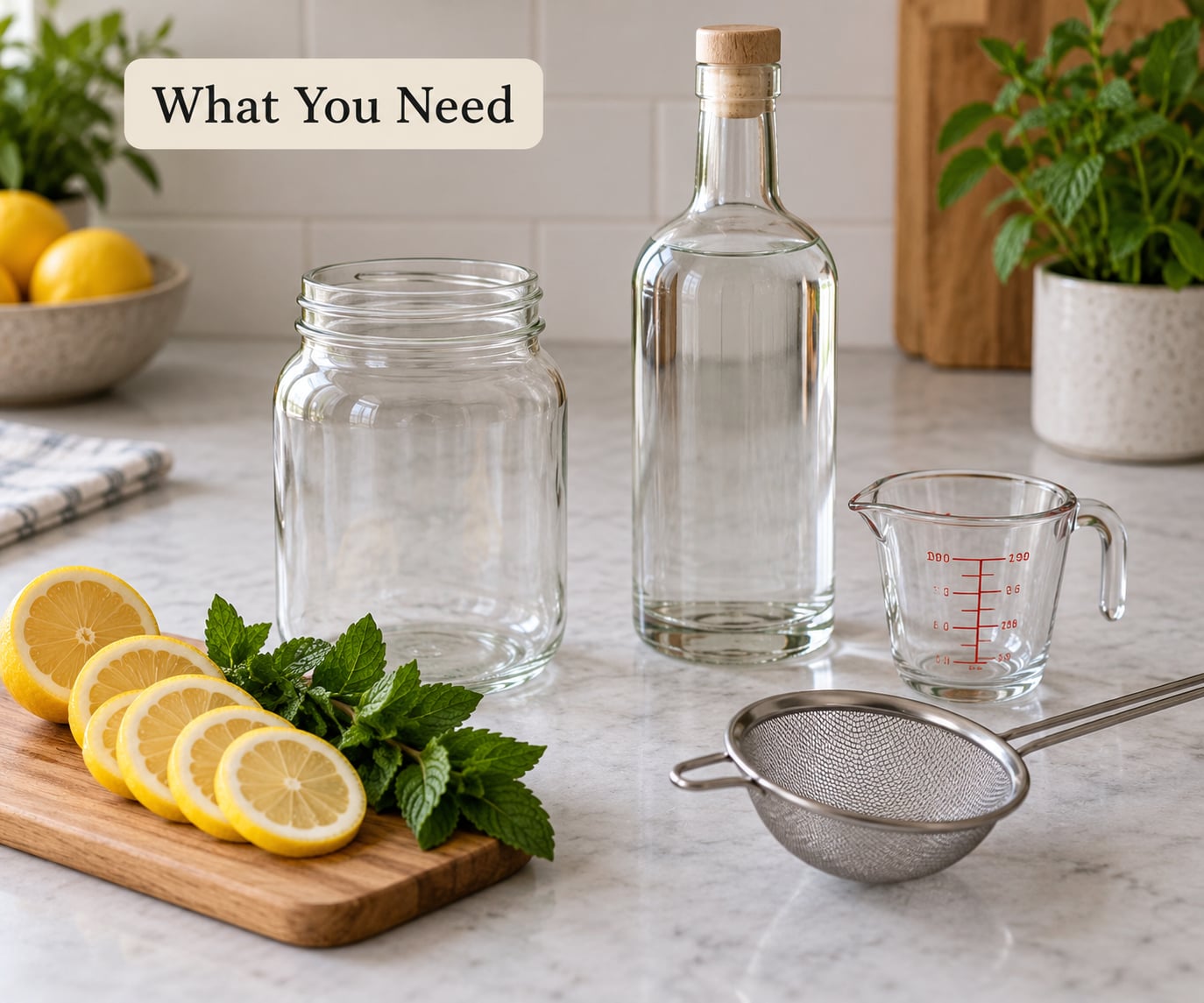
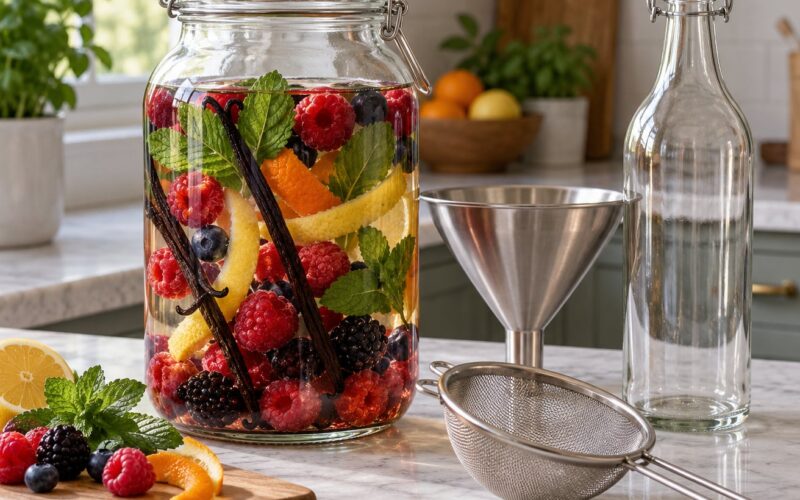
A wide-mouth glass jar with a tight lid is the only vessel you truly need. The wide mouth matters because you will be pushing produce down into the liquid with your fingers, and a narrow jar turns that into a fight. A one-quart mason jar or a large cookie jar both work well.
You will also want a fine-mesh strainer for the first pass and a piece of cheesecloth or a paper towel for the second. The mesh catches pulp, the cloth catches the fine particles that make a finished drink look cloudy in the glass.
- Wide-mouth glass jar with a lid that seals, one quart or larger
- Fine-mesh strainer plus a second layer of cheesecloth or a coffee filter
- Small funnel for bottling without spilling
- Labels or masking tape and a pen, because an unlabeled bottle in a fridge goes bad or gets drunk by mistake
- Kettle for rinsing jars with boiling water before you fill them
That last one comes straight from homebrewers, who rinse jars with boiling water before any fruit goes in. It takes two minutes and it kills the mold that would otherwise ruin a batch.
The base ratio
One 750 ml bottle of spirit to about 2 cups of fruit, roughly 350 to 450 g. That is the number most home infusion guides land on and it works because it leaves enough headroom for the produce to sit under the surface.
Herbs are the exception. They are far more concentrated per gram than fruit, so a packed cup of rosemary or sage per bottle is plenty. A handful of delicate herbs like mint or basil is more than enough for a bottle.
Which spirit absorbs flavor best
Higher-proof spirits extract faster and more aggressively. That speed is useful for a two-hour pepper infusion and dangerous for a four-week citrus peel. Pick the proof to match how long you want the process to take.
| Base spirit | How it handles infusion | Pairs well with |
|---|---|---|
| Vodka, 80 proof | Neutral, so fruit shows up cleanly with nothing underneath it | Berries, citrus peel, herbs, peppers |
| Gin | Juniper adds its own herbal note, which can crowd light botanicals | Cucumber, rosemary, citrus, berries |
| White rum | Slightly sweet, so it rounds out tart fruit | Pineapple, mango, spices, coffee |
| Blanco tequila | Peppers extract fast; watch it closely | Jalapeno, grapefruit, pineapple, cilantro |
| Bourbon or rye | Oak and caramel carry flavor well but slow it down | Cherries, figs, vanilla, cinnamon |
| Cognac or brandy | Fruit-forward, good for stone fruit | Apricot, peach, pear |
| 100 proof spirit | Extracts in hours rather than days | Hard candies, coffee beans, citrus peel, fast batches |
Cheap vodka works. Nobody in my kitchen can tell a 40 dollar bottle from the store brand once it is buried under two cups of blackberries, and the money is better spent on produce.
Step-by-Step: How to Infuse Liquor with Fruit and Herbs
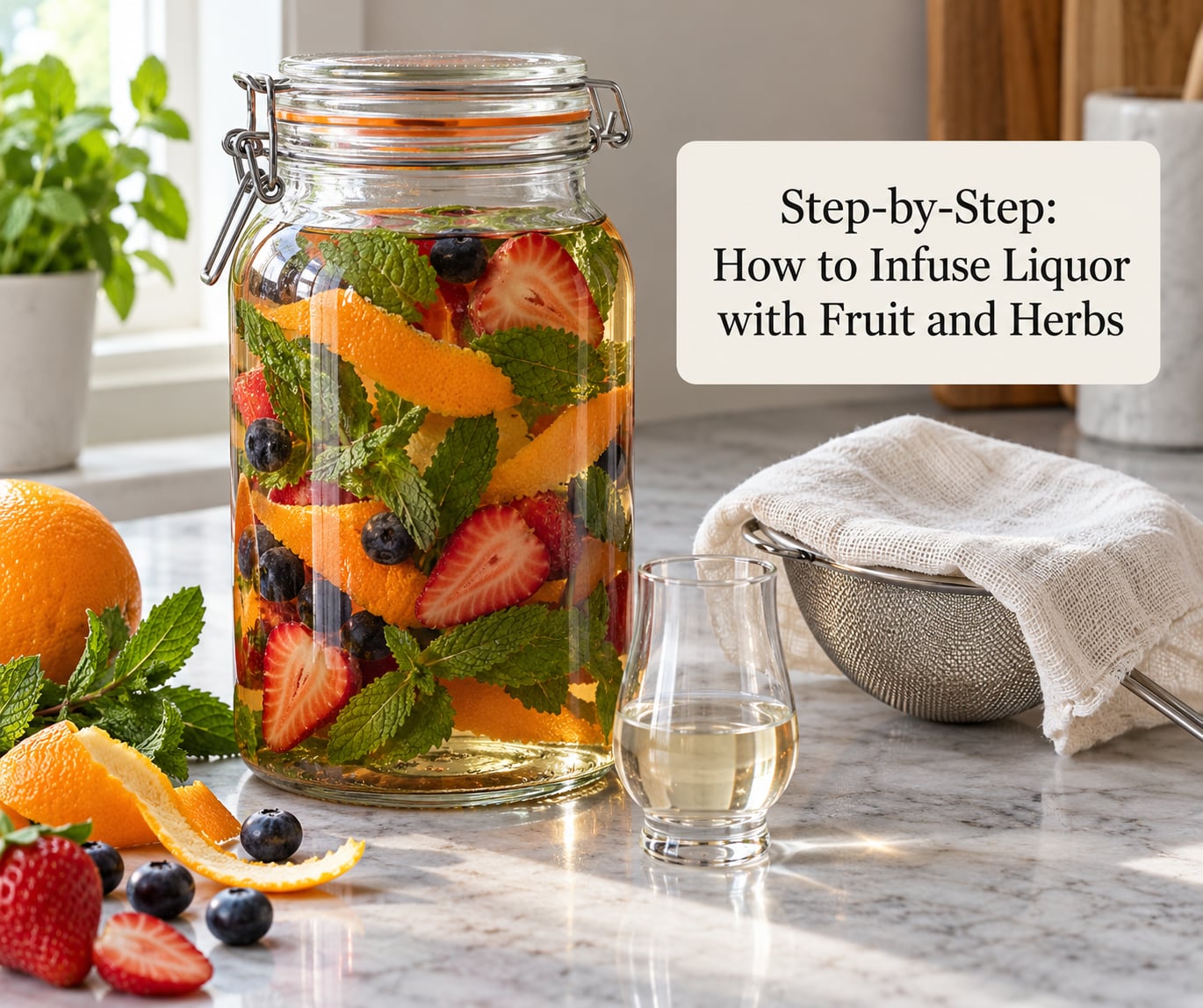
Choose the Right Liquor, Fruit, and Herbs
Start with the ingredient, not the bottle. Decide what flavor you want in the finished drink, then choose produce that tastes like that flavor when you bite it. An under-ripe peach will infuse into thin, sour vodka no matter how long you wait.
Good beginner combinations are vodka with raspberries, whiskey with cherries, and gin with cucumber and rosemary. Add one herb to one fruit and you are set. Two fruits and a herb is a lot more than most home batches need, and past three ingredients the flavors start talking over each other.
Fresh herbs work far better than dried for infusions. Dried basil and dried mint lose their volatile oils in storage, and you end up tasting dust. Dried rosemary and dried cinnamon hold up well because their flavor compounds are not as fragile.
Prepare the Ingredients Without Overloading the Jar
Wash everything, then dry it thoroughly. Water left on produce dilutes the spirit and lowers the final alcohol content, which is exactly the thing that keeps a finished bottle shelf stable. Damp fruit is the number one reason homemade infusions go cloudy and then fade.
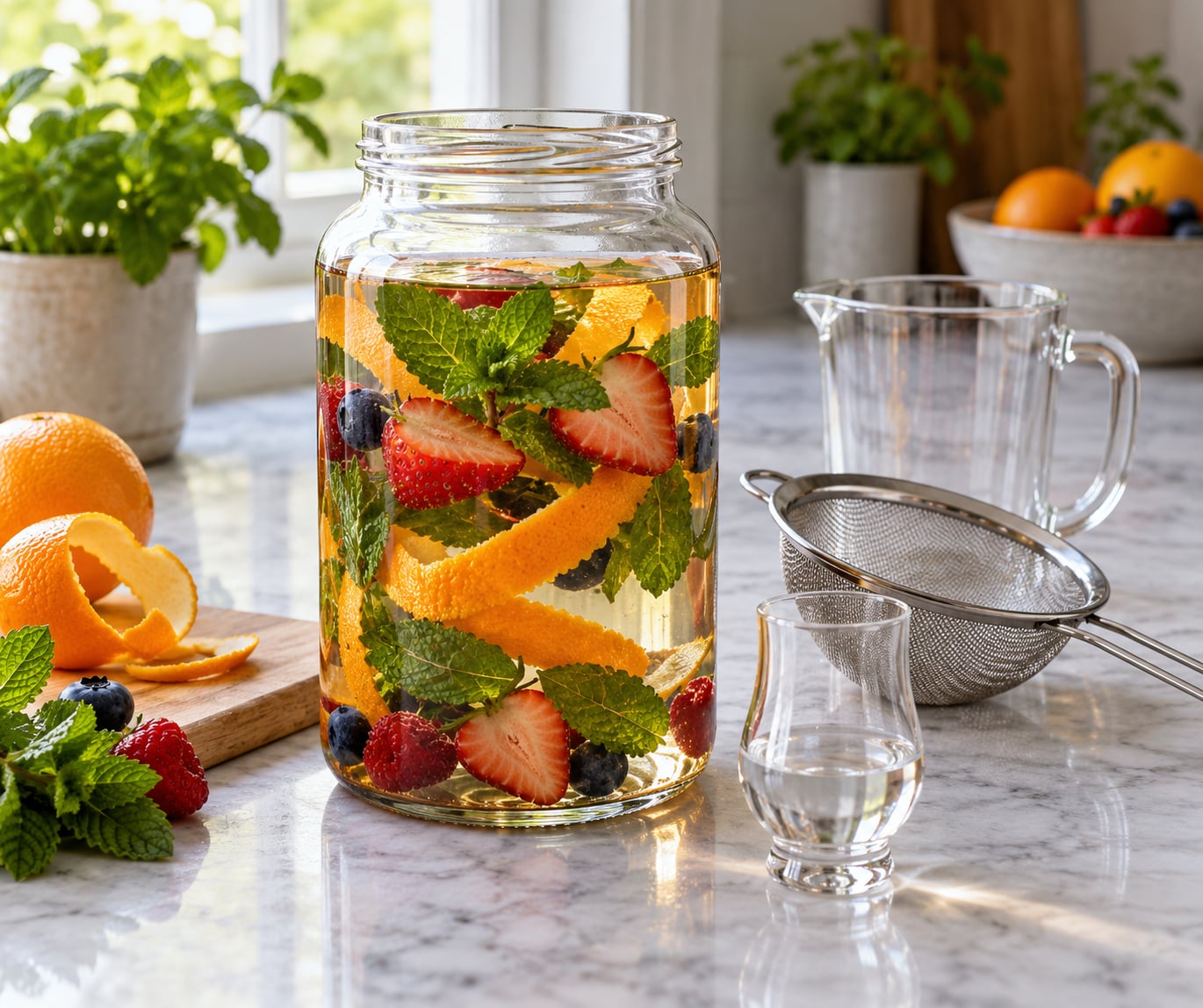
Cut large fruit into pieces so liquid can reach the inside. Halve the strawberries, quarter the pineapples, and leave berries whole because crushing them releases juice and seeds into the liquid.
Then remove everything bitter before it goes anywhere near the spirit. Citrus pith is the big one: take a lemon or orange and remove only the colored outer zest, leaving the white layer behind. Seeds, pits, stems and the white membrane inside citrus peels all leach bitter compounds, and that bitterness gets stronger the longer the infusion runs.
Gentle bruising works for herbs and for hard things like vanilla beans or cardamom pods. Muddling fruit is a different story, and it is a mistake: crushing breaks the fruit and lets bitter seeds and cloudy juice into the batch.
Combine and Steep the Infusion
Pack the produce into the jar first, then pour the spirit over it. Liquid on top of produce is slower than produce on top of liquid, so pack the fruit, add the spirit, and press everything down with the back of a clean spoon until it is fully submerged. Anything poking above the surface will brown and grow mold instead of infusing.
Seal the jar and put it somewhere cool and out of direct light. A pantry shelf or a closed cabinet is better than a windowsill, and heat speeds up extraction more than anyone expects.
Give the jar a shake or a swirl every day. Agitation moves fresh liquid across the surface of the produce, which speeds things up without adding any bitterness.
How long to infuse fruit, herbs, and spices
| Ingredient class | Examples | Steep time | Taste starting at |
|---|---|---|---|
| Peppers and heat | Jalapeno, habanero, chili | 2 to 12 hours | 1 hour |
| Delicate herbs | Mint, basil, cilantro, tarragon | 4 to 24 hours | 2 hours |
| Dense fruit and spices | Pineapple, mango, peaches, vanilla, cinnamon | 2 to 5 days | 1 day |
| Soft berries | Raspberries, strawberries, blackberries | 3 to 7 days | 1 day |
| Woody herbs | Rosemary, sage, thyme, bay | 5 to 14 days | 3 days |
| Citrus peel | Orange, lemon, grapefruit zest | 1 to 4 weeks | 5 days |
| Coffee and hard botanicals | Coffee beans, cacao, peppercorns | 6 to 24 hours | 1 hour |
Those windows are ranges, not deadlines. Taste as you go, starting at the earliest time in the row, using a clean spoon so you do not introduce bacteria or cloud the jar.
Herbs are the part everyone underestimates. A sprig of mint that smells incredible in the garden can turn the bottle soapy and vegetal after two full days in 80 proof spirit, and a rosemary bundle keeps improving for two weeks. Start delicate herbs short, and leave woody herbs alone.
Taste, Strain, and Bottle the Result
Taste the spirit straight, then taste a spoonful diluted in a little water or soda. Raw spirit is harsher than it will be in a finished drink, so a concentrate that tastes aggressive can still be perfect at 2 ounces over ice.
When the flavor is where you want it, strain it. Pour through the fine-mesh strainer first, then through the cheesecloth or coffee filter for a second pass. Do not press or squeeze the produce, because that forces pulp and sediment through the cloth and gives you a cloudy bottle.
Bottle it into a clean glass jar or bottle and seal it. Label it with the date, the spirit, and the ingredients. That last part has saved me more than once when I found two unlabeled bottles at the back of a fridge and had to sniff both.
Refrigerate the finished infusion and treat it as a perishable product. Fresh produce releases water and sugar into the spirit, which slowly dilutes the alcohol below the level that keeps it shelf stable. A fruit infusion is a refrigerated drink for weeks or a couple of months at most, not a bottle you leave on a bar shelf for a year.
How to use the finished infusion
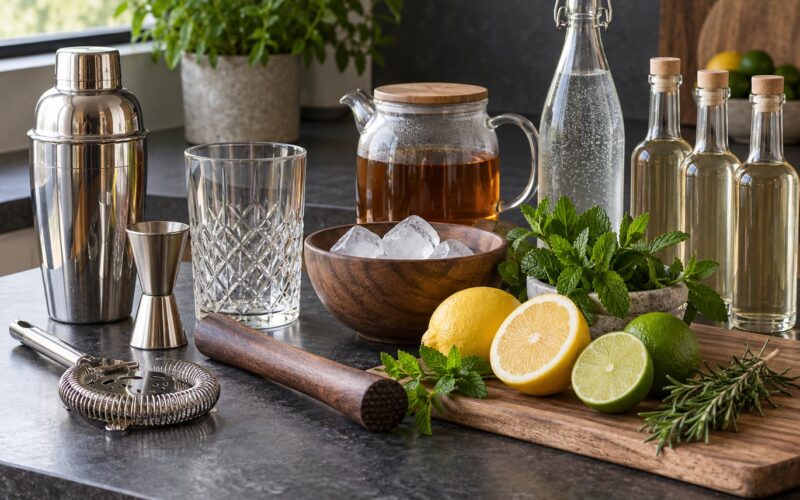
Use it as a swap in any cocktail built on that spirit. A raspberry vodka makes a good Gimlet, an herb gin makes a better Gin and Tonic, and a bourbon with cherries turns into an old-fashioned with real depth.
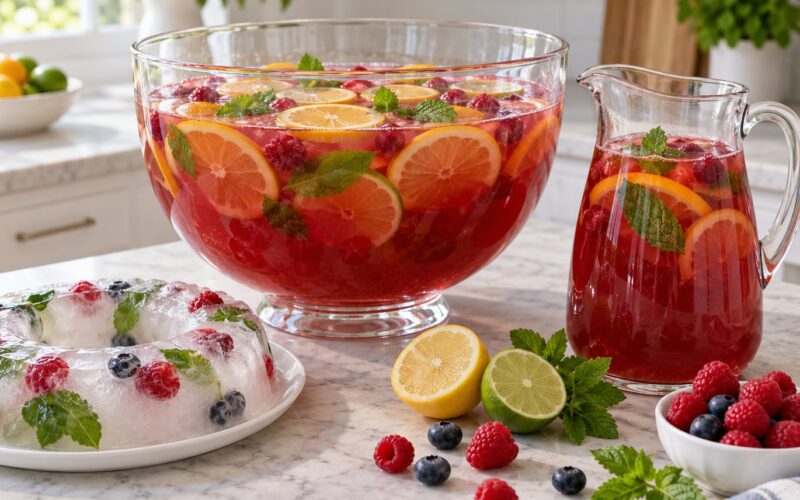
Pour it over ice with soda water and a citrus twist for a two-ingredient drink all by itself. Fruit-infused spirits also make a quick punch base for a party, where you pour one bottle into a large bowl and top it with sparkling water and ice right before serving.
Making an infusion without alcohol
The same method works with no alcohol at all, with one change: what you make is a shrub or a botanical syrup rather than an infused spirit. Cover the produce with water instead of spirit, simmer it gently for about 20 minutes, strain it, then sweet the liquid with an equal weight of sugar and let it cool.
A 2:1 water to sugar ratio gives a shelf-stable syrup in the fridge for a couple of weeks. Add sparkling water over ice and you have a non-alcoholic cocktail that tastes like the produce rather than like candy.
Common Mistakes
Almost every failed batch traces back to one of six things.
- Overpacking the jar. If the produce sits above the liquid line, it browns and molds instead of infusing. Fix: pack fruit loosely and press it fully under the spirit, or split the batch between two jars.
- Using wet or unwashed produce. Surface water dilutes the spirit and drops the final alcohol content. Fix: wash, then dry everything on a towel or a rack before it goes in.
- Leaving pith, seeds, or pits in. This is the number one reason homemade vodka tastes bitter or medicinal. Fix: zest citrus only, and pit or deseed everything else before it goes in.
- Steeping past the flavor peak. Fruit and herbs do not get stronger forever. Cell walls break down during long steeps and release bitter compounds, so a batch that tasted great on day three can taste like perfume on day ten. Fix: taste every 6 to 12 hours early on, and pull the produce when the flavor is right rather than when the calendar says so.
- Skipping the second straining pass. Fine pulp passes through a mesh strainer and makes every drink look dirty. Fix: run the finished liquid through cheesecloth or a coffee filter once more, and never squeeze the solids.
- Leaving the produce in the bottle. The solids keep releasing flavor, color and water long after the flavor has peaked. Fix: strain out the produce as soon as the taste is right, refrigerate the liquid, and use it up.
Two more things come up constantly. People expect an infusion to taste sweet like a liqueur, and it will not: fruit adds aroma and color, but almost no sugar. Make your sweetness separately with a simple syrup if the drink needs it. And people try to speed things up with candy, which dissolves into a harsh chemical version of the flavor it imitates. Real produce, or no batch.
Frequently Asked Questions
How long should you leave fruit in vodka to infuse?
Most fruit needs 3 to 5 days at room temperature in 80 proof vodka, with soft berries on the short end and pineapple or peaches at the longer end. Delicate herbs like mint and basil want only 4 to 24 hours, and citrus peel can run 1 to 4 weeks. Taste starting after one day and stop when the flavor is where you want it, because flavor peaks and then turns bitter.
Can you infuse for too long?
Yes, and it is the most common way a batch gets ruined. Fruit and herbs release their flavor early, then keep breaking down and releasing bitter compounds from seeds, pith and broken cell walls. A batch that tasted great on day three can taste medicinal by day ten. Start tasting every 6 to 12 hours and pull the produce as soon as the flavor peaks.
How long will fruit-infused vodka keep?
Refrigerated, a strained fruit infusion usually stays good for 4 to 8 weeks, sometimes a couple of months. Always keep it cold, because fresh produce adds water to the spirit and dilutes the alcohol below the level that makes it shelf stable. Aroma, color and flavor all fade in the first month, so make small batches rather than one big jar.
Can infused vodka go bad?
It can, and the cause is almost always produce left in the bottle or storage above refrigeration. Fruit infusions are not shelf stable the way unopened vodka is: water from the produce dilutes the alcohol, and the low-proof result becomes a place for microbes to grow. Strain out all solids, refrigerate, and use it within a month or two.
What is the best alcohol to soak fruit in?
An 80 proof neutral spirit such as vodka is the safest starting point for fruit, because there is nothing else in it to compete with the produce. Higher-proof spirits extract faster, which suits quick batches with peppers, coffee or hard candies, but they pull bitterness just as efficiently. Dark spirits like bourbon and whiskey work well for cherries, figs and vanilla, though they extract more slowly.
Do I need to add sugar or a mixer after infusing?
No. An infusion gives you aroma, color and flavor, but fresh fruit adds almost no sugar, so the result is dry rather than sweet. If your drink needs sweetness, add a simple syrup separately, which lets you control how sweet each glass is. If the batch tastes harsh straight, dilute it in the finished drink rather than sweetening the bottle.
Conclusion
Start with a clean jar rinsed in boiling water, an 80 proof neutral spirit, one fruit and one herb, and a short steep of about 24 hours. Taste it the next day, and when the flavor is right, strain out every bit of produce, refrigerate the liquid, and label it with the date.
From there, change one variable at a time: a different fruit, a longer steep, or a dash of simple syrup in the finished drink. That is how you learn how to infuse liquor with fruit and herbs faster than any single recipe will teach you.