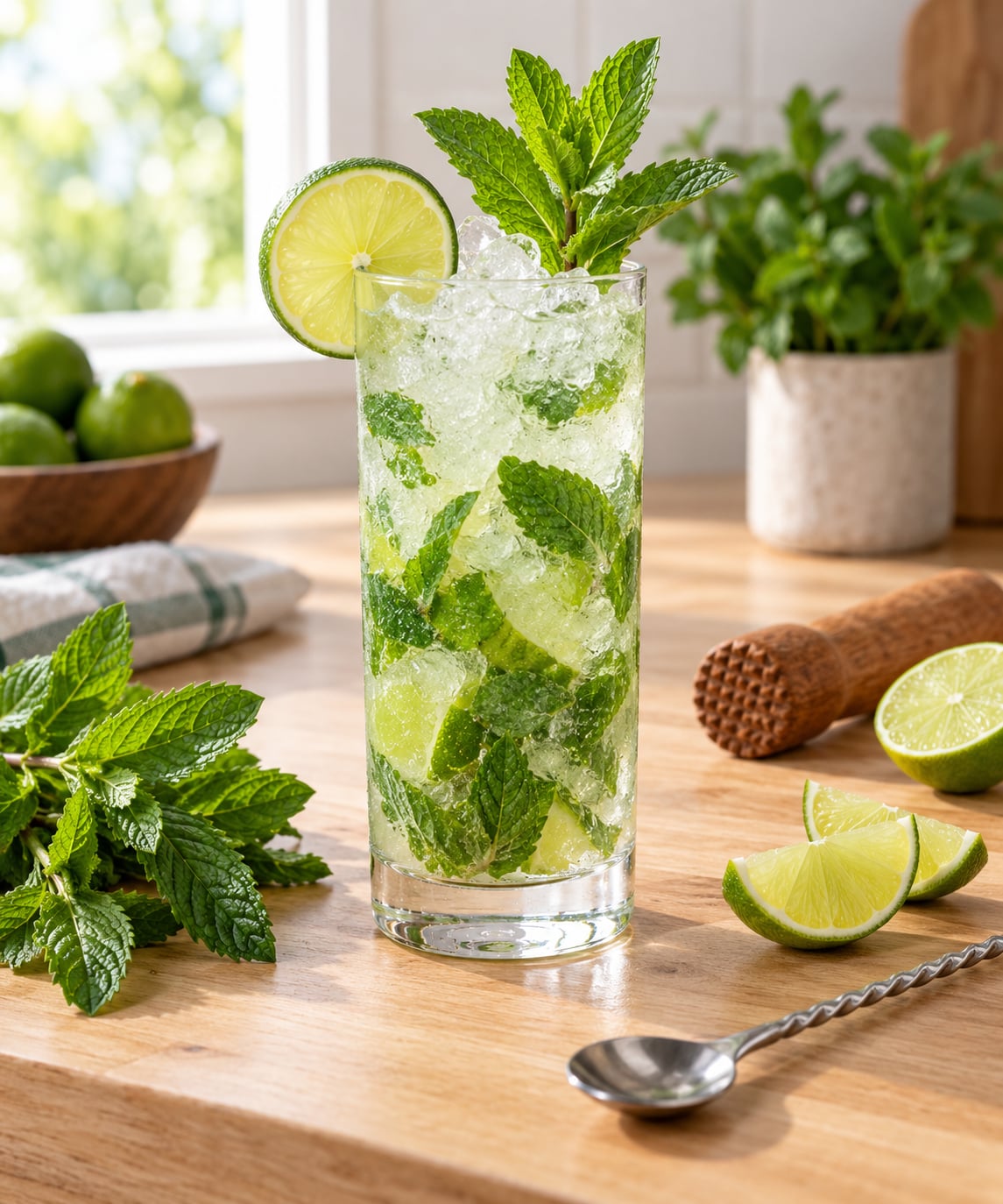
You cannot press mint and leave it completely untouched, because pressing is what releases its aroma. You can cap the damage, though: use 6 to 8 fresh spearmint leaves, press them with a wooden muddler 3 to 4 times, and stop the moment the smell opens up. That is how to make a mojito without bruising the mint into a bitter, cloudy mess. Five minutes, one glass, no bar kit required.
There is a second school of thought worth knowing about before you start. A long-running thread on r/bartenders splits almost evenly between bartenders who pound the mint and those who clap a sprig and drop it in whole. Both camps agree on one thing: shredding the leaves is where drinks go wrong.
Table of Contents
- What You Need
- Step-by-Step: How to Make a Mojito Without Bruising the Mint
- How to Make a Mojito Without Bruising the Mint: Press, Don’t Pound
- How to Make the Sugar-Lime Base
- How to Add Rum, Ice, and Soda Water
- Common Mistakes
- Frequently Asked Questions
- Why does my mojito taste bitter after I muddle the mint?
- Can I still use a mojito if the mint leaves turn dark or bruised?
- Should the mint be muddled before or after the sugar and lime are added?
- How much soda water keeps a mojito crisp without losing its rum?
- How can I make the drink less strong without changing its flavor too much?
- Conclusion
What You Need
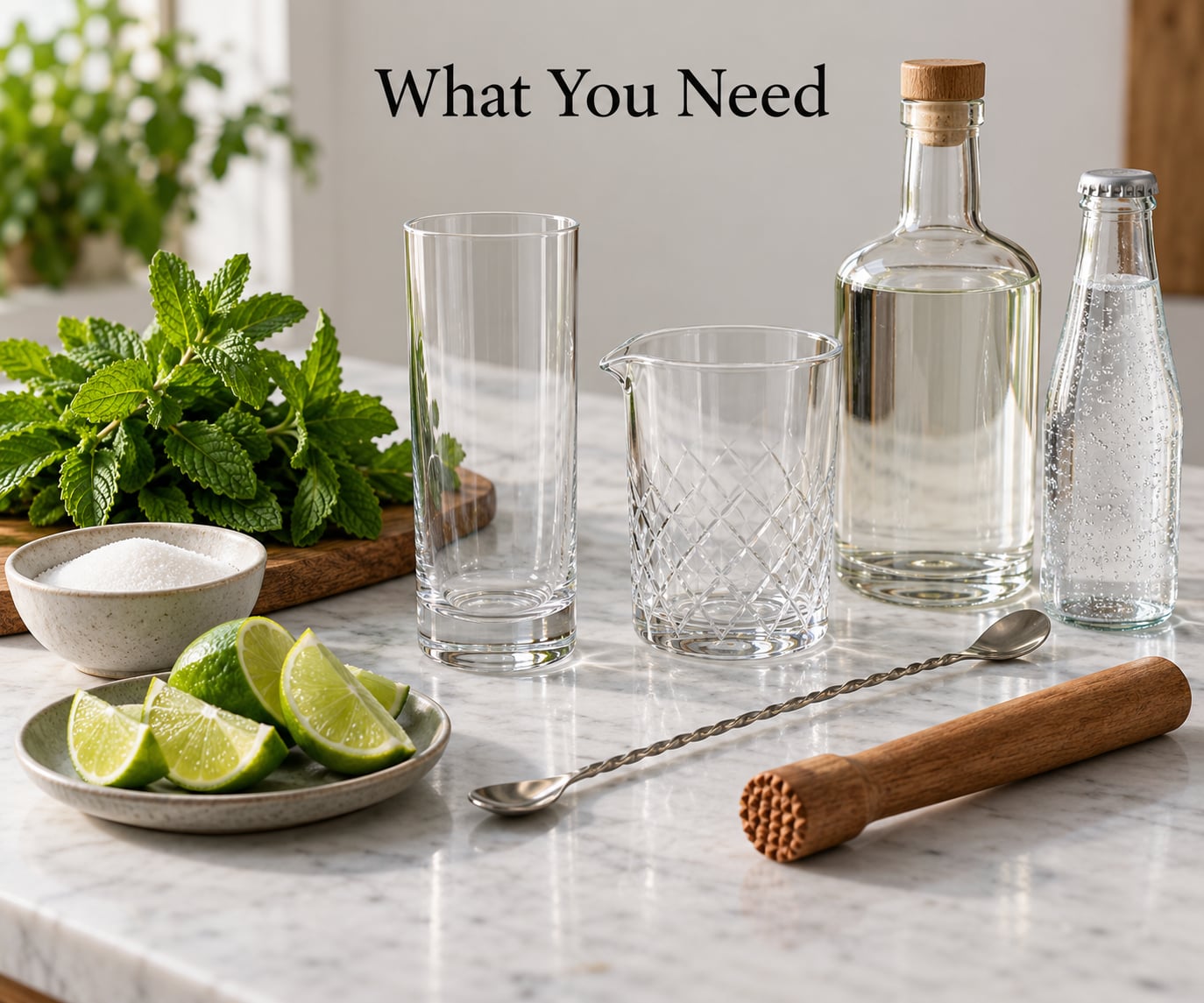
Everything here is either in a kitchen drawer or a grocery store aisle. The only tool people fuss over is the muddler, and it is genuinely optional.
- Mint: 8 to 10 fresh spearmint leaves, plus one intact sprig for garnish. Spearmint is the right choice; peppermint is hotter and turns bitter faster.
- Lime: one medium lime, cut into wedges, plus a wedge or wheel for the rim.
- Sugar: 2 teaspoons granulated. Equal parts sugar and water stirred together into a syrup also works, and dissolves faster in cold drinks.
- White rum: 2 ounces. A clean, unaged white rum tastes like mint and lime rather than fighting them.
- Ice: about 1 cup crushed or finely chopped. Regular cubes work, they just dilute the drink faster.
- Soda water: 3 to 4 ounces, chilled.
- Glass: a tall highball or collins glass, filled about three-quarters with crushed ice.
- Tools: a bar spoon, plus a wooden muddler if you have one.
No muddler? The flat back of a wooden spoon works nearly as well, and a bar spoon does in a pinch. Rolling the leaves between your palms for a few seconds, then dropping them in, is a legitimate zero-tool method that many working bartenders prefer anyway.
Step-by-Step: How to Make a Mojito Without Bruising the Mint
Five stages, and only one of them needs care. Watch the leaves rather than the clock.
- Strip the mint. Pull the leaves off the sprig, drop the woody stem, and check for anything green and moving tucked along the underside.
- Build the sugar-lime base. Squeeze 4 to 5 lime wedges into the sugar at the bottom of the glass and stir until the sugar looks damp.
- Press the mint. Add the leaves on top and press 3 to 4 times, stopping as soon as the aroma hits your nose.
- Add rum and ice. Pour in the rum, fill the glass with crushed ice, and churn briefly with the bar spoon.
- Top with soda. Pour chilled soda water down the side of the spoon and lift the spoon once to keep the bubbles alive.
How to Make a Mojito Without Bruising the Mint: Press, Don’t Pound
Put the leaves in the empty bottom of the glass first, before any liquid, and press with the flat end of the muddler. A few seconds of firm, straight-down pressure releases the oil. Anything beyond that starts tearing the leaf apart.
Two cues tell you when to stop. The first is smell: the moment the mint smells bright and green at nose level, it is done, and continuing only adds bitterness. The second is appearance: pressed leaves look darker and slightly flattened but still hold their shape. If you see ragged edges, flecks, or a dark green smear on the glass, you have gone too far.
The mechanism is simple. Aroma lives in tiny oil glands on the leaf surface, and a gentle press ruptures just enough of them to let the oils into the drink. Pounding past that point tears the leaf tissue, breaks down the chlorophyll that keeps it green, and pushes vegetal, tea-like bitterness into the liquid along with green flecks that clog straws.
Count the presses rather than watching the clock. Three or four is the ceiling for most home kitchens, and that ceiling is really the whole of how to make a mojito without bruising the mint: enough pressure to open the aroma, not enough to shred the leaf. If you want to go further, swap the muddler for a bar spoon and use the flat back, which distributes the pressure instead of concentrating it in one spot.
How to Make the Sugar-Lime Base
Squeeze the lime wedges directly into the sugar, in the bottom of the glass, before anything else goes in. Turn the wedge toward the palm as you squeeze so the juice runs out rather than spraying, then stir with the bar spoon until the sugar clumps turn damp and paste-like.
That damp paste is the whole point, because it dissolves slowly once the drink is cold and full of ice. Stir it into liquid first and you end up with grit at the bottom of the glass.
Balance comes down to lime quantity. Four to five wedges from a medium lime balances 2 ounces of rum without turning the drink harsh. Taste the base before the rum goes in: it should taste pleasantly sour and sweet, with a small prickle at the back of the throat. If it makes you pucker hard, add another half teaspoon of sugar rather than more lime.
How to Add Rum, Ice, and Soda Water
Order matters. Rum goes in before the ice so it mixes with the lime-sugar base at full strength instead of getting diluted on contact. Pour the 2 ounces of rum over the pressed mint, then fill the glass about three-quarters with crushed ice and churn with the bar spoon for five or six quick turns.
Churn, do not stir. A tall spoon held against the inside of the glass and lifted and dropped a few times mixes rum, juice, and sugar while pulling the mint oils up through the ice without hammering the leaves further.
Fill to about an inch below the rim, then top with 3 to 4 ounces of chilled soda water poured down the back of the spoon. The chilled liquid keeps more carbonation in the glass, and the spoon keeps the bubbles from collapsing on impact. Stir once, gently, and stop.
Signs you have overworked it: a dull, flat drink with fine green particles suspended in it, or a straw that keeps catching on mint debris. Both point to the same fix, more pressing than the drink needed.
Common Mistakes
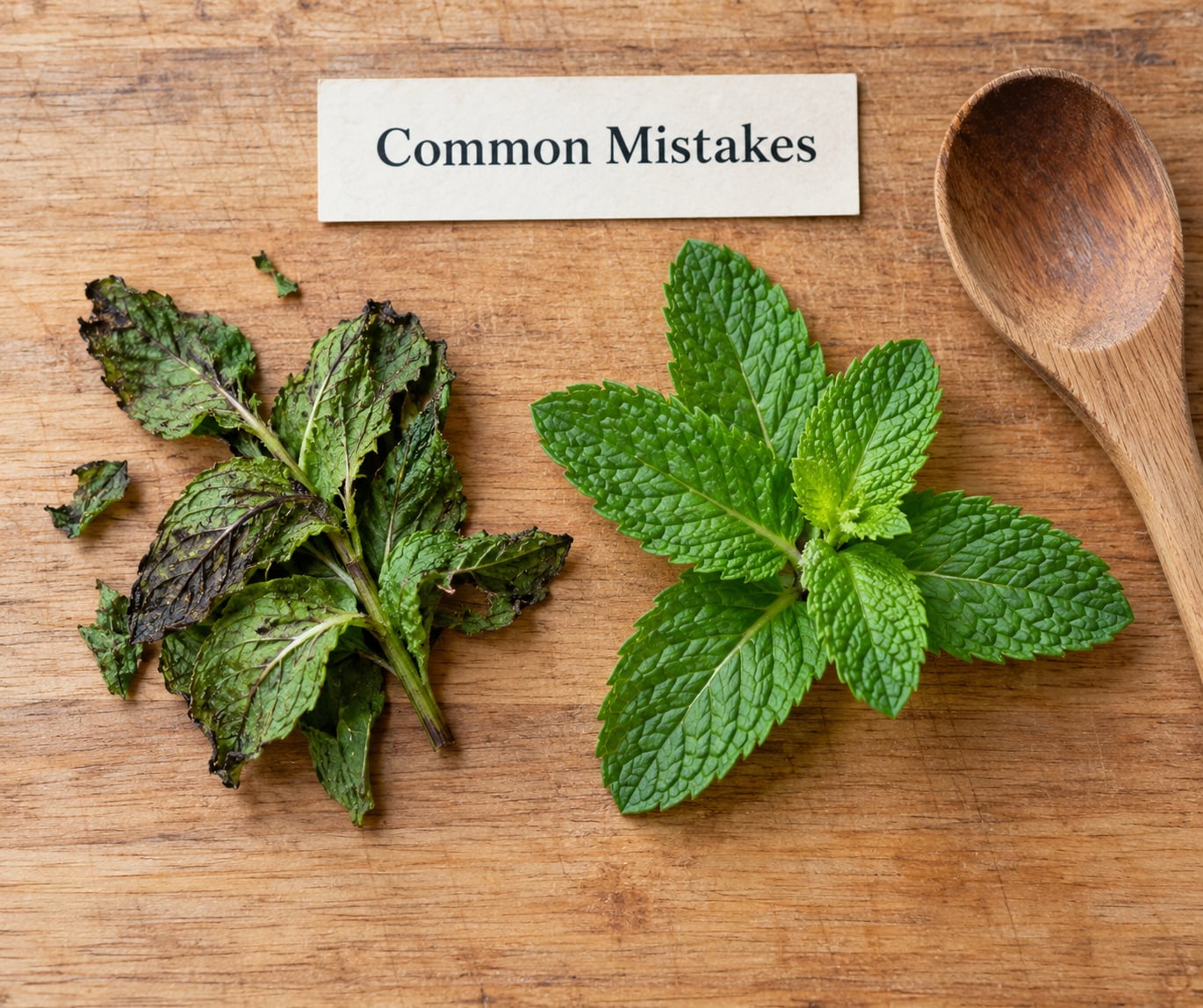
Almost every bad home mojito traces back to one of these seven. Each has a straightforward correction.
Pouring on the force. A heavyweight muddler driven hard with both hands shreds leaves in seconds. Use a wooden muddler, one hand, and short presses with the flat end.
Muddling past fragrant. The aroma arrives early, usually by the third press, and everything after it is bitterness. Count presses instead of working until the drink looks mixed.
Crushing ice in the glass. Muddling ice breaks it down and waters the drink before you have even added soda water. Add the ice after the mint, and chop it finely beforehand so you are not breaking cubes with a tool.
Overloading on lime. Too much juice reads as harsh rather than bright. Start with four wedges, taste the base, and add more only if it tastes flat.
Adding soda water too early. Pouring it in before the ice, or stirring hard afterward, flattens the drink. Top with soda last and lift the spoon once.
Using bruised or blackened leaves. Mint that has blackened at the edges, smells grassy, or has been sitting for more than a week will taste weak and slightly bitter no matter how gently you press it. Store sprigs in a jar of water in the fridge like a bouquet and change the water every couple of days.
Filling the glass to the top. An overfilled highball has no room for the mint to express itself, and the garnish ends up crushed against the rim. Leave that inch of headspace.
That last inch matters more than it sounds. Getting how to make a mojito without bruising the mint right is mostly about restraint: a low fill, a counted press, and a top pour that leaves the bubbles alone. The rest is arithmetic.
On the question of bartenders and the drink: the resistance you have heard about is mostly workflow, not dislike. Stripping stems leaf by leaf and watching press counts slows service down, and shredded mint that gets sucked up a straw is a real complaint in the trade. The work-around that satisfies both camps is the no-muddle method. Nomad Bar’s Pietro Collina has argued for dropping the leaves into the shaker whole, with lime, syrup, and rum, shaking for 10 to 15 seconds, and straining. You get aroma without any pressure at all, and the leaves stay intact in the glass.
Frequently Asked Questions
Why does my mojito taste bitter after I muddle the mint?
Bitter mint almost always means the leaves were crushed past the point of pressing. Tearing ruptures more oil glands than the drink needs and breaks down chlorophyll, which adds a vegetal, tea-like taste and turns the liquid cloudy green. It also happens when mint is old or waterlogged. Use 6 to 8 fresh leaves, press only 3 to 4 times, and stop the moment the aroma reaches you.
Can I still use a mojito if the mint leaves turn dark or bruised?
You can, but the drink will lean bitter and murky, and no amount of extra soda water will fix it. Pressed leaves should darken slightly while keeping their shape. Leaves with ragged edges, black patches, or a green film on the glass have been overworked. If that is what you have, start again with fresh sprigs rather than trying to rescue the glass.
Should the mint be muddled before or after the sugar and lime are added?
After the sugar and lime, and only once they have been stirred into a damp paste. The paste catches the mint oils and carries them through the drink instead of letting them sit on the glass. Working mint into an empty glass first, or into a full one, is what turns the leaves black, because there is nothing there to cushion the pressure.
How much soda water keeps a mojito crisp without losing its rum?
Three to four ounces for two ounces of white rum, which is the classic balance. Pour it chilled and last, straight down the back of a bar spoon, then lift the spoon once instead of stirring. Going over five ounces starts to read as a soda with a splash of rum rather than a mojito, and the rum is what carries the whole drink.
How can I make the drink less strong without changing its flavor too much?
Add more ice and more soda water rather than cutting the rum, and build with a longer spoon so the flavor stays even. Chilling the glass and using finely crushed ice slows dilution, which is the other reason drinks get stronger as they sit. Cutting the rum itself changes the balance, because lime and sugar were chosen to work against two ounces of alcohol.
Conclusion
Start with the base: put 2 teaspoons of sugar in the bottom of a tall glass and squeeze in 4 to 5 lime wedges, then stir until the sugar is damp. Add 6 to 8 fresh spearmint leaves and press them 3 to 4 times with the flat back of a wooden muddler, stopping the moment the aroma opens up. Rum, ice, then chilled soda water last. Press gently, and if you would rather not press at all, shake the leaves whole in the shaker for 10 to 15 seconds and strain.