You can make a cocktail without a shaker by using anything leak-proof you already own: a mason jar with a two-piece lid, a sealed plastic water bottle, a protein shaker bottle, or a pot with a lid. It takes about two minutes and costs nothing extra. The secret is that a shaker does three jobs, and most drinks only need two of them done well.
The trick to learning how to make a cocktail without a shaker is knowing when stirring is enough and when you really do need ice in a closed container. Get that decision right and the rest is just measuring and a steady hand.
Table of Contents
- What You Need to Make a Cocktail Without a Shaker
- Step-by-Step: Five Ways to Do It
- 1. Stir the Cocktail in a Glass
- 2. Roll the Cocktail Between Your Hands
- 3. Use a Sealed Jar or Bottle to Shake
- 4. Build the Drink Directly in the Serving Glass
- 5. Use Two Glasses to Blend the Cocktail
- Common Mistakes and How to Fix Them
- Frequently Asked Questions
- What can I use if I don’t have a cocktail shaker?
- Can I make cocktails without a shaker?
- What are some cocktails I can make without shaking?
- How much dilution does shaking a cocktail add?
- How long should I shake a cocktail in a jar?
- How do I strain a cocktail without a strainer?
What You Need to Make a Cocktail Without a Shaker
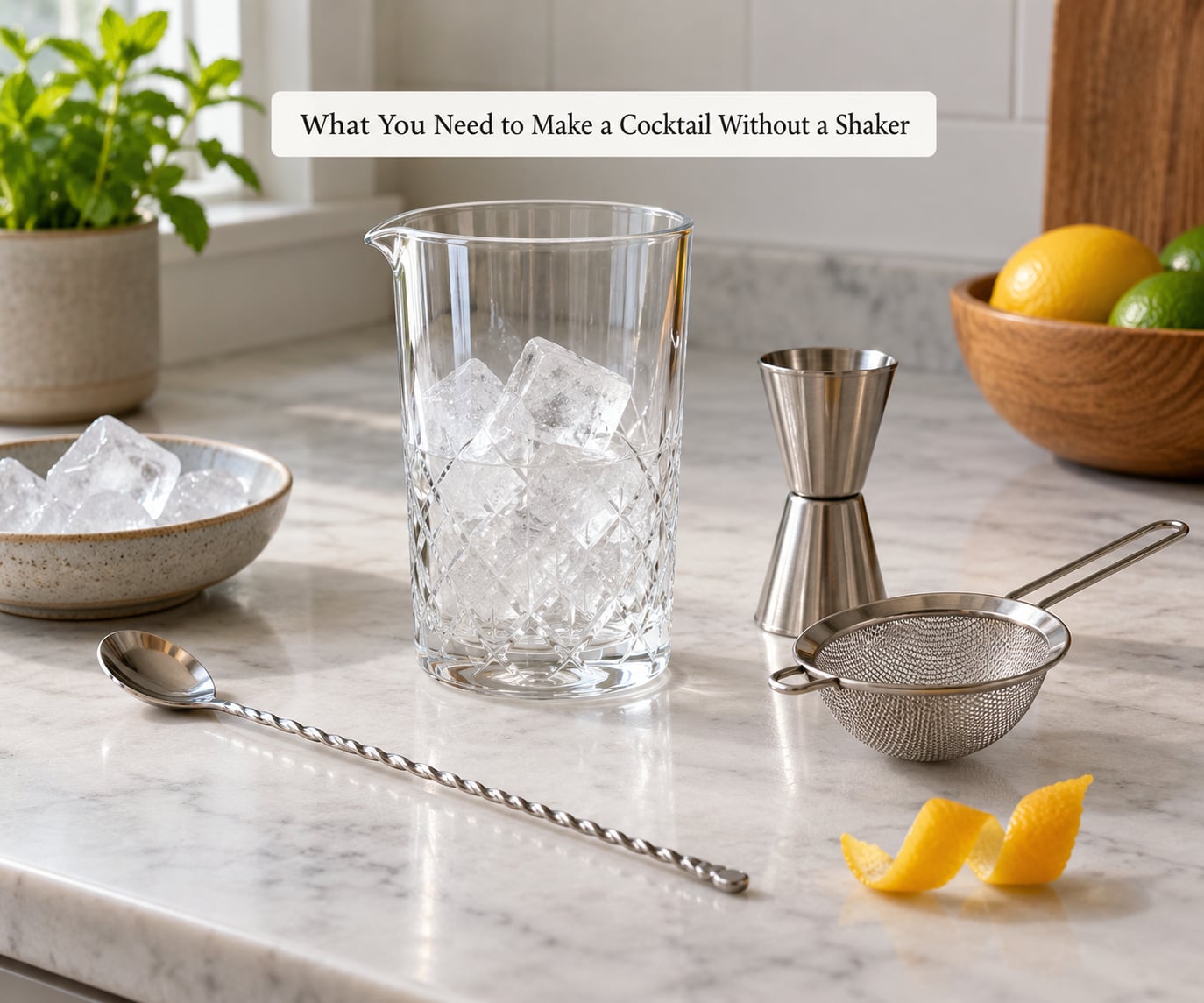
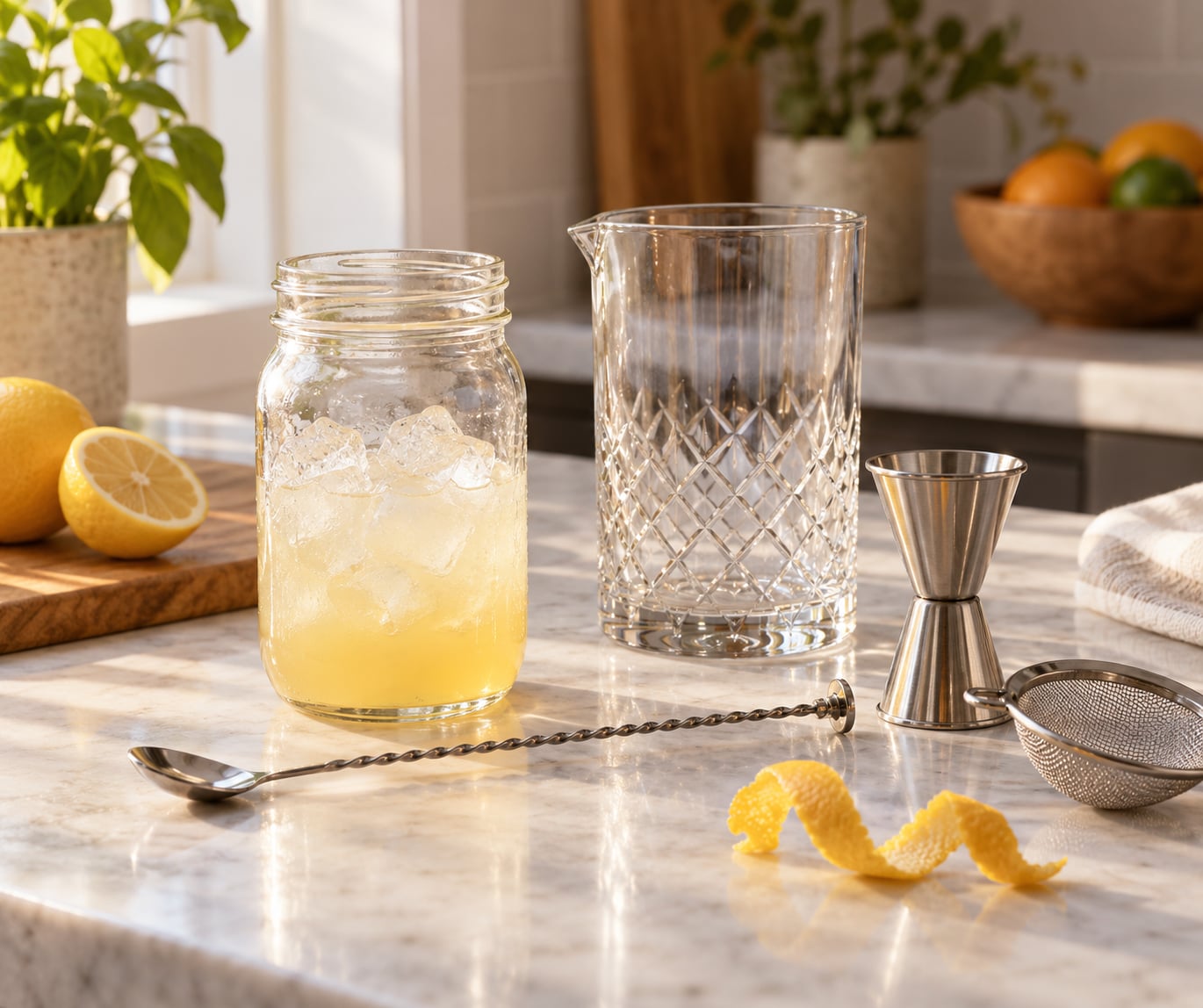
Everything below is optional except ice and a way to measure. If you own a mixing glass, a long spoon and a strainer, you can cover about 80 percent of classic cocktails without another tool.
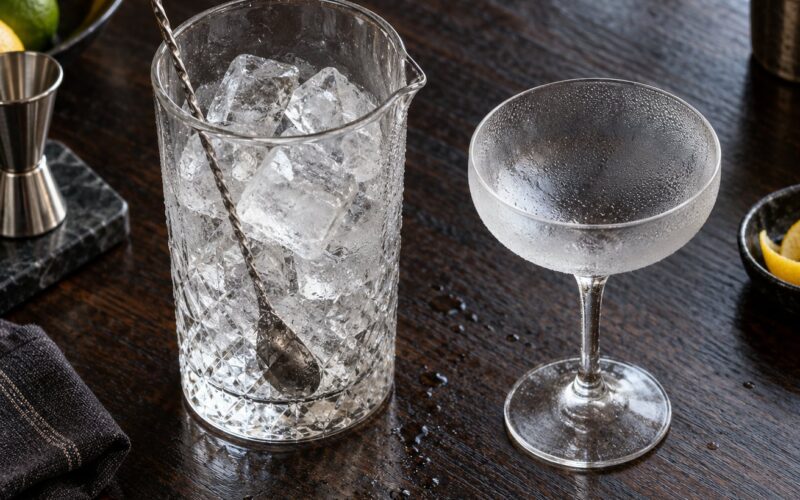
- Mixing glass or tall glass. Any straight-sided glass works. A heavier bottom keeps cold drinks cold while you stir.
- A long spoon. A bar spoon is ideal, but a teaspoon, a butter knife, or even a clean chopstick does the same job. You want something long enough to reach the bottom of the glass.
- A jigger or two tablespoons. A jigger is the upgrade. Measuring by eye is where most weak home drinks come from.
- A strainer. A fine mesh tea strainer from the kitchen drawer is the stand-in, and it costs nothing to use. A slotted spoon is the backup.
- Ice. Use whatever is in the freezer. Small cubes chill faster and dilute more slowly than large block cubes.
- A container substitute. A mason jar, a screw-top water bottle, a protein shaker bottle, or a saucepan with a tight lid.
Put ice in the mixing glass for a few minutes before you start. A cold glass does part of the chilling work for you, so the drink spends less time diluting.
Step-by-Step: Five Ways to Do It
1. Stir the Cocktail in a Glass
Stirring is the correct method, not a compromise, for any drink made only from spirits, fortified wine, bitters and syrup. It dilutes more gently than shaking and leaves the texture clean.
Add roughly two-thirds ice to the mixing glass, pour in the ingredients, and stir with a bar spoon. Keep the spoon against the wall and pull it through the ice so the liquid moves as a single current rather than splashing.
Stir for about 30 seconds. You are looking for two things: the outside of the glass feels cold to the touch, and the ice has dropped to a slow tumble instead of clattering. Stirring that spirit-first cocktail any longer mostly buys you extra dilution.
Strain into a chilled serving glass. A Manhattan, a Martini, a Gimlet, a Rusty Nail or an Old Fashioned built over a big cube are all built this way in real bars.
2. Roll the Cocktail Between Your Hands
Rolling is the gentlest option and it suits drinks where dilution is the enemy. Short, citrus-heavy cocktails suffer most when overworked.
Put the ingredients and ice in a shaker, a jar, or even a sturdy tumbler, hold it with both hands, and roll it back and forth across the counter in short pushes. You want the ice to tumble, not to rattle wildly.
Thirty seconds of rolling chills a Gimlet or a Papa Doble nicely without pushing the drink watery. It is also the technique for anything with fresh herbs, where bruising matters more than aeration.
Do not roll anything with carbonated mixer inside the container. You will lose the bubbles you paid for. Add sparkling water, soda or prosecco at the very end, straight down the side of the glass.
3. Use a Sealed Jar or Bottle to Shake
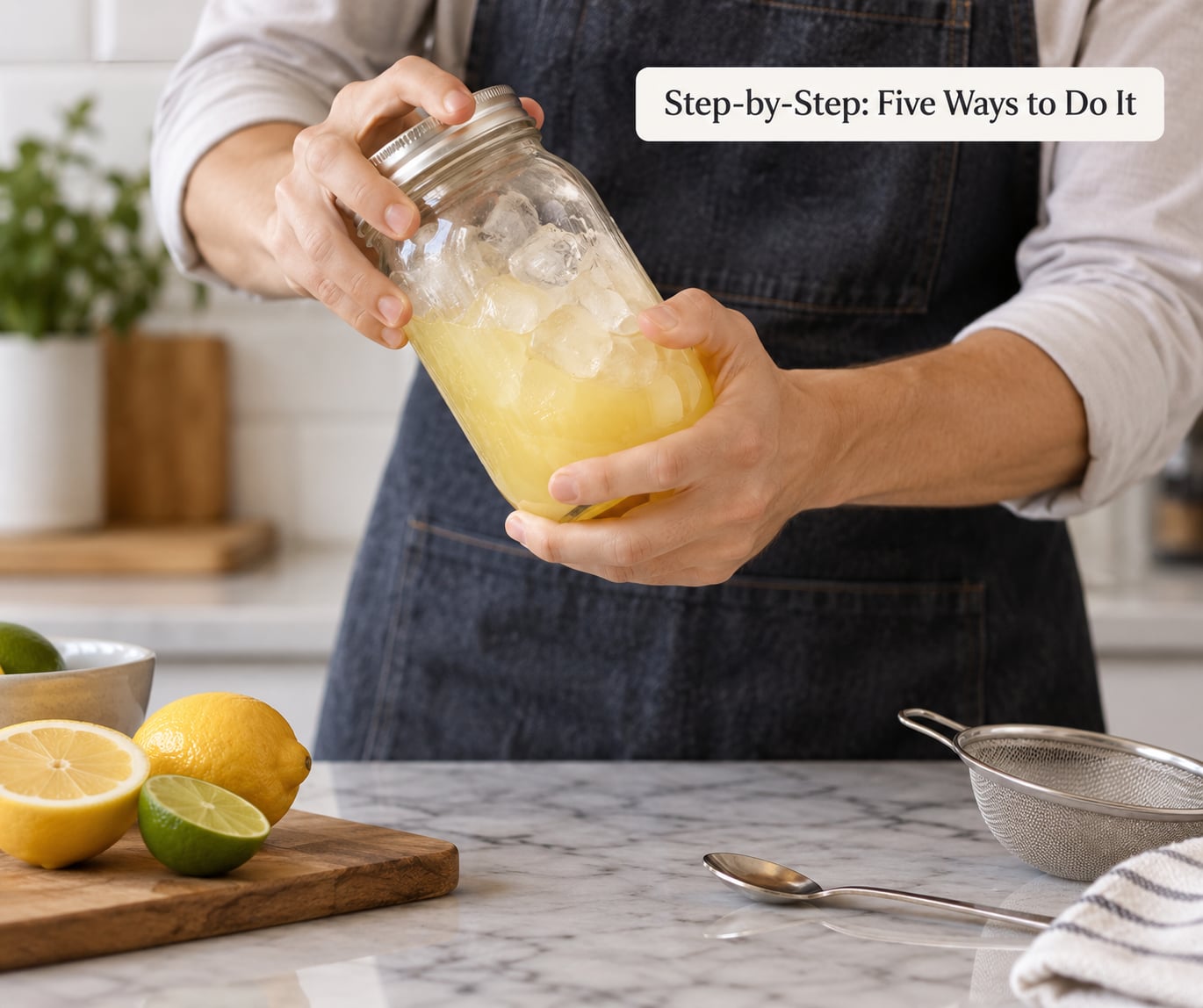
This is the closest thing to a real shaker, and it is how you make a Margarita, a Daiquiri, a Pisco Sour or an Espresso Martini without buying a tin.
Fill a lidded jar with about 6 ounces of liquid and roughly 2 cups of ice, leaving enough headroom that you can actually move it. Screw the ring on until snug, then back it off a fraction. Over-tightened mason jar rings are the number one cause of leaking mid-shake, and they can pop the lid straight off.
Grip the jar with both hands, keep it parallel to the floor, and shake for 15 to 20 seconds. Longer than feels right is closer to correct than stopping early, because alcohol transfers heat more slowly than water does. Ice regulates itself: once the drink is properly cold, the melt slows on its own.
Watch the sides of the jar. Cold with condensation outside means you are done. If you want a frothy drink like a Pisco Sour or Whiskey Sour, dry shake it first, without ice, so the egg white foams before anything gets diluted.
A protein shaker bottle is the better improvised tool because the wide mouth and tight gasket leave headroom and hold a grip. A plastic water bottle with a wide cap works too, just check the seal over the sink first.
Mind the shape of the jar. A wide-mouth jar gives more ice surface against the liquid, so it chills fast and dilutes faster. Narrow-mouth containers are gentler but take a few extra seconds.
4. Build the Drink Directly in the Serving Glass
Plenty of cocktails want no dilution at all, so skip the whole question. An Americano, a spirit-forward highball, a Gin and Tonic with good ice, a Rum and Coke: pour the spirit, add the mixer, drop in ice, stir once with a spoon.
The famous shake and dump method takes this further. Make the drink in your serving glass with ice, put a coaster or small plate on top, grip it hard and shake the whole thing for a few seconds, then set it down and enjoy.
The benefit is practical as much as culinary. One glass in, one glass out, nothing to wash, and no cleanup between the first and fifth drink of the night.
Save this method for drinks that are built to be diluted. Anything delicate or citrus-forward belongs in a glass where you control the pace.
5. Use Two Glasses to Blend the Cocktail
When a drink has fruit, herbs or anything you want emulsified, blend it. An immersion blender in a tall glass, a blender with a large cube, or two ordinary glasses turned over each other all work.
For the two-glass method, put the fruit, herbs, sugar and a splash of spirit in one glass, press down with the bottom of the second glass, and twist back and forth while you lift slightly. You want crushed, not pulverised.
Drop in ice, add the rest of the liquid, cap both glasses with a coaster or small plate, and shake both at once. That gives you the chill and the dilution in ten seconds, and it is exactly how a Caipirinha gets made.
A Caipirinha, a Moscow Mule without the shaker, an Espresso Martini shaken with ice and an Aperol Spritz rolled in a tumbler all fall into this camp.
Common Mistakes and How to Fix Them
Over-tightening the lid. A mason jar ring torqued to maximum leaks or blows the lid off mid-shake. Snug is the goal, and you should be able to flip the sealed jar over your sink without hesitation.
Shaking a sealed cobbler shaker until it freezes shut. If you borrow a friend’s shaker, tighten it only to the point where it holds. Over-sealed tins are genuinely hard to open and there is a thread of folklore about bartenders trapped by their own equipment.
Filling the container too full. There has to be ice space to move. Pack it solid and you get a blender more than a shaker.
Using wet or stale ice. Ice that has been sitting in a bin with melted water thins the drink before you start. Use fresh cubes, and dump the melt water from the jar rather than pouring it out.
Stirring a drink that needed shaking. Any drink with juice, fruit, egg white, cream or coconut cream needs agitation to come together. Stirring an Americano is correct; stirring a Daiquiri gives you a cold, flat juice.
Shaking a drink with a carbonated mixer inside. The soda foams out and goes flat in one move. Build carbonated drinks in the glass and add the bubbles last.
Pouring the whole drink through a coarse sieve. If a drink contains citrus or pulp, straining through a fine mesh strainer is the difference between a cocktail and a cloudy iced tea.
Skipping the strainer entirely. Pouring straight from the mixing glass carries ice chips and diluted liquid into the drink. Hold the mesh strainer over the serving glass, tip the mixing glass, and tap the strainer once so the last of the liquid comes through.
Frequently Asked Questions
What can I use if I don’t have a cocktail shaker?
A mason jar with a two-piece lid, a sealed plastic water bottle, a protein shaker bottle, or a saucepan with a tight lid all work. You need something leak-proof that fits about 6 ounces of liquid plus 2 cups of ice, leaves some headroom, and fits in both hands. For drinks with less need for shaking, a tall glass and a long spoon are enough.
Can I make cocktails without a shaker?
Yes, and plenty of classics are built that way. A Martini, a Manhattan and an Old Fashioned are stirred in a glass rather than shaken, so a shaker never comes into the picture. Juice and egg drinks need more agitation, and for those a jar or bottle handles the job. No equipment is a reason to experiment, not a limit.
What are some cocktails I can make without shaking?
Stirred drinks need no shaking at all: the Martini, Manhattan, Gimlet, Negroni, Old Fashioned, Rusty Nail and Boulevardier. Drinks built in the glass work too, such as the Americano, Gin and Tonic, and any spirit with a carbonated mixer added last. Aperol Spritz and an Americano are the two easiest drinks to make all night with one glass.
How much dilution does shaking a cocktail add?
A well-executed hard shake lands somewhere around 20 to 25 percent dilution, which is the classic one-to-four spirit-to-water ratio bartenders aim for. That is why you use ice in a sealed container rather than a spoon: the ice melts into the drink on purpose. Shake longer than feels comfortable, and use a narrow-mouth jar if you want less of it.
How long should I shake a cocktail in a jar?
Fifteen to twenty seconds is the working range, held parallel to the floor with both hands. Ten to fifteen seconds is enough for a pre-chilled drink with good ice. Stop when the outside of the container feels cold and the ice has slowed to a tumble. Longer than you think is usually right, since alcohol takes longer to chill than water.
How do I strain a cocktail without a strainer?
Use a fine mesh tea strainer from the kitchen drawer, held over the serving glass. If you only have a slotted spoon, rest it across the glass rim and pour through the slots, catching larger ice pieces. A piece of cheesecloth tied loosely over the glass works in a pinch, and for citrus drinks you really do want something fine to keep the pulp out.
If you take one habit from this, start with a jar. Six ounces of liquid, two cups of ice, a ring tightened only until snug, fifteen seconds with the jar held flat, then strain through a tea strainer. Once that feels routine, most nights never need a shaker at all.