If you want to know how to drink Scotch neat or with water, here is the short version: pour it into a tulip-shaped glass at room temperature, taste it neat first, then add still water a few drops at a time until the alcohol burn eases and the aromas come forward. Ice is a third option — colder, faster-diluting, and a matter of taste rather than correctness.
This guide walks through the whole method in order: what you need on the table, the serving styles and how to choose between them, how to taste without judging the whisky on the first sip, and how to dilute on purpose instead of reaching for ice by reflex. Budget about fifteen minutes for a proper tasting, and no experience at all.
Table of Contents
- What You Need
- Step-by-Step
- Choose Your Serving Style
- Taste It Neat First
- Add Water and Adjust
- Try It With Ice
- Run a Neat vs. Water Test at Home
- Common Mistakes
- Tips for Better Scotch
- Scotch tasting words worth knowing
- Frequently Asked Questions
- Should Scotch be drunk neat or with water?
- How much water should I add to Scotch?
- Is it better to drink Scotch with hot or cold water?
- What type of glass should I use for Scotch?
- Does adding ice to Scotch ruin the flavor?
- Why does Scotch burn my throat when I drink it neat?
What You Need
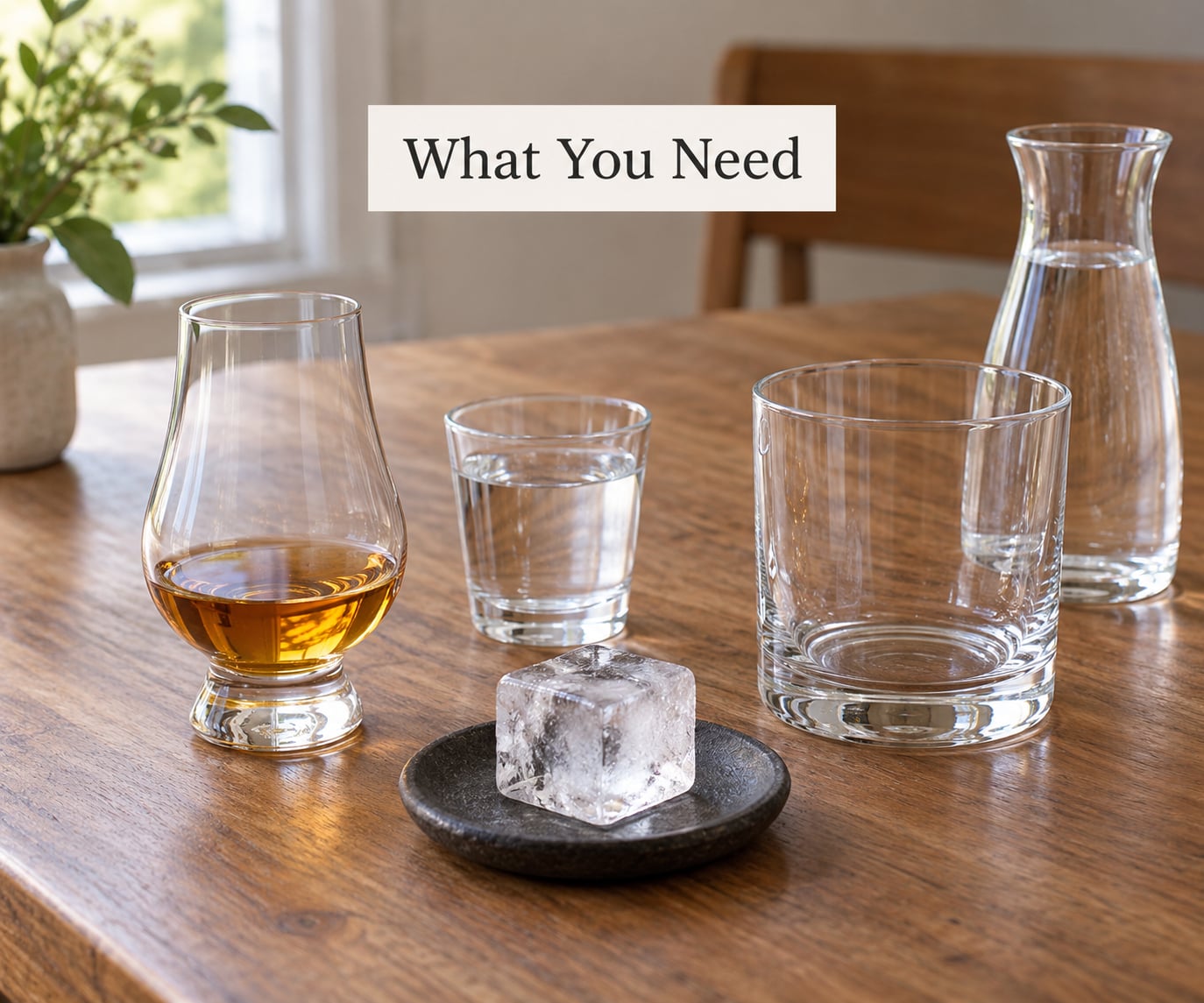
The list is short, and almost everything on it is optional except the whisky and some water. Each item changes something specific about how the drink behaves in the glass, so it is worth knowing which job it does before you buy anything.
- The Scotch itself. Any bottle works, though blended Scotch is the gentlest place to start and single malt is where the water argument gets interesting. Cask-strength bottlings at 55% ABV or higher need water more than anything else.
- Still, filtered water. Plain tap water is usually fine, but water with a strong chlorine or mineral taste will sit right on top of the whisky. Sparkling water is a real preference among some drinkers; chilled or room temperature is the other axis, and both are legitimate.
- Ice, and only if you want it. One large cube or sphere melts more slowly than a handful of small cubes, which keeps the dilution gentle. Whisky stones are the non-diluting option for anyone who just wants cold liquid.
- A tulip-shaped glass. A Glencairn or Copita-style glass narrows at the rim and wide at the bowl, which concentrates aroma instead of letting it disperse into the room. A rocks or old-fashioned glass works, but you get more air and a weaker scent.
- A second glass of water. This is the “water back” — the sip of plain water between pours that resets your palate. It is also how Scotch is served at distilleries and in most whisky bars.
- Optional tasting tools. A water dropper or a small pipette gives you repeatable dilution instead of guesswork, a nosing glass helps with delicate pours, and a notebook is the single cheapest way to remember what you liked six bottles later.
- A palate cleanser. Plain crackers, unsalted bread or a little still water. Anything sweet or flavoured will wreck the next sip.
Step-by-Step
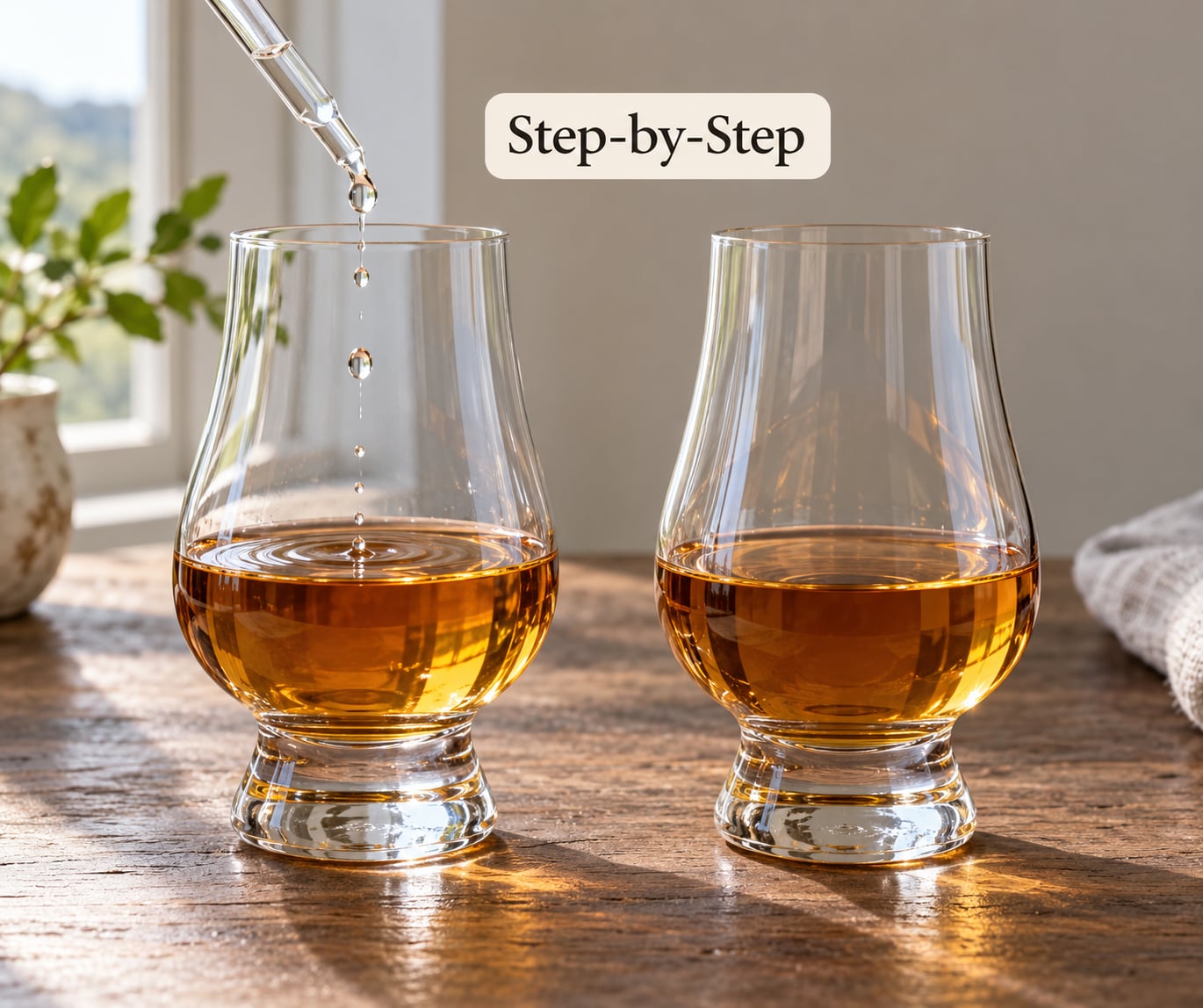
Six steps, in this order. The order matters more than the equipment — tasting neat before you dilute is what gives you something to compare against, and comparing is the entire point.
Choose Your Serving Style
Neat means nothing added at all: no ice, no water, no mixer, usually at room temperature. Scotch with water means a measured amount of still water in the glass, which is no longer neat — the moment you add water you are drinking Scotch with water, and precision people will correct you on it. On the rocks means poured over ice. A water back is a separate glass of plain water alongside your neat dram.
As a starting point for most beginners: 40% to 46% ABV Scotch is comfortable neat or with two or three drops of water; anything cask strength or heavily peated will want more water than you expect; and if you simply prefer a cold, slightly sweet long drink, ice is a fine way to drink it — it is a choice, not a mistake.
Taste It Neat First
Look before you sip. Hold the glass up so light passes through the liquid and check the colour and clarity, then tilt it and watch the legs run down the inside of the glass — thick, slow legs usually mean a heavier, more oily whisky. Then nose it: leave the nose just above the rim rather than buried in the bowl, and smell again a few times as it sits.
Sip small and let it sit. Roll a little around the front of your mouth, notice the mouthfeel, the sweetness, any smoke, then swallow and wait for the finish. Alcohol burn on the first sip is completely normal, especially with a young or high-proof bottling — it fades within a minute or two as your palate adjusts. Do not judge the whisky on sip one, and never gulp or take it as a shot.
Add Water and Adjust
This is the part almost nobody gives you a number for, so here is one: start with three drops per 30 ml, roughly a quarter of a teaspoon, and work from there. Add slowly with a pipette or the tip of a clean teaspoon, swirl the glass gently to mix, then nose and sip again before adding more. You are looking for the moment the alcohol burn no longer dominates the mid palate and the finish opens up.
For a heavily peated Islay or a 58% cask strength, five to eight drops is normal. For a delicate floral Speyside at 40%, two drops may be plenty, and anything past five starts flattening it. If you overshoot and the whisky tastes thin and short, you cannot add it back — the glass is diluted for good. That is why the dropper is worth owning.
Try It With Ice
Ice does two things at once: it chills the whisky and it dilutes it. Chilling suppresses aroma volatility, which is why a cold pour tastes blunter and longer on the finish. Small cubes melt fast and can water a 30 ml pour down to almost nothing in five minutes. A single large cube or an ice sphere has roughly a quarter less surface area than a cube of the same volume, so it chills without flooding the glass.
If you want cold without dilution, chill the whisky itself in the fridge for twenty minutes or freeze it in an ice-compatible bottle and pour it over a large cube. Or skip the liquid entirely and use whisky stones, which cool the drink and leave the strength untouched. Any of these are fine; the only real mistake is treating a temporary dilution as a flaw.
Run a Neat vs. Water Test at Home
This is the cheapest tasting exercise you can do, and it settles most arguments in about ten minutes. Pour 30 ml of one Scotch into two identical glasses. Taste the first neat, note three words. Add three drops of water to the second and do the same. Swirl, wait five minutes and nose both again, because the glass you set down ten minutes ago smells different from the one you just poured.
Then increase dilution in the second glass one drop at a time and record which point you prefer. Repeat with a peated bottle and a high-proof one. If you keep a notebook, this simple protocol does more for your palate than any tasting event, and it costs the price of one bottle and a pipette.
Common Mistakes
Nearly every beginner habit has a one-line fix. These are the ones I see over and over.
- Using a wide glass for a small pour. A tumbler disperses the aroma into the air and you end up tasting mostly ethanol. Fix: any tulip-shaped glass, filled about a third to halfway, or at most one finger’s width.
- Pouring too much. A 60 ml pour cannot be finished before it warms up, and you lose the ability to go back for more water. Fix: 25 to 30 ml is the standard tasting pour, about an ounce and a half.
- Adding water by the splash. A splash in a 30 ml pour can halve the strength and flatten the aroma entirely. Fix: drops, counted, starting at three.
- Using a bucket of small ice cubes. It dilutes and chills at once, so you cannot tell which one turned you off. Fix: one large cube, a sphere, or stones.
- Rushing the taste. Gulping, shooting it, or swirling the glass hard and sniffing immediately gives you no information. Fix: sip, roll, swallow, then wait ten seconds for the finish.
- Judging the first sip. A hot, closed feeling on sip one is normal. Fix: give it three sips before you form an opinion, and keep a water back for the burn.
- Skipping the neat pass. If you water it from the first second, you never learn what the distillery bottled. Fix: always taste neat first, even if only for three sips.
- Believing there is one correct method. Neat, watered and on the rocks are all established ways to drink Scotch, and nobody has ever failed at any of them. Fix: use whichever one you enjoy, and change your mind whenever you like.
Tips for Better Scotch
None of this needs equipment. It just needs a bit of method and the willingness to pay attention for ten minutes.
- Use filtered or still water. Chlorine reads as harshness in a spirit with almost nothing to hide behind. If your tap water tastes of anything, use bottled still water.
- Keep the glass spotless. Detergent residue and smells from the kitchen land straight on the nose. Rinse with hot water only and dry with a lint-free cloth.
- Serve at room temperature, roughly 15 to 20°C. That is around 59 to 68°F, which in most kitchens is simply leaving the bottle out for a few hours. Refrigerated whisky tastes muted.
- Let the glass open. Nosed immediately, a whisky smells flat. Wait, sniff again, and keep coming back to it as the alcohol dissipates — this is why tasters swirl and revisit.
- Take notes in plain words. Two words per pour beat a paragraph you cannot remember. Write it down within a minute of finishing, before the next bottle overwrites it.
- Match the style to the method. Floral Speyside and Highland malts show more when slightly watered; peaty Islay and maritime Campbeltown are easier to read with a few drops; blends are perfectly drinkable neat or over ice; cask strength and sherry-cask heavy drams almost always want water.
- Start small if you are new. A 40% blended Scotch over a large cube is a very different drink from a 46% single malt neat. Neither is the correct introduction — one of them will match how you actually like to drink.
- Have a non-alcoholic option ready. A simple highball of Scotch, soda water and a lemon twist, or a whisky sour, is not a lesser way to drink it. Plenty of drinkers use a whisky cocktail to move from neat to not-neat without giving up.
Scotch tasting words worth knowing
Not being able to describe a whisky is the most common reason people stop exploring them. A handful of terms covers most of what you will smell.
| Term | What it means in plain English |
|---|---|
| Neat | Poured with nothing added, no water and no ice |
| Water back | A separate glass of plain water served alongside your drink |
| On the rocks | Poured over ice |
| Dram | A casual single serving, loosely an ounce or two, not a shot |
| Cask strength | Bottled at the strength it left the cask, often 55% ABV or more |
| Nose | To smell the whisky above the rim of the glass |
| Finish | What stays in your mouth after you swallow |
| Mouthfeel | The texture and body as it moves across the tongue |
| Legs | The streaks the liquid leaves on the inside of a tilted glass |
| Peat smoke | The smoky, sometimes medicinal or maritime character from peat in the malt |
| Dilution | Adding water, and how much of it |
Frequently Asked Questions
Should Scotch be drunk neat or with water?
Either one, and there is no wrong answer. Neat is how the distillery bottled it and is the best way to judge a whisky, while a few drops of still water softens the alcohol burn and releases aromatic compounds that sit muted at full strength. Try neat first, then add water three drops at a time until it tastes balanced to you.
How much water should I add to Scotch?
Start at about three drops for every 30 ml, which is roughly a quarter teaspoon, and add more slowly. Peated whisky and cask-strength bottlings at 55% ABV or higher usually take five to eight drops. Floral Speyside at 40% needs far less, sometimes only two. If you overshoot, the whisky will taste thin and short.
Is it better to drink Scotch with hot or cold water?
Room temperature is the default for a reason: it avoids shocking the whisky and keeps the aroma moving. Hot water is used for some very heavily peated drams to soften medicinal edges, but it dulls most delicate malts. Cold water works well and some distilleries recommend it. Chilled water is fine, and sparkling water is a genuine preference rather than a mistake.
What type of glass should I use for Scotch?
A tulip-shaped glass such as a Glencairn or Copita is the standard for tasting, because the narrow rim concentrates the aroma while the wide bowl lets you swirl it. A rocks or old-fashioned glass is fine for serving on the rocks or for guests. Fill a tasting glass only a third full, about 25 to 30 ml.
Does adding ice to Scotch ruin the flavor?
Ice chills and dilutes at the same time, and chilling does suppress delicate aromas, so it is not ideal for tasting a single malt. That is a preference, not a defect. A single large cube or sphere melts slowly and softens the drink without flattening it, and whisky stones chill it with no dilution at all.
Why does Scotch burn my throat when I drink it neat?
High ethanol concentration irritates the lining of your mouth and throat, and it is strongest at the start of the glass and with young or high-proof whisky. Sip slowly, swirl it around the mouth first, and take a sip of water back to reset. The burn fades within a couple of minutes as your palate adjusts, and water in the glass reduces it faster.
Start tonight with one bottle, a tulip glass, room-temperature whisky and a pipette. Taste it neat, add three drops of water, and notice what changes in the nose and the finish. Once you have done that comparison a couple of times, you can stop reading guides and start trusting your own palate.