You drink rum like you mean it by matching the style to the serve, using a glass that fits, and slowing down long enough to smell the rum before the first sip. Most people get it wrong because they pour a double of a light rum straight from the fridge and decide the whole category is bad. It is not the rum’s fault. It is the temperature, the pour, and the pace.
That question comes up constantly on rum and cocktail forums: a new bottle arrives, the buyer has no idea what to do with it, and the fear is that they will be judged. Nonsense. Nobody is watching. What matters is that you can get something genuinely good out of whatever is in the bottle, tonight, without buying a single new tool.
This guide works for any rum, from a light-bodied white to a forty-three percent añejo. It takes about six minutes per tasting, and there is nothing here that requires a tasting mat, a coravin, or a shelf full of glassware. Read the steps, grab the bottle, and go.
Table of Contents
- What You Need
- You Do Not Need Gear to Know How to Drink Rum Like You Mean It
- How to Drink Rum Like You Mean It: Step-by-Step
- 1. Choose the Rum for Your Tasting
- 2. Pour a Measured Serving
- 3. Look Before You Sip
- 4. Warm It and Smell Before Drinking
- 5. Take a Small, Deliberate Sip
- 6. Add Water, Ice, or a Garnish Only If You Want To
- 7. Finish and Say What You Taste
- Common Mistakes
- Frequently Asked Questions
- Should rum be drunk straight or with mixers?
- What glass is best for drinking rum?
- Does adding water to rum make it taste better?
- Should rum be served cold or at room temperature?
- Is a darker rum always stronger or better?
- Conclusion
What You Need
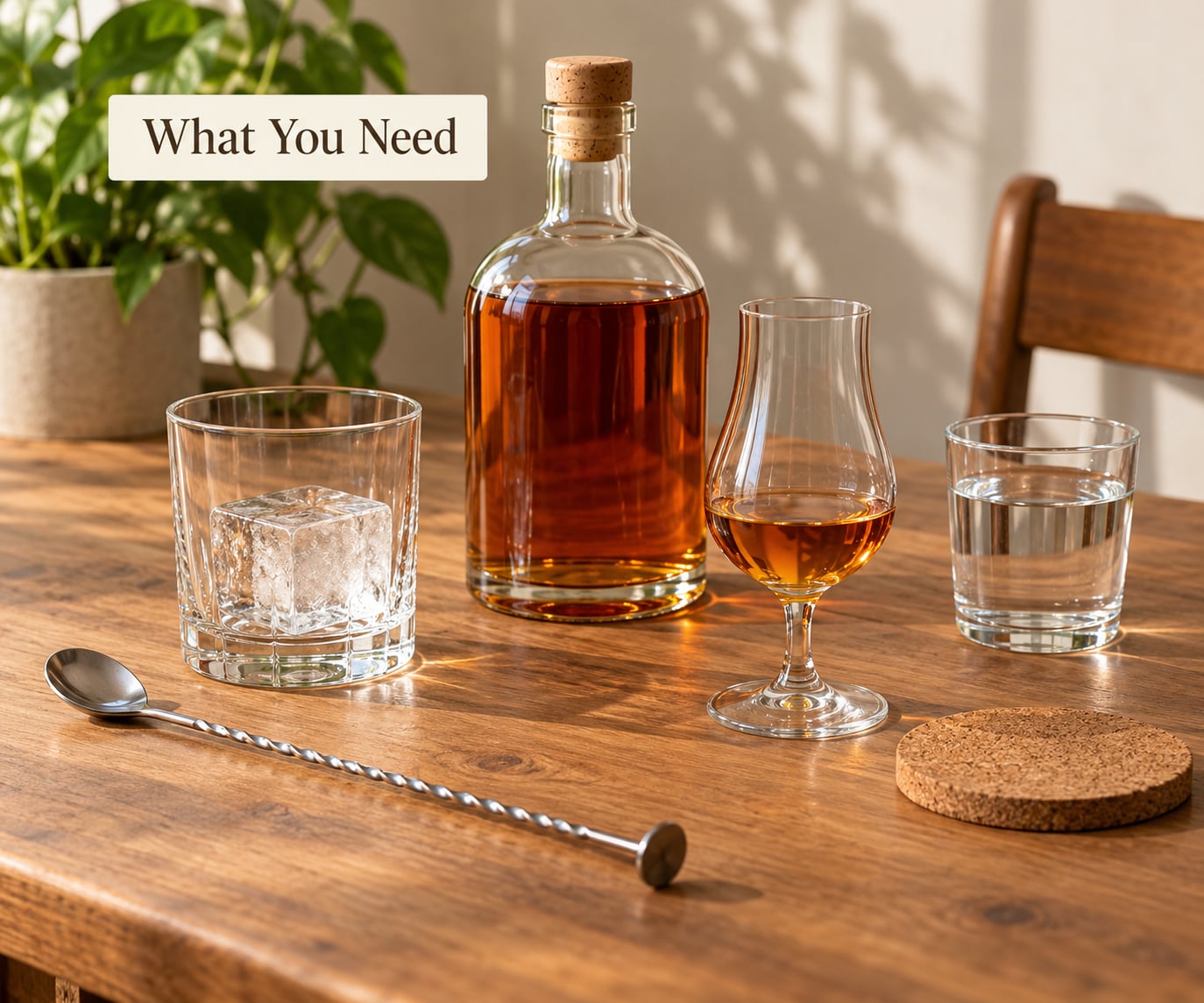
Five things, and four of them you already own.
The rum. Any bottle. A fifteen-dollar supermarket rum is a completely legitimate place to learn this, and it will teach you more about dilution and temperature than an expensive bottle will.
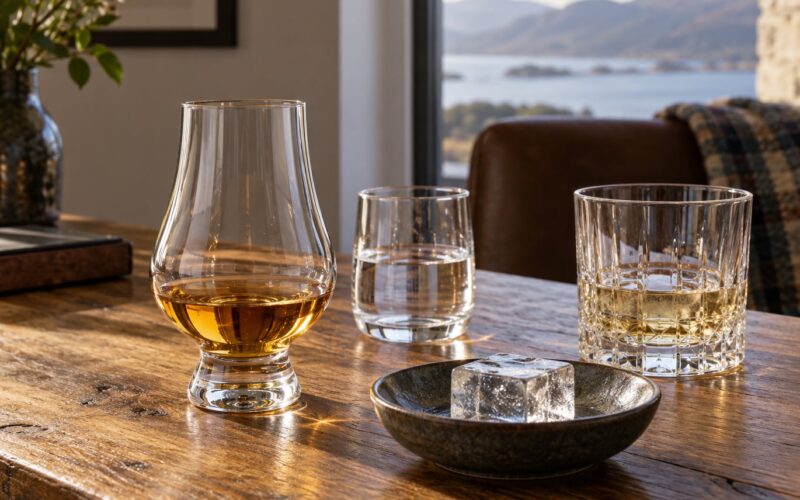
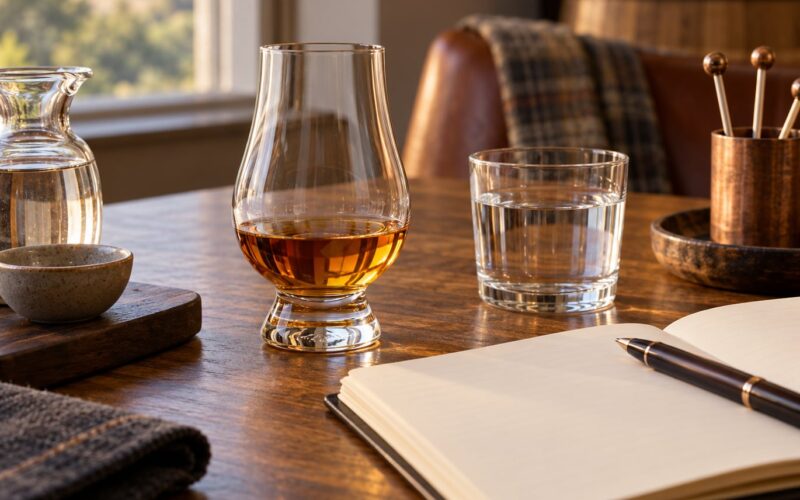
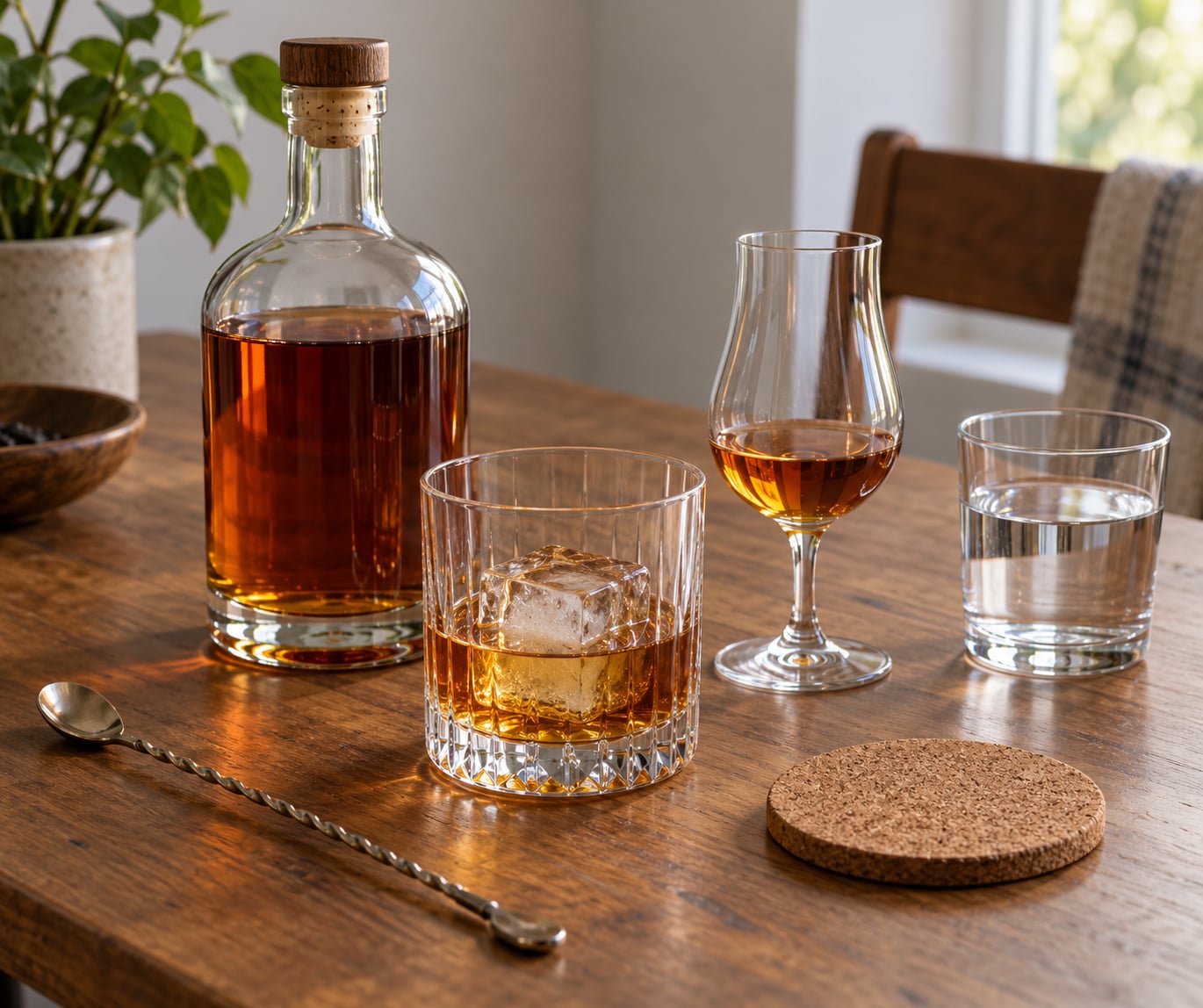
A glass with a narrow top. A Glencairn is the standard, but a rocks tumbler, a small wine glass, or even a shot glass does the job. The narrow opening is what matters because it concentrates the aroma as you bring your nose to it.
Water. A small glass of plain water sitting next to the rum, for adding to the glass and for cleaning your palate between sips. A kettle that has gone cold works too.
One large ice cube, if you want it. Not compulsory. One cube in a tumbler dilutes more slowly than four small ones, and that matters for anything you are actually trying to taste.
Time and a clean palate. Five minutes. A plain cracker or a few unsalted roasted nuts between samples so your tongue resets. Coffee and smoking both flatten your ability to smell, so skip both.
You Do Not Need Gear to Know How to Drink Rum Like You Mean It
A $400 glass will not out-taste a tumbler. A Glencairn, a tulip, a snifter and a rocks glass all do the same job in slightly different ways, and if you own none of them the difference is a smaller aroma trap, not a ruined evening. The technique below works in any vessel that narrows at the top.
What you should skip entirely: spittoons for a casual evening, a decanter, a corkscrew that costs more than the rum, and any urge to hold a glass by the stem like it is wine. Hold it around the bowl, and warm the bowl with your fingers for a few seconds before you smell anything. Warmth opens a rum that cold air keeps shut.
How to Drink Rum Like You Mean It: Step-by-Step
What follows is a repeatable ritual. Work through it once with any bottle and you will know how to drink rum for the rest of your life, without sounding like you studied for it.
1. Choose the Rum for Your Tasting
Start by figuring out what kind of rum is actually in the bottle, because that dictates everything: how much you pour, how warm it should be, and whether it wants ice, water, or nothing at all. The color tells you a lot, and the label confirms it.
Look for the style on the label first: white or silver, gold, dark or demerara, spiced, and an age statement such as anejo, viejo, or reserva if it has one. Then read the ABV. That single number explains more about how a rum will feel than any tasting note ever will.
| Rum style | What it is | Typical ABV | Best serve |
|---|---|---|---|
| White (silver) | Light, filtered, cane-forward, meant for mixing | 37-40% | Daiquiri, Mojito, Rum and Coke, over ice |
| Gold | White rum with caramel coloring and a rounder body | 37-40% | Over ice, or with cola, ginger beer, or tonic |
| Dark (demerara) | Molasses-based, caramel, molasses, sometimes sherry or cocoa casks | 40-43% | Neat, over a single large cube, in an Old Fashioned |
| Spiced | Flavored with cinnamon, clove, nutmeg, often caramel color | 35-40% | Neat over ice, with hot cider, in a Dark ‘n’ Stormy |
| Aged (anejo, viejo, reserva) | Oak-matured, one to fifteen years, vanilla and toasted wood | 40-43% | Neat, slightly warm, in a nosing glass |
| Overproof / cask strength | 50-57% and up, bottled with little or no dilution | 50-57% | Aged and rested, 15 ml (0.5 oz), 5-10 drops of water |
Two categories are worth decoding because they change everything about flavor. Rhum agricole is distilled from fresh sugarcane juice rather than molasses, which gives it grassy, vegetal, almost green notes and a lighter body. Molasses rum is the classic, heavier style: caramel, banana, dried fruit, baking spice. Cachaça is sugarcane too but technically not rum; treat it like a grassy, funkier rum and it works fine in a caipirinha.
If your bottle is unlabeled and unknown, the color is still a usable clue. Pale straw is light and clean. Amber or gold is rounder. Deep mahogany is dark or aged, and it will usually reward a neat sip. Deep brown can also be a heavily caramel-colored spiced rum, so treat color as a hint, never a verdict.
2. Pour a Measured Serving
Pour about 60 ml (2 oz) for a full aroma-led tasting, or 30-45 ml (1 to 1.5 oz) if you want a slower, longer drink. Anything higher-proof than about fifty percent ABV deserves a smaller pour of roughly 15 ml (0.5 oz), because the point of that bottle is intensity, not volume.
Use a jigger if you have one, and use your eye if you do not. A standard drink is 45 ml (1.5 oz) of forty-percent spirit, so anything you pour past that is a double by definition, and a double of a forty-three percent añejo is a lot of alcohol in one glass.
Pouring from the bottle straight into the glass is fine. What is not fine is pouring a thick slug into a frosted glass and drinking it before it has settled, because the cold and the alcohol hit together and neither of them is letting you taste anything.
3. Look Before You Sip
Hold the glass up to a window or a lamp and look through it. You are checking two things: color, and how the liquid moves. If the rum clings to the side of the glass in slow beads, it has body and probably some age or viscosity from oak. If it runs flat like water, it is a young light-bodied rum and that is completely fine.
The myth to kill right here: a darker color does not mean a better rum. Caramel coloring makes a pale spirit look like a rich mahogany, and the only real proof of depth is the aroma and the finish, not the glass. Judge it in the nose, not by looking at it.
4. Warm It and Smell Before Drinking
Cup both hands around the bowl of the glass, or rest it in your palm, and let the rum come up a few degrees. Thirty seconds of hand warmth is enough. This is the single easiest upgrade most beginners skip, and it is the difference between a spirit that tastes closed and one that smells like baking spice and toasted oak.
Now smell it in stages. Start with the glass about a hand’s width from your face so the alcohol does not overwhelm you, then bring it closer. Smell with your mouth slightly open so air reaches the back of your nose. If you want to be precise, block one nostril with a finger and smell, then the other. It sounds fussy and it genuinely works.
You are not hunting for expert vocabulary. You are naming the first three things that register. In practice that means vanilla, caramel or molasses, baked banana, clove and nutmeg, dried fruit, toasted oak, citrus peel, or a grassy green note in a agricole rum. Whatever you smell in the first five seconds is the honest answer, and the rest of the aroma is where the good bottles separate themselves.
Swirl the glass gently first if the rum is over forty percent, to coat the sides and lift the heavier aromatics off the liquid. Do not slosh half the glass onto the table. A slow, controlled rotation is enough.
5. Take a Small, Deliberate Sip
Put a small amount on the front of the tongue first, where the sweetness receptors live, then let it move to the middle where you pick up spice, and to the back where you pick up oak and ethanol warmth. That thirty-second tour is the actual tasting. Swallowing immediately is why most people conclude that rum is harsh.
Sip without chugging and without holding the glass at arm’s length like a shot. Roll the liquid around your mouth, notice where it feels warm, and take a breath through your nose while it sits there. That combination of aroma and liquid is where the flavor compounds actually live, and it is the reason a rum can taste different to a professional than it does to you on the first pass.
Then take a quiet second sip, and this is the one that actually tells you something. The first sip was for the palate to adjust. The second is the evaluation: is there a clear progression from entry to middle to finish, or does it simply stop? A single large cube in the glass between sips keeps the temperature right without flooding the aroma.
Do not worry about a slight burn at forty percent. A little warmth is normal and it fades as the alcohol clears. A raw, aggressive heat that does not soften is usually a sign the pour was too big, the glass was too cold, or the rum wants water, which is the next step.
6. Add Water, Ice, or a Garnish Only If You Want To
A few drops of water, five to ten, is the most useful technique in this whole guide and almost nobody uses it. It softens the alcohol heat, loosens the aromatic compounds that are stuck to the ethanol, and it makes a well-made rum taste more like itself rather than less. Add a splash, sniff, sip, and decide. You can always add more; you cannot take it back.
Overproof rum needs this more than anything. Distilleries and rum communities alike suggest letting a bottle at fifty-seven percent sit open for around thirty minutes before you judge it, then starting with five to ten drops of water. What reads as aggressive at first sip is often just untasted ethanol looking for a way out.
Ice is a legitimate choice, not a compromise, when the rum is light and citrus-forward. It cools the glass and dilutes it gradually, which suits a white or gold rum in a Daiquiri or a Rum and Coke. For a dark or aged rum, skip the ice entirely so the finish stays concentrated.
Garnish is optional and should follow the rum, not lead it. Lime wedge or a squeezed lime peel suits a white or gold rum. An orange twist over a dark rum lifts its caramel without adding sugar. Mint belongs to a Mojito, where the sugar is balanced by fresh lime. A cherry is decoration unless you actually like cherries. Bitters are a cocktail ingredient: two dashes of aromatic bitters in an Old Fashioned add a genuine spice and bitter depth that garnish never will.
One warning on mixers: the goal of a mixer is to change the texture or the length of the drink, not to hide a rum you have not evaluated. If you cannot taste the rum at all, you are drinking soda with a rum-shaped tax.
7. Finish and Say What You Taste
The finish is the most honest part of any tasting. After you swallow, notice what stays: sweet vanilla and warm oak that lingers for ten seconds, a sharp citrus peel that fades fast, a clean mineral dryness, or a flat nothing at all. Finish length is not a quality score, it is a description, but a rum that disappears instantly versus one that keeps developing usually points to very different levels of age and complexity.
Then say one honest sentence out loud, even if only to yourself. Something like “sweet at the front, dry oak at the back, would happily drink it again” is a complete and correct tasting. Nobody is grading you. The point of putting it in words is that the next bottle becomes much easier to choose, and that is the whole practical value of tasting anything.
After a few sips, drink a little of your water or eat a plain cracker to reset your palate. You cannot accurately compare two rums back to back without a clean palate between them, and this is where most home comparisons go wrong.
Common Mistakes
Almost every bad rum experience traces back to one of these. Each one is a fixable habit, not a palate problem.
Skimming the glass. You catch the opening aroma, decide, and move on. Fix: smell twice, once at a distance and once close, and never judge a rum on the first sniff alone. The first sniff is where the alcohol hits you; the second is where the rum shows up.
Drinking it far too cold. Straight from the fridge, the aromatics are frozen shut and the palate feels nothing. Fix: let a white or gold rum sit out for ten minutes, or serve it over a single large cube rather than straight from cold storage. Aged rum should be smelled at room temperature, somewhere around 65-70F, with no ice at all.
Pouring a double neat. Fifty milliliters of a forty-three percent añejo hits harder than it tastes, and the heat makes you blame the bottle. Fix: 30-45 ml (1 to 1.5 oz), and 15 ml (0.5 oz) for anything over fifty percent.
Flooding the glass with mixer. Two parts mixer to one part rum is a flavored soda. Fix: aim for roughly one to three parts mixer depending on what you are making, and taste the rum on its own at least once so you know what the mixer is doing.
Judging by color. Deep mahogany can be caramel coloring rather than twelve years in oak. Fix: color is a hint about style. Aroma, palate, and finish are the answer to whether the rum is any good.
Over-describing what you smell. Nobody is impressed by tasting notes you borrowed from a bottle’s back label. Fix: name the first two or three things you genuinely register, in plain words. “Cinnamon and something like banana” is a better tasting note than a paragraph of invented poetry.
Treating garnish as mandatory. A paper umbrella changes nothing about the drink. Fix: garnish to signal and to balance, mainly citrus peel, mint with lime, and bitters in spirit-forward serves. Skip anything that only adds sweetness.
Comparing two rums back to back with no reset. The second bottle tastes worse than it is. Fix: water or a plain cracker between samples, and if you are tasting more than two, spit from the third glass onward. Nobody will notice, and it is the normal practice at every serious tasting.
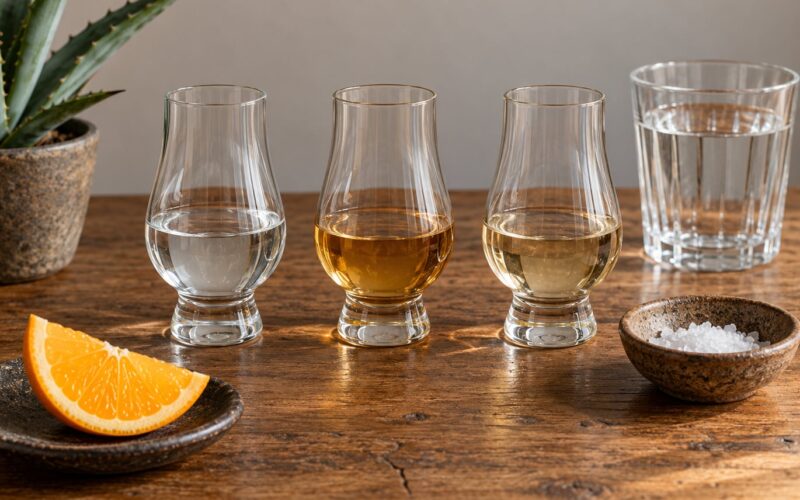
One practical tip that gets people unstuck fast: run a twenty-minute home flight. Pick two or three rums from different categories, one light and one aged, pour 15-20 ml (about half an ounce) of each into separate glasses, taste them in order from lightest to heaviest, and keep notes on three things only: smell, sweetness or dryness, and finish. Twenty minutes, three glasses, and you will know more about your own preferences than an hour of reading.
On strength and pacing: a standard drink is 45 ml (1.5 oz) of forty-percent spirit. Two such drinks is a normal amount for many people and can still be a lot of alcohol in one sitting, especially with a full stomach involved. Check the ABV, watch the pour, and if you are pouring for other people, pour smaller than you think. Nobody at your table is keeping score, and drinking rum slowly is not a lesser way to drink it. It is the entire point of this article.
Frequently Asked Questions
Should rum be drunk straight or with mixers?
Both are legitimate, and the answer depends on the style rather than on any rule about neat versus mixed. Sip a dark or aged rum neat to taste oak and caramel, and serve a white or gold rum mixed or over ice, where its lighter body suits dilution. The common mistake is using a mixer to avoid tasting the rum at least once, not the mixing itself.
What glass is best for drinking rum?
Any glass that narrows toward the top works, because a narrow opening concentrates the aroma. A Glencairn is the standard choice, with a rocks tumbler as the everyday alternative for ice serves and a stemmed nosing glass for older, more aromatic rums. A wine glass or a shot glass is entirely usable, and holding the bowl in your palm for a few seconds warms the rum before you smell it.
Does adding water to rum make it taste better?
Usually, yes, and it never makes a good rum worse. Five to ten drops soften the ethanol heat and release aromatic compounds that are otherwise bound to the alcohol, which opens up vanilla, oak, and spice notes. This matters most at high proof, where 50 to 57 percent ABV rums are commonly started with water and a short rest before tasting.
Should rum be served cold or at room temperature?
Light white and gold rum tastes best cold, over a single large cube or as a mixed drink, where the chill suits its lighter profile. Aged, dark, and overproof rum is better smelled at room temperature, around 65-70F, with no ice, because warmth opens the aroma and cold shuts it down. The middle ground many people like is one large cube in a rocks glass.
Is a darker rum always stronger or better?
No. Color often comes from caramel coloring rather than aging, so a dark-looking rum can be no stronger or better than a pale one, and read the ABV instead. Strength runs roughly 37 to 40 percent for white and gold, 40 to 43 percent for aged and dark, and 50 to 57 percent for overproof. Age and cask quality show up in the aroma and the finish, not the color.
Conclusion
If you do one thing tonight, pour 30-45 ml (1 to 1.5 oz) of whatever rum you have into a glass that narrows at the top, warm it in your hands for thirty seconds, smell it twice, take a small sip, and listen to the finish before you add ice, water, or anything else. That single routine is the whole answer to how to drink rum like you mean it, and it works on any bottle you own right now.