Tasting bourbon is a repeatable sequence, not a talent: look at it, swirl it, smell it, take a small sip, let it coat your mouth, note the finish, then go back to the nose. If you can only taste alcohol and burn right now, that is a technique problem, not a broken palate. Here is the method, plus the vocabulary that makes the flavors nameable.
The reason beginners stall is that alcohol numbs your tongue. Most of what we call flavor is actually aroma, detected retronasally as the sip moves up into the nasal cavity, so no amount of tongue-staring will find the cherry. Swirling, breathing out through your mouth after a sip, and giving the glass a few minutes to open are what unlock the notes hiding behind the ethanol.
This is the October 2026 version of the guide, and it works at home with whatever you already own. Nothing here requires a distillery tour or a case of expensive glassware.
Table of Contents
- What You Need
- How to Taste Bourbon and Pick Out Flavors, Step by Step
- 1. Prepare your bourbon and tasting setup
- 2. Look at the bourbon before you smell it
- 3. Smell before you sip and name what you find
- 4. Taste it and find the flavors behind the burn
- 5. Add water and track the finish
- 6. Match your notes to what you actually enjoy
- Common Mistakes That Flatten Your Tasting
- Frequently Asked Questions
- What is the best way to taste bourbon?
- Should I add water when tasting bourbon?
- What flavor notes should I look for in bourbon?
- Does a higher proof bourbon taste better?
- How do I choose a bourbon if I am a beginner?
- Can I taste different bourbons at home?
- Conclusion
What You Need
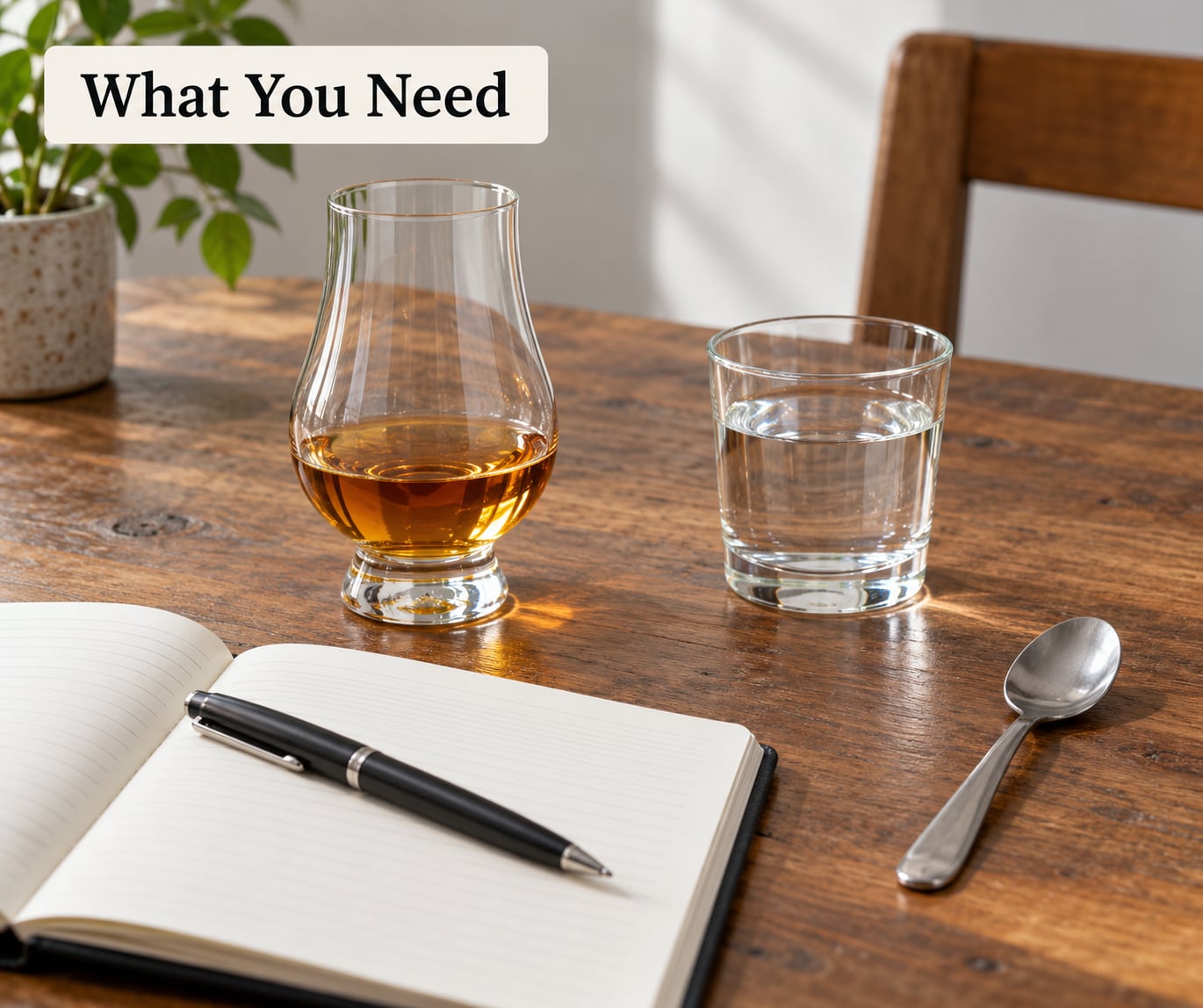
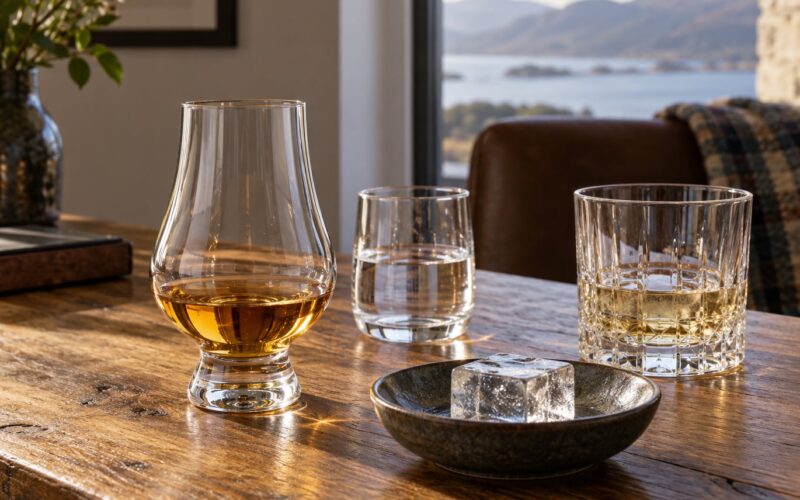
Start with a glass whose bowl is wider than its rim, so aromas concentrate as you swirl. A Glencairn glass is the shape most home tasters end up with, and a copita or brandy snifter works nearly as well. A rocks glass is fine. A short tumbler is fine. A coffee cup is genuinely fine, because the technique matters more than the vessel.
- Sweet — caramel, butterscotch, brown sugar, toffee, honey, vanilla, maple, fudge, molasses. Anchor it to crème brûlée, a butterscotch candy, or a spoon of maple syrup.
- Spice — cinnamon, clove, nutmeg, ginger, black pepper, cayenne warmth, dill, anise. Anchor it to the cinnamon in a gingerbread cookie, a whole peppercorn, or pickle brine.
- Fruit — red cherry, blackberry, plum, peach, apricot, green apple, lemon peel, orange marmalade. Anchor it to cherry preserves, a fresh peach, or candied orange peel.
- Oak and wood — toasted oak, vanilla bean, cedar, charcoal, tobacco leaf, leather, pencil shaving. Anchor it to a campfire, an old leather belt, or the inside of a cigar box.
- Floral and herbal — rose, lavender, mint, eucalyptus, fresh-cut grass, hay, chamomile. Anchor it to lavender, crushed mint leaves, or grass cut after rain.
- Savory and roasted — toasted bread crust, graham cracker, roasted corn, walnut. Anchor it to fresh-baked sourdough crust or a handful of toasted walnuts.
Use this list as a flavor reference: pick the category first, then one descriptor inside it, then a food you actually know the taste of. That three-step path is how you pick out flavors without needing the vocabulary of a working taster.
You also need clean water on hand, in a separate glass. Water is the single most useful tool for a beginner because a few drops change high-proof bourbon from a burn to something you can read.
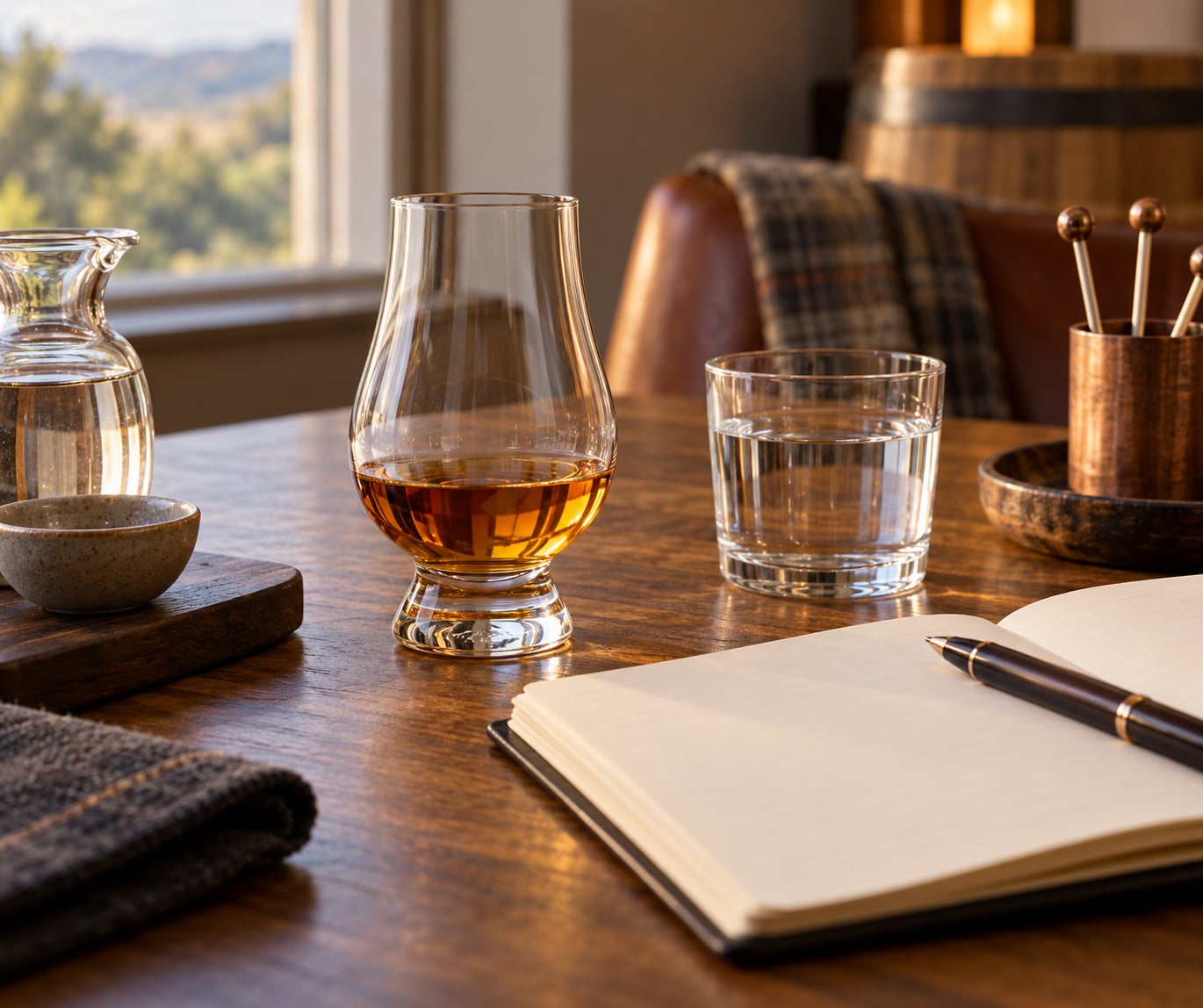
A tasting sheet matters more than people expect. Write down five fields before you pour anything: distillery and expression, proof, mash bill if you know it (the share of corn, rye, wheat, and malted barley), what you smell, and what lingers. Later, those notes are worth more than a bottle price, because they tell you what to buy next.
Optional extras: unflavored bread or plain crackers as a palate cleanser, a spoon from your kitchen as a water dropper, and a few coffee beans to reset a nose that has gone dull. Use the same glass every time so your palate learns one baseline.
How to Taste Bourbon and Pick Out Flavors, Step by Step
1. Prepare your bourbon and tasting setup
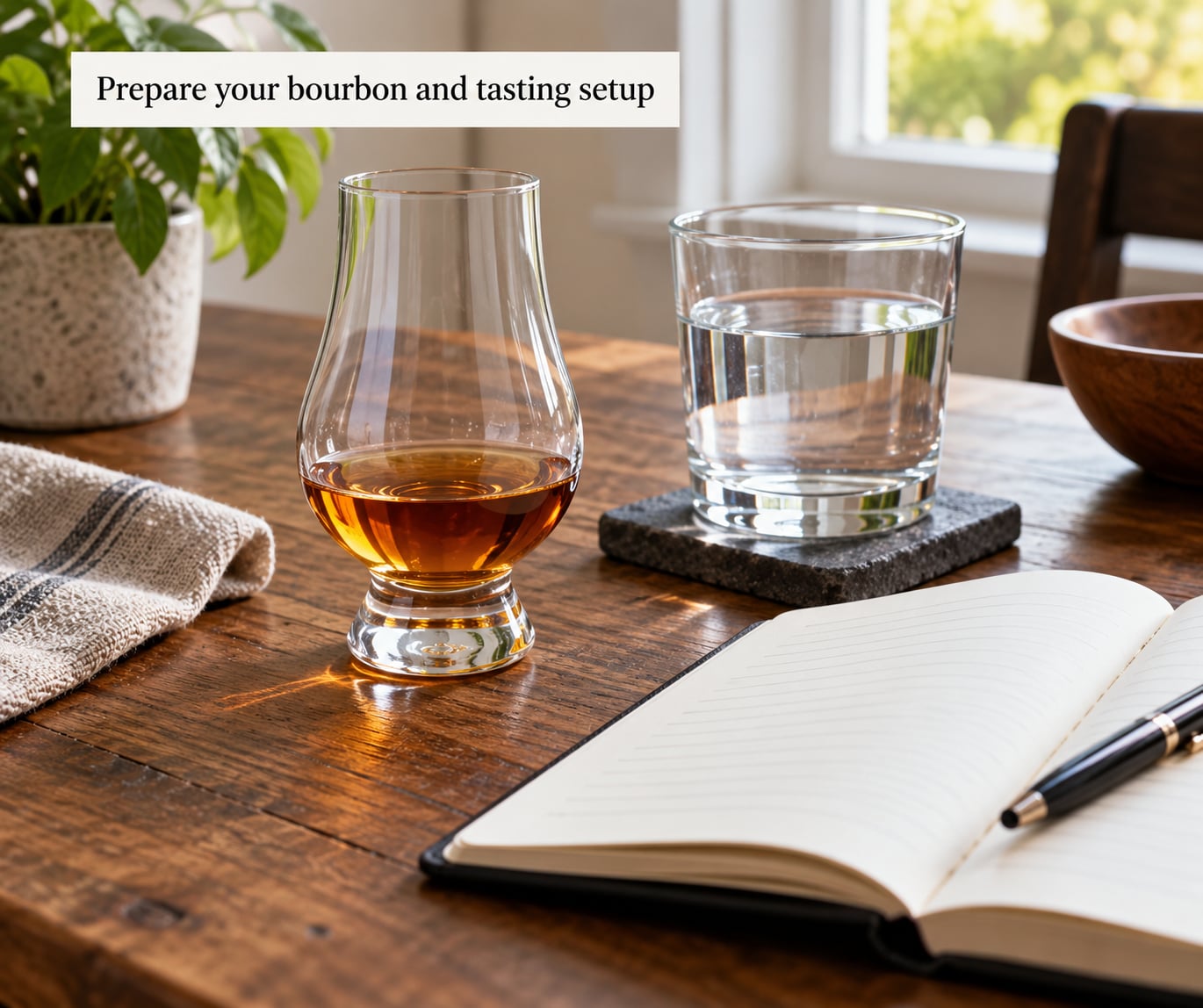
Pour a neat portion of about 1.5 to 2 ounces, which is enough to swirl and smell without wasting the pour. Serve it near room temperature, somewhere between 60 and 68 degrees F. Straight from a cold bottle, bourbon tastes tighter and more alcoholic than it will a few minutes later, which is why a warm kitchen beats a cold one.
Sit somewhere quiet, away from candles, cleaners, coffee, and food cooking next door. Scent is the easiest sense to poison and the hardest to notice you have poisoned. Give the glass two or three minutes before the first serious nose; sitting time lets it settle and lets the surface open.
Write the label details down before you smell anything. Bourbon you cannot identify later is bourbon you cannot buy again.
2. Look at the bourbon before you smell it
Tilt the glass and look at the color against white paper or a sheet of plain white card, never against a tablecloth or a phone screen. Color tells you about the barrel and the age more than the age statement does: deep copper with red highlights is common in long, warm warehouses, while pale straw usually means a younger distillate or a cool climate.
Look at the legs, the streaks that cling to the side of the glass as it runs back down. They show mouthfeel before you drink anything. Thick, oily legs suggest a heavier body; fast, thin streaks suggest something lighter and more spirit-forward.
None of this tells you quality on its own. A young, pale bourbon can be excellent, and a dark one can be dull. Appearance gives you your first words, not your verdict.
3. Smell before you sip and name what you find
Swirl the glass gently, then bring it under your nose with your mouth slightly open. Let the aroma come to you instead of burying your face in the glass, which drowns your nose in ethanol. First pass is for intensity: is it delicate, moderate, or loud? Second pass is for categories: is anything sweet, spicy, fruity, oaky, floral, or savory?
Then get specific within each category using the table above. Stop at the first honest food memory. If you smell cinnamon and it reminds you of a gingerbread cookie, write gingerbread cookie. Nobody needs you to reach candied vanilla bean on the first sip.
One trick worth learning early: smell each nostril separately by tilting the glass a few degrees and shifting it until one side dominates, then the other. Aroma reads differently on each side for a lot of people, and the weaker side is often where the subtler notes are hiding. On the r/bourbon thread titled “How do I taste flavors instead of just bourbon?”, the highest-voted tip was to open your mouth and let air move the liquid over your tongue, and it works for the same reason.
When the glass empties of smell, reset. Smell the crook of your elbow, which smells faintly like skin and salt, then smell a clean water glass. Your nose fatigues fast, and beginners usually mistake fatigue for a boring bourbon.
4. Taste it and find the flavors behind the burn
Take a sip about the size of a shot of espresso, no bigger. Roll it around your mouth so it touches your teeth, cheeks, and the roof of your mouth, then let it sit for two or three seconds before swallowing. That coating is where mid-palate flavors show up: the middle of the caramel curve, the pepper that arrives after the oak, the fruit hiding behind the heat.
Now separate what your tongue reports from what your nose reports. The tongue handles sweetness, salt, sour, bitter, and umami, plus texture and alcohol warmth. Everything else, including vanilla, cherry, cedar, and smoke, arrives through the nose.
After you swallow, breathe out gently through your open mouth. That pushes the aromatic compounds up toward the back of your nose where you can identify them, and it is the single highest-value half-second in the whole method. Professional tasters do it every time.
Compare what you found in the nose to what you found in the mouth. Often the aroma promised vanilla and the sip delivered brown sugar, and that mismatch is one of the most useful things you will ever write down.
5. Add water and track the finish
Here is the rule that replaces all the contradictory advice online: taste it neat first, take notes, then add water and taste again. How much water depends on proof.
| Bottle proof | What to do |
|---|---|
| Under 90 | Taste neat. It is already open and water mostly flattens it. |
| 90 to 100 | Taste neat, then try three or four drops of water. |
| 100 to 110 | Taste neat, then add a small splash, about a teaspoon. |
| 110 and above, including barrel proof | Taste neat as a baseline, then add water until it stops smelling like rubbing alcohol. Usually a splash to a tablespoon. |
Barrel proof and other high-proof releases are not meant to be drunk straight. They exist to show you concentration and age, and they need dilution before your nose can read them at all.
With water in the glass, go back to the nose first, then sip again. New notes usually appear, and the alcohol heat drops enough that sweetness and spice become the loudest things in the room.
Finish means whatever is still present after you swallow. Measure it in seconds. Notice whether what lingers is sweet, dry, oily, spicy, oaky, or purely hot, and whether it fades or keeps unfolding. Two sip testers sitting at the same table should agree on length even if they use different words.
6. Match your notes to what you actually enjoy
Now the useful part. Read your sheet back and sort the bourbon into a profile: sweet and low-proof and easy, balanced and mid-proof, spicy and rye-forward, or oaky and high-proof. Most people land on one of these before buying again, and it usually is not the one they expected.
Age is a weak signal on its own. A ten-year bourbon that tastes thin and oaky is less interesting than a four-year bourbon full of caramel and fruit, and plenty of six-year bottles are outstanding. Read the label for proof, mash bill, and whether it is a finished product or a barrel-proof release, and let your own notes do the rest.
If you want the notes to track back to the ingredients, that is where bourbon flavors come from. Corn is the sweet, caramel base. Rye adds spice, herb, and dill. Malted barley adds cereal and bread crust. Yeast contributes fruit esters during fermentation. Then new charred oak barrels, which the law requires, add vanilla, toast, caramelization, and tannin while some spirit evaporates into what distillers call the angel’s share.
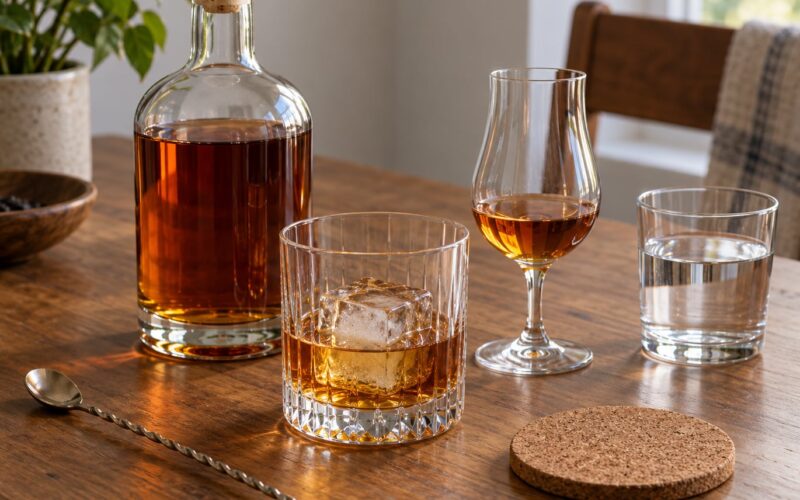
Serving style is the last variable. Neat shows the spirit most honestly. On the rocks cools and dilutes, which softens heat and rounds fruit. A splash of water or soda opens high-proof bottles. Try the same bourbon in two forms in one sitting and note which one you would actually pour again.
Common Mistakes That Flatten Your Tasting
Almost every beginner tasting problem traces back to one of six things.
1. Skipping the nose entirely. You sip, you get heat, you shrug. Fix: give the nose two full passes before the first sip, with your mouth slightly open.
2. Sipping too much. A big pour floods your palate and dulls everything for the next minute. Fix: espresso-sized sips, three or four of them per pour.
3. Not breathing out through the mouth. Swallowing kills the aroma, and many beginners never push it back up. Fix: after every sip, breathe out gently through an open mouth before sniffing again.
4. No water on hand. High-proof bourbon then reads as harsh instead of strong. Fix: keep a water glass within reach and use the proof table above.
5. A dirty glass or a dirty room. Soap, candle smoke, and yesterday’s dinner perfume will convince you a bourbon smells like nothing at all. Fix: rinse with cold water only, no detergent, and sniff the empty glass before you pour.
6. Treating tasting notes as universal. If a bottle’s label says pencil shavings and you get vanilla, your nose is working fine and your vocabulary is smaller than the writer’s. Forum threads about picking up strange notes, basil in a wheated bourbon, nightshade fruit in a high-proof rye, exist precisely because tasting is personal. Nobody fails this.
One more that is not a technique but ruins the practice anyway: chasing jargon instead of honest memory. Pick any three notes you actually taste and write them in plain words. That is a better tasting than six borrowed adjectives.
Frequently Asked Questions
What is the best way to taste bourbon?
Look, swirl, nose, sip, finish, return to the nose. Use a glass wider at the bowl than the rim, pour about 1.5 ounces, take small sips, roll each one over your teeth and cheeks, then breathe out through an open mouth after swallowing. Write notes in five fields: label, proof, nose, palate, finish. Repeat the whole loop after adding water.
Should I add water when tasting bourbon?
Taste it neat first and always take notes before you dilute. Below 90 proof, water mostly flattens the spirit. Between 90 and 110, a few drops or a small splash help. At 110 proof and above, especially barrel proof, you need water or the ethanol blocks your nose entirely. Add until the glass stops smelling like rubbing alcohol, then nose again.
What flavor notes should I look for in bourbon?
Look first for a broad category: sweet, spice, fruit, oak and wood, floral and herbal, or savory and roasted. Then get one step more specific inside it, like caramel or brown sugar in the sweet family, or cherry and peach in fruit. A single honest food memory per category is plenty. Professional notes with words like pencil shavings are optional, never required.
Does a higher proof bourbon taste better?
No, higher proof is a packaging and age signal, not a quality one. At 100 proof and above, ethanol masks aroma and you will taste less before diluting. A well-made 90 proof bourbon can carry more character straight from the glass than a cask-strength bottle does on the first sip. Judge high-proof releases after a few drops of water.
How do I choose a bourbon if I am a beginner?
Pick a bourbon in the 90 to 100 proof range with at least 51 percent corn in the mash bill, which is the legal floor, and start with something carrying no added coloring. Flavors that read well at that proof are caramel, vanilla, brown sugar, and orchard fruit. Taste two bottles side by side and write your sheet for both before you buy a full bottle.
Can I taste different bourbons at home?
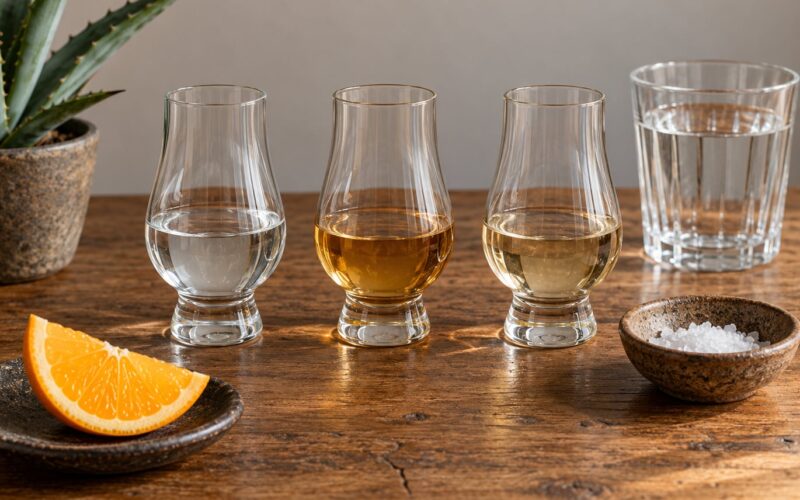
Yes, and it is the best way to train. Buy quarter-bottle splits or miniatures, which are designed for exactly this, and taste three or four in one sitting. Use a fresh glass for each, rinse between pours, keep water and plain crackers on the table, and skip anything above 110 proof so you are not fighting ethanol. Add your notes to a journal and reread them a week later.
Conclusion
Tasting bourbon is a loop you can run in five minutes: nose, small sip, roll it over your mouth, breathe out, note the finish, then go back to the nose. Run it on three quarter-bottle splits this week with the flavor reference table open beside you, write three plain-language notes for each, and reread them a week later.
Within a few sessions you will know whether you lean sweet, spicy, fruity, or oaky, and you will buy the next bottle with a reason instead of a guess. The ability to pick out flavors is not something you were born with. It is a vocabulary, and vocabularies get built one pour at a time.