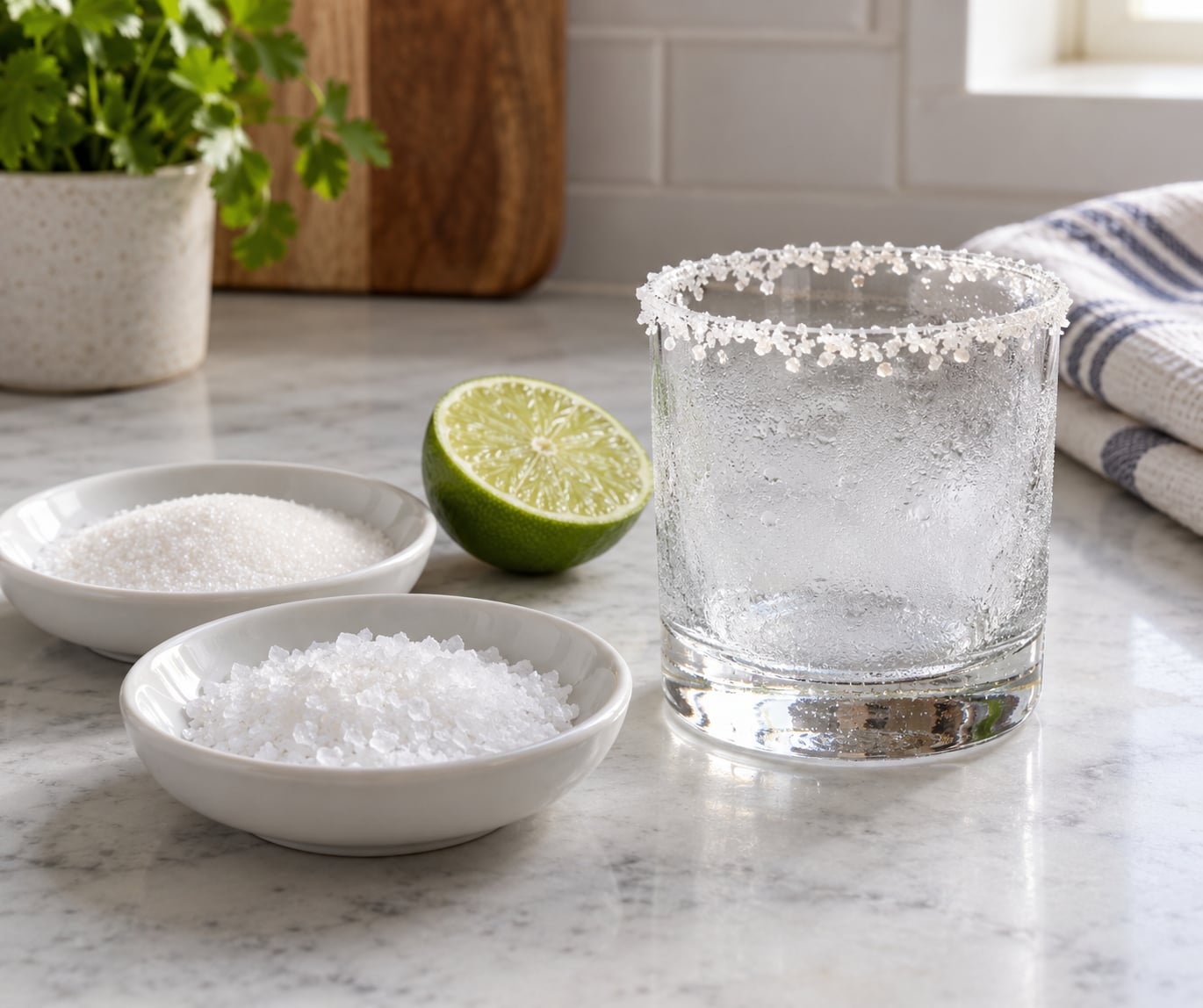
To rim a glass with salt or sugar, wet the outside edge with citrus juice, dip the rim into coarse salt or granulated sugar on a shallow plate, then tap off the loose crystals. That’s the whole technique, and it takes about 30 seconds per glass. The only real difference between the two is what ends up in the glass: salt sharpens savory and citrus-forward drinks, sugar softens sours and dessert cocktails.
The reason a rim matters goes beyond looks. Salt is a genuine flavor enhancer, which is why it belongs on a margarita: it softens the sharp edge of lime juice and mutes the bitter notes in orange liqueur. Sugar does something else entirely, adding aroma, a light crunch and a rounded sweetness that suits drinks that would taste harsh with salt.
A word of warning before you start. Most ugly rims come from one of three mistakes: a warm glass, too much juice on the rim, or a deep container that catches a puddle of liquid and turns the salt into paste. Fix those three and the rest is easy.
Table of Contents
- What You Need
- Step-by-Step: How to Rim a Glass With Salt or Sugar
- 1. Chill the glass and set up two dishes
- 2. Choose the right salt or sugar
- 3. Wet only the outer rim
- 4. Rotate, lift and tap off the excess
- 5. Finish and serve, and keep the rim intact
- Common Mistakes
- Frequently Asked Questions
- Should I use salt or sugar to rim a glass?
- Do you wet the rim with water or citrus?
- What kind of salt is best for rimming a glass?
- Why is my sugar rim turning clumpy or dissolving?
- Can I rim a glass ahead of time?
- Why do margaritas get salt on the rim?
- Conclusion
What You Need
The full setup is small, and it works for both methods.
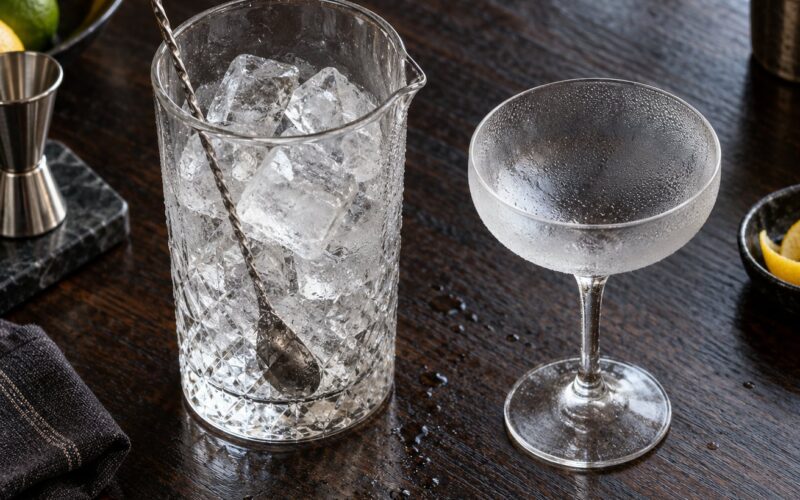
- A clean, cold glass. Rocks glasses, coupes, martinis and margarita glasses all work. Chilling matters more than people expect.
- A shallow plate or saucer. A rimming dish or a small plate with a raised edge is better than a deep salt tub. Bar pros use a saucer or a napkin because juice pooling in a container contaminates the salt.
- Coarse material for salt rims: coarse sea salt, kosher salt, or flake salt such as Maldon.
- Granulated material for sugar rims: regular granulated sugar, superfine sugar, or cocktail sugar.
- A citrus wedge or cut half to wet the rim. Lime suits tequila drinks, lemon suits sours, grapefruit and orange suit spicier or citrus-heavy recipes.
- Water or a light syrup. Water is neutral and quick. A simple syrup at roughly three parts water to one part sugar gives a slower-dissolving rim.
- A clean towel to catch drips and to hold a chilled glass without warming it.
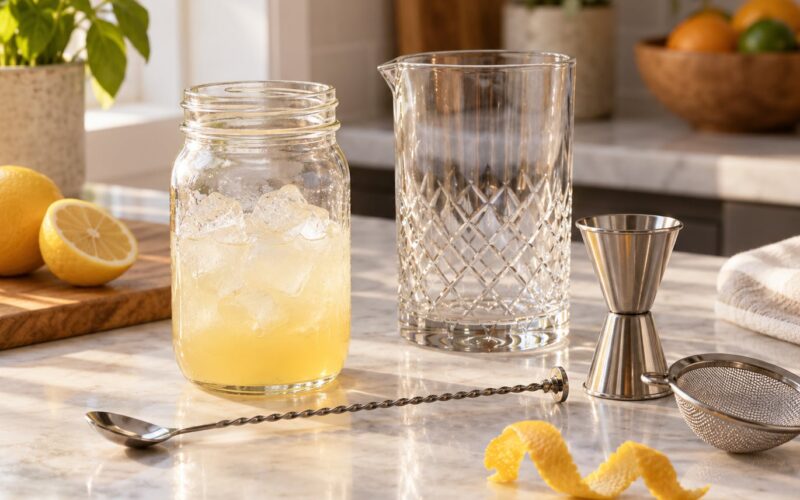
- Optional: a clean pastry brush for half rims, a cocktail pick for placing citrus wheels, and a second shallow dish if you want both salt and sugar at once.
Step-by-Step: How to Rim a Glass With Salt or Sugar
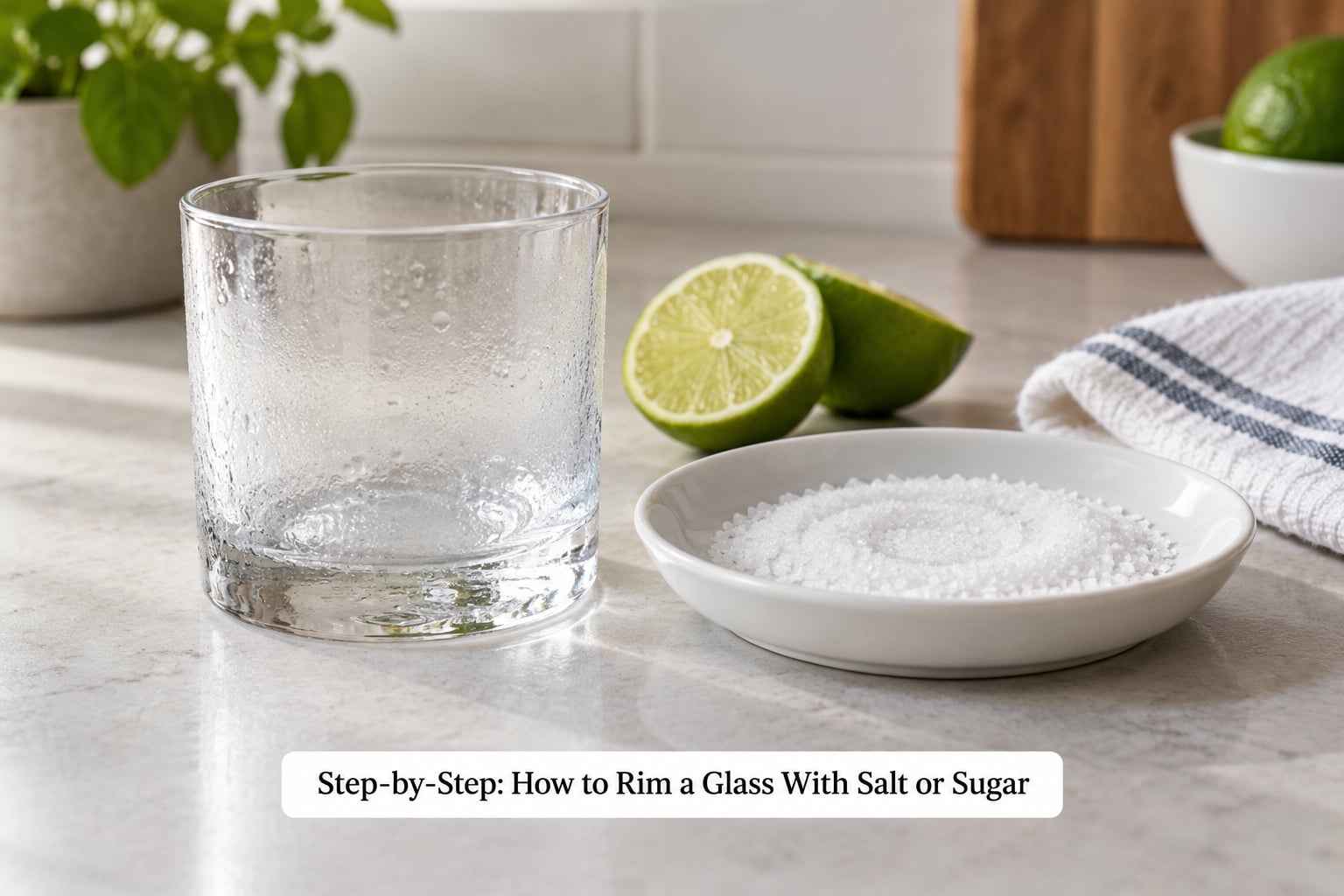
The method is identical for both materials. Only the moistener and the grain change.
1. Chill the glass and set up two dishes
Put your glass(es) in the freezer for 10 minutes or run them under cold water. A cold surface holds condensation, and that thin film of water is half of what makes salt grip a rim. A room-temperature glass sweats only after you pour the drink, by which point the rim is already sliding off.
While the glass chills, pour two shallow amounts into two saucers: one of coarse salt, one of granulated sugar. Keep the layer thin, roughly a centimeter deep. A deeper pile traps juice and forms a paste that smears instead of sticking.
2. Choose the right salt or sugar
Grain size is the whole ballgame. Fine table salt dissolves into a wet paste before it ever grips, so it clumps and drops into the drink. Coarse grains give you a visible crystalline band, better texture, and they dissolve slowly enough to last through the drink.
| Rim | Flavor effect | Best drinks | Grain to use |
|---|---|---|---|
| Salt | Sharpens and balances acidity, softens bitterness | Margaritas, palomas, micheladas, bloody marys, tomato-based drinks | Coarse, kosher or flake salt |
| Sugar | Adds sweetness, aroma and light crunch | Sours, gimlets, whiskies, fruit cocktails, dessert drinks | Granulated or cocktail sugar |
| Both | Sweet and salty contrast | Rocks-glass drinks where both elements are already present | Equal parts in one dish, called a salgar rim |
Salt choices, roughly in order of how they behave on a rim:
- Coarse sea salt sticks well, tastes bright and mineral, and gives a crunchy texture. The safe default.
- Kosher salt has larger flakes than table salt, holds up well, and is easy to find. It dissolves a touch faster than coarse sea salt.
- Flake salt such as Maldon is light and clean-looking with strong salinity. It clings well but crumbles if you over-tap the glass.
- Fine table salt is the one to avoid. It turns to paste and drops into the drink.
Sugar choices work differently. Granulated sugar gives the most coverage but can look slightly grainy. Superfine sugar gives a smooth, even band and clings more reliably. Cocktail sugar is simply a coarser, crunchier version sold for bartenders. Brown sugar adds a toffee note to fall drinks, and you can mix your own cinnamon sugar by combining one part cinnamon with four parts sugar.
3. Wet only the outer rim
Run the cut face of the lime wedge along the outside edge of the glass, all the way around, then wipe the inside of the wedge against your thumb so you start each pass with fresh juice. If your wedge is small, cut a shallow notch into the flesh so one pass wets the outside, the top edge and the inside lip in a single turn. That one habit explains most of what goes wrong when people learn how to rim a glass with salt or sugar: a juice-loaded wedge floods the salt and turns the first pass into paste.
Wet the outside only. Juice that runs down the inside wall makes the drink look diluted and streaked, and juice running down the outside makes a blotchy rim that will never look professional.
For a sugar rim, water is fine but a light syrup is stickier. A 3:1 syrup brushed on with a pastry brush, or a thin line of maple syrup, gives you a candied rim that resists dissolving. That trick gets repeated constantly in r/cocktails and r/Mixology for drinks served over ice.
4. Rotate, lift and tap off the excess
Hold the glass by the stem or by the base with two fingers. Tilt it a few degrees so the damp rim touches the salt rather than plunging straight down. Rotate the glass one full turn while it sits in the dish, keeping consistent pressure. Then lift straight up and tap the rim once, lightly, against your palm or the edge of the counter to knock off the loose crystals.
How do you know it worked? You want a continuous band with no bare gaps and no thick clumps. Run a fingertip along the outside of the rim without touching it: if the crystals feel even and dry, the rim is set. A visible white line of crystals that has started to slide toward the base means you dipped too deep.
5. Finish and serve, and keep the rim intact
Rim as late as practical. The best order is: build the drink’s base in the pitcher or shaker, chill the glasses, then rim, then pour, then add ice and garnish. If you must work ahead, rim the dry glasses and keep them inverted and covered in the fridge, then pour the drink at the last moment.
For a party, set up a station. One saucer of salt, one of sugar, a wedge bowl, a towel, and a bus tub for drips. Rimming eight glasses takes about four minutes once the rhythm is in your hands, and a bartender doing a shift will do the same motion over and over.
Two tricks worth knowing. For a half rim, use a clean pastry brush dipped in lime juice and paint only the front half of the rim before dipping, or run the wedge over just one side. For a half-and-half rim called a salgar, blend equal parts coarse salt and granulated sugar in one dish; the sweet-salty contrast works particularly well in a rocks glass over a big cube.
Common Mistakes
Bare patches in the rim. The juice dried before it reached the salt, or the glass was warm. Chill first, and re-wet any section that looks dull before you rotate.
The rim is too thick, and crystals drop into the drink. You held the glass too deep in the dish or pressed too hard. Lift sooner, rotate with a lighter touch, and tap twice instead of once. Blot the underside of the rim on a dry towel to catch the strays.
Salt will not stick at all. Usually one of three things: a warm glass, a dry wedge, or juice that ran back off the rim. Wipe the rim area, refresh the wedge, and run the juice along the edge only a second or two before dipping.
The rim looks wet and blotchy. Too much juice, or juice that dripped down the outside. Wipe the glass with a damp towel first, use a single light pass with the wedge, and tip the glass slightly outward as you start dipping.
The sugar rim clumps or dissolves. A warm glass, a heavy hand, or rimming too far ahead of service. Chill the glass, dust the rim with a light touch, and finish it just before the drink is poured. Superfine sugar is the fix if granulate keeps sliding.
You used table salt. It dissolves into paste and drops straight in. There is no way to make fine table salt behave like a rim; switch to coarse or kosher.
Rimming a plastic cup. Yes, margarita salt sticks to plastic, which comes up constantly on bartending forums. The surface holds less moisture than glass, so expect a slightly thinner rim. Score the outside of the cup lightly with a knife first, or add a drop of lime juice right before dipping, and avoid warm plastic entirely since it sheds a film that stops salt gripping.
You rimmed the wrong drink. Sugar on a classic margarita reads as too sweet to a lot of people, and salt on a dessert cocktail overpowers it. Regulars on r/bartenders argue about this endlessly and the honest answer is that it depends on what is already in the glass.
Frequently Asked Questions
Should I use salt or sugar to rim a glass?
Use salt for savory, citrus-forward, tomato-based and beer-like drinks where a salty contrast works well. Use sugar for sours, gimlets, whiskies, fruit cocktails and anything dessert-style. If you cannot decide, go with salt for a drink containing lime or orange liqueur and tequila, and sugar for a drink that already contains simple syrup or fruit juice.
Do you wet the rim with water or citrus?
Citrus juice is best when its flavor belongs in the drink, which is why margaritas get lime and sours get lemon. Water is more neutral and keeps the finished rim from tasting strongly of lime. For sugar rims, a light syrup or a thin line of maple syrup gives the most reliable grip and a slower dissolve.
What kind of salt is best for rimming a glass?
Coarse salt gives a visible crystalline rim and more texture than fine table salt. Kosher salt works well too, and flake salt such as Maldon clings cleanly without looking heavy. Avoid table salt and pre-mixed seasoned salts, which clump and drop into the drink.
Why is my sugar rim turning clumpy or dissolving?
A warm glass, too much moisture, or rimming too early all cause sugar to clump or slide off. Chill the glass, use a light touch with superfine sugar, and finish the rim just before you pour. If the rim keeps failing, brush a thin layer of simple syrup onto the rim first.
Can I rim a glass ahead of time?
You can prep the drink components ahead, but add the salt or sugar as late as practical. Rimmed glasses keep best inverted and covered in the fridge for short spells, though humidity is the enemy of both materials. For a party, set up a rimming station and do the rims last.
Why do margaritas get salt on the rim?
Salt acts as a flavor enhancer rather than decoration. It softens the sharp acidity of lime juice and mutes the bitter notes that orange liqueur brings, so the drink tastes balanced instead of harsh. A light salt rim also draws out the citrus aroma as you drink.
Conclusion
How to rim a glass with salt or sugar comes down to four things: a cold glass, a shallow saucer, a wedge of citrus, and a light hand. Wet only the outside edge, tilt the glass a few degrees, rotate once through the salt or sugar, lift, and tap off the loose crystals right before you pour. Salt and sugar use exactly that same technique; what changes is the grain you pick and which glass it suits, with salt for citrus and savory drinks and sugar for sours and dessert cocktails.