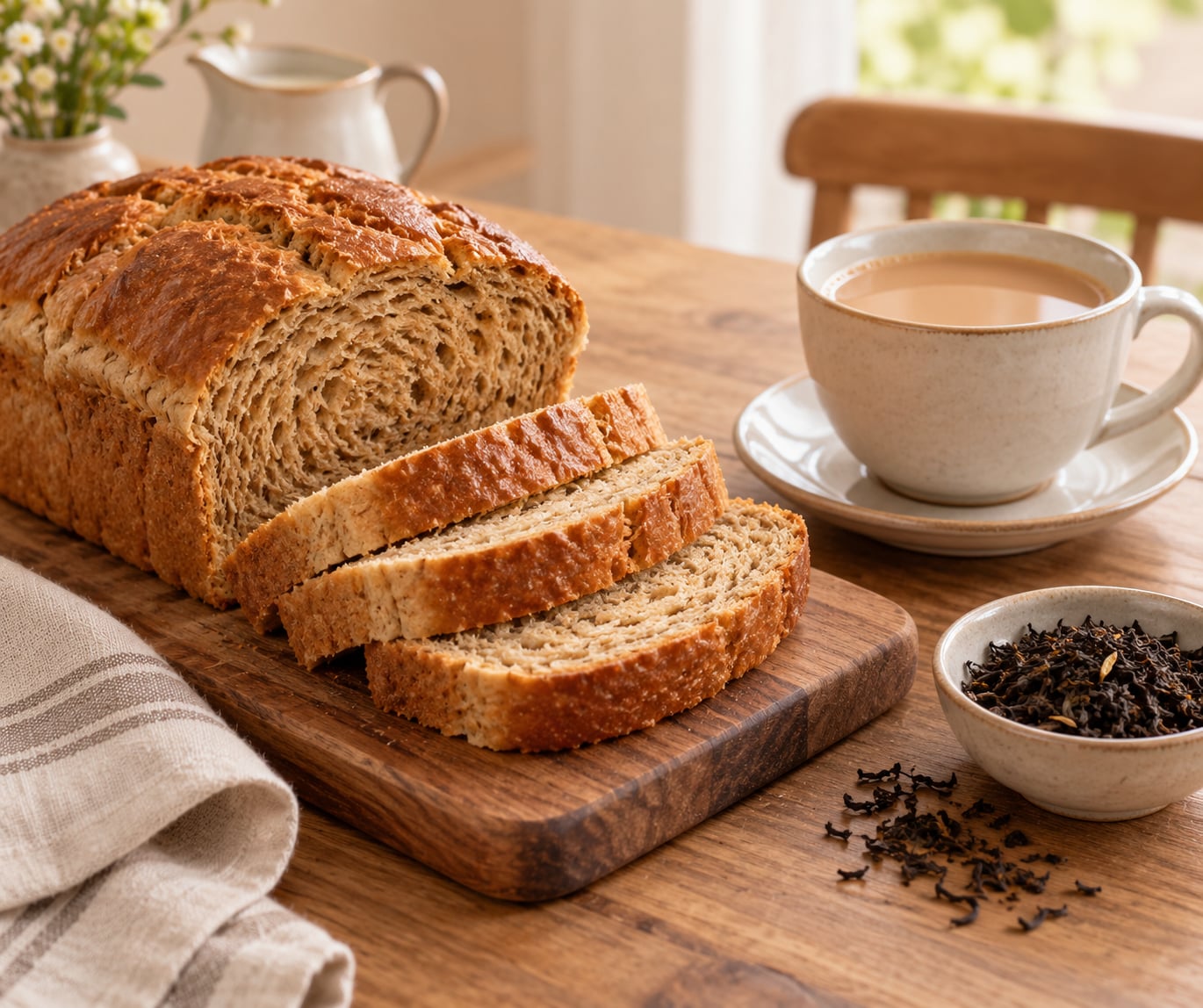
Milk tea bread is an enriched yeast loaf made with tea-infused milk, so the crumb stays soft and slightly sweet while carrying a gentle tea flavour that plain milk bread never has. “Milk tea bread” covers two different loaves on the internet: Japanese milk bread with matcha or hojicha powder stirred into the dough, and West African tea bread, called kyibom, where tea is steeped into the milk. This guide builds the brewed-milk version, which is the one that works in an ordinary home kitchen.
Plan on three to four hours from start to slice, most of it waiting. A stand mixer helps but is not required, and there is no tangzhong step, no Pullman tin, and no special pan. A loaf tin, a bowl, a whisk and an oven thermometer are enough.
Table of Contents
- What You Need
- Step-by-Step: How to Make Milk Tea Bread at Home
- Step 1: Prepare the Milk Tea
- Step 2: Mix the Dry Ingredients
- Step 3: Combine the Wet Ingredients
- Step 4: Make the Batter
- Step 5: Bake the Bread
- Step 6: Cool and Serve
- Common Mistakes and How to Fix Them
- The loaf is dense and heavy
- The middle sinks out right after you take it out of the tin
- The centre is gummy or underdone
- The tea flavour is barely there
- The loaf tastes bitter
- The edges are dark while the middle is pale
- Frequently Asked Questions
- Can I make milk tea bread with tea bags instead of loose-leaf tea?
- What kind of tea gives milk tea bread the best flavor?
- How do I keep milk tea bread soft after baking?
- Why is my milk tea loaf dense or gummy?
- Can I add tapioca pearls or boba to the bread?
- How long should I let milk tea bread cool before slicing?
- Conclusion
What You Need
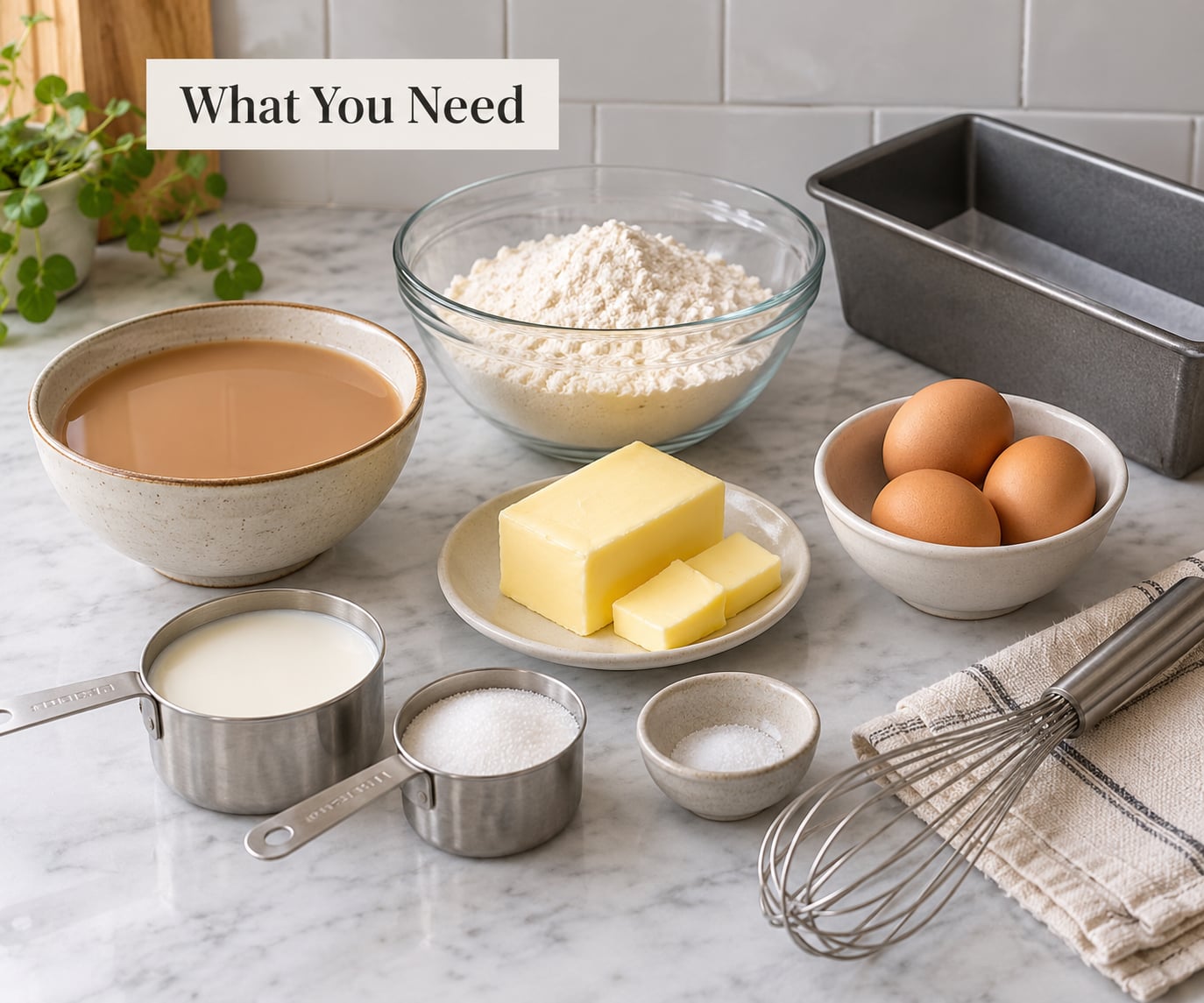
The list is short and everything is available in a normal supermarket. Weights come first because grams are the only way to get this right twice in a row; the cup measures are there for readers who do not own a scale, as so many people asked for in the comments under competitor recipes.
| Ingredient | Metric | US | Note |
|---|---|---|---|
| Brewed milk tea | 280 ml | 1 cup plus 2 tbsp | Steeped strong and cooled to lukewarm, about body temperature |
| Bread flour | 350 g | 3 cups, spooned and levelled | Plain flour works, the crumb is just slightly tighter |
| Caster sugar | 35 g | 3 tbsp plus 1 tsp | Keeps the crumb tender and mellows tea bitterness |
| Instant yeast | 7 g | 2 1/4 tsp | Swap for 2 1/4 tsp active dry, warmed with the milk |
| Fine salt | 6 g | 1 tsp | Balances the tea |
| Unsalted butter | 60 g | 1/4 cup | Melted, plus a little more for the tin |
| Large eggs | 2 | 2 | Room temperature |
| Vanilla extract | 5 ml | 1 tsp | Optional but worth it |
| Ground nutmeg | 1 g | 1/4 tsp | The seasoning that makes this taste like Ghanaian kyibom |
| Tea, for brewing | 2 to 3 bags or 20 g loose leaf | 2 to 3 bags or about 4 tbsp loose leaf | Assam, strong breakfast blend, chai, or a matcha and hojicha blend for a lighter colour |
Two pieces of equipment earn their place. A 23 cm by 13 cm loaf tin gives a loaf tall enough to slice properly, and a kitchen thermometer takes the guesswork out of both the milk temperature and the doneness test at the end.
On substitutions, the rule is simple: anything that replaces milk can be used, anything that replaces fat changes the crumb slightly, and nothing structural gets swapped silently. Soy, oat and almond milk all work, use them unsweetened and add nothing on the label as a defence. For butter, a neutral oil gives a marginally lighter loaf. Cheese milk, the Ghanaian preference over margarine, is a straight swap and adds a little tang.
Step-by-Step: How to Make Milk Tea Bread at Home
Step 1: Prepare the Milk Tea
Brew the tea stronger than you would drink it, because the bread eats the flavour rather than the strength. Two tea bags or 20 g of loose leaf in 300 ml of water, steeped 5 to 7 minutes, gives you roughly the 280 ml you need. Steep a third bag in the same pot for another 2 minutes if you want the tea to read clearly in the finished slice.
Add 30 g of the sugar while the tea is still hot, stir until it dissolves, then cool it to lukewarm. Touch test beats a thermometer: a finger held in the liquid should feel warm, not hot, around 35 to 38 C. Milk above 45 C kills the yeast, and readers who add cold tea end up with a loaf that never rises.
Lift the bags out once the steep is done and let the liquid cool while you measure the flour. Swapping one tea bag for a spoonful of matcha or hojicha powder stirred into the flour is the other common route, and it gives a green or roasted loaf rather than a tannic one. Brewed milk is the gentler option and it is the one this guide uses.
Step 2: Mix the Dry Ingredients
Whisk the flour, salt, yeast and the remaining 5 g of sugar together in a large bowl until no streaks of yeast remain. It takes fifteen seconds and it decides whether you get one even rise or a loaf with a dense patch where the yeast landed in a heap.
If you are going the matcha route, whisk 2 tablespoons of matcha or hojicha into the flour at this point rather than stirring it into wet batter later. Cooking the powder into a tangzhong paste removes green lumps entirely, but for a mixed-method loaf, whisking it into dry flour is good enough.
Step 3: Combine the Wet Ingredients
In a second bowl, whisk the lukewarm milk tea with the melted butter, the eggs, the vanilla and the nutmeg until the mixture is completely smooth and no ribbons of egg remain. Do this separately from the flour, and stir rather than beat. A splash of separated egg white will not hurt the dough, but blended-in air makes the crumb holey instead of fine.
Whisk only until it looks like one liquid. Anything longer starts pulling protein into suspension in the milk, and that protein tightens the crumb once it meets flour.
Step 4: Make the Batter
Pour the wet mixture into the dry and stir with a spatula or spoon until no dry flour is visible, about one minute. The batter will be slack and sticky at this stage. That is correct. Enriched dough with this much butter and egg cannot be kneaded into a tight ball in a bowl, so resist the urge to add flour beyond the 350 g.
Cover the bowl and let it rise in a warm spot for 60 to 90 minutes, until the surface has puffed, doubled or at least grown noticeably and smells sweet and beery. If you have a stand mixer with a dough hook, five minutes on low removes most of the gluten development worry. Without one, the long first rise does the same job.
When the dough has doubled, work it once against the side of the bowl to release the trapped gas. Scrape it into a greased 23 cm by 13 cm tin, level the top with a wet spatula, cover again and give it a second rise of 40 to 60 minutes. It is ready when a finger pressed a centimetre into the surface springs back slowly and leaves a faint dent. It should feel full and domed.
Step 5: Bake the Bread
Heat the oven to 175 C, fan 160 C, and put the tin in as soon as the dough goes in. Middle rack, no fan if you have a baking stone or a very hot oven. Bake 35 to 40 minutes for a 23 cm tin.
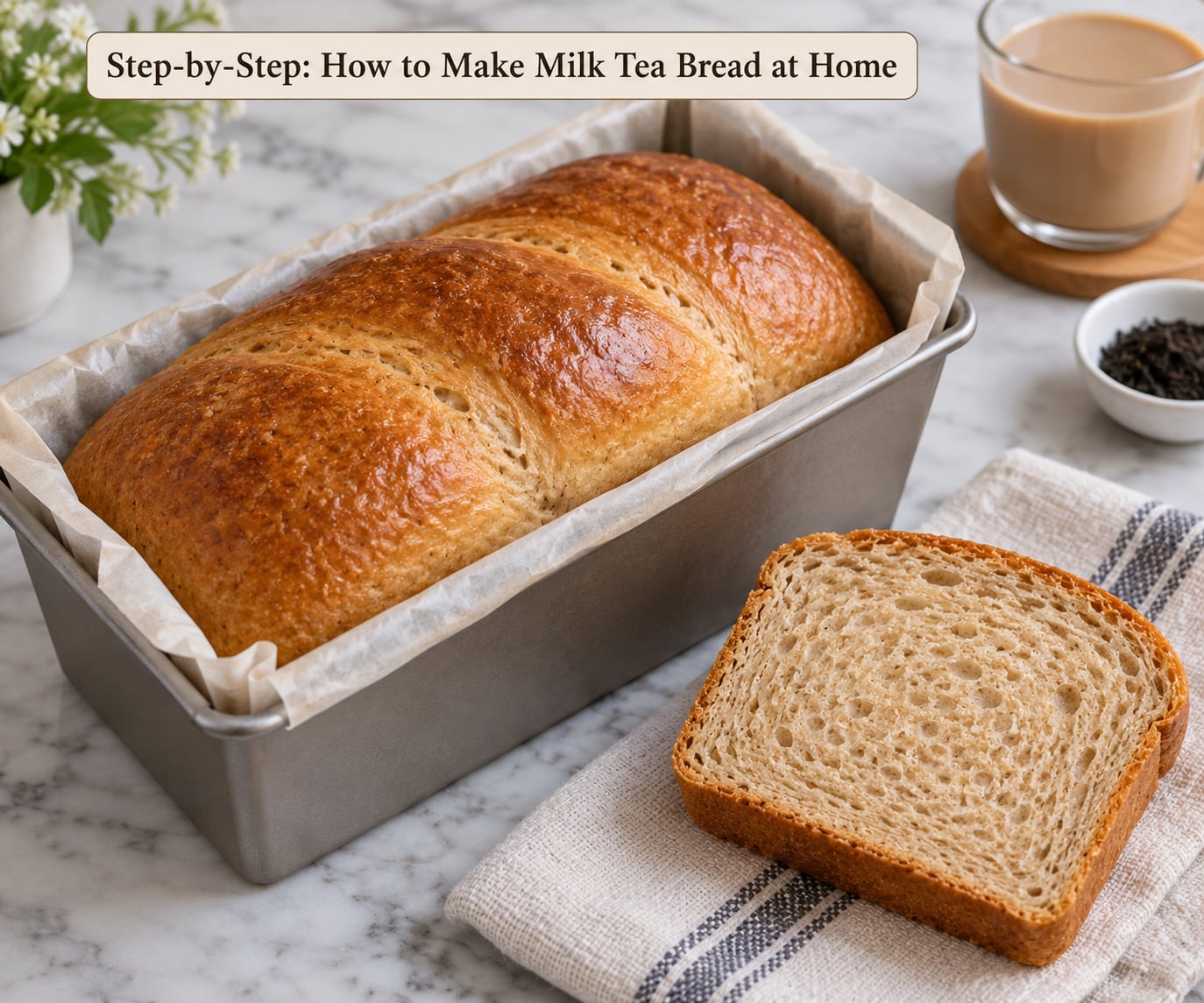
Three cues tell you it is done. The top should be evenly deep golden, the loaf should feel firm when you press the crust lightly through the oven door, and a skewer or probe in the centre should read 93 to 96 C with no wet dough clinging to it. If the top browns before the middle sets, tent the loaf with foil for the last ten minutes. An underbaked centre that pulls away from the tin walls usually means the dough was underproofed, not underbaked.
For a paler, softer crust like the Ghanaian bakery loaf, bake at 150 C for 45 to 50 minutes with a tray of boiling water on the floor of the oven. The steam keeps the crust thin and beige instead of brown and crackled, at the cost of a denser crumb.
Step 6: Cool and Serve
Let the loaf sit in the tin for 15 minutes, then turn it onto a rack and leave it completely alone for another hour. Yeast bread is still setting as it cools, and slicing a warm loaf is the number one reason readers end up with a gummy, compressed crumb that reads as a baking failure.
Wrap it in a clean tea towel or a plastic bag once it is cool. At room temperature it stays soft for two days; a loaf stored cut-side down on a board stays usable for three. Slices freeze flat in a bag for two months and come back close to fresh after three minutes in a 160 C oven or 20 seconds in a microwave.
Serve it with butter and jam for breakfast, or slice it thick for an omelette sandwich the way Ghanaian tea bread is eaten. Condensed milk and a cup of strong milk tea alongside is the pairing that makes the most sense of the name. It also freezes well as a gift loaf wrapped in parchment and twine.
Common Mistakes and How to Fix Them
Most failed tea bread comes down to four things: yeast temperature, proofing time, overmixing, or slicing too early. Work through these in order and the loaf usually sorts itself out.
The loaf is dense and heavy
Dough that never got a full first rise bakes into a brick. Either the milk was too hot and killed the yeast, or the dough was left somewhere cold. Fresh yeast is the third suspect, and old jars lose potency fast. Check the dough at 45 minutes rather than trusting the clock, and if it has not visibly grown, add another 30 minutes before you give up on it.
The middle sinks out right after you take it out of the tin
This is the most common complaint on every milk bread page out there, and it is nearly always overproofing. The dough was weak, the second rise ran long, and the structure collapsed as it cooled. Pull the second rise short of doubled, and stop at the poke test rather than the clock. Cutting the loaf’s top with a shallow score also gives the expanding crumb somewhere to go.
The centre is gummy or underdone
Either it came out of the oven too early or it was sliced warm. Use the internal temperature test, 93 to 96 C in the centre, rather than browning on top as your only signal. Thick or squat loaves need another five to eight minutes. If the crumb is wet after a fully baked and fully cooled loaf, your oven runs hot and you are pulling it before the starch has set; drop the temperature by 15 C next time.
The tea flavour is barely there
Milk bread dilutes everything. Add a third tea bag and extend the steep to 8 minutes, or increase the brewed tea to 320 ml and cut the flour to 330 g to hold the hydration steady. If you are using matcha, the powder loses both flavour and colour in a long hot bake, so cook it into a tangzhong or stir it into the cooled dough right before the second rise rather than into the initial mix.
The loaf tastes bitter
Bitterness comes from tannin, and tannin comes from over-steeping. Keep black tea and chai under 7 minutes, use a smaller amount, or blend with a milder Assam. Cutting the sugar back makes it worse, since sugar is what rounds off tea sharpness.
The edges are dark while the middle is pale
The tin is sitting too close to the element or your fan setting is aggressive. Move it to the middle rack and bake with the fan off, or tent with foil as soon as the top takes colour. Pull it the moment the top is golden rather than deep brown; a milk tea loaf colours slowly and burns quickly on the way past done.
Two habits keep results consistent. Weigh the flour every single time, because cup measures vary by a quarter of a cup depending on how you spoon them, and always cool the tea to a finger-warm temperature before it meets the yeast.
Frequently Asked Questions
Can I make milk tea bread with tea bags instead of loose-leaf tea?
Yes, tea bags are the easier option and work better than loose leaf here, because you brew a small, exact volume and then discard the bags. Use two standard bags for 300 ml of water, steep 5 to 7 minutes, sweeten the milk while it is hot, then pull the bags out. A third bag for 2 extra minutes gives a stronger flavour. Matcha and hojicha do not bag well, so those go into the flour as powder rather than into the milk.
What kind of tea gives milk tea bread the best flavor?
Strong black tea gives the clearest flavour: Assam, an English breakfast blend, or a chai blend if you want spice. Green tea and matcha taste milder and turn the crumb pale grey-green rather than tea coloured, and any of them go in as powder rather than brewed. The key variable is strength, not variety. Brew double strength and you can move from delicate to bold by changing the steep time alone.
How do I keep milk tea bread soft after baking?
Store it sealed. A loaf left uncovered dries from the crust inward within hours, which is what makes day-old milk bread feel like cardboard. Wrap the cooled loaf in a clean tea towel or put it in a closed bag or container, and keep it at room temperature rather than the fridge, which stales bread faster than heat does. Slices frozen flat in a bag and reheated in a hot oven come back softer than bread kept in the fridge.
Why is my milk tea loaf dense or gummy?
Three usual causes, in order of likelihood. First, the first rise was too short because the milk killed the yeast, so the dough never developed gas. Second, you sliced it warm and the crumb was still setting. Third, you mixed the wet ingredients into the flour like a cake batter and developed too much gluten. Check that the tea was finger-warm before mixing, give the first rise until it has visibly doubled, and cool the loaf for a full hour.
Can I add tapioca pearls or boba to the bread?
Not in the dough. Boba need boiling water to gelatinise, and once cooked they are dense and chewy, so they weigh the dough down and leave grey streaks through the crumb. If you want the flavour, make a syrup from brown sugar, water and brewed tea, reduce it until thick, and fold that in during the second rise. Serve the loaf with boba on the side, or cut the loaf and fill it like a fruit sando.
How long should I let milk tea bread cool before slicing?
At least an hour before you cut into the main loaf, and 15 minutes minimum if you are impatient. Warm yeast bread is still cooking internally, so cutting it early compresses the crumb into a gummy layer that does not recover, even after it cools. This is the single most reported disappointment with home-baked milk bread and it is completely avoidable.
Conclusion
The first step decides most of the loaf: brew the tea properly strong, sweeten it while it is hot, and cool it to finger-warm before it touches the yeast. Everything after that is ordinary enriched bread making, and doing it by weight rather than by cup is what turns a first attempt into a repeatable one.
Start with plain brewed milk tea and the basic seasoning of vanilla and nutmeg. Once the loaf comes out with the crumb you want, swap in matcha or hojicha powder, add cheese milk, or double the batch in a second tin. Readers who follow this order tend to go on to make it again, which is the only real test of a recipe.