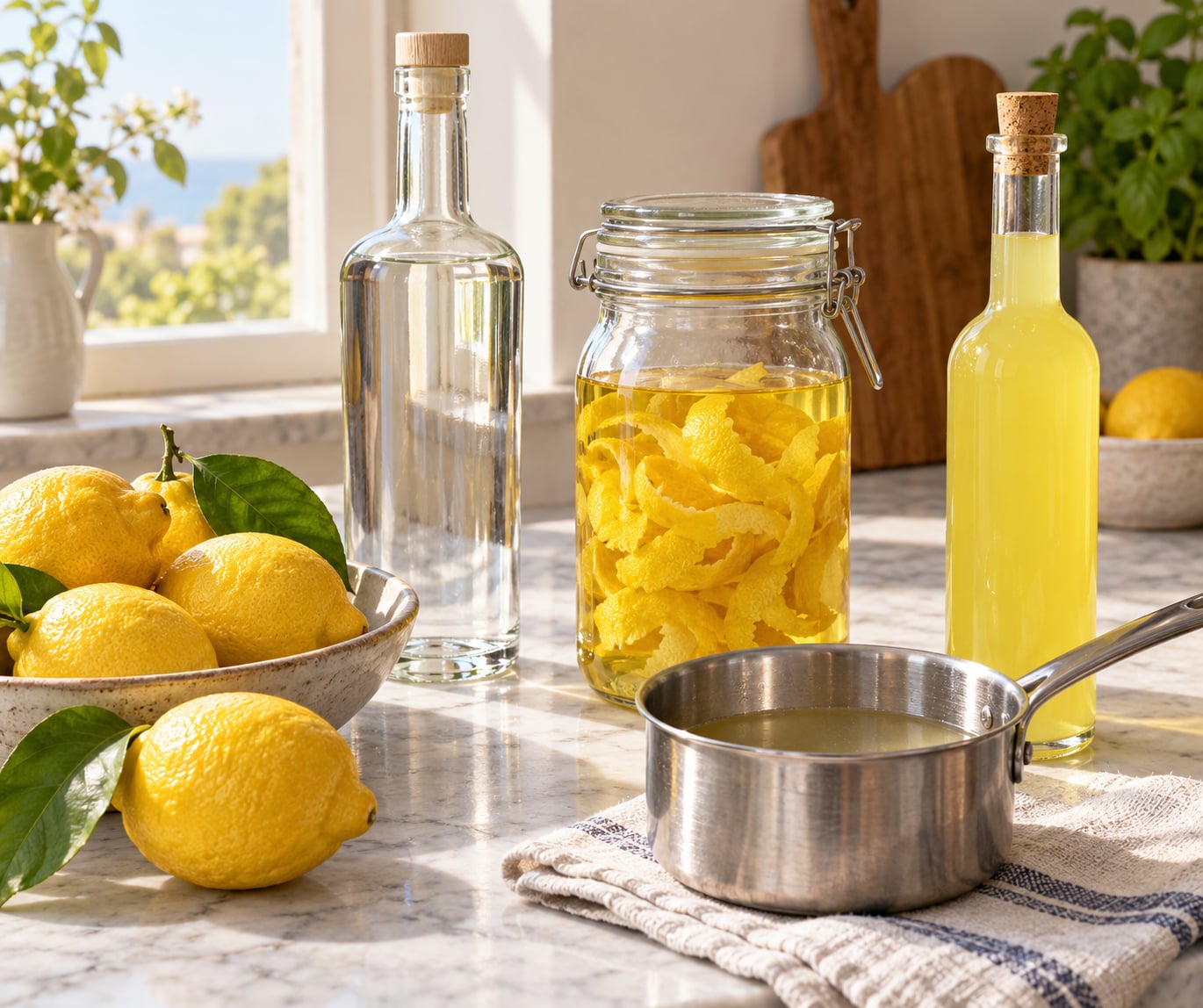
Limoncello from scratch is made by macerating fresh lemon peel in high-proof alcohol, straining out the peel, then diluting that aromatic spirit with cooled simple syrup and resting it before serving. The whole process takes two to four weeks and needs no distilling equipment, just a jar, a strainer and a bottle.
If you have never tried how to make limoncello from scratch, the reason it is worth the wait is in the chemistry. Alcohol works here as a solvent. It pulls the essential oils out of the yellow zest, and those oils carry both the lemon aroma and the bright yellow colour, which is why a good batch needs no colourant at all. Get the pith out and get the syrup cold before it meets the spirit, and the recipe is otherwise forgiving.
In short:
- Peel the lemons — unwaxed fruit, yellow zest only, no white pith.
- Infuse the alcohol — submerge the peel completely in neutral spirit and wait.
- Make simple syrup — equal weights of sugar and water, cooled to room temperature.
- Combine and strain — syrup into the spirit, never the other way round.
- Bottle and chill — seal it, rest it a couple of weeks, serve it cold.
Table of Contents
- What You Need
- Ingredients and quantities for one batch
- Lemon to spirit to sugar to water ratio, and how to scale it
- Choosing your alcohol: Everclear vs vodka
- Equipment you actually need
- Step-by-Step: How to Make Limoncello from Scratch
- Step 1: Peel the lemons
- Step 2: Infuse the alcohol
- Step 3: Make the simple syrup
- Step 4: Sweeten the limoncello
- Step 5: Strain, bottle and chill
- Common Mistakes
- Frequently Asked Questions
- Which alcohol is best for limoncello?
- How long should limoncello steep before bottling?
- Why does my homemade limoncello taste bitter?
- Is limoncello supposed to be cloudy?
- Do you get drunk off limoncello?
- How long does homemade limoncello last, and does it need refrigerating?
- Conclusion
What You Need
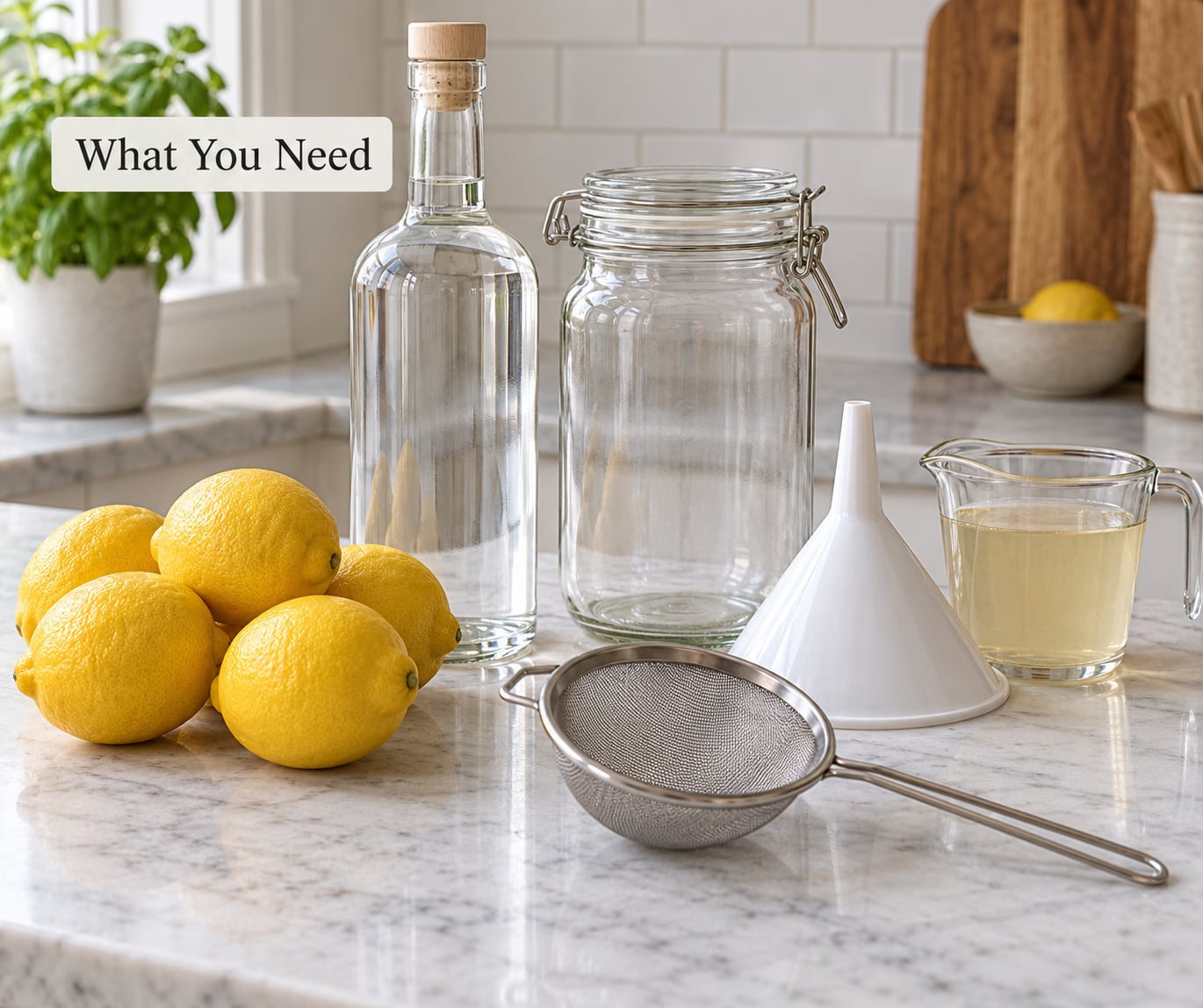
Limoncello needs four ingredients and very little equipment. The lemon decides whether the batch works; the other three are arithmetic. Most home batches land somewhere between 25 and 30 percent alcohol by volume, which is the same range as the bottles sold in Italy.
Ingredients and quantities for one batch
- 10 to 12 medium lemons, unwaxed or organic, scrubbed and completely dry
- 750 ml (3¼ cups) neutral spirit — 100-proof vodka or 190-proof grain alcohol
- 1 cup (200 g) granulated sugar
- 1 cup (240 ml) water
- Optional: a tablespoon more sugar for a sweeter southern Italian style, or a sprig of mint for a few hours of infusion
That yields roughly 1.2 litres of finished limoncello, which is about six small glasses or a dozen 100 ml bottles. Organic lemons have thinner rind, so home brewers who use them regularly add two or three extra fruit rather than fighting the peel off thinner.
Lemon to spirit to sugar to water ratio, and how to scale it
| Ingredient | 1 batch (about 1.2 L) | 2 batches | 3 batches |
|---|---|---|---|
| Lemons, unwaxed | 10 to 12 | 20 to 24 | 30 to 36 |
| Neutral spirit | 750 ml (3¼ cups) | 1.5 L (6½ cups) | 2.25 L (9½ cups) |
| Sugar | 200 g (1 cup) | 400 g (2 cups) | 600 g (3 cups) |
| Water | 240 ml (1 cup) | 480 ml (2 cups) | 720 ml (3 cups) |
| Jar size | 1 L | 2.5 L | 4 L |
Scale by volume, not by doubling the lemon count alone. If the peel is not fully submerged in spirit, extraction stops partway through and the batch tastes thin.
Choosing your alcohol: Everclear vs vodka
Grain alcohol at 190 proof is the strongest extractor and gives the most vivid lemon. Vodka is gentler and softer on the palate. The finished strength, though, is set mostly by how much syrup you add, not by the bottle you started with.
| Spirit | Proof | ABV | Lemon character | Finished ABV |
|---|---|---|---|---|
| Everclear | 190 | 95% | Sharpest, most vivid, cleanest finish | About 58% — too hot, dilute further |
| Everclear | 151 | 75.5% | Strong, clean, less round than vodka | About 46% — still strong |
| Vodka | 100 | 50% | Balanced, smooth, well-rounded | About 30% |
| Vodka | 80 | 40% | Mildest, most neutral | About 24% |
That table is the part most recipes skip. A litre of 190-proof spirit in a standard recipe ends up near drinkable rocket fuel, so home winemakers using Everclear cut the spirit to about a third of the lemon count and add two to three times the syrup to land near 30 percent.
Both work. Everclear users generally report a stronger, cleaner lemon, while vodka drinkers describe a rounder drink that tastes closer to Italian bottles. If you want the classic digestif profile and cannot get grain alcohol locally, 100-proof vodka is the safest all-round choice.
Equipment you actually need
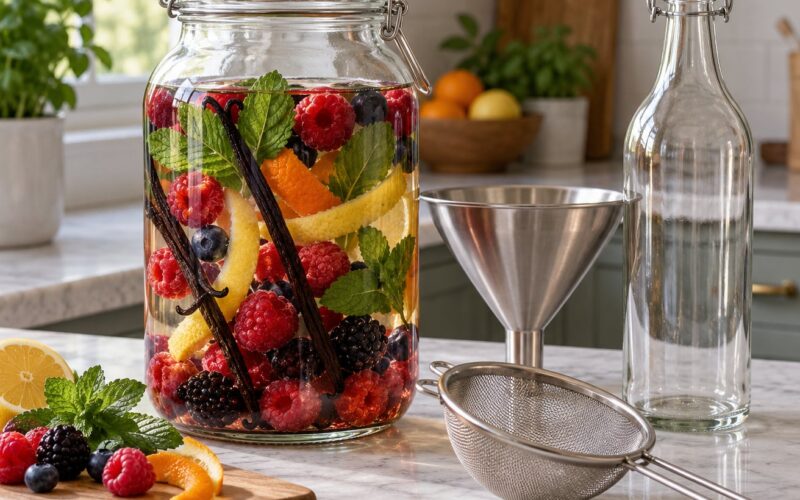
Essential: an airtight glass jar or bottle with at least 1 litre of headroom, a vegetable peeler or fine microplane zester, a fine-mesh strainer, a small saucepan, and clean bottles with corks or screw caps for the finished batch. Optional but useful: a funnel, a coffee filter for a second pass of straining, a bottle with a spout for tasting, and labels.
You do not need a hydrometer, a sous-vide circulator or a vacuum sealer. A hydrometer tells you the proof you can calculate on paper, and sealing under vacuum extracts nothing extra from lemon peel that a good steep does not already do.
Step-by-Step: How to Make Limoncello from Scratch
Step 1: Peel the lemons
Scrub the lemons under hot water with a brush, then dry them completely. Water left on the peel dulls the aroma, and any wax or treatment on the skin ends up in the bottle.
Take off only the yellow outer layer. The white pith underneath carries limonin and related bitter compounds, and that is where bitterness comes from — not from the zest, which should taste sharp and fragrant rather than bitter when you nibble it.
Zest with a microplane or a Y-peeler. A standard vegetable peeler takes pith with it, which is the single most repeated complaint from first-time makers; if that is your only tool, peel thinner and inspect each strip.
As a rule of thumb you need roughly six lemons to cover the bottom of a 1 litre jar in a single loose layer. That is a good test for whether you have enough peel for the batch you planned.
Step 2: Infuse the alcohol
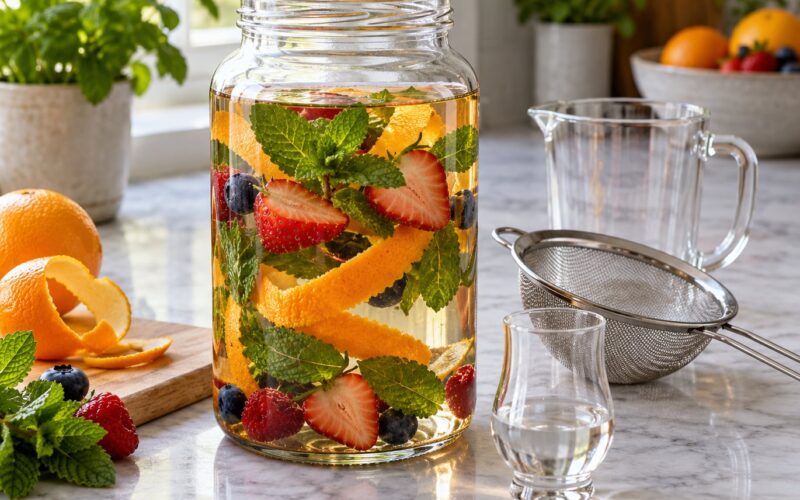
Put the peel in the jar, pour in the spirit, and close the lid. Every piece of peel should sit under the liquid. If any float above the surface, press them down or top the jar up with a little more spirit.
Store the jar in a cool, dark cupboard away from the kitchen window, and give it a shake once a day for the first week. The shake redistributes the oils that collect on the peel.
Sources disagree wildly about steep time, from ten days to nearly three months. Here is what each window actually gives you:
| Steep time | Flavour result | Bitterness risk | Who should pick it |
|---|---|---|---|
| 7 to 10 days | Bright, tart, light aroma | Low | First batches, gifts you need next week |
| 2 to 4 weeks | Balanced, rounded, recognisably limoncello | Low | Most home brewers |
| 8 to 12 weeks | Deep, almost candied lemon, heavier oil character | Rises once pith is present | Patient brewers who like a strong pour |
Two to four weeks is the sweet spot, and the traditional Sorrento methods sit at the short end of that. Do not extend the steep because you think something is wrong. Alcohol preserves the peel indefinitely, so a dark batch after eight weeks is over-extracted, not spoiled.
Step 3: Make the simple syrup
Combine equal weights of sugar and water — 200 g sugar with 240 ml water — in a small saucepan. Bring it just to a boil, stir until the sugar disappears, then take it off the heat and let it cool all the way to room temperature.
Cooling completely is not optional. Hot syrup meeting high-proof alcohol creates a temporary emulsion that looks permanently cloudy, and cloudiness is the second most common complaint after bitterness. Ten minutes in the fridge is enough.
Step 4: Sweeten the limoncello
Pour the cooled syrup into the strained lemon spirit and stir. Never pour alcohol into hot syrup, and never add syrup to the jar while the peel is still inside — you will be bottling sediment with the drink.
Alternatively, dissolve the sugar directly in the strained spirit. It takes longer and leaves the liquid a touch thinner, but it gives you an undiluted lemon hit, which some northern Italian drinkers prefer.
Taste before you bottle. Add sugar a spoonful at a time and stir until it dissolves. Sorrento style is noticeably tart; the southern style from the Amalfi Coast is sweeter. Both are correct, and you cannot fix sweetness after bottling, so decide here.
Step 5: Strain, bottle and chill
Pour the liquid through a fine-mesh strainer, then press the peel firmly with the back of a spoon to get the last of the liquid out. Run a coffee filter over the collected spirit for a noticeably clearer result, and let it settle for a few hours before bottling.
Bottle into something you can seal properly, label with the date, and keep it somewhere dark. Served straight from the freezer it is meant to be slightly slushy, and that texture is part of how it is drunk in Italy.
At 25 to 30 percent ABV the drink is stable on a pantry shelf and does not spoil. In a hot kitchen or in direct sunlight the aromatics fade faster, so the freezer or the fridge is the better home for it, and a batch will comfortably keep a year or more.
Common Mistakes
Almost every disappointing batch traces back to one of five things. Here is the symptom, the cause, and the fix.
| Symptom | Cause | Fix |
|---|---|---|
| Harsh bitterness | White pith was included during peeling | Repack the batch with fresh zest and a little extra syrup; bitter peel cannot be removed after the fact |
| Bitterness and saltiness together | Peel washed in salted water, or unwashed fruit with surface treatment | Start over with scrubbed, dried, unwaxed lemons |
| Cloudy or milky | Warm syrup added to alcohol, forming an emulsion | Let it stand sealed for a week, or pass it through a coffee filter to drop the suspended oils |
| Sugar sinks to the bottom | Syrup added while still hot, so it is too viscous to mix | Warm the bottle gently in a warm water bath and swirl until clear |
| Weak, watery lemon | Peels not fully submerged, so extraction stopped early | Add fresh zest and more spirit to top the jar, then steep another week |
| Too sweet to drink | Sugar added by eye rather than by taste | Dilute with a splash of the leftover spirit or with vodka and cold water |
One fear comes up more than any other: whether a batch sitting in alcohol for two months has gone bad. It has not. With no juice, dairy or fresh fruit in the jar, the alcohol is a stable preservative, and a change in colour or a stronger taste means extraction, not spoilage.
The mistake that is hardest to undo is bitter peel. Everything else on that list can be corrected after the fact; that one needs a fresh batch.
Frequently Asked Questions
Which alcohol is best for limoncello?
190-proof grain alcohol gives the brightest, cleanest lemon because it extracts the peel oils most efficiently. 100-proof vodka is the gentler option and the easiest to buy, producing a rounder drink closer to commercial Italian bottles. Whichever you choose, the finished strength comes mostly from how much syrup you add, so adjust dilution rather than hunting for a stronger bottle.
How long should limoncello steep before bottling?
Two to four weeks is the range most home brewers land on and the best balance of flavour and safety. Seven to ten days gives a lighter, tart drink and works well for a first batch. Eight to twelve weeks produces a deeper, almost candied lemon but raises bitterness risk if any pith slipped into the zest. Alcohol preserves the peel, so a long steep never spoils.
Why does my homemade limoncello taste bitter?
The bitter compounds such as limonin live in the white pith, not the yellow zest, so bitterness almost always means pith was peeled along with the peel. A vegetable peeler is the usual culprit; a microplane or Y-peeler is far better. If the batch is already bitter, pack it with fresh clean zest and extra syrup and steep again, but pith already dissolved into the spirit cannot be removed.
Is limoncello supposed to be cloudy?
A finished batch should be clear and bright yellow, so cloudiness means something went wrong. Adding syrup while it is still warm to high-proof alcohol creates a temporary emulsion that scatters light and looks milky. Let the bottle stand sealed for about a week and it often clears on its own. If it does not, pass it through a coffee filter, which drops most of the suspended oils.
Do you get drunk off limoncello?
Yes, if you overdo it, and that surprises people. A small 50 ml serve of a homemade batch at 25 to 30 percent ABV carries roughly the same alcohol as a double measure of straight vodka, which is more than a typical 40 percent spirit. Limoncello is usually drunk straight after a large meal and in small chilled glasses, so the food and the pour size are what keep it in check.
How long does homemade limoncello last, and does it need refrigerating?
A batch at 25 to 30 percent alcohol keeps a year or more with no risk of spoilage, because the spirit preserves the lemon oils and there is no juice or dairy involved. Refrigeration is optional but recommended, since cold slows the loss of aroma. Keep bottles sealed and away from sunlight. Freezer storage works well too, and the drink is traditionally poured partly frozen.
Conclusion
Start by buying unwaxed lemons and picking them up with a microplane rather than a peeler. That single choice removes the most common cause of failure before you begin.
For your first batch, make it small — six lemons in half a litre of spirit, steeped for ten days — so you learn how the peel behaves without committing a dozen fruit and a month of waiting. Once that tastes right to you, run the full batch, rest it two weeks, and serve it from the freezer in small glasses after dinner.