How to make tortillas from scratch takes about 30 minutes and five ingredients for the flour version: 3 cups all-purpose flour, 1 teaspoon salt, 1 teaspoon baking powder, 1/3 cup oil, and 1 cup warm water. Mix it, knead it, rest it, roll it thin, then cook each one 30 to 60 seconds a side on a hot dry pan until it puffs and freckles with brown.
There are two recipes worth knowing. Flour tortillas are soft and forgiving, which makes them the easier place for a beginner to start. Corn tortillas are made from masa harina, which is nixtamalized corn flour, and they ask for more precise water than most people expect. This guide gives you both, plus what to do when the dough cracks or the tortillas refuse to puff.
Table of Contents
- What You Need
- Step-by-Step: How to Make Tortillas From Scratch
- Making Flour Tortillas From Scratch
- Making Corn Tortillas From Scratch
- Cooking and Serving Your Tortillas
- Common Mistakes When Making Tortillas From Scratch
- Frequently Asked Questions
- What are the ingredients to make tortillas?
- How to make tortillas with 4 ingredients?
- How to make a 3 ingredient tortilla?
- Why won’t my homemade tortillas puff up?
- Why are my homemade tortillas so stiff and why do they get hard?
- Do I need a tortilla press, and can I make tortillas ahead of time?
- Conclusion
What You Need
Start with the flour list. It makes about 16 tortillas and needs nothing from the pantry you don’t already have.
- 3 cups (about 360 g) all-purpose flour
- 1 teaspoon salt
- 1 teaspoon baking powder
- 1/3 cup (about 80 ml) neutral oil, melted, or softened butter
- 1 cup (about 240 ml) warm water, not boiling
For corn tortillas you need three things and about 14 rounds.
- 2 cups (about 240 g) masa harina
- 1 1/4 cups (about 300 ml) warm water, roughly 100 to 110F
- 1/2 teaspoon salt
- 1 teaspoon neutral oil or lard, optional
Masa harina is not the same as cornmeal or generic corn flour. Cornmeal is simply dried corn, so a tortilla made from it disintegrates in water. Masa harina is corn that has been soaked in an alkaline solution, cooked, dried, and milled, and that treatment is what gives corn tortillas their aroma, their strength, and their ability to puff.
For tools, a tortilla press is genuinely useful because it gives you even thickness, and even thickness is what cooks evenly on the pan. A cast iron or aluminum press costs less than a nice dinner. If you do not have one, a heavy flat skillet pressed down on a dough ball works nearly as well, and a rolling pin between two sheets of parchment gets you most of the way there.
For heat, any skillet works, but a comal or cast iron griddle holds a steadier temperature than thin nonstick and gives you those brown freckles. A clean tea towel for wrapping the finished stack is the one tool people skip and then wonder why their tortillas went stiff.
Substitutions worth knowing: swap up to half the flour for whole wheat for a nuttier, denser tortilla, and use all of it if gluten is not a concern. Lard, shortening and oil all work in the flour dough, with lard tasting the most traditional and oil tasting the most neutral. Corn tortillas are naturally gluten-free, which makes them the option for anyone avoiding wheat.
Step-by-Step: How to Make Tortillas From Scratch
Both methods follow the same rhythm: build a dough, rest it so the liquid distributes, shape it thin, and cook it fast on a hot dry surface. The differences are in how much water, how long you knead, and how firm you press.
Making Flour Tortillas From Scratch
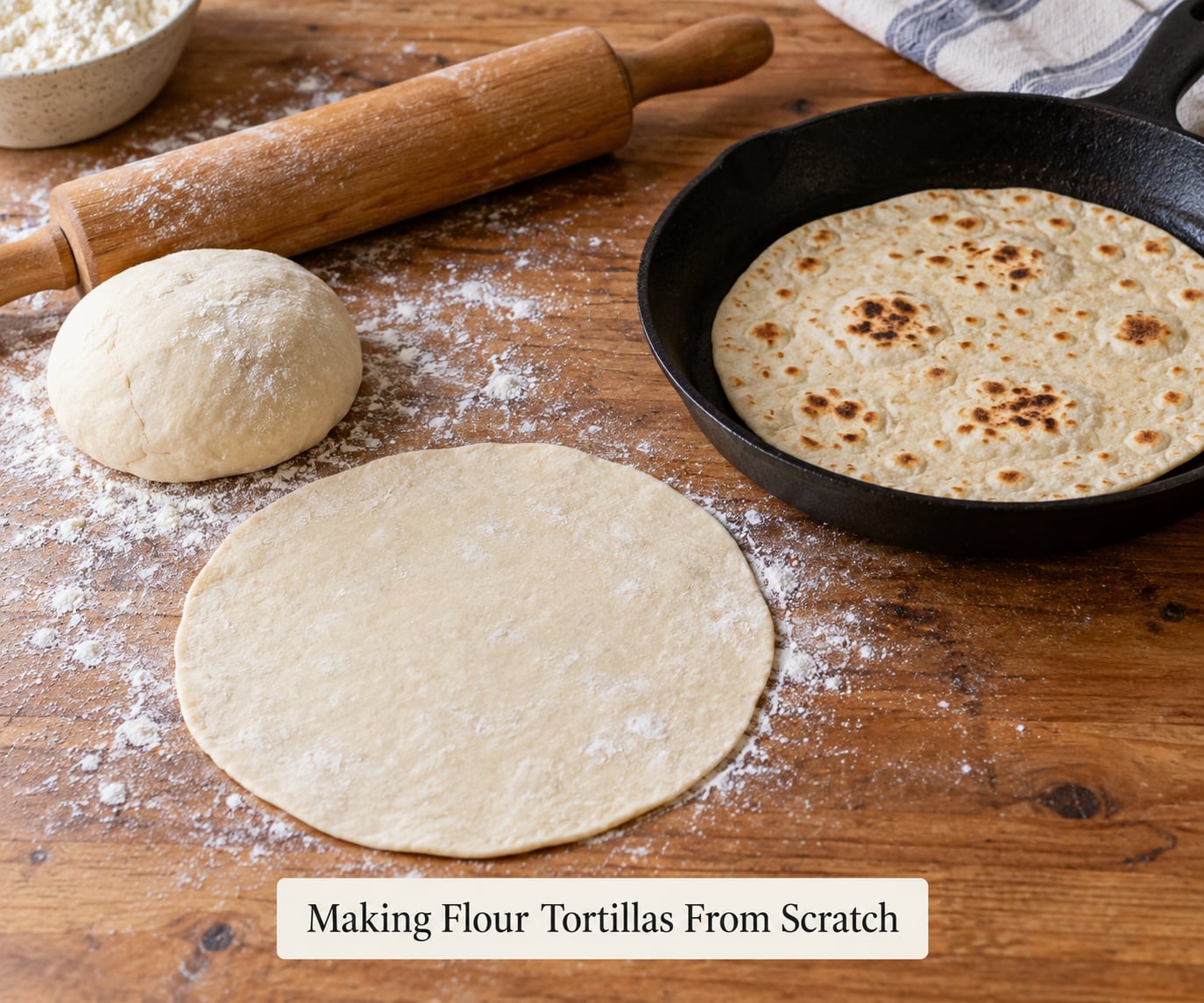
1. Mix the dry ingredients. Whisk the flour, salt and baking powder in a large bowl until the baking powder is evenly distributed, with no white streaks sitting in the flour.
2. Rub in the fat. Add the oil or softened butter and work it through the flour with your fingertips until the mixture looks like coarse crumbs. This step is what keeps the tortillas tender, because the fat coats the flour particles and holds back gluten development.
3. Add the water. Pour in the warm water and stir with a fork, then squeeze the lumps with your hand until the dough comes together. It will look shaggy at this point and that is fine.
4. Knead for 5 to 8 minutes. Push with the heel of your hand, fold, quarter turn, repeat. You are looking for a smooth, soft ball that feels a bit like modeling clay and no longer sticky. If you own a stand mixer, use the paddle to bring the dough together and then the dough hook for about 3 minutes on low.
5. Rest the dough 20 to 30 minutes. Wrap it in plastic or a damp towel. Resting relaxes the gluten network so the dough rolls out instead of springing back, and it hydrates the flour fully, which is why rested dough tastes better and bends without cracking.
6. Divide into 16 balls. Pinch off pieces and roll them smooth between your palms. Let them sit under a towel for 10 more minutes while the dough relaxes further.
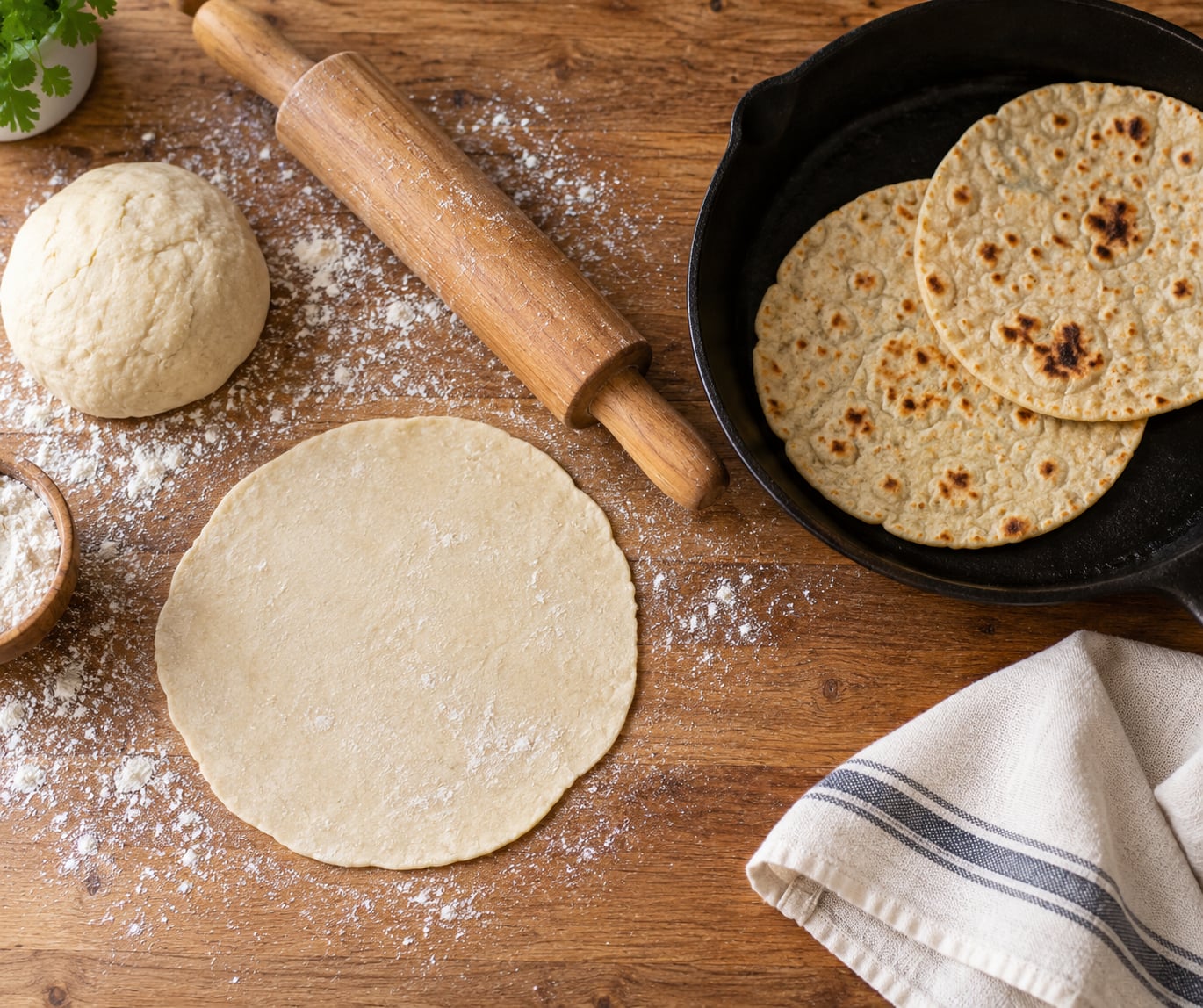
7. Roll each ball thin. Dust the counter lightly with flour, set a ball down, and roll from the center outward, rotating a quarter turn as you go. Aim for a round about 4.5 to 5.5 inches across. Push the edges thinner than the middle, because that is where thickness hides and where cracking starts.
8. Cook without oil. Put a dry skillet over medium-high heat and lay the tortilla on. Cook 30 to 60 seconds until you see bubbles and a few brown spots, flip, and give the second side 15 to 30 seconds.
9. Stack in a towel. As each tortilla comes off, fold it into a clean tea towel and stack it there. The stack traps steam that keeps every tortilla soft while you cook the rest.
Making Corn Tortillas From Scratch
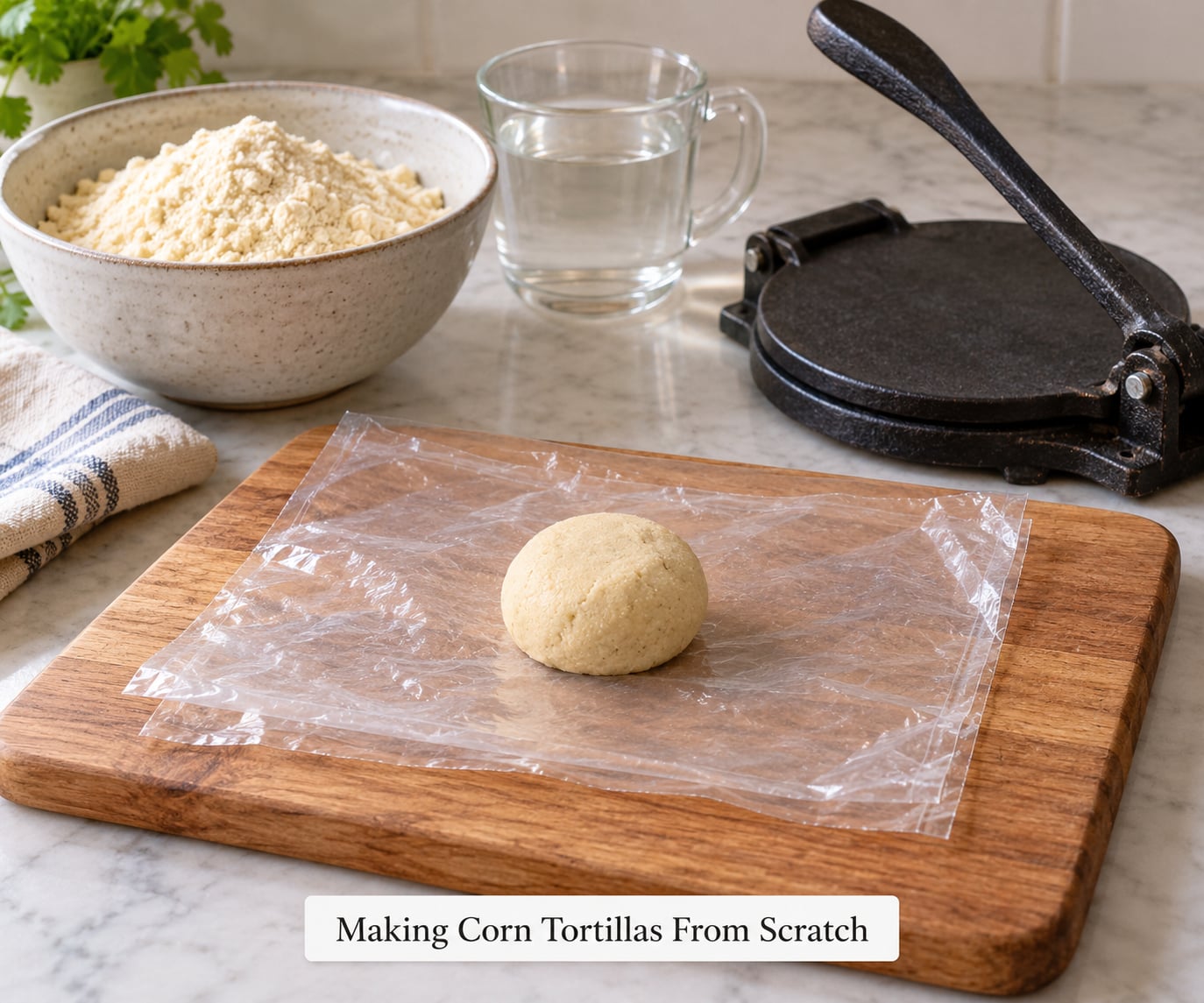
Corn dough is less forgiving than flour dough because it never develops gluten to give it slack when something goes wrong. Measure the water and you will be fine; eyeball it and the dough swings from wet to dry in seconds.
1. Get the ratio right. The dependable number is 1 to 1.4 by weight, so 240 g of masa harina takes about 336 g of water, which lands close to 1 1/4 cups. Warm water in the 100 to 110F range hydrates the masa faster than cold water and gives you a softer tortilla.
2. Pour and wait. Put the water over the masa harina and salt, let it sit 30 seconds, then mix with your hand or a fork. Stop as soon as it comes together.
3. Check the texture. Pinch a piece off. It should hold its shape, feel like soft clay, and crack cleanly at the edge when you bend it rather than tearing in long strands. That clean break is your signal the hydration is right.
4. Rest 15 to 30 minutes covered. The masa continues absorbing water the whole time, which is why dough that felt sticky can feel dry a few minutes later. A longer rest makes the tortilla more pliable and easier to press.
5. Portion small balls. Divide into 12 to 14 pieces and roll them smooth, slightly smaller than a golf ball. Keep them under a damp towel so they do not dry out on the counter while you cook.
6. Press. Set a ball on plastic wrap, top with a second sheet, and press down firmly once. Flip the packet and press a second time so the shape stays round. The dough should release cleanly from the film. If it clings, the dough is too wet; if it crumbles at the edge, it is too dry and a few drops of water fixes it.
7. Peel and cook. Peel off the top sheet only, keeping the tortilla attached to the film on your palm, and lower it onto the hot pan film-side down. Cook 30 to 45 seconds until it releases easily and shows freckles, flip, and give it another 30 seconds.
8. Serve immediately. Corn tortillas have almost no fat in them and they stiffen faster than flour tortillas. Eat these within the hour.
Cooking and Serving Your Tortillas
Heat control matters more than any other variable. Medium-high to high heat is right. Too cool and the tortilla steams instead of sealing, so it never puffs; too hot and the outside blackens before the steam has cooked the middle.
Test the pan before you start. A flick of water should skitter across the surface and vanish in a couple of seconds. Skip the oil for flour tortillas, since the fat is already in the dough and a slick pan makes them spot and crisp instead of staying pliable. A corn tortilla pan can use the faintest wipe of oil if your skillet looks dry.
You will know a tortilla is done when it puffs into a pillow, shows scattered brown freckles, and slides freely when you nudge the pan handle. Flip it and you should hear a very faint breath of escaping steam. Total time per side stays under a minute.
Wrap the cooked tortillas in a clean tea towel inside a bag or under a folded towel, and they stay soft and foldable for hours. This single habit is the difference between tortillas you roll burritos in and tortillas that crack when you try.
Use them for tacos, breakfast burritos, quesadillas, fried tacos rolled with cheese, or rolled with cinnamon sugar for a dessert. They also freeze: cool them completely, stack with a sheet of parchment or plastic between each layer, and keep them airtight in the freezer for 2 to 3 months. Reheat straight from frozen in a dry skillet for 10 to 15 seconds a side, or wrap one in a damp paper towel for 20 to 30 seconds in the microwave.
Dough freezes too, which is the real make-ahead win. Shape flour dough into individual balls, wrap each in plastic, and freeze for 2 to 3 months. Thaw overnight in the fridge, then let the ball sit at room temperature 30 minutes before rolling. Thaw corn dough in the fridge in its container, add a tablespoon of water if it looks dry, and knead briefly.
Common Mistakes When Making Tortillas From Scratch
Dough cracks at the edges while rolling. It is too dry. For flour dough, add a tablespoon of water at a time and knead until the dough smooths out. For corn dough, that clean-edge-crack test is exactly what you want, so if the whole ball is crumbling, work in water a teaspoon at a time and rest it again.
Flour dough is sticky and clings to everything. You added too much water or not enough flour dusting. Knead a tablespoon of extra flour into the dough, and dust the counter and rolling pin lightly rather than heavily, since excess flour makes tortillas taste raw.
Tortillas come out too thick and firm to roll thin. Two causes. Either you did not let the dough rest, so gluten fights back, or you rolled the middle only and left a fat rim. Rest longer and press the edges thinner than the center every single time.
They do not puff up. This is nearly always one of three things: the dough was too dry to make steam, the pan was not hot enough to seal the outside before moisture escaped, or the tortilla was too thick for steam to expand. Fix all three and the puff comes back.
They stick to the pan or to the press film. Skip the plastic wrap and you lose the barrier that lets the dough release. Corn dough that clings to the film is also usually over-hydrated. Flip and press again, and pull the tortilla off in one motion rather than scraping it.
They brown too fast or scorch. Your heat is too high for the thickness. Drop to medium and expect a slower first side with more browning on the second. Flour tortillas in particular go from golden to black in about four seconds once they are ready to flip.
They are fine hot and brittle an hour later. They dried out. Wrap the stack in a towel immediately, keep it sealed, and skip the refrigerator, which pulls moisture right out of them.
Corn tortillas crumble instead of folding. They went past the foldable window. Corn tortillas stiffen faster than flour ones by design. Make them the last thing you cook before eating, or press a fresh one while the filling is already out.
Frequently Asked Questions
What are the ingredients to make tortillas?
A basic flour tortilla takes five ingredients: 3 cups all-purpose flour, 1 teaspoon salt, 1 teaspoon baking powder, 1/3 cup oil or softened butter, and 1 cup warm water. Basic corn tortillas take three: 2 cups masa harina, 1 1/4 cups warm water, and 1/2 teaspoon salt, plus oil if you like. No yeast, no baking soda, nothing to hide behind.
How to make tortillas with 4 ingredients?
Drop the baking powder and keep the fat: flour, salt, oil, water. You lose a little lift but stay tender, because the oil still coats the flour and limits gluten. You can also skip the oil instead, though fat-free dough tightens as it rests and cracks more at the edge, so give it the full 30 minute rest.
How to make a 3 ingredient tortilla?
Masa harina, water, salt. That is the whole list for corn tortillas and it is how plenty of Mexican home cooks work every week. For flour tortillas, three ingredients means flour, water, and salt, with no baking powder and no fat. Those are plainer and slightly less tender, so eat them warm rather than rolled into a burrito the next day.
Why won’t my homemade tortillas puff up?
Three things drive the puff: steam pressure, a hot pan, and even thickness. Steam forms when the outside sets before the moisture inside escapes, so a tortilla that is too thick cannot expand and ends up flat with a raw spot. A cool pan never seals the outside. Dry dough has no moisture to turn into steam in the first place.
Why are my homemade tortillas so stiff and why do they get hard?
Stiff tortillas usually mean too little fat or too short a rest, so gluten in the flour never gets coated and relaxed and the dough fights you. Tortillas that turn hard as they cool have lost moisture. Wrap the finished stack in a clean tea towel right off the pan and keep it sealed, because that trapped steam is what keeps them pliable for hours.
Do I need a tortilla press, and can I make tortillas ahead of time?
You do not need a press. It mainly buys you even thickness faster, and a heavy flat skillet pressed on a dough ball between two sheets of plastic wrap gets you most of the way there. Cooked tortillas keep 3 to 4 days refrigerated airtight and 2 to 3 months frozen. Portioned dough balls freeze 2 to 3 months and thaw overnight in the fridge.
Conclusion
Mix 3 cups of flour, 1 teaspoon each of salt and baking powder, 1/3 cup oil, and 1 cup warm water, knead it for five minutes, and let it sit under plastic for half an hour. That single batch gives you about 16 tortillas and the whole thing moves faster than a pizza delivery.
Start with a small batch and expect the first one to be mediocre, because this is a skill where your hands learn faster than any recipe can teach. Adjust from there: more fat and a longer rest if they feel stiff, a splash more water if they crack while rolling, and lower heat if they brown before they puff. Once you have a batch you like, freeze the dough balls and you have fresh tortillas on a weeknight in about fifteen minutes.