Most dry, bouncy meatballs trace back to three things: how fatty the meat is, how much water is locked inside the ball, and how hard you worked the mixture. How to make meatballs that stay tender comes down to using meat around 15 to 20 percent fat, adding a soaked-bread panade, and mixing only until everything comes together. Plan on about 45 minutes start to finish, and the technique rewards you long before the sauce is done simmering.
The part that trips people up is the mixing. Ground meat is already a broken-down protein structure, and kneading it works those proteins into a dense web that tightens as it cooks. That is the same chew you want in a sausage, and exactly what you do not want in a meatball.
Table of Contents
- What You Need
- Step-by-Step
- 1. Choose a moist, fatty meat
- 2. Add moisture without overmixing
- 3. Shape meatballs evenly
- 4. Brown the meatballs first
- 5. Finish cooking gently
- Common Mistakes
- Frequently Asked Questions
- What is the best meat for tender meatballs?
- How do I keep meatballs from becoming tough?
- How long should I cook meatballs?
- Should I add egg or breadcrumbs to meatballs?
- How do I keep meatballs tender when cooking them in sauce?
- Conclusion
What You Need
Tender meatballs start with a moderately fatty meat and a wet binder. Everything else on the list is seasoning, and it is the fat and the moisture doing the real work.
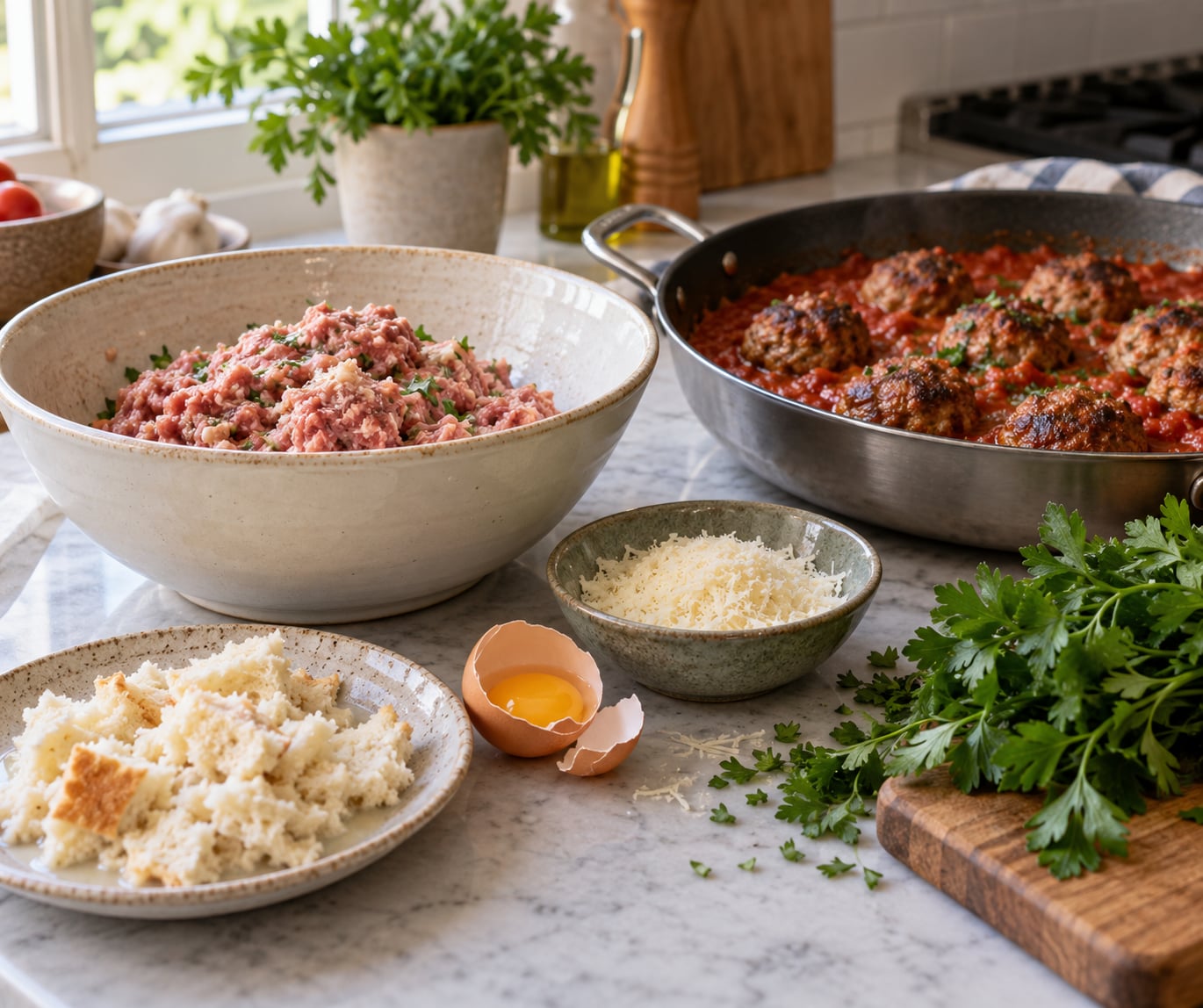
For one pound of ground meat, the ratios most home cooks land on are two slices of white sandwich bread torn into chunks and soaked in a third of a cup of milk, one egg, a quarter cup of grated Parmesan, and a couple of tablespoons of ricotta if you have it. Season with salt, black pepper, garlic, and a small amount of nutmeg or fennel seed if you like that direction.
- Meat: 80/20 ground beef, a half beef and half pork blend, or beef with pork and veal
- Panade: white sandwich bread plus milk, water, or broth
- Binder: one egg, plus grated Parmesan or pecorino
- Aromatics: onion grated or minced until nearly paste-like, and garlic
- Equipment: a wide skillet, a shallow baking sheet, a small scoop, and an instant-read thermometer
A shallow pan rather than a deep pot is the piece of equipment people skip. Meatballs need to sit in a single layer to brown, and crowding drops the temperature and steams them instead.
Step-by-Step
1. Choose a moist, fatty meat
Aim for meat that still carries 15 to 20 percent fat. Fat is what bastes the meatball from the inside while it cooks, and lean meat has nothing left to give once the heat is on.
Ground beef at 80/20 is the reliable default, and a 50/50 beef-and-pork blend is even more forgiving. Veal is the tenderest of the traditional three and pork carries both fat and flavor, which is why the beef-pork-veal mix shows up in so many Italian-American kitchens. Avoid anything labeled 90/10 or lean for meatballs; it can work, but only with extra milk in the panade and an egg or two more.
Turkey, chicken, and venison need the same treatment plus more. Most cooks blend lean proteins 50/50 with pork, then add a quarter cup of milk and an extra egg so the mix stays loose.
2. Add moisture without overmixing
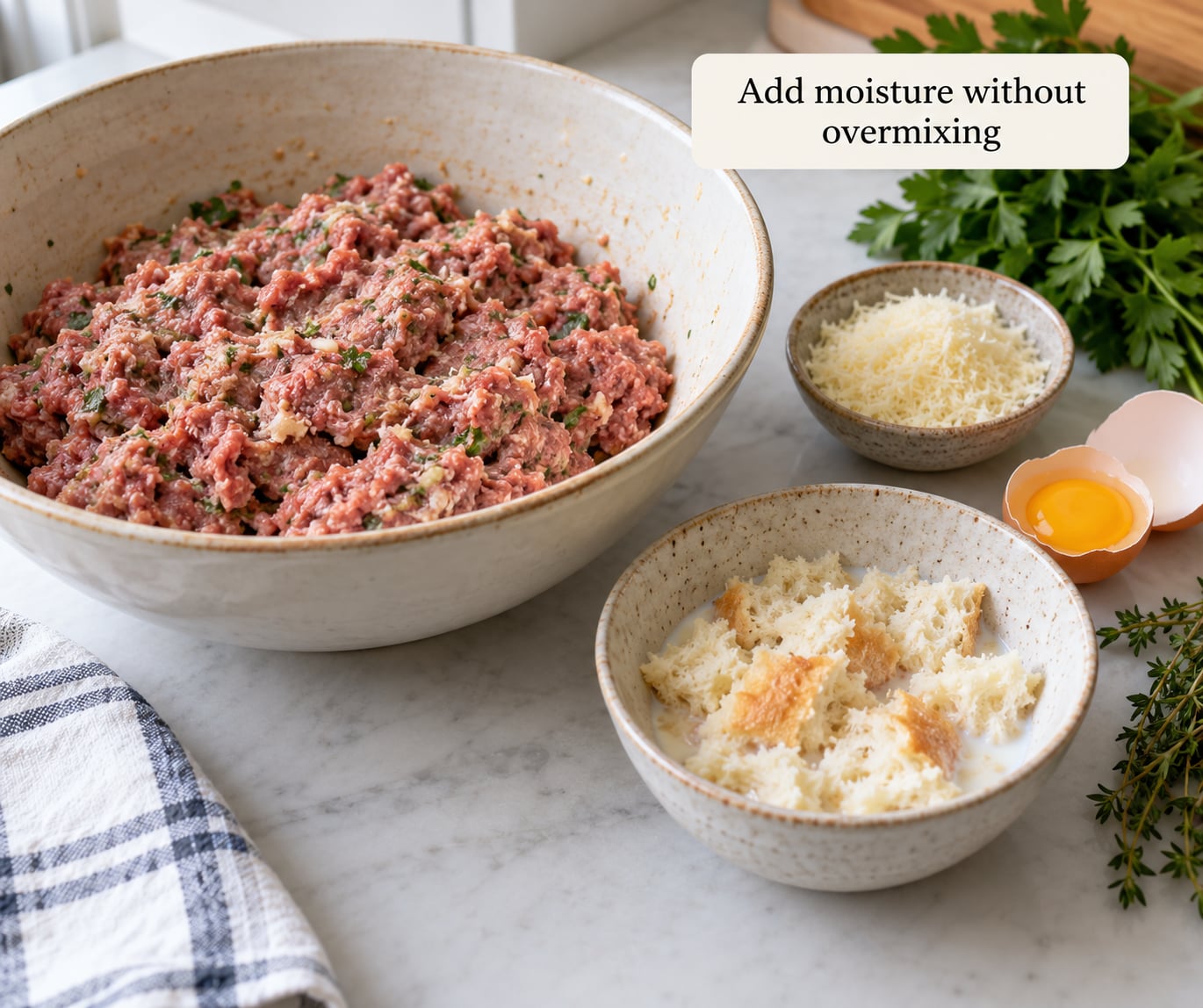
Mix the non-meat ingredients first, then add the ground meat last and mix only until no dry streaks remain. This order is the single most repeated fix among home cooks who have had good meatballs and bad ones from the same recipe.
The texture at that point should look slightly loose and a little pasty. If you are kneading it because the bread is still visible in chunks, keep going for another thirty seconds and then stop. Overworking the meat tightens the protein network, and that web contracts further under heat, which is where the rubbery bounce comes from.
Soak the bread in milk rather than using dry breadcrumbs straight from the box. Dry crumbs drink moisture out of the meat and then release it into the pan, leaving you with a drier ball than you started with. A soaked panade holds that water inside instead. Grate the onion fine; coarse pieces are the most common reason meatballs crack and fall apart in the sauce.
Let the mixed meat sit at room temperature for 30 to 60 minutes if you have time. The bread hydrates further and the mixture firms just enough to roll without spreading, which gives you lighter balls.
3. Shape meatballs evenly
Use damp hands or a small scoop and make every ball the same size, roughly walnut to golf ball. Matching sizes is not cosmetic — a batch with a mix of large and small finishes cooking unevenly, and the big ones sit past done while the small ones are still catching up.
Cup the mixture gently and roll it loose. You want it to hold together and feel slightly soft, not compressed. Pack it firmly and the same overworked texture problem returns, this time baked into the shape.
4. Brown the meatballs first
Brown for flavor and for a shorter trip through the sauce. Heat a thin layer of oil in a wide skillet over medium-high heat, add the meatballs in a single layer, and leave them alone for two to three minutes before turning. That undisturbed time is what builds a crust that will not shed when the balls go into the sauce.
Cook in batches if your pan is crowded. Too many meatballs drops the temperature, they sit in steam instead of oil, and the whole batch goes pale and soft.
The oven works too. Bake at 425°F (218°C) on a shallow sheet for 18 to 20 minutes, turning once, until the outside is colored. Shorter cooking time in the sauce follows, which means less water loss overall.
5. Finish cooking gently
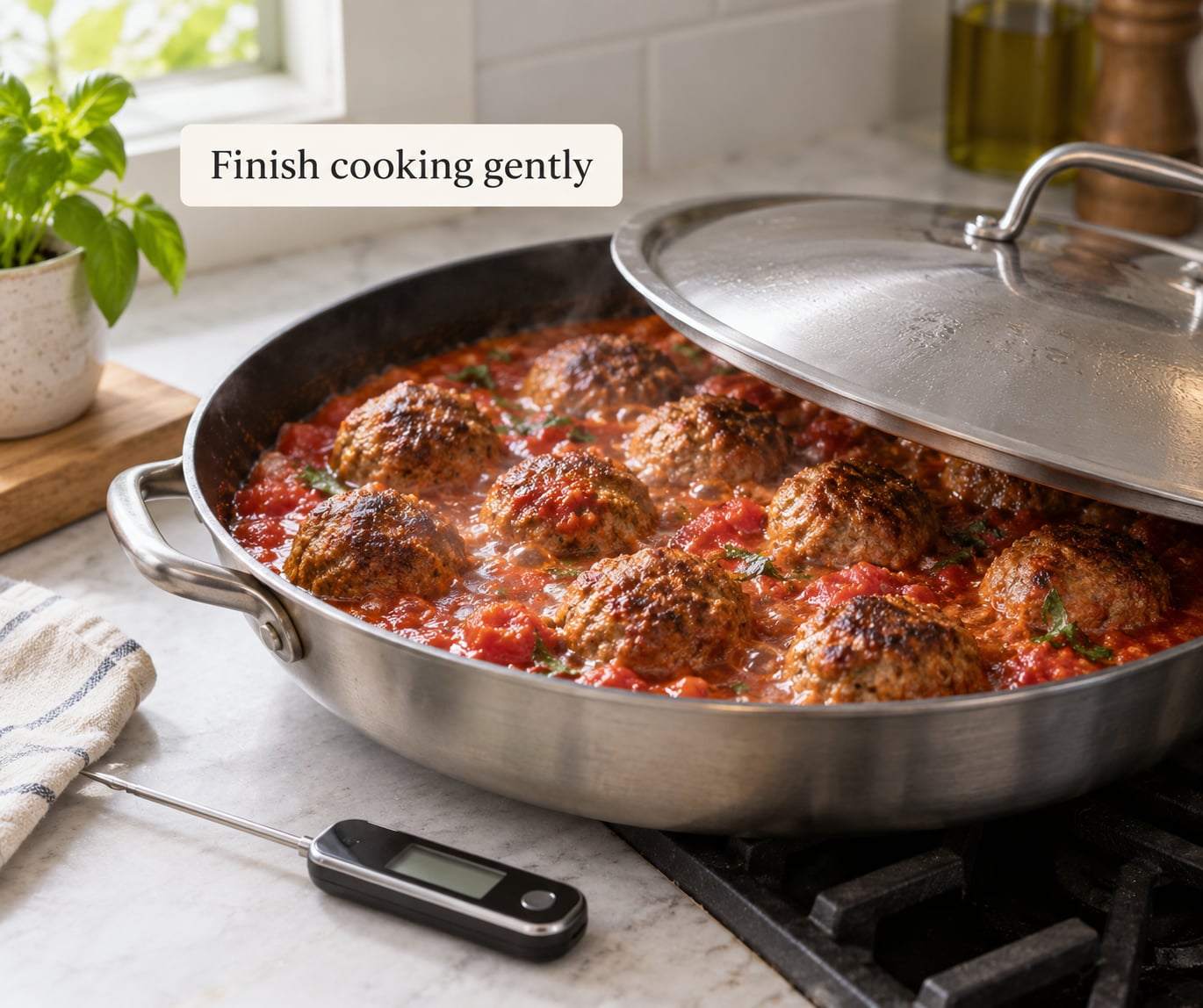
Add sauce or broth until the meatballs are about halfway submerged, bring it to a bare simmer, cover, and cook at 25 to 35 minutes. Stir the pan once or twice so nothing sticks to the bottom, and keep the heat low enough that you see an occasional bubble rather than a rolling boil.
Check the center with a thermometer. Ground meat is safe and properly done at 160°F (71°C), and the USDA minimum for ground beef, pork, veal, and lamb is the same. Pull them at that mark and let them rest in the sauce for five minutes; the residual heat carries them the last few degrees while the juices redistribute.
Long cooking does not tenderize ground meat the way it does a tough cut of steak, because a grind contains very little connective tissue to convert. What it mostly does is squeeze out water. A slow simmer is useful for flavor and for softening the onion, not for turning rubbery meat into something succulent.
Common Mistakes
Almost every batch of disappointing meatballs has one of these causes.
Overmixing. The mixture was worked past the point where it came together. Combine the wet and dry ingredients first, add the meat, and use a fork or your fingertips for as few strokes as possible.
Lean meat. Ninety-twenty beef, chicken breast, and unblended turkey have too little fat to baste the inside. Move to 80/20 or blend lean meat 50/50 with pork.
Dry breadcrumbs. They absorb moisture from the meat and give it back to the pan. Soak bread in milk or broth for ten minutes and squeeze it before mixing.
Coarse onion. Big onion pieces interrupt the mixture and the ball splits when it hits the pan. Grate or pulse it until it is almost a paste.
Packing the balls tight. Rolling hard compresses the same protein structure you were trying to keep loose. Cup and roll instead.
Too much heat. A hard sear followed by a rolling boil burns the outside and drives moisture out of the center. Sear hot, then simmer low.
Crowding the pan. Meatballs touching each other steam instead of brown, and steam-cooked meatballs have no crust to hold them together. Use two pans.
Pulling them early. Pale meatballs taken out of the pan finish as rubbery, because carryover cooking is smaller than most people assume and the interior was still raw. Use the thermometer.
A few extras that cost nothing: ice milk or icy water in the panade makes the meat a little lighter, and a tablespoon of olive oil in the mix adds fat that helps if your meat is on the lean side. Freshly grated Parmesan melts into the ball and helps bind it, while pre-shredded bagged cheese does not bind worth much.
Frequently Asked Questions
What is the best meat for tender meatballs?
A beef, pork, and veal blend is the classic answer because veal is the tenderest and pork supplies fat. If you want to keep it simple, 80/20 ground beef works well on its own. Avoid anything leaner than 90/10, and blend turkey, chicken, or venison 50/50 with pork if you want to use those.
How do I keep meatballs from becoming tough?
Toughness almost always comes from overworking the meat and from using meat that is too lean. Mix the bread, egg, cheese, and seasonings together first, add the ground meat last, then combine only until no dry streaks remain. Choose meat around 15 to 20 percent fat and stop mixing well before the mixture looks uniform.
How long should I cook meatballs?
Browned meatballs simmered in sauce need 25 to 35 minutes at a bare simmer with the lid on. Baked at 425°F, they need about 18 to 20 minutes and can go straight to the table. Check the center with a thermometer rather than the clock: ground meat is done and safe at 160°F (71°C).
Should I add egg or breadcrumbs to meatballs?
Both help, though they do different jobs. Egg is the binder that holds everything together and adds moisture. Bread is the moisture reservoir, and it works far better soaked in milk or broth than added dry. Per pound of meat, use one egg and two soaked slices of white sandwich bread.
How do I keep meatballs tender when cooking them in sauce?
Add sauce until the meatballs are only halfway submerged, bring it to a bare simmer rather than a boil, cover, and cook 25 to 35 minutes. A gentle simmer lets heat move into the center without boiling the moisture out of the meat. Turn them once halfway through and pull them at 160°F (71°C).
Conclusion
Start with meat around 15 to 20 percent fat, add just enough soaked bread and egg to hold the mixture together, and mix only until it comes together. Then simmer the meatballs covered in sauce at a bare simmer until the center hits 160°F (71°C). Those four habits fix nearly every dry or bouncy batch, and the thermometer removes the guesswork.