To clean a coffee maker with vinegar, mix equal parts white distilled vinegar and water, pour it into the water reservoir, run a half brew cycle, let it sit for 30 to 60 minutes, then finish the cycle and rinse two or three times with fresh water. The whole job takes about an hour, most of it passive.
It’s the least pleasant kitchen chore there is, and the payoff is immediate. Coffee that tastes flat and a little sour usually means trapped oils and mineral scale, and both come out with an acid soak. You don’t need any special equipment, and the whole thing fits in the time it takes the machine to cool down anyway.
Table of Contents
- What You Need
- Step-by-Step: How to Clean a Coffee Maker With Vinegar
- Check Your Coffee Maker’s Instructions
- Unplug and Empty the Coffee Maker
- Mix the Vinegar Solution
- Run the Solution Through the Machine
- Scrub Removable Parts
- Rinse and Run Clean Water
- Make a Test Brew
- Common Mistakes to Avoid
- Is it safe to clean a coffee maker with vinegar?
- Frequently Asked Questions
- How much vinegar should I use in a coffee maker?
- Can I use apple cider vinegar to clean a coffee maker?
- Is it safe to clean a coffee maker with vinegar?
- How do I get a vinegar smell out of a coffee maker?
- How often should I clean my coffee maker with vinegar?
- Conclusion
What You Need
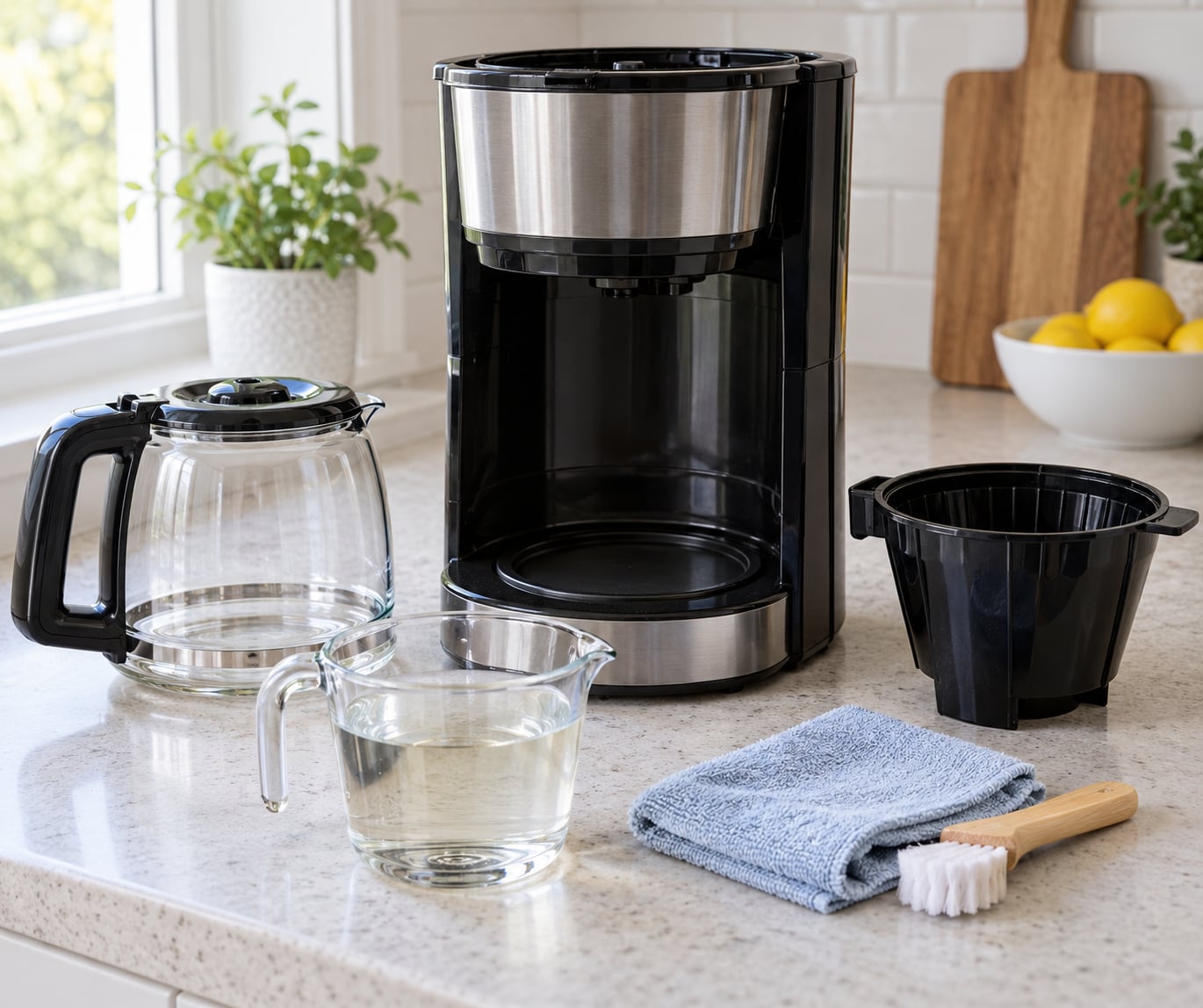
Cleaning a coffee maker with vinegar takes a short supply list, and most of it is already in your pantry.
- White distilled vinegar. Distilled matters here. Distilled water is filtered, so the vinegar itself carries almost no mineral grit that could settle in the reservoir and add new scale.
- Clean water. Enough to fill the reservoir to the level your machine needs for one brew cycle.
- A measuring cup or spray bottle. The cup matters for accurate diluting; the spray bottle is handy for the parts you are not soaking.
- A soft cleaning cloth or paper towel.
- A small brush. An old toothbrush handles filter basket slots, spray holes and narrow openings that a cloth will miss.
- A screwdriver, but only if your manual specifically allows you to open the machine. Don’t remove panels on your own.
- The manual. This is the one item people skip and the one that matters most.
Skip metal scouring pads, which scratch glass carafes and plastic surfaces and leave nowhere for water to sit. Skip any detergent your manufacturer hasn’t approved, too. Dish soap belongs on the removable parts washed by hand, never in the machine’s water path, unless the manual says otherwise.
Step-by-Step: How to Clean a Coffee Maker With Vinegar
Read these in order the first time. Once you’ve done it twice, the order matters less than the rinse step at the end.
Check Your Coffee Maker’s Instructions
Start by finding the model number, usually on a sticker underneath or behind the machine, and looking up its cleaning section. Several manufacturers, including KitchenAid and Mr. Coffee, publish descaling guidance that specifies the ratio, the soak time and the number of rinse cycles for their own machines, and those instructions beat anything you’ll read here.
Two things to look for. Some brands explicitly say not to use vinegar, usually because the machine has an aluminum boiler or sealed heating system. Others ship a specific cleaning cycle that does the measuring for you. A few require you to run the solution twice rather than once.
Also check which materials are involved. This method is intended for removable, non-aluminum internal parts, glass or plastic carafes and the water path. It does not apply to powered components, sealed heating systems or anything electrical that stays in place.
Unplug and Empty the Coffee Maker
Unplug the machine and let it cool completely. Pour out any water left in the reservoir and the carafe, and empty the drip tray.
Take out the filter basket, the grounds or used pod, and the carafe lid. Wipe out loose grounds from the basket with a dry paper towel, then check the spout and the underside of the lid, where oils collect. Note which pieces are marked dishwasher safe and which are only hand wash.
Keep water away from the controls and the base. The electrical base of most machines is not meant to be washed, and even a small amount of water around the cord or switch can cause problems later.
Mix the Vinegar Solution
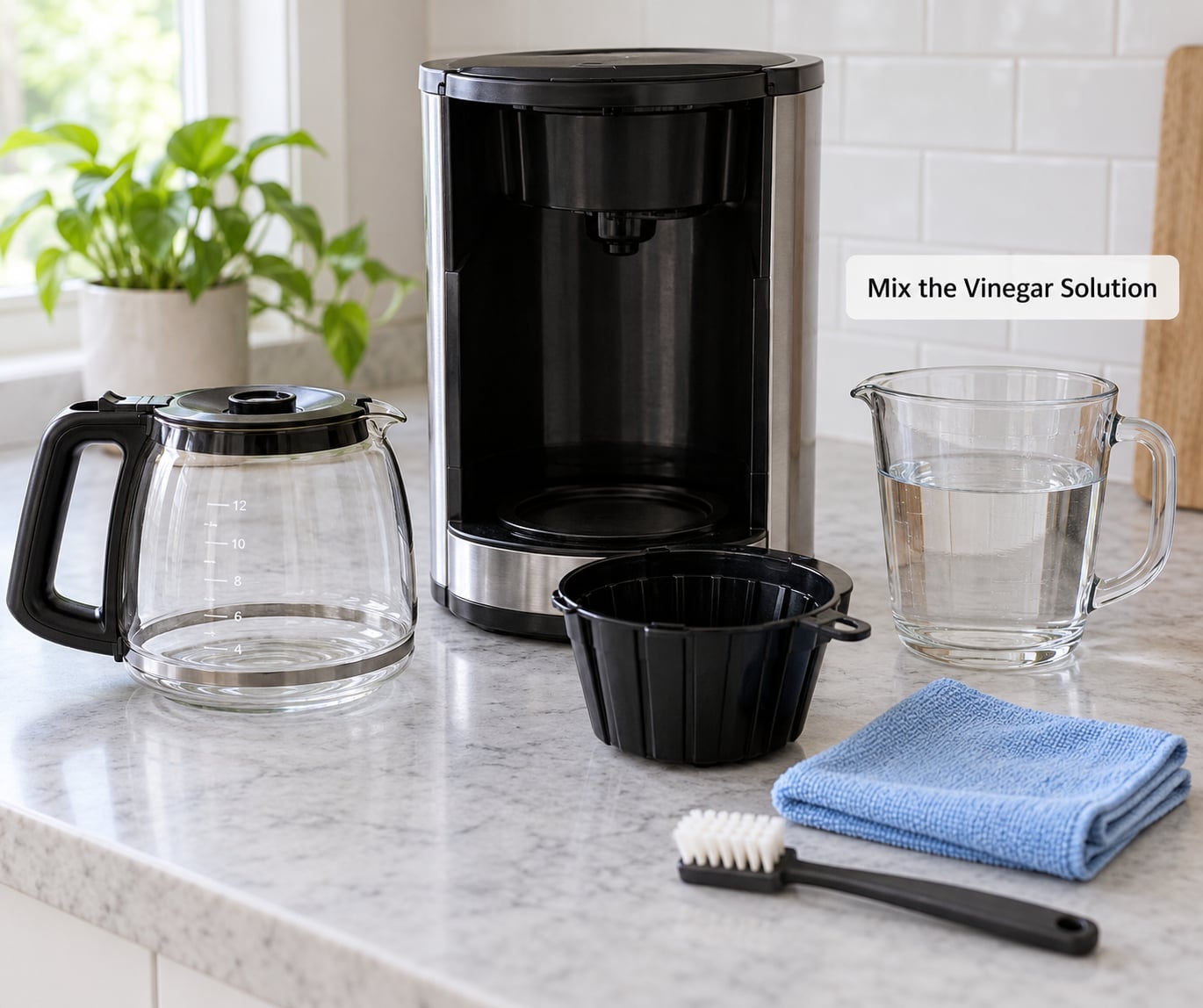
The baseline ratio is equal parts white distilled vinegar and water, which for most household drip machines means one cup of vinegar and one cup of water. Fill the reservoir only to the line marked for a single brew cycle, and adjust that volume up or down to match the size of your machine, but stay inside whatever range your manual gives you.
Mix the solution in a separate measuring cup first, then pour it in. Mixing it separately means you’re accurate rather than guessing by eye, and it avoids a layer of undiluted vinegar sitting on the bottom of the reservoir. Don’t overfill. A machine that overflows during the cycle spills diluted acid across your counter.
You will see the solution reach the brew path within the first few seconds of the cycle, running from the reservoir through the heating element and out of the spray head or shower screen. That color change in the carafe is your confirmation that the acid is actually traveling where you need it to go.
Run the Solution Through the Machine
Set the machine to brew and let it run until the reservoir empties, usually about halfway through a normal cycle. Then stop it and leave the machine alone for 30 to 60 minutes. That soak is where the acid does the work on scale, and cutting it short is the most common reason people need a second cleaning a month later.
If your machine has no rinse cycle, run a plain water cycle to flush the concentrate out of the hot water line before the soak, so the acid isn’t sitting in a pipe doubled in strength. If the manual tells you to fill the carafe and soak the parts instead of running the machine, follow the manual, and soak the carafe separately in warm soapy water.
An overnight soak is not better. Leaving undiluted or half-strength vinegar in a machine for twelve hours risks etching metal components and sealing in an odor that takes many cycles to clear. Thirty to sixty minutes does the same job without the risk.
Scrub Removable Parts
While the machine soaks, wash the carafe, the lid, the filter basket and any other part the manual lists as washable. Use warm water, a drop of unscented dish soap and a soft brush or non-scratch pad.
Pay attention to edges. Coffee oils hide in the seam where the basket meets its handle, in the slots of the basket, around the carafe spout and under the lid’s gasket. Those are the places people wipe once, miss, and then find the oily film back on a few weeks later.
Never submerge the machine’s base or any part with a heating element in it, unless the manual explicitly allows immersion. Rinse everything thoroughly and let the parts air dry rather than towel-drying them, since air drying leaves less trapped moisture behind the gaskets.
Rinse and Run Clean Water
This is the step that people get wrong, and it’s the step that decides whether the machine smells clean. Every rinse cycle carries a little more of the acid out, so keep going until the water coming out runs clear and smells neutral rather than stopping at the first cycle that looks clear.
For a household drip machine, two to three full fresh water cycles is a reasonable minimum. Refill the reservoir with plain water, run a full brew cycle with no coffee in it, and discard what comes out. Repeat. If you can still catch any vinegar scent in the steam, keep going.
Then reassemble everything. The carafe, the basket and the lid all have to seat correctly or the next brew will overflow or spray, and that looks like a machine fault when it isn’t one.
Make a Test Brew
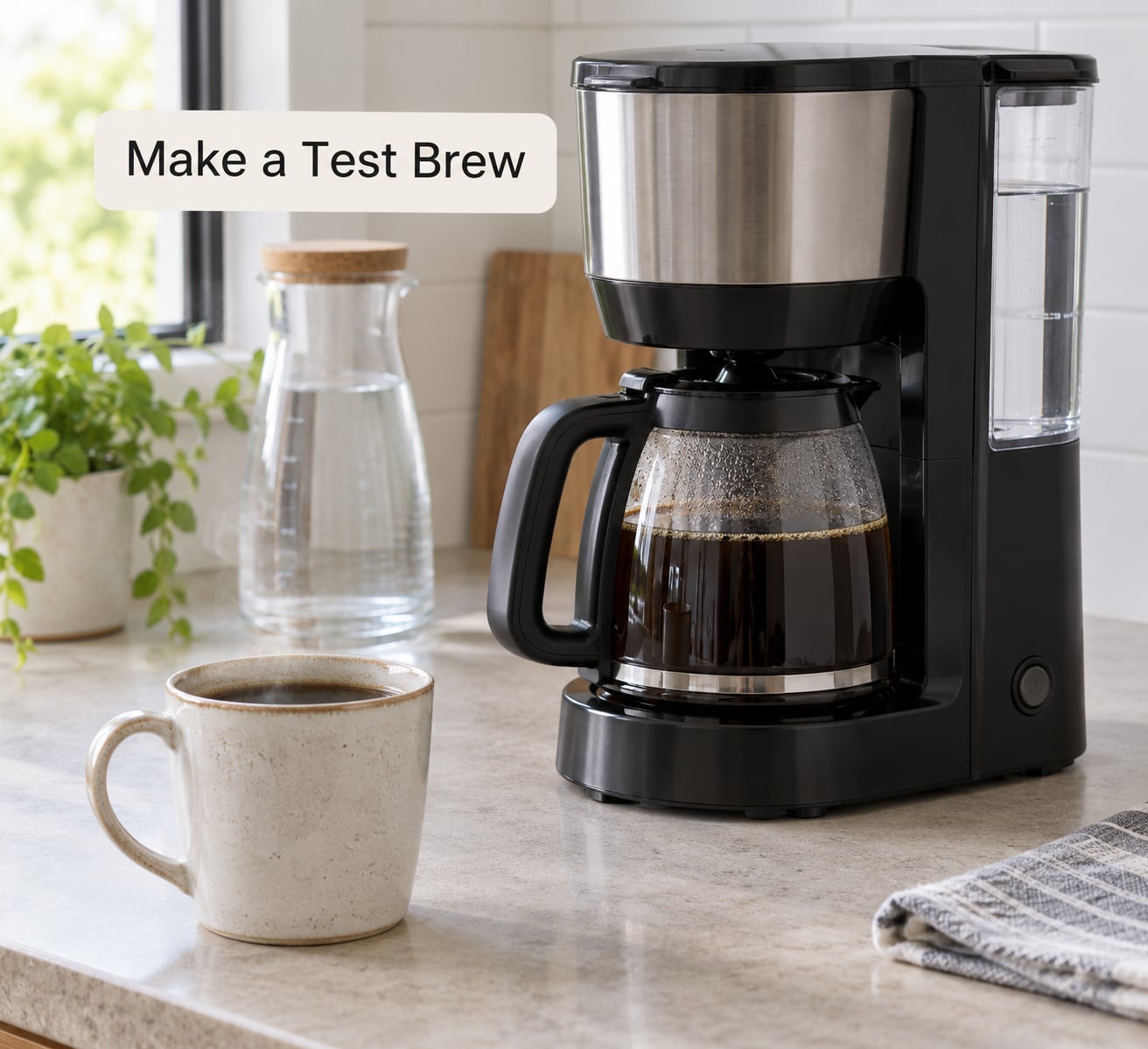
Brew a full pot of fresh coffee with fresh water and taste it before you go back to normal. You’re looking for four things: no vinegar smell in the steam, no sour or sharp edge in the taste, no leaking at the reservoir or carafe seal, and a brew speed that feels like it always has.
If the coffee still tastes of vinegar, you need more rinse cycles, not more scrubbing. If the machine now brews slowly or spits water, that usually means scale is still blocking the water line rather than a part you left loose.
A burnt smell on the first brew after a dormant period is a separate thing. A machine that has been in storage for a year or more should get this full clean plus a couple of extra plain water cycles before anyone trusts its coffee, because old water sits in the lines and picks up whatever smells are in the cabinet.
Common Mistakes to Avoid
Most failed vinegar cleanings come down to one of a handful of habits, and each has a simple fix.
Skipping the rinse. The clean worked; the taste didn’t. Two or three full cycles of plain water, until the output smells neutral, is not optional.
Using too little vinegar. A few splashes won’t touch limescale. Use the equal-parts baseline for a household machine unless your manual says otherwise.
Leaving undiluted vinegar to sit overnight. Long dwell time on strong acid can etch metal parts and drive the odor deeper into seals. Thirty to sixty minutes with a diluted solution is the safe version.
Scrubbing parts that stay in place. A soft brush on a removable basket is helpful. A scouring pad or a screwdriver on a fixed component is how people damage housings and void warranties.
Mixing vinegar with detergent or bleach. Never. Vinegar and bleach produce chlorine gas, which is genuinely dangerous. Wash parts with soap by hand first, rinse them well, and only then descale the water path with acid.
Ignoring the carafe. A clean machine can still pour from a carafe with a film of old oils in it, and the drink will taste stale no matter how well you rinsed.
Believing the descale light. On many machines that light counts brew cycles rather than sensing minerals, so it switches on at a fixed interval whether or not there’s scale. Use brewing time and taste as your real signals. If coffee takes noticeably longer than it used to, or water is left sitting in the tank, clean it.
Is it safe to clean a coffee maker with vinegar?
For a standard drip machine with a plastic or stainless water path, yes, diluted vinegar is a safe and effective way to descale. The caution is about material and concentration rather than about vinegar itself.
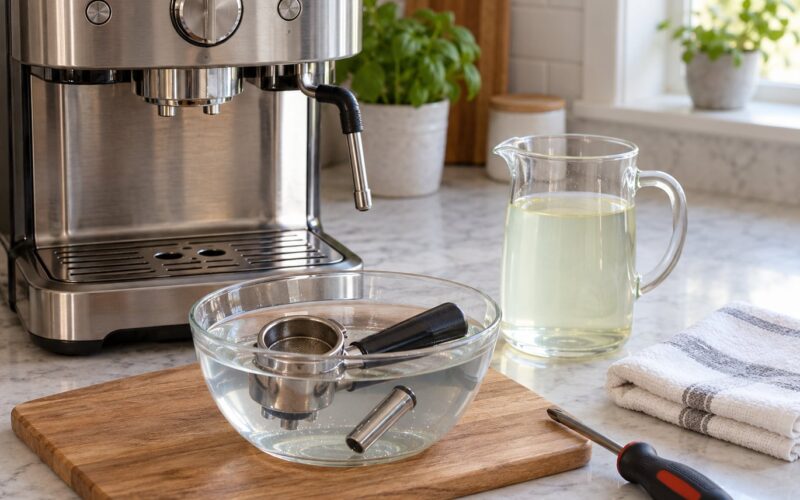
Espresso machines are the exception people argue about online, and the concern is real. Persistent warnings on coffee enthusiast forums describe vinegar as too aggressive for aluminum boilers, because acetic acid attacks the metal and can pit it over repeated full-strength cycles. Citric acid is the more common choice there, and a lot of owners will not run vinegar through a machine they care about keeping for years. If you own an espresso machine, use the descaler your manufacturer recommends, or citric acid, rather than vinegar.
For single-serve machines, vinegar is generally fine but usually used full strength with a long soak rather than diluted, and the machine needs many rinse cycles afterwards. Follow that machine’s manual, and expect to run extra water through it.
Frequently Asked Questions
How much vinegar should I use in a coffee maker?
For most household drip machines, mix equal parts white distilled vinegar and water, which is usually one cup of each. Fill the reservoir only to the level your machine needs for a single brew cycle rather than to the top, and adjust the volume to fit a larger or smaller machine. Stay within the ratio your manual specifies, and never pour straight undiluted vinegar into a machine unless that manual tells you to.
Can I use apple cider vinegar to clean a coffee maker?
You can, but white distilled vinegar is the better choice. Apple cider vinegar carries color and sugars that can leave a faint film and a slightly sour aftertaste in the reservoir, and it takes more rinsing to clear. It costs more for the same acidity, and the odor is heavier. If apple cider vinegar is all you have, use the same dilution and run at least two extra fresh water cycles afterwards.
Is it safe to clean a coffee maker with vinegar?
For a standard drip machine with a plastic or stainless water path, a diluted white vinegar solution is safe and effective. The caution is about material and strength: avoid vinegar on espresso machines with aluminum boilers, where acetic acid can pit the metal over repeated full-strength cycles, and use the descaler the manufacturer recommends instead. Never mix vinegar with bleach or detergent, and never use undiluted vinegar for an overnight soak.
How do I get a vinegar smell out of a coffee maker?
Run more fresh water cycles, one after another, until the output smells neutral. Each cycle carries a little more of the acid out of the reservoir, water lines and carafe. A tablespoon of baking soda in a full reservoir, left to sit for an hour, absorbs lingering odor, and coffee drinkers on forums use it as a second step. Remember to rinse the carafe separately, because a machine can smell clean and still pour from a smelly pot.
How often should I clean my coffee maker with vinegar?
Descale a typical drip machine every two to three months, and descale sooner if brewing has slowed down, water is left sitting in the reservoir, or your coffee tastes sour. Wash the carafe, lid and filter basket in warm soapy water once a week, and do a quick wipe-down after every use. In a hard-water area, or if you always use unfiltered tap water, move the vinegar clean to once a month.
Conclusion
Use your manual’s approved ratio of white distilled vinegar and water, clean the removable brewing path rather than scrubbing fixed parts, and rinse with several batches of plain water until no vinegar odor remains at all. Do it every two to three months, and your coffee will taste like it did the day you unboxed the machine.