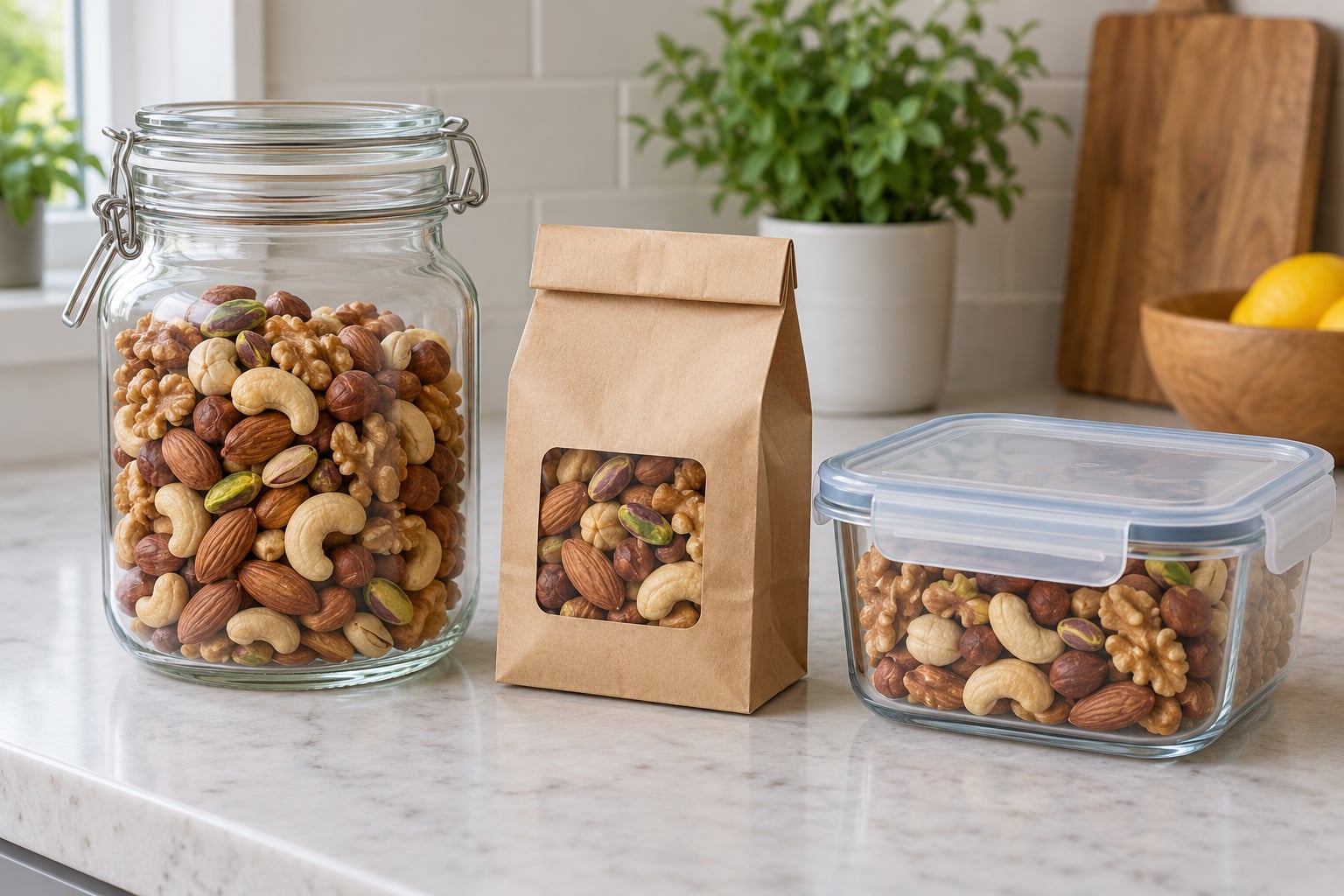
To store nuts so they stay fresh, seal them airtight, keep them cold, and keep them away from light and moisture. A pantry jar in a cool, dark cupboard works for almonds, cashews and pistachios; walnuts, pecans and pine nuts belong in the refrigerator or freezer. Frozen nuts stay good for a year or more.
Most people lose nuts to one of two things: an open bag on the counter that gets clipped shut but never truly sealed, or a jar living above the stove where heat and steam reach it daily. Neither is a container failure. They are placement failures.
The whole method takes about five minutes per bag. Cool the nuts, choose the container, label the date, and pick the storage location based on how quickly you will actually eat them. The rest of this guide covers each step, plus what to do when a batch already smells off.
Table of Contents
- What You Need
- Step-by-Step
- Step 1: Choose the Best Storage Method for the Nut
- Step 2: Cool Nuts Completely Before Sealing Them
- Step 3: Use Airtight Containers and Label the Date
- Step 4: Store Nuts in the Right Conditions
- Step 5: Refresh Stored Nuts and Replace Them Safely
- Common Mistakes
- Frequently Asked Questions
- Is it better to store nuts in glass or plastic?
- What is the best container to store nuts in to keep them fresh?
- Should I keep my nuts in the refrigerator?
- How long will nuts last if vacuum sealed?
- What nuts have the longest shelf life?
- Can you eat rancid nuts, and what do you do with a bad batch?
- Conclusion
What You Need
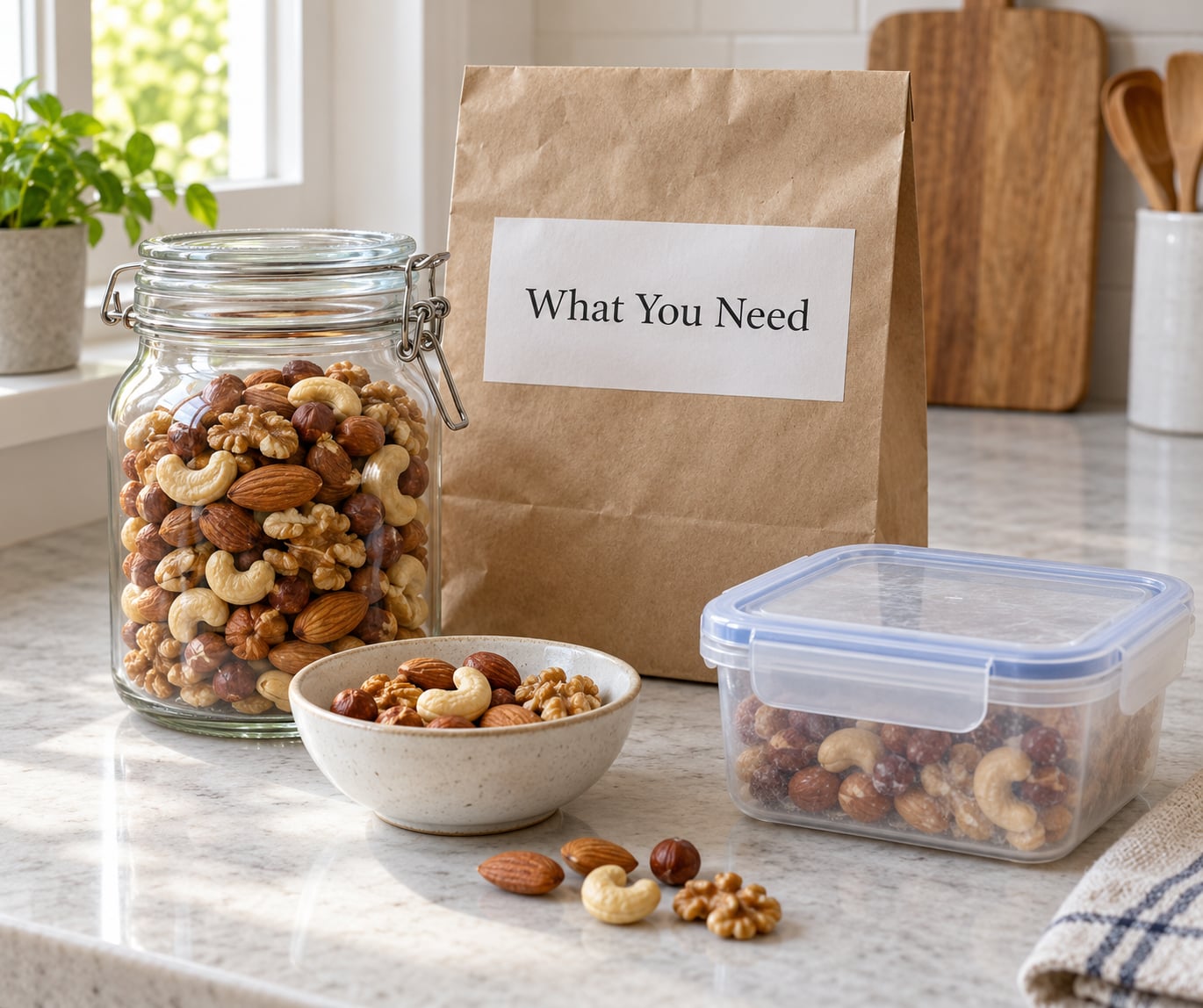
You need somewhere airtight, somewhere dark, and a way to remember when you filled it. That is the entire kit.
- Airtight glass jar with a gasket lid. Mason jars and clamp-lid jars both work. The gasket matters more than the glass.
- Heavy-duty resealable freezer bags for bulk bags, or small freezer containers if you prefer rigid.
- Label tape or masking tape plus a pen for the nut type and the date you stored it.
- Airtight container, or the original bag. The factory bag is often nitrogen-flushed, which buys you time, but it is not airtight once opened.
- Fridge and freezer space, optional but recommended if you buy in bulk or bake weekly.
Nothing here requires buying equipment. A clip-top jar, a roll of tape and a working freezer drawer will carry you through years of nut storage. Buy a vacuum sealer only if you already own one and plan to freeze large quantities.
Step-by-Step
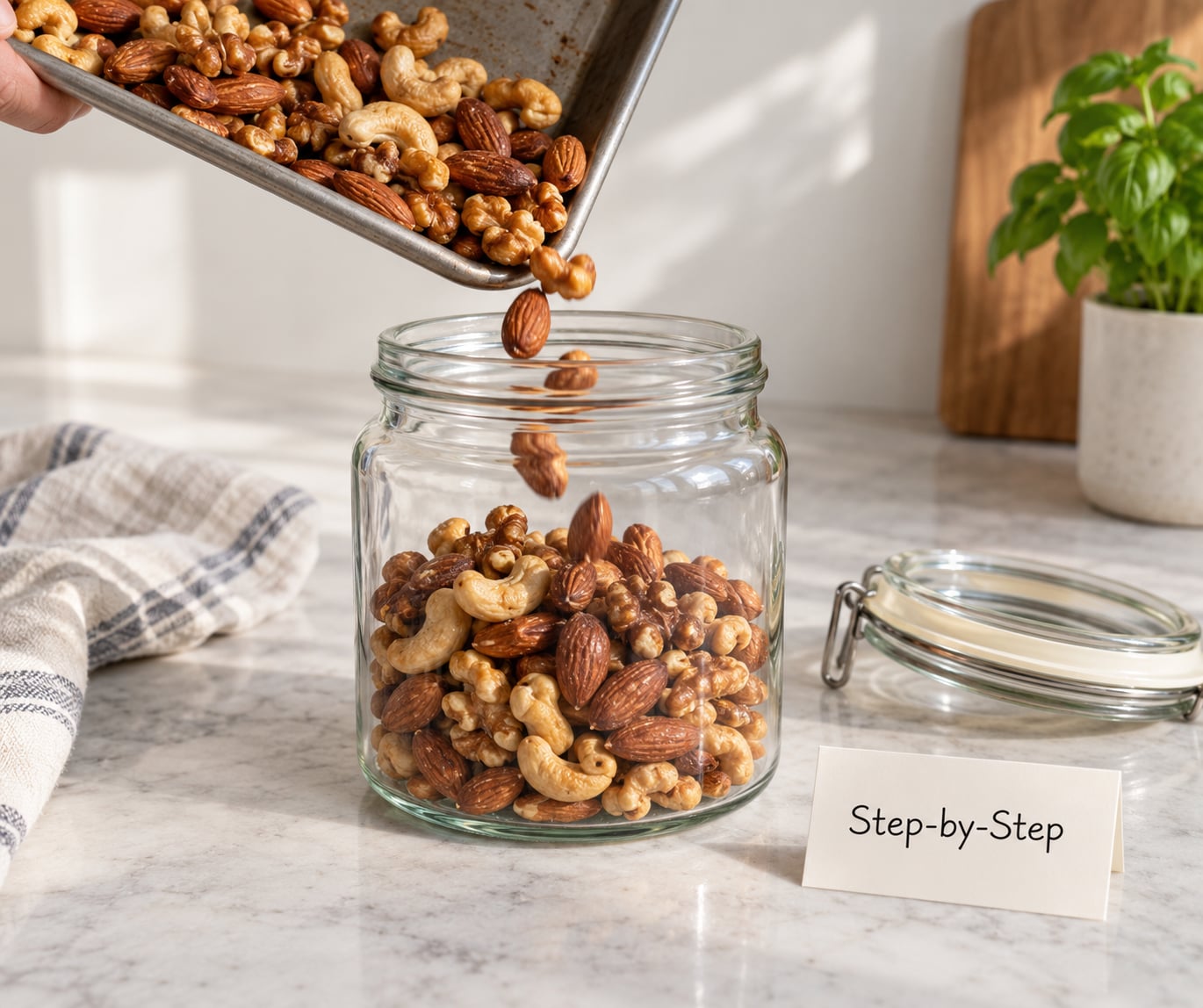
Step 1: Choose the Best Storage Method for the Nut
Nuts fall into two groups, and the split explains almost everything. Walnuts, pine nuts, pecans and macadamias are high in polyunsaturated fat, which breaks down faster because it has many double bonds that oxygen attacks. Almonds, cashews and pistachios are mostly monounsaturated fat, which holds up much better at room temperature.
Start with the table, then pick the row that matches what you bought.
| Nut | Pantry (cool, dark) | Refrigerator | Freezer |
|---|---|---|---|
| Walnuts | 2 to 4 weeks | 4 to 6 months | 1 to 2 years |
| Pine nuts | 1 to 2 weeks | 3 to 4 months | 1 year or more |
| Pecans | 1 to 2 months | 4 to 6 months | 1 to 2 years |
| Hazelnuts | 2 to 3 months | 5 to 6 months | 1 year or more |
| Almonds | 4 to 6 months | 8 to 12 months | 1 to 2 years |
| Cashews | 4 to 6 months | 8 to 12 months | 1 to 2 years |
| Pistachios | 4 to 6 months | 8 to 12 months | 1 year or more |
| Brazil nuts | 1 to 2 months | 3 to 4 months | 1 year or more |
| Macadamias | 3 to 5 months | 6 to 9 months | 1 to 2 years |
| Peanuts | 1 to 2 months | 4 to 6 months | 1 year or more |
How you store them on day one matters too. Nuts still in their shell keep longest because the shell is a natural barrier. Once you shell, chop or grind them, the surface area jumps and oxidation speeds up. A bag of whole walnuts in the fridge beats chopped walnuts on the counter every time.
Step 2: Cool Nuts Completely Before Sealing Them
Warm nuts sealed into a jar make their own condensation. Moisture trapped against the nut surface invites mould, and mould is the one failure you cannot sniff your way out of later.
So cool them first. If you roasted or toasted them, spread them on a tray and let them reach room temperature, usually 20 to 30 minutes. If they came straight from the fridge, let them sit out briefly before sealing so condensation forms on the outside of the jar rather than inside it.
You will know it worked when the jar is cool to the touch and the nuts feel dry and firm, not tacky or soft.
Step 3: Use Airtight Containers and Label the Date
Glass beats plastic for long-term storage because plastic lets a slow trickle of oxygen through, and nuts are exactly the food that suffers from it. For the freezer, a resealable freezer bag with the air pressed out is genuinely fine, and it stacks better than jars.
Portion for how you actually cook. If you bake twice a month, a freezer bag holding six individual servings beats one large tub, because every open container is an oxygen leak. Home bakers who freeze nuts report exactly this: serving-sized bags, pulled out one at a time.
Then write on the container. Nut type, storage date, and whether it is roasted or raw. That label is what lets you rotate oldest first instead of rediscovering an old bag and hoping it is still good.
Step 4: Store Nuts in the Right Conditions
The pantry works only if the cupboard is genuinely cool, genuinely dark and away from moisture sources. The worst spot in most kitchens is above the stove, and the second worst is a windowsill. Heat and light are the two things you can never take back once the oil has oxidized.
In the refrigerator, airtight sealing matters more than usual. Fridges often sit around 30 to 50 percent relative humidity, and shelled nuts absorb that moisture through their porous surfaces. A loose, half-closed bag in the fridge will end up soft and dull. A gasketed jar will not.
For the freezer, push out the air with your hands before sealing, flatten the bag, and label it. Frozen nuts go straight from freezer to baking tray without thawing, which saves a step and keeps their texture tighter.
Step 5: Refresh Stored Nuts and Replace Them Safely
Check your stash once a month. Open the jar, take one nut, and smell it before you taste it. Fresh nuts smell sweet and nutty. Rancid nuts smell flat, then sharp, then unmistakably like old paint or stale crayons.
If the smell is there, do not keep trying to bake or roast your way through the batch. Toss it.
- Smell test first. This is the decisive check, and it needs no equipment.
- Taste one nut only to confirm, never as a challenge.
- Bin the whole batch, wash the jar with hot soapy water, and dry it fully before reuse.
Refreshing does not really exist. You cannot reverse oxidation. Toasting a stale batch hides the flavor for a few minutes in a cookie and not one second longer. Replacement is the fix.
Common Mistakes
- The jar above the stove. Move it to the highest cupboard away from the hob, or into the fridge.
- A sunny windowsill. Light triggers the same reaction as heat. Move the jar inside.
- Clipped bags. A clip closes a bag but does not create a seal. Decant into a gasketed jar or double-bag in the freezer.
- One big bulk tub. Every scoop exposes the rest. Portion into servings.
- An unlabelled shelf. Without dates you cannot rotate, so the oldest bag gets used last and quietly goes rancid.
- A warm garage or car. If a bag has been through a hot car, treat it as suspect rather than moving it back indoors.
- Refrigerating nut butters in a warm cupboard. Butters and pastes need the fridge from the moment they are opened, every time.
Frequently Asked Questions
Is it better to store nuts in glass or plastic?
Glass, for anything staying more than a few weeks. Plastic containers and bags let a slow amount of oxygen pass through, and nut oils are unusually sensitive to it. For the freezer or for short-term pantry use, a heavy-duty resealable bag pressed free of air works fine. The deciding factor is the seal, not the material: a gasketed glass jar beats a thin plastic tub every time.
What is the best container to store nuts in to keep them fresh?
An airtight glass jar with a silicone-gasketed clamp lid, kept in the fridge or a dark cupboard. It blocks oxygen and light, and it is easy to date with tape. If you prefer plastic, choose a rigid tub with a rubber seal rather than a thin tub, and skip clear plastic for anything long-term. Mason jars, clip-lid jars and wide-mouth gasketed jars all work well.
Should I keep my nuts in the refrigerator?
Yes, for walnuts, pine nuts, pecans and anything you will not finish within a month. They are high in polyunsaturated fat, which oxidizes quickly at room temperature. The refrigerator roughly quadruples their life. Almonds, cashews and pistachios are more stable and tolerate a cool, dark pantry for four to six months if sealed airtight.
How long will nuts last if vacuum sealed?
Vacuum sealing plus freezing gets you roughly one to two years, which is what long-term food storage users report in practice. Vacuum sealing at room temperature buys less than people expect, because it removes air but does not remove heat or light, and oxidation resumes as soon as the seal is broken. Freezing does most of the work; the vacuum step is a bonus.
What nuts have the longest shelf life?
Macadamias, almonds, cashews and pistachios hold up best because they are mostly monounsaturated fat. In an airtight jar in a cool, dark cupboard, almonds and cashews commonly last four to six months, and macadamias a bit longer. In-shell nuts outlast shelled ones for the same reason. Frozen, all of them will keep a year or more.
Can you eat rancid nuts, and what do you do with a bad batch?
Rancid nuts are not a food-safety emergency like mould, but they are also not worth eating. Oxidation produces the compounds that make the smell and taste offensive, and the same process reduces the unsaturated fat and antioxidant benefit you were eating them for. Smell one nut, confirm if needed, then bin the batch and wash the jar before reusing it.
Conclusion
Start with the next bag you open. Let the nuts cool and dry completely, seal them airtight, write the date on the lid, and put them where the label says they should be: the pantry for almonds, cashews and pistachios you will eat within a few months, the refrigerator for walnuts, pecans and pine nuts, and the freezer for anything bought in bulk.
Two minutes now saves a bag in the bin later.