If plain sparkling water tastes flat, sharp or just boring, the fix is usually not a better brand. Chill it harder, pour it into a narrower glass, and add something aromatic like citrus or mint. Most people can fix an entire glass in under two minutes with what is already in the fridge.
Quick answer: add fresh fruit or a strip of citrus peel, dilute with real juice at a 1:1 or 1:3 ratio, drop in a small amount of natural sweetener or bitters, and serve it ice-cold in a narrow glass. Cold water and a small serving are what make the difference between seltzer that tastes crisp and seltzer that tastes like warm soda.
- Start with water straight from the coldest part of the fridge, around 35 to 40°F.
- Pour it into a narrow or stemmed glass so the aroma stays concentrated.
- Add large solid ice cubes instead of a cup of small ones.
- Use citrus peel or slices for acidity and aroma without syrup.
- Lightly muddle mint or basil, then add the water last.
- Dilute with unsweetened juice at 1 part juice to 3 parts seltzer, or 1:1 for a stronger drink.
- Adjust one flavor at a time so you can actually taste what changed.
The variables that move the needle most are temperature, glass shape and how much air the drink picks up while you pour. None of them require anything more exotic than a knife and a spoon.
Table of Contents
- What You Need
- Step-by-Step
- 1. Start With Very Cold Water
- 2. Choose the Right Glass
- 3. Add Ice Without Flattening the Drink
- 4. Use Citrus for a Brighter Flavor
- 5. Add Fresh Aromatics, Not Heavy Syrup
- 6. Pour Slowly and Preserve the Bubbles
- 7. Adjust One Flavor at a Time
- Common Mistakes
- Frequently Asked Questions
- What can I add to sparkling water to make it taste better?
- Why does sparkling water taste bitter or sharp to me?
- Why does sparkling water taste sour after it goes flat?
- How can I add flavor to sparkling water without sugar?
- What mixes well with sparkling water for mocktails?
- Is there a way to turn sparkling water back into still water?
What You Need
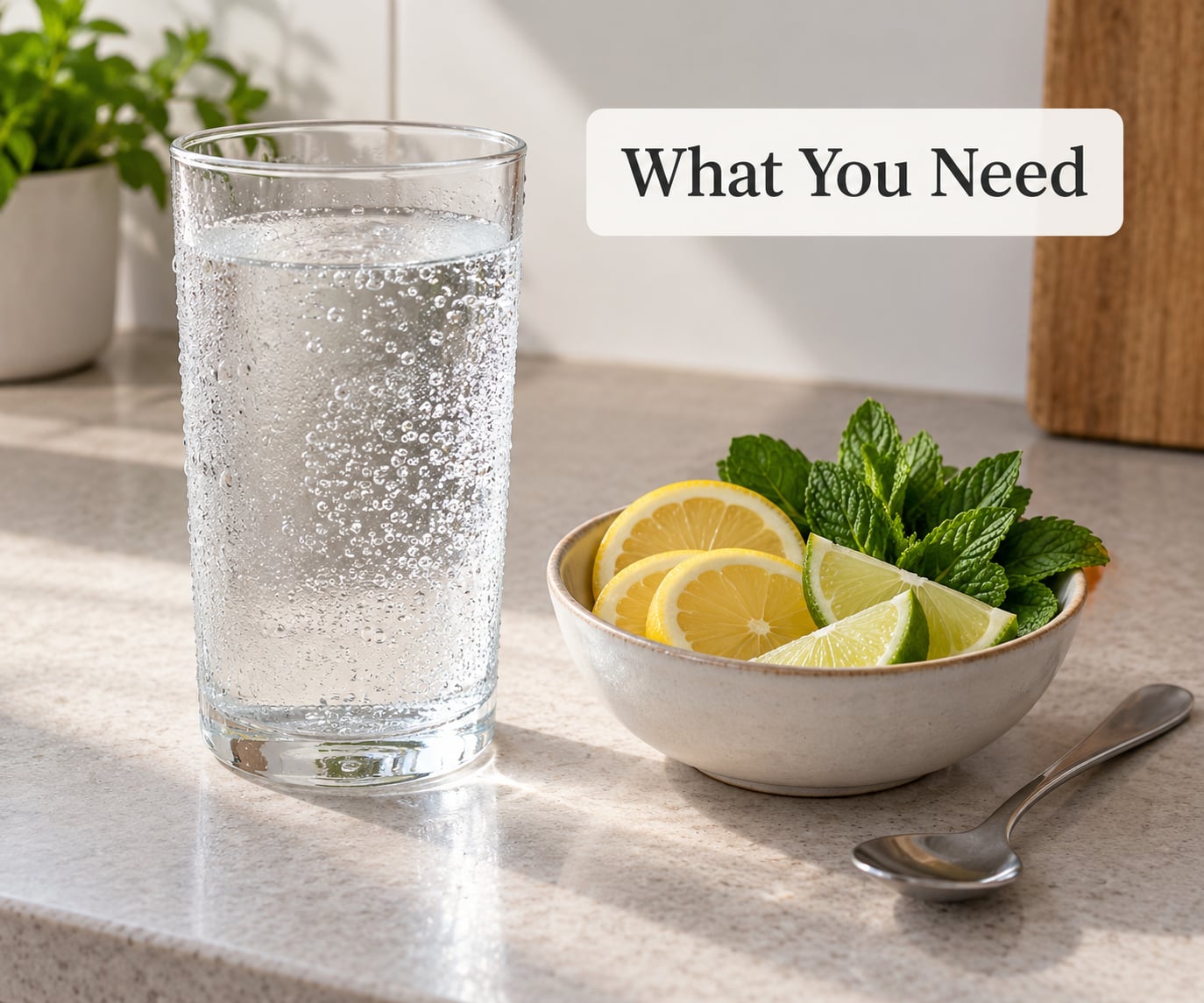
The ingredient list is short, which is the point. You want things that add aroma and acidity, not things that add sugar.
- Sparkling water: a chilled bottle or freshly carbonated water from a soda maker.
- A clean glass: a narrow tumbler, wine glass or flute works best. Skip wide coffee mugs.
- Ice: two or three large solid cubes, or one big block you can shave.
- Citrus: a lemon, lime, grapefruit or orange. Peel matters as much as the juice.
- Fresh aromatics: mint, basil, rosemary, cucumber, or a handful of berries.
- A spoon or muddler: a wooden spoon is enough for most jobs.
Optional extras, if you already have them: a dash of Angostura bitters, half a teaspoon of honey or maple syrup, or a spoonful of unsweetened fruit juice. None of these are required for a good glass.
Step-by-Step
How to make sparkling water taste better comes down to a sequence, not a single trick. Cold first, then glass, then ice, then flavoring, then the pour.
1. Start With Very Cold Water
Carbon dioxide holds on better in cold liquid, and cold liquid tastes less sharp to most people. That is why a chilled bottle feels crisp and one left on the counter for an hour feels harsh.
Chill the bottle in the fridge for at least a few hours, or stand it in ice water with salt for about 15 minutes if you are impatient. You want it noticeably cold to the touch before it ever meets the glass.
How to tell it worked: the first sip lands clean on the front of the tongue instead of stinging the back of your throat.
2. Choose the Right Glass
Shape changes how much aroma reaches your nose. A narrow glass concentrates the gases at the top of the drink, so you smell what you are tasting. A wide tumbler lets the carbonation escape into the room and the drink goes flat faster.
A wine glass or coupe is the best cheap upgrade for a single serving. A narrow highball is fine if that is all you have. Fill it no more than halfway if you want the bubbles to survive the whole drink.
3. Add Ice Without Flattening the Drink
Ice cools the drink, but melting ice dilutes it, and dilution makes sparkling water taste weaker and more sour at the same time. Small cubes melt fast and make it worse.
Use two or three large solid cubes, or a block you crack. Chilling the glass first, then adding the water, gives you the same effect with far less melt. If your ice is cloudy and half gone before you sit down, the cubes are too small.
4. Use Citrus for a Brighter Flavor
Citrus does two things at once: the juice adds acidity that balances carbonic acid, and the oils in the peel add aroma you would never get from the fruit alone.
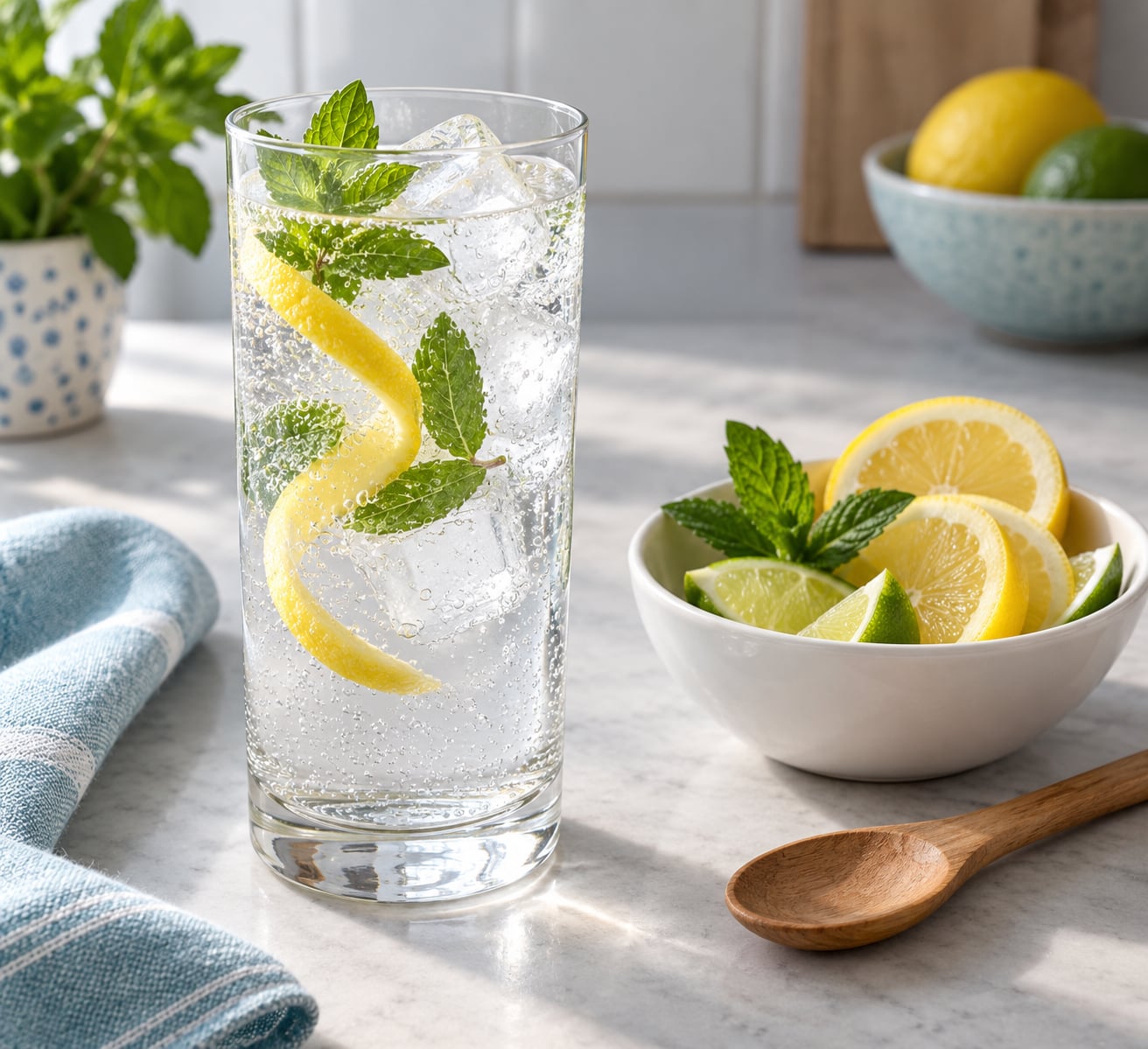
For a clean lemon-lime glass, twist one lemon peel over the surface to release the oils, drop it in, and squeeze in half a lime. Rub the rim with a cut lemon before pouring if you want the aroma right under your nose.
For grapefruit, peel a strip and drop it straight into the water, no squeezing. Grapefruit pith turns bitter fast if you crush it, so treat it gently.
5. Add Fresh Aromatics, Not Heavy Syrup
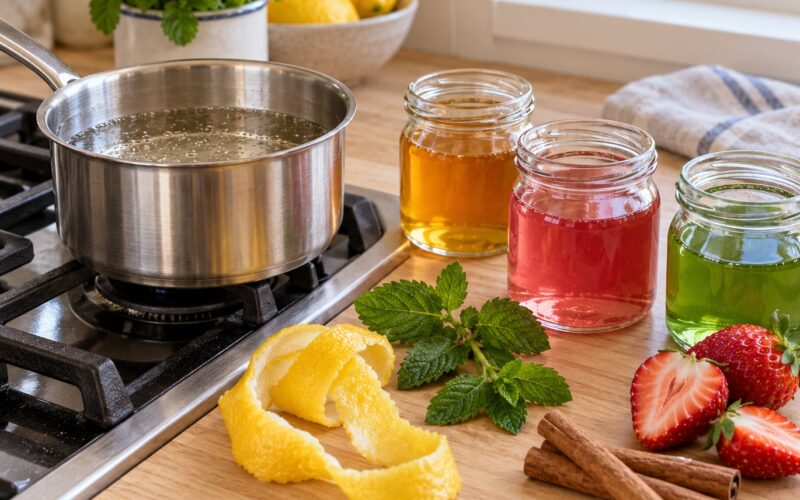
Most syrup mixes bury the water under sweetness, which is exactly the taste people are trying to escape when they switch to seltzer. Fresh herbs and fruit give you the same lift with none of it.
Put mint, basil or rosemary in the empty glass first and press it with a spoon five or six times. That releases the oils without tearing the leaves into pulp. Add the ice, then the water, then top with fruit slices.
Thin cucumber ribbons and a few crushed berries work the same way. Skip the herbs if they turn brown in the glass, and never boil them, since cooked herbs lose the aromatic oils entirely.
6. Pour Slowly and Preserve the Bubbles
Most flat seltzer is self-inflicted. Pouring hard from height, stirring with a spoon, or dropping ice in after the water all knock carbon dioxide out of solution faster than you think.
Tilt the chilled glass and pour the water slowly down the inside wall, so it runs down the side rather than churning the middle. Add garnishes and ice before the water, not after.
Use a bar spoon and stir once, gently, if you need to mix something in. A second hard stir is what flattens it.
7. Adjust One Flavor at a Time
When you add three things at once, you have no idea which one helped. Add one, taste, then add the next. This is the fastest way to learn how to make sparkling water taste better for your own palate rather than someone else’s.
Want more sweetness? Stir in half a teaspoon of honey or maple syrup first, then taste again. Want more fruit? Add a quarter cup of unsweetened juice at a 1:3 ratio, pour over ice, and stir once.
Want the bite dialed down rather than up? Pour less, add more still water, or let the glass sit for two minutes. Want more edge? Add a second splash of seltzer and a strip of lemon peel.
Common Mistakes
Almost every disappointing glass of sparkling water traces back to one of a handful of habits.
It tastes sour or bitter. Two causes: over-carbonation and warm liquid. Chill it more, use fewer button presses or less of the bottle, and add a little juice to fill the gap.
It tastes flat even though it was fizzy in the bottle. You poured too hard, stirred too much, or let it sit in an open glass. Pour down the side, keep the glass cold, and skip the stirring.
It tastes thin and watery. Too much ice and too little water. One big block or three large cubes in a smaller glass fixes it in one pour.
It tastes soapy or metallic. That usually comes from the water itself, not the carbonation. Brands with a heavier mineral profile can taste like this to people, and switching to a lighter mineral profile or filtering the water often solves it.
It tastes like diet soda. Flavored sparkling waters built on artificial sweeteners and flavor oils tend to land here. Making it yourself with fruit, juice and bitters avoids that entirely.
Two serving habits do most of the remaining work. Drink it within 15 minutes of pouring, and keep the glass out of direct sun or near a warm lamp. Heat is the quiet enemy of carbonation.
Frequently Asked Questions
What can I add to sparkling water to make it taste better?
The most reliable additions are fresh citrus peel or slices, muddled mint or basil, cucumber ribbons, fresh berries, and unsweetened fruit juice. Dilute juice at one part to three parts seltzer for a light result, or one to one for something closer to juice. A small amount of honey, maple syrup or bitters also rounds out the taste. Serve everything ice-cold for the best result.
Why does sparkling water taste bitter or sharp to me?
Most of the bitterness comes from carbonic acid, the weak acid that forms when dissolved carbon dioxide meets water. It trips the same receptors as other sour flavors. The intensity rises when the water is warm or heavily carbonated. Chill it thoroughly, pour less, and add a squeeze of lemon or lime to balance the tang.
Why does sparkling water taste sour after it goes flat?
Once the bubbles leave, the acidity does not leave with them. A small amount of carbonic acid remains in the liquid, so the drink tastes thin and sour rather than neutral. Adding cold sparkling water back into it, or diluting it with a little juice, is the quick fix. Fresh ice helps the temperature side of the problem.
How can I add flavor to sparkling water without sugar?
Use aromatic ingredients instead of sweeteners. Citrus peel, muddled herbs, cucumber, berries and a dash of Angostura bitters all add aroma and depth with no added sugar. Steep herbs in still water in the fridge overnight for a stronger infusion, then top with sparkling water at serving time so the carbonation stays lively.
What mixes well with sparkling water for mocktails?
Citrus, mint, basil, cucumber, berries and fresh ginger all hold up well in carbonated liquid. For a simple zero-proof drink, muddle berries or herbs in the glass, add a quarter cup of juice, fill the rest with ice and sparkling water, and pour in slowly down the side of the glass. Tonic water works the same way if you want a slightly bitter edge.
Is there a way to turn sparkling water back into still water?
There is no practical way to remove the carbonation once it has dissolved. You can dilute it with still water to soften the bite, or let the glass sit uncovered for several minutes until it goes flat. A small amount of carbonic acid remains even then, so the flavor never returns to plain water.
Start tonight with the simplest version: cold water, a lemon twist, a couple of mint leaves pressed in the glass, and a slow pour. Once that tastes good, add one flavor at a time until you find the combination you actually reach for again. That is how to make sparkling water taste better without buying anything new.