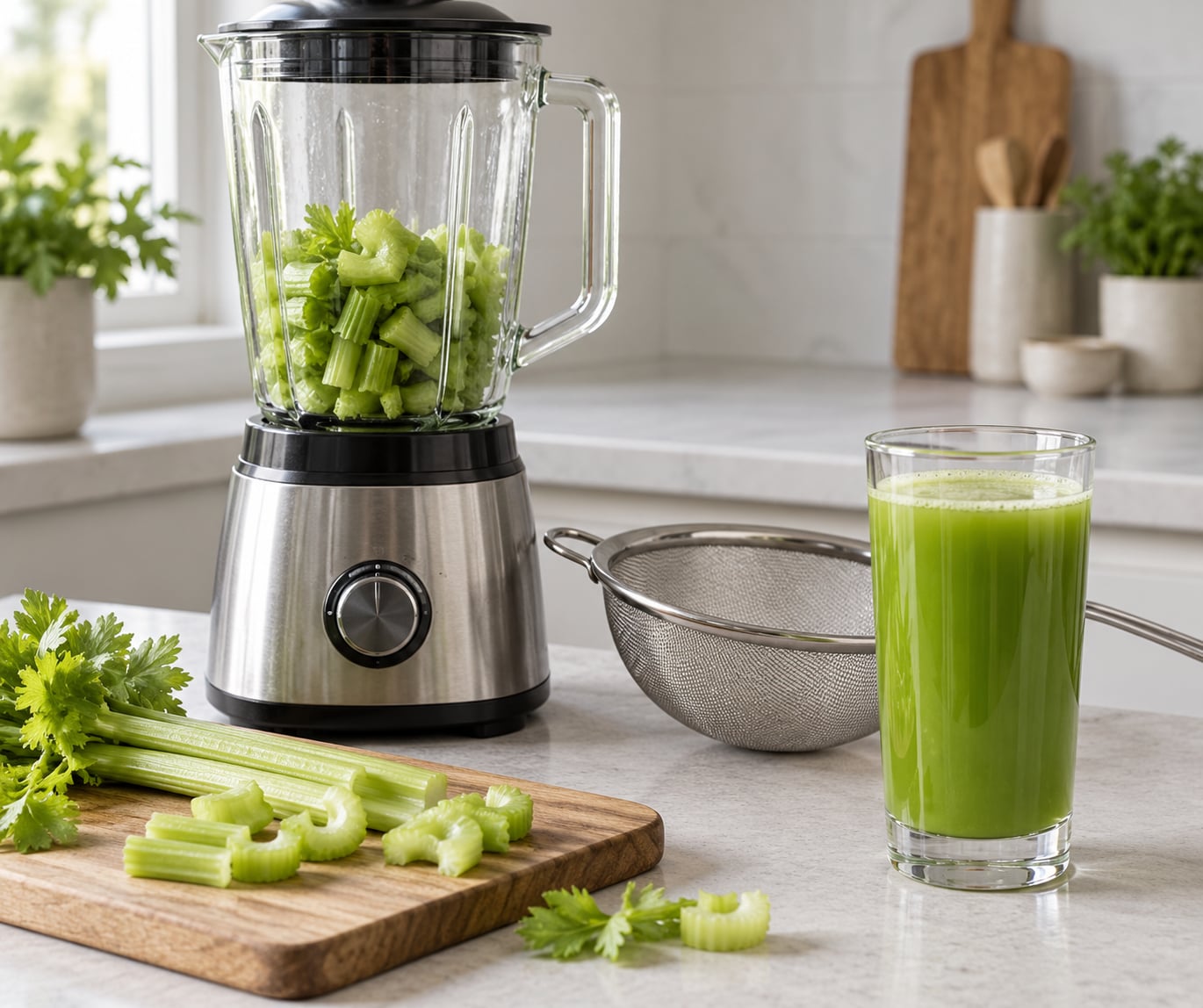
You can make fresh celery juice without a juicer by blending chopped celery with a little water and straining it through a fine-mesh strainer, nut milk bag, or cheesecloth. That is the whole trick. A blender breaks down celery perfectly well, because celery is soft and watery compared with carrots or beets, and the strainer does the job a juicer would normally do.
The honest catch is that strained blender juice is thinner and more work than juice from a masticating juicer, and it sits closer to a savory green smoothie in flavor than most people expect. Adjust the water, strain it or drink it unstrained, and it works well as a low-calorie morning drink. The whole process takes about ten minutes.
Table of Contents
- What You Need to Make Celery Juice Without a Juicer
- Step-by-Step
- 1. Wash and trim the celery
- 2. Cut the celery into blender-friendly pieces
- 3. Blend the celery until smooth
- 4. Strain out the pulp if you want a lighter texture
- 5. Adjust the flavor and consistency
- 6. Serve the celery juice immediately
- Common Mistakes
- Bitter juice means the leaves stayed on
- Watery juice means the water ratio was too high
- Pulpy, gritty juice means the straining was rushed
- Foam on top means you blended too long on high
- Low yield means nobody pressed the pulp
- Separated or discolored juice means it sat too long
- Frequently Asked Questions
- What is the best way to juice celery without a juicer?
- Can a blender make celery juice, or is it only a smoothie?
- Why does my celery juice look watery or separate?
- How long does homemade celery juice stay fresh?
- Can I make celery juice without drinking so much pulp?
- Is celery juice safe for everyone to drink regularly?
- Conclusion
What You Need to Make Celery Juice Without a Juicer
For one or two servings you need very little, and most of it you probably already own.
- Celery: 1 full bunch, usually 8 to 10 stalks with the leaves still attached. You will get roughly 2 cups of finished juice from one bunch.
- Filtered or cool water: 1/4 to 1/2 cup. Enough to get the blades moving, not enough to make it taste like a cucumber drink.
- Blender: A regular countertop blender is fine. A high-speed one gets you a smoother result in less time.
- Fine-mesh strainer: A small sieve, a nut milk bag, or a square of cheesecloth over a bowl.
- Silicone spatula or spoon: For pressing the pulp, which is the step people skip and then wonder why their yield is so low.
- Optional add-ins: Half a lemon or lime, a small knob of ginger, one apple, or a few cucumber slices.
A high-speed blender matters more than people expect. It liquefies the celery in 30 to 45 seconds instead of a couple of minutes, and the motor runs cooler, so the juice tastes fresher. A standard blender still works, but give it longer and expect a coarser texture. If yours has a soup or smoothie setting, use it, and if not, run short 10-second pulses a few times before settling into one long blend.
No blender at all? An immersion blender in a tall, narrow container breaks down small batches just as well, though it is a slower job. A food processor gets you partway there, but it leaves a coarser puree that strains awkwardly. And you can hand-crush chopped celery in a bowl with a little water, then press it through cheesecloth. Expect to spend twenty minutes and use a lot of elbow grease for one glass.
For straining, you have three good options and they are not equal. A nut milk bag holds back the most fiber and gives you the cleanest liquid, which is why juicing fans insist on one. A fine-mesh sieve is close behind and is the easiest thing to find. Cheesecloth works, but it lets grit through, so run the liquid through it twice.
| Straining tool | What you get | Watch out for |
|---|---|---|
| Nut milk bag | Cleanest, most juice, holds back the most fiber | Holds back liquid too, so press it well |
| Fine-mesh sieve | Good balance of clarity and effort | Clogs fast, so work in small ladlefuls |
| Cheesecloth | Works with no special equipment | Lets grit and hair-like fibers through |
Step-by-Step
1. Wash and trim the celery
Pull the leaves off the stalks and set them aside. The greens are edible, but they carry most of the bitterness, and blending them in turns a clean drink into a bitter one. Most people who try leaves-on celery decide quickly against it.
Break each stalk at the root end and discard anything soft, hollow, or discolored, then rinse the stalks under cool running water. Celery holds grit in the ribs and at the base, so turn each one as you rinse rather than just holding it under the tap.
2. Cut the celery into blender-friendly pieces
Cut the stalks crosswise into 1-inch pieces, or split long stalks lengthwise first. The base of a celery bunch is the toughest part, so peel the stringy outer skin from the bottom two stalks with a peeler or a paring knife if they feel fibrous.
Smaller pieces blend evenly and give you a smoother result than one big chunk that stalls the blades. If the stringy rib running down the center bothers you, slice it out with a sharp knife. You are done when the pieces are roughly the same size and the hard base is gone.
3. Blend the celery until smooth
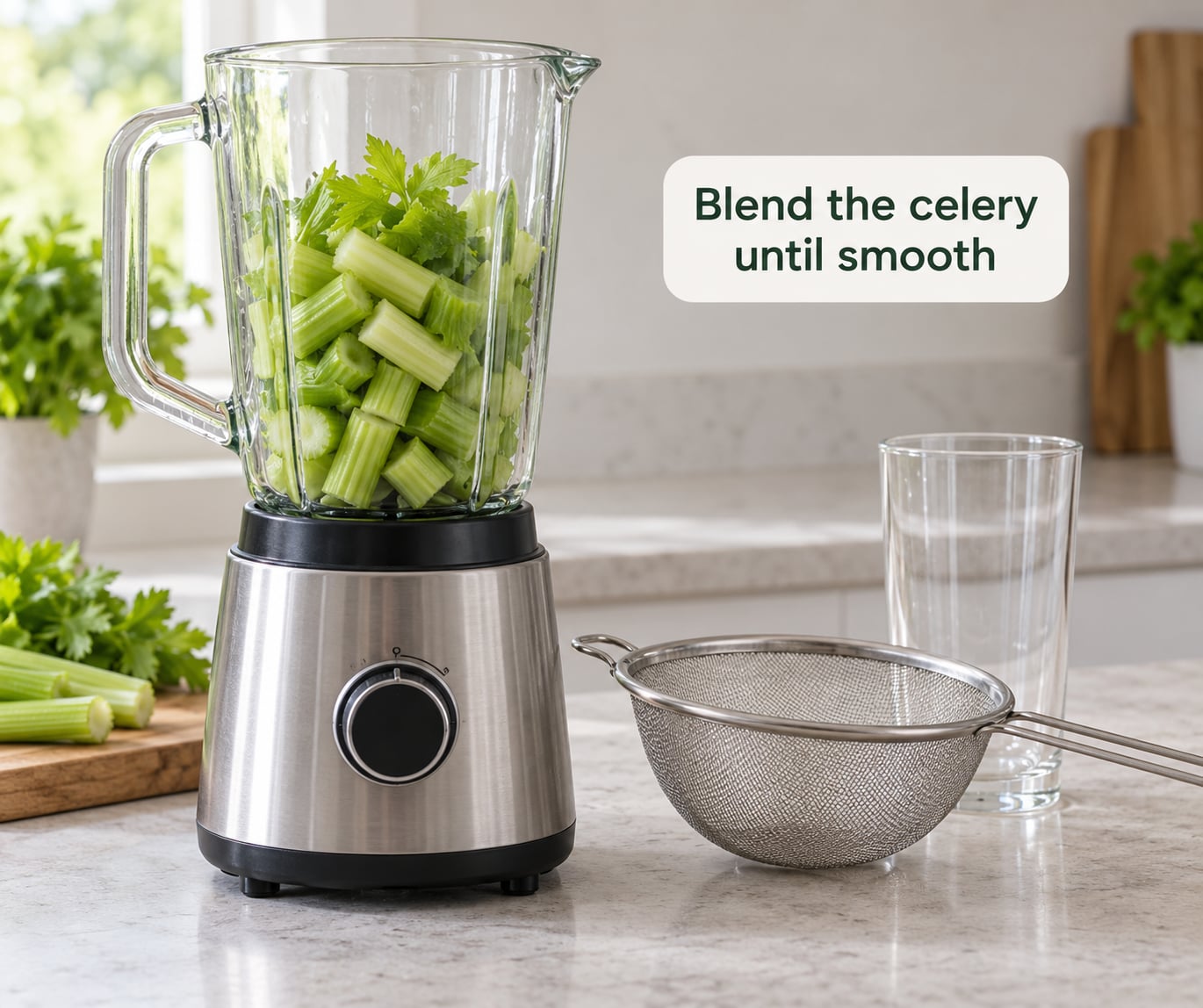
Put the chopped celery in the blender first, then add 1/4 cup of water and start with 10-second pulses. Add celery in batches rather than packing the jug full. A blender that is more than two-thirds full has nowhere for the puree to go, and a poorly vented blender lid can pop its seal and spray celery across your ceiling.
Once the first batch is smooth, add the rest with a little more water and run a longer blend. Scrape down the sides with a spatula halfway through so nothing sits untouched against the walls.
You are looking for a bright, even green puree with no visible chunks and a texture closer to thin paint than salad. If it will not move, add another tablespoon of water. If a high-speed blender takes longer than about 60 seconds, something is stuck, and more water beats more force. This is the core of how to make celery juice without a juicer: the water and the blending are doing all the work.
4. Strain out the pulp if you want a lighter texture
Set your fine-mesh sieve, nut milk bag, or cheesecloth over a bowl and pour in about a cup of the puree at a time. Work the pulp with a silicone spatula, pressing firmly against the mesh, until the liquid stops coming through. Skipping the pressing step is the number one reason a batch yields half what it should.
Be clear about what straining does. It pulls out water, dissolved nutrients, and pulp together, so what you get is celery-infused water, not a pulp-free extraction of celery juice. It tastes lighter, pours thinner, and has less fiber than the unstrained blend. If you want to keep the fiber and the full flavor, skip this step entirely and drink the puree as a savory smoothie.
Cheesecloth drinkers, run the strained liquid through a second time. The second pass catches the grit that the first one let go, and it is the difference between a clean-tasting drink and one that feels gritty on the way down.
5. Adjust the flavor and consistency
Thin it with cold water a tablespoon at a time, or thicken it by blending a few more stalks straight into the strained liquid. A squeeze of lemon or lime brightens the flavor and takes the edge off the vegetal taste, and a small knob of grated ginger adds warmth. Half an apple makes it sweeter and milder, which helps if you are handing the glass to someone who does not want green vegetables.
Taste before you sweeten. Fresh celery is naturally sweet, and the fruit and lemon people add to store-bought juice usually cover up a blender batch that was over-watered.
One warning: do not load a full blender with extra produce on top of the celery. Add-ins work best in small amounts alongside the stalks, not as a second full jug, and always check that the lid is seated before you start.
6. Serve the celery juice immediately

Pour the finished juice into a chilled glass and skim off any foam with a spoon. Fresh celery juice is a clear, bright green, a little cloudy if you left the pulp in, with a scent like cut grass and cucumber. If yours looks brown, dull, or fizzy, it has been sitting too long.
Drink it within the hour if you can. The flavor is at its cleanest right after straining, and celery juice picked up on the celery juice trend largely as an empty-stomach morning drink, where there is nothing else in the glass to compete with it.
Common Mistakes
Bitter juice means the leaves stayed on
Remove the leafy tops before blending, and peel the tough outer strings from the stalks. Old celery is bitter too, so buy bunches that snap rather than bend.
Watery juice means the water ratio was too high
Start at 1/4 cup for a full bunch and add more only when the blades stop moving. If you already strained it, you cannot thicken it back up, which is the one mistake worth learning from.
Pulpy, gritty juice means the straining was rushed
Pour in smaller amounts, press harder, and strain twice through fine cloth. A nut milk bag is the fix if you do this often enough to notice the difference.
Foam on top means you blended too long on high
Short pulses keep the jug cooler and cut the foam. A tablespoon of water also helps, and letting the glass sit for a minute lets the bubbles collapse on their own.
Low yield means nobody pressed the pulp
One bunch gives roughly 2 cups, which surprises a lot of first-timers. You will get closer to that figure if you press the pulp properly, and slightly less if you keep the leaves out. A rolling pin pressed across a cloth bundle works as a manual press when you want more liquid.
Separated or discolored juice means it sat too long
Strained juice that has been sitting goes dull and slightly fizzy, and the solids settle at the bottom. Make it the day you plan to drink it.
A few habits cover most of this. Buy crisp, bright bunches and store them upright in the fridge, wrapped loosely in plastic. Use a high-speed blender if you have one, and cut the pieces small so the blades do not work so hard. Strain only when you want a lighter drink, and drink the result fresh.
Frequently Asked Questions
What is the best way to juice celery without a juicer?
The best way to juice celery without a juicer is a high-speed blender plus a fine-mesh strainer. Chop 8 to 10 stalks, blend with 1/4 to 1/2 cup filtered water until no lumps remain, then press the puree through a sieve or nut milk bag with a silicone spatula. One bunch of celery yields roughly 2 cups.
Can a blender make celery juice, or is it only a smoothie?
A blender makes true juice once you strain it. Unstrained, the same blend is a savory celery smoothie, thicker and higher in fiber. Straining separates the liquid from the pulp, so the result pours like store-bought juice and the fiber stays behind in the bag or sieve.
Why does my celery juice look watery or separate?
Watery juice usually means too much water or fully ripe, soft stalks, and separation means the juice sat too long before you drank it. Celery that has started to lose its structure releases liquid that no longer holds the solids together. Use crisp stalks, add water a spoonful at a time, and drink it within the hour.
How long does homemade celery juice stay fresh?
Drink it the same day you make it. That is when the color is brightest and the taste is cleanest. If you have to save some, pour it into a sealed glass jar, leave some headroom, refrigerate it, and use it within 24 hours. A pale, fizzy, off-smelling glass has gone past its best.
Can I make celery juice without drinking so much pulp?
Yes, strain it twice. After the first pass through the sieve, run the thin liquid through a second, finer sieve or the same nut milk bag again, and you will catch grit and hair-like fibers. Leave a little pulp in the glass on purpose if you want some fiber along with the juice.
Is celery juice safe for everyone to drink regularly?
Most people tolerate celery juice fine, but it is high in plant compounds and potassium, and it can upset digestion, especially on an empty stomach. Celery also interacts with some blood pressure and blood thinner medications. If you take prescriptions, are pregnant, or manage a condition, ask your doctor or pharmacist first.
Conclusion
Start simple: wash a bunch of crisp celery, pull off the leaves, chop the stalks small, and blend in small batches with 1/4 cup of water. Press the puree through a nut milk bag or fine sieve only if you want a lighter drink, because leaving the pulp in gives you more fiber and a more honest celery flavor. Drink it the same morning you made it, and adjust the water and lemon next time to taste.