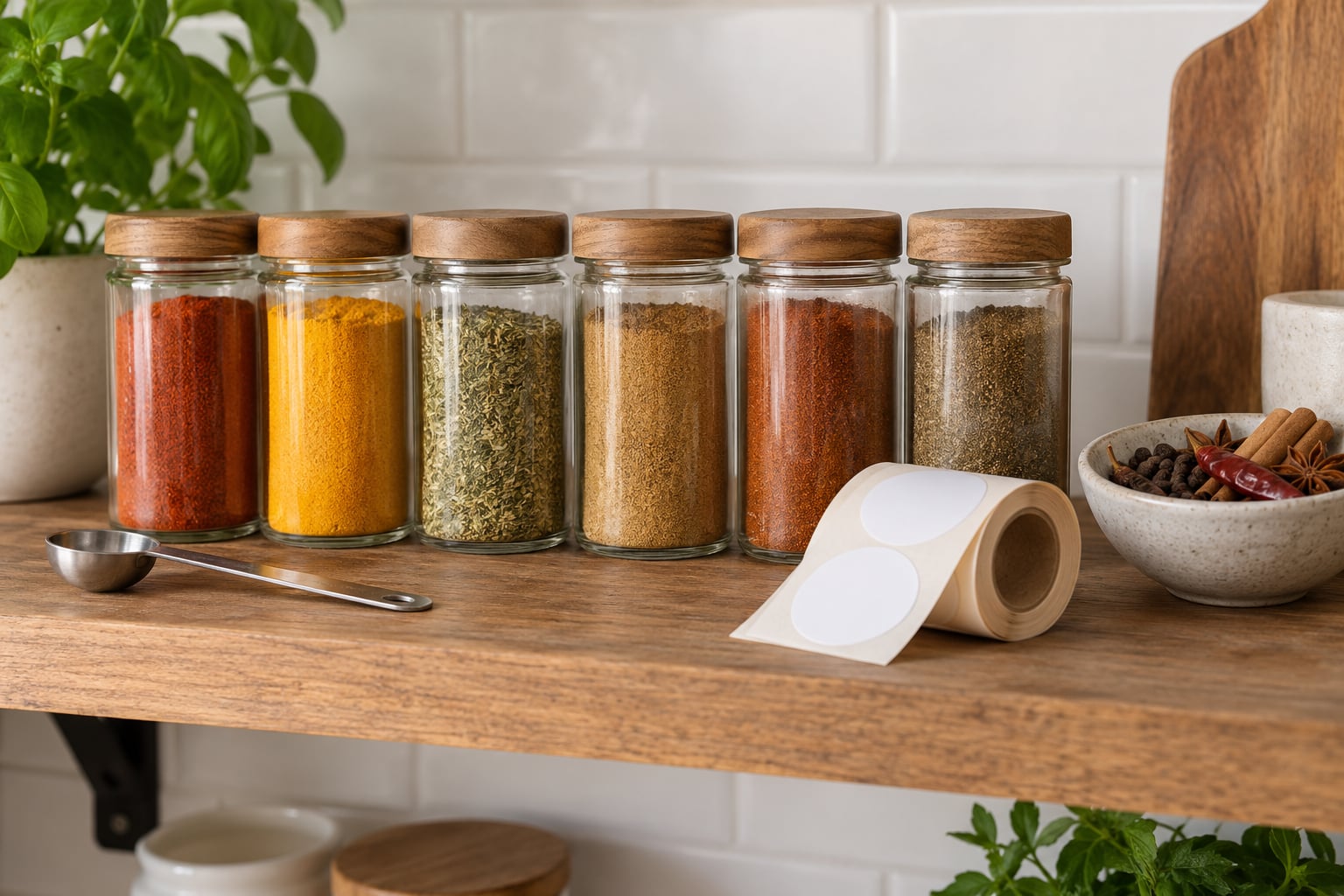
Spices keep their punch when you keep them away from heat, light, air and moisture. Store them whole as long as you can, in airtight glass jars, in a cool dark cabinet well away from the stove, label every jar with a date, and freeze the ground spices you use twice a year. That routine takes about twenty minutes, once.
The reason comes down to what a spice actually is. The aroma and flavor sit in volatile essential oils on the surface of a seed, a bark or a root. Those oils drift into the air, oxidize when they meet oxygen, break down under heat, and get carried off by water. Airtight, opaque, cool, dry storage blocks all four routes at the same time.
Grinding multiplies the problem. A whole peppercorn exposes a small surface; ground pepper exposes hundreds of times more, so it fades in months rather than years. Everything below follows from that one fact.
Table of Contents
- What You Need
- Step-by-Step
- Check Whether Each Spice Is Still Fresh
- Choose Airtight Containers for Each Spice
- Keep Spices Cool, Dark, and Dry: Where to Store Spices in a Small Kitchen
- Label and Organize the Spice Collection
- Use Freezing or Refrigeration for Long-Term Storage
- Common Mistakes
- Frequently Asked Questions
- How long can spices be stored?
- What is the best container for storing spices?
- Should spices be stored in the refrigerator?
- Can spices be frozen to make them last longer?
- How can I tell if a spice has lost its flavor?
- The Short Version: How to Store Spices So They Keep Their Punch
What You Need
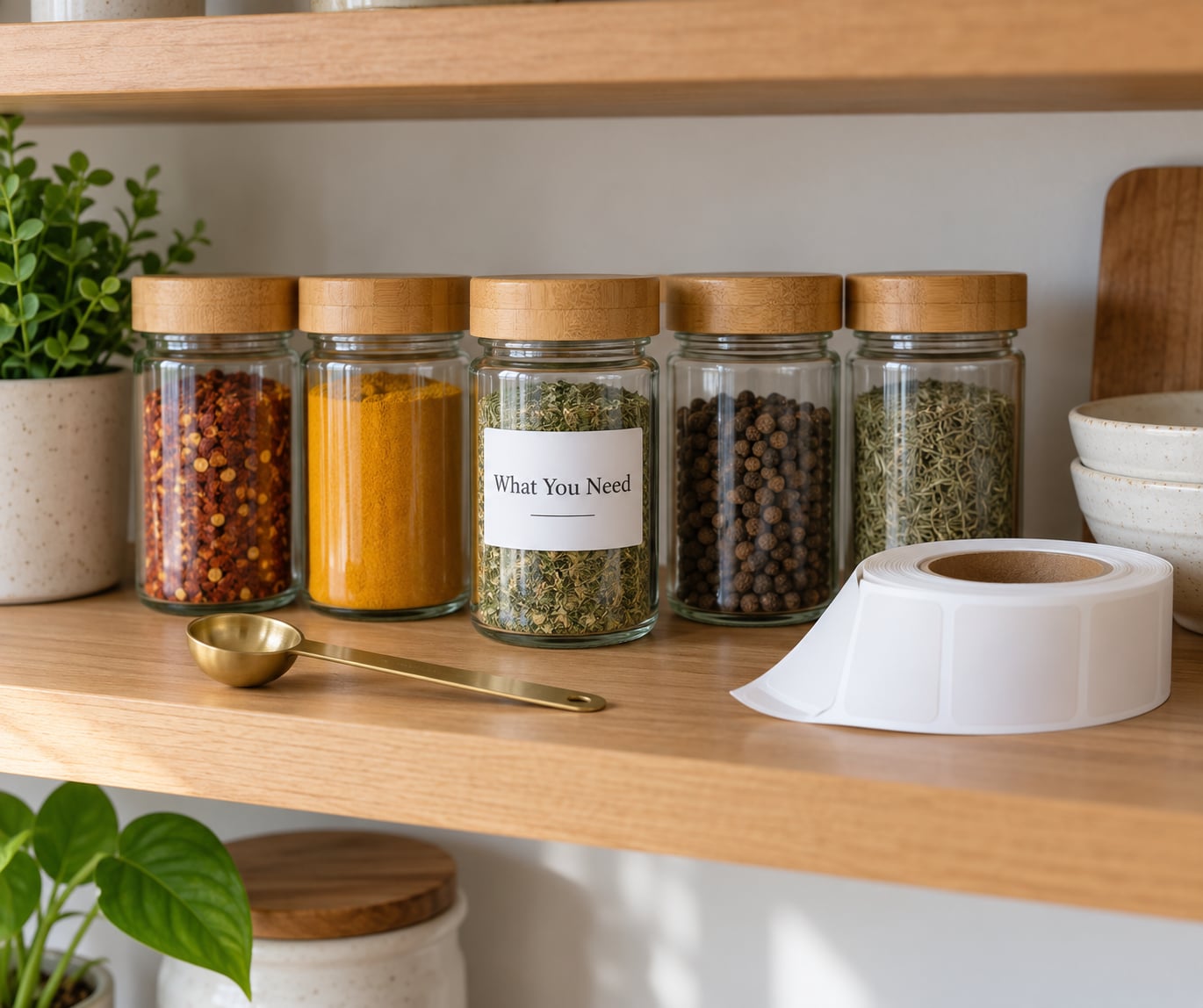
- Airtight glass jars with screw lids that have a gasket, sized to about six to twelve months of use
- Masking tape or jar labels, plus a permanent marker
- Measuring spoons you keep dry, ideally one small spoon per frequently used spice
- Freezer bags or small lidded freezer containers, only if you buy in bulk
- A small dry skillet for toasting and for a freshness test
- Optional: food-safe silica gel packets and a bay leaf in each jar
Sizing is where most collections go wrong. Buy the jar that holds what you will cook off in a year, not the biggest one on the shelf, because a container half full of cumin stays aromatic much longer than a bag stuffed to the brim.
Ask any cook what container they trust and you get the same answer: a plain airtight glass jar. Nothing exotic, just a lid that actually seals.
Step-by-Step
Work through this in order. Sorting first means you do not spend effort storing spices that already taste like cardboard.
Check Whether Each Spice Is Still Fresh
Open the jar and smell it before you shake it. A working spice is sharp and specific, whether that is the citrus note in lemongrass or the warm bite of cinnamon. A faded one smells dusty, cardboard-like, or flat, with nothing underneath.
Color is the second check. Bright paprika dulls toward brick red, ground turmeric pales, and any ground spice that has faded from orange to tan has lost a lot of its volatile oil already. Texture matters too: whole seeds should snap rather than bend, and ground spice that has hardened into a solid cake has absorbed moisture from the air.
Then look at age and packaging. US spice packs do not carry a meaningful expiration date, so the purchase date you scribbled on the lid is more useful than anything printed on the label. One trust test beats a printed date every time: put a pinch in a dry pan over medium heat for ten seconds. Good spice blooms and smells richer. Old spice just gets warmer.
These are typical windows under cool, dark, airtight storage. Ground figures assume you buy in modest amounts and keep the jar closed.
| Spice | Whole form | Ground form |
|---|---|---|
| Peppercorns | 2 to 4 years | 6 to 12 months |
| Cinnamon sticks, cloves | 3 to 4 years | About 1 year |
| Cumin, coriander seed | 2 to 3 years | 6 to 12 months |
| Cardamom pods | 1 to 2 years | 6 to 12 months |
| Bay leaves, dried | 1 to 2 years | Not practical to grind |
| Paprika, chili powder | Rarely bought whole | 6 to 12 months |
| Turmeric | 2 to 3 years | 9 to 12 months |
| Saffron threads | 1 to 2 years | Same as whole |
| Nutmeg, cinnamon bark | 2 to 3 years | 6 to 12 months |
| Onion and garlic powder | Fresh or dried bulbs, about 6 months dried | 6 to 12 months |
Choose Airtight Containers for Each Spice
Glass wins for ground spices. A mason jar or a purpose-made spice jar with a screw lid and gasket keeps oxygen out and, if the glass is tinted or kept in a dark cabinet, keeps light out too. Metal tins with tight lids work well for blends you use weekly. Plastic is fine for whole seeds in a busy kitchen for a few months, but it slowly lets more oxygen through, and a clear plastic jar on a bright shelf is the worst of both.
Test the seal before you trust it: close the lid on a small piece of tissue and pull. If the paper resists, the jar is airtight enough for spices. Leave an inch of headspace rather than filling to the brim, and never store a jar with a damp spoon standing inside it.
For bulk quantities, small amounts do not belong in a big bag. Portion into freezer bags or heat-sealed mylar pouches, then keep only one portion in the working jar. Cooks who freeze spices usually dry them out overnight first, then bag small batches, which is exactly the method that works.
Keep Spices Cool, Dark, and Dry: Where to Store Spices in a Small Kitchen
Heat is the worst enemy, and the stove wall is the worst spot in most kitchens. A closed cabinet beside a working range can sit above 80 degrees Fahrenheit through a long dinner service, and that heat drives the oils straight out of the jar. The same goes for a shelf above the microwave, a cabinet over the oven, and the top of the refrigerator, which is warm from the motor and often near a window.
Aim for an interior cabinet, ideally one that does not share a wall with the outside of the house. Skip the window sill even if it looks charming. The sink and dishwasher cabinet is also damp, and humidity is what turns ground spices into solid blocks and brings in pantry pests.
In a small kitchen, split the collection in two. Keep the ten or twelve spices you reach for every week in a drawer organizer or on a step riser at counter height, and move everything else to the freezer or a high cabinet. Home cooks with forty-plus jars usually find that a single tray of daily spices plus a frozen reserve works better than trying to display everything.
A quick physical test: shut the cabinet door and hold your hand near it. If it feels warm, find a different spot.
Label and Organize the Spice Collection
Write the name and the date you opened or bought it, then put it on the lid or the bottom of the jar. Plenty of cooks label the back so the shelf still looks tidy from the front, which is the better compromise if you care about looks.
Rotate stock first in, first out. New stock goes behind the old jar, not in front of it, and the oldest jar moves to the front. If dating every jar sounds fussy, keep a single note in your phone with the date you did a bulk restock and work forward from there.
Blends need their own rules. A masala or a cake mix has already had the surfaces of many spices broken open, so it fades faster than the single spices inside it. Keep blends in smaller jars, use them inside three to six months, and buy small quantities of the blend rather than mixing a huge batch.
One safety note for home blenders. Spices are dry and safe on a pantry shelf. Spice mixes packed in oil are a different story: oil packed with garlic, herbs or chillies can grow Clostridium botulinum at room temperature. Refrigerate those mixes and use them within a few days, or freeze them for longer storage, and never leave a homemade garlic-in-oil jar sitting on a counter or in a cupboard.
Use Freezing or Refrigeration for Long-Term Storage
Freezing is the strongest pause button you have. Cold slows oxidation dramatically, and frozen spices keep their aroma for a year or more. Portion first, so you take out only what you need: put a season’s worth of ground spice into a small freezer bag, squeeze the air out, label it with the name and the date, and lay the bags flat in a single layer until they are solid, then stack them.
Thaw one bag at room temperature for ten minutes and use it straight from the open bag. There is no need to reseal it, and refreezing a partly used bag is fine if you press out the air and write the thaw date on it.
If you want to freeze in glass, leave an inch and a half of headspace, set the lid on loosely rather than screwing it down tight, and let the jar cool before tightening. Mason jars that are sealed tight with almost nothing in the headspace can crack in a freezer. Wide-mouth jars survive a freeze far better than standard neck jars.
Refrigeration is narrower than most people assume. It genuinely helps chili flakes, dried curry leaves, ground chile, saffron and mustard seed, and it makes a difference in a humid kitchen where pantry humidity sits above sixty percent. Cold also slows the oils in paprika from going rancid.
Skip the fridge for ordinary shelf spices. It eats precious space, and refrigerator humidity is its own problem, which is why anything refrigerated still has to be airtight. Condensation forms inside the jar when warm spice goes into a cold cabinet, and that water is exactly what you are trying to avoid.
Common Mistakes
- Jars above the stove. Move them to an interior cabinet. This one habit does more good than any jar upgrade.
- Open bowls on the counter. Decant into airtight jars with lids on. An open bowl loses aroma within weeks.
- Dipping a wet spoon in. Wipe the spoon on the jar rim, or keep a dedicated dry teaspoon for that spice.
- Pre-grounding everything. Buy whole cumin, coriander and peppercorns and grind a small amount when the dish needs it.
- One huge bag per spice. Decant into jars sized for six to twelve months, and freeze the rest in portions.
- Clear jars in a sunny spot. Swap to dark glass or move the shelf away from the window.
- No dates anywhere. Two minutes with a marker on the lid is enough. Old stock then gets used before new stock.
- Never checking. Once a month, smell five jars. Faded color and a dusty smell both show up long before mold does.
- Keeping spices years past their window. Freeze the ones you barely use, and toss anything musty, oily-looking or webbed with insect activity.
- Mixing spices with oil and leaving them on a shelf. Refrigerate or freeze oil-packed blends and use them quickly.
Storage only rescues what is still worth saving. If a jar smells of damp cardboard or has visible webbing and larvae, freeze it for 48 hours, then discard it rather than scooping out the good-looking layer.
Frequently Asked Questions
How long can spices be stored?
Whole spices such as peppercorns, cumin seed, cloves and cinnamon keep their aroma for roughly one to four years when stored airtight in a cool dark cabinet. Ground spices fade in six to twelve months because grinding exposes far more surface. Dry blends and spice mixes lose aroma faster than single spices, so treat them as six months. Frozen portions keep their flavor a year or more. Printed expiration dates on spice packaging are not a reliable guide, so date your own jars instead.
What is the best container for storing spices?
An airtight glass jar with a screw lid and gasket is the best everyday container for most spices. Glass blocks oxygen well and can be tinted to block light, and it does not absorb odors. Metal tins with tight lids work well for blends, and freezer bags or mylar pouches suit bulk quantities. Clear plastic is usable for a few months but lets in more air and light. Whatever you choose, the lid matters more than the jar.
Should spices be stored in the refrigerator?
Only for a few of them. Chili flakes, ground chile, dried curry leaves, saffron and mustard seed hold their flavor longer in the fridge, and refrigeration helps in humid kitchens. Everyday spices such as cumin, paprika and pepper do not need cold, and refrigerator humidity creates condensation inside the jar, which is the moisture you are trying to avoid. Anything you do refrigerate still has to be airtight.
Can spices be frozen to make them last longer?
Yes, and freezing is the most effective storage method for ground spices used infrequently. Portion a season’s worth into a small freezer bag, squeeze out the air, label it with the name and date, and freeze. Thaw a bag at room temperature and use it straight from the open bag without resealing. In glass, leave an inch and a half of headspace and leave the lid loose until the jar is cold, or the glass can crack.
How can I tell if a spice has lost its flavor?
Smell it first. A good spice is sharp and specific, while a faded one smells dusty, flat or cardboard-like. Color fades too, with bright paprika dulling toward brick red and turmeric paling. Texture gives it away as well: ground spice that has hardened into a cake has taken on moisture. For a final check, warm a pinch in a dry pan for ten seconds. If nothing blooms, replace it.
The Short Version: How to Store Spices So They Keep Their Punch
Start tonight with the jar closest to the stove. Move it to an interior cabinet, wipe the spoon, and put a piece of tape on the lid with today’s date. Then pick the three spices you use least and freeze them in season-sized portions with a label.
That is the whole method: airtight, opaque, cool, dry, dated, and rotating. Twenty minutes of setup buys you a year of flavor in every jar, and your dishes stop tasting flat.