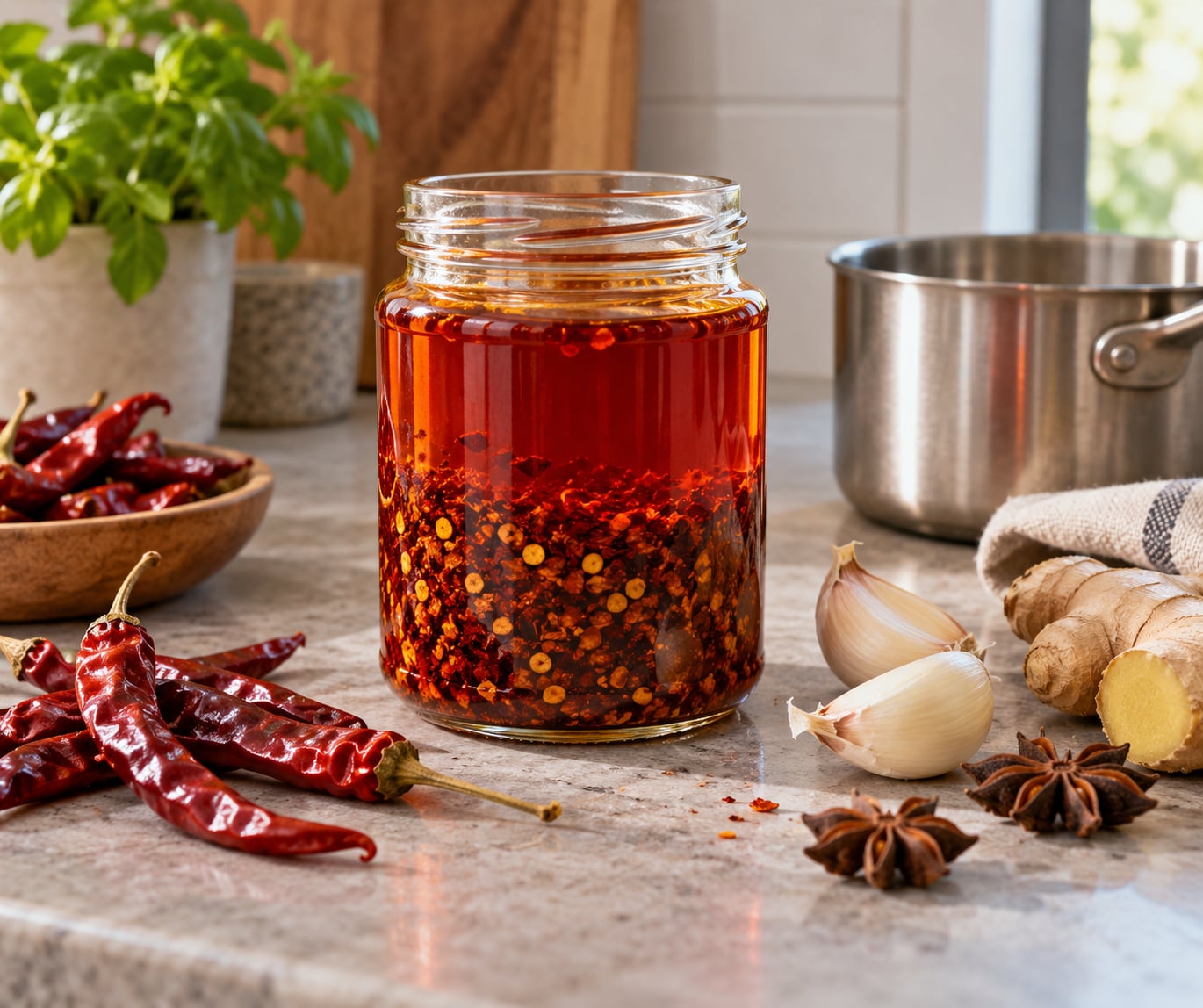
Chili oil is a condiment made by pouring hot oil over dried chili flakes, aromatics and whole spices, which toasts the chile and pulls its color, aroma and heat into the oil. Learning how to make chili oil at home takes about 15 minutes of active work plus an overnight rest, and you control the heat level, the chile variety and how much sediment stays in the jar.
That last part matters more than most recipes admit. Store-bought jars are filtered smooth and standardized, which is fine until you want a pour that hits like a Sichuan dipping sauce or a mild ruby drizzle for eggs. Homemade is a fifteen-minute project once you’ve done it twice.
Table of Contents
- What You Need
- How to Choose the Base Oil
- Step-by-Step
- How to Toast and Crush the Chiles
- How to Infuse the Oil Without Burning the Aromatics
- How to Finish and Store the Chili Oil
- Common Mistakes
- Frequently Asked Questions
- What kind of dried chiles work best for homemade chili oil?
- Can I make chili oil with fresh chiles instead of dried ones?
- How hot should the oil be when I add the chili flakes?
- Should I strain homemade chili oil before storing it?
- How long does chili oil keep at room temperature?
- What can I use chili oil for besides noodles?
- Where to Start Tomorrow Morning
What You Need
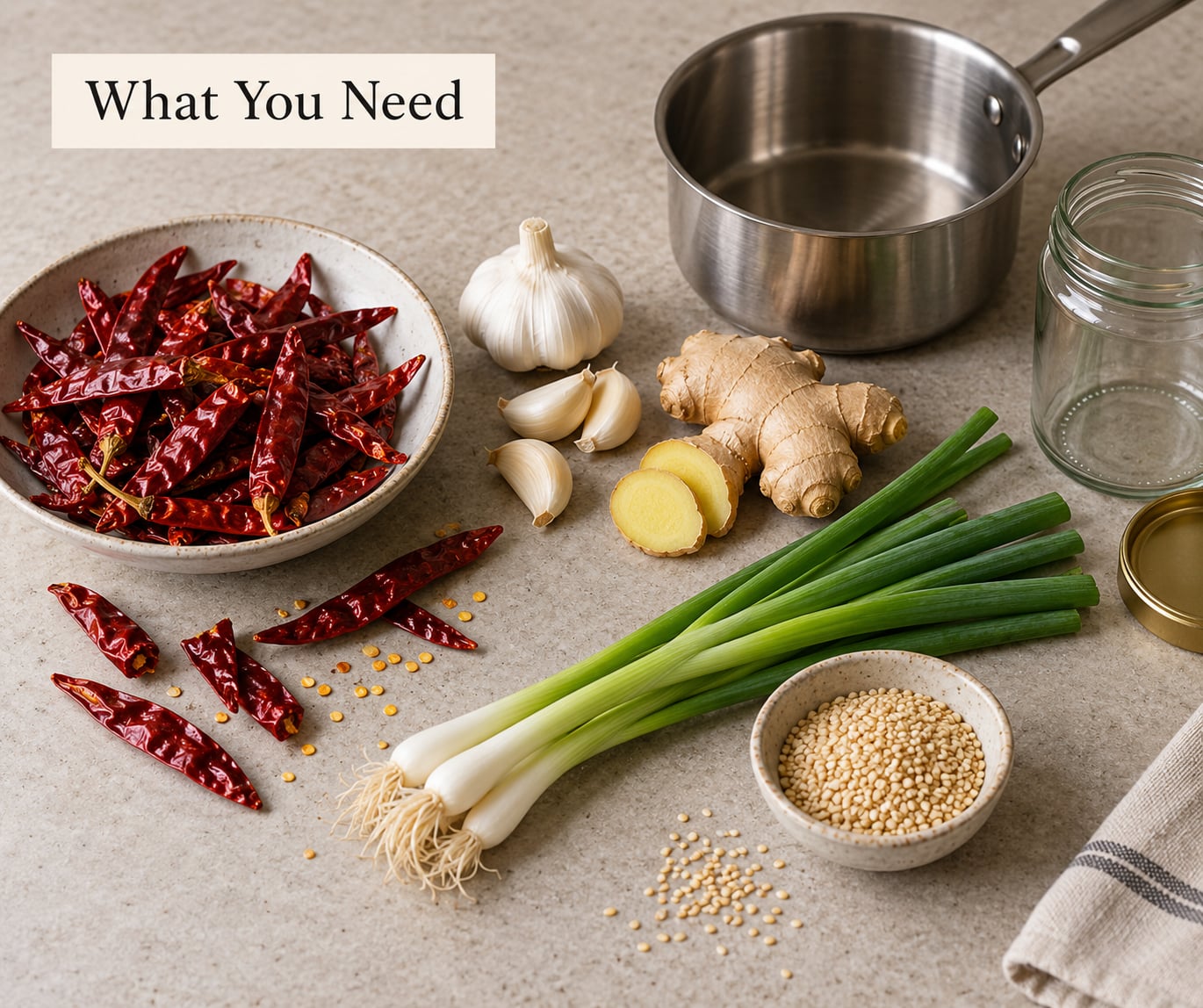
Everything here is either structural, aromatic or seasoning. The flakes carry heat and color, the aromatics carry fragrance, the salt carries the flavor that otherwise sits flat in oil, and the oil carries all of it.
- Coarse red pepper flakes, about 1/2 cup (30 g) for 1 cup of oil. Coarse is the important word. Fine flakes go dusty and bitter because they scorch before the oil gets hot enough to extract.
- Neutral oil, 1 cup (240 ml). Grapeseed, canola, peanut, sunflower or avocado all work.
- Aromatics, 4 sliced garlic cloves, 2 slices ginger about the size of a coin, 2 scallions cut into 2-inch lengths. Slice, don’t mince. Small bits burn.
- Whole spices (optional but good): 2 star anise, 1 cinnamon stick, 2 bay leaves, 1 teaspoon Sichuan peppercorns.
- Salt, 1 teaspoon kosher or fine sea salt. It also helps pull water out of fresh aromatics if you use any.
- Equipment: a small saucepan, a heat-proof bowl or measuring jug, a fine mesh sieve, a jar, and a thermometer if you have one.
Skip the fresh vegetables. Any water in the bowl is what turns a good chili oil into a jar that goes cloudy and then fuzzy in the cupboard, and every forum thread I read on this subject circles back to that same problem. The cooking itself handles moisture from the aromatics, but dried flakes start dry, which is why this style of oil keeps.
How to Choose the Base Oil
| Oil | Flavor it adds | Best for |
|---|---|---|
| Grapeseed | Nearly none | A clean, chile-first oil that tastes closest to restaurant versions |
| Peanut | Faint nuttiness | Sichuan-style oil, fried rice, stir-fry |
| Canola or sunflower | None | A budget-neutral base you can taste the difference in later |
| Avocado | None | The highest smoke point of the bunch, forgiving on heat |
| Extra virgin olive | Green, peppery, fruity | A drizzle finished over pizza, eggs or beans. It works, but the flavor profile leans Italian |
| Toasted sesame | Strong, nutty | Korean-leaning finishing oil. Use half sesame, half neutral |
Swapping oils is the easiest way to change the character of the batch without changing the recipe. Gochugaru is another easy swap for the flakes if you want a sweeter, smokier edge, and chile de arbol flakes give you a cleaner, sharper heat than Sichuan blends do.
Step-by-Step
How to Toast and Crush the Chiles
Toast first, and the flavor changes completely. Thirty to sixty seconds in a dry pan over medium heat deepens the sweetness and pushes out the dusty, cardboard note that raw flakes carry into oil.
You’re looking for two cues together: a deeper, brick-red color instead of bright scarlet, and a smell that fills the room and turns slightly smoky. If you smell acrid smoke, you’ve gone too far and should start over; there’s no fixing burnt chile.
Then crush. Cut the pods into short segments with scissors or a knife, scrape out most of the seeds if you want less heat, and pulse in a food processor or mortar until you have irregular flakes. Stop while it still looks chopped. Powder is the enemy here, and a blender whips it to dust in seconds.
How to Infuse the Oil Without Burning the Aromatics
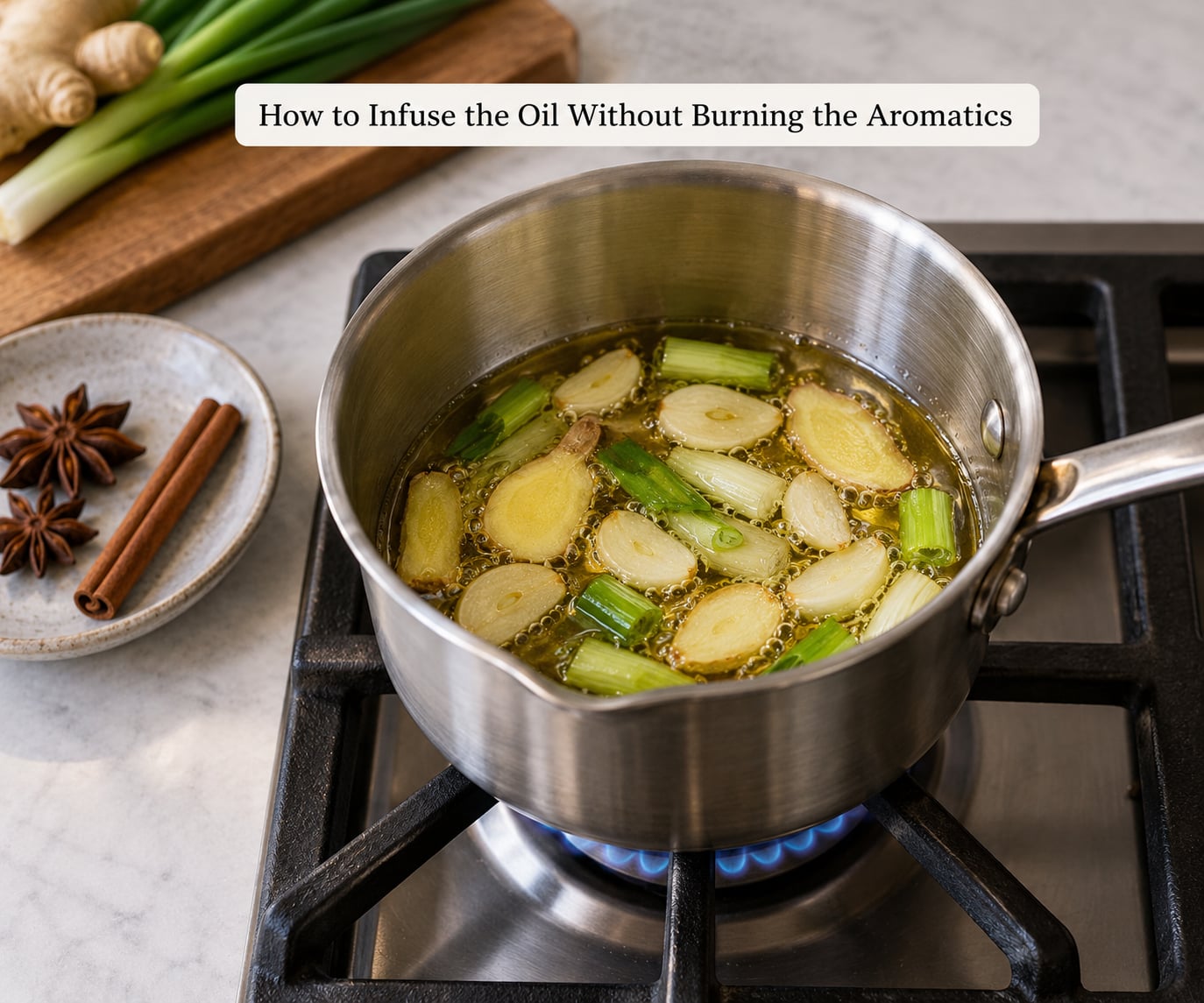
Put the oil, aromatics and whole spices in the saucepan together and set it on medium-low. You are looking for a steady shimmer across the surface, not bubbles and not smoke.
If you have a thermometer, 300 to 350 F (150 to 175 C) is the window. Without one, use your eyes and your nose: the garlic turns from white to pale gold, the oil moves like water that is one step away from simmering, and you can smell ginger and scallion from an arm’s length away. That is the moment to pull it off the heat.
This is an infusion, not a fry. The aromatics should cook gently for 10 to 15 minutes, then you take the pot off the burner and let the oil settle for a minute. Burnt garlic is the single most common way this goes wrong, and it turns a clean oil bitter within seconds.
Safety before the pour. Dry out a heat-proof bowl and put your flakes and salt in it first, before the oil is hot. Clear the counter, dry your hands, and have a lid or sheet pan within reach. Hot oil expands and can spit. Pour from low and slowly, in a thin stream, with the bowl on a stable surface rather than cradled in a wet towel.
Pour the oil over the flakes and it will foam and crackle immediately. Stir, then leave it untouched for 10 minutes so the color deepens to a dark ruby.
How to Finish and Store the Chili Oil
Strain through a fine mesh sieve into a clean, completely dry jar. If you want the smooth, pourable restaurant texture, press the solids and strain twice. If you want the sediment, skip the sieve and spoon the whole mixture into the jar.
Do not fill the jar to the top. Oil and the sediment expand as they settle, and a full jar of hot oil has no room and no way to vent. Leave two inches of head space, and let the oil cool at room temperature, uncovered, before you put the lid on.
Refrigerate it and it holds for six months. On a counter in a cool, dark kitchen it stays good for about two months, and it’s fine in a warm cupboard for a couple of weeks. The reason for the spread is simple: oil seals out oxygen but not the trace moisture in the sediment, so the longer it sits warm with solids in the jar, the more risk you take. A clean dry spoon every time is what actually buys you the shelf life.
The sediment most people throw away is the best part for fried rice. Scrape it into the pan before the egg, or stir a spoonful into mayo for a dipping sauce.
Common Mistakes
Bitter or burnt oil is the number one failure, and it always has the same cause: too much heat. The fix is to pull the oil off the burner earlier than feels right and use a lower flame, plus never leave the pan unattended once it starts shimmering. Pale, dull oil is the opposite problem, usually oil that never got hot enough to bloom the flakes, and the fix is hotter oil, a coarser grind, or both.
Watery or cloudy oil comes from fresh ingredients. Chop fresh garlic and chiles, salt them in a colander and let them sit 20 minutes, or skip the fresh entirely. If you already poured hot oil over fresh garlic, expect to refrigerate the jar and use it within a week.
Overly hot oil is a flavor choice, not a mistake, and the dial is the flake-to-oil ratio. Adjusting it takes no rewarming and no new technique. A short list of the ratios that actually work:
- Mild: 1/4 cup flakes per cup of oil, about 15 g to 240 ml
- Medium: 1/2 cup flakes per cup of oil, about 30 g to 240 ml
- Fiery: 3/4 to 1 cup flakes per cup of oil, about 45 to 60 g to 240 ml
Harsh seasoning usually means too much salt in the bowl before the pour. Salt draws out chile heat and compounds it, so halve it, and add the rest at the table instead. Poor storage is the last one: a damp jar, a jar that isn’t dry, or filling it to the brim. Wipe the rim clean, leave head space, and keep it out of direct light.
Frequently Asked Questions
What kind of dried chiles work best for homemade chili oil?
Coarse red pepper flakes from a Chinese grocery or an Asian market aisle are the safest default, and they give you a clean, medium heat. Sichuan-style red chile flakes add a deeper, sweeter flavor and are what most restaurant chili oils are made from. Gochugaru brings a smokier, fruitier note, while chile de arbol flakes are sharper and leaner. Avoid finely ground cayenne from a spice jar, which scorches quickly and turns bitter.
Can I make chili oil with fresh chiles instead of dried ones?
You can, but it is a different condiment and it keeps far less well. Fresh chiles and fresh garlic release water when you pour hot oil over them, and that moisture is what encourages mold. Salt the chopped fresh chiles in a colander for 20 minutes to draw off some of it, use them within the week, and keep the jar refrigerated. For something that sits on a shelf for months, use dried chiles.
How hot should the oil be when I add the chili flakes?
Between 300 and 350 F (150 to 175 C) is the target, which is hot enough to bloom the chile and deepen the color without smoking. Without a thermometer, look for a steady shimmer across the surface, pale gold garlic and a clear ginger and scallion aroma from an arm’s length away. The moment you see smoke or darkening garlic, it has gone too far and the oil will taste acrid.
Should I strain homemade chili oil before storing it?
It depends on the texture you want. Straining twice through a fine mesh sieve gives you a smooth, pourable oil that looks and feels like restaurant chili oil. Leaving the sediment in gives you a thicker, rustier condiment with more body, which is what most Sichuan dipping sauces are made of. Either way, make sure the jar is completely dry first, and always use a clean spoon.
How long does chili oil keep at room temperature?
In a cool, dark kitchen, roughly two months at room temperature is a reasonable window, and longer in a warm cupboard is riskier because oil does not seal out the trace moisture in the sediment. Refrigerated, the same jar keeps about six months. Using a clean, dry spoon every time matters more than where you store it, since a wet spoon introduces water that starts the whole spoilage problem.
What can I use chili oil for besides noodles?
It is a finishing condiment, so use it wherever you’d finish with a drizzle: over soft-boiled eggs, dumplings, steamed greens, grilled meat, mapo tofu, hot pot dipping sauces and sandwiches. Mix it into mayonnaise or a simple dipping sauce for fried dumplings, or fold a spoonful into fried rice at the end. The strained sediment is excellent stirred into rice or thinned with a little vinegar.
Where to Start Tomorrow Morning
Make the medium version first: half a cup of coarse red pepper flakes, one cup of neutral oil, garlic, ginger and scallions, and a teaspoon of salt. Toast the flakes, infuse the oil until it shimmers, pour it over, and let it sit overnight before it goes in the jar. Once you have one batch you trust, adjust the ratio rather than the method.