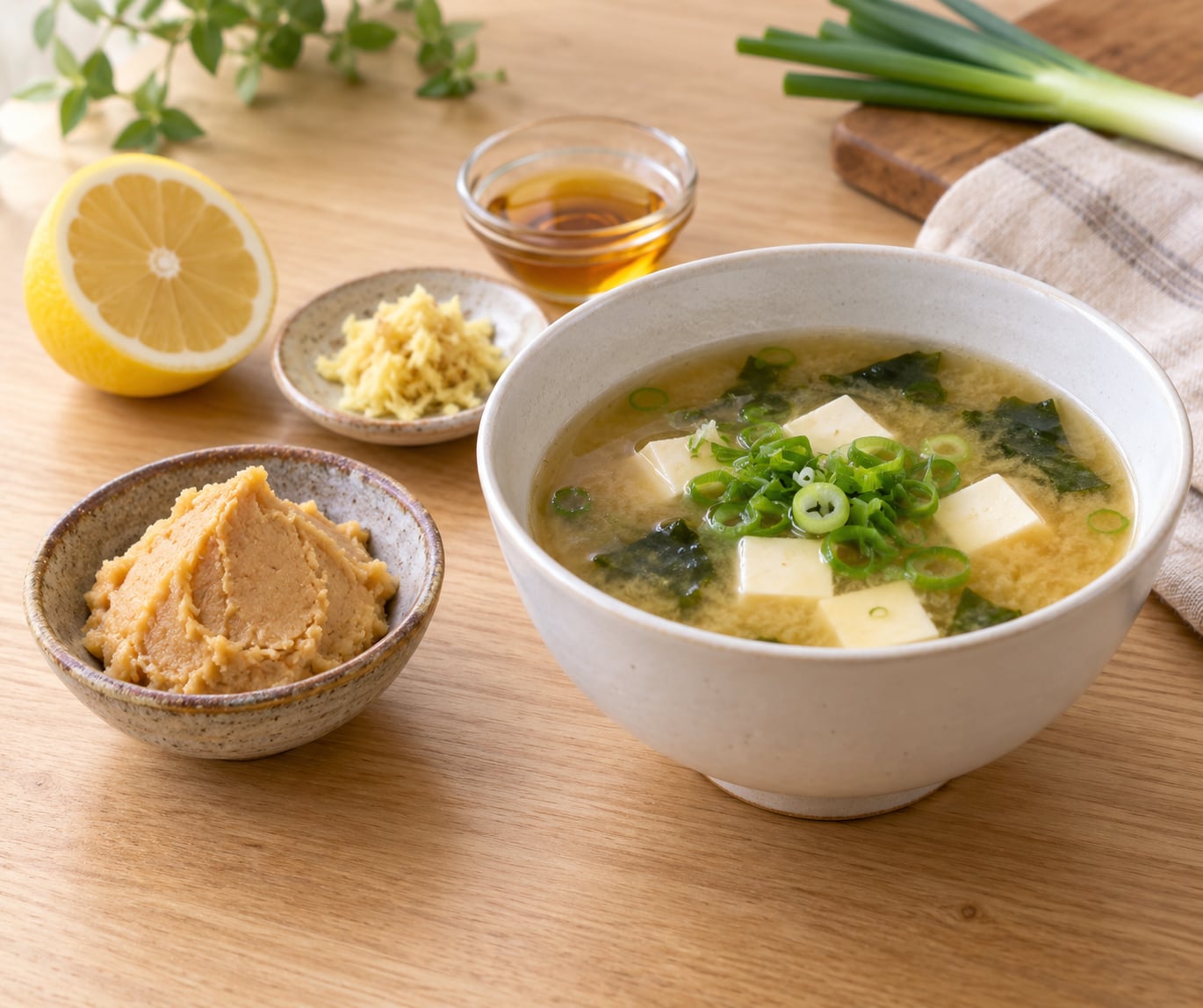
To use miso in everyday cooking, pick the mildest miso you can find, dissolve a spoonful in a little warm liquid, and stir it in near the end of cooking over low heat. Start at about 1 teaspoon per serving. That single habit turns plain vegetables, grains, eggs and sauces into something that tastes like it took longer than it did.
Miso is a fermented soybean paste seasoned with salt and cultured with koji, a mold that breaks soybean proteins down into free amino acids. The glutamate in there is what your tongue reads as umami, the savory depth that makes stock and soy sauce taste serious. It is seasoning and flavor in the same spoonful.
Most people meet miso as soup and assume that is the whole job. That is why half the tubs in America go stale in the back of the fridge. If you are starting with a leftover tub, jump straight to the weeknight section below, because the fastest adoption point is a dressing or a creamy pasta sauce, both of which take no technique at all.
Table of Contents
- What You Need
- Step-by-Step
- 1. Choose a Miso for the Dish
- 2. Prepare and Taste the Miso
- 3. Add Miso to Soups and Broths
- 4. Whisk Miso Into Everyday Sauces
- 5. Use Miso in Marinades, Glazes, and Dressings
- 6. Fold Miso Into Quick Weeknight Meals
- Common Mistakes
- Frequently Asked Questions
- Can you boil miso when cooking?
- Which type of miso is best for beginners?
- Can miso be used in vegetarian or vegan meals?
- How much miso should I add to soup?
- How should miso be stored, and can it be used after opening it?
- Conclusion
What You Need
You do not need much equipment. You need the right miso, something to thin it, and a sense of how salty the rest of your dish already is.
Pick your miso by color. White miso, also called shiro miso, is pale, sweet and mild with the lowest salt of the standard three. It dissolves cleanly and does not bully delicate flavors, which makes it the right default for dressings, sauces, eggs and baking. Red miso, called aka, is darker, fermented longer and considerably saltier and funkier. It stands up to long, high-heat cooking and to strongly flavored ingredients like grilled eggplant, sturdy fish and beef.
Yellow or barley miso is made with roasted barley instead of some or all of the rice. It is earthy, nutty and brown, and because barley contains gluten, it is not a gluten-free choice. Sweet miso, sometimes sold as hatakara or awase, has added sugar and mirin and is milder and less salty than the same color implies. Sauces and glazes split cleanly into miso, mirin or sake, and rice vinegar or a squeeze of lemon.
Measure by the serving, not the recipe. One teaspoon per person is the reliable starting point for soups, sauces and eggs. Two tablespoons is plenty for a pot of vegetables, a pound of meat or a family-size dish. If you are nervous, use half a teaspoon and taste.
Have these on hand. A small whisk or a fork for dissolving, a bowl with a ladle of warm liquid, a silicone spatula for scraping the tub, and a basting brush if you plan to glaze anything.
Store it like a condiment, not a spice. An unopened tub keeps fine in a cool cupboard until its date. Once opened, press the paste flat, wipe the rim clean, seal it tightly and refrigerate it. Plan on using it within a few months. Miso darkens and mellows as it ages, and that is normal rather than a sign it has gone off. Toss a clean, dry spoon in each time, and if the tub develops mold, a fizzy surface or a smell you do not recognise, throw it out.
Step-by-Step
1. Choose a Miso for the Dish
Match the intensity of the miso to the intensity of the food. Miso is a background note in a delicate broth and a headline flavor in a marinade.
White miso suits light soups, dressings, creamy sauces, scrambled eggs, oatmeal, baked goods and any dish where you want savory depth without a heavy finish. Red miso suits longer braises, barbecue-style glazes, sturdy fish such as salmon or mackerel, chicken, roasted eggplant and mushrooms, and chili. Barley miso suits slow-cooked beans, hearty stews and anything where an earthy, almost coffee-like bitterness is welcome.
Skip the strongest varieties for weeknight food. A young, pale paste brings more aroma with far less salt, and that is what you want when the pot only cooked for fifteen minutes.
If the dish already carries salt, miso is seasoning first and flavor second. Think of it as the salt you are adding plus a spoonful of stock.
2. Prepare and Taste the Miso
Scoop straight from the tub for soups, glazes and anything going onto hot food. A thin layer of oil on top is normal and harmless, and you can scrape past it.
For cold or creamy applications, dissolve before you add. Put the miso in a small bowl, add a spoonful of warm water or the cooking liquid, and whisk until smooth. If it stays pasty, add more liquid a teaspoon at a time. This is the single fix for lumpy dressing, and it takes fifteen seconds.
Taste the diluted paste before it goes in. If it is aggressively salty on its own, your pot is going to overshoot, so add less than you planned and lean on acid and sweetness later instead.
3. Add Miso to Soups and Broths
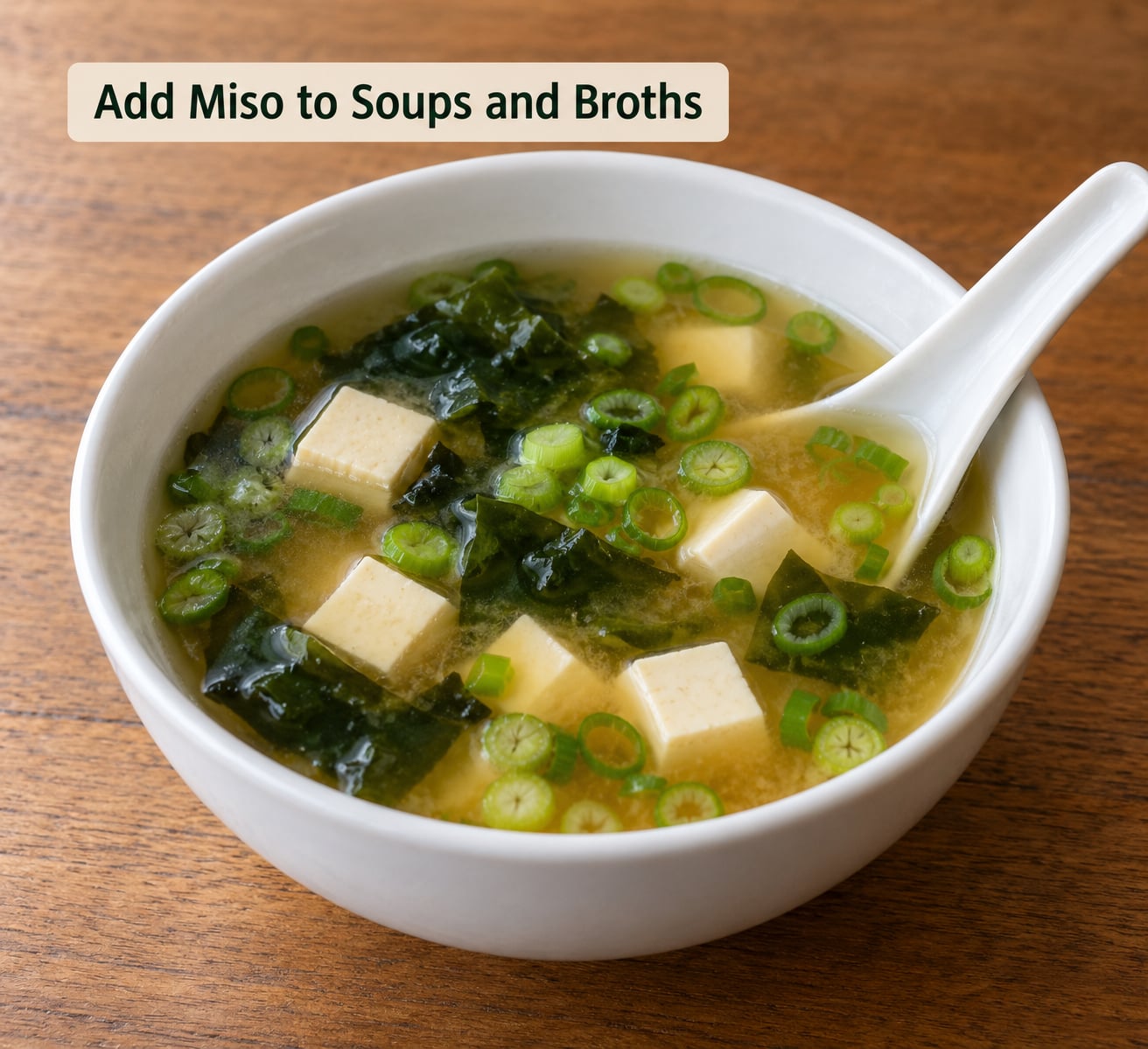
Turn the heat down or turn it off, ladle a little hot broth into a bowl with the miso, whisk to a smooth slurry, then stir that back into the pot. Do this in the last minute of cooking rather than at the start.
For a pot that serves four, two tablespoons of white miso is a solid starting quantity. Add it in two stages instead of one, tasting after the first, because broth keeps concentrating as it simmers.
Dashi-style broths are the traditional pairing. A simple kombu and bonito dashi takes about fifteen minutes, and it is the flavor miso was designed to sit in.
Miso soup is where the other aromatics do their work. Grated ginger for heat, sesame oil added off the heat for fragrance, tofu for body, wakame or scallions for texture, and a small spoon of rice vinegar if the soup tastes flat rather than salty. Thin buckwheat noodles make it a meal rather than a starter.
4. Whisk Miso Into Everyday Sauces
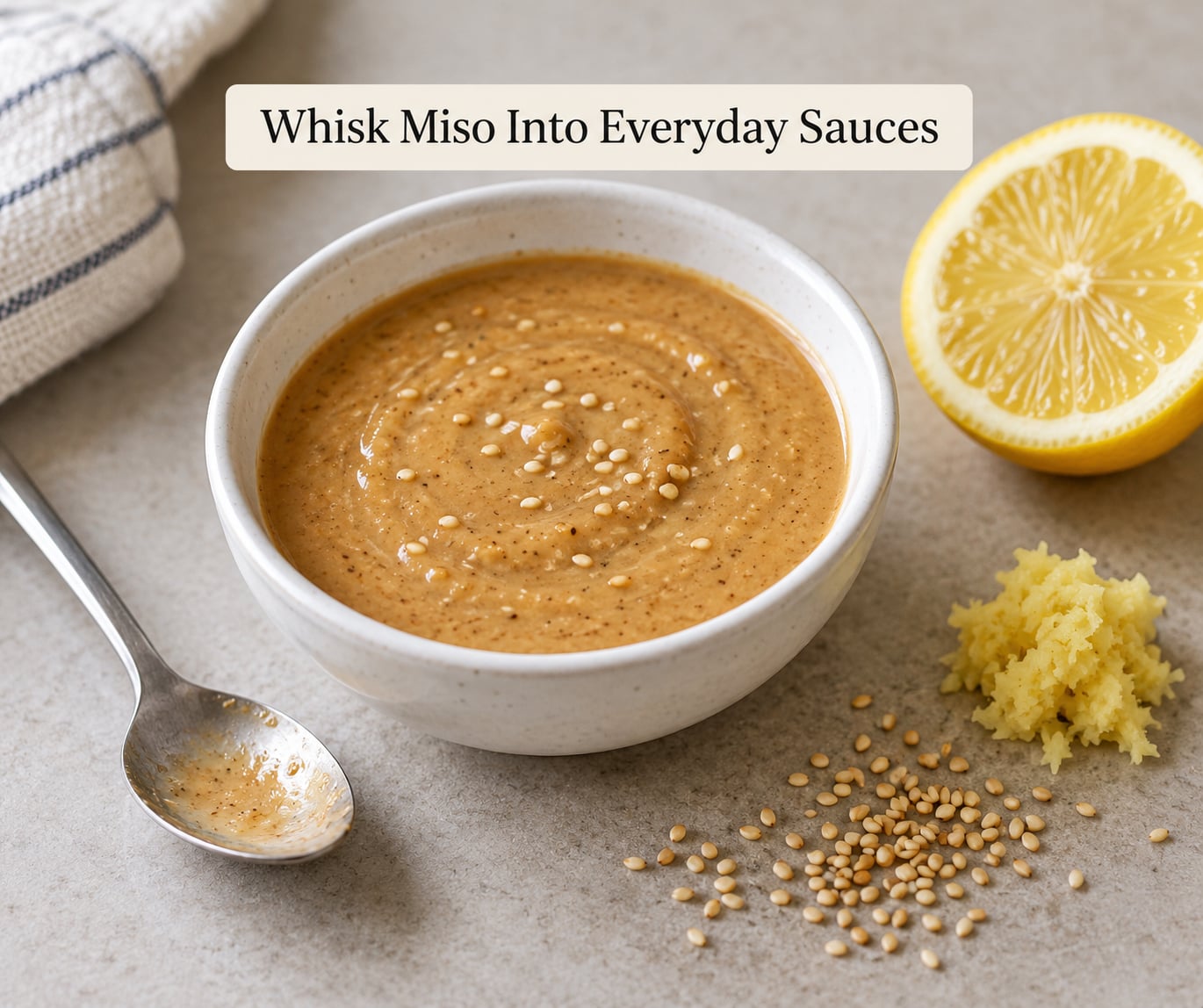
This is where miso earns its keep in a kitchen that does not cook Japanese food four nights a week. The technique is the same every time: dissolve first, then add fat or liquid, then taste.
For a creamy sauce, warm two tablespoons of miso with two tablespoons of warm water, then whisk it into yogurt, mayonnaise or softened butter. It works as a dip for vegetables, a spread for sandwiches, and a dressing for slaw. Mustard or a spoon of rice vinegar keeps a mayonnaise-based sauce from tasting flat.
For a pan sauce, whisk the diluted miso into hot butter and the fond at the bottom of the pan, then splash in wine or stock and let it reduce. That combination moves fast, so keep the pan off the heat once the miso goes in.
Balance with acid and sweetness rather than more salt. A quarter teaspoon of rice vinegar, a squeeze of citrus, a teaspoon of honey or maple, or a splash of mirin will fix a sauce that reads only salty. If a sauce splits or turns greasy, whisk in a tablespoon of cold water at a time off the heat.
Miso also makes a convincing savory note in a carbonara or Alfredo-style white sauce, in a béchamel made with milk instead of stock, and in a vegan cheese sauce built from cashews and nutritional yeast. A teaspoon in a pan of roasted vegetables dressed after cooking does more than a drizzle of oil.
5. Use Miso in Marinades, Glazes, and Dressings
A useful starting ratio is two parts miso to one part mirin or sake, with a teaspoon of sugar or honey per tablespoon of miso. That gives you the sweet-sour-salty profile that glazes well and does not need soy sauce at all.
For a marinade, mix the miso with a little neutral oil and the liquid of your choice, then coat vegetables, tofu, fish or chicken and let it sit. Fifteen to thirty minutes for fish and vegetables, up to a few hours for tofu and chicken. Red miso holds up to longer sitting than white does.
Reserve a third of the glaze before the raw protein goes into the pan. Spoon or brush it on during the last few minutes of cooking so it caramelizes without burning. Miso burns fast because of its sugar, so watch it closely and keep the heat moderate.
When you cook poultry, take the internal temperature to 165°F or 74°C before serving, regardless of how long the marinade sat. Ground meat needs 160°F or 71°C, and fish and whole cuts of beef or pork need 145°F or 63°C. The glaze goes on after the food is safe, or during the final minutes of cooking once the temperature is already on its way up.
Eggplant, corn, shishito peppers and tofu all take a miso glaze well on a sheet pan, brushed on halfway through roasting. The glaze thickens and sticks as the moisture cooks off, which is the point.
6. Fold Miso Into Quick Weeknight Meals
Most of these take less time than the rice.
- Scrambled eggs. Whisk a teaspoon of white miso into the eggs before they hit the pan, or spread miso butter on toast and pile the eggs on top.
- Oatmeal and grains. Stir a teaspoon into cooked oatmeal, rice or quinoa. It reads as a savory, nutty note rather than anything obviously fermented.
- Roasted or steamed vegetables. Toss broccoli, carrots, potatoes or squash with a spoon of miso and oil before roasting, or add a teaspoon to the cooking liquid while steaming.
- Noodles. Any brothy noodle dish takes miso in the last minute. Cold noodles dressed with miso, rice vinegar, a little sugar and sesame oil is a ten-minute lunch.
- Mashed potatoes. Beat a tablespoon into warm butter with cream or milk. Miso stands in for some of the salt in a heavily salted mash.
- Burgers and sandwiches. Thin miso butter or a miso-mayo on the bun brings the same depth as months of simmering.
- Breakfast grain bowls and pancakes. A spoonful of miso maple drizzle works as a salty-sweet topping, thinned with a teaspoon of warm water.
- Sloppy joes and chili. A tablespoon stirred into the sauce at the end adds the depth that usually takes an hour of simmering.
As a general rule, add miso during cooking when the dish is hot and wet, and serve it as a finishing condiment when the food is crisp or cool. A drizzle on roasted potatoes or a side of miso butter on hot bread keeps more of the aroma than stirring it into the pan.
Common Mistakes
Too much miso. You cannot stir it back out. Add more liquid, more unsalted stock, unsalted rice, yogurt or butter, then sharpen the dish with rice vinegar, citrus or a spoonful of honey. Next time, halve the amount and taste.
Adding it too early. Miso that simmers for a long time loses its aromatics and turns flat, and people often read that as bitterness. Add it in the last minute over low heat instead.
Hard boiling. A brief boil is not dangerous, but a rolling boil drives off the volatile aromatics and can affect the live cultures that make miso interesting. Warm miso through a soup or whisk it into a sauce, then take the heat down.
Lumps. Undissolved miso shows up as thick pasty streaks, mostly in cold sauces. Whisk it with warm liquid before it goes in, and add the liquid a little at a time.
Forgetting the salt elsewhere. This is the most common version of oversalting. If the dish already contains soy sauce, stock, cheese or salted butter, cut that back by roughly the amount of miso you are adding and taste before adding more salt anywhere.
Reaching for a strong miso out of habit. Younger, paler miso has more aroma and less salt. Save the deeply fermented tub for slow cooking, not for a weeknight sauce.
Pairings that swallow it. Very bitter greens, heavy chili, black coffee and raw onion flatten miso rather than highlight it. Mild fish, cabbage, mushrooms, sweet potatoes, eggs and dairy all let it read clearly.
A tub that sat too long. Older miso is softer and more concentrated, so it is also saltier. Use less of it. If it is beyond its date but looks and smells normal, misozuke is a good rescue: bury cucumber, radish, carrot or aubergine cubes in it, press out the air, and refrigerate. The vegetables pickle in a few days and the paste gets used up.
Frequently Asked Questions
Can you boil miso when cooking?
You can heat miso without any risk, and a soup that hits a hard boil for a moment is not ruined or unsafe. It simply loses some aroma, because the volatile compounds that give miso its character do not like hard boiling. If you want the fullest flavor and the live cultures that people eat miso for, dissolve it in a ladle of warm broth and stir it in after you turn down the heat. Simmering miso for a long time tends to taste flat rather than bitter.
Which type of miso is best for beginners?
White miso, also called shiro, is the easiest place to start. It is pale, mildly sweet, lower in salt and dissolves more smoothly than red or barley miso, so small mistakes are easy to correct. It works in dressings, creamy sauces, eggs, oatmeal and baked goods without dominating the dish. Move to red miso once you are comfortable, using it for marinades, glazes and long braises where its stronger flavor belongs.
Can miso be used in vegetarian or vegan meals?
Plain miso is fermented soy, salt and koji, so it contains no animal products and works well in plant-based cooking. Check the label, because some commercial misos are blended with bonito dashi or other fish products. Miso is the workhorse of vegan savory cooking: it gives a vegan cheese sauce, a cashew-based mac and cheese, mushroom gravy or a sloppy joe sauce the salty depth that would otherwise need animal products.
How much miso should I add to soup?
Start at one teaspoon per serving, and two tablespoons for a pot that serves four. Dissolve it in a ladle of hot broth first, stir it back in, and taste before adding any other salt. Red miso is saltier and more intense than white, so use less of it. If the soup tastes flat rather than salty, add grated ginger, a splash of soy sauce or a spoon of rice vinegar instead of more miso.
How should miso be stored, and can it be used after opening it?
An unopened tub keeps in a cool cupboard until the date on the label. After opening, press out air, wipe the rim, seal it tightly and refrigerate, and plan to use it within a few months. Miso gets darker and milder as it ages, which is normal, so leftover miso from last month is perfectly usable. Discard it if you see mold, a fizzy or swollen surface, or an unfamiliar smell, and always use a clean dry spoon.
Conclusion
Start with a spoonful, not a philosophy. Mix a teaspoon or two of white miso with a few tablespoons of warm liquid until smooth, stir it into your dish over low heat in the last minute, and taste before you add any other salt. If something is missing, add rice vinegar, honey or sesame oil rather than more miso.
That one habit covers soups, sauces, marinades, eggs, vegetables and grains. Once it is automatic, keep a pale tub for weeknight cooking and a red one for glazes, and the leftover problem disappears.