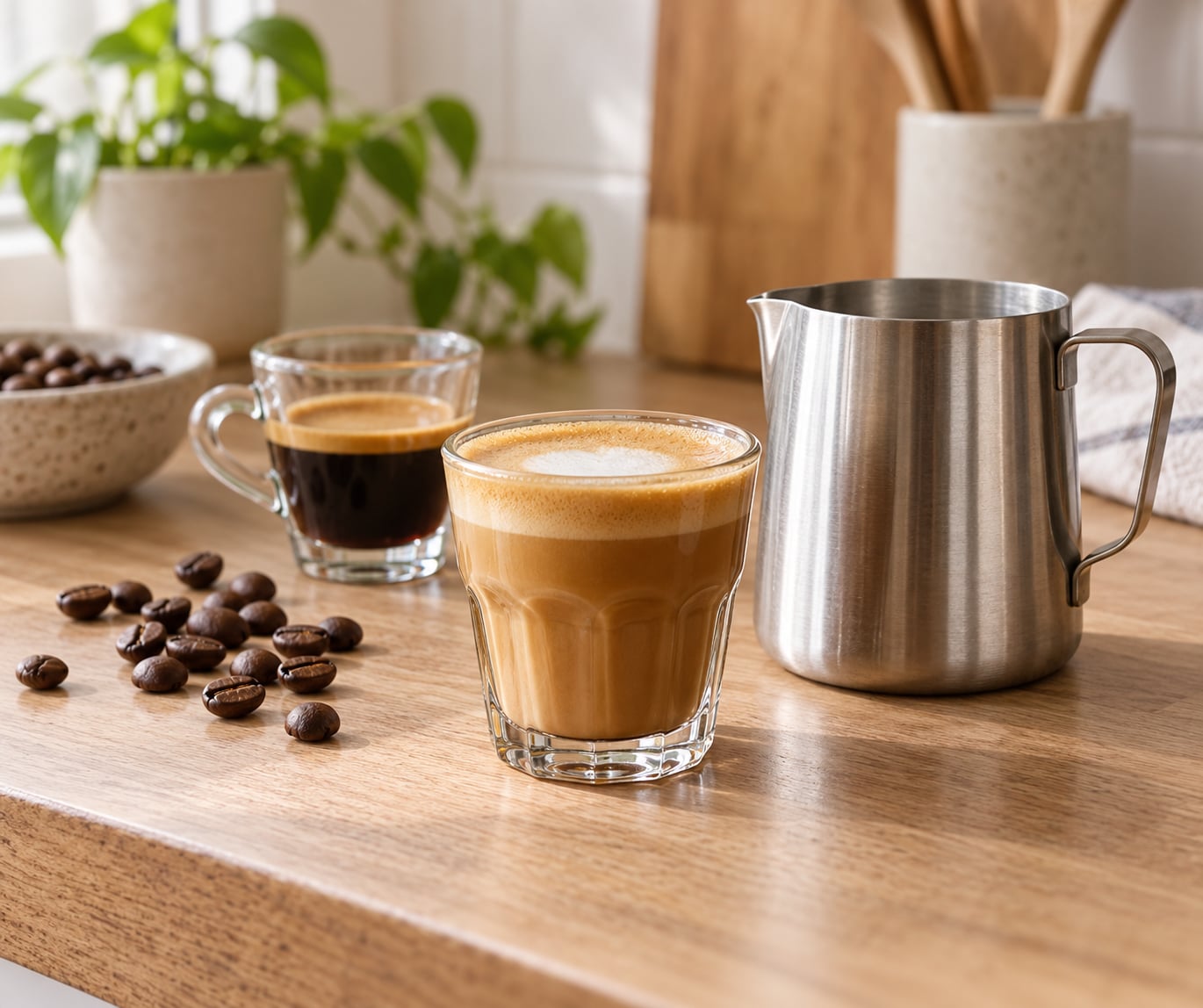
A cortado is equal parts espresso and warm, lightly textured steamed milk, served small in a 100-150 ml glass, roughly a 1:1 ratio by weight with no dry foam on top. Learning how to make a cortado and what makes it different comes down to two things: a double shot you actually like, and just enough microfoam to soften it without hiding it.
It takes about five minutes once your steam wand makes sense, and it is the drink to make on a morning when a latte feels too milky and a cappuccino too foamy. I will walk through the method first, then the differences that actually define it.
One warning before we start: menu language is a mess right now. The same word gets used for two different drinks in different countries, and even in 2026 most cafes swap between cortado and flat white without blinking. Learn the proportions and you can order or make either one on purpose.
Table of Contents
- What You Need
- The espresso
- The milk
- The kit
- Step-by-Step: How to Make Cortado and What Makes It Different
- Step 1: Prepare and Pull the Espresso
- Step 2: Steam the Milk to a Silky Texture
- Step 3: Combine Espresso and Milk
- Step 4: Taste and Adjust the Cortado
- Common Cortado Mistakes and How to Fix Them
- 1. The drink tastes weak or washed out
- 2. The milk smells burnt or tastes cooked
- 3. You have a dry foam cap and made a cappuccino
- 4. Your machine’s minimum brew volume overfills the cup
- 5. The milk separates or looks broken
- Frequently Asked Questions
- What is special about a cortado?
- Is a cortado basically a flat white?
- What is the ratio of coffee to milk in a cortado?
- Does a cortado have foam, and what temperature should the milk be?
- Why does my cortado taste weak?
- Do I need a Gibraltar glass to make a cortado?
- Conclusion
What You Need
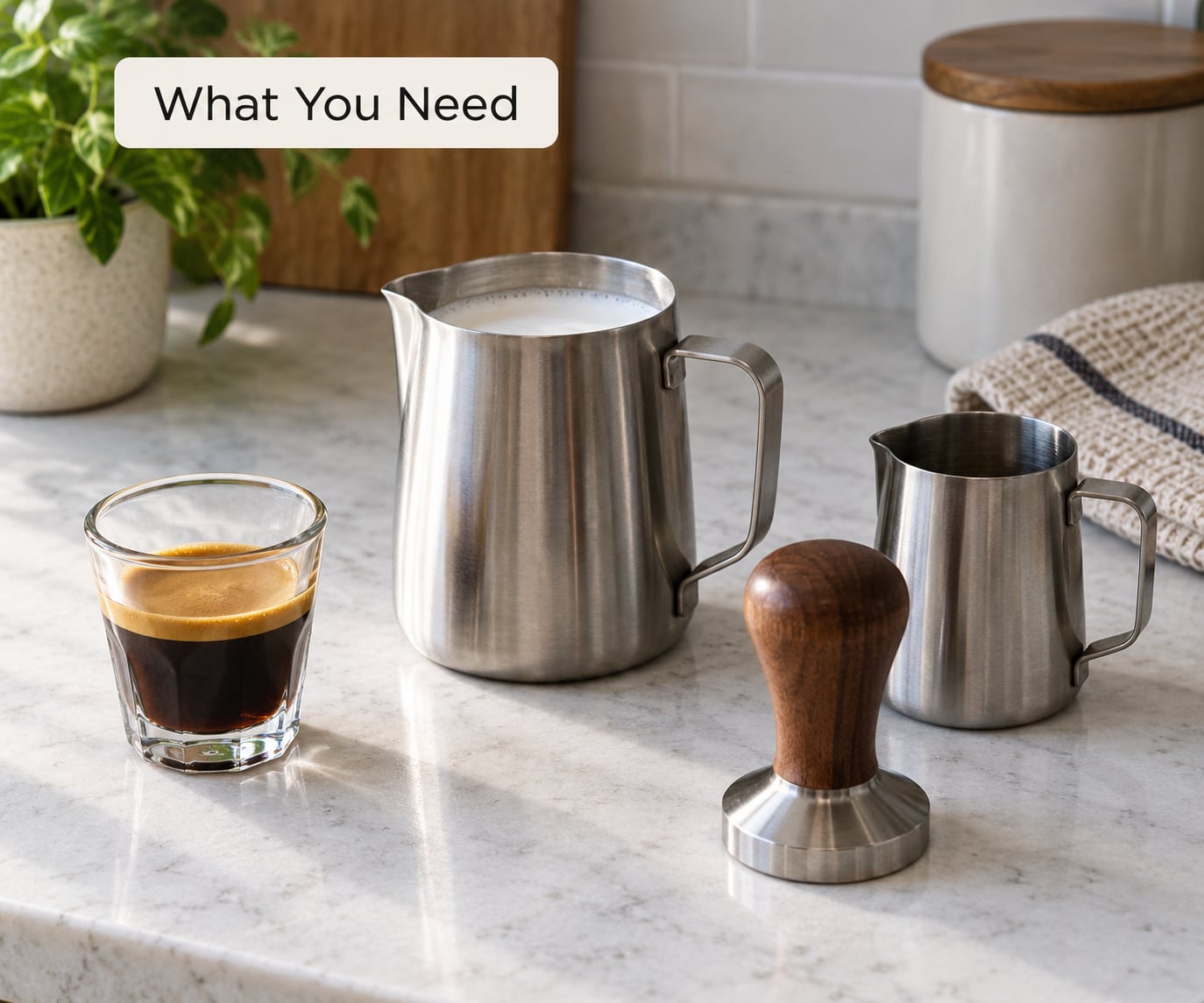
The espresso
A double shot of 18 g in, extracting to roughly 36-40 g out in 25-30 seconds. That is the 1:2 brew ratio, and it is the single biggest lever on whether your drink tastes like coffee or like warm milk.
The milk
About 60 ml (2 oz / a small cup) of whole or 2% dairy. Anything from a carton works, though barista editions of oat and soy are formulated to steam and hold texture better than the grocery versions, which split and taste thin when heated.
The kit
- An espresso machine with a steam wand, or any machine that makes a decent double shot
- A small metal pitcher, around 350-450 ml, so you can actually get the wand tip near the surface
- A 100-150 ml glass or demitasse. A Gibraltar tumbler is the classic choice, but any small heavy glass works
- Optionally a scale, a tamper and an instant-read thermometer
No wand at all? A handheld frother, or even a whisk and a few minutes of elbow grease, gets you the temperature right even if the microfoam is coarser. The milk still works.
Step-by-Step: How to Make Cortado and What Makes It Different
Step 1: Prepare and Pull the Espresso
Dose 18 g of coffee into the basket, tamp level, and pull to 36-40 g. Watch the stream rather than the clock. It should start dark and slow, run honey-colored through the middle, and finish pale with a thin caramel streak a couple of seconds before it stutters out.
When it runs, you want a thick hazelnut-colored crema on top. No crema or a thin, streaky one usually means the dose was light or the shot channeled, and your milk will not fix that.
No portafilter machine? An automatic bean-to-cup can do it: pick the double espresso or ristretto size, and use the manual steam wand or the milk jug if your machine has one. A capsule machine is the same idea in miniature, since a double espresso capsule gives you roughly the right volume. A moka pot or AeroPress makes a stronger, more concentrated brew, so pull about 40-45 ml and treat it as the espresso half.
Step 2: Steam the Milk to a Silky Texture
Fill the pitcher just past the bottom of the steam tip, about 60 ml. Put the tip on the surface of the milk and open the valve for one short breath to stretch it, then drop the tip just under the surface so the milk spins and rolls. You want a quiet whirlpool, not a tearing, screaming sound.
Stop at 55-65°C (131-149°F). Below that the milk tastes thin and the texture never comes together; above about 70°C the lactose and proteins start breaking down, which is where the flat, cooked, hazelnut-sweet aftertaste in a scorched drink comes from. If your machine has no thermometer, the pitcher is too hot to hold a flat palm against for more than a second or two.
The texture you want is wet microfoam, which reads as glossy and pourable. Hold the pitcher at an angle under a light and look for a sheen on the surface with no visible dry bubbles. Dry foam feels stiff and sits up in a mound. Wipe the wand, knock the pitcher on the counter once or twice to settle big bubbles, and do not swirl it afterwards.
Step 3: Combine Espresso and Milk
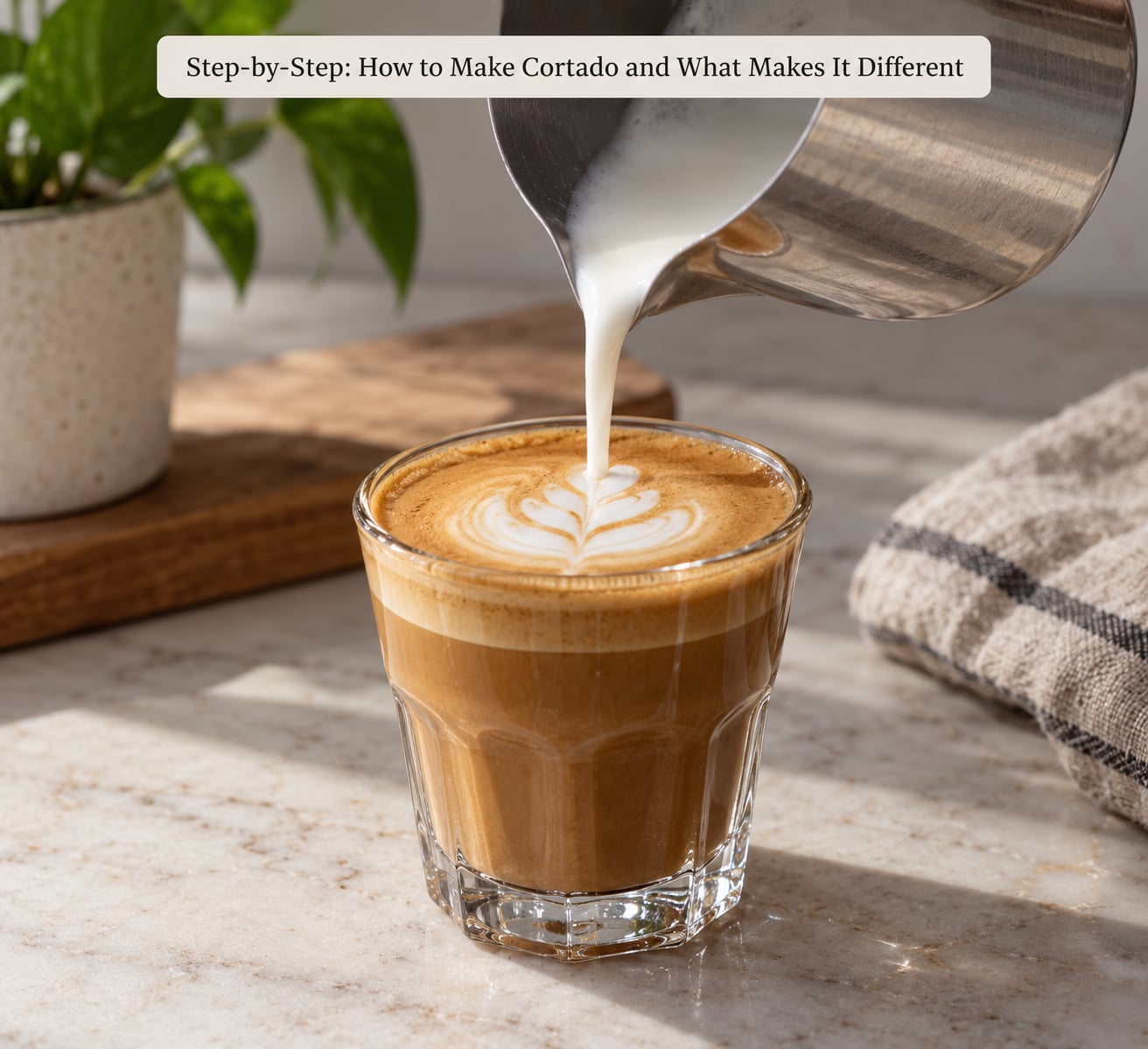
Pour about 60 ml of the steamed milk into the espresso so you land near 1:1 by weight. Start low and thin, pouring from just above the surface, then raise the pitcher slightly and let a small amount of foam ride on top as you finish. That thin layer is normal; a thick cap is not.
If you pour from height for a pattern, keep the pour small and quick, because a cortado is nearly full. A simple leaf is easy; a rosetta is not, and nobody at the cafe counter will think less of a spotless surface.
This is where the difference from every other drink on the menu becomes obvious. Same double shot everywhere, but how much milk lands on top of it:
| Drink | Espresso to milk | Milk texture | Typical size |
|---|---|---|---|
| Espresso | No milk | None | 30-40 ml |
| Espresso macchiato | About 4:1 | A teaspoon of dry foam as a mark | 40-50 ml |
| Piccolo | About 2:1, with a ristretto | Wet microfoam | 60-90 ml |
| Cortado | About 1:1 | Wet microfoam, glossy, no cap | 100-150 ml |
| Flat white | About 1:2 | Wet microfoam, thinner pour | 150-180 ml |
| Cappuccino | About 1:1 | Deep, dry foam cap | 150-200 ml |
| Latte | About 1:3 to 1:5 | Mostly milk, very light foam | 240-350 ml |
A cortado and a cappuccino share the same ratio and differ only in the foam. A cortado and a flat white share the foam and differ only in the volume. That is the whole trick, and it is why the drink tastes both softer and stronger than anything else on that list.
Step 4: Taste and Adjust the Cortado
Sip it and ask four things. Is the coffee readable, or does the milk win? Is the temperature right? Is the texture creamy rather than foamy? Is the sweetness coming from the milk or from the beans?
If it tastes weak, add less milk or move to a smaller glass before you touch the grinder. Then lengthen the shot by a few grams. If it is too sharp for your taste, add 10 ml more milk or steam it a degree or two hotter. Make one change at a time.
Common Cortado Mistakes and How to Fix Them
Most disappointing cortados come down to one of five things, and only the last one is really about your beans.
1. The drink tastes weak or washed out
Fix: cut the milk, not the coffee. Pour 45-50 ml instead of 60 ml, or use a smaller glass so the ratio tightens. Only if it still tastes thin should you grind finer or move the yield up to 40 g. Home drinkers often blame the grind when the actual problem is a 200 ml cup.
2. The milk smells burnt or tastes cooked
Fix: start over with fresh cold milk and stop at 55-65°C. Steaming a tiny volume heats quickly, so keep the pitcher moving and check early and often. Small volumes also sit below the reach of some domestic steam wands, where the tip never breaks the surface and the milk just scorches from below.
3. You have a dry foam cap and made a cappuccino
Fix: drop the pitcher so the tip sits a few millimetres under the surface, and stop introducing air after the first breath. Over-aeration is the single most common home mistake. Read the result by gloss and flow, not by volume: if it pours like cream, it is right.
4. Your machine’s minimum brew volume overfills the cup
Fix: brew a double, then pour only half into the cup and prepare the second half fresh, or use a machine setting that stops short and finish with a splash of hot water. Some portafilter machines will not pull less than a double anyway, so scale the milk rather than the shot.
5. The milk separates or looks broken
Fix: heat too slowly or too high and the proteins clump. Keep the whirlpool active, wipe and purge the wand between every jug, and pour the milk within a minute or two of steaming. Fresh milk, not warm milk left out on the counter.
A couple of habits worth keeping: use filtered water, because hard water dulls the shot and soft water tastes flat; and rest your beans a week or two after roasting so the espresso settles before you judge the ratio.
Frequently Asked Questions
What is special about a cortado?
A cortado is defined by balance. It uses roughly equal parts espresso and steamed milk, which softens the coffee’s acidity and adds body while keeping the aroma, crema and origin character of the shot readable. Most other milk drinks either dilute the coffee much further or cover it in foam, so the espresso disappears rather than being tempered.
Is a cortado basically a flat white?
Very close, and often confused on menus. A flat white carries more milk, usually around twice the espresso by volume, in a slightly larger cup, so it reads softer and less intense. A cortado stays near a 1:1 ratio in a 100-150 ml glass. If you want the coffee louder, order the cortado; if you want it rounder, order the flat white.
What is the ratio of coffee to milk in a cortado?
About 1:1 by weight, which means roughly 18 g of coffee in, 36-40 g of espresso out, and about 60 ml (2 oz) of steamed milk. Treat that as a starting point rather than a rule. A slightly longer, sweeter shot suits light roasts, while a darker roast often tastes better with a little less milk, so around 1:1 to 1:1.5 covers most preferences.
Does a cortado have foam, and what temperature should the milk be?
It has integrated microfoam, not a foam cap. Aim for 55-65°C (131-149°F), stopping at the point where the milk is glossy, wet and pourable. Much hotter and the milk tastes cooked and flat; much cooler and the texture stays thin and watery. If you want an actual layered foam drink with the same ratio, that is a cappuccino.
Why does my cortado taste weak?
Nine times out of ten it is volume, not grind. A 200 ml cup filled with 90 ml of milk is closer to a flat white than a cortado, so the coffee reads thin. Use a smaller glass or pour less milk first, and only then adjust the grind or the shot yield. Also check that you are drinking it within a minute of pouring, while the crema is still intact.
Do I need a Gibraltar glass to make a cortado?
No. A Gibraltar tumbler is the traditional vessel and about 133 ml, which happens to suit the drink well, but any small heavy glass between 100 and 150 ml works. A demitasse is fine if you scale the milk down. Some US cafes also use the word Gibraltar for a cortado-style drink served in that glass, which is part of why the naming gets confusing on menus.
Conclusion
Start with one move: pull a fresh double espresso and steam 60 ml of milk to a glossy, pourable microfoam at 55-65°C, then pour them together in a small glass at roughly equal parts. Taste it, and if it reads thin, take the milk down before you change anything else.
That is the whole difference. A cortado keeps the coffee loud enough to taste, uses just enough milk to round it off, and skips the foam cap that turns the same ratio into a cappuccino. Once the proportions feel right, a flat white and a latte are just the same drink with more milk and a bigger glass.