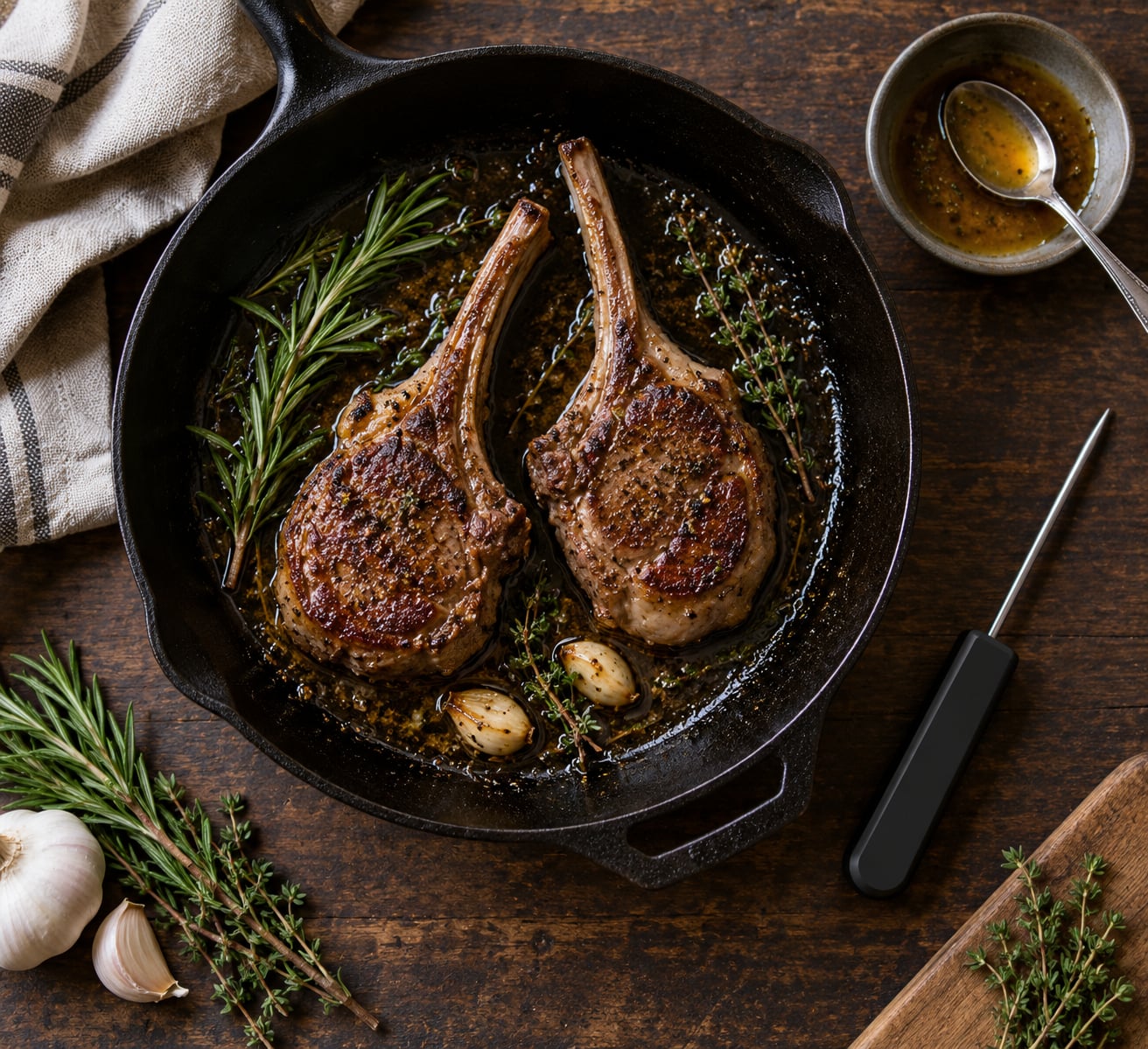
How to cook lamb chops on the stovetop takes about 20 minutes start to finish: a hot cast-iron skillet, salt and pepper, then a basting spoon and a little butter. Sear each side until deeply browned, baste with garlic and herbs, check the temperature, and rest the chops before slicing. The whole thing uses one pan and no grill.
Lamb has less internal fat than beef, so it moves from juicy to dry faster than most people expect. That makes precision the whole game: a hot pan, a dry chop surface, and a thermometer instead of a timer.
- Temper and season: sit the chops out for 20 minutes, pat them dry, then salt and pepper both sides right before they hit the pan.
- Preheat the pan: heat a heavy skillet over medium-high until a drop of water skitters, then add a thin layer of oil.
- Sear: lay the chops in away from the handle and leave them alone for about 3 minutes per side.
- Baste and rest: spoon butter, garlic and herbs over the chops for 2 to 3 minutes, pull at 125°F / 53°C, then rest 5 minutes.
I cook lamb chops this way most weeks, and the two habits that changed my results were drying the meat properly and reading the thermometer early rather than at the end. Everything else is detail.
Table of Contents
- What You Need
- Step-by-Step: How to Cook Lamb Chops on the Stovetop
- How to Cook Lamb Chops on the Stovetop: Season and Sear
- Flip and Cook to the Right Doneness
- Rest the Lamb Chops
- Make a Quick Pan Sauce
- Common Mistakes
- Tips for the Best Stovetop Lamb Chops
- Frequently Asked Questions
- Can I cook lamb chops in a nonstick skillet?
- Do lamb chops need to come to room temperature before cooking?
- Should I cook lamb chops from frozen?
- How thick should lamb chops be for stovetop cooking?
- Can I make the pan sauce without wine?
- How long should cooked lamb chops be stored in the refrigerator?
- Conclusion
What You Need
The list is short because lamb chops need very little to turn into a weeknight dinner.
- Lamb chops, 1 inch thick if possible. Rib chops or loin chops both work. Loin chops cook faster and taste like a small T-bone; rib chops carry more fat and more flavour.
- Kosher salt. Coarse ground gives you a better crust than fine sea salt. If you only have fine salt, use about half as much.
- Freshly ground black pepper. Add it with the salt, before the heat, so it toasts into the crust.
- A high-heat oil such as canola, avocado or grapeseed. Olive oil works, but regular extra-virgin has a low smoke point and turns bitter in a screaming-hot pan.
- Salted butter, 2 to 3 tablespoons. This is the baste, and it carries the garlic and herbs.
- 2 garlic cloves, lightly crushed or minced. Add after the butter melts and keep the baste short so it does not scorch.
- Fresh rosemary and thyme sprigs. Dried herbs work in a pinch, though fresh has more aroma.
The pan matters more than anything else on that list. A 10-to-12 inch cast-iron skillet or heavy stainless skillet holds heat evenly, which is how you get a crust on the whole surface instead of a browned band on one side. Thin nonstick pans cannot get hot enough without smoking the oil.
Two optional tools are worth having. An instant-read thermometer lets you stop cooking at the exact temperature you want instead of guessing. Tongs let you turn the chops without puncturing the crust and letting juices run out.
Step-by-Step: How to Cook Lamb Chops on the Stovetop
How to Cook Lamb Chops on the Stovetop: Season and Sear
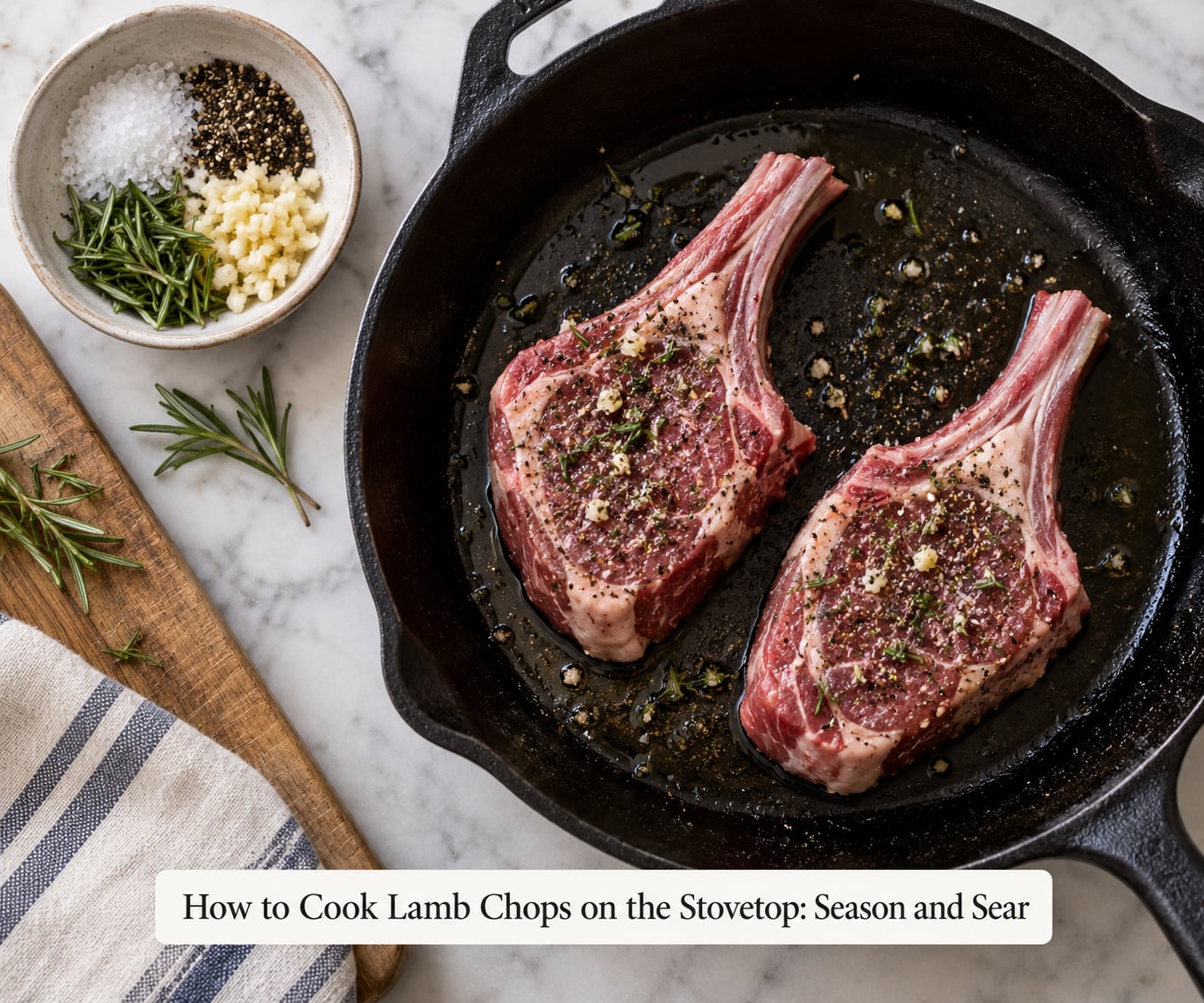
Take the chops out of the fridge 20 minutes before cooking. Starting at room temperature is the difference between an evenly cooked centre and a raw core surrounded by a brown crust.
Pat both sides thoroughly dry with paper towels. Moisture is the enemy of browning: wet meat steams instead of searing, and you end up with a pale grey patch instead of a crust. Trim only the thickest slabs of external fat and leave a thin layer behind, because that layer bastes the meat as it renders.
Season generously on both sides with salt and pepper, right up against the heat.
Heat the skillet over medium-high for about two minutes. Flick a drop of water into the centre: if it evaporates with a sharp hiss and skitters across the surface, the pan is ready. Add about a tablespoon of oil and let it shimmer but not smoke.
Lay the chops in flat, away from the handle so splattering fat goes the other way. Press them down lightly, then step back. The loud, confident sizzle tells you the pan was hot enough; a quiet hiss means it was not, and the chops will grey before they brown.
Cook without touching them for roughly 3 minutes on a 1 inch chop. You want the edges to curl slightly and the crust to be deep brown before you turn.
Flip and Cook to the Right Doneness
Turn the chops with tongs and cook another 2 to 3 minutes on the second side.
Add the butter now, let it foam, then tilt the pan and spoon the foaming butter over the chops for 2 to 3 minutes. Drop in the garlic and herb sprigs for the last minute. Add garlic too early and it burns; add it at the end of the baste and it stays sweet.
Here is where most home cooks go wrong, because they trust the clock instead of the meat. Cook time varies with thickness, starting temperature and how hot your burner really runs, so use a thermometer and check early.
Probe the thickest part of the chop, away from the bone, and pull several degrees below your target. Residual heat keeps cooking the meat after it leaves the pan, which is why a chop pulled at 125°F / 53°C often lands near 130°F / 54°C on the plate.
| Doneness | Pull off the heat | Final temperature | Texture |
|---|---|---|---|
| Rare | 115–120°F (46–49°C) | 120–125°F (49–52°C) | Very soft, quite pink |
| Medium-rare | 120–125°F (49–52°C) | 125–130°F (52–54°C) | Deep pink centre, juicy |
| Medium | 130–135°F (54–57°C) | 135–140°F (57–60°C) | Pink-grey centre |
| Medium-well | 135–140°F (57–60°C) | 145°F (63°C) | Mostly cooked, still moist |
| Well done | 145°F (63°C) | 160°F (71°C) and up | Firm and noticeably drier |
For food safety, the USDA recommends cooking whole cuts of lamb to an internal temperature of at least 145°F / 63°C with a three-minute rest. Most home cooks serve lamb chops well below that, which is a matter of preference rather than safety, but the 145°F figure is the official minimum.
Times shift with thickness, so scale from these numbers for a 1 inch chop taken from a tempered fridge:
| Chop thickness | First side | Second side | Baste | Approx. total |
|---|---|---|---|---|
| 3/4 inch | 2–3 min | 2 min | 1–2 min | 6–8 min |
| 1 inch | 3 min | 2–3 min | 2–3 min | 8–10 min |
| 1.5 inch | 4 min | 4 min | 2–3 min | 10–13 min |
| 2 inch | 5 min | 5 min | 2–3 min | 12–15 min |
If your chops are thicker than 1 inch, add 1 to 2 minutes per side. A recipe written for a 1 inch chop will leave a 2 inch chop raw in the middle, and running it longer to fix that is how you end up with a dry chop.
Rest the Lamb Chops
Move the chops to a warm plate or a small board and wait 5 minutes. Rib chops can take 8 to 10 if you want the maximum juiciness.
Resting lets the muscle fibres relax and reabsorb the juice that pushed out during cooking. Slice too early and that juice ends up on the cutting board instead of in the meat. Loosely tented with foil, the chops will not cool enough to matter in 5 minutes.
The temperature keeps climbing while they sit. If you pulled at 125°F / 53°C, expect about 130°F / 54°C when you cut. That climb is normal, not overcooking.
Make a Quick Pan Sauce
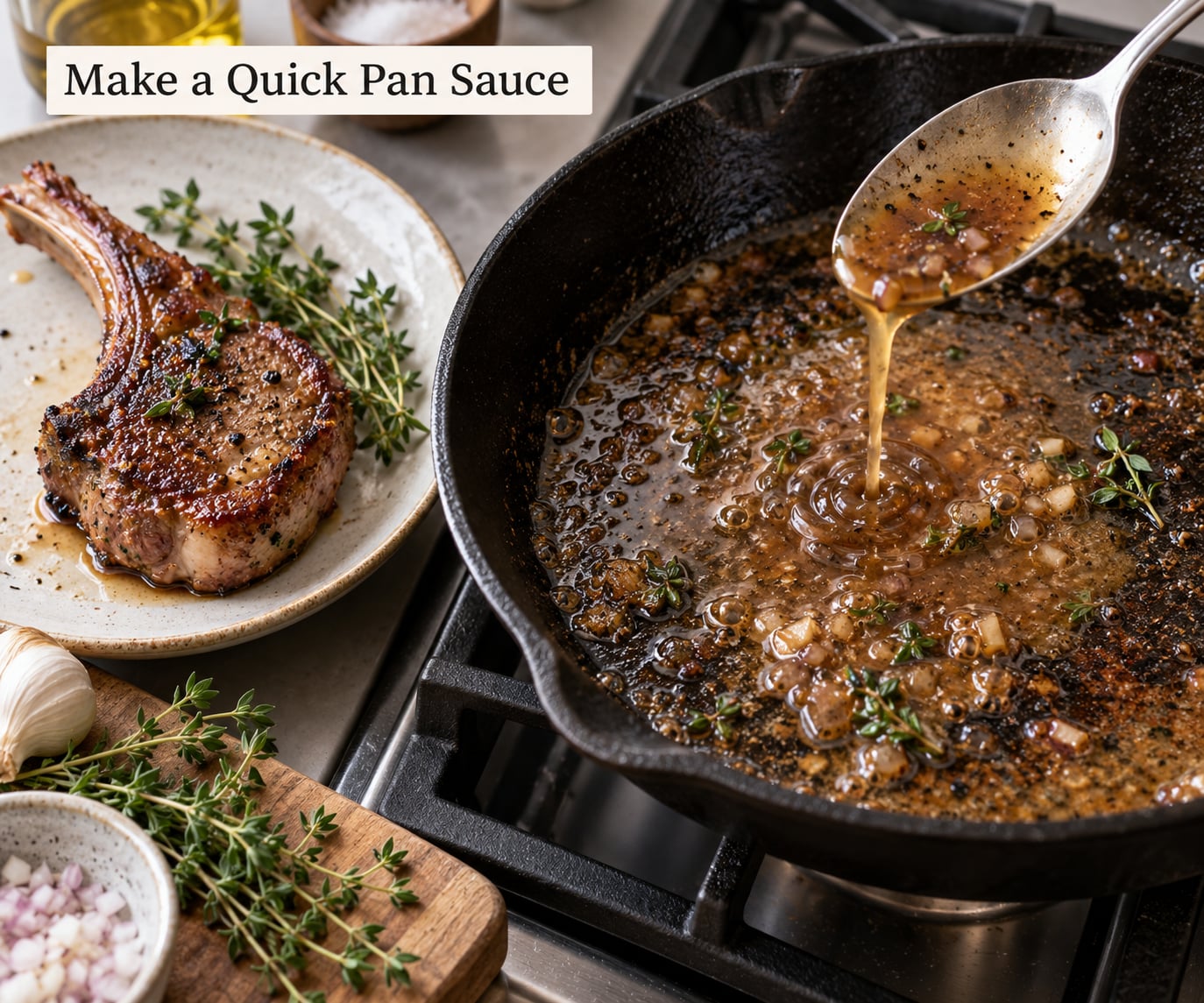
The browned bits stuck to the pan, called the fond, hold more flavour than the meat does. Loosen them and you have a two-minute sauce that ties the whole plate together.
Take the pan off the heat and pour in about half a cup of chicken or beef stock, dry white wine, or even plain water. Scrape with a wooden spoon until the fond lifts. Return it to low heat and reduce by half.
Whisk in one more tablespoon of cold butter, a squeeze of lemon, and a pinch of salt. Keep the pan off high heat, or the emulsion breaks and the sauce turns grainy.
Two easy swaps: skip the wine and use stock with a spoon of Dijon mustard, or go dairy-free and whisk in an extra tablespoon of olive oil instead of butter. The sauce is optional; the chops are already good on their own.
Common Mistakes
Almost every disappointing lamb chop traces back to one of eight things.
- Crowding the pan. More than four chops drops the temperature and traps steam. Cook in two batches, or use two skillets.
- A pan that was not hot enough. The oil should shimmer before the meat goes in. No shimmer means a grey crust and a dry chop.
- Moving the meat too early. Let it sit until the crust releases on its own. Flipping early tears the surface and sticks.
- Relying on time alone. A chop that reads 160°F / 71°C after four minutes per side was either too thick or started cold. Read the thermometer.
- Cutting before resting. You lose the juice you just worked to keep in there.
- Scorched garlic. Add garlic only for the final minute of the baste. It goes from sweet to bitter in seconds.
- A cold centre. Probing right next to the bone gives a false low reading. Aim for the thickest part, away from the bone, and check more than one chop.
- A burnt pan sauce. Deglaze while the pan is still hot but take it off the burner first, then reduce over low heat.
If a chop comes out well past your target, it will not recover. Slice it thin and serve it over warm salad or grain bowls, where the moisture helps.
Tips for the Best Stovetop Lamb Chops
A few refinements take a good chop to a great one.
Match the thickness. Buying chops cut from the same end of the rack means they finish at the same time. If one is noticeably thicker, cut it down to match or cook it first and hold it.
Keep the pan dry before the oil goes in. A drop of water left in the pan sputters and spits.
Control the heat yourself. Medium-high should give a steady, aggressive sizzle. If the butter browns in the first 30 seconds of the baste, turn it down.
Use the thermometer early. One reading at the halfway point tells you whether to add a minute or skip it.
Finish thick chops in the oven. For a 2 inch chop, sear 3 minutes per side, then move the pan to a 375°F / 190°C oven until the thermometer reads your target. It cooks more evenly than sitting on the burner.
Change the seasoning, not the method. The same sear-baste-rest sequence works with mint sauce, a balsamic reduction whisked in at the end, harissa in place of the pepper, or a Montreal-style steak seasoning. For dairy-free, infuse the olive oil with garlic and rosemary overnight and basting with that.
Store leftovers properly. Refrigerate cooked lamb within two hours in a sealed container and use it in three to four days. Reheat gently in a skillet with a splash of stock rather than a microwave, which dries the edges.
Any thermometer in this kitchen is worth its price, and the closest substitute is not a timer.
Frequently Asked Questions
Can I cook lamb chops in a nonstick skillet?
You can, but you will not get the same crust. Nonstick coatings are usually rated for medium heat, and a nonstick skillet needs two pans to match the heat capacity of cast iron. If nonstick is all you have, use it at medium-high, skip the butter baste to protect the coating, and lean on olive oil for the basting instead. A hot cast-iron or stainless skillet is the better tool here.
Do lamb chops need to come to room temperature before cooking?
They benefit from it. Twenty minutes out of the fridge is enough to take the chill off the surface and edge fat without letting the meat sit where it becomes unsafe. Straight-from-the-fridge chops spend longer cooking the outside before the centre catches up, which is a common reason for a raw middle. If you forget, just add a minute or two to the first side and check the temperature early.
Should I cook lamb chops from frozen?
No. Frozen chops need to thaw fully in the refrigerator, which usually takes 12 to 24 hours depending on thickness. Cooking from frozen leaves an icy core that never reaches temperature in the time the outside needs, and the meltwater ruins the crust. If you are in a hurry, you can sear the chop frozen and then finish it in the oven, but the texture is worse and the timing is hard to predict.
How thick should lamb chops be for stovetop cooking?
One inch is the sweet spot for a cast-iron skillet: three minutes a side plus a short baste gets you a browned crust and a medium-rare centre. Three-quarter-inch chops cook in six to eight minutes and dry out fastest, so pull them early. Anything at one and a half inches or thicker is better seared on the stove and finished in a 375F oven, because the centre takes too long to catch up on the burner.
Can I make the pan sauce without wine?
Yes, and the result is just as good. Chicken, beef or vegetable stock works on its own; add a teaspoon of Dijon mustard and a splash of vinegar at the end for the acidity that wine usually provides. Water works too, but it needs more aggressive reduction and more salt. Remember to take the pan off the burner before adding the liquid, then reduce slowly so the fond does not burn.
How long should cooked lamb chops be stored in the refrigerator?
Three to four days, stored in a sealed container and refrigerated within two hours of cooking. Keep the chops on a plate rather than loose in the pan so they do not sit in their own juices. Reheat in a skillet over low heat with a splash of stock, covered, for a few minutes rather than microwaving, which pushes moisture to the edges and leaves the centre dry. Do not reheat more than twice.
Conclusion
Start by patting the lamb chops dry and heating a heavy skillet until the oil shimmers. That single habit does more for the final plate than any ingredient you add.
From there the sequence is short: season, sear about 3 minutes per side for a 1 inch chop, baste with butter, garlic and herbs for 2 to 3 minutes, pull at 125°F / 53°C for a medium-rare centre, rest 5 minutes, and turn the pan drippings into a quick sauce. Learn to cook lamb chops on the stovetop with those five moves and it becomes the default answer for a weeknight dinner that tastes like it took all afternoon.