Blind baking means baking your pie crust on its own, weighted down, before the filling goes in. Chill the shaped shell at least 30 minutes, line it with parchment paper, fill it with 3 pounds or more of pie weights, and bake at 425°F (220°C) for 15 to 20 minutes. Pull the weights, then bake 10 to 12 more minutes until the base is dry and golden. Total hands-on time is about 20 minutes plus two chill waits.
It sounds fussy, but the whole job is preventing one thing: raw dough meeting a wet filling. Cream, custard, pudding, lemon curd, and fruit syrup all soak into unbaked pastry and leave you with a pale, damp bottom that never cooks through. A pre-baked shell has already set and dried, so the filling cooks at the speed it should and the crust stays crisp underneath.
Quick answer: 425°F (220°C) for 15–20 minutes with weights, then 10–12 minutes without them. Use at least 3 lb of weights per 9-inch shell, fill them above the rim, and rest the chilled shaped shell in the fridge for 30 minutes before it goes in the oven.
A note on temperature, since you will see 350°F, 400°F, and 425°F all recommended on the same question. 425°F is the right number for a conventional oven because the weighted stage needs enough heat to set the pastry fast before the butter melts and pools. 350°F works, but it takes roughly 10 extra minutes in each stage and gives a paler shell. If your oven runs hot or is more than a few years old, pull it back to 410°F rather than 425°F, and watch the crust rather than the clock.
Table of Contents
- What You Need
- How to Blind Bake a Pie Shell Step by Step
- How to Prepare the Pie Shell
- How to Add Weights Without Warping the Crust
- How to Remove the Weights and Finish Baking
- Common Mistakes
- Frequently Asked Questions
- What are the best weights for blind baking a pie shell?
- How long should I blind bake a pie crust?
- Do I need to prick the bottom of a pie shell before blind baking?
- Can I use dried beans instead of pie weights?
- Why is my pie shell shrinking while it bakes?
- Should I blind bake the pie shell before or after adding the filling?
- Conclusion
What You Need
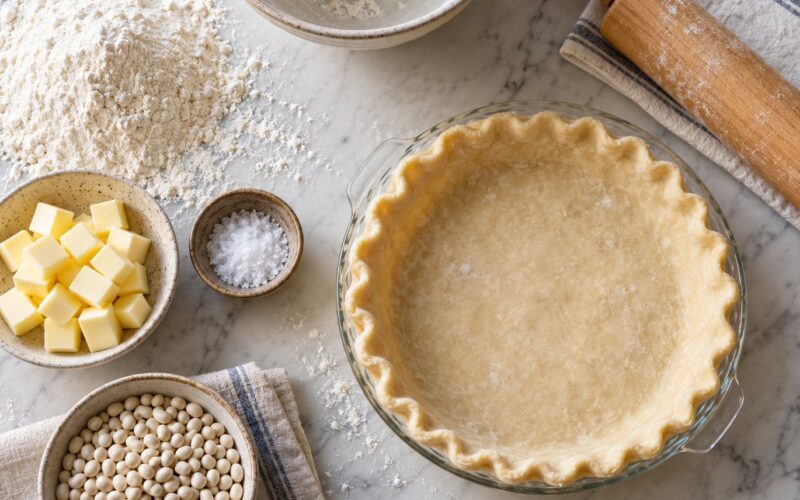
For a 9-inch pie you want about 3 pounds of weight. That is roughly 2 cups of dried beans, a full bag of uncooked rice, or a set of ceramic pie weights. The volume matters more than the ingredient, and more is genuinely better here — underfilling the shell is the most common reason a crust bubbles or slumps.
You also need a liner. Parchment paper is my default because it never sticks to the pastry, which matters when the butter-rich dough is still soft from the oven. Aluminum foil works equally well and is what most recipes call for if you line the shell instead of the top. If you have foil but no parchment, crimp the foil up the inside walls and over the rim so it holds its shape.
A rolling pin, a fork for docking, and a baking sheet large enough to sit under your pie plate are the rest of it. The sheet is not optional if your pie plate is glass or ceramic. Direct oven rack heat can send a butter leak straight onto the element, and the smoke is genuinely unpleasant.
Weights you can use, in rough order of preference: ceramic pie weights, dried beans, uncooked rice, sugar, or a second pie plate set inside the first. Beans and rice can be reused for baking indefinitely, just not for eating. Sugar works and does not need washing, though it can caramelize slightly at 425°F.
How to Blind Bake a Pie Shell Step by Step
How to Prepare the Pie Shell
Roll your dough about 1/8 inch thick, roughly 15 inches across for a 9-inch plate. Lift it into the plate and let it slump rather than pressing it down — pushing dough into the corners stretches the sides, and stretched sides shrink in the oven. That shrinkage is the whole reason for everything else in this method.
Leave a 1-inch overhang, tuck the excess under, and crimp along the rim. Then put the shaped shell in the fridge for 30 minutes. Experienced bakers treat that post-shaping chill as the single biggest fix for shrinking. The butter firms up, the gluten relaxes, and the shell keeps its shape under heat.
Take the shell straight from the fridge to a hot oven — do not let it sit on the counter while you preheat. Then dock the base: prick it all over with a fork, working in rows about an inch apart. Docking gives trapped steam and air somewhere to go, which is what stops the bottom from blistering up. Weights alone will not stop bubbling; the fork holes are doing the work.
How to Add Weights Without Warping the Crust
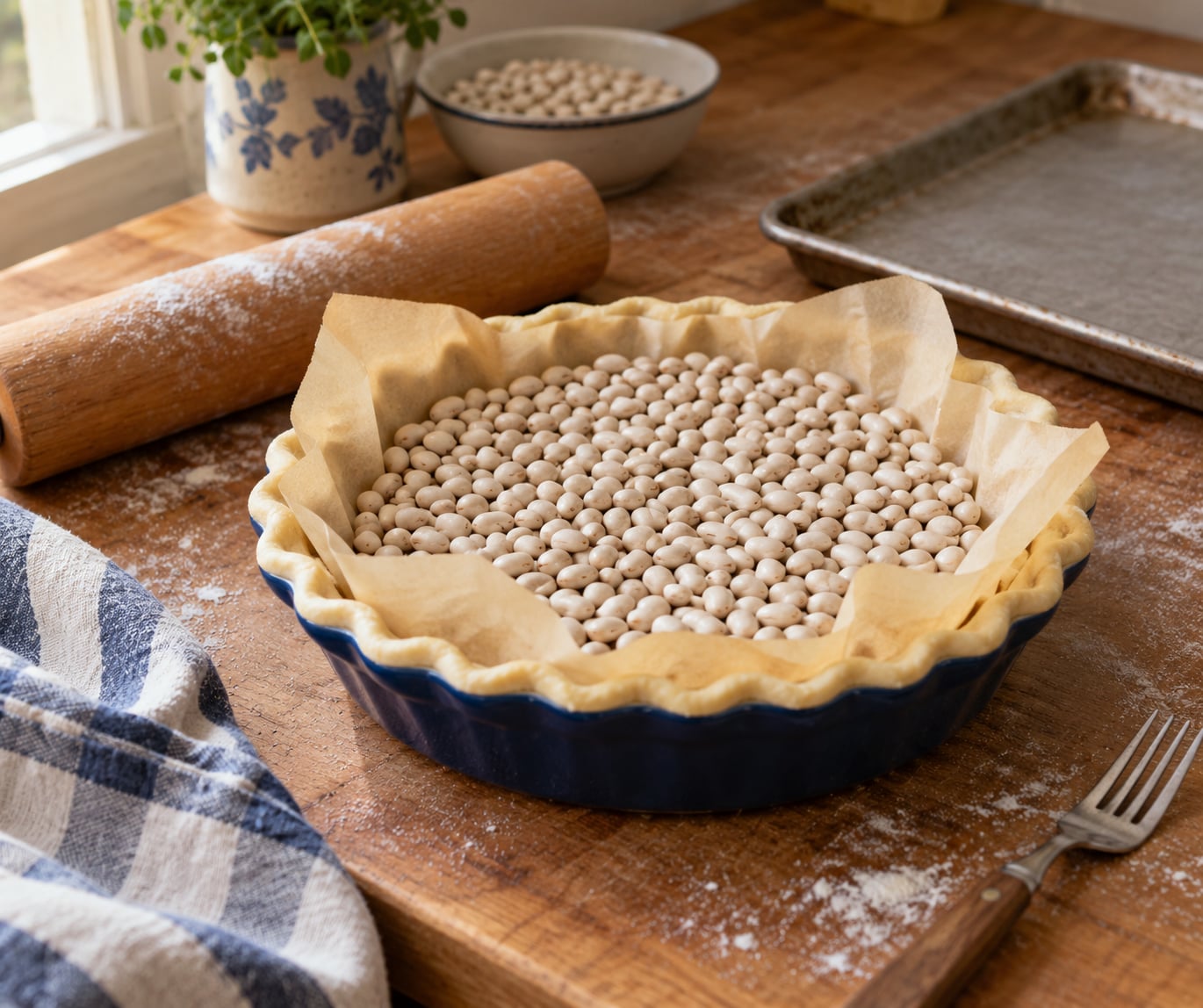
Preheat to 425°F (220°C) with the rack in the lower-middle position. Fit a sheet of parchment paper over the shell, snipping a small vent hole or two so steam can escape.
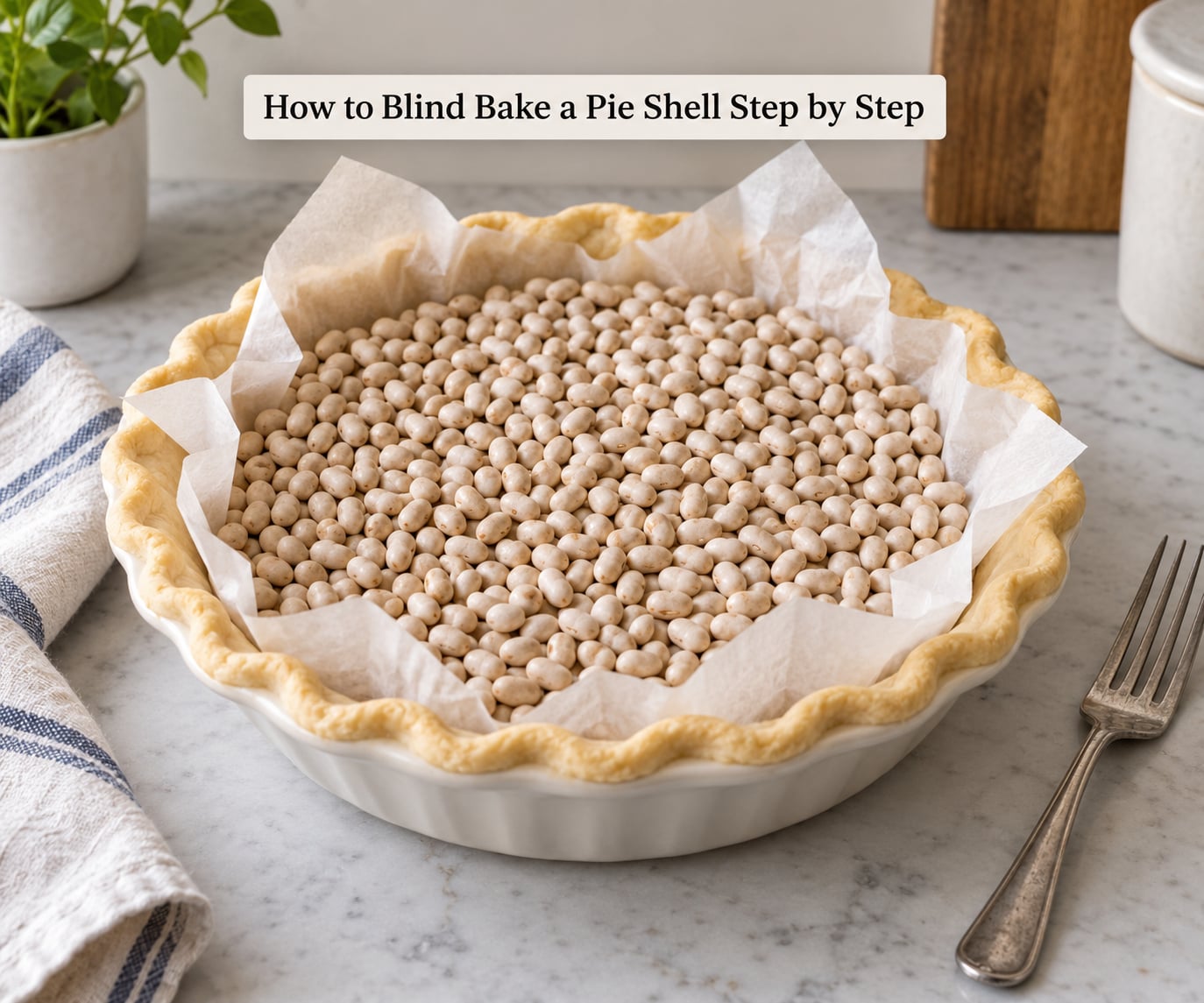
Pour the weights in and spread them into an even layer, right up the sides and past the rim of the plate if you can. The pressure needs to reach the fluted edge, otherwise the rim slumps while the bottom stays flat and you end up with a shell that bakes unevenly. Three pounds for a 9-inch plate is the working number; two cups of dried beans is what that usually looks like in practice.
If the weights shift as you pour, add a second sheet of crumpled parchment on top and tuck the edges down inside the plate. That lid stops beans rolling into the corner and leaving one bare patch that bubbles.
How to Remove the Weights and Finish Baking
Bake weighted for 15 to 20 minutes. The dough is done with the weights in when the sides look set and matte, the edges have gone pale gold, and the whole shell feels firm when you nudge the plate. You are not looking for deep color at this stage — the crust still has a second bake coming.
Pull the plate out, lift off the parchment and weights, and return it to the oven for 10 to 12 minutes. A small pool of melted butter at the base at this point is completely normal, not a failure. It soaks back into the hot pastry as the shell finishes and dries out.
The shell is finished when the base is dry to the touch, evenly golden, and the crimped edge has deepened in color. Lift a corner gently with a spatula: a properly blind-baked shell releases from the plate without tearing or sticking. A pie oven thermometer is not needed, though one sitting in the shell while it bakes will tell you when the middle of the base has reached set.
Cool the shell on a rack for 20 to 30 minutes before filling. Fillings go into a cool shell, never a screaming hot one, or the butter in the pastry melts again. Once filled, refrigerate the pie rather than leaving it on the counter, and eat baked shells within three days. For longer storage, freeze the baked shell on a tray, then bag it; let it come to room temperature before filling so it doesn’t crack.
Common Mistakes
Stretching the dough as you fit it. Pushing pastry into the corners thins the sides and they shrink hard in the heat. Let the disc slump into the plate under its own weight, and patch tears with a small piece of dough instead of stretching.
Skipping the post-shaping chill. Warm butter slumps and warm gluten contracts. Thirty minutes in the fridge, or 20 if you are in a hurry, is the cheapest insurance in the whole process.
Not enough weight. Half a layer of beans in the middle of the plate does nothing to the sides. Fill the shell past the rim. If you run out of beans mid-pie, that is the moment to break out the foil-and-weights-only method or a second plate.
Leaving the foil loose or skipping the parchment lid. Foil that slides away from the wall leaves the edge unprotected, and a bare layer of loose beans leaves gaps. Mold the liner tightly against the shell and cover the top.
Pulling the weights too early. If you remove them before the sides have set, the shell relaxes and slumps in the second stage. Wait for a firm, matte surface rather than trusting the timer alone.
Baking on the oven rack in a glass or ceramic plate. Butter can leak and smoke. Always set the plate on a baking sheet.
Expecting a dry shell after a par bake. If you stop after the weighted stage and add a wet filling, you get the soggy bottom you were trying to avoid. A par bake — 3 to 5 minutes after the weights come out, just enough to set the base — is only right for fruit pies with a jammy filling, not custard or cream.
Frequently Asked Questions
What are the best weights for blind baking a pie shell?
Ceramic pie weights are the best choice because they heat cleanly and sit in an even layer. Dried beans or uncooked rice work just as well and cost nothing. Use about 3 pounds for a 9-inch shell, spread the weights past the rim of the plate, and cover them with a second sheet of parchment so nothing shifts. Beans and rice can be reused for baking but not for eating.
How long should I blind bake a pie crust?
Bake weighted for 15 to 20 minutes at 425°F (220°C), until the sides look set and the edges pale gold. Remove the weights and bake 10 to 12 minutes more until the base is dry and evenly golden. Timing shifts with oven temperature, so check the visual cues rather than trusting the clock alone. Cool the shell fully before filling it.
Do I need to prick the bottom of a pie shell before blind baking?
Yes. Docking means pricking the chilled base all over with a fork, in rows about an inch apart, before the weights go in. Those holes give trapped steam and air an escape route, which is what prevents the bottom from blistering up. Pie weights on their own do not stop bubbling, so do not skip this step even if the shell looks covered.
Can I use dried beans instead of pie weights?
Yes, and most home bakers do. Two cups of dried beans fill a 9-inch shell to the right depth. Uncooked rice works the same way, and so does sugar, though sugar can caramelize a little at 425°F. Save the beans or rice for baking again later rather than eating them, since they absorb fat and flavors from the shell.
Why is my pie shell shrinking while it bakes?
Three causes account for nearly all of it: dough stretched while being fitted, a skipped chill, or not enough weight in the pan. Let the disc slump into the plate instead of pressing it, refrigerate the shaped shell for 30 minutes, and fill weights past the rim. If the dough was already sticky or overworked, no blind baking technique will fully stop the shrinkage.
Should I blind bake the pie shell before or after adding the filling?
Always before. The whole point of blind baking is that the shell is fully set and dry before any liquid touches it. Baking with the filling in means the pastry cooks slowly from a raw state, so a wet filling soaks in and the base stays pale and damp. Cool the baked shell completely, then fill and bake the pie as its recipe directs.
Conclusion
Start with the fridge. Roll the dough, fit it into the plate without stretching, crimp, and give the shaped shell a full 30 minutes to chill before anything else happens. That one pause fixes more problems than any other step in the method.
From there it is two even bakes: 15 to 20 minutes at 425°F with 3 pounds or more of weights filling the shell past the rim, then 10 to 12 minutes with the weights out. The shell is ready when the base is dry, evenly golden, and releases from the plate without sticking. Cool it fully, fill it, and the bottom will still be crisp the next day.