The best wines for spicy food are low in alcohol, high in acidity, and lightly sweet. Capsaicin makes strong alcohol and tannin taste hotter and more bitter, so the usual rule of a bold red for rich food inverts completely once chile is involved.
That single fact does most of the work. Once you know what heat a dish actually carries, matching wine to it takes about thirty seconds of thought. That is the whole answer to how to pair wine with spicy food without memorizing a chart, and it holds for a weeknight curry, a tray of wings, or a taco night that gets out of hand. The method below is updated for 2026.
The short answer: reach for an off-dry aromatic white, a chilled light red, a dry rosé, or a sparkling wine. Avoid heavy oak, hard tannin, and anything over roughly 14% alcohol.
Table of Contents
- What You Need
- Step-by-Step
- 1. Identify the Dish’s Main Heat
- 2. Match Sweetness First
- 3. Choose Acidity for Bright Contrast
- 4. Select a Wine With the Right Body
- 5. Check Aromatics and Tannin
- 6. Test, Cool and Adjust
- How to Pair Wine With Spicy Food by Dish
- Wine Styles to Try for Different Kinds of Heat
- Common Mistakes
- Frequently Asked Questions
- What wine is best for very spicy food?
- Should red or white wine go with spicy dishes?
- Does sweet wine always pair better with hot chile?
- What wine works with curry if I only drink red?
- Can sparkling wine handle chile heat?
- Does serving wine colder make it better with spicy food?
- Conclusion
What You Need
You need four things in your head and nothing in your cupboard. No specialist equipment, no thermometer for precision beyond your fridge, no charts on the wall.
The first factor is perceived sweetness in the wine. Not sweetness in the dessert sense — a wine with a little residual sugar tastes rounder and riper, which blunts the burn. The second is acidity, the thing that cuts through coconut milk, cream and oil the way a squeeze of lime does on the plate.
The third is body, meaning weight and mouthfeel. A light wine disappears against a rich sauce; a heavy wine flattens a delicate one. The fourth is tannin, the drying grippy quality in red skins and oak. Tannin is the first thing to go wrong when chile shows up.
Keep these four separate from the dish. Readers often blur “the dish is spicy” into “pick a spicy wine,” and there is no such wine. Describing the food on its own terms is the whole trick.
Step-by-Step
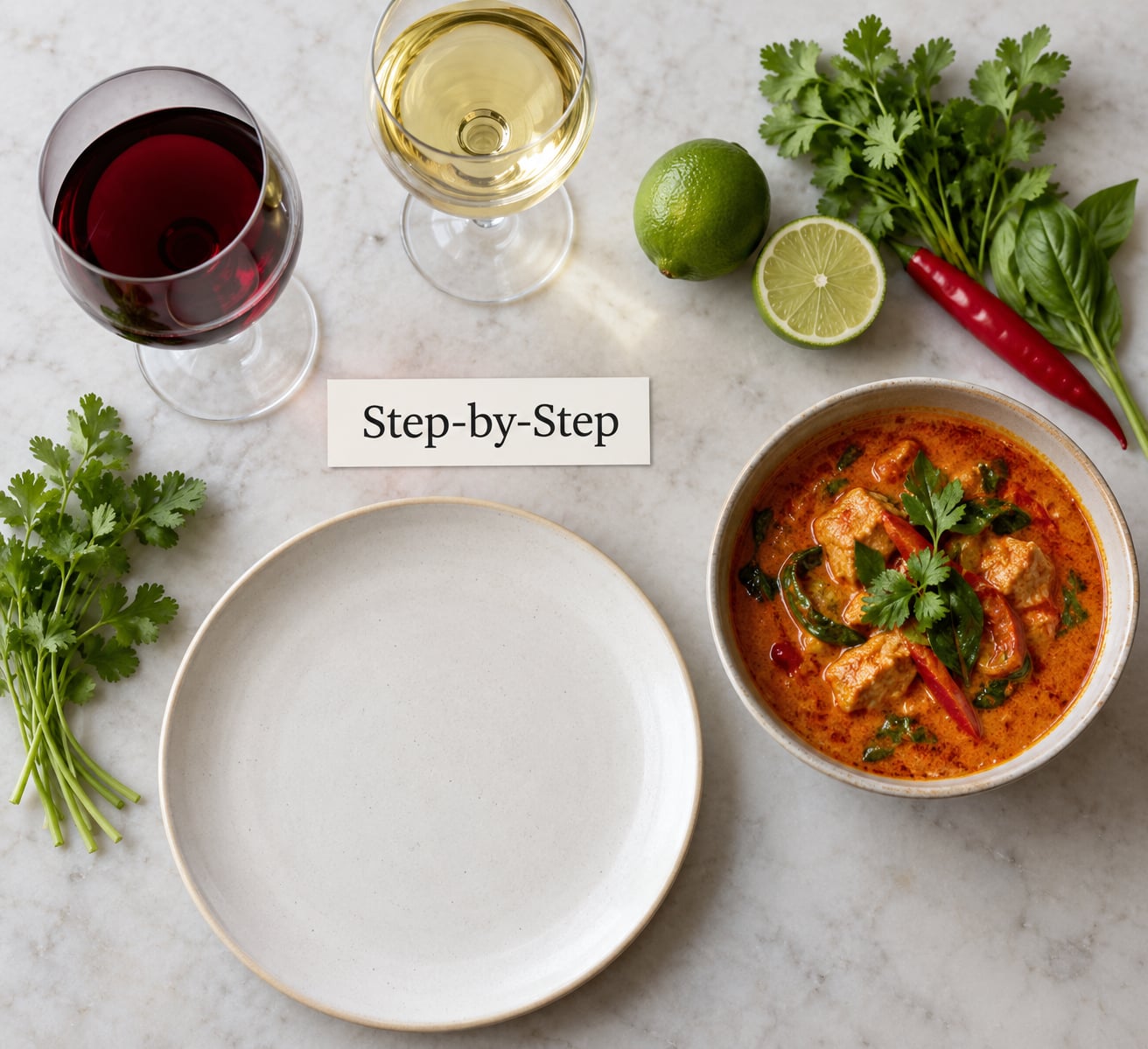
Six steps, in order, and step one does most of the sorting.
1. Identify the Dish’s Main Heat
Not all heat behaves the same, and the type changes what you reach for.
Clean chile heat is the raw capsaicin burn of jalapeño, serrano or habanero. Aromatic warmth is cumin, coriander, ginger, star anise and cinnamon — no burn at all, but it makes anything thin-tasting seem faint. Smoky heat comes from chipotle, ancho or gochujang, and it leans woody. Fermented heat is the tang of Korean gochujang, Thai nam prik or Mexican salsa, which is acidic as well as hot. Rich heat is the fat-loaded kind: butter chicken, coconut curry, chili con carne with cheese.
Fermented and rich heat are the two that reward acid and sweetness hardest. Clean chile heat tolerates a wider range but punishes alcohol most of all.
2. Match Sweetness First
Sweetness is your first lever because it works at every heat level. A small amount of sugar in the wine registers as fruit and softness rather than dessert.
Start points: a dry wine under about 4 g/L of residual sugar is what most people call dry. An off-dry wine sits roughly 4 to 12 g/L and is the sweet spot for most curries and chile dishes. A genuinely sweet wine runs above that, and it only works against very hot, fatty or fermented food.
Off-dry Riesling, Chenin Blanc, Pinot Gris and Gewürztraminer live in that middle band, which is why they keep coming up. When sweetness tips over into dessert territory against a mild aromatic dish like a fragrant rice dish, the wine starts to taste cloying — that’s the boundary case, and it’s worth knowing before you buy.
3. Choose Acidity for Bright Contrast
Acidity is what keeps a meal from getting flat. It refreshes chile-heavy food and cuts fat from coconut and cream sauces.
Look for wines with lifted, mouthwatering acidity: Sauvignon Blanc, Pinot Grigio, Grüner Veltliner, Vinho Verde, Albariño. Champagne and dry sparkling rosé go further still, because the bubbles scrub the palate between bites and the high acid keeps them moving through a rich dish.
Rosé sits in the middle of this whole section. Dry rosé from a cool climate carries enough acidity and light fruit to handle chile without the sweetness of an off-dry white.
4. Select a Wine With the Right Body
Match the weight of the wine to the weight of the sauce, not to the Scoville number on the chile.
Light-bodied wines suit mild aromatic heat: a cucumber-and-chile salad, a gentle green curry, grilled prawns with lime. Medium-bodied wines handle assertive dishes — tandoori chicken, chili con carne, jerk. Full-bodied wines belong with rich heat, but even then keep them soft: a ripe, plush red with no tannic edge rather than a lean one.
The broad rule is that body should roughly track the sauce. I treat it as a starting point rather than a law, because a high-acid light wine can carry more than its weight suggests.
5. Check Aromatics and Tannin
Now match the wine’s aroma to the dish’s aromatic profile. Fruit-forward wines echo tomato, cumin, coriander, chile and citrus; wines with their own herbal or floral character sit comfortably beside a curry’s spice list.
Tannin is where things go wrong. Capsaicin makes your perception of alcohol and tannin sharper, so the same wine that tastes fine on Tuesday tastes abrasive over a chile sauce. Tannat, Cabernet Sauvignon, Malbec and Syrah are the usual offenders, and heavily oaked Chardonnay is the sneaky one because the oak flavours survive while the texture turns hard.
Smoked and toasted spice pulls in the opposite direction. Restrained oak is fine here — a lightly toasted note reads as char — but a wine dominated by vanilla, toast and smoke will fight a chipotle marinade and muddle the plate.
6. Test, Cool and Adjust
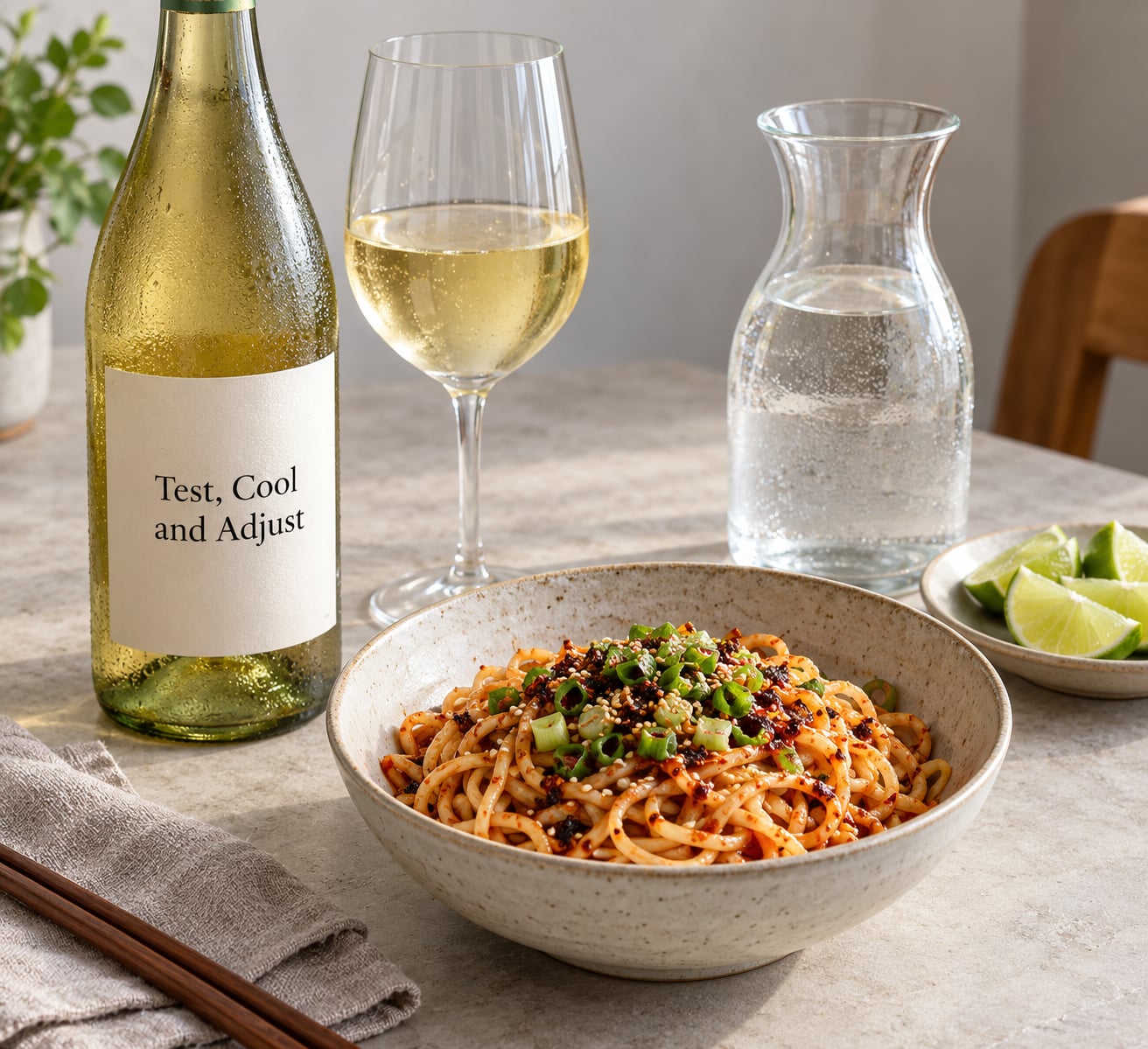
Serve a small pour before the meal starts. Smell it, take a bite of food, then sip — tasting them apart misses the whole point.
Check four things: whether the aroma still smells pleasant after the bite, whether the first sip stays clean rather than turning bitter, whether the finish stays short and fresh, and whether the temperature is right.
On temperature, take whites and light reds down from cellar temperature to fridge temperature — roughly 45-50°F, or 7-10°C. That single change rescues a surprising number of bottles. Sparkling wines want it colder still.
If the pairing still isn’t working, adjust in this order: add acidity (a squeeze of lime into the dish, or a sharper wine), then sweetness (a touch of honey or sugar in a sauce, or a sweeter bottle), then dilution (a splash of water or soda in the wine). Never reach for more alcohol.
How to Pair Wine With Spicy Food by Dish
Once the six steps narrow your options, this table turns the method into specific bottles. It is a starting point, not a verdict. Read the heat column first, because it tells you more than the dish name does.
| Dish | Main Heat | Start With | Serve At | Avoid |
|---|---|---|---|---|
| Hot and sour soup | Fermented and vinegary | Sauvignon Blanc or dry Riesling | 8-10°C / 46-50°F | Oaked Chardonnay |
| Thai green curry | Aromatic, mild chile | Off-dry Riesling or Grüner Veltliner | 8-10°C / 46-50°F | Heavy oak |
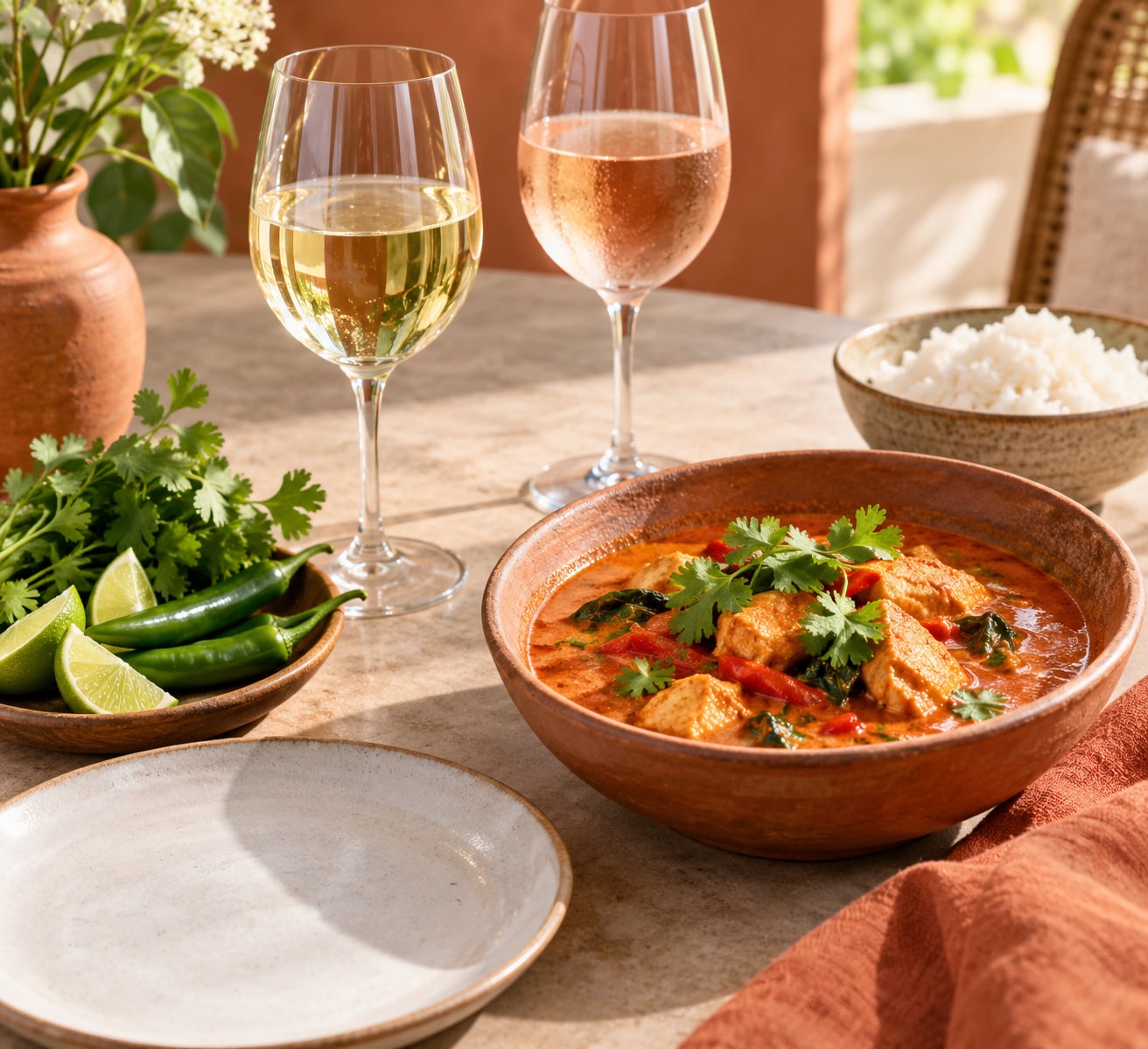
| Thai red curry | Aromatic plus rich coconut | Off-dry Chenin Blanc or dry rosé | 8-10°C / 46-50°F | Dry, tannic reds |
| Sichuan noodles with chilli oil | Fierce chile, numbing peppercorn | Dry sparkling or chilled Gamay | 6-8°C / 43-46°F | Any red served warm |
| Korean barbecue | Sweet fermented glaze | Slightly sparkling rosé or off-dry Riesling | 8°C / 46°F | High-ABV Shiraz |
| Buffalo wings | Fierce vinegar-plus-chile heat | Dry sparkling wine | 6-8°C / 43-46°F | Cabernet, Malbec |
| Biryani | Aromatic warmth | Dry rosé or Vinho Verde | 8-10°C / 46-50°F | Sweet dessert-style wines |
| Tacos with salsa roja | Clean chile and acidity | Grüner Veltliner or Albariño | 8-10°C / 46-50°F | Tannic reds |
| Jerk chicken | Smoky plus aromatic | Gamay or Cinsault, chilled | 12°C / 54°F | Heavily oaked reds |
| Chili con carne | Rich, tomato-based heat | Gamay or light Pinot Noir, chilled | 14-16°C / 57-61°F | Overripe high-alcohol reds |
| Roasted vegetable curry | Aromatic, moderate | Gewürztraminer or Pinot Gris | 8-10°C / 46-50°F | Dry, high-alcohol whites |
| Burnt-end barbecue | Smoky, charred | Cinsault or chilled Gamay | 14°C / 57°F | Bold oak-aged reds |
One rule covers most rows above: if the dish is hot, keep the wine cold, and if the dish is aromatic, keep the wine fruity.
Wine Styles to Try for Different Kinds of Heat
Mild aromatic heat: dry rosé, Grüner Veltliner, Torrontés. These sit close enough to the aromatics that nothing clashes.
Fierce chile heat: off-dry Riesling, Albariño, dry sparkling wine. Sugar and bubbles both cut the burn; acidity keeps the wine from going flat.
Smoky heat: Cinsault, Gamay, or a lightly oaked Pinot Noir. Restraint is what matters, not the amount of oak.
Creamy heat: Gewürztraminer, Viognier, a fuller sparkling. Aromatics and a little residual sugar handle butter and coconut better than acidity alone does.
Fermented chile heat: sparkling rosé, Chenin Blanc, Torrontés. The acidity in fermented sauces matches the acidity in the wine, and they reinforce each other.
Sweet heat: tawny port, Vin Jaune, or a late-harvest Riesling against a very hot, fatty dish. Keep these for the hottest plates, not for a fragrant biryani.
If you’d rather not drink wine, a crisp lager or a pale ale works on almost all of this, and an IPA’s grapefruit notes suit curry well. Hard seltzer with lime, mango lassi, or iced tea with a squeeze of lime covers the rest. Nothing on this list needs to be expensive.
And if the only bottle in the fridge is a bold, oak-aged red, you have options: chill it hard for twenty minutes in the fridge or a few minutes in ice water, and serve it with something sweet or sour on the side. Do not serve a tannic red at cellar temperature next to a chile sauce, because it will taste worse than the bottle deserves.
Common Mistakes
Mistake: serving red wine too warm. Warm reds lose their fruit and their acidity is muted. Fix: chill reds destined for spicy food to 12-16°C (54-61°F), not the 18°C cellar default.
Mistake: assuming stronger wine handles more heat. Alcohol is what chile amplifies most. Fix: check the ABV on the label and pick something at or under 14%.
Mistake: ignoring tannin. Drying tannin plus capsaicin reads as bitterness. Fix: choose reds with soft, low tannin, or switch to a white.
Mistake: matching only chile intensity. Two equally hot dishes can need opposite wines if one is smoky and one is sour. Fix: identify the heat type before the heat level.
Mistake: picking an overly oaked wine. Oak flavours fight chile aromatics and oak tannin amplifies the burn. Fix: read the label and skip anything described as vanilla, toast, butter or smoke.
Mistake: reaching for dessert wine every time. Sweetness that helps against fierce, fatty heat turns cloying against mild aromatic dishes. Fix: stay off-dry by default and save the sweet bottles.
Mistake: forgetting that acid and fat do the cleaning. A wine that tastes thin next to a coconut sauce is usually an acidity problem. Fix: a brighter wine, or lime in the dish.
One more note worth making: pairing rules are guidelines, not laws. Plenty of drinkers report that a strong, earthy red they like went perfectly well with a heavily spiced dish, and they are not wrong. Use the method above to get out of a bad match, then trust your own palate over any article.
Frequently Asked Questions
What wine is best for very spicy food?
For very hot chile, reach for a wine with residual sugar, high acidity and low alcohol. Off-dry Riesling, Gewürztraminer, Albariño and dry sparkling wine all work, because sugar and acidity blunt capsaicin while bubbles cleanse the palate. Serve it colder than usual, around 45-50°F. What you want to avoid is high alcohol, hard tannin and heavy oak, all of which chile makes taste harsher.
Should red or white wine go with spicy dishes?
Whites and sparkling wines are the safer default, because high acidity and lighter alcohol stand up to chile better. Reds work too, as long as they are light-bodied, low in tannin and served cool. Gamay, Cinsault, chilled Pinot Noir and Lambrusco are the ones that behave. A heavy, oak-aged red will taste metallic and bitter beside a chile sauce.
Does sweet wine always pair better with hot chile?
No, and this is the most common misunderstanding. A touch of residual sugar genuinely dampens the burn, so off-dry wines are the most reliable choice. Sweet wine only works against very hot, fatty or fermented food. Against mild aromatic dishes such as biryani or a fragrant rice dish, an off-dry selection works far better.
What wine works with curry if I only drink red?
Pick a red that is light-bodied, low in tannin and served cool. Gamay, Cinsault, chilled Pinot Noir and Lambrusco are reliable with most curries. Lambrusco in particular handles both heat and richness, and its acidity keeps it clean against coconut and cream sauces. Serve at 12-16°C rather than room temperature, and skip anything described as bold or oaked.
Can sparkling wine handle chile heat?
Yes, and it is one of the most underrated choices for hot food. The bubbles act as a palate cleanser between bites, and sparkling wines usually carry high acidity and low tannin, so nothing reinforces the burn. Dry sparkling, sparkling rosé and pet-nat all work. Serve them colder than you think, around 43-46°F.
Does serving wine colder make it better with spicy food?
Colder wine tastes less alcoholic, less tannic and more acidic, and all three help with chile. Taking a red from cellar temperature to fridge temperature is the cheapest fix for a pairing that felt too hot or too firm. Light reds work best around 12-16°C, whites and off-dry styles around 8-10°C, and sparkling around 6-8°C.
Conclusion
Work through the sequence in order: identify the heat type, match sweetness, add acidity, check body, then look at aromatics and tannin. Every step narrows the shelf down to two or three bottles, and most of the time an off-dry aromatic white at fridge temperature is the right answer.
That is how to pair wine with spicy food in under a minute once you have the method. Start there, and if a pairing feels off, fix it with temperature or a little acidity before you blame the wine.