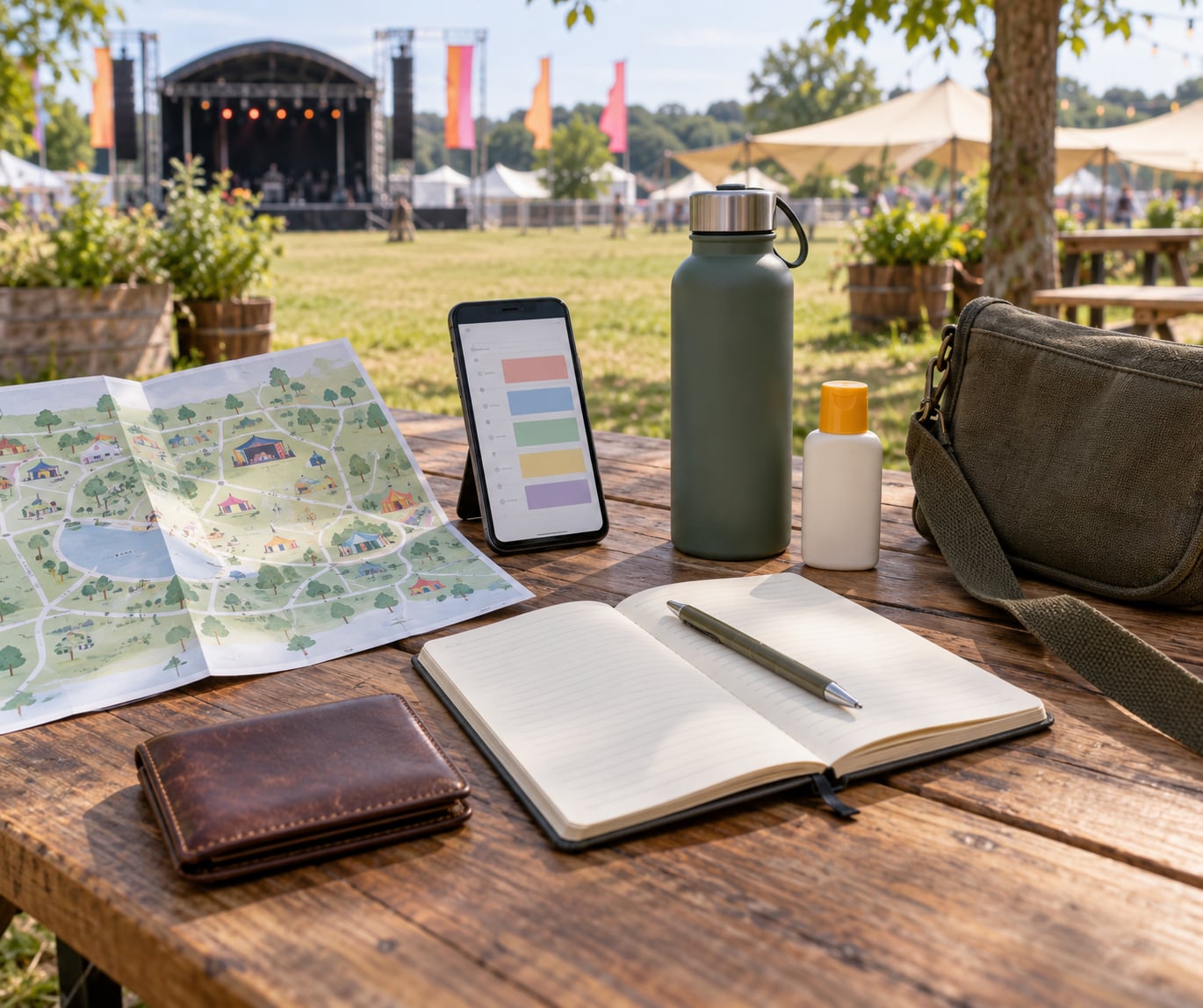
To make food festival plans as a visitor, pick your must-try dishes before you go, walk the whole event once to learn the layout, and pace yourself through the day. Most of the work happens at your kitchen table, not in the queue.
A good plan has four moving parts: a shortlist of dishes, a rough route, a spending limit, and enough slack that a sold-out stall or a downpour doesn’t ruin the afternoon. Skip any one of those and you will spend the day drifting, queuing, and wondering where your money went.
This guide covers attending, not organizing. Every festival works a little differently, so the advice here is built to survive a street food market, a ticketed tasting weekend, or a wine festival where the whole point is the drinks.
Table of Contents
What You Need
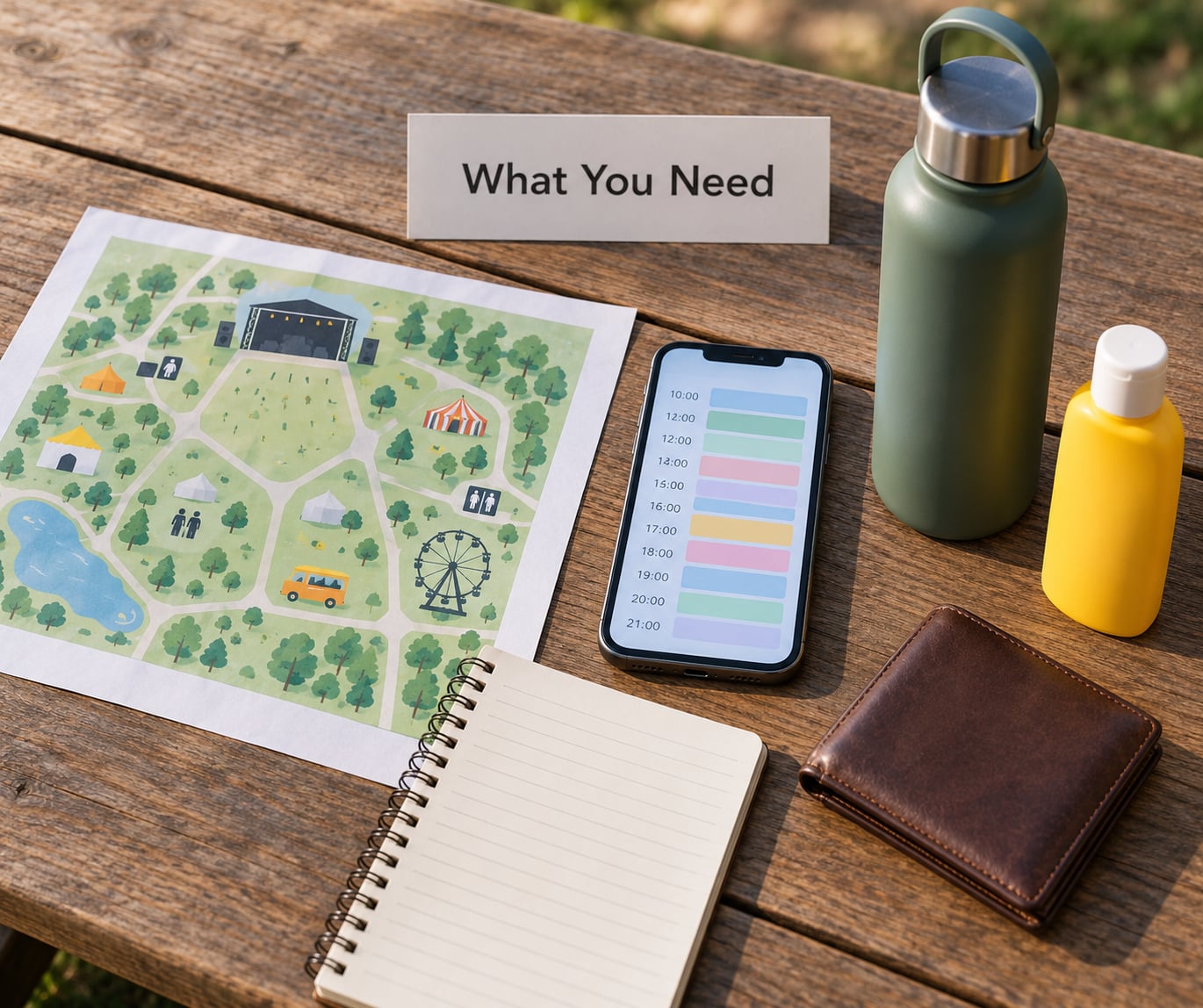
Before you leave home, get six things sorted. None of them takes more than a few minutes once you know what you’re looking for.
- The schedule and site map. Download both. Entry windows, chef demonstrations and live sets have fixed times, and the map is how you find the vendors you came for plus the restrooms and water stations.
- Your ticket or entry details. Some festivals are free, some sell walk-up entry, and ticketed tasting events sell out weeks ahead. Know which one you’re dealing with and whether pre-booking is cheaper at the gate.
- A spending limit. Pick a number before you arrive and decide in advance which purchases are worth it.
- The vendor list. Scan the lineup for signature dishes and check whether the event is walk-up, ticketed with a sampling package, or cashless.
- Your dietary notes. Write down allergies and restrictions in your phone so you can read them out at a stall instead of reciting them from memory with a queue behind you.
- A small kit. Reusable water bottle, sunscreen, a power bank, a payment method, and a small packet of tissues. A crossbody bag beats a tote because your hands stay free for a sample in each.
One more thing to decide in advance: how flexible your day is. Going alone with a tight list of targets is a completely different trip from wandering with two friends. Both work, but only one of them needs a printed schedule.
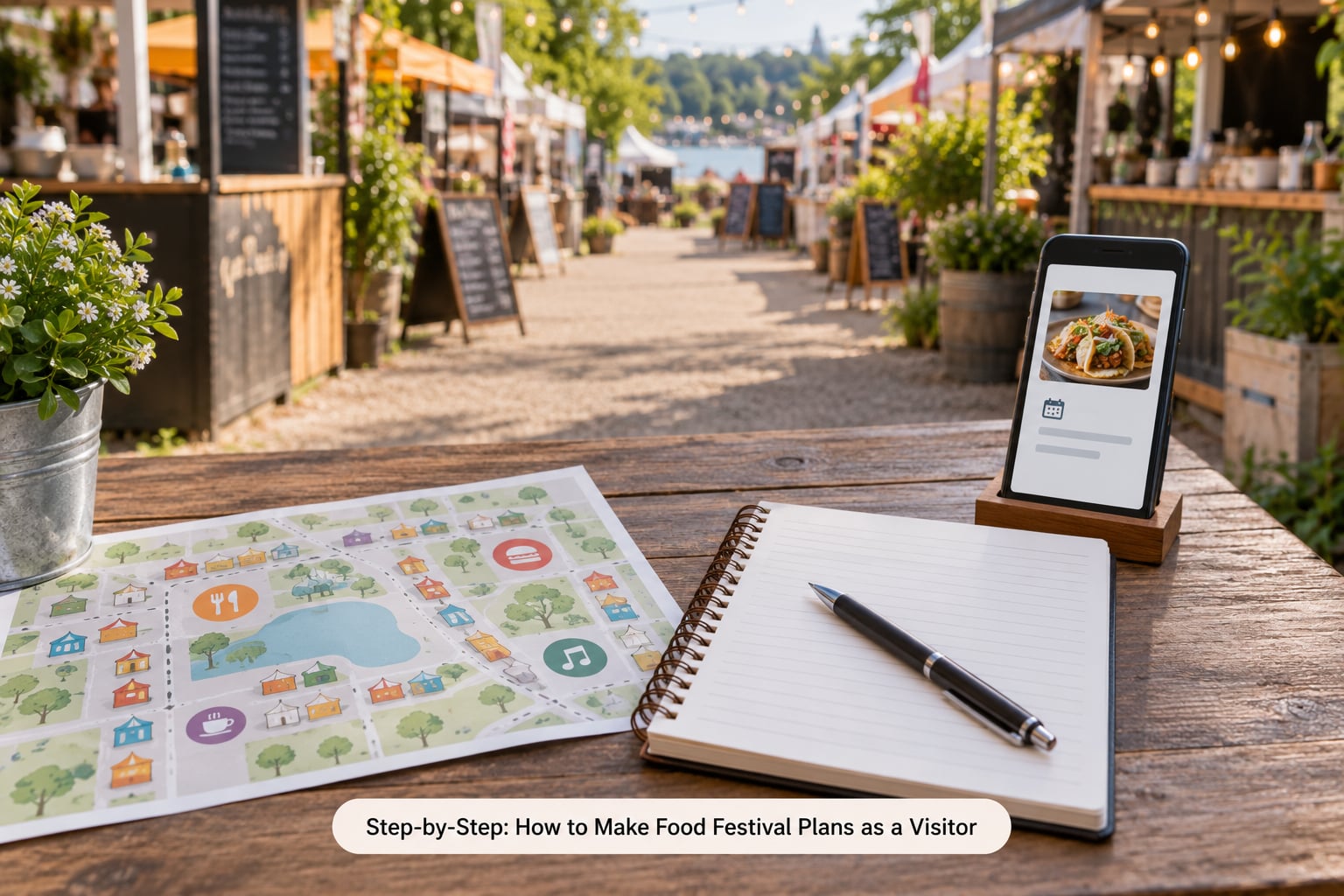
Step-by-Step: How to Make Food Festival Plans as a Visitor
Define Your Festival Priorities
Start by separating must-do stops from optional ones. A must-do is a dish you would regret missing, a chef you specifically wanted to see, or a set you planned around. Everything else is a bonus.
Limit the must-do list to five or six stops for a full day. That number assumes tasting portions, which are small but not nothing, and it leaves room for sharing. Write the rest down as a wish list so you can add to the day if the crowd thins out.
Build a Realistic Route and Schedule
Group vendors that sit near each other on the map, then walk the grounds on paper and build a loose loop. Leave real gaps. A ten-minute queue with forty people in it turns into twenty, and a plan with no gaps collapses the first time that happens.
Anchor the fixed items first: a demonstration at two, a music set at four, a wine tasting with limited pours. Those fill specific hours. Then slot your must-try stops before and after them without stacking four purchases into a twenty-minute window.
Keep the plan loose. A tight minute-by-minute itinerary feels efficient on paper and miserable in practice, because every small delay eats into the next block.
Set a Food and Drink Budget
Most surprise spending at food festivals comes from tasting portions, which feel trivial individually and add up quietly. Estimate by counting instead of guessing: a few tasting items, one or two drinks, entry if it’s ticketed, plus parking, a snack, or a drink you buy twice because you forgot to bring water.
Then rank your spending. Put one or two genuinely memorable dishes at the top, drinks second, and convenience items at the bottom. When you have a limit and a ranking, standing in a queue with something tempting becomes a ten-second decision instead of a five-minute debate.
Decide the format question before you buy anything. A cover charge or sampling package can be worth it when it includes dishes you would have paid for anyway. At a walk-up festival you pay per item, so your choices drive the total instead of the ticket. Ticketed tasting events often include pours or samples in the price, which changes the maths entirely.
Check the payment rules too. Cashless events run card-only with a fee added at checkout or a per-transaction minimum, and a small withdrawal fee from an out-of-network ATM costs more than a couple of extra tips would.
Prepare for Crowds, Weather, and Dietary Needs
Arrive early if you care about short lines or popular vendors that sell out. The first hour is also when the seating is available, which matters more than most people expect at an outdoor event. If you mostly want atmosphere, arriving later is fine and often calmer.
Refill water whenever you pass a station, not when you’re thirsty. Pair rich fried or creamy dishes with something lighter, and alternate alcohol with water so the afternoon doesn’t catch up with you in the evening.
For allergies, ask vendors directly rather than reading the board from a distance. Say what you’re avoiding out loud, ask about shared fryers and cross-contact, and treat an uncertain answer as a no. Many stalls publish ingredient lists on their own sites or social accounts, and checking before you go is faster than interrogating a queue.
Have a backup for the obvious risks: a hot afternoon, a stall that ran out, an outdoor stage cancelled for wind. Your backup is usually simple: move indoors, drop a lower-priority stop, or shift the tasting you were saving for later.
Sample Strategically and Take Notes
Taste small and early. You learn more from three modest portions across three hours than from three full portions in one sitting, and the early stops keep your palate sharp for the food you saved.
Compare similar offerings against each other rather than treating every sample as an equal verdict. Two tacos, two coffees, two barbecue sauces. Once you notice a pattern, you can skip confidently and spend the freed ten minutes somewhere better.
Keep notes. A short line in your phone, or a photograph of the vendor’s name, is enough to remember what was worth it and where it was. If you’re with people, splitting one item lets everyone try two vendors instead of one.
Share where it makes sense, not everywhere. One or two shared dishes in a day gives you room for a headline item later, which is usually the thing you’ll talk about on the drive home.
Leave Room for Unexpected Discoveries
Block one open stretch of the day, roughly an hour, with nothing scheduled. New vendors appear at festivals, seasonal specials turn up that weren’t in the lineup, and the stall with the shortest line is regularly the best one on the grounds.
If you follow the plan perfectly, you’ll eat well and remember nothing but the queue. A plan that bends once or twice is usually the one that works.
Common Mistakes
Almost every complaint about food festivals traces back to a planning error rather than a bad day. These are the ones that come up again and again.
Overpacking the schedule. Six tasting stops in ninety minutes is not a plan, it’s a queue with extra steps. Cut it to three and let the rest become optional.
Not reading the entry rules. Entry fees and cover charges that aren’t advertised clearly cause most of the angry reviews. Check whether you need a ticket, whether there’s a walk-up price, and what’s included before you queue at the gate.
Buying on your first loop. Walking the whole event before spending anything tells you what exists, where the lines are, and which stalls are worth the wait. Attendees who do this consistently eat better and spend less.
Arriving late to a sell-out event. Popular vendors run out of their signature item well before closing time and may pack up early. If a specific dish is the reason you went, get there in the first couple of hours or don’t count on it.
Spending without a limit. Tasting portions are small enough that no single purchase feels like a decision. Set a ceiling before you go and rank what deserves the money.
Ignoring dietary information. Vague allergen answers and shared fryers are common problems. Bring your restrictions written down, ask clearly, and carry a backup plan for a stall you can’t trust.
Assuming shade and seating will appear. Outdoor street festivals often have very little of either. Find the seating early or accept that you’ll be standing for most of the day.
Relying on one payment method. Cashless stalls rejecting cards mid-queue is a recurring frustration. Bring a second option and keep a small amount of cash on you.
Frequently Asked Questions
How much money should I bring to a food festival?
Work it out by counting rather than guessing: a handful of tasting items, one or two drinks, entry if the event is ticketed, and small extras like parking or a snack. Decide in advance which dishes are worth the most and set a firm ceiling. If you arrive with a limit and a ranked list of stops, tasting portions stop feeling like small decisions and start adding up predictably.
What should I bring to a food festival?
A refillable water bottle, sunscreen, a power bank, a payment method plus a backup, and a small pack of tissues in a crossbody bag. Download the site map and the schedule so you can find your vendors and the restrooms without walking the grounds twice. If you have allergies, keep them written on your phone so you can read them at the stall.
How do I avoid long lines at a food festival?
Walk the entire festival once before you buy anything, so you know which stalls are busy and which are quick. Mark the long-line stalls for later and eat at off-peak times, usually in the first hour or after the lunch rush. Or split the day: work the popular vendors early, then revisit the others once the crowds thin out.
Do you need a ticket for a food festival?
It depends on the format. Street food festivals and night markets are usually walk-up and free, while wine, cultural food, and tasting events often require a ticket, a cover charge, or a sampling package. Ticketed events can sell out well ahead, so check the event page before you make travel plans. Arriving early usually costs less than buying at the gate.
How do you eat at a food festival with food allergies?
Say your allergy out loud at the stall and ask about shared fryers, oil, and prep surfaces rather than relying on a menu board read from a distance. Check the vendor’s own site or social account before you go, since many publish ingredient lists online. If an answer is vague, skip that stall and move on rather than guessing.
What do you do if you overeat at a food festival?
Stop tasting for a while rather than pushing through, and move gently. Water helps more than anything, and a slow walk to find seating beats another sample. Skip the richest items for the next hour or two, keep portions small when you start again, and don’t plan a big meal right after. Most of the discomfort passes well before the drive home.
Conclusion
Do one thing the night before: choose five dishes you would genuinely regret missing, note the fixed demonstrations and sets on the schedule, and set a spending limit you will not renegotiate at the booth. Everything else on the day is a bonus, including the vendor you have never heard of that ends up being the best bite of the afternoon.