To stir a cocktail, put every ingredient in a mixing glass with a good handful of ice, add a bar spoon, and stir steadily in small circles for about 20 seconds until the outside of the glass frosts. Stir any drink made only of alcohol, vermouth, bitters, or syrup. Shake instead when the recipe contains juice, egg white, dairy, or cream.
That is the whole method. The parts people get wrong are the grip, the size of the ice, and the patience to stop at the right moment. Get those right and a Manhattan comes out glossy and cold instead of warm and thin, which is the difference between a drink that tastes deliberate and one that tastes like it was thrown together.
Stirring is about control. You are chilling and diluting the drink at the same time, and both jobs stop the second you stop stirring. Most home bartenders go wrong by being impatient, not by being careless.
Table of Contents
- What You Need
- How to Stir a Cocktail: Step-by-Step
- How to Hold the Bar Spoon
- How to Stir Without Splashing or Bruising
- How Long to Stir a Cocktail
- When to Stir a Cocktail
- How to Chill and Strain the Finished Drink
- Common Mistakes
- Tips for Better Stirred Cocktails
- Frequently Asked Questions
- How long should I stir a cocktail?
- Should you stir cocktails with a spoon or a bar spoon?
- Do you stir cocktails with ice or without ice?
- What is the difference between stirring and shaking a cocktail?
- How do I know when a cocktail is chilled enough?
- Why is my stirred cocktail watery?
- Conclusion
What You Need
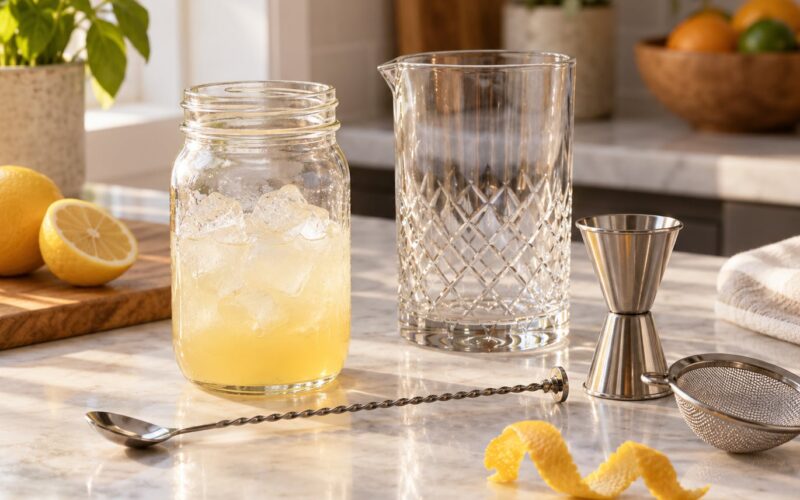
Six things, and only one of them is fussy. If you want the shortest path to a good drink, buy the mixing glass and a bar spoon first and skip the rest.
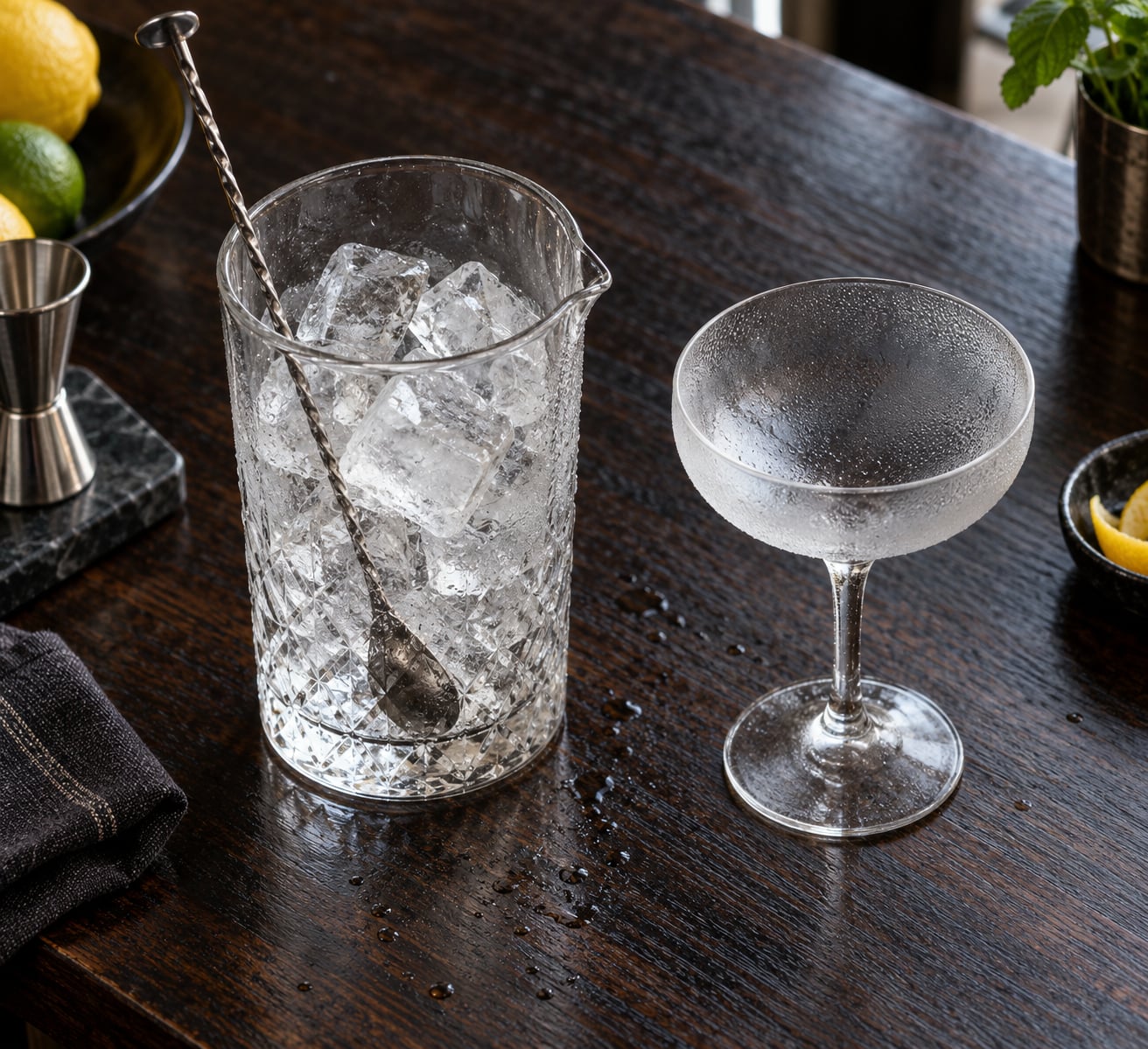
- Mixing glass. A 12 to 16 ounce heavy-bottomed glass lets you see what you are doing and gives the spoon something solid to push against. A pint glass works in a pinch.
- Bar spoon. Long enough to reach the bottom of the mixing glass, with a small bowl at one end and a flat or disc end at the other for muddling. A teaspoon is too short and rattles against the glass.
- Jigger. A 1 ounce measure on one side and 2 ounces on the other. Free-pouring is a skill you can pick up later.
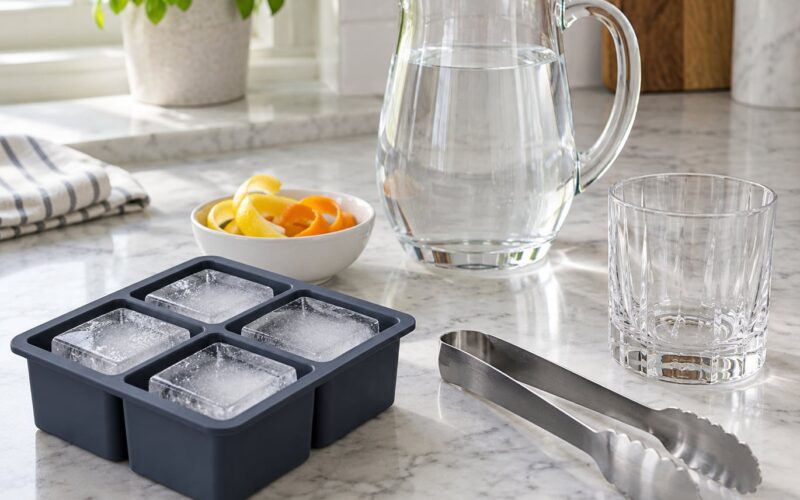
- Ice. Enough to fill the mixing glass two-thirds of the way. More ice chills faster and dilutes less.
- Strainer. A Hawthorne strainer, which is a perforated disc on a spring, sits on top of the mixing glass and pours clean. A julep strainer is the slotted spoon shape.
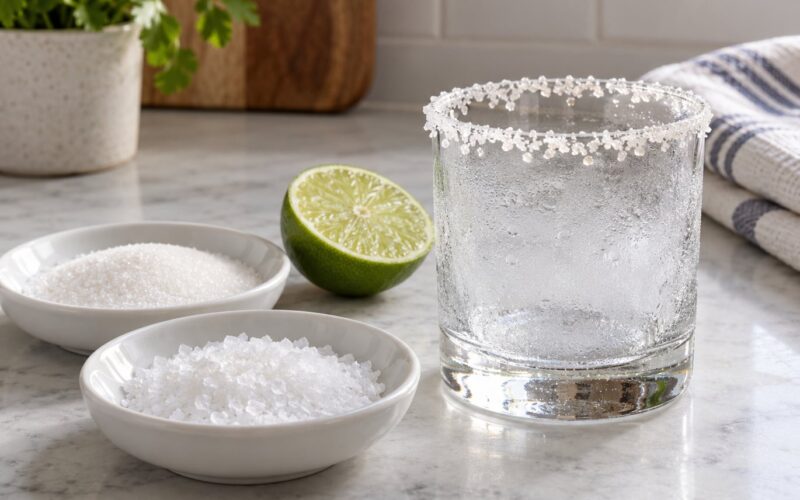
- Serving glass. A chilled coupe or Nick and Nora for anything up to a Martini, a chilled rocks glass for anything built over ice.
For a first practice run, make a Martini or a Manhattan. Both are all alcohol, both are forgiving, and both show you immediately whether your technique is right because you can see the clarity.
How to Stir a Cocktail: Step-by-Step
This is the sequence. Measure, build, chill, stir, strain, serve.
- Chill the serving glass first. Fill it with ice and a splash of water while you build the drink. Empty it just before you strain. A room-temperature glass can undo five minutes of careful chilling in about thirty seconds.
- Measure everything into the mixing glass. Spirits, vermouth, bitters, syrup. If the recipe has a delicate aromatic like a gin or a nose of citrus peel, add it last.
- Add ice until the glass is two-thirds full. This is the step most people skip and the one that matters most. Ice is both your chilling mechanism and your dilution, and a fuller glass gives you more surface area to work with.
- Take the bar spoon grip. See the next section for the exact hand position.
- Stir steadily in smooth circles. Keep the spoon against the wall of the glass, move your wrist rather than your arm, and keep a steady rhythm.
- Stop on the cues, not the clock. Frost on the outside of the glass, a drop in temperature you can feel through the spoon, and a smell that has shifted from alcohol-sharp to aromatic. Then strain.
How to Hold the Bar Spoon
Pinch the spoon between your ring finger and middle finger near the top of the handle, with your index finger resting along the shaft for control. Your thumb stays off or lightly on top. The grip should be firm enough that the spoon does not twist in your hand but loose enough that you can rotate it with a flick of the wrist.
Set the bowl of the spoon against the inside wall of the mixing glass and keep it there for the whole stir. That contact is what makes the drink move. A spoon spinning in the middle of the glass just churns the center and leaves the edges of your drink untouched.
Keep the handle angled slightly inward rather than straight up. It clears the rim of the glass and keeps your knuckles away from the ice, which matters more than it sounds after the fourth drink of a party.
How to Stir Without Splashing or Bruising
Use small, tight circles, roughly one to two inches across, at a steady medium pace. The classic bartender technique draws the spoon around the wall of the glass and pulls it back through the center, over and over, so the whole volume gets moved rather than a lane of liquid being spun fast in place.
Movement comes from the wrist. Your forearm should be nearly still. Wrist-driven stirring is smooth, quiet, and easy to keep constant, while arm-driven stirring tires out fast, speeds up without you noticing, and starts throwing liquid over the rim halfway through a batch.
Keep the glass on the counter or on a rubber bar mat. Lifting it and stirring in the air is how people splash a Manhattan onto the counter. For very tall drinks, set the glass slightly back from the edge of the surface so a stray drop has somewhere to go.
Delicate garnishes like a lemon twist are added after stirring, never before. Mint gets clapped once between your palms and dropped in at the end. Anything you stir hard enough to bruise belongs in the glass later, not during.
How Long to Stir a Cocktail
About 20 seconds with standard ice cubes in a room-temperature mixing glass is the number most recipes assume. Treat it as a starting point, not a rule, because ice size and starting temperature change it. More ice and colder ice chill faster. Bigger ice melts slower. A glass that has already been chilled needs less time.
| Ice type | Stir time | What happens |
|---|---|---|
| Standard cubes | 20 to 25 seconds | The everyday case, and the baseline for every recipe written for home bars |
| Large cube or sphere | 30 to 45 seconds | Chills thoroughly but dilutes slowly, so the drink stays tight |
| Cracked or crushed ice | 10 to 15 seconds | Chills fast and dilutes fast, so stop early and taste |
| Whipped or very cold ice | 10 to 15 seconds | Already below freezing, so the drink needs only a light stir |
Forum bartenders report somewhere around three-quarters to one full ounce of added water on a single stirred drink, which is the dilution most classic recipes are balanced around. Stir for a minute and a half and you have nearly double that, which is why a Manhattan made with too much enthusiasm tastes thin.
The clock matters less than three cues. Frost spreads across the outside of the mixing glass. The metal spoon gets cold enough to sting your fingers. And the aroma changes, going from a sharp alcohol smell to something rounder and more aromatic, because the volatile oils have had time to open up. The moment all three happen, strain.
When to Stir a Cocktail
Stir drinks that are entirely alcohol, vermouth, bitters, syrup, or fortified wine. Shake drinks that contain juice, egg white, dairy, cream, or coconut. That single split is the whole decision, and it comes down to one thing: shaking whips air into the liquid, and air is either the point of the drink or a mistake depending on what is in the glass.
A Martini, a Manhattan, a Negroni, a Boulevardier, an Old Fashioned, a Rob Roy, a Vesper. All spirit, all stirred. A whiskey sour, a daiquiri, a Margarita, a Pisco Sour, an Amaretto Sour, any egg white drink. All shaken, because they need the aeration and the emulsification.
Stirring also protects clarity and texture. Shake a Negroni and the vermouth and gin turn cloudy and dull on the way back to clear. Stir it and it stays bright, glossy, and smooth, which is the entire appeal of the drink.
There is a third option worth knowing. If you are serving a drink over ice in a rocks glass anyway, you can build it directly in the serving glass and stir it there. Working bartenders do this constantly because it saves a transfer and a strain. It is completely legitimate, and for an Old Fashioned at your own kitchen table it is the move I use. The trade is that you lose control of dilution a little, since some water stays in the glass with the ice.
| Vessel | Best for | Watch out for |
|---|---|---|
| Mixing glass | Anything that gets strained, especially drinks served up | More to clean up, and you transfer twice |
| Shaker tin | Stirring a drink when the mixing glass is in the dishwasher | Narrow base makes the spoon bump the sides, which sounds louder than it is |
| Serving glass | Old Fashioneds, Manhattans on the rock, anything built over ice | Harder to control dilution, and the glass warms faster |
How to Chill and Strain the Finished Drink
Chill is a two-part job. The ice chills the drink, and the pre-chilled serving glass keeps it cold on the way to the table. Fill the serving glass with ice and a splash of water while you stir, dump it, wipe it dry, and strain into it seconds later.
For a drink served up, fit the Hawthorne strainer over the mixing glass with the spring around two fingers back from the spout, so the mesh never touches the pour. Tilt the glass slightly and let the liquid run out under its own weight. Pushing the last of it through by pumping the spoon is what pushes pulp and sediment through the mesh and leaves you with a cloudy drink.
For a drink served over ice, drop a large cube in the chilled rocks glass and pour directly in, or use a julep strainer and let the ice come across. A julep strainer lets small chips through, which is why the Hawthorne exists.
Pick the glass to match. Martini and Vesper want a coupe or a Nick and Nora, cold and dry. Manhattans, Negronis, and Old Fashioneds want a rocks glass. Anything with a big aromatic component wants a glass with a stem or a tulip shape, so the nose gets somewhere to go.
Common Mistakes
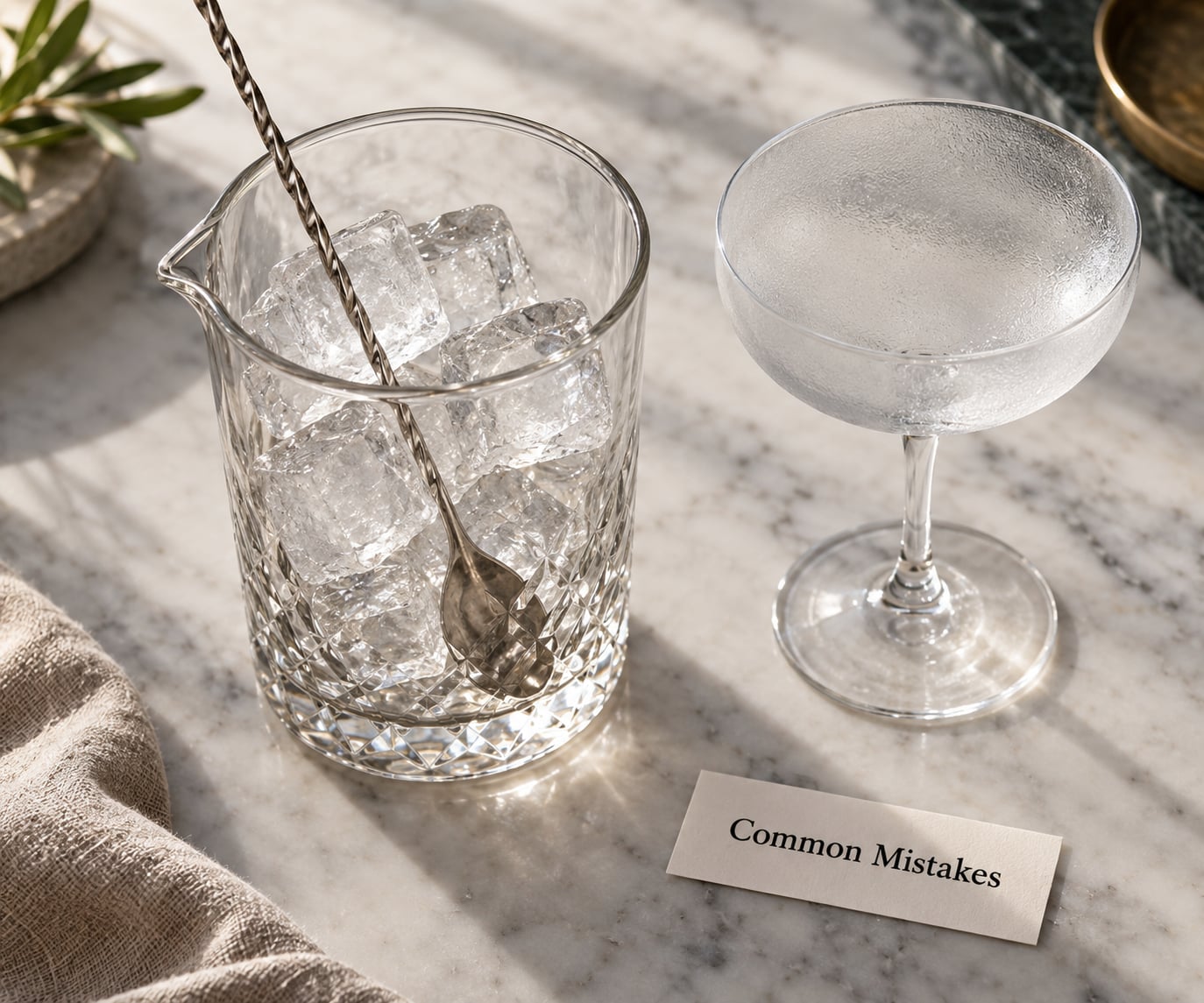
Almost every disappointing stirred drink comes down to one of these.
- Using a teaspoon instead of a bar spoon. It is too short, it clinks against the glass, and it never reaches the bottom. Fix: a bar spoon, bowl at the bottom.
- Not enough ice. A half-filled glass chills slowly and dilutes fast. Fix: two-thirds full, no exceptions.
- Stirring too hard. Big arm-driven circles tear the drink apart and throw liquid over the rim. Fix: wrist only, small circles, steady pace.
- Stirring past cold. Chilly is not the same as cold, and cold is not the same as balanced. Fix: strain when the glass frosts and the aroma opens up.
- Skipping the glass chill. The drink loses heat the moment it lands. Fix: ice and a splash of water in the serving glass from the start.
- Forcing the last ounce through the strainer. It clouds the drink and stirs up sediment. Fix: let gravity do the work, and stop when the flow turns to drips.
- Holding the spoon in the middle of the glass. The edges never mix and the drink tastes uneven. Fix: keep the bowl against the wall the whole time.
Tips for Better Stirred Cocktails
Taste before you serve. Dip a clean spoon, or better, strain a small amount into a tasting glass. Under-diluted reads sharp and boozy, over-diluted reads thin and short. You cannot fix either one after it hits the glass.
Use ice that is as cold as you can get it. Ice straight from the freezer chills faster and melts slower than ice that has been sitting in a bucket on the counter. In a warm kitchen, that difference shows up within twenty seconds of stirring.
Dilute your spirits and vermouth. The best single upgrade in a home bar is to pour the whiskey, gin, and vermouth into a bottle with a little water and let it sit. Vermouth is wine, and wine goes stale and oxidizes in an open bottle within weeks.
Stir batches for a party. One large mixing glass, measured ingredients in the right ratio, and ice to fill it. Stir the batch, then strain into each glass. Stir time scales roughly with the volume of liquid rather than the number of drinks, so a batch does not need ten times the stirring.
Keep the aroma intact. Japanese bars are the reason for the slow, quiet, deliberate stir. The drink spends longer in contact with ice at a lower agitation level, which extracts flavor without shredding delicate top notes. You do not need a background in it, but slowing down by half a beat genuinely helps.
Taste the vermouth ratio and adjust it. If a Manhattan tastes harsh, the vermouth is doing too little work. Add another quarter ounce before you add more water. Most classic recipes give you a starting ratio, not a permanent law.
Frequently Asked Questions
How long should I stir a cocktail?
About 20 seconds with standard ice cubes in a mixing glass that started at room temperature. Large cubes need 30 to 45 seconds because they melt slowly, while cracked or crushed ice needs only 10 to 15. Watch the glass instead of the clock: when frost spreads across the outside, the spoon feels painful to touch, and the aroma turns from sharp alcohol to something rounder, the drink is ready to strain.
Should you stir cocktails with a spoon or a bar spoon?
Use a bar spoon. It is long enough to reach the bottom of a mixing glass, so you can keep the bowl against the wall for the whole stir, and most have a flat or disc end at the top for muddling sugar or herbs. A kitchen teaspoon is too short, rattles against the side of the glass, and leaves the edges of the drink unmixed. If that is all you have, it works better than nothing.
Do you stir cocktails with ice or without ice?
Always with ice. Ice does two jobs at once in a stirred drink: it chills the liquid and it melts into it, which is the dilution that rounds out a spirit and softens the alcohol bite. Stirring without ice simply mixes the ingredients and leaves you with something warm and flat. You are aiming for roughly three-quarters to one ounce of added water on a single drink.
What is the difference between stirring and shaking a cocktail?
Shaking whips air into the drink and aerates it, which suits juice, dairy, and egg white drinks. Stirring mixes gently, keeps the liquid clear and glossy, and gives you finer control over dilution. Stir anything made only of alcohol, vermouth, bitters, or syrup, and shake anything containing juice, egg, dairy, or cream. Shaking a Manhattan just makes it cloudy and thin.
How do I know when a cocktail is chilled enough?
You do not need a thermometer. Three cues line up at the same moment: frost forms on the outside of the mixing glass, the spoon becomes cold enough to sting, and the aroma shifts from sharp alcohol to a rounder, more aromatic smell. Any one of those alone is not enough. When all three show up together, strain immediately, because the drink starts warming the moment ice leaves it.
Why is my stirred cocktail watery?
Usually you stirred too long or used too little ice. A fuller mixing glass chills the drink faster, so you get cold with less melt. If your ice is small or crushed, cut your stir time to 10 to 15 seconds. Another common cause is a thin glassware sitting on a warm counter, so chill the serving glass with ice and water while you build, then dump it right before you strain.
Conclusion
Chill the glass, fill the mixing glass two-thirds with ice, and stir steadily with a bar spoon held against the wall until the outside frosts and the aroma opens up. That is roughly 20 seconds with standard cubes. Then strain and serve immediately. Everything else in a good stirred drink comes down to that one motion done without rushing.