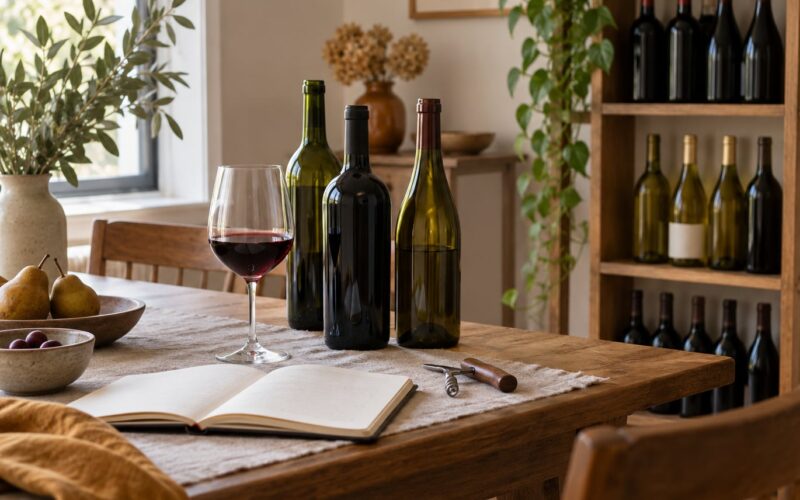
Decanting a wine means pouring it out of the bottle into a decanter or any carafe, usually to strip out sediment from an aged bottle and to give a young, tannic wine some air. Most everyday bottles need none of it. A Cabernet Sauvignon three years from the vintage does, an old Barolo gets a careful pour, and a simple Pinot Noir or a sparkling wine is better off in the bottle.
Here is how to decant wine and when to bother, in plain order: stand the bottle upright first, taste a small glass before you commit, and let the wine tell you whether it opened up or faded. The whole process takes about two minutes of actual pouring, plus however long the bottle needs to settle.
One distinction to keep straight, because most people get it backwards. Decanting is pouring the wine off its sediment. Aerating is exposing it to air so a closed wine opens up. Sediment removal matters for older bottles. Aeration matters for young, powerful reds. When people ask me how to decant wine, they almost always mean the second one.
Table of Contents
- What You Need for How to Decant Wine and When to Bother
- Step-by-Step
- 1. Choose the right bottle and check its condition
- 2. Stand the bottle upright before opening
- 3. Open the bottle carefully
- 4. Taste before and after a small initial pour
- 5. Pour slowly into the decanter
- 6. Decide whether to wait
- 7. Taste at intervals rather than by guesswork
- 8. Pour and keep the sediment behind
- 9. Store leftover wine correctly
- How long to decant, by wine style
- Common Mistakes
- Frequently Asked Questions
- Do you need to decant every bottle of wine?
- How long should you decant wine before drinking it?
- Is decanting old wine risky?
- What does it mean if wine smells better after decanting?
- Should you leave sediment in the bottle?
- How long can wine stay in a decanter?
- Conclusion
What You Need for How to Decant Wine and When to Bother
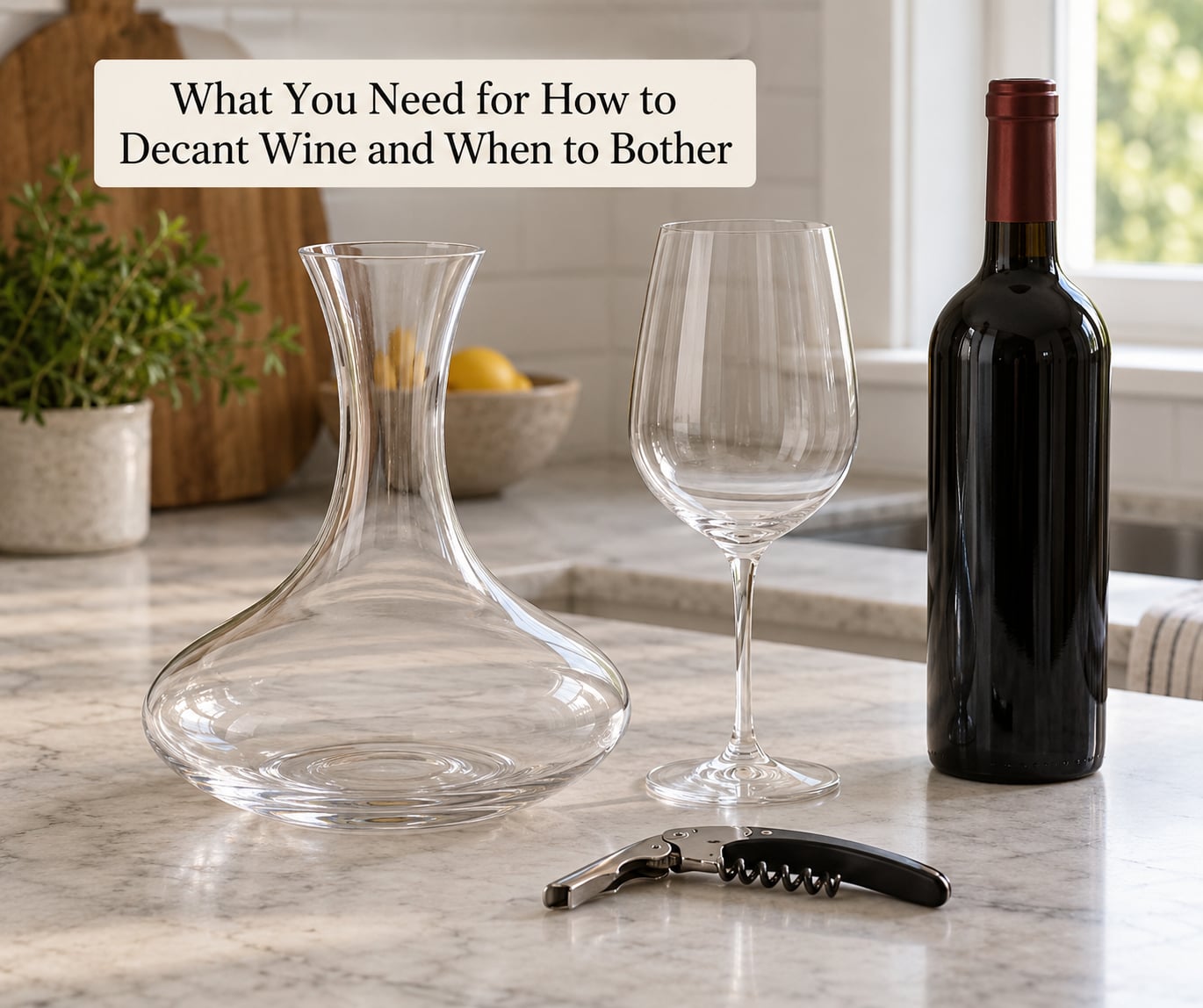
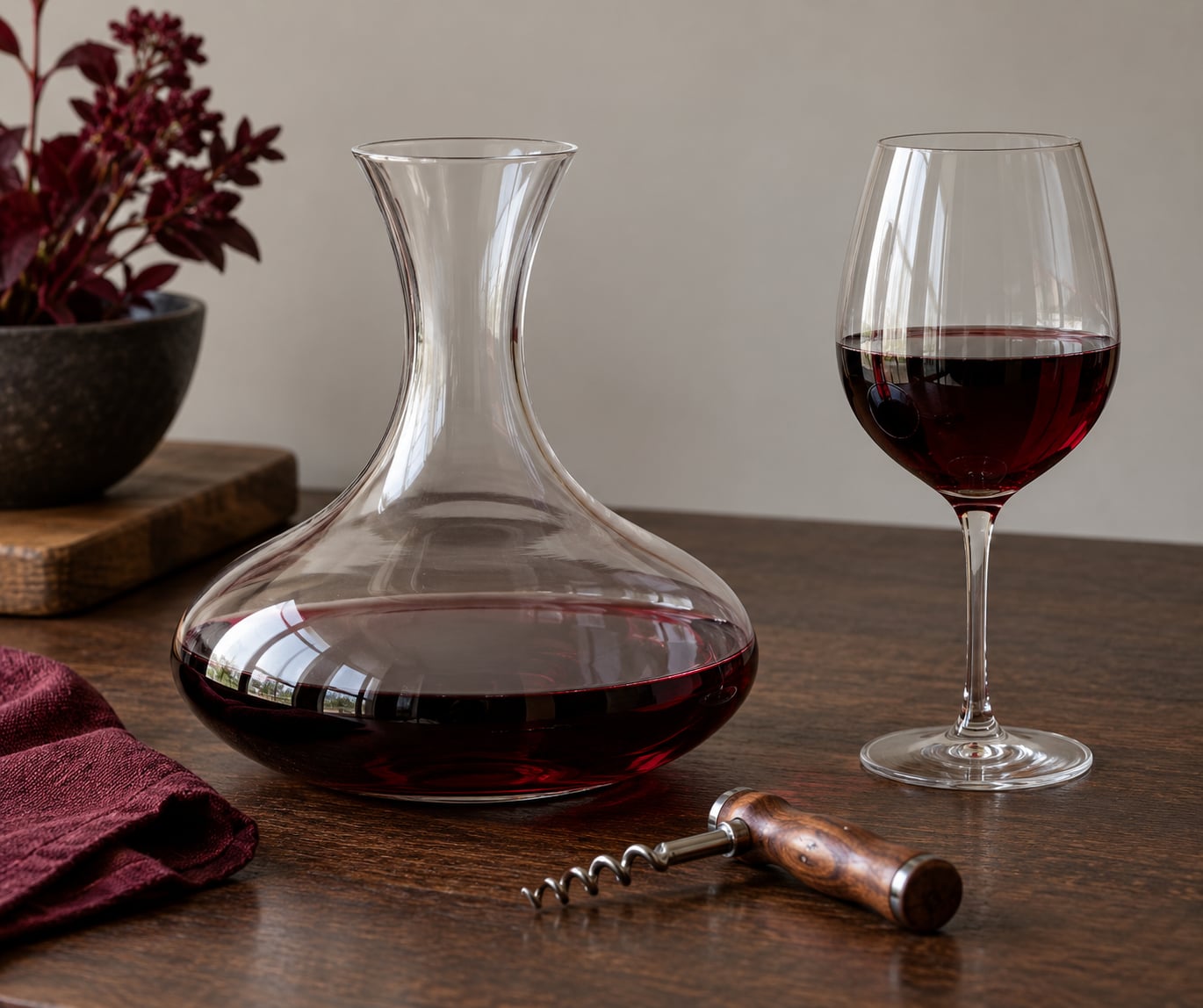
Not much. A decanter is nice, but it is not the tool doing the work. Any glass carafe, a jug, a pitcher, even a second wine glass will hold a bottle and give you air contact. What matters is the surface area of wine exposed, not the shape of the vessel.
- A wide decanter or carafe for young, closed reds. Wider is better here because more wine touches air.
- A slim carafe or the original bottle for fragile old wines. Less air contact is the point.
- A corkscrew, ideally one with a blade or a second piece, so a crumbling cork has somewhere to go.
- A wine glass per taster so you can pour a small sample before the main pour.
- A steady, cleared counter space. Decanting while dodging a toaster is how half the sediment ends up in the decanter.
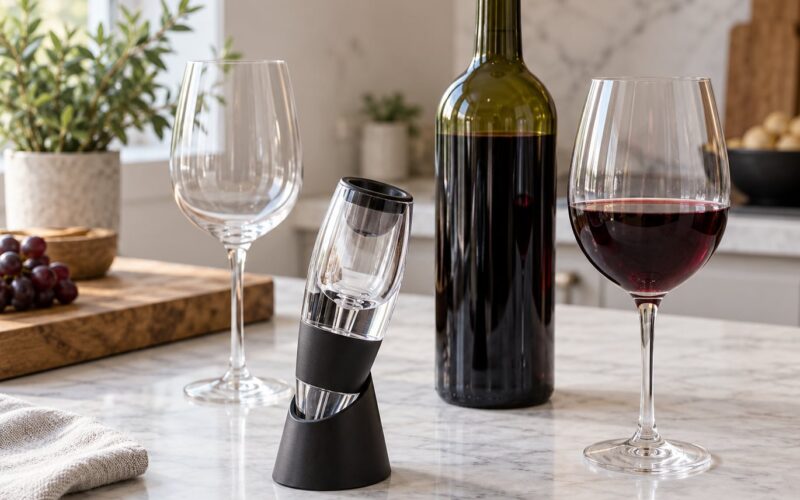
Aerator gadgets exist and opinions on them are split. Plenty of people on WineBerserkers call them unnecessary, arguing a glass does the same job once you swirl and wait. Others use one on young reds because the agitation opens them faster than air time alone. If you own one, use it on a young wine. If you do not, nothing is missing.
Before anything else, look at the bottle. Hold it up against a light and tilt it slowly. Rust-brown streaks and grit collecting at the base mean sediment, and that bottle wants standing time. Wine that looks crystal clear and smells clean probably does not.
Step-by-Step
1. Choose the right bottle and check its condition
Decide from the label, the vintage and the sediment, not from habit. A young Cabernet Sauvignon, Syrah, Nebbiolo or Tempranillo usually needs air. A light red such as Pinot Noir or Gamay rarely does. Sparkling wine is never decanted, because the carbonation is already doing the aerating and shaking the bottle just fizzes it flat.
Very old bottles get a different treatment. Past roughly twenty years, the wine may be fragile, and you decant mainly to clear sediment or to rescue a cork that broke on the way out, not to aerate. Old whites are fine to decant when they carry sediment, which many chardonnay bottlings do.
2. Stand the bottle upright before opening
This is the step people skip and then blame when they decant grit. Sediment needs time to fall, and movement puts it back in suspension. Stand the bottle upright for 12 to 24 hours before opening, longer if it has been jostled in a case or a car boot.
Give a fragile old bottle the same courtesy, even more so. The risk is not just cloudy wine, it is pushing a delicate wine past the point where it is comfortable with air. If you only have an hour, skip the decant and drink it from the bottle.
3. Open the bottle carefully
Wipe the lip and the outside of the neck before you go anywhere near a decanter. Old wine stains and cork crumbs land there, and a wet neck is how a clean pour turns into a mess.
If the cork crumbles, drop in a spoon, lift it out with the corkscrew, and pour the bottle through a fine sieve or a coffee filter into the decanter. A bottle that was going to be corked or heat-damaged will not be saved by this. Only cork crumbs were the problem.
4. Taste before and after a small initial pour
Pour about 60 ml into a glass and smell and taste it before doing anything else. Swirl, sniff, wait a few minutes, taste again. This gives you a baseline and it catches the boring failures early: a wine can be corked, tired or heat-damaged, and no amount of air fixes any of those.
This sample is also the honest test of whether the bottle is worth the effort. If it is already flat and dull, you have learned that for a few seconds of work.
5. Pour slowly into the decanter
Hold the bottle upright and tip it slowly so the wine runs down the inside wall of the decanter rather than splashing. That keeps bubbles out of the wine, and bubbles are just surface area you did not ask for, all froth and no benefit.
Fill the decanter to no more than three quarters. A full decanter gives you nowhere to pour back at the end, and it makes sediment easier to stir up. As the level drops near the base, stop pouring and leave the last centimetre in the bottle. That residue is harmless, and it is where the sediment lives.
6. Decide whether to wait
There are two waiting jobs and they are not the same. For a young, tannic red, you are aerating, and the useful window runs from about 15 minutes to a couple of hours. For an aged bottle, you are separating sediment, and waiting buys you almost nothing.
Aromatic whites sit in the middle. A full-bodied chardonnay with texture, or a natural or orange wine that smells closed, often improves with 15 to 30 minutes of air. A light, crisp white that already smells of citrus needs nothing at all.
Warmer wine aerates faster. That is worth remembering when you serve a red at room temperature straight from a warm cupboard: the air contact is doing more work than it would in a cold cellar.
7. Taste at intervals rather than by guesswork
Set a timer and taste every 20 to 30 minutes. What you are watching for is the moment the wine gets more open: aromas separate and lift, the bitter tannin edge softens, the finish lengthens. Once you pass that peak, more air does nothing for you.
There is a folk rule that an hour in a decanter is worth about a year of aging. Treat it as a rough intuition about how much air a wine sees, not a fact. What it reliably describes is acceleration, not transformation. WineBerserkers regulars make a similar point about aging versus airing: more aroma shows up in the glass, but the slow structural work of aging is not happening on that timescale.
If nothing changes by 30 minutes, more time probably will not help either. Move on and serve it.
8. Pour and keep the sediment behind
When it is time to serve, pour from the decanter rather than tipping it. Stop the pour when you can see the last glass getting cloudy. If you have poured almost everything and a little sediment is still loose at the bottom, let it settle for a minute and serve the clearer wine above it.
Sediment is a natural by-product of ageing, harmless, and simply a clarity and elegance issue. Nobody is going to fall ill from it. Getting it into the decanter anyway is a habit worth dropping, because it makes the wine taste duller than it is.
9. Store leftover wine correctly
Open wine is on a clock, and a decanter does not stop the clock. If you have more than a glass left, put the stopper on and refrigerate the decanter, or pour what remains back into the bottle with a vacuum stopper and chill that.
A stopper slows oxidation down. It does not reverse it, and it does not make three-day-old wine good again. People weighing the leftovers point out on r/wine that most wines want an hour or two and rarely more than three, which is another way of saying an overnight decant is usually a step backwards. Finish the bottle tonight, keep the cork in the fridge for a day or two, and lower your expectations on anything older than that.
How long to decant, by wine style
Use this table as a starting point, then trust the glass. The times assume the bottle stood upright beforehand and is served at normal drinking temperature.
| Wine style | Examples | Time in the decanter | Note |
|---|---|---|---|
| Young, high tannin | Cabernet Sauvignon, Syrah, Nebbiolo, Tannat | 30 to 120 minutes | The clearest case for aerating. |
| Medium-bodied young red | Tempranillo, Merlot, Sangiovese | 20 to 45 minutes | Often open by 30 minutes already. |
| Aged red, 10 to 20 years | Bordeaux, Barolo, vintage Port | Decant and serve, or under 15 minutes | Mostly about clearing sediment. |
| Very old red, past 20 years | Mature Bordeaux, old Nebbiolo | Pour off sediment, serve fast | Fragile. Air exposure loses more than it adds. |
| Full-bodied or textured white | Oaked chardonnay, aged white Burgundy | 15 to 30 minutes | Can also carry heavy sediment. |
| Closed or low-sulfur white | Many natural and orange wines | 15 to 30 minutes | Shakes off a struck-match or reductive note. |
| Light, crisp white | Sauvignon Blanc, Pinot Grigio | Skip | Air flattens the freshness. |
| Light red | Pinot Noir, Gamay, Lambrusco | Skip, or a splash decant | Often better with ten minutes in the glass. |
| Sparkling | Cava, Champagne, pet-nat | Never | Movement knocks out the bubbles. |
Planning around dinner, work backwards from when you want to drink it. For a young tannic red that means opening around meal time. For an old bottle, open it when the first course lands and pour straight away.
Common Mistakes
Almost every decanting problem traces back to doing one of these six things.
- Decanting every bottle by reflex. Simple, light and already-fragrant wines lose their best feature in a decanter. Fix: skip anything that already smells clean and tastes balanced in the glass.
- Opening the bottle straight after moving it. Sediment is still in suspension and goes straight into the decanter. Fix: stand the bottle upright for 12 to 24 hours, and 24 if it has been transported.
- Pouring too fast. Splashing pulls in air as foam and stirs the sediment back up. Fix: run the wine down the wall of the decanter slowly and fill it to three quarters.
- Filling the decanter to the brim. There is nowhere left to pour back, so the dregs at the bottom get stirred in. Fix: stop at three quarters and serve from above the last centimetre.
- Leaving an old bottle in a decanter. A fragile aged wine left for an hour goes flat and loses its aromatics. Fix: decant for sediment and serve immediately.
- Reading oxidation as aeration. If a wine smells like bruised apple, wet cardboard or flat sherry, air is not the missing ingredient. Fix: put the cork back on, chill it, and drink it within a day or two.
Two more worth knowing. Serving a decanted bottle the following night is a mistake, not a technique, because the wine has been drinking oxygen since you opened it. And bottle shock from a bumpy journey can leave a wine tasting dull and closed, which looks exactly like a wine that wants air. Rest it upright for a few hours before you decide anything.
Frequently Asked Questions
Do you need to decant every bottle of wine?
No, and forcing the habit does more harm than good. Decanting earns its place with sediment-heavy aged bottles and with young, high-tannin reds that taste closed. Simple, light-bodied wines, already fragrant whites and sparkling wines gain nothing from it and often lose freshness. Start with a small sample glass, then decide from the taste rather than from the label.
How long should you decant wine before drinking it?
For a young, tannic red, 30 to 120 minutes covers most cases, with the useful part usually arriving in the first 30 to 45. An aged bottle you are decanting for sediment wants minutes, not hours. A textured white often needs 15 to 30. Taste every 20 to 30 minutes and stop at the peak rather than following the clock.
Is decanting old wine risky?
Yes, more than most guides admit. Past about twenty years a wine can be fragile, and an hour of extra air may flatten aromas that took decades to build. Decant it for sediment, pour slowly, keep the vessel narrow if you can, and serve straight away. If the cork broke, that is the strongest reason to decant an old bottle at all.
What does it mean if wine smells better after decanting?
It means the wine was closed and air has released aromatics that were held in the glass, which is exactly what aeration is supposed to do. Tannin often softens at the same time and the finish lengthens. It does not mean the wine has aged faster in a meaningful sense, and it does not rescue a corked, heat-damaged or tired bottle.
Should you leave sediment in the bottle?
Yes. Sediment is a harmless natural by-product of ageing, and the dregs in the bottom centimetre of the bottle are the cheapest way to keep it out of your glass. Stand the bottle upright for 12 to 24 hours first so it settles, pour steadily down the wall, and stop when the level gets low. Clarity is the only real benefit.
How long can wine stay in a decanter?
Treat a decanted bottle as open wine on a short clock. Most reds are at their best for an hour or two after pouring, and few need more than three. Stopper the decanter and refrigerate it if there is wine left over, or pour the remainder back into the bottle with a vacuum stopper. A stopper slows oxidation but cannot reverse what has already happened.
Conclusion
The rule is short. Stand the bottle upright, taste a small glass first, and decant only when the sediment, the wine style or the taste test asks for it. Start there tonight and the rest of the technique takes two minutes of pouring.