To batch cocktails for a party, multiply every ingredient in a single-serve recipe by the number of servings you need, then add roughly 10% to 20% extra water to replace the dilution the ice would have provided. Hold back bubbles, dairy, egg whites and fresh herbs, chill the batch for one to two hours, and pour over ice at service. The mixing itself takes about 20 minutes once the ingredients are out.
Batching is the difference between being a host and working a bar. One pitcher of a Daiquiri scaled to twenty servings takes less time than shaking five drinks one at a time, and every glass that comes out of it tastes the same. It also means guests can pour, which gets you out of the kitchen for the first hour.
The part people get wrong is dilution. Ice does two jobs in a single serve: it chills and it waters the drink down. A batch skips the ice until service, so if you do not replace that water the pitcher turns out harsh and boozy, and by the last pour it tastes like straight spirit. Everything below is about scaling correctly and putting that missing water back.
Table of Contents
- What You Need
- Step-by-Step: How to Batch Cocktails for a Party
- Step 1: Choose a Batch-Friendly Cocktail
- Step 2: Calculate the Batch and Shopping List
- Step 3: Prepare and Chill Ingredients
- Step 4: Mix the Batch Without Diluting It
- Step 5: Set Up a Simple Service Station
- Step 6: Garnish, Serve, and Clean Up
- Common Mistakes
- Frequently Asked Questions
- Can I batch cocktails for a party the day before?
- How much cocktail should I make for a party?
- Should I add ice to a large batch of cocktails?
- How do I serve two different cocktails without over-preparing?
- What is the best batch cocktail for a large group?
- How long can mixed cocktails stay refrigerated before serving?
- Conclusion
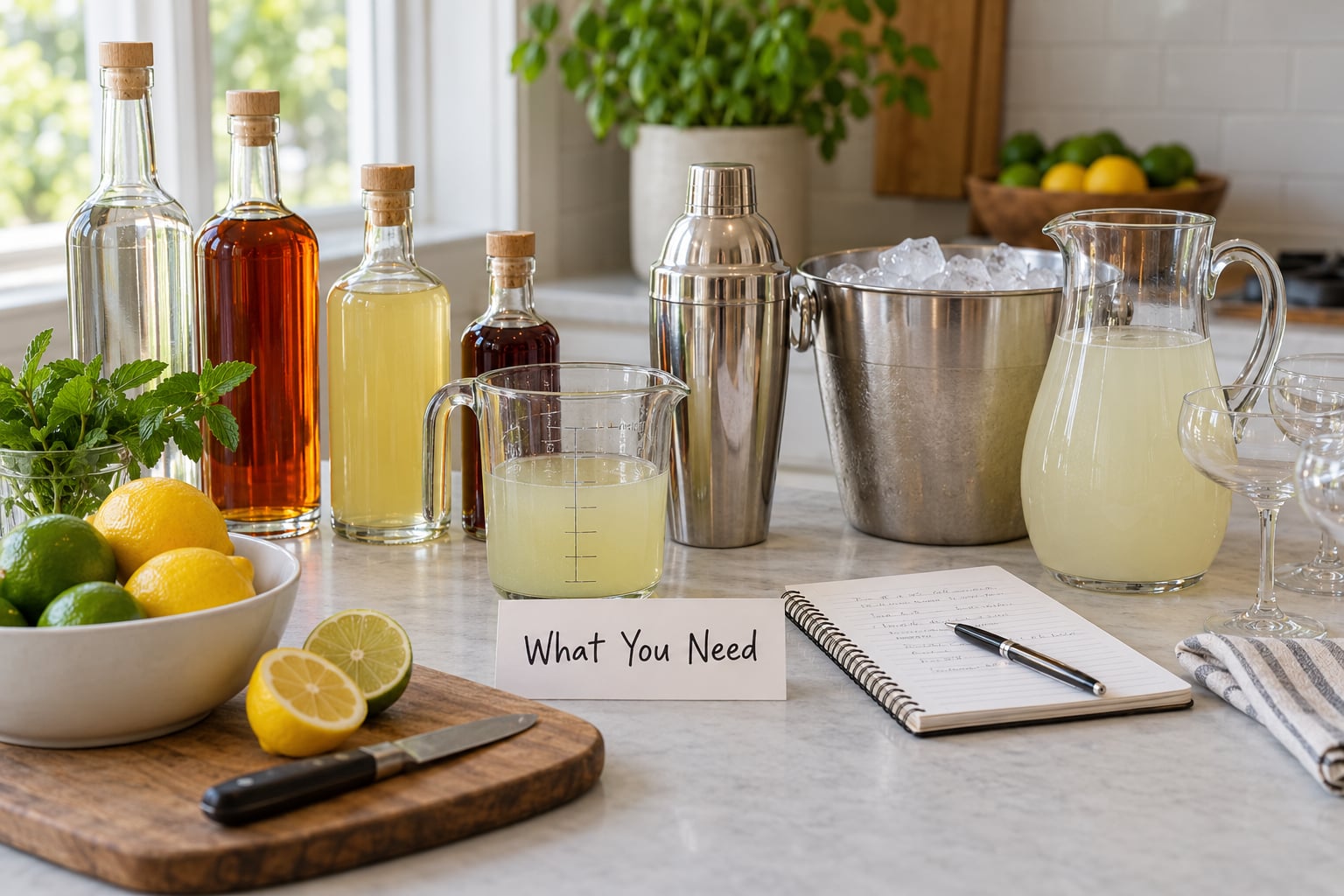
What You Need
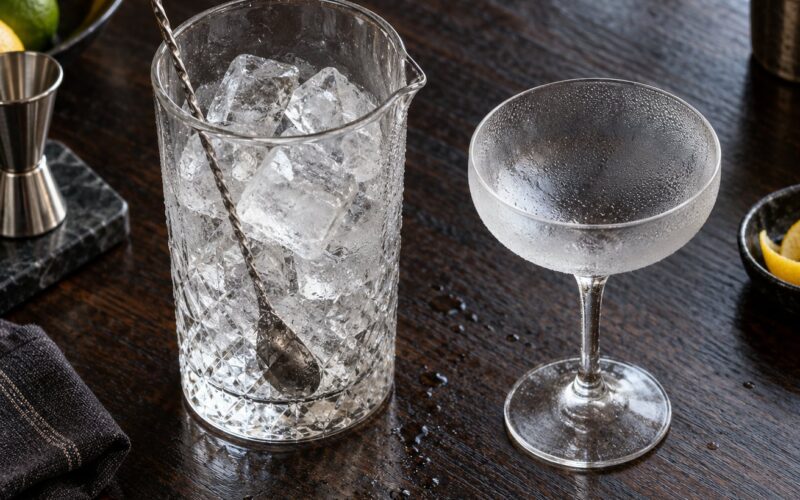
You need less gear than a bar, and most hosts already own it. A jigger for accurate measures, a pitcher or large jar for mixing, a bar spoon, a strainer, and a cooler or ice bucket for holding the batch cold will cover everything from eight guests to thirty.
- Measuring: a jigger, plus a small kitchen scale if you have one. Volume measures are fine for spirits and syrups; a scale helps with egg white or anything you need to be exact about.
- Mixing: a glass pitcher, a mixing glass, or a food-safe jar big enough for the full batch. Leave headroom, because a full pitcher sloshes over the moment someone pours.
- Straining: a fine strainer or a Hawthorne strainer if you are batching anything with citrus or fruit in it.
- Chilling: a refrigerator with space, an ice bath in a sink or tub, and a cooler with ice for service. Glass pitchers cannot go straight into a cooler full of water, so rest them on ice if you can.
- Serving: a pitcher, a drink dispenser for twenty or more, or two pitchers and a ladle. Ice for the glasses, a scoop that is not your serving spoon, and one large ice block or a bucket of large cubes keeps dilution down.
- Labeling: masking tape and a marker. Write the drink name, the batch date and the serving count on the pitcher.
- Garnishes: cut fruit, herbs if you are hand-finishing, and cocktail napkins.
For ingredients, choose recipes built from stable components: citrus juice, simple syrup, spirits, fortified wine, and non-perishable bitters. Those five things scale cleanly from one drink to fifty.
Know your yield before you start. A single-serve recipe of 2 ounces of spirit, 1 ounce of lime, and three-quarter ounce of syrup makes about 3.75 ounces total, which fills a rocks glass with a large cube and covers roughly three people drinking moderately over an evening. Double-check the math for your recipe before you buy anything, because the total ounces is what becomes your batch volume.
Drinks differ in how many servings you get per ounce of mix. A strong spirit-forward cocktail at 3 ounces per serve covers about 8 servings in a quart. A wine-based or low-alcohol drink at 5 ounces per serve stretches the same quart to about 6.5 servings. A two-ingredient spritz base at 2 ounces per serve gives you roughly 16 servings per quart, because the bubbles get added at the glass.
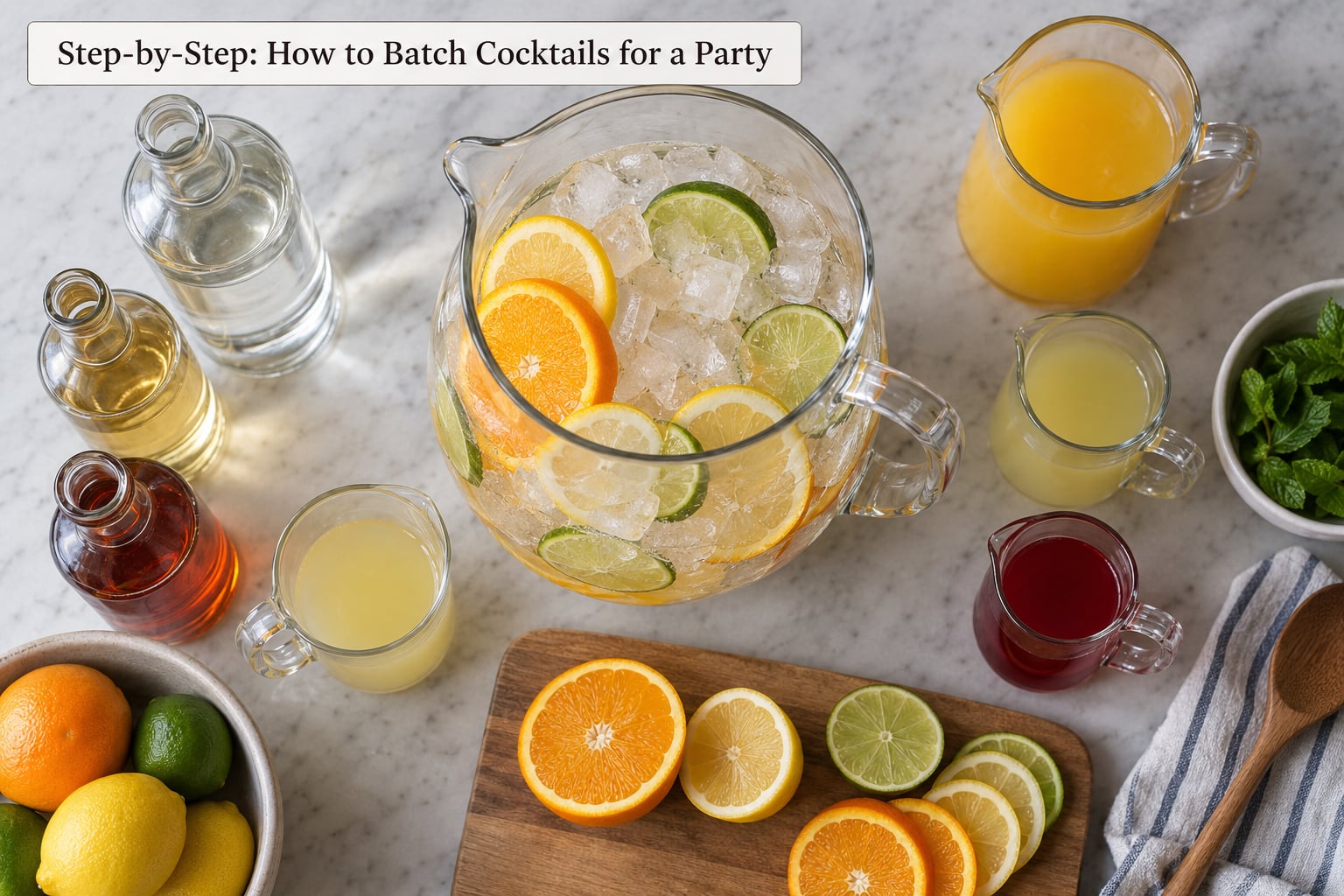
Step-by-Step: How to Batch Cocktails for a Party
Batching runs in six moves: pick a forgiving drink, size the batch, prep and chill, mix with the dilution included, set a service station, then garnish and clean up as the party runs. Most of the work happens before anyone arrives.
Step 1: Choose a Batch-Friendly Cocktail
Daiquiri, whiskey sour, margarita, sangria and spritz bases are the most reliable drinks to batch, because they are built from stable liquids that taste good after sitting together for hours. Anything with dairy, egg white, carbonation, whipped cream or fresh herbs belongs in the per-glass column instead.
There are two families worth understanding, because they batch differently. Sour-style cocktails follow a 2:1:1 ratio: two parts spirit, one part sour (citrus juice), one part sweetened (syrup). Daiquiris, sours and margaritas sit here, and they love a pitcher because the citrus does not fade quickly. Spirit-forward drinks such as an Old Fashioned or a Negroni are lower in liquid, so they batch into small amounts and get poured over a big cube where the drinker’s own ice does the diluting.
Low-alcohol drinks batch well too, which is useful for long gatherings. Wine-based punches and aperitivo-style drinks keep pouring for four hours without turning into a problem. Just remember that anything with bubbles, dairy, egg white, cream or fresh herbs should never go into the main batch.
Step 2: Calculate the Batch and Shopping List
Multiply your single-serve yield by planned servings, then add 10% to 20% extra water. A neat trick used by home bartenders is to plan 2.5 alcoholic drinks and 2 mocktails per adult, which keeps non-drinkers in the math from the start rather than as an afterthought.
Start with drinks per hour. Give each guest one drink in the first hour, then one more drink for each hour after that. A three-hour party means three drinks per guest, so twenty guests means sixty servings.
For a three-hour party, that works out like this:
- 12 guests: 36 servings. A 3.75 ounce recipe needs about 135 ounces of finished drink.
- 20 guests: 60 servings, about 225 ounces of finished drink.
- 30 guests: 90 servings, about 340 ounces, which is over two and a half gallons. Use a drink dispenser.
Now multiply each ingredient. A Daiquiri at 2 ounces rum, 1 ounce lime juice, three-quarter ounce simple syrup for 20 servings, plus 10% dilution water:
- 40 ounces rum, which is 5 cups or about 1.2 liters
- 20 ounces lime juice, about 1.5 cups
- 15 ounces simple syrup, a little over 1 cup
- 7.5 ounces cold water for dilution, about half a cup
That comes to about 82.5 ounces in the pitcher and yields a little more than 20 drinks once ice goes in at service. Shopping by volume instead of by bottle is faster: 40 ounces of rum is two 750 ml bottles, and 20 ounces of lime juice is a standard 15-ounce bottle plus a splash.
For a low-sugar batch, cut the syrup by about a quarter and let the citrus lead. Taste the single serve first, then scale the version you actually like. Batching a recipe that was too sweet by a single ounce is far worse than one that was slightly sharp.
Step 3: Prepare and Chill Ingredients
Prep the day before and keep everything cold: juices, syrups, garnishes and the bottles themselves. Freshly squeezed citrus keeps about 24 hours refrigerated in a sealed container, so make it the morning of if you can and refrigerate it.
Simple syrup keeps two weeks in the fridge and only gets better. Carbonated water and soda keep sealed in the fridge and go into the glass, never the pitcher. Cut fruit for garnish can be prepped a day ahead and covered, though citrus wedges brown a little after a few hours, so squeeze those fresh at service time.
Chill the actual containers. Cold spirits mix faster, and a pitcher that has sat in the fridge tastes noticeably cleaner. After you mix, let the batch rest and chill for one to two hours before serving so the flavors marry and the temperature settles all the way through.
Shelf life is different for every batch. Citrus-based drinks like a Daiquiri or margarita are best within 24 hours. Spirit-forward batches such as a Manhattan or an Old Fashioned hold several days refrigerated, since the vermouth is the limiting ingredient. Anything with dairy or fresh juice from the fridge should be used within a day, and never leave a mixed batch at room temperature for more than about two hours.
Step 4: Mix the Batch Without Diluting It
Measure every portion exactly, combine it in the pitcher, add cold water for the dilution the ice would have done, and chill. Do not build the batch by eyeballing, because errors scale.
The rules that matter, in short:
- Scale the recipe by servings, then add 10% to 20% water to the total volume.
- Scale bitters slightly down rather than multiplying them exactly; bitterness amplifies in a batch.
- Never pre-mix drinks with club soda, sparkling wine, or dairy and egg whites.
- Hold fresh herbs and delicate garnishes for service time.
- Convert ounces to cups as you go: 8 ounces is one cup, 16 ounces is a pint, 128 ounces is a quart.
- Taste with a clean spoon before you chill it, then adjust.
Once everything is in the pitcher, stir once or twice so the water blends in. For a citrus batch you can also chill it over an ice bath before serving, which gets it cold fast without watering it further. If the batch tastes thin or harsh, the fix takes seconds: a splash of water for strength, a splash of the sour component for sharpness.
Restoring body at service matters as much as the water. For a sour, stir in soda water and a fresh lime half per glass. For a spritz, pour the base over ice and top with sparkling wine. For a punch with fruit, add the fruit at service so it stays bright.
Step 5: Set Up a Simple Service Station
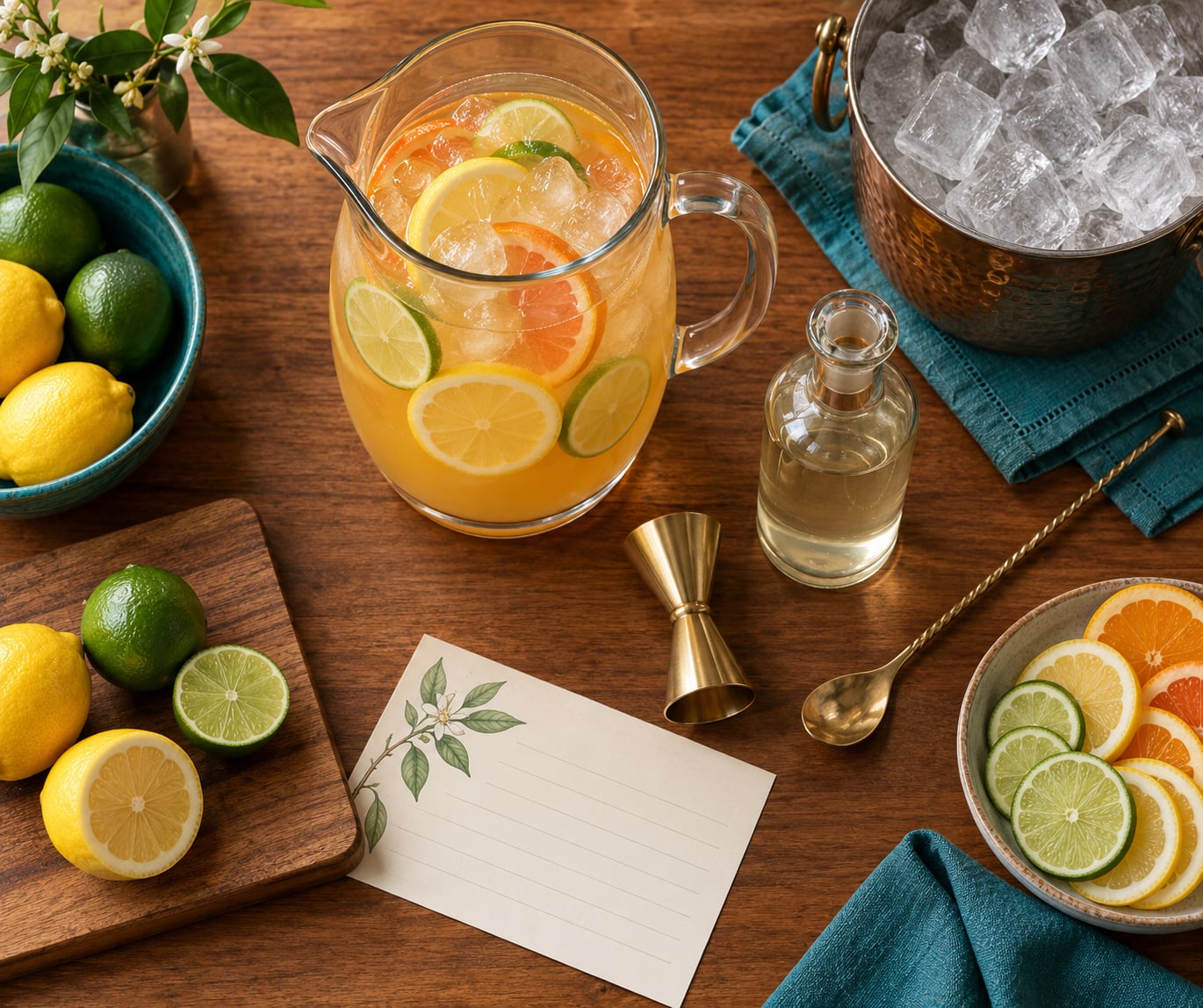
Set the station so guests pour their own and nothing gets wasted: pitcher or dispenser on a tray, ice in a separate bucket, glasses on an ice bed, garnish in small bowls, and the batch pitcher set inside a tub of ice to hold its temperature without diluting it.
Decide between serving over ice and serving up. Over ice in a rocks glass with one large cube is the low-waste choice for a sour. Up in a chilled coupe or wine glass suits spirit-forward drinks where the guest wants aroma, and it keeps dilution entirely in their control.
Replenish in small amounts. When the pitcher is down to a few servings, top it up with a fresh mix of the same ratio rather than mixing a second oversized batch; you will use less, and you avoid a surprise sitting in the fridge the next day. Keep a ladle or a pour spout with the pitcher so nobody dips in with a serving spoon.
Step 6: Garnish, Serve, and Clean Up
Taste the batch before anyone arrives and correct it while you still have time. Then label the pitcher with the drink name, the date and the serving count, so the next host in your house knows what is inside.
Garnish at the last moment, because a slice of lime left sitting on the surface for two hours is a sad, dry slice of lime. Keep citrus, herbs and any bubbles in separate small containers on the station and let each guest finish their own drink.
A simple timeline keeps the whole thing calm. The day before, make the syrup, cut fruit for garnish, and count your bottles. Two hours before, squeeze the citrus, mix the batch with its dilution water, and chill it hard. About 30 minutes before guests arrive, set out the ice, fill the cooler, arrange glasses and garnishes, and pour a test glass to check strength.
When the party winds down, pour or discard any batch that touched a guest’s mouth rather than trying to store it. Clean perishable leftovers go in the bin the same night, and reusable pitchers get washed right after, because citrus and sugar left to sit will cloud glass and smell.
Common Mistakes
The most common batching failures are all avoidable, and most of them trace back to scaling or timing. Here is what goes wrong and the specific fix.
- Forgetting dilution water. The batch tastes harsh and boozy by the third drink. Fix: add 10% to 20% water to the total volume, and taste with a clean spoon before serving.
- Mixing the batch too early. Citrus batches lose brightness and spirit-forward batches lose aromatics over hours in the fridge. Fix: mix the morning of, chill one to two hours, and keep the fruit out until service.
- Multiplying bitters exactly. Bitters taste louder in a big batch and can turn the whole pitcher bitter. Fix: scale them down about 15% to 20% and taste as you go.
- Batching carbonated drinks. A sparkling base made in the morning is flat by evening. Fix: keep soda and sparkling wine sealed in the fridge and top each glass.
- Batching dairy or egg white. Cream and egg white separate or curdle once citrus is in the mix. Fix: keep those drinks per-glass, or use a milk-punch technique where the dairy goes in first and stays cold.
- Forgetting the garnish. A plain sour looks unfinished and tastes flatter than it is. Fix: pre-cut fruit the day before, squeeze citrus at service, and put it in bowls guests can reach.
- Serving over too much ice. Crushed ice in warm weather turns a batch watery fast. Fix: use one large cube or a big block per glass, and keep the pitcher itself on ice rather than filling it with ice.
- Confusing recipe yield with party size. People multiply by guests but not by drinks per hour, and by evening you have run dry. Fix: use the one-drink-first-hour rule, then one drink per hour after, and add the mocktail allowance.
- Planning only for drinkers. The non-drinking guest count gets added at the last minute. Fix: plan two mocktails per adult alongside the alcohol and make the zero-proof batch as carefully.
Hosting gets easier once the drink stops being your job. Put the pitcher on ice, put a ladle beside it, and tell people to help themselves. Keep one more backup drink in the fridge, unbatched, so a second hour is fast if the first pitcher runs dry.
And keep a zero-proof option ready. A batch mocktail uses the same logic with no spirits: two parts tea or juice, one part sour, one part sweetener, plus dilution water. Two mocktails per adult covers most mixed groups and takes ten minutes to mix.
Frequently Asked Questions
Can I batch cocktails for a party the day before?
Yes for spirit-forward drinks. Batches built on whiskey, rum, vermouth or liqueurs keep several days refrigerated, covered and labeled. Citrus-based drinks like a Daiquiri or margarita are best within 24 hours, and anything with dairy or fresh-pressed juice should be mixed the same day. Hold carbonation and garnishes back until service so nothing goes flat or brown.
How much cocktail should I make for a party?
Give each guest one drink in the first hour, then one more drink per hour after that, and add a 10% cushion. For a three-hour party that is three drinks per guest, so 20 guests need about 60 servings. At 3.75 ounces per serving, that is roughly 225 ounces of finished drink, or close to two quarts.
Should I add ice to a large batch of cocktails?
No. Ice belongs in the serving glass, not in the pitcher, because it waters the batch down as it melts and the drink turns flat and thin. Add the missing water yourself at mixing time instead, at 10% to 20% of the total volume. Keep the pitcher sitting on ice in a tub or cooler so it stays cold without diluting.
How do I serve two different cocktails without over-preparing?
Pick one signature drink to batch and make the second per-glass, or in a much smaller pitcher, only if guests ask for it. Two full batches doubles your shopping, prep and waste. A good split is one large batch plus one zero-proof option, which covers drinkers and non-drinkers without doubling the kitchen work.
What is the best batch cocktail for a large group?
A sour-style drink such as a Daiquiri, whiskey sour or margarita works best, because it scales cleanly, keeps for a day and stays refreshing over a long evening. For 30 or more guests, move the batch into a drink dispenser so guests can pour without lifting a heavy pitcher. Add soda water and fresh citrus at the glass to restore sparkle and sharpness.
How long can mixed cocktails stay refrigerated before serving?
Spirit-forward batches keep several days refrigerated, covered and labeled. Sour and citrus batches are best within 24 hours. Anything containing dairy, egg white or fresh-pressed juice should be used the same day, and a batch that has sat at room temperature for more than about two hours should be discarded rather than re-chilled.
Conclusion
Start with one drink and do the math tonight. Pick a sour like a Daiquiri or whiskey sour, multiply the single-serve recipe by one drink per guest per hour plus your guest count, add 10% to 20% water, and chill it for a couple of hours before anyone arrives.
Keep one backup pitcher or a zero-proof batch in the fridge rather than making twice as much up front. That single decision is the difference between a calm party and a host stuck in the kitchen at midnight.