To thaw fish safely overnight, put it in the refrigerator set at 40°F or below, on a plate or tray on the lowest shelf, loosely covered, for 8 to 12 hours. That slow, cold melt is the only method that both keeps bacteria dormant and protects the texture of the flesh. It takes almost no effort, but the setup matters: where you put the tray and whether you cover it decide how the fish thaws.
I thaw fish two or three times a week in my own kitchen, and the thing that trips people up isn’t the fridge, it’s the timer. Most over-thawed fish I see comes from someone who followed a 24-hour rule for a half-pound tilapia fillet. Thin fish needs half the time a thick steak does.
| Method | Time | Best for | Texture result |
|---|---|---|---|
| Refrigerator, overnight | 8-12 hours | Planning dinner the night before | Best, even thaw |
| Cold-water bath | 20-40 minutes | Same-day cooking, no planning | Good, cook right away |
| Running cold water | 30-60 minutes | Very last resort | Fair |
| Microwave, defrost setting | 5-10 minutes | Cooking straight from frozen | Rubbery at the edges |
| Room-temperature counter | 2-4 hours | Nothing. Not safe. | Bacteria risk |
Table of Contents
- What You Need to Thaw Fish Safely Overnight
- Step-by-Step Overnight Refrigerator Method
- Step 1: Check the Fish and Plan the Timing
- Step 2: Place the Fish in a Leakproof Container
- Step 3: Refrigerate Overnight and Keep It Cold
- How Long Does Fish Take to Thaw Overnight?
- Step 4: Check for Full Thawing Before Cooking
- Common Mistakes That Ruin Thawed Fish
- Thawing on the Counter
- Using Warm Water to Speed Things Up
- Leaving the Fish Uncovered on a Shelf
- Following a 24-Hour Rule for Thin Fillets
- Cooking Partly Frozen Fish
- Confusing Thawing Signs With Spoilage
- What If the Fish Was on the Counter Overnight?
- Preparation Tips After Thawing
- Frequently Asked Questions
- Can I leave fish to thaw overnight in the refrigerator?
- What refrigerator temperature should I set for thawing fish?
- Should I thaw fish in its vacuum-sealed bag?
- How long can thawed fish stay in the fridge before I cook it?
- How can I defrost fish safely when I have less than 12 hours?
- The Short Version to Start With Tomorrow
What You Need to Thaw Fish Safely Overnight
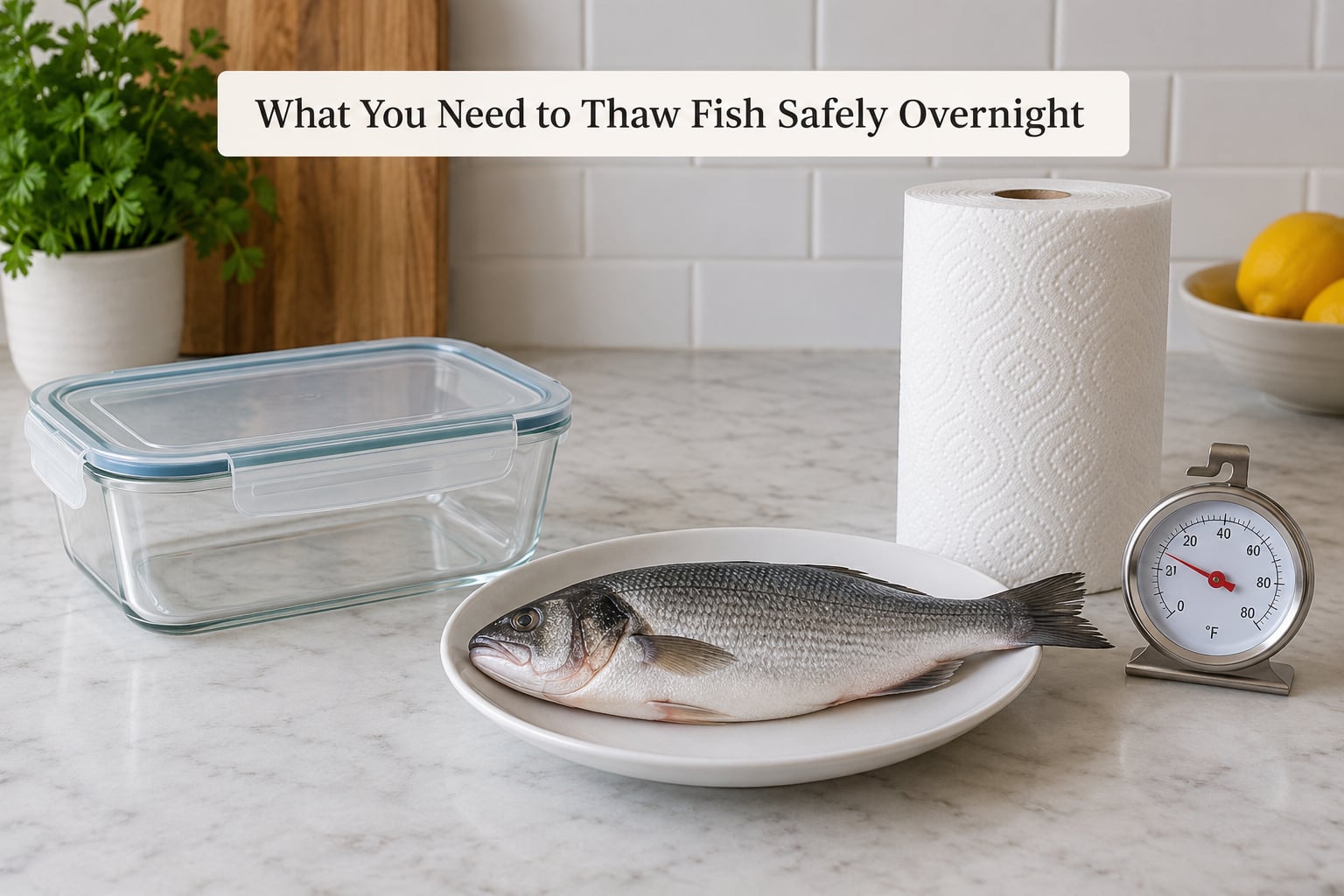
The list is short, which is why this method is so accessible. Everything you need already sits in your kitchen.
- A refrigerator at 40°F or below. If you have never checked, put a fridge thermometer on the middle shelf and read it in the morning. Most household fridges run warmer than the dial claims.
- A rimmed baking sheet or lidded glass container. A flat rimmed sheet drains liquid away from the fish. A container catches it, which is fine as long as you pour it out before cooking.
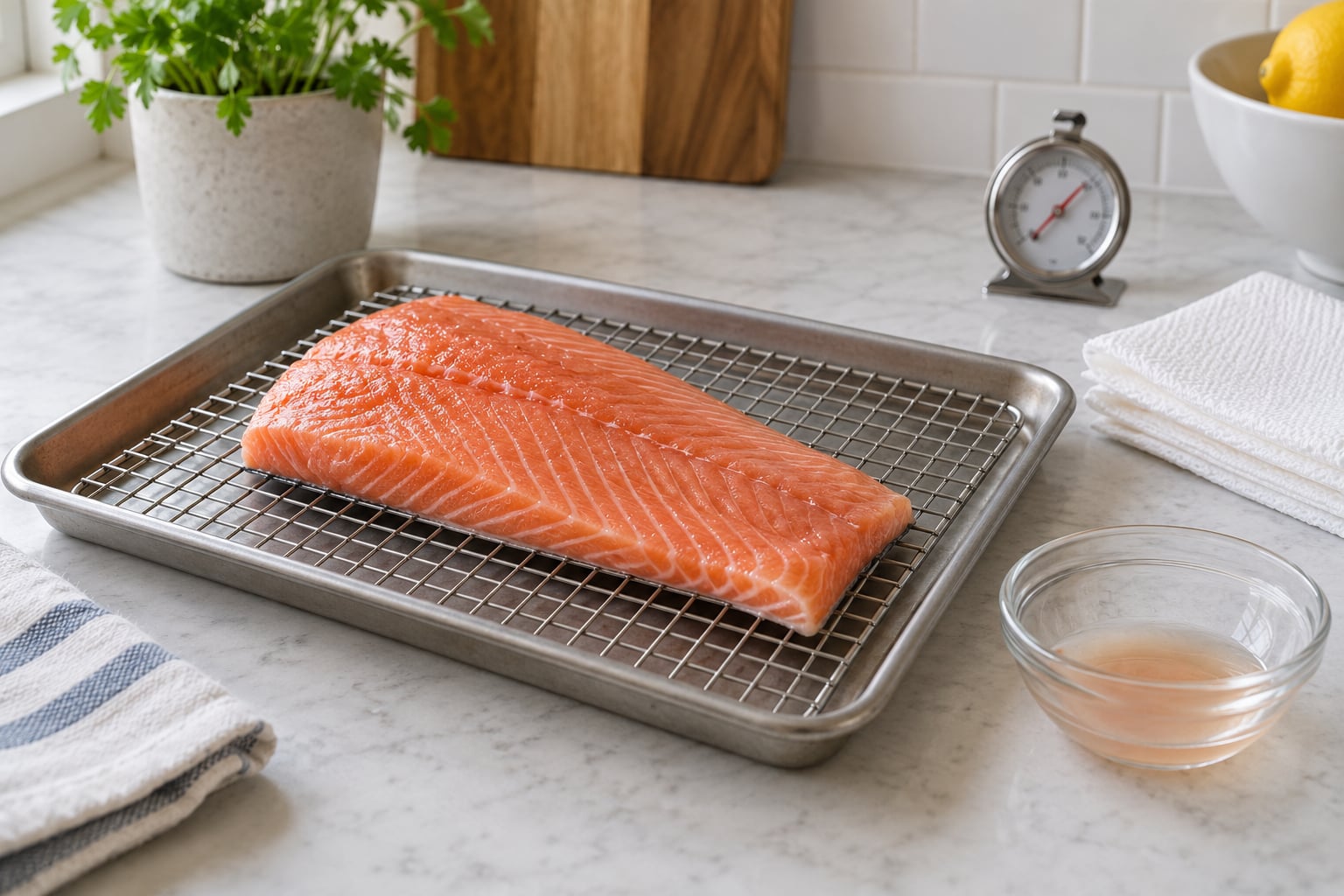
- A wire rack. Resting the fish on a rack inside the sheet pan is the single best trick for overnight thawing, and almost nobody uses it. Meltwater runs off instead of pooling under the fillet.
- A zip-top bag, plastic wrap, or an upside-down lid. Loose coverage slows the melt slightly and blocks drips and smells.
- Paper towels. You will pat the fish dry before it hits the pan, and towels help with that.
- A label or a marker. Write the date on the tray. Thawed fish keeps 1 to 2 days refrigerated, and the date is the only way you will remember when it went in.
Step-by-Step Overnight Refrigerator Method
Step 1: Check the Fish and Plan the Timing
Look at the fish before you commit to overnight. IQF or flash-frozen fillets, the individually quick-frozen kind at the grocery store, thaw noticeably better than fish that was frozen slowly in a block, and they need less time. Whole fish flash-frozen on ice right after the catch, the kind anglers bring home, are the same.
Read the bag for a use-by date and check for leaks. If the vacuum pack is puffed, split, or weeping liquid, do not put it in the fridge. That is spoilage, and it has nothing to do with thawing.
Then work backward from dinner. A thin fillet of sole, flounder, or tilapia needs 6 to 8 hours. A thick salmon fillet or cod steak can take 12 or more. Getting this right is how to thaw fish safely overnight without ending up with a fillet that has been sitting in its own liquid for two extra days.
Step 2: Place the Fish in a Leakproof Container
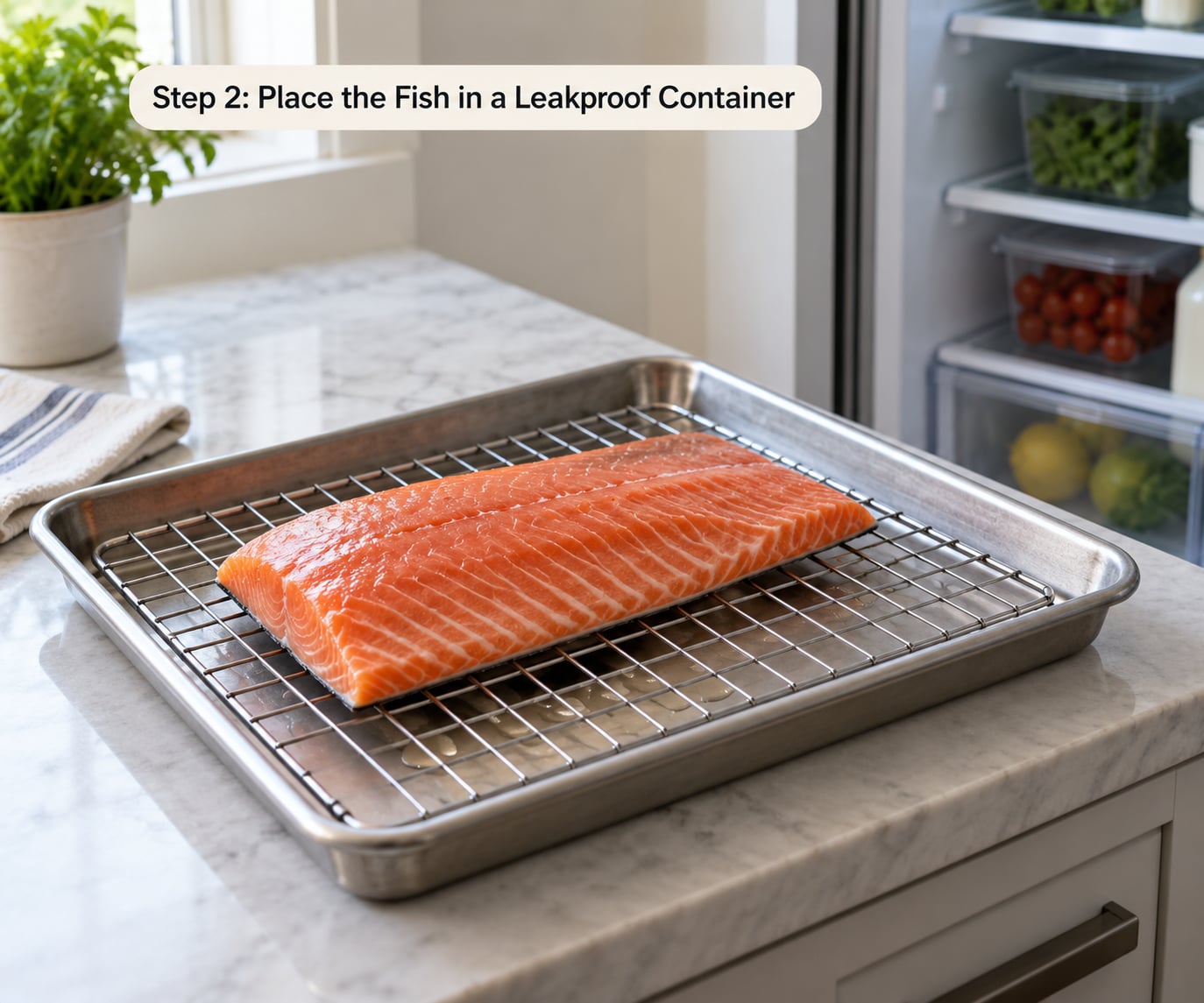
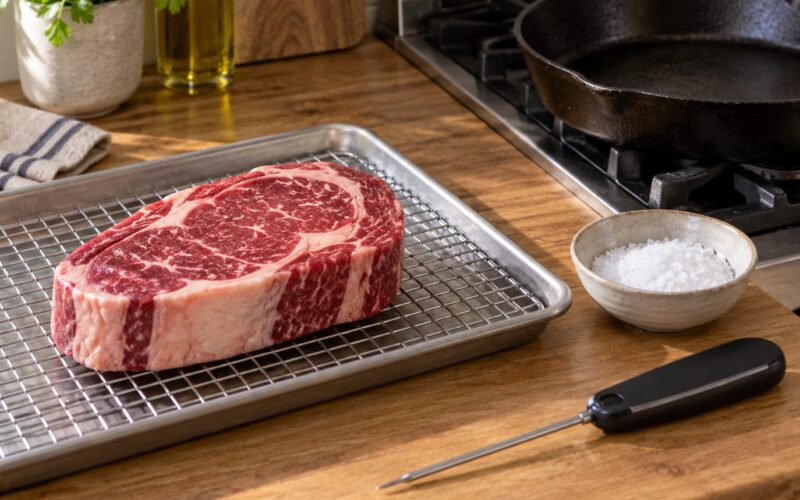
Set a wire rack inside a rimmed baking sheet. Lay the frozen fish on the rack, then put the whole sheet on the bottom shelf of the refrigerator. If you do not have a rack, a plate inside a sheet pan works, or a glass container with a loose lid.
People get contradictory advice about the packaging, so here is the rule. If the fish is in intact vacuum packaging, you can leave it sealed, and that is the safest option because nothing touches the pan or the fridge shelf. If the pack is loose, dented, or already open, move the fish to the tray and loosely cover it with plastic wrap or an inverted bowl.
The bottom shelf is not a superstition. Fish juices dripping onto a shelf of vegetables or cooked rice is the most common way thawing ruins a fridge full of food, and the lowest shelf catches it first.
Step 3: Refrigerate Overnight and Keep It Cold
Leave it alone for 8 to 12 hours. Do not put anything on top of it, do not tuck it beside a hot dish, and do not nudge it into the door where the temperature swings every time someone opens the fridge.
The reason this works is slow, even heat transfer. Cold air melts the ice crystals without the outer layers ever entering the 40-140°F bacterial danger zone, and without the cell walls rupturing the way they do in warm water or a microwave.
One mistake here is worth naming because it comes up constantly in home kitchens. Freezing does not kill bacteria; it only pauses them. Any time fish spends between 40°F and 140°F, bacteria start multiplying, and thawing is the step where that clock starts. That is why a countertop thaw is not a shortcut, it is a gamble.
How Long Does Fish Take to Thaw Overnight?
Match the time to the cut, not to a single number. Thickness is what decides the window.
| Fish cut | Refrigerator time | Notes |
|---|---|---|
| Thin fillet (sole, flounder, tilapia) | 6-8 hours | Fish at the top of this list goes mushy fast if left longer |
| Thick fillet (salmon, cod, haddock) | 8-12 hours | The standard overnight window |
| Fish steak (swordfish, tuna, halibut) | 12-18 hours | Consider a two-stage thaw for a really thick piece |
| Whole fish | 18-24 hours | Start a full day ahead, not a night ahead |
| Shrimp, scallops, other shellfish | 6-8 hours | Quickly |
| Frozen fish soup or stock | 24 hours or more | Not the same problem, and much easier |
If the fish is still frozen after 12 hours, do not move it to the counter. Move it to a cold-water bath instead. Keep the fish in a sealed bag, submerge it in cold tap water, weigh it down with a plate, and change the water every 20 to 30 minutes. That finish takes 20 to 40 minutes and the texture holds up fine.
Step 4: Check for Full Thawing Before Cooking
There is a test, and it takes five seconds. Press the thickest part of the fillet with your thumb. Fully thawed fish bends and yields, and the fillet slides easily off the bone if it is still skin-on. A piece that resists, that springs back, or that has a hard core in the middle needs more time.
Turn it over and check for ice crystals along the grain or in the seam. Clear flesh with a faint pink cast is fine. White, chalky, frozen-looking patches mean it is not done.
Then pat it dry with paper towels, on both sides, before it goes anywhere near a hot pan. Surface moisture has to evaporate for browning to happen, and a wet fillet steams instead of searing. Salt it after it is fully thawed and only right before cooking, because salt applied too early draws out moisture and leaves you with the waterlogged texture you were trying to avoid.
When it goes in the pan, take the internal temperature to 145°F and check the thickest part with a thermometer. That single habit settles most of the arguments about doneness.
Common Mistakes That Ruin Thawed Fish
Thawing on the Counter
No. The outer two centimeters of fish hit the 40-140°F danger zone within an hour or two while the center is still solid, which is exactly the condition bacteria multiply fastest in. USDA and FDA guidance both list the refrigerator, cold water, and microwave as the only safe methods, and the counter is on none of them.
Using Warm Water to Speed Things Up
Warm water thaws the outside long before the inside, so you get a cooked outer layer, a raw center, and damaged cell walls holding water. If you use water at all, it must be cold tap water, changed every 20 to 30 minutes.
Leaving the Fish Uncovered on a Shelf
Without a tray, the meltwater carries surface bacteria across the shelf and into other food. Every home-cooking forum has the same complaint, and every fix is the same: a plate, a rimmed sheet pan, or a sealed bag underneath.
Following a 24-Hour Rule for Thin Fillets
This is the quiet killer of texture. Twelve extra hours in the refrigerator does not harm fish the way warm water does, but the flesh keeps losing structure and the fillet turns rubbery and dull. Match the time to the cut.
Cooking Partly Frozen Fish
A frozen center cooks unevenly and steams the thin edges. If you want a sear, finish the thaw. If you skipped planning, cook from frozen in a wet-heat method, and never in a screaming hot pan. Baking, braising, and poaching work from frozen because the heat surrounds the fish evenly. Searing does not, because the frozen core drops the pan temperature too fast for browning to start.
Confusing Thawing Signs With Spoilage
Clear meltwater pooling under the fish is normal. What is not normal is a sour or ammonia smell, a slimy surface, or flesh that has turned dull and dark gray around the edges. Frozen fish can also have a mild marine odor. Distinguish them by smell and by how long it has been warm, not by how it looks wet.
What If the Fish Was on the Counter Overnight?
Here is the decision rule. Two-hour rule: perishable food sitting at room temperature should be used or refrigerated within two hours, or one hour if the kitchen is above 90°F. Fish left out overnight has been in the danger zone for many hours, and no smell test makes it safe again.
Refrigerating it does not undo the harm, either. The honest answer is to throw it away. If you cannot stomach the waste, the next time keep the package in the freezer and move it to the fridge the day before rather than relying on a counter plan that felt fine until the morning.
Preparation Tips After Thawing
Cook the fish within 1 to 2 days of thawing, and keep it on the bottom shelf in the fridge until you use it. Cooking a fish that spent a cold night in a sealed tray preserves texture far better than a fish that was force-thawed.
If your plans change and you want to refreeze it, thawed fish keeps for one to two months at 0°F. Refreezing costs you moisture and texture, so it suits soup and stews far better than a pan-seared dinner.
A last shortcut for people who did not plan ahead: running frozen fish under cold water in the sealed bag works. Cold water moves heat faster than cold air, which is why a bath thaws a fillet in under an hour. Just cook it straight away, because it will not hold like refrigerator-thawed fish.
Frequently Asked Questions
Can I leave fish to thaw overnight in the refrigerator?
Yes. Leaving fish in the refrigerator overnight is the safest and best-textured way to defrost it, and it is what USDA and FDA guidance recommend. Keep the refrigerator at 40 F or below, set the fish on a plate or rimmed sheet pan on the lowest shelf, and cover it loosely. Give a thin fillet 6 to 8 hours, a thick fillet 8 to 12 hours, and a whole fish up to 24.
What refrigerator temperature should I set for thawing fish?
Forty degrees Fahrenheit, or about 4 C, or colder. Many home refrigerators sit warmer than their dials suggest, so a cheap fridge thermometer is worth keeping on the middle shelf. What you are trying to avoid is the 40 to 140 F bacterial danger zone. Below 40 F, fish bacteria stay dormant and the ice melts slowly and evenly, which is also what protects the texture.
Should I thaw fish in its vacuum-sealed bag?
If the seal is intact you can leave it sealed, and nothing touches your tray or fridge shelf. Open the bag only if it is loose, dented, or already leaking. Vacuum packaging does not carry a botulism risk for thawing fish in a working refrigerator, because cold air and no oxygen suppress the bacteria involved. The real risk is a split pack weeping juice across the rest of the fridge, which is why a tray goes underneath either way.
How long can thawed fish stay in the fridge before I cook it?
Use it within one to two days, and keep it on the bottom shelf until you cook it. Thawed fish that came from a refrigerator thaw holds its texture better than fish that was force-thawed in cold water or a microwave. If it has already been thawed for two days, cook it tonight rather than pushing to a third, because quality drops faster than safety does but both are trending the wrong way.
How can I defrost fish safely when I have less than 12 hours?
Use a cold-water bath. Keep the fish sealed in its packaging or a zip-top bag, submerge it in cold tap water, weigh it down with a plate so it stays under the surface, and change the water every 20 to 30 minutes. Most fillets thaw in 20 to 40 minutes; thicker steaks take about an hour. Cook it immediately afterward. Never use warm or hot water, and save the microwave for fish you plan to cook from frozen.
The Short Version to Start With Tomorrow
Put the fish on a wire rack in a rimmed sheet pan, on the lowest shelf, at 40°F or below, loosely covered, for 8 to 12 hours. That is the whole method, and it is why I stopped thawing on the counter years ago. Press the thickest part in the morning to check it, pat it dry, and get it to 145°F in the pan.