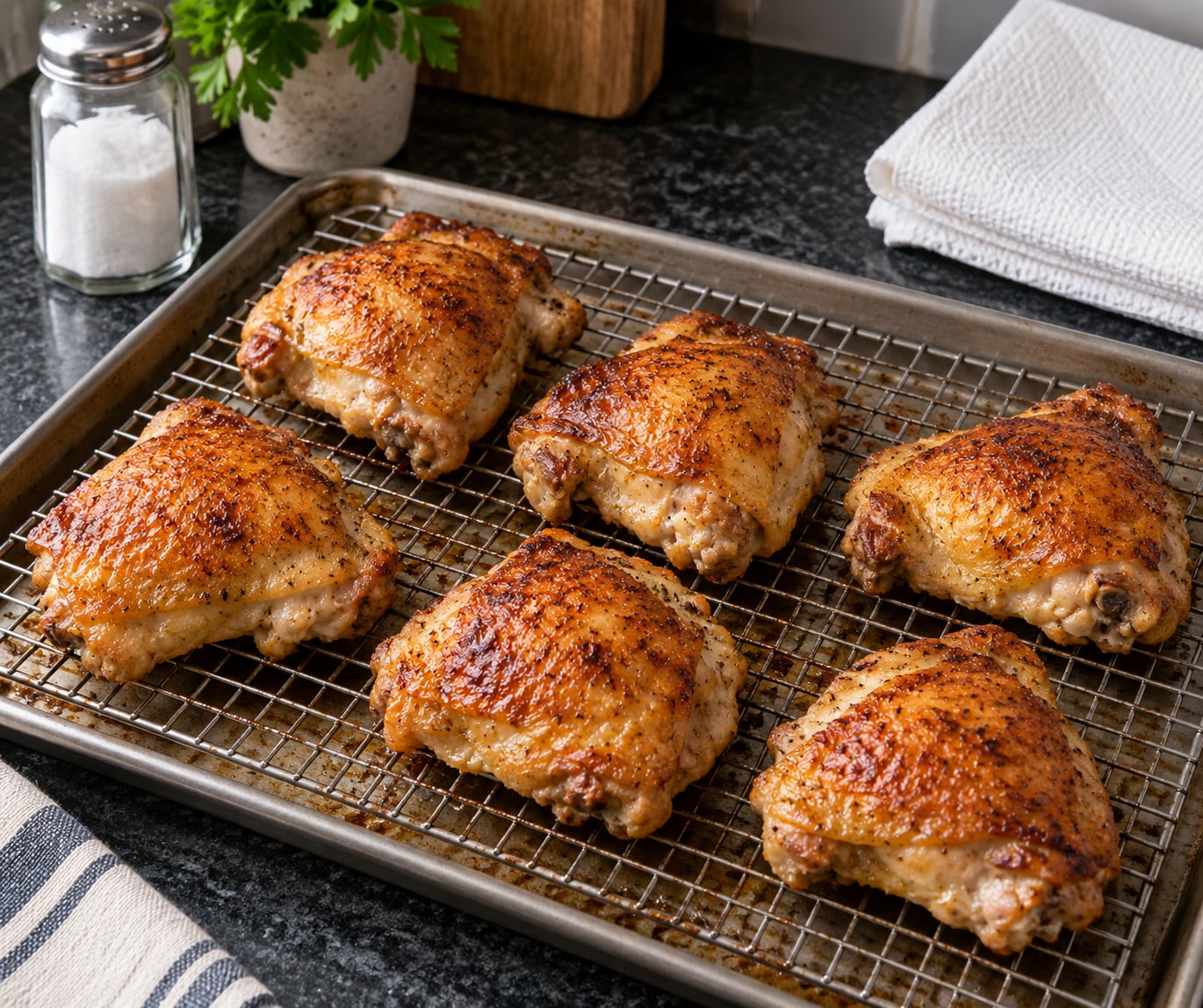
The short answer: to make crispy chicken skin in the oven, roast it uncovered at 425–450°F (220–230°C) on a wire rack set over a rimmed sheet pan, with the skin patted bone-dry and salted, until the thickest part hits 165°F. Bone-in thighs take 35–45 minutes, and a 2–3 minute broil at the end takes the surface from golden to glassy-crunchy.
That is the whole method. Nearly every soggy-skin complaint traces back to one of three things: moisture left on the surface, fat that never rendered, or skin pressed flat against a lined pan with no airflow under it. Fix those three and the oven does the rest.
If you salt the chicken and let it sit uncovered in the fridge overnight, you get noticeably better results, and it costs you nothing but a fridge shelf. If you skip that, the skin still crisps — it just crisps a little less evenly. Total hands-on time is about 15 minutes, most of it waiting.
Table of Contents
- What You Need
- Step-by-Step
- Pat the Chicken Dry and Season It
- Set Up the Rack and Preheat the Oven
- Roast Uncovered Without Disturbing the Skin
- How to Make Crispy Chicken Skin in the Oven at the Final Stage
- Check Doneness and Rest the Chicken
- Common Mistakes
- Tips for the Crispiest Results
- Frequently Asked Questions
- What temperature makes chicken skin crispy in the oven?
- Do I need salt to make chicken skin crisp in the oven?
- Can I make crispy chicken skin without a wire rack?
- Should I cover the chicken while roasting it in the oven?
- How long should chicken skin broil to become crispy?
- How do I keep crispy chicken skin from getting soggy?
- Conclusion
What You Need
- Bone-in, skin-on chicken. Thighs are the most forgiving and the crispest per minute. Drumsticks, wings, or a whole spatchcocked bird all work. Breasts work too, but they have less fat under the skin, so watch them closely.
- Kosher salt. Diamond Crystal or Morton both work; kosher salt is flakier and easier to distribute evenly than table salt. For a dry brine, roughly 1 tablespoon per whole chicken or 1 teaspoon per pound of parts.
- Baking powder, optional but helpful. About 1 teaspoon per whole bird, or 1/2 teaspoon per pound. Not baking soda — see the differences below.
- A high-heat oil with a neutral flavor, such as avocado, grapeseed, or canola. A teaspoon or two on the skin helps if you are roasting at the very top of the range.
- An instant-read thermometer. This is the one tool that turns guesswork into a repeatable result. Push it into the thickest part, not touching bone.
- A rimmed baking sheet and a wire cooling rack that fits inside it. The rim catches the fat that pours off; the rack lifts the skin off the metal so heat reaches the underside.
- Parchment or foil, if you prefer easier cleanup. Both work, but they change the result slightly — a bare metal pan crisps faster, parchment is the best compromise, and foil is the softest of the three.
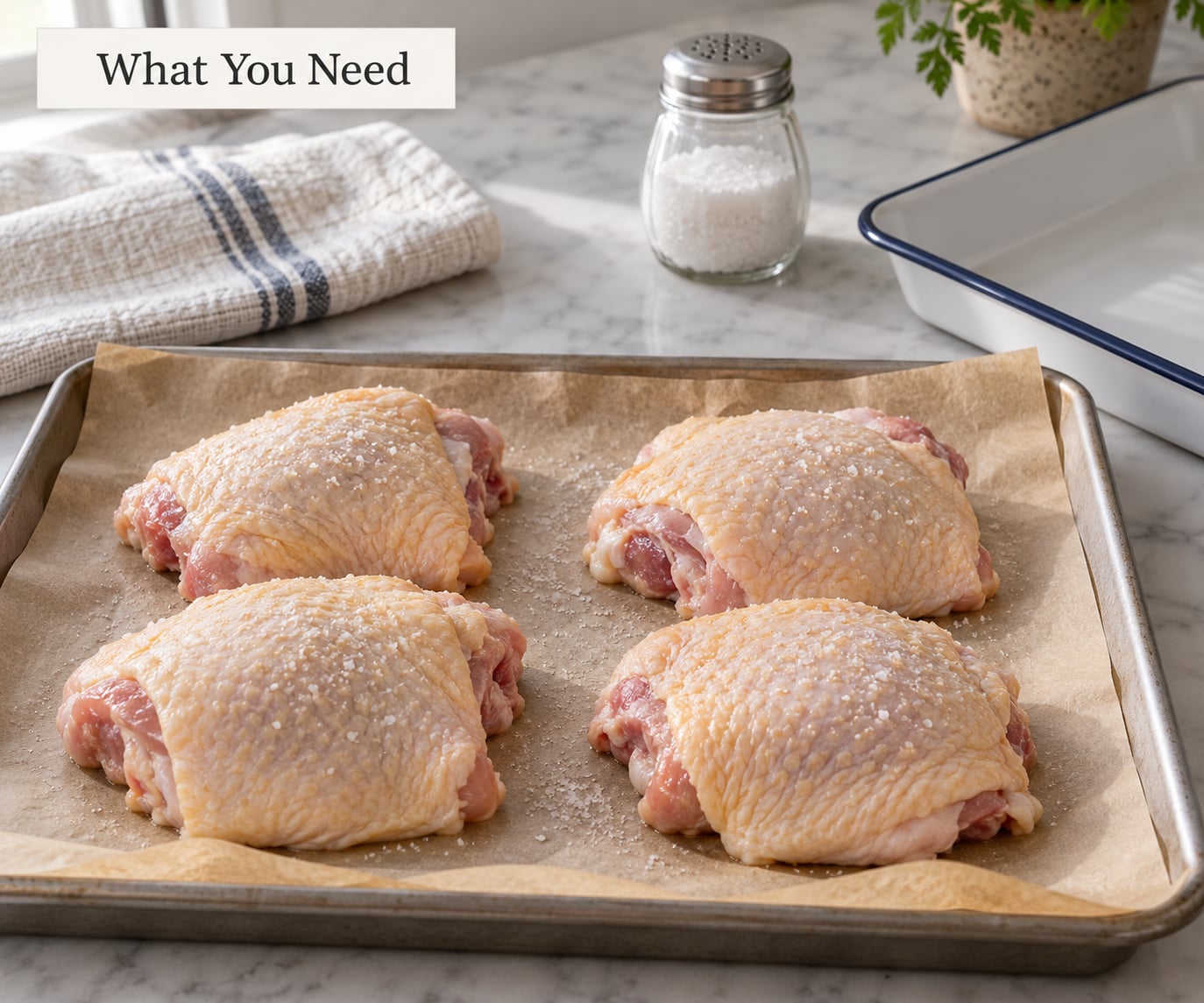
Preheat the oven while you prep. A cold oven plus wet skin is the most common reason a batch of thighs comes out pale and leathery instead of bronzed and crackling.
Step-by-Step
Pat the Chicken Dry and Season It
Surface moisture is the enemy of crisp skin. Water sitting on or under the skin turns to steam at 425°F, and steam keeps the skin soft no matter how long you roast it. Blot every piece with paper towels until the skin feels dry and slightly tacky, not damp.
Pat the whole piece, including the edges and under the skin flap where liquid hides. A few people go further and pull the skin loose from the meat with your fingers, which opens a channel for fat to escape, but for a weeknight dinner a thorough towel job is enough.
Next, season. For immediate cooking, use about 1 teaspoon of kosher salt per pound, rubbed into the skin and under it. For the better version, salt generously and refrigerate the chicken uncovered on a rack for 4 to 24 hours — this is a dry brine, and it draws water out of the skin before any heat is applied. Two hours helps a little; overnight is where the difference shows.
Keep the skin attached when you move the chicken around. Pinch it back into place after blotting if it lifts, since a torn flap curls and burns before the rest browns. If you are using baking powder, mix it into the salt and dust it over the skin at the last moment so it stays dry.
Avoid heavily paprikaed or sugar-based rubs at these temperatures. They scorch long before the fat under the skin has rendered, which is why many cooks drop to 425°F when using a bold rub.
Set Up the Rack and Preheat the Oven
Heat the oven to 425°F for breasts and whole birds, or 450°F for thighs, wings, and drumsticks. Give it a full 15 to 20 minutes to come to temperature. Convection is fine — drop the temperature by 25°F, since moving air browns the skin faster and crisps the underside without a rack.
Set a wire cooling rack inside a rimmed sheet pan and let the chicken sit skin-side up with space between the pieces. Air needs to move underneath, and that is exactly the part people miss: skin flat on parchment crisps on top and goes chewy on the bottom, which is the single most common complaint on cooking forums.
Line the pan with parchment if you want a washable sheet pan, and keep the foil option in mind for the times you prioritize cleanup. Oiling the skin is optional — a light drizzle helps at 450°F, and excess oil pools under the skin and steams instead of crisping.
Roast Uncovered Without Disturbing the Skin
Put the pan in on a middle or upper-middle rack and leave the chicken uncovered. Foil, a lid, or a snug pan traps the moisture you just worked to remove, and you end up steaming the skin in its own liquid for the first 20 minutes.
For thighs, expect 35–45 minutes at 450°F. Breasts run 22–28 minutes at 425°F. Wings need about 30–40 minutes, drumsticks 35–45, and a spatchcocked whole bird roughly 45–55 minutes at 450°F. Skin-only pieces bake far faster, around 10–16 minutes depending on size.
Around the halfway mark, check the fat. When you can see clear liquid collecting in the bottom of the pan and the skin has tightened and gone translucent-gold, the rendering is on track. Rotate the pan front to back if your oven has a hot spot, which most do — home cooks report this as the fix for one tray browning while another stays pale.
Do not baste. Every swipe of a brush lays fresh moisture back onto the surface you are trying to dry out.
How to Make Crispy Chicken Skin in the Oven at the Final Stage
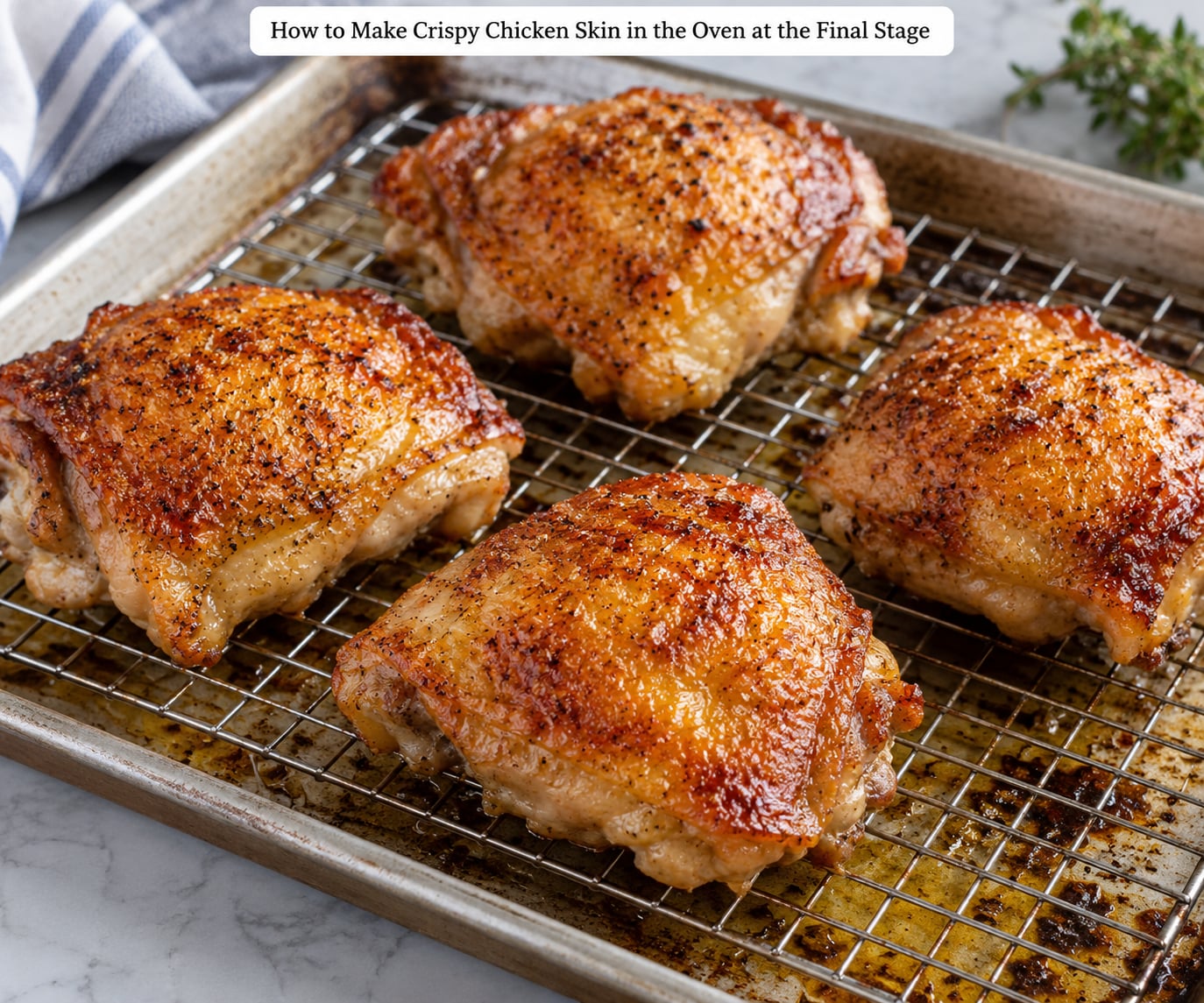
Once the meat is nearly done, move the pan to the top rack and switch the broiler to high. Keep the chicken 6 to 10 inches from the element and do not walk away. Two to three minutes is usually enough for a visible jump in crispness.
Watch for the signs: the skin darkens from gold to mahogany, small bubbles appear across the surface, and the fat under the skin goes from cloudy to clear. Pull it the moment the edges look set — broiler elements run hot enough to char paprika, garlic, and thin pieces of breast in under a minute.
If you would rather skip the broiler, finishing at the top of a 450°F oven for the last five minutes works nearly as well. The broiler just concentrates the heat into the last few minutes.
Check Doneness and Rest the Chicken
Check the thickest part with the thermometer. The USDA minimum safe internal temperature for poultry is 165°F (74°C), and that is the floor, not the finish line. Many cooks push thighs to 175°F for texture, which is fine because the meat is fatty and forgiving, but breasts go dry and leathery past about 170°F.
That gap between safety minimum and recipe targets is the source of most of the confusion online. 165°F is about safety; anything above it is about moisture and texture, and the safe number is the one that matters on a first cook.
Rest the chicken 5 to 10 minutes on the rack, uncovered. Resting lets the juices redistribute instead of running out, and leaving it uncovered stops the trapped steam from softening the crust you just built. Skip the foil tent — it undoes the last ten minutes of work.
Eat it the same day if you can. Crispness fades as the fat reabsorbs into the skin, though it holds reasonably well for a few hours at room temperature under loose foil.
Common Mistakes
Skin is soft, limp, or leathery. Almost always moisture. Either the chicken was not dried properly, or it sat in a wet marinade, or it was covered during the first half of the roast. Pat dry, salt early, and keep the pan uncovered.
Crisp on top, wet underneath. The chicken is sitting flat on parchment or foil. A wire rack lifts the skin so hot air circulates beneath it. This is the fix that gets the most attention because the symptom is so common.
Skin crisps in patches instead of evenly. Uneven heat or uneven thickness. Rotate the pan at the halfway point, and check that the pieces are not touching each other.
Edges or thin spots burn while the rest stays pale. The heat is too high for the seasoning, or the pieces are too thin. Drop to 425°F for breasts and for heavily spiced rubs, and pull the broiler stage earlier.
The meat dries out. Usually breasts roasted past their window, or pieces crowded together so they steam each other. Cut the breast thickness with a butterfly or pound it even, and give every piece an inch of space.
The skin sticks to the pan. Oil the rack lightly, or line with parchment and pull the skin off while the pan is still hot — it releases much more easily than once it has cooled.
Tips for the Crispiest Results
Buy air-chilled chicken when you can. Water-chilled birds spend time in a chlorinated bath that plumps the skin with absorbed water. Air-chilled chicken has noticeably drier skin before you do anything at all, which means less work from you.
Use thighs and drumsticks when you can. They carry more fat under the skin, and fat is what crisps. A skin-on breast will crisp, but it needs a shorter, gentler cook and a shorter broil.
Dry brine low-salt if you are watching sodium. Four hours uncovered in the fridge with a light sprinkle pulls water out without a heavy salt load. Paprika, garlic powder, and black pepper all tolerate high heat better than fresh garlic or chili flakes.
Save the rendered fat. The liquid in the bottom of the pan is schmaltz. Pour it through a sieve into a jar and keep it for frying potatoes, seasoning greens, or making a roux.
Turn leftover skin into cracklings. Lay trimmed skin pieces flat, weight them under a second sheet pan so they stay flat, and bake at 450°F until browned and crisp, roughly 10 to 16 minutes. They keep for a week in an airtight container and re-crisp in a hot oven in a few minutes.
Use an air fryer for the same method. Air fry chicken skin-side up at 400°F for 15 to 20 minutes. The moving air mimics convection, so it behaves like the wire rack does in a conventional oven.
Frequently Asked Questions
What temperature makes chicken skin crispy in the oven?
Roast at 425°F for breasts and whole birds, or 450°F for thighs, wings, and drumsticks. High heat is what renders the fat under the skin and drives the browning that creates crispness. If you use convection, drop the temperature by 25°F and the moving air will do the rest. Check the thickest part reaches 165°F before the skin is fully browned, since a piece can hit temperature while the fat underneath is still soft.
Do I need salt to make chicken skin crisp in the oven?
Salt is not what makes skin crisp, but it is what makes it crisp evenly. Salt draws water out of the skin by osmosis, and drier skin browns faster and crisps harder. Use about 1 teaspoon of kosher salt per pound for chicken you are cooking immediately, or salt generously and refrigerate the chicken uncovered for up to 24 hours as a dry brine. Skin crisps without salt, just less reliably.
Can I make crispy chicken skin without a wire rack?
You can, and it will still brown on top. What you lose is the underside: skin resting flat on parchment or a bare pan steams in its own drippings and stays soft underneath, which is the most common complaint about oven chicken. A wire cooling rack set inside a rimmed sheet pan is an inexpensive fix. If you have no rack, use convection and shorten the cook by about 10 percent.
Should I cover the chicken while roasting it in the oven?
No. Foil, a lid, or a snug pan traps moisture against the skin for the first 20 minutes, and that trapped steam is exactly what keeps skin soft. Leave the chicken uncovered for the entire cook. Some people tent foil over the meat partway through to protect the breast while the thighs keep crisping, but leave the skin itself uncovered the whole time.
How long should chicken skin broil to become crispy?
Two to three minutes under a high broiler, with the chicken 6 to 10 inches from the element. It moves fast, so stay in the kitchen and watch rather than guessing. Stop when the skin darkens from gold to mahogany, bubbles appear on the surface, and the fat underneath goes from cloudy to clear. Thin breast pieces can char in under a minute, so pull them early.
How do I keep crispy chicken skin from getting soggy?
Three things do most of the work. Rest the chicken uncovered rather than tenting it with foil, serve it within a few hours rather than storing it overnight, and skip the microwave entirely when reheating. Put leftovers on a rack over a sheet pan at 400°F for 8 to 10 minutes; the airflow re-renders the fat and the skin comes back close to its original crunch.
Conclusion
The sequence is short and it does not change much: dry the skin, salt it, preheat fully, set it skin-side up on a rack, roast uncovered at 425–450°F, and finish under the broiler while you watch.
If you change one thing after reading this, change the drying step. Blot the skin until it feels tacky, salt it, and leave it uncovered in the fridge overnight. That single habit fixes more soggy-skin problems than any pan, powder, or temperature tweak.