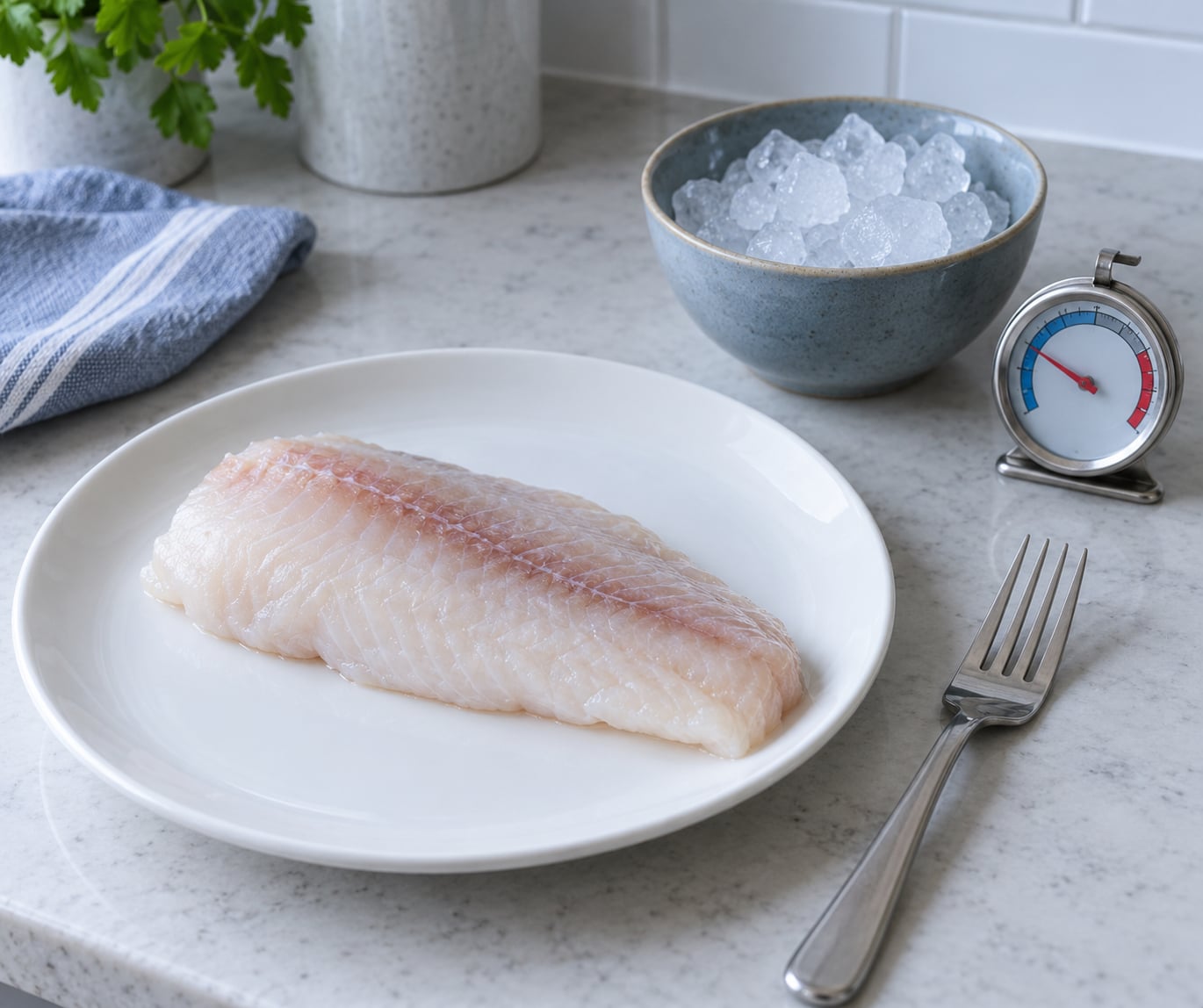
How to tell if fish has gone bad comes down to three checks you can finish in under a minute: smell it, look at it, and press it. Fresh fish smells mild and clean, has translucent flesh with a bright, natural colour, and springs back when you touch it.
Spoiled fish gives off a sour or ammonia-like smell, turns dull and slimy, and keeps a dent where your finger went. One failed check on its own is worth thinking about, but two together mean you bin it. When in doubt, throw it out.
Table of Contents
- What You Need
- Step-by-Step: How to Tell if Fish Has Gone Bad
- 1. Check the packaging, date, and storage history
- 2. Look for visible signs of spoilage
- 3. Smell the fish without tasting it
- 4. Assess the texture and firmness
- 5. Confirm safe handling and cooking
- Common Mistakes When Checking Fish Freshness
- Frequently Asked Questions
- Can frozen fish be bad if it does not smell bad?
- How can I tell whether cooked fish has gone bad?
- Is a fish that smells sour or ammonia-like safe to cook?
- Does slime on fish always mean it is spoiled?
- Why does frozen fish look dull or discolored?
- Can cooking destroy bacteria or toxins in spoiled fish?
- Conclusion: What to Do First
What You Need
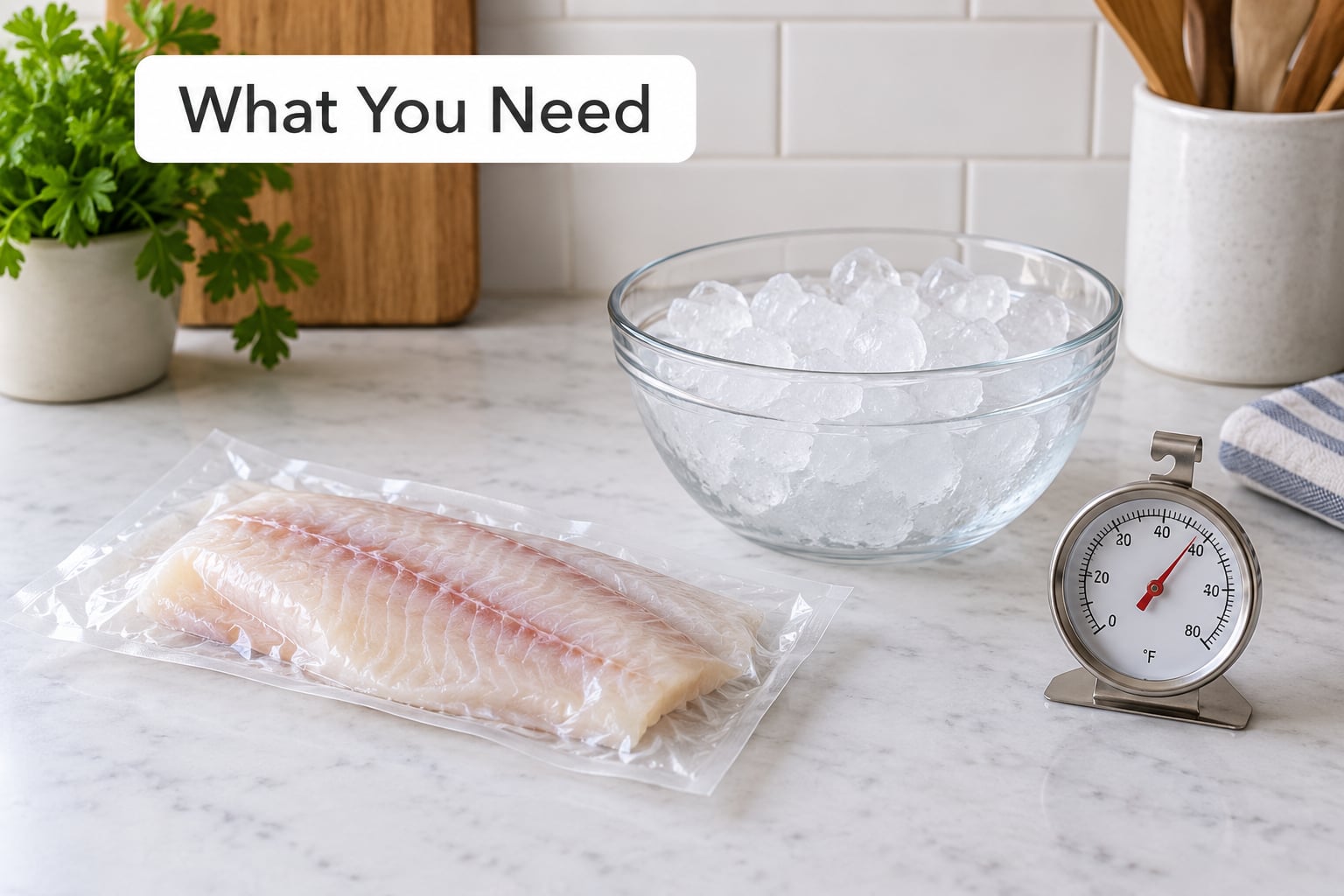
You do not need lab equipment. You need a clean work surface with cold running water or a bowl of ice nearby, disposable gloves or freshly washed hands, a refrigerator that actually holds 40°F (4°C) or below, and the fish’s history.
By history I mean where it came from, when it was bought or frozen, whether it stayed chilled the whole time, and whether anything about it is a guess. That last one matters more than people expect. A fillet you can date is a different problem from a container of “leftover fish, unsure” at the back of the fridge.
- A clean board or plate you can throw away afterwards
- Cold water or a bowl of ice to keep the fish cool while you look at it
- A refrigerator thermometer, if you have one, to check the 40°F (4°C) mark
- Gloves or clean hands, and a bin bag within reach for the discard case
Keep the fish cold while you work on it. Warmth is what bacteria use, and a fifteen-minute inspection on a warm counter tells you less than it does on ice.
Step-by-Step: How to Tell if Fish Has Gone Bad
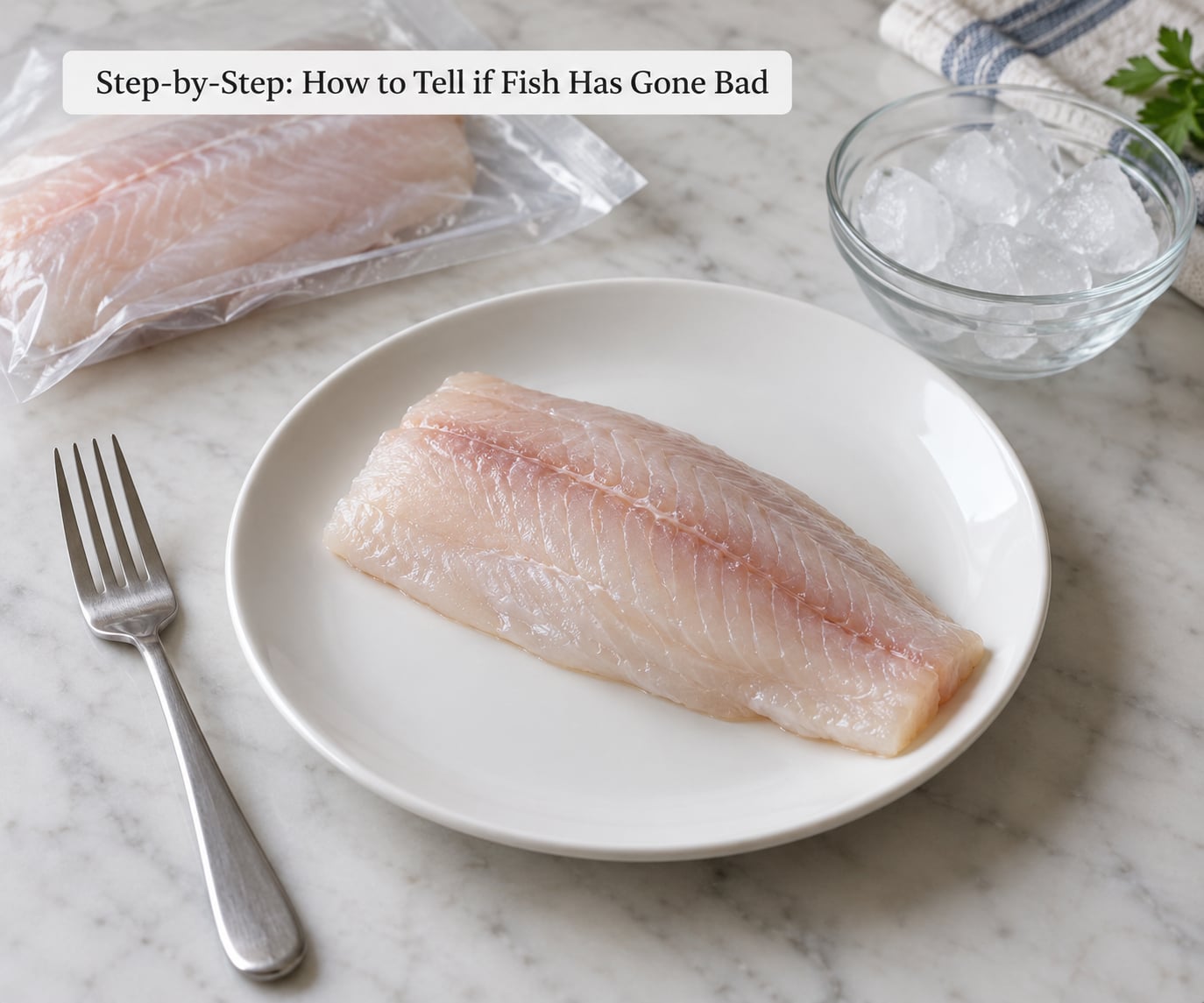
Work in this order. Packaging and history first, because that sets what the rest of the checks are worth; then look, then smell, then feel, then think about temperature. Several warning signs together matter far more than any single observation.
1. Check the packaging, date, and storage history
Look at the pack before you open it. A vacuum or sealed pack should be flat and tight against the fish. Bulging, puffed packaging, a broken seal, or leaking liquid means gas and liquid have built up inside, and you should bin it without opening it over your sink.
Read any use-by or sell-by date as manufacturer guidance, not proof of safety. A sell-by date tells you when the label was printed, and a best-by date is a quality promise rather than a safety guarantee. The real question is whether the cold chain held.
Reconstruct the timeline as best you can. Fresh raw fish belongs in a fridge at 40°F (4°C) or below for one to two days, and in a freezer at 0°F (-18°C) or below for safety. If it sat at room temperature for more than two hours, or you cannot remember how long it has been there at all, treat the timeline as broken and move on to the sensory checks with that in mind.
2. Look for visible signs of spoilage
Fresh fish has translucent, watery flesh with a bright natural colour, a shiny skin or a bright metallic sheen on the scales, and clear surface moisture. Spoiled fish drifts away from that: a dull grey cast, a brown or greyish bloodline, yellowish or greenish patches, and edges that look dried out or browned.
Watch for a milky or cloudy residue on the surface, liquid pooling in the tray, thick slime, or anything growing on the flesh. Those are not normal. Compare two pieces from the same pack if you can, because a difference between them tells you far more than either one alone.
Some variation is normal. Salmon is naturally pink, mahi mahi is naturally pale, tuna is deep red, and oily fish darkens as its fats oxidise. The point is not a specific colour, it is how far the fish has moved from what that species should look like.
For a whole fish, add the eyes and gills to the visual check. Clear, bulging eyes and bright red gills suggest freshness; cloudy, grey or sunken eyes and gills that have gone brown or dull are warning signs.
3. Smell the fish without tasting it
This is the most reliable check you have, and it takes five seconds. Bring the fish close before the packaging is fully open, because cold fish holds its smell better once it warms a little.
Fresh fish smells mild, clean and faintly briny, like cold ocean air. What you are listening for is anything else. A sour or vinegary note, an ammonia-like sharpness like window cleaner, a putrid or rotten smell, or a strong lingering fishiness are all reasons to stop.
Ammonia is worth calling out because readers ask what it actually smells like. It is a sharp, chemical, bleach-adjacent scent that hits the back of the throat. It comes from bacteria converting the fish’s own proteins into volatile compounds, including trimethylamine, which is the source of the familiar “fishy” smell. That conversion is spoilage chemistry, not a washable surface issue.
Never taste a piece to check it. That is how you get a mouthful of raw bacteria at best and a case of food poisoning at worst.
4. Assess the texture and firmness
Press the fillet gently with your fingertip. Fresh flesh is firm and elastic, and the dent springs back immediately. Spoiled flesh stays dented, feels mushy, or falls apart when you lift it.
There is a difference between a wet sheen and a slimy coating. Clear moisture on the surface is normal. A tacky, slippery or sticky film that feels different between two pieces from the same pack is a warning sign, and so is a mushy coating that slides under your finger. Shine is fine; slime is not.
Frozen and thawed fish will feel softer and sometimes slicker than fresh fish, and freezing can dull the colour, so texture and appearance alone can mislead you there. That is why smell comes first. Where you have several signs pointing the same way, the answer is easy.
5. Confirm safe handling and cooking
Appearance and smell cannot guarantee safety, especially after temperature abuse. Bacteria such as Salmonella and Listeria can be present without changing how a piece looks or smells, and cooking to 145°F (63°C) internal kills many of them but not all of the risk.
Some spoilage is chemical rather than bacterial. When bacteria act on the histidine in scombroid fish such as tuna, mackerel, mahi mahi and sardines, they convert it into histamine, which causes scombroid poisoning and survives both cooking and freezing. No amount of heat, lemon or seasoning rescues it.
So do not try to make suspect fish safe by cooking it hard. If the storage history is uncertain, the packaging was compromised, or the fish smells off, discard it. When you have eaten suspect fish and develop nausea, vomiting, cramps, headache or diarrhoea, contact a doctor and say what you ate and when.
Common Mistakes When Checking Fish Freshness
Almost every bad decision about fish comes from one of a handful of habits. These are the ones that come up most often, with the fix for each.
- Relying only on the date. A date is a label, not a thermometer. Pair it with the cold chain, the packaging and the sensory checks.
- Assuming cooking fixes it. Cooking kills many bacteria, but histamine is heat-stable, and a bad piece still smells worse once it hits the pan. Fish that smells off is not a cooking project.
- Tasting to check. There is no safe way to sample raw fish and conclude it is fine. Use smell and texture.
- Confusing freezing damage with spoilage. Freezer burn dulls the colour and dries the surface, and it is a quality problem rather than a safety one. A fish can look tired and still be perfectly good; it cannot smell sour and still be good.
- Ignoring time at room temperature. The danger zone runs from 40°F to 140°F (4°C to 60°C). Discard fish that spends more than two hours there, or one hour if the room is above 90°F (32°C).
- Getting a false positive on high-urea species. Shark, swordfish and some tuna contain urea and legitimately smell strongly ammoniacal when perfectly fresh. Check texture and colour as well, and do not rationalise away a genuine sour smell by telling yourself that fish always smells like that.
A few habits close most of the gaps. Buy from a counter that keeps fish on ice or under refrigeration, and ask when it was caught or thawed. Buy only what you will cook within a day or two, or freeze it the same day you get it. Keep raw fish on the lowest shelf so nothing can drip onto food below it, and use a separate board from your vegetables and cooked food.
Label what you freeze with the date, and thaw in the refrigerator rather than on the counter. The basic standard stays simple: fresh fish should smell mild or briny, never fishy, and the flesh should spring back under a fingertip. It is the cheapest test in the kitchen and the one most often skipped.
Frequently Asked Questions
Can frozen fish be bad if it does not smell bad?
Yes, though it is less likely. Freezing stops bacterial growth but does not kill bacteria, so fish can spend time in the danger zone during thawing, transport or a power cut and start deteriorating. Check that the flesh is firm and the colour looks natural, and never taste it raw to find out. If the packaging is torn or the smell is sharp and sour, discard it.
How can I tell whether cooked fish has gone bad?
Cooked fish spoils quietly. A good piece stays firm and moist and flakes apart cleanly; a bad one turns rubbery, dry or mushy. Warm a small corner and smell it, because any sour or ammonia-like note once hot is a clear throw-out signal. Cooked fish keeps three to four days in a fridge at 40°F (4°C) or below.
Is a fish that smells sour or ammonia-like safe to cook?
No. A sour or ammonia-like smell means bacteria have already broken down proteins in the flesh, and those compounds are still there when the fish hits a hot pan. Cooking intensifies the odour rather than removing it. This is the single most common trap people hit, and the answer is to discard the fish before you start.
Does slime on fish always mean it is spoiled?
Usually, yes. A thin film of clear moisture on fresh fish is normal, but a sticky, tacky or slippery coating that feels different between two pieces of the same fillet signals bacterial growth. Shine is fine; slime is not. Frozen and thawed fish can feel slicker than fresh, so weigh texture alongside smell and colour rather than on its own.
Why does frozen fish look dull or discolored?
Freezing causes freezer burn. Water leaves the flesh, the fats oxidise, and the myoglobin along the bloodline turns grey or brown, so frozen fish often looks duller than fresh even when it is perfectly safe. Freezer burn is a quality problem, not a safety one. After thawing, smell and texture remain your best freshness guides.
Can cooking destroy bacteria or toxins in spoiled fish?
No. Cooking at 145°F (63°C) kills many bacteria, but histamine formed from histidine in scombroid fish is heat-stable and survives both cooking and freezing. No amount of heat, lemon or spices makes spoiled fish safe, so disposing of it is the only option. Seek medical advice for nausea, vomiting or cramps after eating suspect fish.
Conclusion: What to Do First
Start with the history and the packaging, because those set the odds before you touch the fish. If the pack is swollen or broken, or the timeline is a guess, the decision is already made and you have saved yourself the sniff test.
If the history checks out, use your senses together rather than one at a time. Mild clean smell, bright translucent flesh, firm springy texture means it is fine. A sour or ammonia-like smell, dull discoloured flesh, slime or mushiness means it is not, and two of those signs together are enough.
Do not taste it to decide, and do not plan to cook your way out of it. When in doubt, throw it out.