To make a daiquiri that is not too sweet, you work three levers: cut the syrup, raise the lime juice, and shake harder for more dilution. Start at 2 parts rum to 1 part fresh lime to 0.5 part 1:1 simple syrup, shake it cold, then taste and adjust. Most syrupy home daiquiris are not a rum problem at all.
A classic daiquiri has three ingredients and is barely sweet. It is rum, lime and a teaspoon of sugar, shaken hard with ice and strained into a cold glass. The trouble is that recipe cards rarely say which syrup they mean, and a 2:1 rich syrup poured as if it were 1:1 doubles the sugar before you take a sip.
Temperature messes with your calibration too. Sugar tastes cloying when a drink is warm, so people add syrup, then the ice melts and dilutes the sharpness but leaves the sugar behind. Shake properly and the same mix reads clean and dry, and you will want less syrup next time.
Here is the method, the ratio ladder, and the fixes for the mistakes that most often go wrong.
Table of Contents
- What You Need
- Know which syrup you are holding
- Swaps that cut sweetness without changing the drink
- How to Make a Daiquiri That Is Not Too Sweet
- Why yours tastes too sweet when you follow the recipe
- Step 1: Choose the Right Base
- Step 2: Balance the Lime
- Step 3: Add Just Enough Sweetness
- Step 4: Shake and Fine-Tune
- The ratio ladder: four builds from classic to sugar-free
- Common Mistakes
- Frequently Asked Questions
- How do I make a daiquiri less sweet without making it sour?
- Can I make a daiquiri without simple syrup?
- What type of rum is best for a less-sweet daiquiri?
- Should I use fresh lime juice or bottled lime juice?
- How much sugar is too much in a daiquiri?
- Can I make a low-sugar daiquiri with zero sweetener?
What You Need
You need far less than a supermarket list. A decent light rum, real lime juice, a controlled sweetener, and ice will do all the work.
- Light rum, 60 ml (2 oz). A dry, Spanish-style white rum is the right base. Anything vanilla-, caramel- or molasses-forward will read as cloying no matter how little syrup you add.
- Fresh lime juice, 30 ml (1 oz). Squeeze it yourself, or buy it cold-pressed and not reconstituted from concentrate. Bottled juice is not always bad, but it is harsher and more acidic than fresh, which is where many syrupy drinks get their start.
- Simple syrup, 7 to 15 ml (0.25 to 0.5 oz). Made with equal weights of sugar and water, stirred not shaken, and kept in the fridge for a week or two.
- A shaker and a julep or fine strainer. A Boston tin or a mixing glass with a lid is fine. A fine mesh strainer catches the ice chips and pulp that make a drink look slushy.
- Good ice. Cubed or crushed, plus a handful of fresh cubes for the glass.
One piece of kit changes everything: a small graduated jigger. Free-pouring from the bottle is the reason the syrup “looks about right” and lands at double.
Know which syrup you are holding
Simple syrup is 1:1, sugar to water, so one measure of it is one measure of sugar. Rich syrup, also called a 2:1 or demerara syrup, is two parts sugar to one part water, and a bartender measure of it carries close to twice the sweetness. Many home recipes call for “syrup” without specifying, and a 2:1 used where 1:1 was expected is the single most common cause of a daiquiri that tastes like a candy.
Label your bottles. A kitchen marker with “1:1” and one with “2:1” saves a whole round of guessing.
Swaps that cut sweetness without changing the drink
- Drier rum. A light Spanish-style rum brings its own sugar but little else. Skip spiced and aged-heavy whites.
- Grapefruit juice for half the lime. The Hemingway Daiquiri does exactly this. Grapefruit is bitter as well as sour, so the drink tastes drier and stays dry, where extra lime alone just makes it sharper.
- Dry vermouth in place of syrup. A dry martini-style daiquiri, 2.5 parts rum to 1 part lime with a splash of dry vermouth, gets its softness from the vermouth and carries zero added sugar.
- A low-sugar sweetener. Monk fruit syrup behaves well in a daiquiri, and drinkers avoiding sugar report it works. Agave reads rounder than sugar but is still sugar. Stevia and Sweet’N Low leave a slightly bitter finish after lime, so use less than you think and taste as you go.
- A grapefruit twist or a dry-leaning bitters wash. Aroma reads as complexity rather than sugar, which is useful if you want the drink to feel finished with nothing added.
Skip the sweetened pre-bottled daiquiri mixes and anything sold as a frozen slush. If you use a mix at all, read the label: added sugar in the first three ingredients means the drink is already sweet before you add anything.
How to Make a Daiquiri That Is Not Too Sweet
Shake 60 ml rum, 30 ml fresh lime juice and 7 ml 1:1 simple syrup with ice, then taste and reduce the syrup until the drink is bright rather than sweet. The syrup is the first thing to go, the ice is the second lever, and extra lime is the last correction rather than the first.
Why yours tastes too sweet when you follow the recipe
Five causes account for nearly every syrupy home daiquiri, and the recipe is rarely at fault.
- A 2:1 rich syrup used as if it were 1:1. Double the sugar, same measured pour, and the drink lands dessert-adjacent.
- A sweetened premixed or frozen base. Bottled mixes and blender mixes are formulated to taste sweet on their own once thawed.
- Blending instead of shaking. A blender pulverises the ice into slush, which reads as sugar texture even when the sugar level is honest. It also dilutes less predictably, so the drink tastes both sweeter and stronger.
- Calibrating on a warm, undiluted taste. Sweetness reads louder before the ice does its work, so you over-pour.
- Over-correcting a drink that is too sharp. When a daiquiri tastes too sour, the instinct is to add sugar. It is usually undiluted, and the real fix is more ice and a harder shake.
There is also a rum factor worth naming. Vanilla- and caramel-heavy whites taste sweet on their own, and so do spiced rums. A drink built on those needs zero added syrup, not less of it.
Step 1: Choose the Right Base
A dry, light Spanish-style white rum is the safest starting point, and the sugar in it is a small fraction of what most people assume. Check the label for added sugar and skip anything listing it in the first few ingredients.
Body matters as much as sugar. A thin, crisp rum lets the lime read as lime. A heavy rum rounds off the edges and makes the drink taste rounder and sweeter, so if you have a fatter bottle, cut the syrup further rather than reaching for a lighter rum mid-drink.
Step 2: Balance the Lime
Measure 30 ml of juice, not a squeeze. Fresh limes vary a lot by season and origin, and a juice that is sharp and thin needs a different correction from one that is soft and cloudy.
Add the lime with the syrup and rum, then shake. Tasting lime juice on its own tells you less than tasting the finished drink, because sugar and alcohol change how acid reads.
If the drink is too sharp, the fix is water or ice, not sugar. Add a few ice chips, shake again for a few seconds, and taste. If it is flat and dull instead, a small squeeze of citric acid solution or a few drops of acid phosphate sharpens it without adding sweetness. Batch makers use exactly this correction, and a household squeeze bottle of 10 percent citric solution is cheap insurance.
Step 3: Add Just Enough Sweetness
Simple syrup does one job: it takes the sharp edge off the lime so the rum and acid can be tasted rather than endured. A well-balanced daiquiri still tastes sour on the first sip and clean on the finish.
Add it incrementally. Start at 7 ml for a 60 ml rum base, then taste, then add the rest in small pours. To taste dilution properly, put a few drops on the back of your wrist; it reads closer to how the finished drink will.
For a drier result, halve the syrup to 3 ml and add another 5 ml of ice. For no sugar at all, omit the syrup and let the dilution do the softening. That is the martini-style version, and it is worth trying even if you would not order it that way in a bar.
Sweetener swaps behave differently. Monk fruit is the closest to sugar in the glass. Agave is sweeter than sugar by volume, so use less. Stevia and artificial sweeteners carry a bitter note that lime amplifies, so they suit the grapefruit builds better than a straight lime daiquiri.
Step 4: Shake and Fine-Tune
Fill the shaker two-thirds with ice. Shake hard for 10 to 12 seconds, until the outside of the tin goes cold and frosty. The cold is not a detail, it is the process. Dilution spreads the sugar across more liquid, and cold dulls the sense of sweetness, so the drink tastes drier than the same mix tasted straight from the tin.
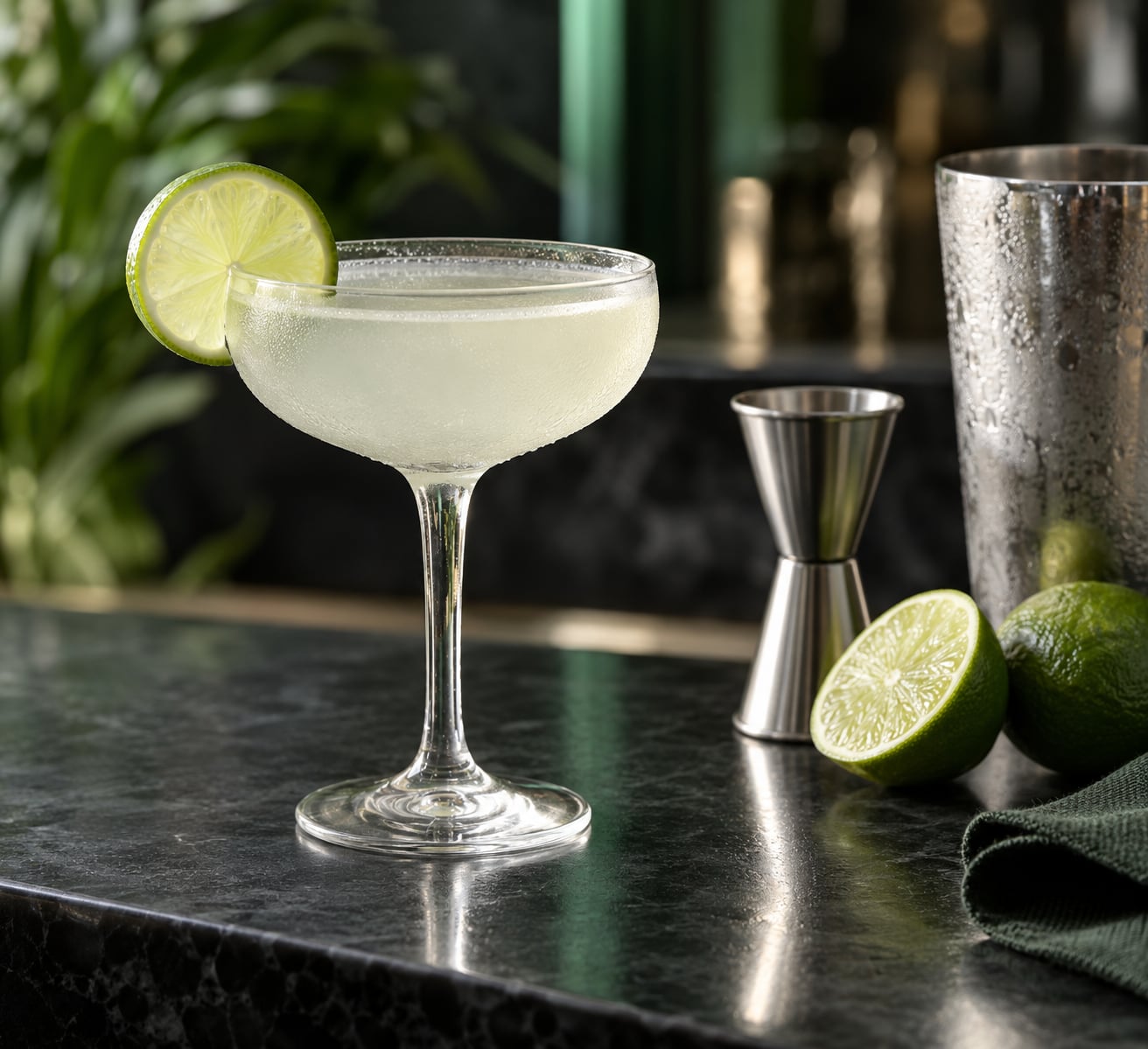
Strain through a fine mesh strainer to catch the pulp, and serve straight up in a chilled coupe with a lime wheel or an expressed lime peel. If your shaker is smaller than the glass, the drink arrives under-diluted, which is the other reason home versions taste strong. Bigger shaker, or shake in batches of two.
Make your last correction in the glass rather than rebuilding the drink. Too sweet: add a splash of lime, then some ice, and stir briefly. Too sharp: add ice, or a small splash of rum and water. Flat: a short lime wheel over the top releases oils that read as brightness.
The ratio ladder: four builds from classic to sugar-free
Here is how to make a daiquiri that is not too sweet by moving along one scale. All four use the same 1:1 syrup, and all four assume a 60 ml rum base. Adjust volumes proportionally for a larger or smaller glass.
| Build | Rum | Lime | Syrup | Feels like |
|---|---|---|---|---|
| Classic | 60 ml (2 oz) | 30 ml (1 oz) | 15 ml (0.5 oz) | Balanced, faintly sweet |
| Slightly dry | 60 ml (2 oz) | 30 ml (1 oz) | 7 ml (0.25 oz) | Bright, clean |
| Dry | 60 ml (2 oz) | 30 ml (1 oz) | 3 ml (0.1 oz) | Very crisp, rum-forward |
| Martini-style | 65 ml (2.2 oz) | 30 ml (1 oz) | 0, plus a splash of dry vermouth | Dry, savoury, zero added sugar |
Two more builds are worth knowing. The Hemingway Daiquiri swaps half the lime for grapefruit juice, which brings bitterness instead of sugar, so the drink tastes drier than a straight lime version at the same syrup level. A Nuclear Daiquiri drops the syrup entirely, leans heavy on the grapefruit, and leans on dilution to keep it drinkable.
For a party, batch the slightly dry build in a pitcher, shake in pairs of two rather than one big batch, and serve over ice so each drink gets diluted at the table. Keep the syrup on the side for anyone who wants it, rather than sweetening the whole jug.
Common Mistakes
These six habits account for nearly every avoidable daiquiri problem, and each has a direct fix.
- Using a rich 2:1 syrup where 1:1 was called for. Make your syrup 1:1, equal weights of sugar and water, and label the bottle. If you already own a 2:1, halve the pour.
- Reaching for bottled mixers or a frozen mix. Check the label for added sugar in the first three ingredients. Mix rum, lime and ice yourself instead; it takes about a minute.
- Free-pouring the syrup. Use a jigger, and start lower than the recipe says if your syrup is 2:1.
- Under-shaking, or shaking in a shaker too small for the glass. Shake 10 to 12 seconds until the tin frosts, and if the shaker is smaller than the serving glass, shake two rounds.
- Serving warm, or pouring over a glass full of warm ice. Chill the glass in the freezer for five minutes and use fresh ice. Cold dulls perceived sweetness, which is why a warm taste misleads you.
- Fixing a sharp drink with more sugar. If it is sharp, it is under-diluted. Add ice and shake again. Only add syrup if the drink tastes thin and hard rather than sour.
One habit worth keeping: taste with a few drops on the back of your wrist after the shake, not straight from the shaker. It removes the temperature and alcohol variables that lead people to over-sweeten.
A final word on expectations. Very dry builds do have a ceiling, and a drink taken all the way to no syrup can taste sour or spirit-forward. A small amount of sweetness is what makes it a daiquiri rather than a sour rum cooler, so aim for the first two rungs of the ladder before you reach the bottom.
Frequently Asked Questions
How do I make a daiquiri less sweet without making it sour?
Cut the syrup first, then add ice. A 60 ml rum base with 30 ml lime and only 7 ml of 1:1 simple syrup tastes bright without tasting sharp, because the extra shaking dilutes the acid as well as the sugar. Reserve extra lime for a drink that is genuinely flat rather than sour, and remember a cold, well-shaken pour tastes less sweet than the same mix tasted warm.
Can I make a daiquiri without simple syrup?
Yes. Omit the syrup, add a few more ice cubes, and shake harder and longer to dilute. The result is the martini-style dry daiquiri: 65 ml light rum, 30 ml lime and a splash of dry vermouth for softness. The vermouth supplies the roundness the syrup would have without adding sugar, so the drink stays dry without turning sharp.
What type of rum is best for a less-sweet daiquiri?
A light Spanish-style white rum is the safest choice. It is thin, dry and minimally sweetened, so it disappears behind the lime instead of adding its own roundness. Avoid vanilla, caramel and spiced rums, which taste sweet before you add anything, and check the bottle for added sugar in the first few ingredients.
Should I use fresh lime juice or bottled lime juice?
Fresh is worth the effort, mainly because it is softer and less sharply acidic. Bottled juice is fine if you are short on limes, but reduce the pour slightly because it hits harder on the acid side, which is often what people compensate for with extra syrup. Never use sweetened lime cordial, which is a mixer rather than juice.
How much sugar is too much in a daiquiri?
For a 60 ml rum base, more than 15 ml of 1:1 simple syrup starts tasting sweet rather than balanced. If you are using a 2:1 rich syrup, halve that number, because a measure of it carries close to double the sugar. If your drink reads cloying at 7 ml, check that your syrup is actually 1:1 and not something softer.
Can I make a low-sugar daiquiri with zero sweetener?
You can. Drop the syrup entirely, add ice to compensate, and go one step drier with a splash of dry vermouth or half the lime swapped for grapefruit juice in a Hemingway build. Monk fruit syrup is the closest-tasting low-sugar option if you want some sweetness, though stevia leaves a bitter note that lime tends to amplify.
Start tonight with 60 ml of dry light rum, 30 ml of fresh lime and 7 ml of 1:1 syrup, shaken hard until the tin frosts. That is the slightly dry rung of the ladder, and most people find their sweet tooth does not miss the extra half measure. From there, move by a teaspoon, taste each time, and stop where the drink is clean rather than sweet.