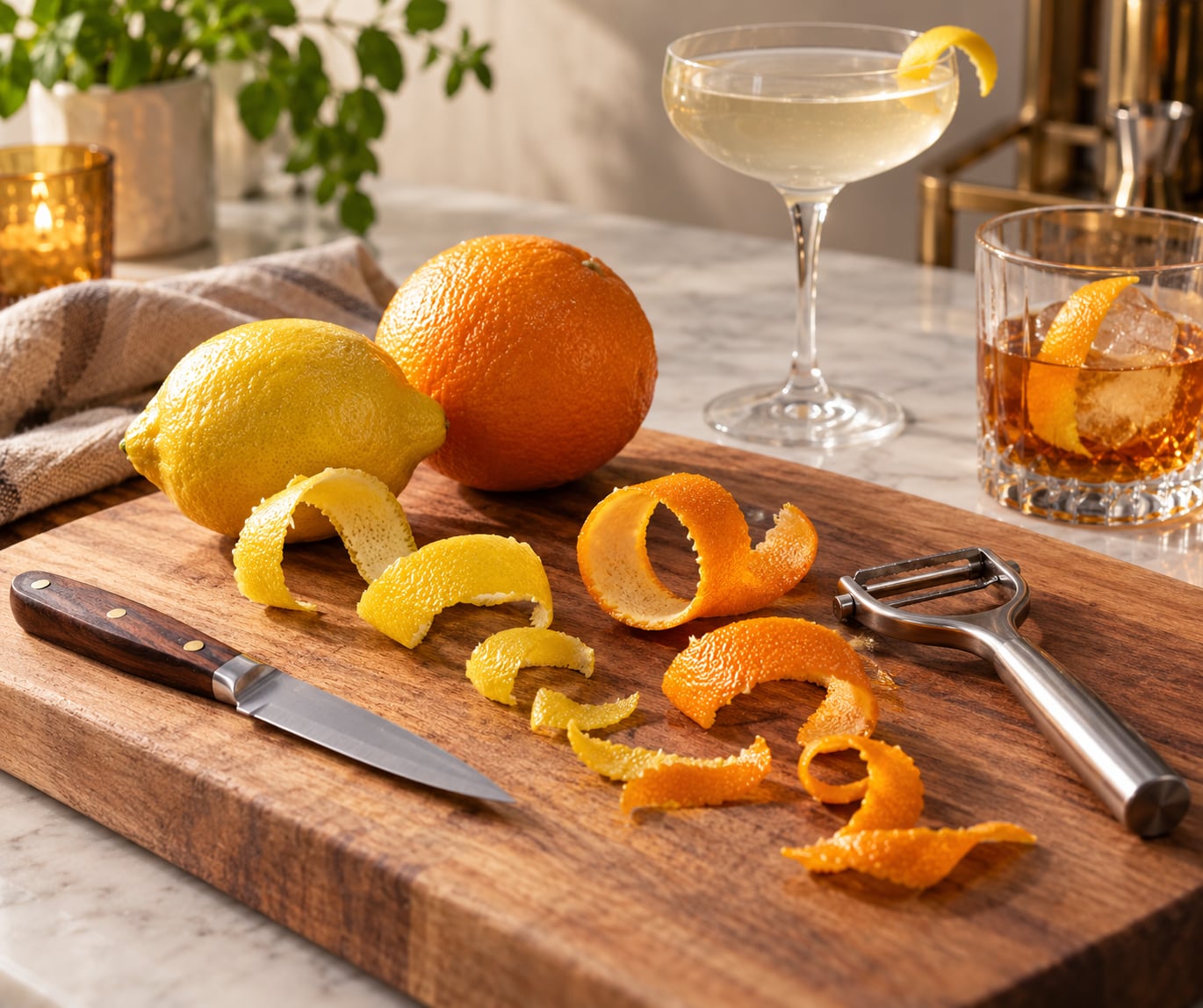
To make a twist garnish from citrus peel, cut a strip of coloured skin roughly 3 inches long with only a hair of white pith attached, roll it into a curl around a chopstick or your fingers, then pinch it over the glass so the oils mist across the surface. A sharp paring knife or a Y-shaped vegetable peeler is all you need, and the whole job takes about ten minutes.
The twist is an ingredient, not decoration. Those oils are mostly limonene and other volatile compounds that never make it into the juice, so a twist can lift a flat gin and tonic or a spirit-forward sour in a way a lemon wedge never does.
Table of Contents
- What You Need
- Step-by-Step: How to Make a Twist Garnish from Citrus Peel
- How to Cut a Clean Citrus Peel Strip
- How to Shape a Twist or Citrus Curl
- How to Make a Twist Garnish Without a Special Tool
- How to Use and Store the Garnish
- Common Mistakes
- Frequently Asked Questions
- What fruit is best for making a citrus twist garnish?
- How thick should the citrus peel be for a cocktail twist?
- What is the difference between a citrus twist and a citrus wheel?
- How do I make a tight spiral instead of a loose twist?
- How long can a citrus peel garnish be stored before using it?
- Which drinks taste best with a lemon, lime, orange, or grapefruit twist?
- Start With the First Two Cuts
What You Need
Pick fruit with tight, unwrinkled skin that feels heavy for its size. Soft, spongy citrus peels tear and turn cloudy, and hard, bumpy fruit gives you an uneven strip with no colour to show.
- Lemon and lime for clear, sharp citrus. Lime peel is thinner and more fragile, so it needs a wider cut and gentler handling.
- Orange and grapefruit for sweeter, softer oils. Home bartenders on r/cocktails describe these as peeling like butter, which makes them the easiest place to start.
- A sharp paring knife for the cleanest, most controlled cut and the widest range of shapes.
- A Y-shaped vegetable peeler for beginners. It cuts a wide, shallow swath that carries more oil and less pith.
- A channel knife or ribbon cutter if you want one long continuous peel for spirals.
- A chopstick, bamboo skewer or cocktail pick for setting the curl.
- A small damp towel to lay finished twists on, which stops them drying out while you work.
Before you pick up any blade, one habit covers most kitchen injuries: hold the fruit in your non-dominant hand and move the fruit, not the tool. Beginners should still cut on a board rather than in the air, and fingers should stay curled back behind the knuckle line.
Tools differ more than most people expect, so pick by the shape you want:
- Paring knife. Any strip width, the best pith control if you go carefully. Intermediate skill. Best for wide strips, shaped garnishes and rim slits.
- Y-peeler. About a 1 inch strip, good pith control, beginner skill. Best for everyday twists and fast prep.
- Channel knife. A narrow continuous ribbon, very good pith control, beginner skill. Best for spirals and long curls.
- Zester. Fine threads, excellent pith control, intermediate skill. Best for zest spirals and desserts.
Step-by-Step: How to Make a Twist Garnish from Citrus Peel
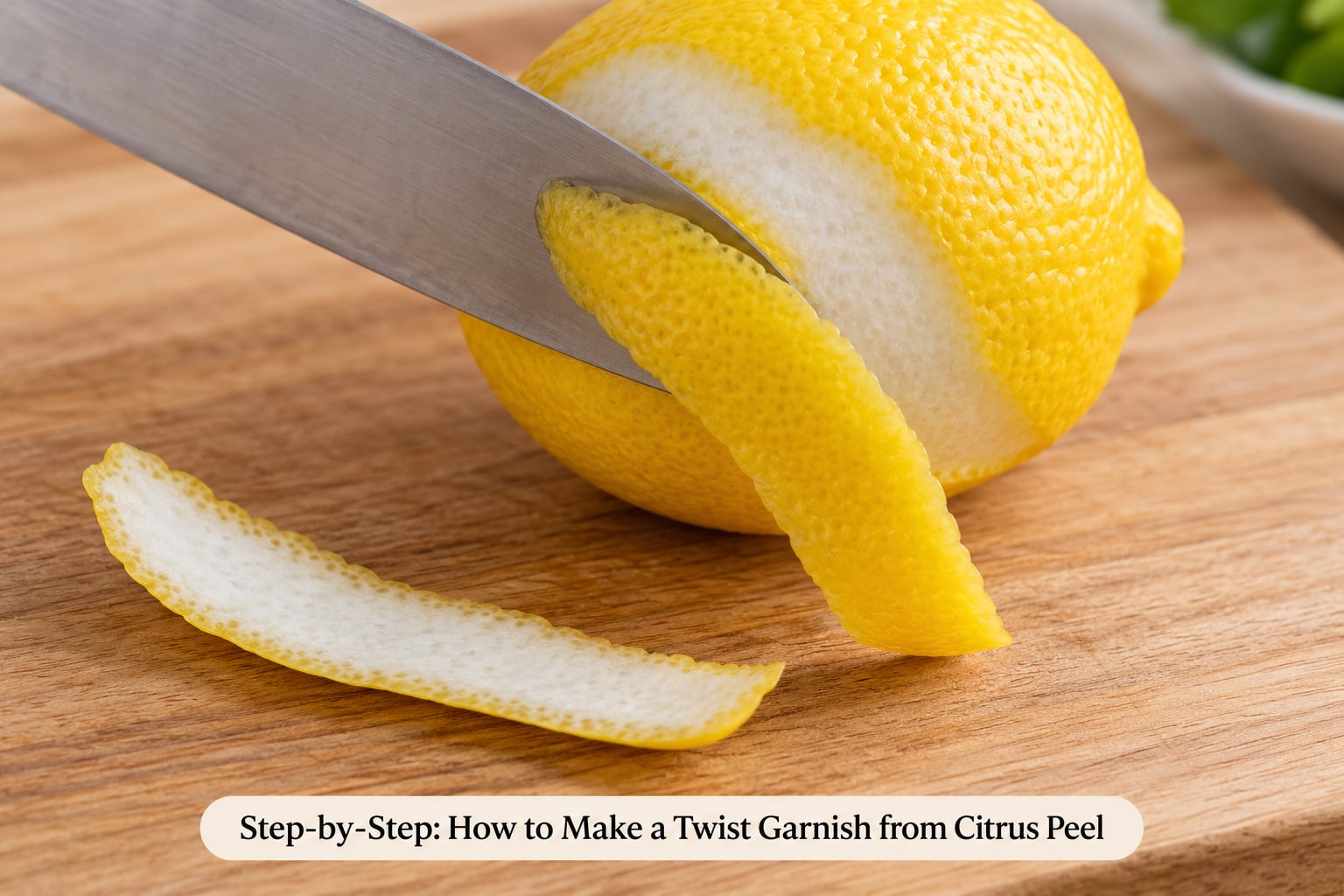
- Wash and dry the fruit. Dry skin grips the knife better, and water under the peel makes the strip limp as soon as it comes off.
- Set up your cutting position. Stand the fruit on a board, or cup it in your non-dominant palm with the peel facing away from your body.
- Start the strip. Set the knife about a quarter inch in from the top of the fruit and take a shallow downward slice through the skin only. You are aiming for the boundary between colour and white.
- Take the second pass. Turn the knife to run parallel to the first slice and lift the strip free. If the underside is streaky white, you went too deep.
- Trim the pith. Lay the strip colour-side down and shave off remaining white with the knife tip, leaving a translucent sliver. It should bend without snapping.
- Cut it to size. Trim to about 3 inches long and between one-half and three-quarters of an inch wide. Wider strips hold a tighter curl and carry more oil.
- Shape it. Press one end under a chopstick and roll the strip around it, colour side out, keeping the curl loose rather than wound tight.
- Express and place. Hold the curl skin-side down above the drink and pinch firmly so the oils spray across the surface. Then drop it in, rest it on the rim, or discard it if you have already taken the aroma.
You will know the cut worked when the strip bends into a loose C without creasing or shedding white crumbs onto the board.
How to Cut a Clean Citrus Peel Strip
Most failed twists fail at this stage, and the problem is almost always one of two things: the knife went too deep into the pith, or the strip came out too narrow to shape.
Watch the blade, not the fruit. The coloured layer, called the flavedo, holds the oil glands, and the spongy white layer under it, called the albedo, is what turns a drink bitter. Run the blade almost flat, angled very slightly downward, and take your strip in two passes instead of trying to saw one thick piece off.
If you find white streaks on the back of the strip, flip it over and shave them off with a shallow scrape. Do not try to cut the pith away from the front, because that is how you puncture the oil glands and lose the aroma you came for.
How to Shape a Twist or Citrus Curl
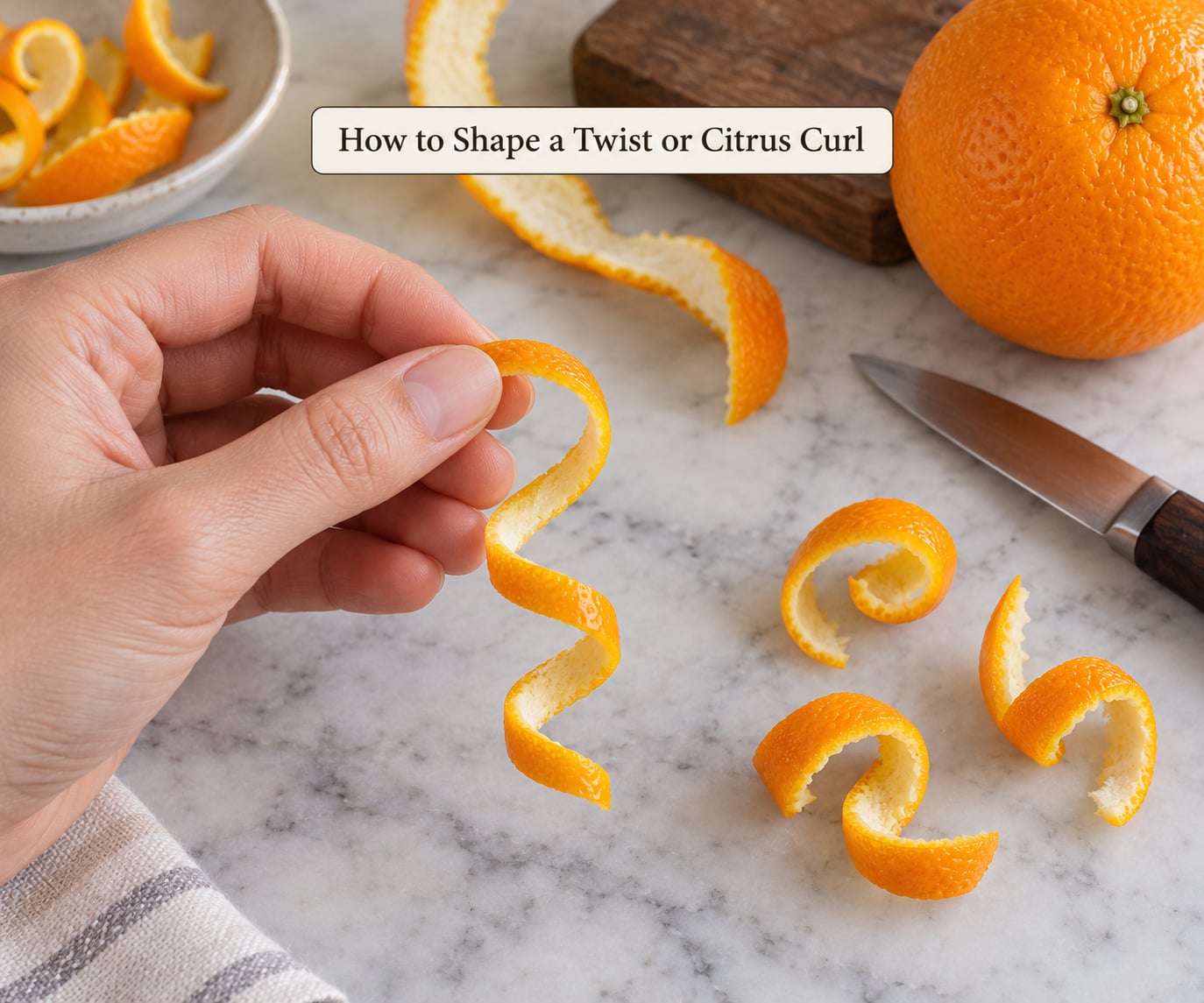
Rolling is what turns a strip into a garnish. For the classic loose twist, press one end of the peel against a chopstick or bamboo skewer and roll the strip around it with your thumb and forefinger, colour side facing out.
Two or three turns is right. Wind it tighter and you get a spiral that looks great in a photo and sits in the glass like a plastic coil. If the peel keeps springing open, your strip is either too wide or too dry, so make a second one and use it immediately.
To set a twist on the rim of a glass, slice a short slit through one end, halfway across the width, then slide that end over the rim. For drinks served in a coupe, a curl resting inside the bowl usually looks better than one hooked over the edge.
To express the oils, hold the curl a few inches above the liquid with the skin facing down and pinch hard between thumb and forefinger. You should see a fine mist and smell it immediately. Never lean over the glass to do this, and keep the mist away from your eyes.
How to Make a Twist Garnish Without a Special Tool
Most people searching for a citrus twist without a tool already own the right one: the Y-shaped vegetable peeler in the drawer next to the bag of carrots. Run it once down the side of the fruit and you get a wide, shallow strip with a thin pith line, which is exactly what a twist wants.
For a longer spiral, a channel knife removes a continuous ribbon you can wrap into a loose coil. A fine zester produces threads rather than strips, which are better squeezed into juice, scattered over a cake, or folded into a spiral for a dessert plate.
If all you have is a knife, a wide strip cut in two passes will beat any shortcut, so there is no need to buy a specialist tool to get started.
How to Use and Store the Garnish
Match the citrus to the drink. Lemon twists suit martinis, gimlets, gin and tonic and sparkling water. Lime belongs with a mojito, a daiquiri or a Paloma. Orange twists lift whiskey sours and old fashioneds, while grapefruit peel is at home in a spritz or with mezcal.
Some drinks follow the Sazerac convention of expressed and discarded: you take the aroma over the surface, then take the peel away, because nobody drinks around the pith.
To store twists, lay them on a barely damp paper towel inside a closed container and refrigerate. That keeps the oils from evaporating for a couple of hours, which is long enough to prep a party batch the morning of. Beyond that the peel browns and goes limp, and a limp twist will not hold its curl.
Do not freeze them. Thawed peel turns soft and cloudy, and it stains the whole container.
Common Mistakes
The drink tastes bitter. Too much white pith came along with the skin. Shave the back of the strip with a shallow scrape and you should still see a translucent layer. If you can see solid white, take another pass.
The peel is flimsy and tears as you roll it. You left too little pith. A hair-thin layer is not optional, because the pith is what gives the strip its spine.
The edges look ragged. A dull knife drags, and very ripe fruit tears. Sharpen the paring knife, and skip any fruit whose skin dimples under your thumb.
The curl unrolls in the glass. It is either too dry or too tight. Make the strip a little wider, roll fewer turns, and shape it right before serving.
Nothing happens when you pinch. The oils have dried out, so the strip was cut too long ago, or you are squeezing too gently. Cut fresh peel, pinch closer to the skin, and you will both see mist and smell it.
Lime twists keep snapping. Lime peel is thinner and more brittle than lemon. Cut a wider strip, trim the pith with lighter pressure, and skip limes with dry or wrinkled skin.
The twists look tired before guests arrive. They went out uncovered. Damp paper towel and refrigeration solve it, and so does cutting them later rather than earlier.
Frequently Asked Questions
What fruit is best for making a citrus twist garnish?
Orange and grapefruit are the easiest because their peel is thick and forgiving. Lemon gives the sharpest, most classic aroma and is the best all-rounder. Lime works too, but its peel is thinner and tears easily, so cut a wider strip and handle it gently. Whatever you use, choose fruit with tight, unwrinkled skin that feels heavy for its size, and cut it fresh.
How thick should the citrus peel be for a cocktail twist?
Aim for a strip about 3 inches long and between one-half and three-quarters of an inch wide, with only a hair-thin layer of white pith underneath. Wider strips curl tighter and hold more oil. Narrow strips look delicate but spring open in the glass. If the back of the strip shows solid white rather than translucence, shave it down before you roll it.
What is the difference between a citrus twist and a citrus wheel?
A twist is a strip of peel only, curled and used mainly for the oils it releases when pinched. A wheel is a round slice of the fruit with the flesh and pith still attached, dropped into the glass and eaten. Twists suit spirit-forward drinks where you want aroma without extra juice or pulp. Wheels suit drinks you intend to sip slowly and stir.
How do I make a tight spiral instead of a loose twist?
Press one end of the strip against a chopstick or cocktail pick and wind the peel around it, colour side out, keeping steady pressure as you go. Two or three turns gives a neat spiral; more than that looks overworked and sits awkwardly in the glass. A wider strip about three-quarters of an inch across curls tighter than a narrow one, so cut wider if you want a compact coil.
How long can a citrus peel garnish be stored before using it?
A few hours in the fridge is the realistic window. Lay the twists on a barely damp paper towel inside a closed container and refrigerate them, and they keep their oils and stay pliable enough to curl. Beyond about half a day the peel browns, dries out and goes limp, which means it will not hold its shape. Freezing is not worth it; the texture never recovers.
Which drinks taste best with a lemon, lime, orange, or grapefruit twist?
Lemon fits martinis, gimlets, gin and tonic and sparkling water. Lime belongs with a mojito, daiquiri or Paloma. Orange suits whiskey sours, old fashioneds and rum drinks. Grapefruit peel works in a spritz or alongside mezcal. In each case, express the twist over the surface just before serving, then leave it in the glass or remove it, depending on how much pith is left.
Start With the First Two Cuts
Almost every disappointing twist traces back to the peel coming off too thick, so start there: take two shallow, parallel passes with a sharp paring knife, leave a hair of pith on the back, and cut the strip wider than feels necessary. Roll it around a chopstick, express it over the drink, and serve it in the same minute.
Once your strips come off clean, the rest is shape and timing rather than knife work, and the same peel anatomy is still doing the work in 2026 that it did the first time anyone ran a strip through a peeler.