A shrub, also called a drinking vinegar, is a concentrated syrup made from fruit, vegetables, herbs, or spices packed with sugar, then loosened with vinegar and left to steep cold. If you want to know how to make shrubs and drinking vinegars at home, the method is short: one ratio, one jar, and a refrigerator, with most of the work done by the sugar and the acid rather than by you.
What is a shrub? A shrub is a preserved cordial. You crush produce, cover it with roughly equal parts sugar and vinegar, and let it steep until the sugar pulls color and juice from the fruit while the vinegar lends a sharp, dry finish. You strain the solids and dilute what is left with sparkling water, spirits, oil, or ice.
A batch takes about ten minutes of hands-on time and four to seven days in the fridge before it is ready to strain. The hardest part is not the technique, it is deciding how sweet you want it, and you can fix that at the serving glass rather than in the jar.
Table of Contents
- What You Need
- Fresh, Dried, and Store-Bought Ingredients
- How to Make Shrubs Step by Step
- 1. Choose a Base Ingredient
- 2. Prepare the Ingredients
- 3. Build the Vinegar Base
- 4. Add Sweetness and Balance
- 5. Rest, Strain, and Bottle
- 6. Serve and Store
- Common Mistakes
- Frequently Asked Questions
- What is the difference between a shrub and drinking vinegar?
- What ingredients can I use to make a shrub?
- Can I make a shrub without sugar?
- How much vinegar should I use for a fruit shrub?
- How long does homemade drinking vinegar last?
- How do I dilute a shrub in a drink?
- Conclusion
What You Need
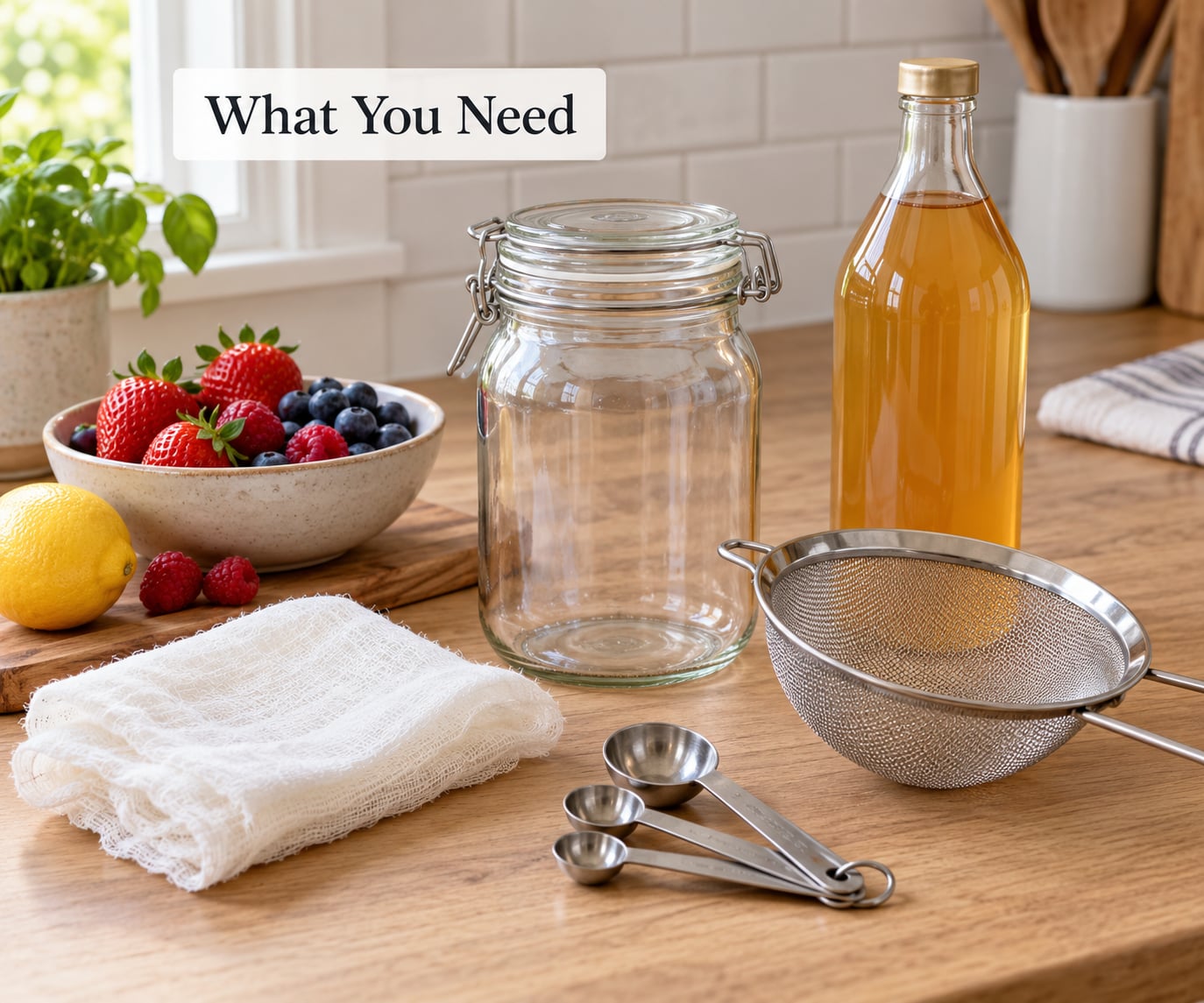
The equipment list is short, and most of it is stuff you already own. A wide-mouth glass jar, a fine-mesh strainer, a piece of cheesecloth, a funnel, a marker, and a clean bottle are enough to make a jar of drinking vinegar that lasts for months.
Use glass rather than plastic or reactive metal, and pick a jar that is no more than half full of solids. Fruit expands as it macerates, and a jar packed to the neck will push its lid open on your kitchen counter. Wide mouths are easier to stir, press, and scrub clean at the end.
A fine-mesh strainer gives you clarity. Cheesecloth or a clean cotton towel set over the mouth of the jar catches pulp that would otherwise cloud the bottle, and pressing the solids with a spoon pushes more liquid through than pouring alone.
Fresh, Dried, and Store-Bought Ingredients
Fresh produce is the standard starting point. It gives the brightest color and aroma, and it works best for berries, stone fruit, citrus, and cucumber. Wash everything, and skip the idea that unwashed fruit helps, because dirt on an acid-soaked mixture is a bad bet.
Dried fruit, dried herbs, whole spices, and ground spices are not second-best options. They concentrate flavor, need only a day or two of steeping, and give you control over how intense the finished drink is. Dried mint and dried cherries are particularly good.
Store-bought ingredients matter more than most guides admit. Dried fruit bought in a supermarket is often treated with oil or syrup to stop it clumping, and that coating dulls the extraction. Plain dried fruit from a bulk bin or a maker of dried fruit behaves differently.
Your vinegar is the one ingredient you should read the label on. Distilled white, apple cider, white wine, rice, champagne, red wine, and balsamic all work, and their acidity and flavor differ. Most people end up with apple cider vinegar, which is mild and round, and it makes a forgiving first batch. For guidance on the rest, the serving table below breaks down the differences.
How to Make Shrubs Step by Step
1. Choose a Base Ingredient
Pick the produce for the occasion, not for the jar. Strawberries, raspberries, blackberries, and rhubarb make sweet shrubs. Cucumber, celery, tomato, and beet make savory ones that belong in dressings. Herbs and spices stand on their own: rosemary, mint, basil, black pepper, and cinnamon all steep well on their own or as an accent to fruit.
Two cups of prepared produce works as a standard batch, roughly the volume of a wide-mouth pint jar filled halfway. That quantity is easy to halve or double later, and it produces about a cup and a half of strained concentrate once the solids come out.
2. Prepare the Ingredients
Wash and dry the produce, then chop it small or crush it with a fork or muddler. Crushing breaks the cell walls, and the juice that releases is the syrup you are trying to make. Chopping without crushing gives you a lighter result that takes longer, which is sometimes what you want for a delicate herb.
Stay away from extra water. Water added to a macerating mixture dilutes the finished shrub and gives the sugars less to work with. If your fruit is watery already, such as cucumber or watermelon, use a little less of it and lean on a drier acid like white wine vinegar.
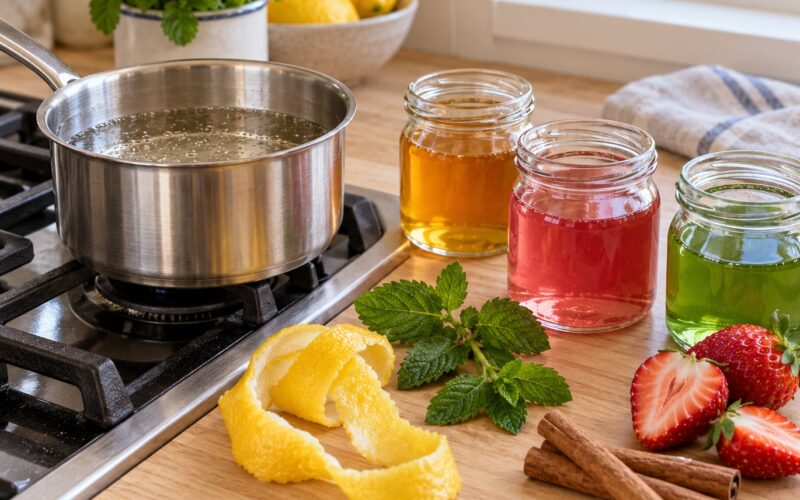
Toast whole spices in a dry pan for thirty seconds until they smell fragrant, then crack them coarsely. Toasting blunts the raw, dusty edge that black pepper and coriander can carry. For citrus, the oleo-saccharum trick works: muddle the zest into the sugar, let it sit for an hour, and pick the peel out before the vinegar goes in. The sugar takes on the aromatic oils, and you get bright citrus flavor without the bitter pith.
3. Build the Vinegar Base
Combine the crushed produce with an equal volume of sugar in the jar. Stir or shake until the sugar looks damp, which means it has drawn liquid out of the fruit. Scrape down the sides, because half the sugar in most failed batches is stuck to the glass above the liquid line.
Pour in an equal volume of vinegar and stir again until the mixture is loose enough to move. Every piece of fruit should stay submerged. Fruit that pokes above the liquid line oxidizes and can grow mold, so add a splash more vinegar or press the solids down with a weight if they float.
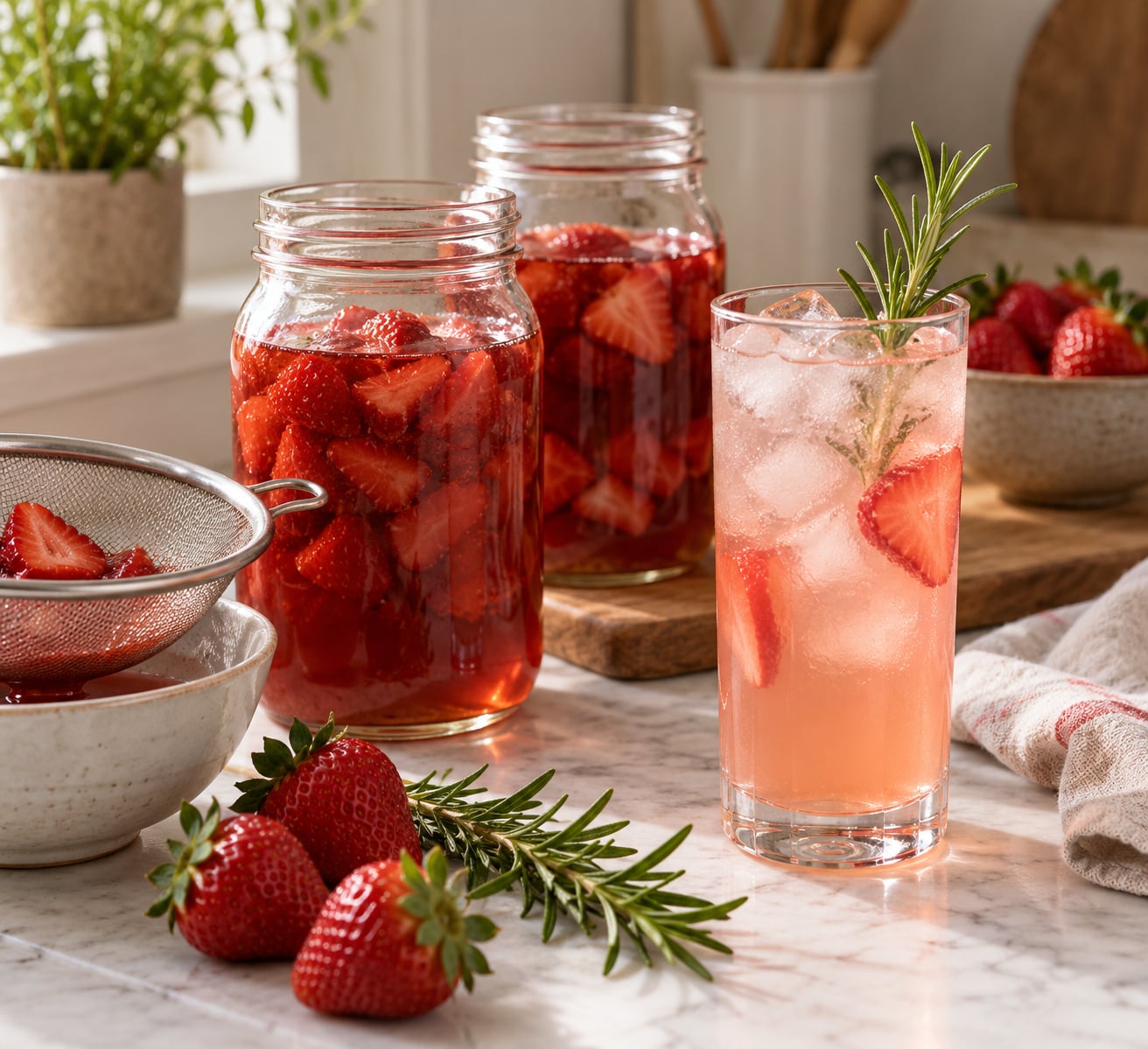
Cap the jar loosely and refrigerate. This cold infusion is the method I would hand anyone starting out. It takes four to seven days for fresh fruit, and one to two days for dried fruit, spices, and herbs. Longer cold infusions push a fruit like strawberry toward a deeper, wineier note, and there is nothing wrong with waiting two weeks if you like.
You will know extraction is done when the color has deepened noticeably, the liquid smells of fruit rather than clean vinegar, and all the sugar has dissolved. Taste with a clean spoon. If the sweetness arrives before the fruit flavor does, it needs more time.
4. Add Sweetness and Balance
Taste the finished concentrate straight from the spoon before it goes anywhere near water. This is the moment to fix balance, because a concentrate that is wrong will be diluted into something that is merely thin.
If it is sharp and vinegary, the fix is sugar. Stir in another 5 to 10 percent by volume of sugar and let it dissolve for an hour or two, or until the next batch if you would rather not wait. If it is sweet and flat, that is almost always too little acid, and the answer is to cut it at the serving glass with more sparkling water rather than to add vinegar to the jar.
Honey and maple syrup work in place of sugar, and they bring their own character. Honey makes the drink rounder and slightly floral, and a batch made with honey and apple cider vinegar is the drink people call a switchel, the older cousin of the modern shrub. Cane sugar, turbinado, and raw sugar all behave similarly, with raw sugar carrying a faint molasses note.
You can make a shrub with no sweetener at all, which sounds wrong and is not. A tart, unsweetened concentrate diluted generously is closer to a tonic than a syrup, and it works best with savory bases like cucumber, celery, or tomato. It will not keep as long and it tastes sharper in a cocktail.
5. Rest, Strain, and Bottle
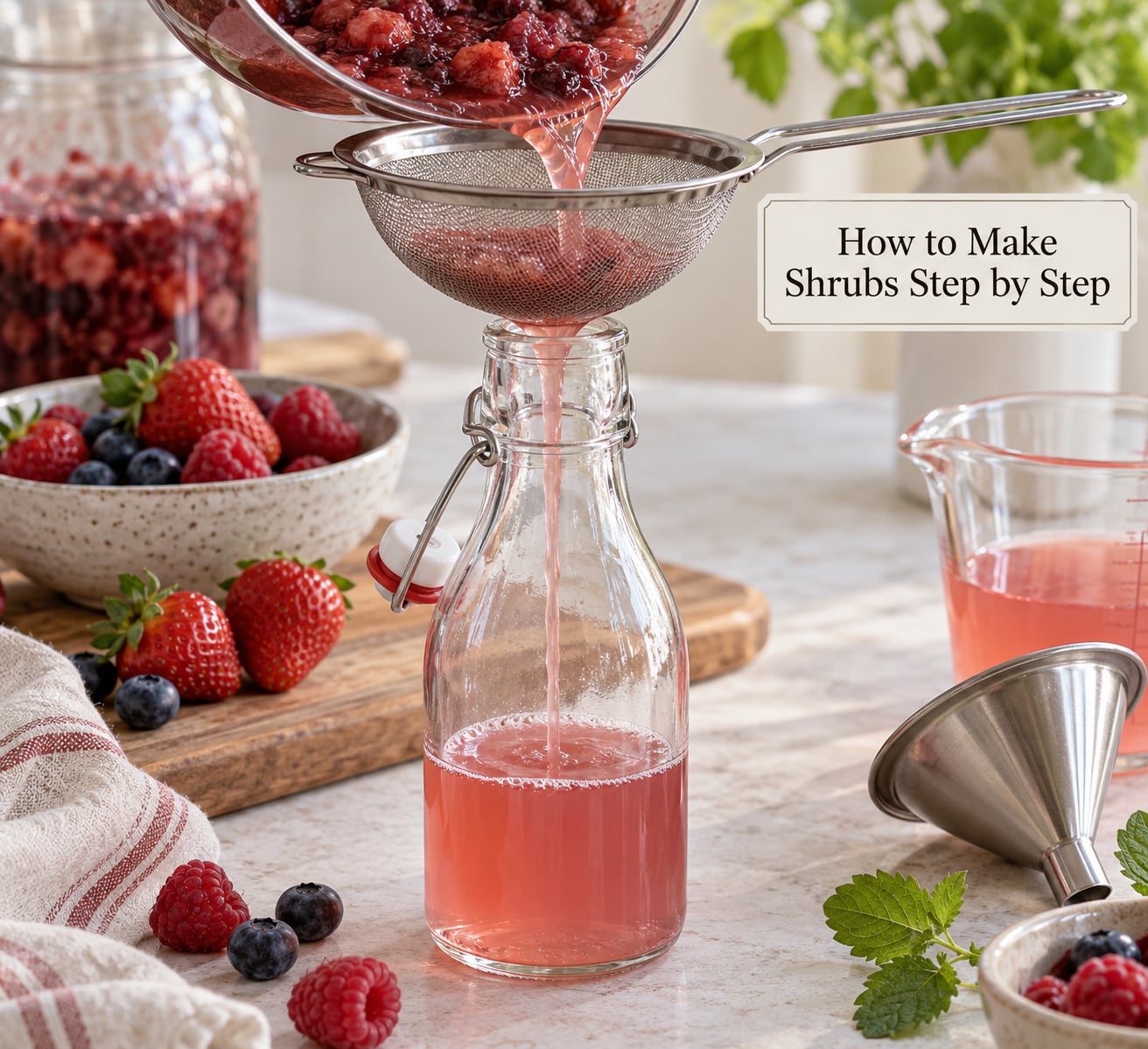
Strain the liquid through a fine-mesh strainer lined with cheesecloth, pressing hard on the solids to get what is trapped in the pulp. Pressing can double your yield, and it is the step people skip and then wonder why they have half a cup of shrub from a full jar of berries.
Bottle the concentrate in a clean jar or bottle and refrigerate it. Label the front with the base ingredient and the date, and put a note on the label if you used honey. A bottle without a date is a bottle you will sniff and squint at in two months.
Discard a batch if you see a cloudy, slimy liquid, a film on the surface, fuzz, a strange fizzy fizz after straining, or a smell like nail polish remover. Cloudiness by itself can be fruit pulp, but cloudiness with a film, a smell, or bubbling means something is living in the jar and the batch is gone.
6. Serve and Store
A strained shrub in the fridge keeps well for six to twelve months, and the flavor is usually better after a few weeks when the sharpness settles a little. If your kitchen runs warm or you travel, freeze the concentrate in ice cube trays and move a batch to the freezer. Thaw a few cubes at a time in a drink.
Shake the bottle before you pour. Concentrated syrups separate, and a pour without shaking gives you watery vinegar followed by a sugar sludge.
| How you are serving it | How much shrub | What it goes with |
|---|---|---|
| Sparkling water highball | 2 to 3 tablespoons | 10 to 12 oz chilled sparkling water, ice, a wedge of the fruit you used |
| Still water or soda | 1 tablespoon | 8 oz cold water, sparkling or still |
| Cocktail | 1/2 to 1 oz | 2 oz of gin, vodka, rum, or whiskey |
| Batch, soda fountain style | 1 part shrub | 3 parts water or sparkling water |
| Straight, a small sip | 1/2 oz | Nothing. Most people do this once, then go back to sparkling water |
| Salad dressing | 2 parts shrub | 3 parts neutral oil, a pinch of salt |
The dilution ratio is the single most important variable and the one people get wrong most often. One part concentrate to three or four parts liquid is the standard starting point, and it is much easier to add shrub than to remove it once something is already in the glass.
For cocktails, vinegar does the job alcohol normally does in a sour. Half an ounce of shrub in a two-ounce spirit drink gives the same lift as adding a splash of fortified wine, and it works in anything from a daiquiri to a whiskey sour. A pinch of salt in a shrub drink rounds out the acidity in a way sugar cannot.
Garnishes matter more than people expect. A sprig of the herb you steeped, a strip of peel from the fruit, or a few cracked peppercorns all reinforce what is in the glass without adding sugar.
There is a version of the storage conversation that says vinegar content means you can leave shrubs on a counter for months. Some commercial products are indeed stable that way, because they are processed and acidified to a tested level rather than mixed in a home kitchen. A homemade batch is not the same thing, so refrigerate it.
The same reasoning applies to canning. Hot water bath canning at shrub ratios is not a reliable or tested preservation method, and fruit packed in a jar with acid added by hand is exactly the situation where the safety margin disappears. Make the quantity you will drink, keep it cold, and move on.
Common Mistakes
The drink is too sharp and the vinegar dominates. This is the single most common complaint, and it has one reliable fix: add more sugar to the concentrate, or use less vinegar next batch. A spoon of loose sugar stirred into the jar dissolves in about an hour, and you can taste your way to the right point.
It tastes like candy in a glass. Your dilution is too rich. Cut the shrub with more sparkling water, add a squeeze of lemon, and drop the concentrate to a tablespoon. Sweetness is easier to add than to take out.
The liquid is thin and watery. Usually one of three things: you skimmed off the sugar, you rinsed your produce and left water in the jar, or your base is very wet fruit like cucumber or watermelon. Mash harder, let the maceration run a day longer, and measure the concentrate you actually got, not the fruit you put in.
The batch is cloudy. Some cloudiness is pulp you failed to strain out, and that is cosmetic. Cloudiness with a film on top, an off smell, or unexpected fizzing is spoilage, and the batch should be discarded. Store-bought shrubs often carry a fine haze from dissolved pectin, which is harmless.
The flavor is too intense too fast. A dried spice or herb that tastes balanced after a day tastes of nothing but itself after two weeks. Pull dried ingredients out earlier, steep them in a smaller amount of vinegar, and combine concentrates later in equal parts.
Crystals at the bottom of the jar. Undissolved sugar. Warm the jar in warm water, swirl, and wait until the crystals vanish before you pour a serving.
Two habits fix most of the above. Measure by volume, never by eye, and write the date on the jar. And taste the concentrate before serving, every single time.
When you scale up, double a recipe into two jars rather than one very large one, so the fruit stays submerged and you can compare batches. When you scale down, a half-pint jar works fine, and smaller batches are better for trying a flavor you are not sure about.
Once you have the basics down, the same method covers shrubs made from herbs and spices alone. Two cups of rosemary with a cup of sugar and a cup of white wine vinegar steeps for two days and makes a savory concentrate that belongs in a vinaigrette. Spices go further still, and a cinnamon-and-clove shrub with no fruit at all is a good winter experiment.
Frequently Asked Questions
What is the difference between a shrub and drinking vinegar?
There is no difference in the finished drink. Shrub is the older English word, carried back from the drink’s history as a sweetened fruit cordial, while drinking vinegar is the American term that describes the acidity. Recipes labeled one or the other are the same process with different proportions of fruit, sugar, and vinegar.
What ingredients can I use to make a shrub?
Almost anything with flavor: berries, stone fruit, citrus, melon, rhubarb, and pineapple work well, as do savory bases like cucumber, celery, tomato, and beet. Dried cherries, dried cranberries, and dried herbs concentrate flavor and steep faster. Single spices such as black pepper, cinnamon, and star anise make a shrub on their own, and herbs like rosemary, mint, and tarragon pair with almost any fruit.
Can I make a shrub without sugar?
You can, and the result is a tart concentrate rather than a syrup. Unsweetened shrubs are best with savory bases such as cucumber, celery, or tomato, and they work as a savory concentrate in vinaigrettes and pan sauces. They are sharper in a drink, so dilute them further than you would a sweetened shrub, and expect a shorter shelf life in the fridge.
How much vinegar should I use for a fruit shrub?
Use an equal volume of vinegar to the prepared fruit, which is the classic one to one to one ratio of fruit, sugar, and vinegar by volume. The same ratio also appears as two cups fruit to one cup sugar to two cups vinegar. If your fruit floats above the liquid line after you add the vinegar, press it down or add more so every piece stays submerged.
How long does homemade drinking vinegar last?
A strained homemade shrub keeps in the refrigerator for six to twelve months and is usually at its best after a few weeks. Discard it if the liquid turns slimy or cloudy with a film on top, if it smells like nail polish remover, or if it bubbles when it should not. Freezing the concentrate in ice cube trays is the safer option for long storage in a warm kitchen.
How do I dilute a shrub in a drink?
Start with one part shrub to three or four parts liquid. For a sparkling water highball that is two to three tablespoons of concentrate in a ten to twelve ounce glass. In a cocktail, half an ounce to an ounce of shrub works with two ounces of spirit. Shake the bottle first, and add more liquid rather than more shrub, since dilution is much easier than correction.
Conclusion
Start with two cups of strawberries, an equal volume in sugar, and the same again in apple cider vinegar, then let it sit in the fridge for a week. Taste the concentrate before it meets any water, adjust the sweetness there, and you have a drinking vinegar you can turn into drinks for the next several months.
Once that batch is gone, change one thing at a time. Swap in cucumber and rosemary for a savory version, try rice vinegar instead of cider, or steep dried cherries with whole cloves and see where it takes you.