Juicing a beet takes about ten minutes: wash it, trim the top, cut it into pieces that fit your feed tube, then run it through. To tame the earthy taste, peel the beet, cut it small, dilute it with two to four parts other produce, and finish the glass with acid plus something sweet. Cold, strained juice tastes cleaner than warm, pulpy juice, and most of how to juice beets and tame the earthy taste comes down to preparation and proportion rather than a clever recipe.
The earthy note that puts people off beet juice is not an imagination and it is not the colour. It comes from geosmin, the same soil-and-pond compound that gives catfish their smell. Beets absorb it from the ground they grow in, so beets grown in heavier soil carry more of it, and the skin holds a higher share than the flesh.
Dilution does more than add-ins. People new to juicing almost always reach for an apple first, when what they actually need is less beet by volume. Start with one small beet in a large base of carrot, apple or cucumber, taste it, and only then decide whether the glass needs sweetening or acid.
Table of Contents
- What You Need
- Step-by-Step
- How to Prepare Beets Before Juicing
- How to Juice Beets in a Juicer
- How to Juice Beets with a Blender
- How to Tame the Earthy Taste
- Common Mistakes
- Frequently Asked Questions
- Do I need to peel beets before juicing them?
- Are raw beets better than cooked beets for juicing?
- Why does my beet juice taste so earthy?
- Can I juice beets in a blender instead of a juicer?
- What can I add to beet juice to make it taste better?
- How long does homemade beet juice stay fresh?
- Conclusion
What You Need
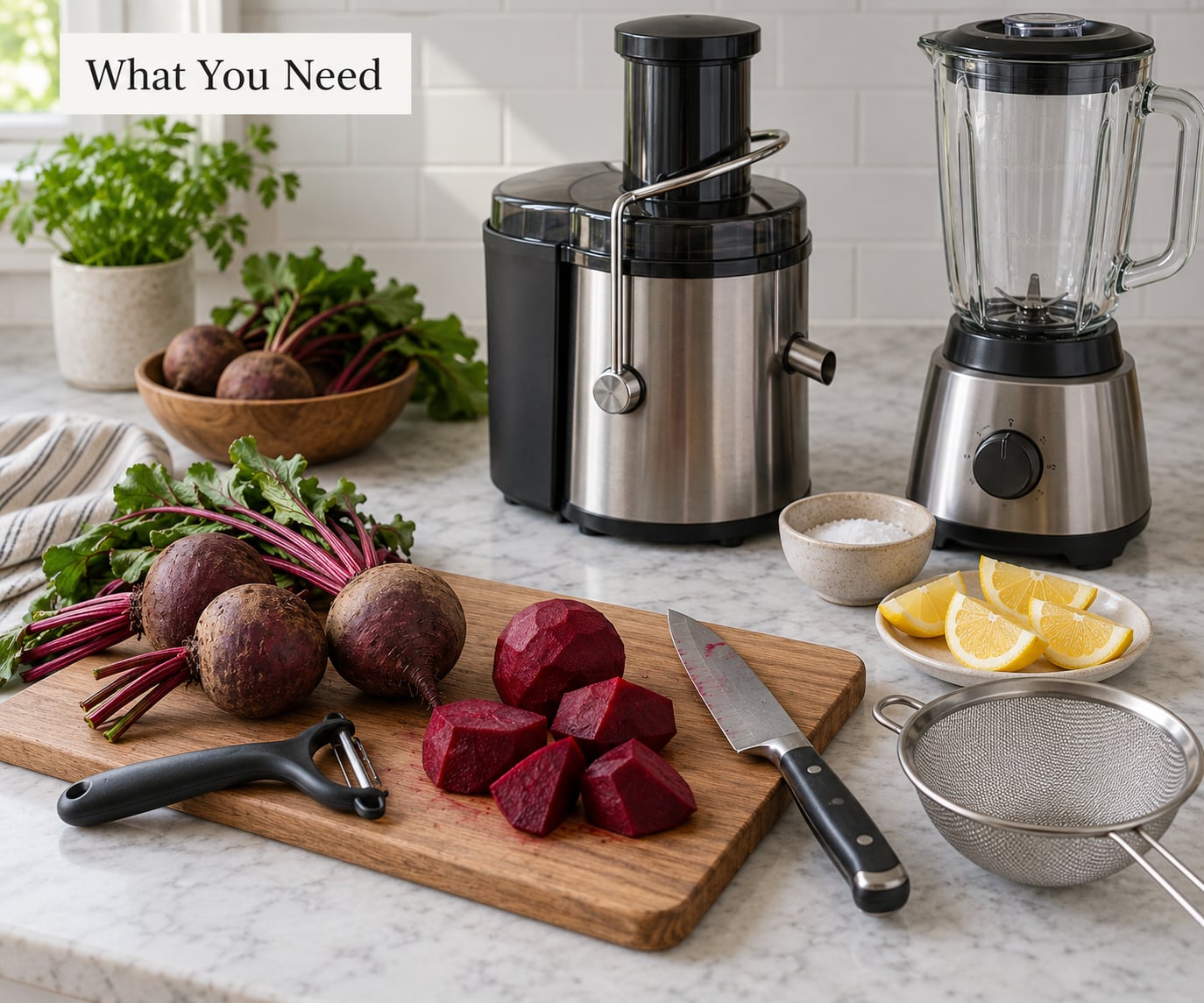
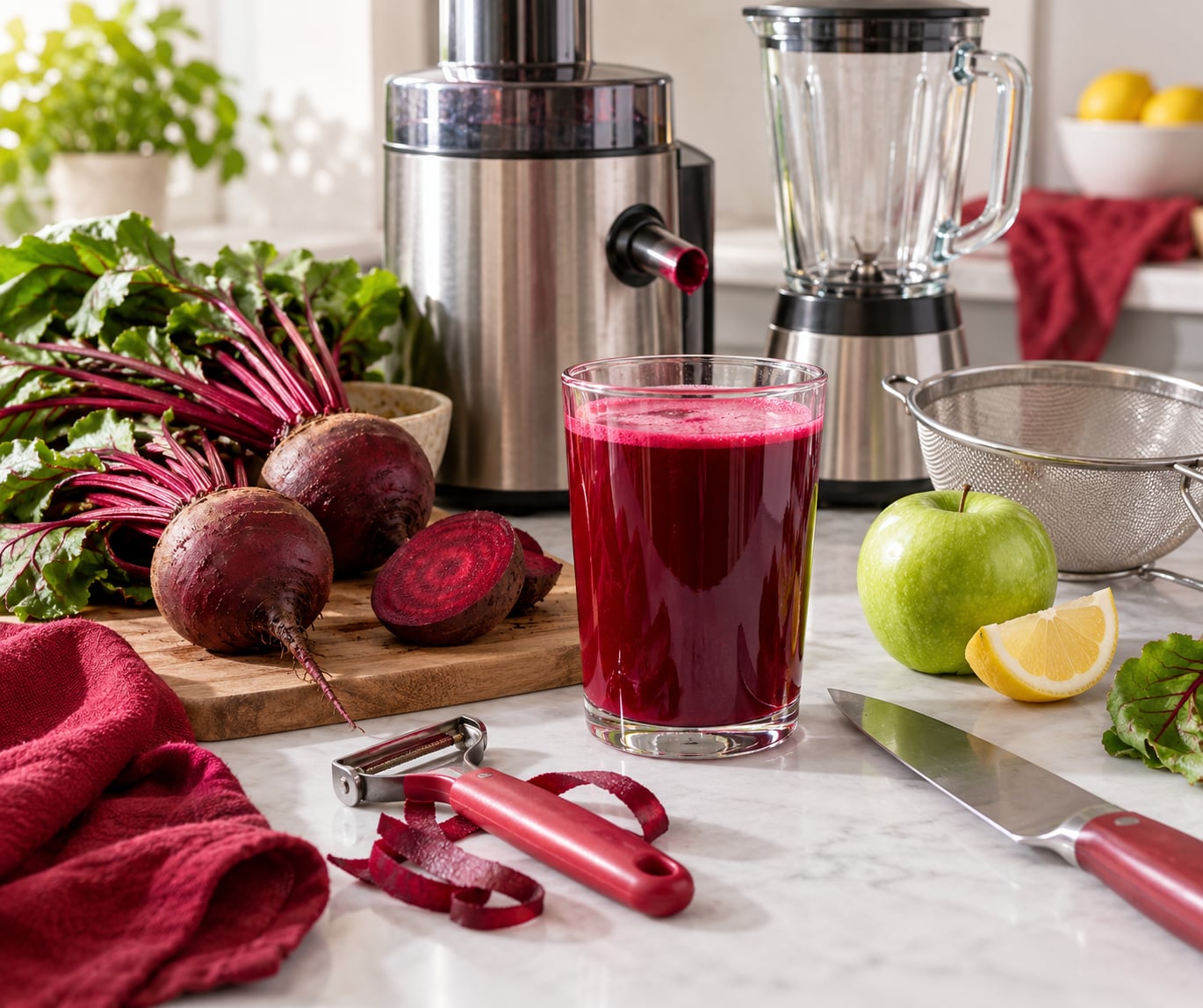
You need very little. A vegetable peeler, a sharp knife and a cutting board handle prep, and then you need a way to separate juice from pulp. Everything else is a flavour lever rather than a requirement.
- Prep: a vegetable peeler, a chef’s knife and a cutting board. A bowl of cool water with a splash of vinegar sits nearby if you want to stop the dye spreading.
- Extraction: a masticating (slow) juicer, a centrifugal juicer, a cold-pressed juicer, or a high-speed blender.
- Straining: a fine-mesh sieve for a cleaner sip, or a muslin cloth if you want pulp-free juice.
- Balance: a lemon or lime for acid, a green apple or pineapple for sweetness, fresh ginger for heat, and mint leaves for a cooling finish.
- Seasoning: a small pinch of salt. It does not reduce earthiness, but it makes the whole glass taste more finished.
- Service: a tall glass and plenty of ice. Warm juice tastes more earthy than the same juice chilled.
Do not skip the vinegar bowl if you care about stains. Beet betalain pigments bond to wood and plastic permanently, and a cutting board that has absorbed raw beet juice will keep a pink ghost for months.
Step-by-Step
How to Prepare Beets Before Juicing
Buy beets that are firm and heavy for their size, with unbroken skin and no soft spots. A beet that gives when you press it is already breaking down, and it will taste muddy rather than sweet. Scrub the skin under cold running water with your fingers or a stiff brush until no soil comes off.
Cut the leafy tops and the thin root tail off. The tops themselves are usable once washed well, and they are good in a pesto or folded into a green juice, but check them for insects first because the crown traps dirt.
Next, decide about the skin. Peel when the glass tastes too earthy, which is the common case. If you are chasing fibre and nutrients rather than the mildest possible flavour, keep the skin on a well-scrubbed beet and cut it finely enough for your machine. Both approaches are defensible; what matters is that peeling is the single biggest flavour move most people can make in one step.
Raw is the default. Cooking softens the root and mutes the raw earthiness, and pickling goes further still, so both are reasonable shortcuts if you already have cooked beets in the fridge. Raw beets give you the brightest colour and the most nitrates, and they need no cooking time at all.
Cut the beet into pieces your machine can actually pull. Roughly 1-inch cubes suit a wide-chute centrifugal or cold-press machine; a slow masticating juicer wants smaller, closer to half-inch pieces, because a hard raw chunk that wedges against the auger is the most common reason a juicer stalls on beets. A medium beet gives you roughly half a cup of juice, so four beets is a big batch and usually more earthiness than one person wants in a sitting.
How to Juice Beets in a Juicer
Line the collection jug or pitcher with a fine-mesh sieve if you want a cleaner glass, then start the machine before you feed anything. Slow juicers and cold-press machines like to be at speed first; a centrifugal can take produce either way.
Feed the beet pieces in a slow, steady stream rather than a handful at once. Overloading the chute is the mistake that produces a foam-filled, bitter glass, because the machine cannot press the pulp fast enough and pushes juice through instead of separating it.
How each machine handles beets:
- Masticating (slow) juicer: highest yield, most pulp in the juice, gentlest on nutrients. Peel, then cut half-inch cubes, and alternate beet with carrot or apple so the auger keeps moving.
- Cold-pressed juicer: high yield and smooth texture, but more pulp in the glass than a masticating machine. Peel, use 1-inch cubes, feed slowly, strain afterwards.
- Centrifugal juicer: fast and fine-textured, but it adds air and heat, which sharpens bitterness. Peel, use 1-inch cubes, work in small batches and drink it cold right away.
- High-speed blender: no separation at all, so you are making a smoothie unless you strain it. Dice finely, add liquid, pulse in short bursts, then strain through a sieve or muslin.
Watch the pulp as it comes out. When it looks dry and pale, the machine is extracting properly. When it is still wet and dark, the juice is thin and watery and you can push more beet through.
How to Juice Beets with a Blender
A blender works, with one change: you have to strain the result. Dice the beet smaller than you would for a juicer, about half-inch cubes, so the blades catch it. Add a quarter cup of water, coconut water or a splash of the juice you already made, which gets the blades turning before the beet firms up around them.
Pulse in short bursts of five to ten seconds rather than running the machine flat out for a minute. Long blending heats the liquid, heats it fast, and pulls air in until the top of the glass is foam. You want a deep red liquid with a little sediment at the bottom.
Strain through a fine-mesh sieve for a drinkable texture, pressing the pulp with the back of a spoon. Push the pulp through a muslin cloth instead and you get a clearer, lighter juice, at the cost of leaving more fibre behind. Pour it over ice immediately.
How to Tame the Earthy Taste
Beets get their muddy note from geosmin, and the pigment that makes them red is a betalain, which is different chemistry and not the problem. Because geosmin is perceived so strongly at low concentrations, the practical fix is arithmetic rather than chemistry: less beet, more of everything else, then acid and sweetness to shift what your tongue reports.
Here is the ratio to start from. Measure by beet size rather than weight, since a single small beet and a large one are not equal.
- Mild, 1 part beet to 4 parts produce: for a 12 oz glass, use 1 small beet, 2 carrots, 1 apple and 1 lemon wedge. It tastes vegetable-sweet and faintly sweet, with no dirt note.
- Balanced, 1 part beet to 2 parts produce: use 1 medium beet, 1 carrot, 1 green apple and a squeeze of lemon. Beet-forward but clean, and the taste most people settle on.
- Bold, 1 part beet to 1 part produce: use 1 beet, 1 carrot and half an apple. Full earthy and mineral, for people who already like it.
This is the fix that comes up again and again in juicing forums, and it has been for years: halve the beets and triple the carrots. Carrot is the most useful diluter because it is sweet without being perfumed, and it holds its own flavour instead of disappearing like cucumber does.
Then add the ingredient that fixes the specific problem you are still tasting.
- Lemon or lime juice for sharpness and lingering earthiness, since acid makes sweetness read as sweeter: 1 wedge of lemon or 1 tablespoon of lime juice per glass.
- Green apple for raw earthiness and bitterness, the classic pairing: 1 apple, roughly half a cup of chunks.
- Pineapple for earthiness with a tropical edge, and the strongest masker of the bunch: a quarter to a third cup of chunks.
- Carrot for thin texture and bitterness: 1 to 2 carrots, more than the beet by volume.
- Fresh ginger for dullness, because the heat pushes the earthiness to the back: a 1 inch knob, unpeeled is fine.
- Mint leaves for an earthy aftertaste, leaving a cooling finish: 6 to 8 leaves.
- Watermelon for dilution and a soft sweetness, mostly useful for volume: 1 cup of chunks.
- Salt for flatness and dullness rather than earthiness itself: a pinch, about 1/8 teaspoon.
- Banana or avocado for nothing useful. Both muddy an already earthy glass, so leave them out of a beet-forward juice.
Two more moves are free. Serve the juice cold over ice, because temperature flattens earthy notes, and drink it within an hour of making it. If the glass still tastes like dirt after all of this, cut the beet in half again next time rather than reaching for another add-in.
Be aware of what you are drinking, too. Beet juice is one of the richest food sources of dietary nitrate, which the body converts to nitric oxide that relaxes blood vessels. Many people notice pink or red urine a few hours later, which is harmless and usually shows up somewhere between three and six hours. If you take blood-pressure medication, have a history of kidney stones, or are prone to constipation, talk to your doctor or a registered dietitian before making this a daily habit, since beets are high in oxalate and a large glass has a mild laxative effect.
Common Mistakes
Using soft, split or muddy beets. Damage and age break down cell structure and push the juice toward a flat, swampy flavour that no amount of lemon rescues. Firm, heavy beets juice sweet and clean.
Overloading the chute. Pushing a handful of beet at once makes the machine press liquid out of pulp it has not broken down. The result is thin juice, extra pulp and more bitterness. One or two pieces at a time, steady and unhurried.
Skipping the strain. Pulp left in the glass reads as grit and texture, and it carries flavour. One pass through a fine-mesh sieve costs you nothing and makes the drink feel finished.
Serving it warm. Juice at room temperature or warmer tastes distinctly more earthy than the same juice on ice. Chill the produce if you can, and always serve cold.
Fixing the flavour after the glass is full. Add acid and sweet at the blending stage, where you can taste and adjust, not at the table where you are topping up a drink that is already unbalanced. If it is flat, add lemon first, then taste again before reaching for something sweet.
Starting with too much beet. Most recipes online are 70 to 80 percent beet, which explains why people describe beet juice as undrinkable. One beet in a full glass of carrot and apple base is enough to colour and nourish the drink. Work your way up over a couple of weeks if you want more.
Ignoring the stains. Betalain dyes cutting boards, blenders, aprons and teeth. Use a dark cutting board, rinse the blender immediately rather than after it dries, and drink through a straw if you are going to a meeting afterwards.
Frequently Asked Questions
Do I need to peel beets before juicing them?
Peeling is the single biggest flavour move most people can make, and it takes about a minute with a vegetable peeler. The skin carries a higher share of the geosmin compounds that read as dirt, so removing it softens the earthy note noticeably. If your aim is fibre and nutrients rather than the mildest possible glass, a well-scrubbed unpeeled beet is fine, provided your machine can handle the texture.
Are raw beets better than cooked beets for juicing?
Raw is the usual choice. It gives the brightest colour, the highest nitrate content and the least processing time. Cooking and pickling both soften and mute raw earthiness, so they work as shortcuts if you already have cooked beets, but the flavour is rounder and less vivid. Roast a batch if you like the flavour and juice the raw root for the drink.
Why does my beet juice taste so earthy?
Beets absorb geosmin from the soil they grow in, and geosmin is the compound that gives wet earth and catfish their smell. People detect it at extremely low concentrations, which is why a little beet can dominate a whole glass. Beets from heavier soil usually carry more, and the skin holds a higher share than the flesh. Peeling, diluting and adding acid all reduce how much you taste.
Can I juice beets in a blender instead of a juicer?
Yes, with one extra step. Dice the beet to about half-inch cubes, add a quarter cup of water or other liquid so the blades catch, and pulse in short bursts of five to ten seconds to avoid foam and heat. You will need to strain the result through a fine-mesh sieve or muslin, since a blender does not separate pulp the way a juicer does.
What can I add to beet juice to make it taste better?
Start with acid rather than sugar: a squeeze of lemon or lime per glass makes everything else taste sweeter. Apple and pineapple add body and mask earthiness, carrot dilutes and smooths, ginger adds heat, and mint cools the aftertaste. Dilution still beats masking, so try one beet to two parts carrot and apple before piling on add-ins. A small pinch of salt sharpens the whole glass.
How long does homemade beet juice stay fresh?
Drink it the day you make it if you can. Refrigerated in a sealed container, unpasteurized beet juice is at its best within 24 hours and generally fine for up to two days, after which the flavour flattens and it oxidizes. Fill the container to the top to limit air, keep it cold, and use a clean pour so you are not introducing bacteria. Discard it if it smells off or fizzes.
Conclusion
Wash and scrub firm beets, cut them small enough for your machine, and feed them through steadily rather than in handfuls. Strain the pulp out and serve it cold. Then do the part that matters most: keep the beet to about one part in three, add lemon first, and reach for apple or pineapple only if it still needs sweetening. Start there, taste it, and build up over a couple of weeks.