Dried-out bone-in chops almost always come down to heat and timing, not the bone. Sear hard for a crust, finish gently in a 375°F (190°C) oven, pull them at 145°F (63°C) internal with a thermometer, then rest 5 to 10 minutes before slicing. Knowing how to cook bone in pork chops without drying them is mostly those four moves plus salt ahead of time. From counter to plate, the whole thing takes about 45 minutes.
The bone itself is not the villain, though. It insulates the muscle next to it and slows cooking on that side, which is exactly why an uneven chop from the fridge dries out at the edges while the middle is still raw.
Table of Contents
- What You Need
- Step-by-Step: How to Cook Bone In Pork Chops Without Drying Them
- Brine the Chops So They Stay Juicy
- Season and Sear Without Overcooking the Meat
- Finish in the Oven and Check with a Thermometer
- Rest and Baste for a Juicy Finish
- Common Mistakes
- Frequently Asked Questions
- Do bone-in pork chops need to be brined to stay juicy?
- Should I sear bone-in pork chops before putting them in the oven?
- What internal temperature should I cook bone-in pork chops to?
- How long do bone-in pork chops take to cook?
- Why are my bone-in pork chops dry after cooking?
- Can I reheat cooked bone-in pork chops without drying them out?
- Conclusion
What You Need
Nothing here is specialized. If you know how to cook bone in pork chops without drying them, you already own everything on this list, and the gaps are what quietly ruin the dinner.
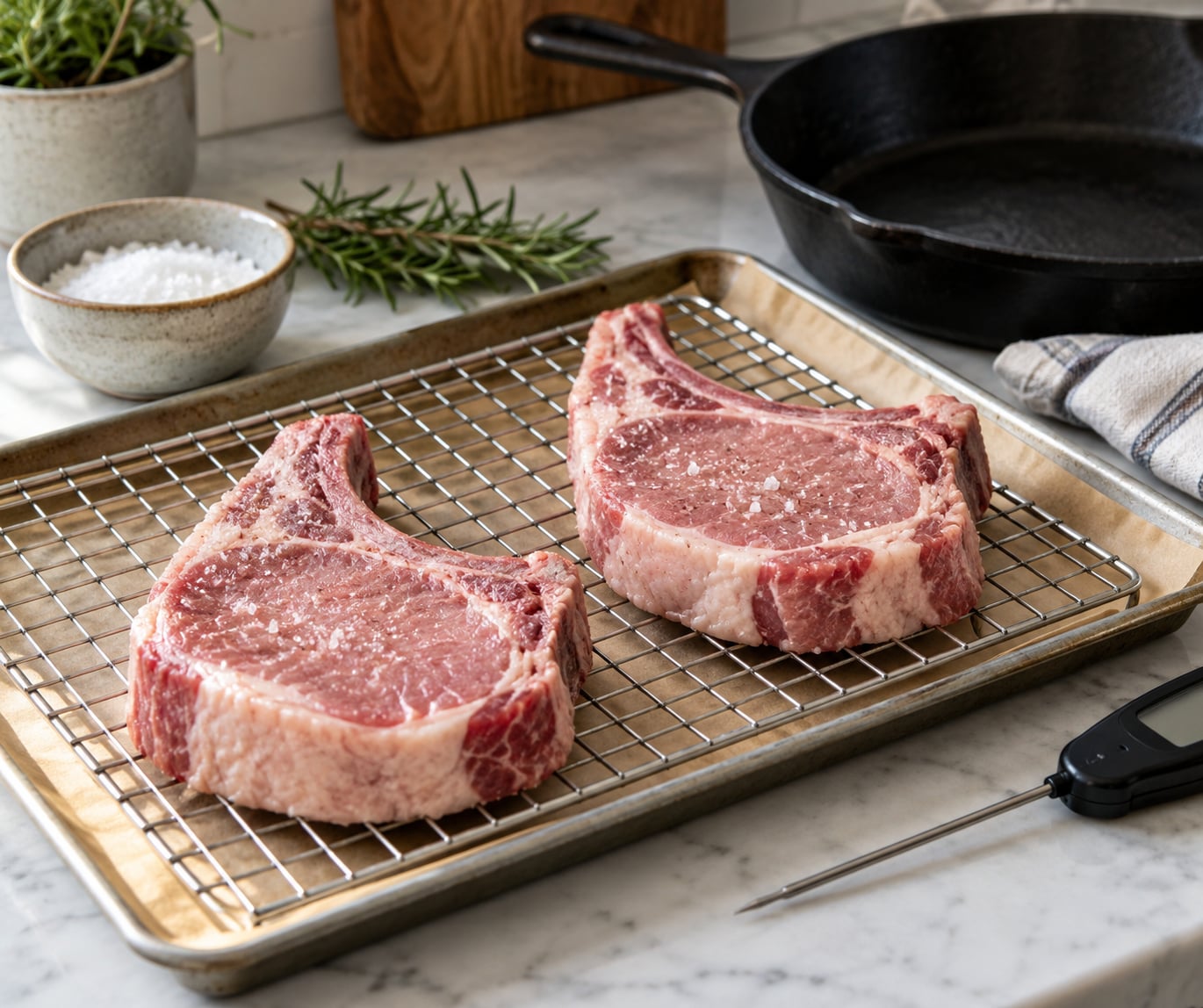
- Bone-in pork chops of even thickness. Measure two or three with a ruler before you start. A 1.5 inch chop next to a 2 inch chop cannot share a cook time, and the thinner one pays for it.
- Coarse kosher salt. Diamond Crystal or Morton, for a dry brine on a wire rack.
- A heavy skillet, ideally cast iron or stainless, with an oil with a high smoke point.
- Butter plus aromatics such as garlic, thyme or rosemary for basting near the end.
- An instant-read thermometer. This is the single tool that separates juicy chops from dry ones.
- A wire rack, sheet pan and foil for brining, resting and the steam pocket.
A wire rack set over a tray keeps air moving under the meat during brining, which is what stops the underside from sitting in its own moisture and going grey.
Step-by-Step: How to Cook Bone In Pork Chops Without Drying Them
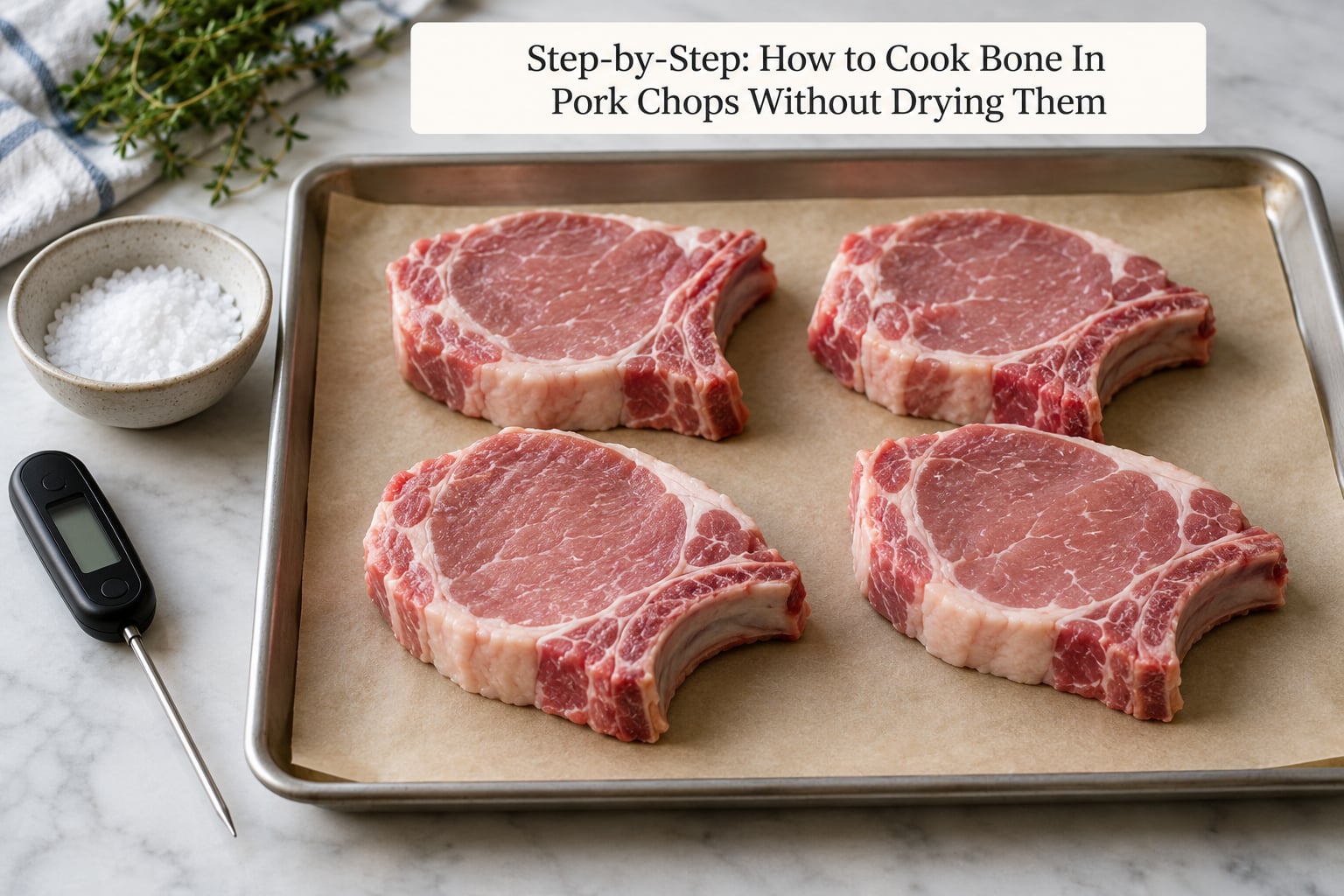
Four things do the work: salt ahead of time, a hot sear, a gentle finish, and a rest. Skip any one of them and you need the others to compensate, which is why chops cooked straight from the package so often disappoint.
Brine the Chops So They Stay Juicy
Brining is not required, but it is the cheapest insurance against dry meat. Pork loin is a lean muscle with very little internal fat, so it gives up water faster than chicken or beef does.
For a dry brine, season both sides of each chop with about 1 teaspoon of coarse kosher salt, lay them on a rack in the fridge uncovered, and wait 6 to 24 hours. At 24 hours the surface will look dry and slightly tacky, which is muscle protein beginning to change. Rinse the chops quickly under cold water and pat them dry before cooking.
For a wet brine, dissolve 4 tablespoons of salt in 4 cups of water, submerge the chops for 30 to 60 minutes refrigerated, then drain and dry them thoroughly. Wet brine and dry brine pull moisture differently: the dry version seasons deeper and adds salt without diluting flavour, which is why most regulars prefer it.
Season and Sear Without Overcooking the Meat
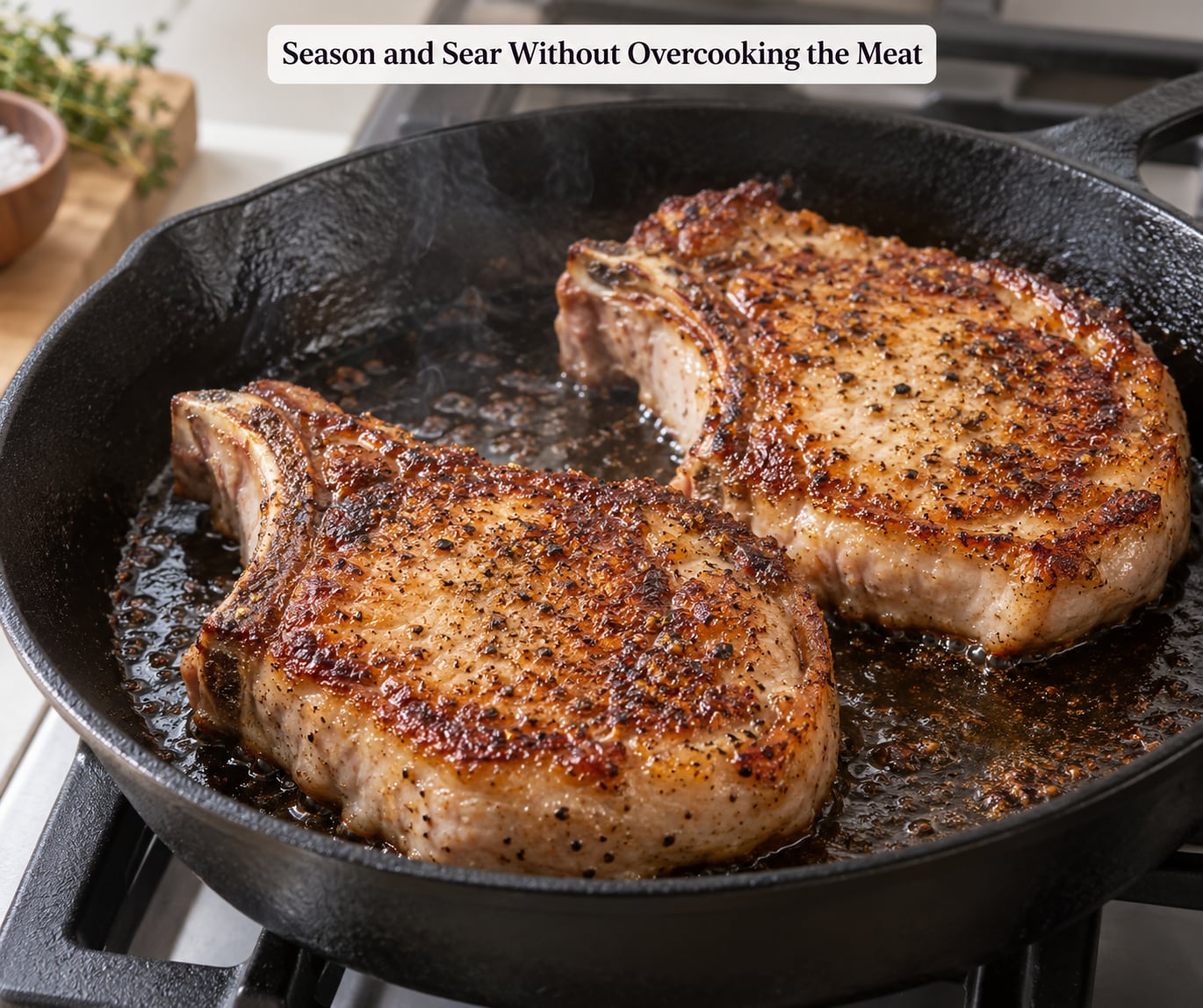
Take the chops out of the fridge 30 to 45 minutes ahead. Meat poured from cold into a hot pan spends its first minute cooking unevenly, and the outer edges set and squeeze out moisture before the center catches up.
Leave the fat cap on. It is the chop’s own moisture shield, and trimming it exposes the lean muscle directly to dry heat. If the butcher left a thick one, score the meat side lightly so the seasoning has somewhere to go.
Season both sides with salt, black pepper and whatever else you like, then pat the surfaces completely dry. Wet meat steams instead of browning.
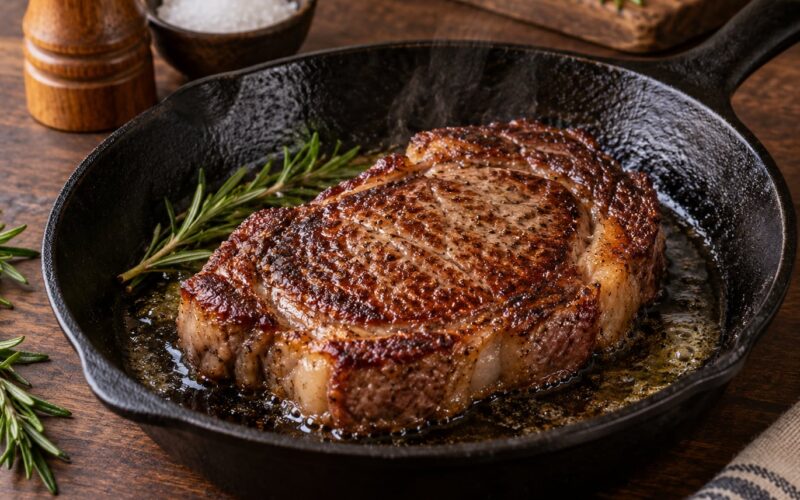
Heat a heavy skillet until a drop of water skitters across it. Add a thin layer of high-heat oil, lay the chops away from you and press them flat for a good 20 to 30 seconds to guarantee full contact.
Leave them alone for about 3 minutes per side, until the surface is a deep, even brown and the edges have turned opaque about a quarter of the way up. If the pan is too hot you will get black spots and a raw-looking gray band; too cool and you will get a pale, grey crust. Deep uniform gold is the target.
Finish in the Oven and Check with a Thermometer
Thick chops move to a 375°F (190°C) oven to finish. Cast iron handles the oven transition without complaint, which removes a whole category of dinner problems.
Tuck a piece of foil loosely over the chops for the first 15 minutes. It traps steam that keeps the surface of the meat moist instead of drying it out, and it is not sealed tightly enough to steam the crust you just built.
| Chop thickness | Oven finish at 375°F (190°C) | Pull at this internal temp | Total time with sear |
|---|---|---|---|
| 1 to 1.25 inch (2.5 to 3 cm) | 7 to 9 minutes | 145°F (63°C) | 14 to 16 minutes |
| 1.5 inch (4 cm) | 12 to 15 minutes | 145°F (63°C) | 20 to 24 minutes |
| 2 inch (5 cm) | 18 to 22 minutes | 145°F (63°C) | 26 to 30 minutes |
Push the probe into the thickest part of the chop, away from the bone, and stop at 145°F (63°C). The USDA’s safe minimum internal temperature for whole cuts of pork is 145°F with a three minute rest, which means a faint pink centre is normal and safe.
If you still cook chops to 160°F (71°C), that outdated habit is the main reason pork has a dry reputation. That was the standard before the guideline changed in 2011, and everything above 145°F squeezes more water out of the muscle.
Air fryers work, though they need a lower setting. Set them to 380°F (193°C), cook a 1.5 inch chop for roughly 9 to 11 minutes, flip at the halfway mark, and pull at 145°F.
Rest and Baste for a Juicy Finish
Baste during the last few minutes: drop a tablespoon of butter with a smashed garlic clove or a sprig of thyme into the pan, tilt it to coat, and spoon the melted butter over the chops. The fat and salt go back into a lean muscle that has lost a lot of moisture to the pan.
Rest 5 minutes for thin chops and 10 for thick ones on a rack, loose foil draped over the top. Resting lets the muscle fibres relax and reabsorb the juice pushed toward the surface during cooking; cutting too early dumps that juice onto the board.
Deglaze the fond with a splash of water or stock for a quick pan sauce and spoon it over at the table. Slice against the grain and serve immediately.
Common Mistakes
- Cooking to a timer instead of a temperature. Two chops of the same nominal thickness can differ by half an inch. Fix: probe every chop, starting with the thickest one, and pull all of them when the first one hits 145°F (63°C).
- Chasing 160°F. That extra 15°F is where a lot of the juice goes. Fix: trust 145°F and the three minute rest.
- Trimming the fat cap. You are removing the only fat the chop has. Fix: leave it on and score it instead.
- Poking with a fork to check. Every puncture vents juice and bacteria is not the point, the drying is. Fix: use a thermometer.
- Searing straight from the fridge. Fix: 30 to 45 minutes on the counter, loosely covered.
- A grey, patchy crust. The pan was not hot enough or the meat was wet. Fix: preheat until it smokes faintly and dry the surface before it goes in.
- Searing a thin chop for 3 minutes a side. Under about 1 inch, a chop has nothing left to give. Fix: 60 to 90 seconds a side and move fast to the oven or the pan juices.
- Opening the oven door repeatedly. Each opening drops the pan temperature and stalls the cook. Fix: one check, one probe.
- Salting hours ahead and cooking straight from the crust. A 24 hour dry brine draws moisture to the surface. Fix: rinse and pat dry.
- Uncovered leftovers. Fix: refrigerate in a sealed container for up to three to four days and reheat gently.
To reheat without drying out, warm a chop in a skillet with a tablespoon of butter for a minute a side, or microwave it at 30% power in a splash of broth or apple juice until just hot.
Frequently Asked Questions
Do bone-in pork chops need to be brined to stay juicy?
No, brining is optional, but it is the most reliable insurance against dry pork loin, which is a lean muscle with little internal fat. A dry brine of about 1 teaspoon of coarse kosher salt per side, 6 to 24 hours ahead on a wire rack, seasons deeper and adds salt without diluting flavour. Rinse and pat dry before searing. If you brine, skip salting again at the pan.
Should I sear bone-in pork chops before putting them in the oven?
Yes, for chops thicker than one inch. A hard sear builds a browned crust that slows moisture escaping, then a 375°F oven finishes the interior gently instead of blasting it. For a thin chop under one inch, 60 to 90 seconds a side is plenty because the remaining cook happens fast. Dry the surface well and use a pan hot enough to colour the meat within a couple of minutes.
What internal temperature should I cook bone-in pork chops to?
The USDA safe minimum internal temperature for whole cuts of pork is 145°F (63°C), followed by a three minute rest. That leaves the centre faintly pink, which is safe and considerably juicier than the old 160°F standard. Probe the thickest part of the chop away from the bone, and remember carryover cooking adds a few degrees while the meat rests.
How long do bone-in pork chops take to cook?
It depends on thickness and method. After a 3 minute sear per side, a 1 inch chop needs about 7 to 9 minutes in a 375°F oven, a 1.5 inch chop needs 12 to 15 minutes, and a 2 inch chop needs 18 to 22 minutes. Treat those as guides only. Start checking with a thermometer around the halfway mark, since chops of the same label can vary by half an inch.
Why are my bone-in pork chops dry after cooking?
Four things cause it almost every time: cooking past 145°F, timing the chop instead of probing it, starting straight from the fridge so the edges set before the centre cooks, and slicing with no rest. A trimmed fat cap makes it worse, since that fat is the chop’s only moisture shield. Fix all four and the same chop in the same pan comes out noticeably juicier.
Can I reheat cooked bone-in pork chops without drying them out?
Yes, and the trick is low and slow. Warm the chop in a skillet with a tablespoon of butter for about a minute per side, or microwave it at 30% power with a splash of broth or apple juice until just hot. High heat is what makes leftovers dry out, because it pushes the remaining moisture out of the muscle faster than the centre can absorb it.
Conclusion
Start with even chops measured side by side, salt them with coarse kosher salt 6 to 24 hours ahead, leave the fat cap, and bring them to room temperature. Sear 3 minutes a side, finish at 375°F until a probe reads 145°F (63°C), then rest 5 to 10 minutes under loose foil before slicing.
Get those four things right and the dry chop problem disappears, without a timer, a special pan or anything harder than a thermometer.